
Chapter 1 Matter Measurement and Problem Solving Outline
Chapter 1 Matter, Measurement, and Problem Solving Outline I. Scientific Method II. Matter III. Units of Measurement IV. Significant Figures V. Dimensional Analysis
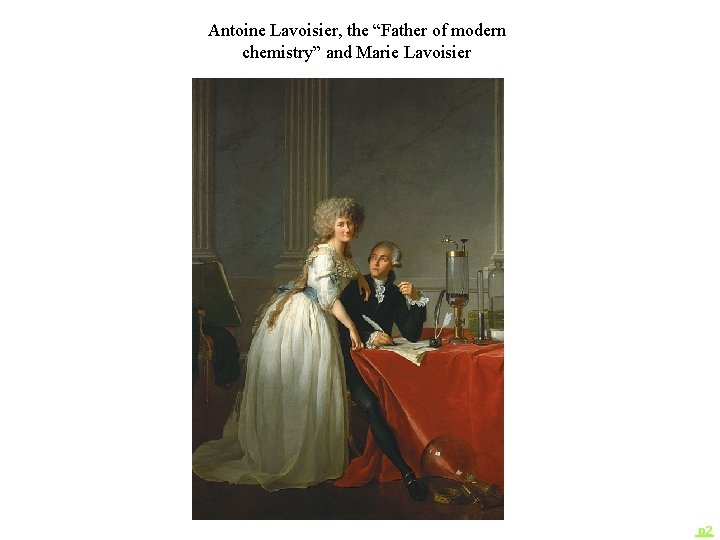
Antoine Lavoisier, the “Father of modern chemistry” and Marie Lavoisier p 2
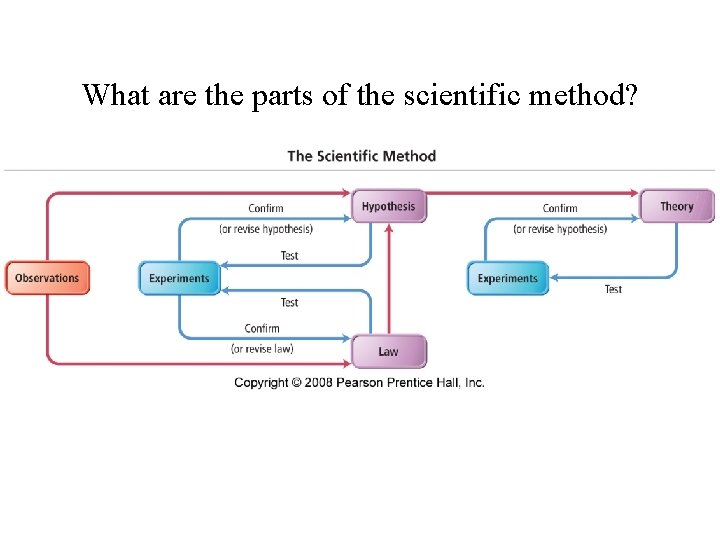
What are the parts of the scientific method?
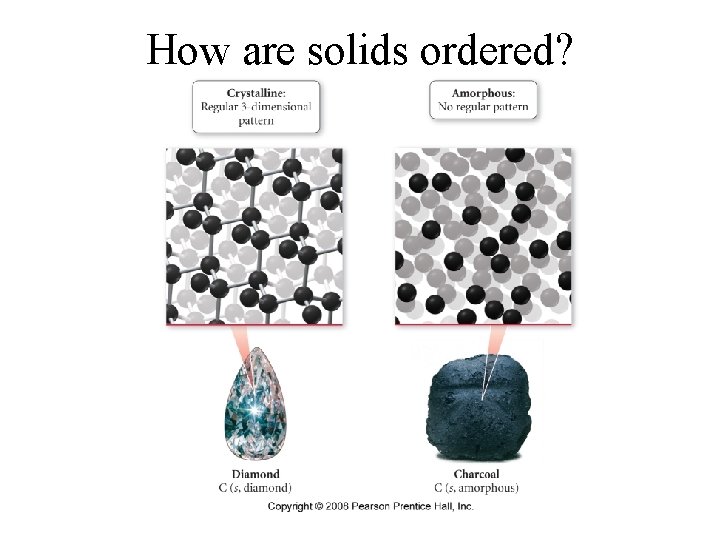
How are solids ordered?
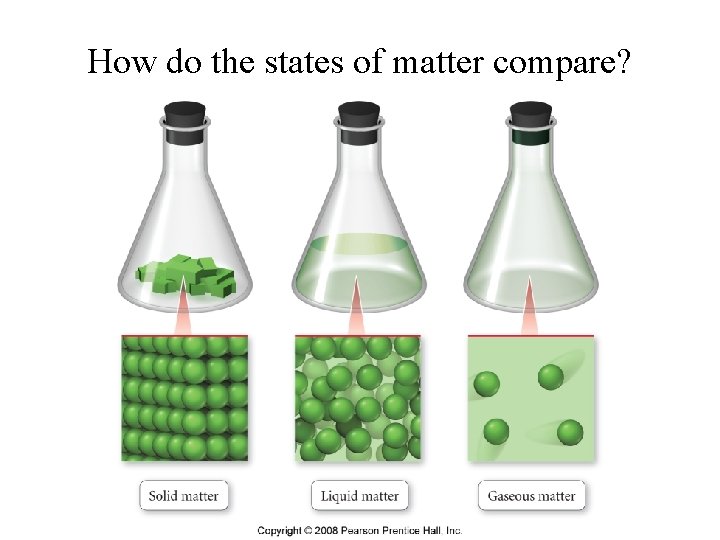
How do the states of matter compare?
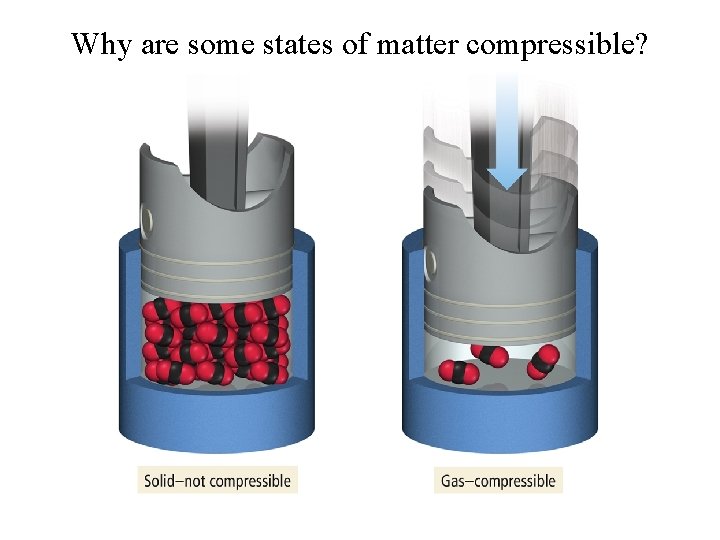
Why are some states of matter compressible?
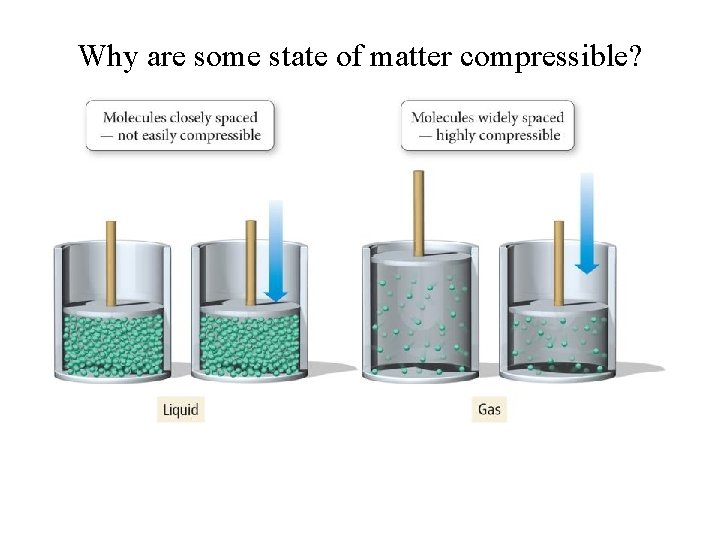
Why are some state of matter compressible?
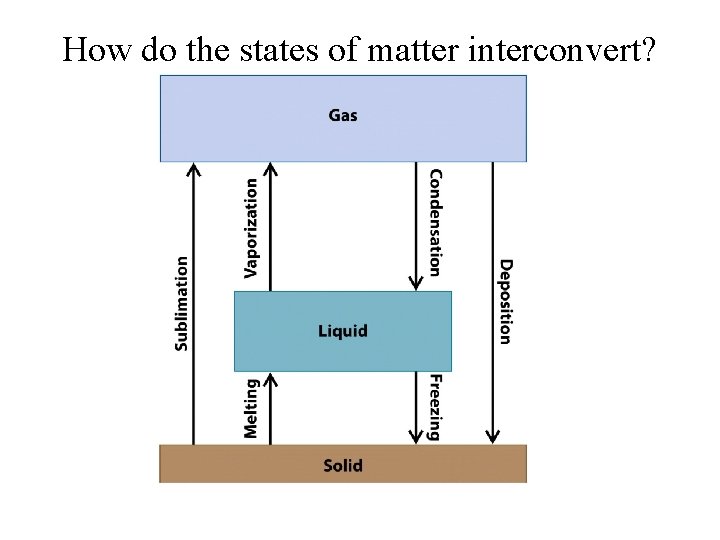
How do the states of matter interconvert?
p 112
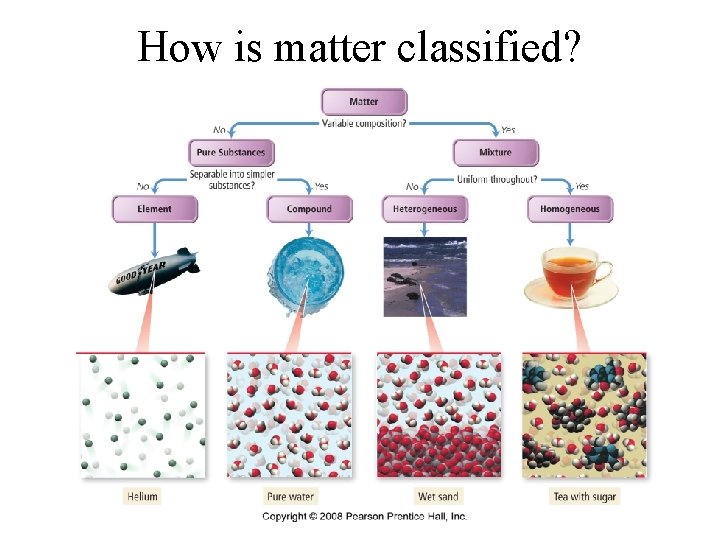
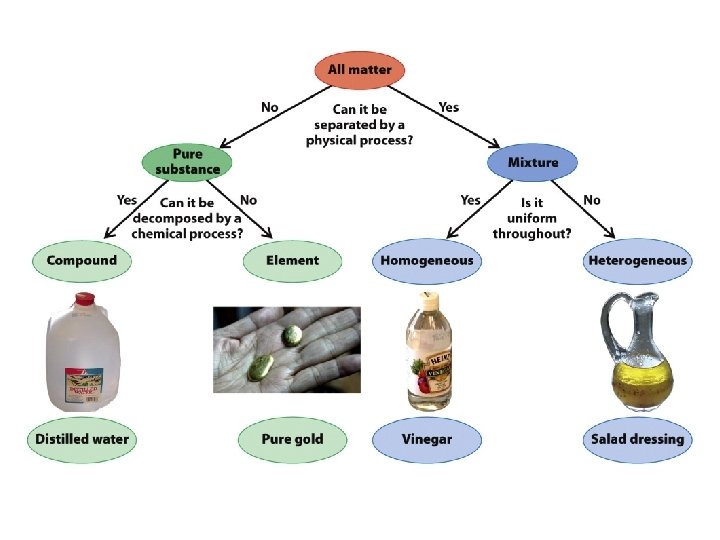
How is matter classified?
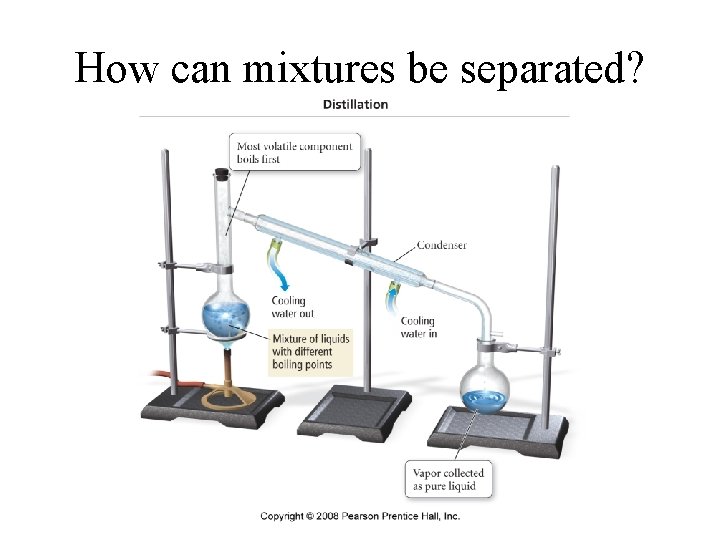
How can mixtures be separated?
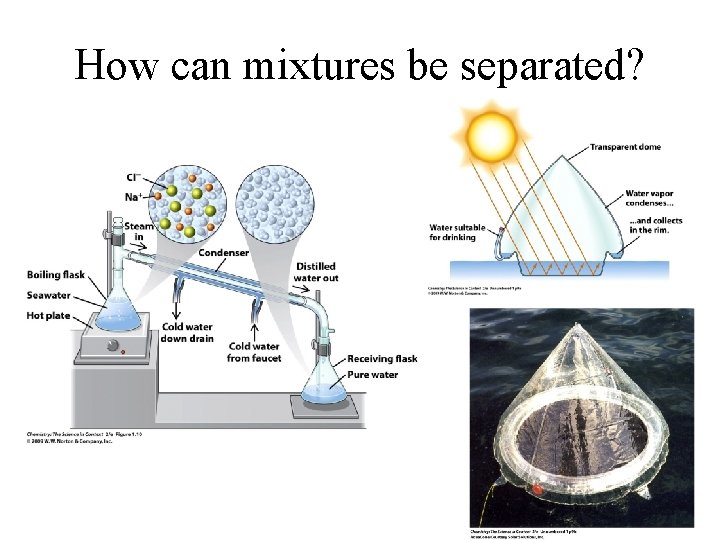
How can mixtures be separated?
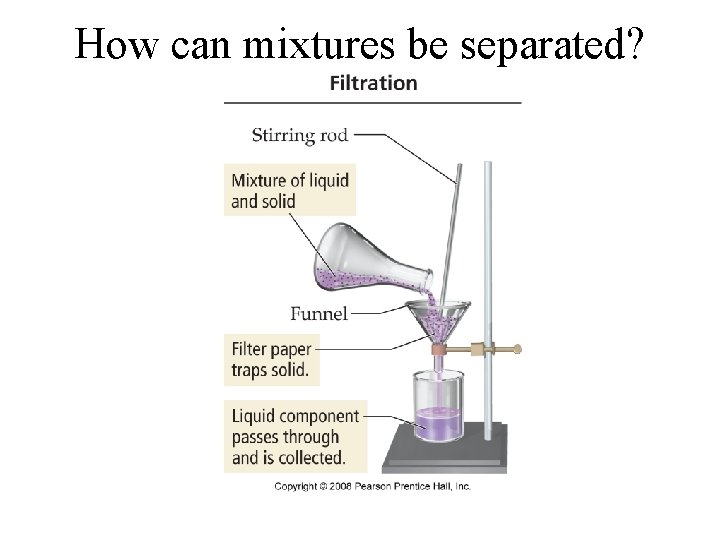
How can mixtures be separated?
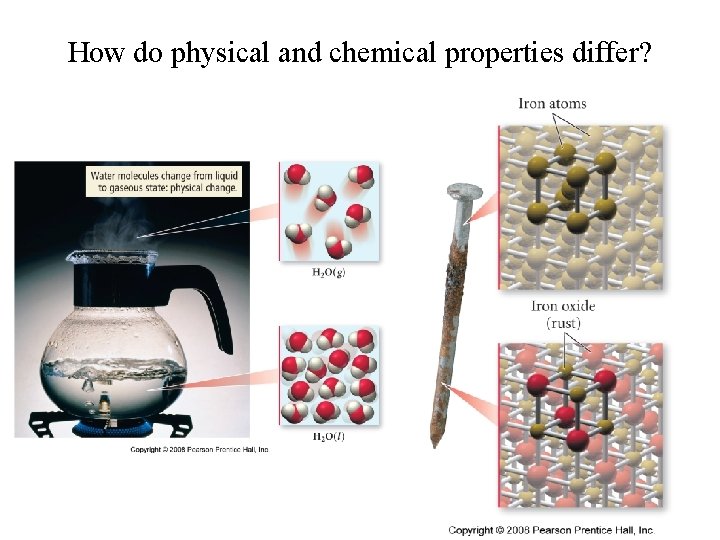
How do physical and chemical properties differ?
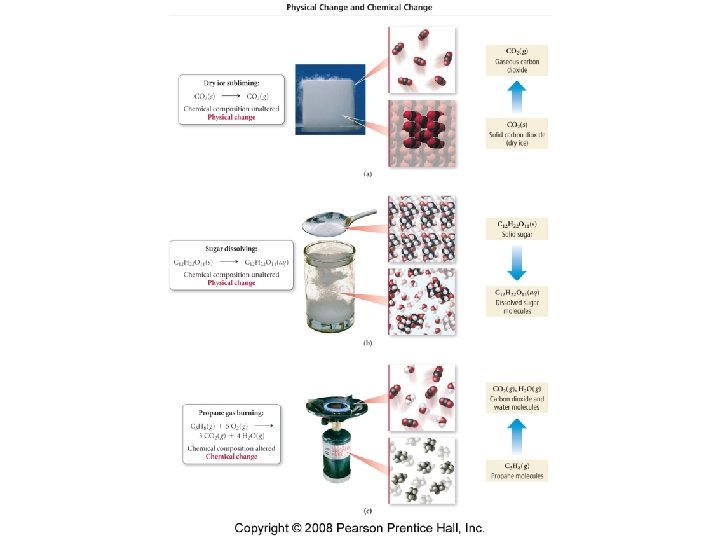
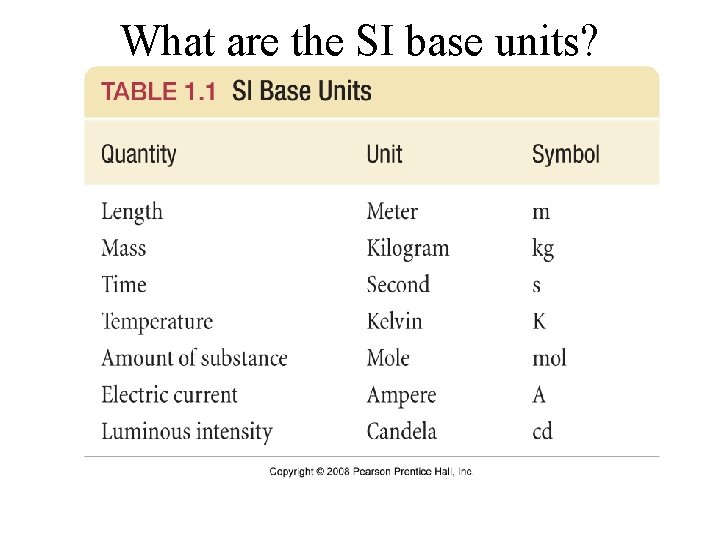
What are the SI base units?
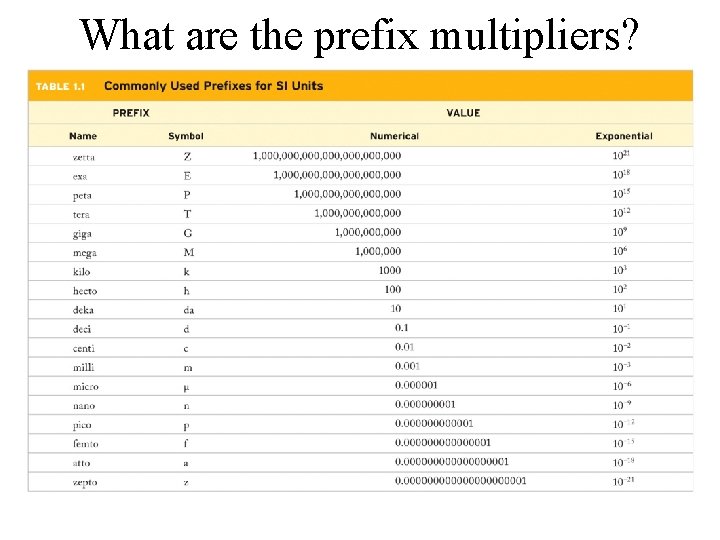
What are the prefix multipliers?
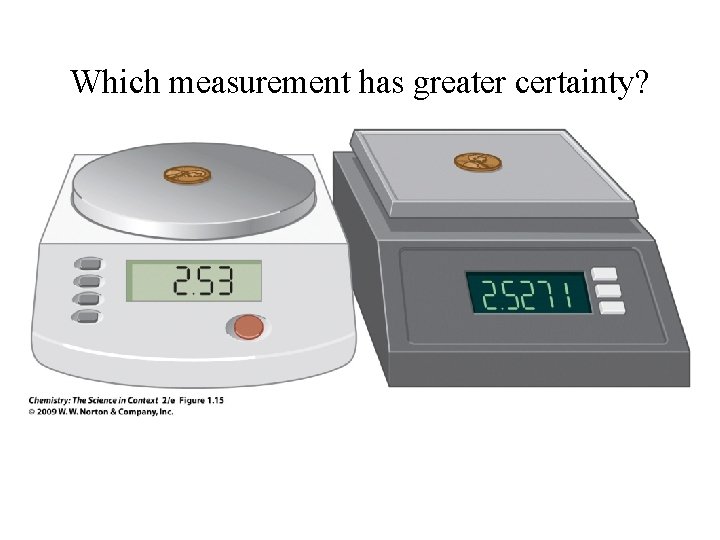
Which measurement has greater certainty?
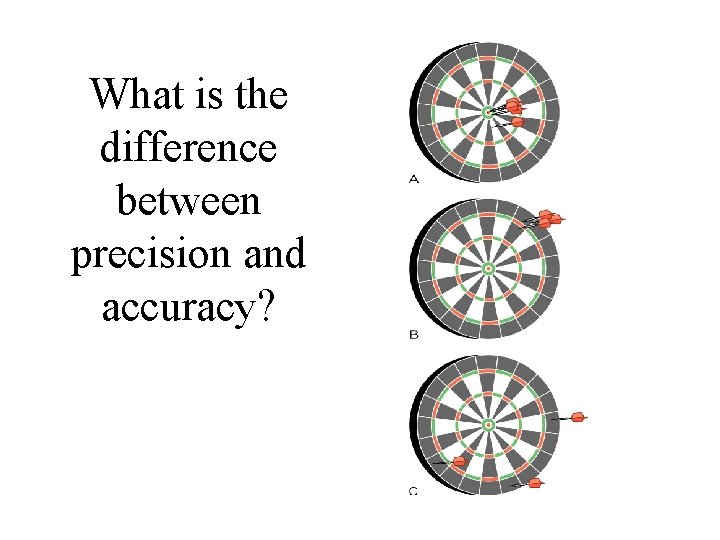
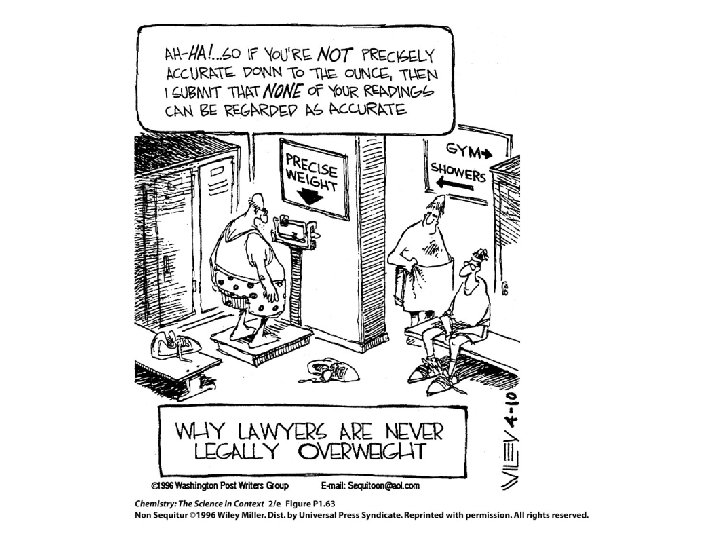
What is the difference between precision and accuracy?
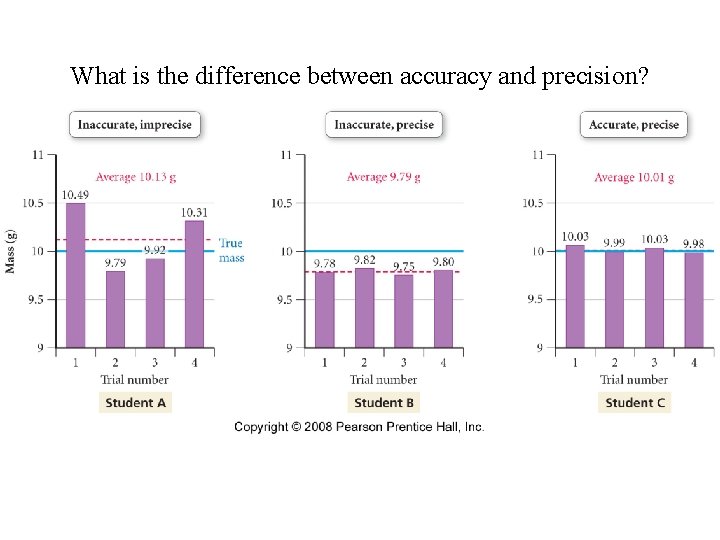
What is the difference between accuracy and precision?
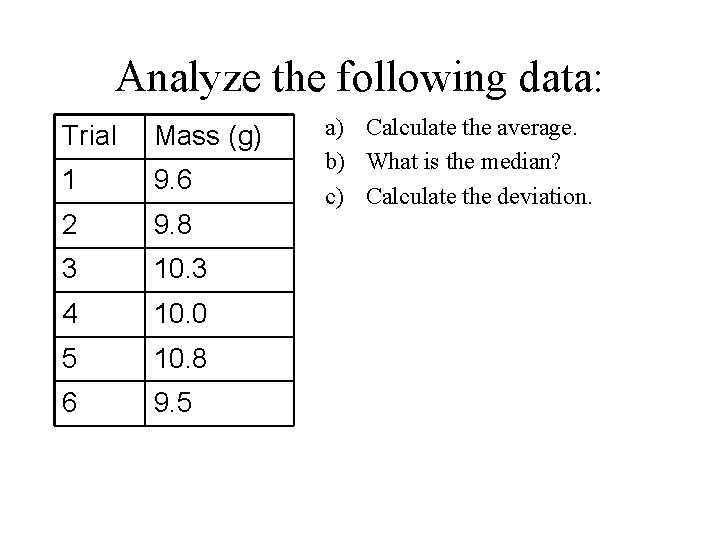
Analyze the following data: Trial Mass (g) 1 9. 6 2 9. 8 3 10. 3 4 10. 0 5 10. 8 6 9. 5 a) Calculate the average. b) What is the median? c) Calculate the deviation.
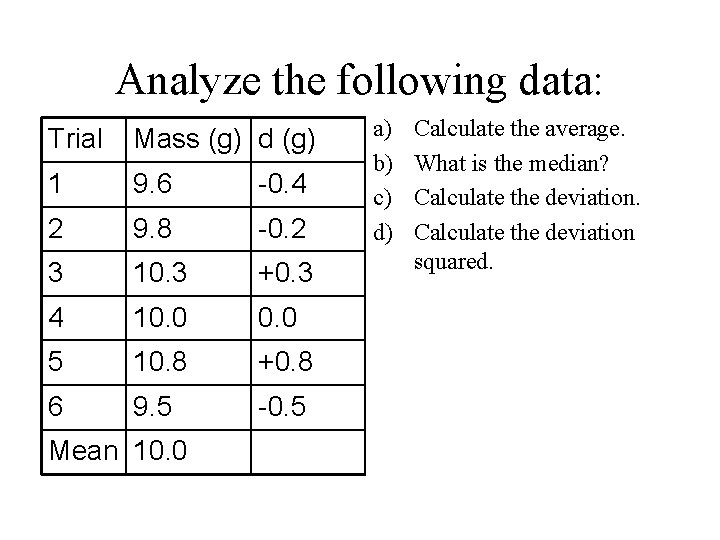
Analyze the following data: Trial Mass (g) d (g) 1 9. 6 -0. 4 2 9. 8 -0. 2 3 10. 3 +0. 3 4 10. 0 5 10. 8 +0. 8 6 9. 5 -0. 5 Mean 10. 0 a) b) c) d) Calculate the average. What is the median? Calculate the deviation squared.
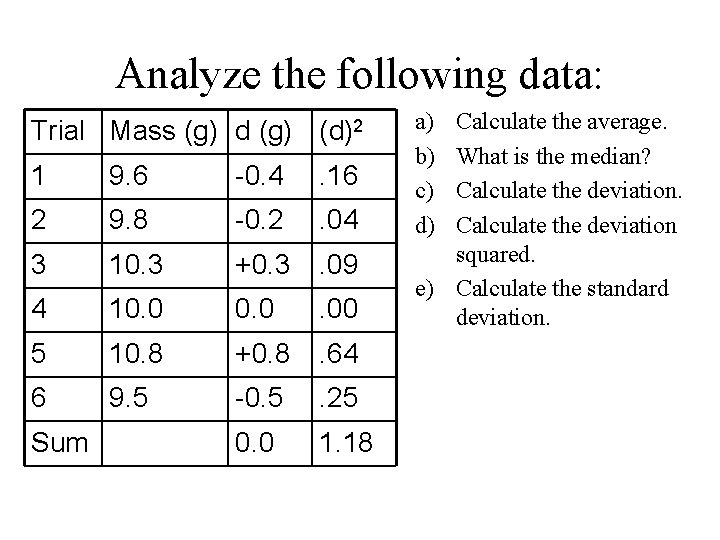
Analyze the following data: Trial Mass (g) d (g) (d)2 1 9. 6 -0. 4 . 16 2 9. 8 -0. 2 . 04 3 10. 3 +0. 3 . 09 4 10. 0 . 00 5 10. 8 +0. 8 . 64 6 9. 5 -0. 5 . 25 0. 0 1. 18 Sum a) b) c) d) Calculate the average. What is the median? Calculate the deviation squared. e) Calculate the standard deviation.
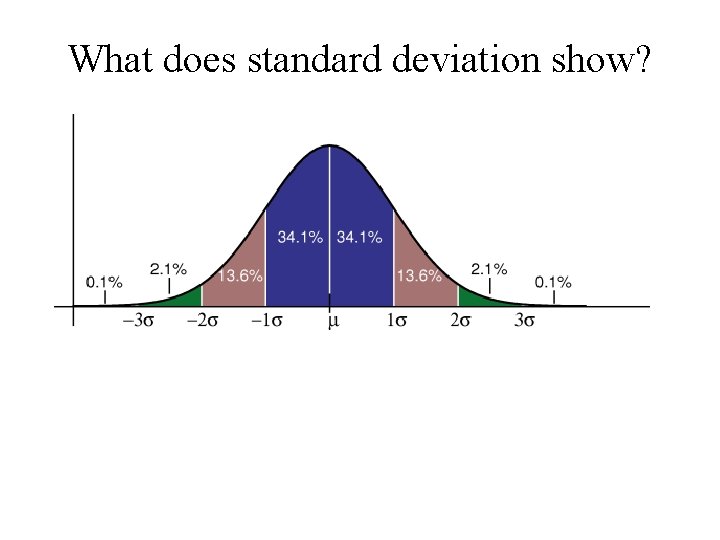
What does standard deviation show?
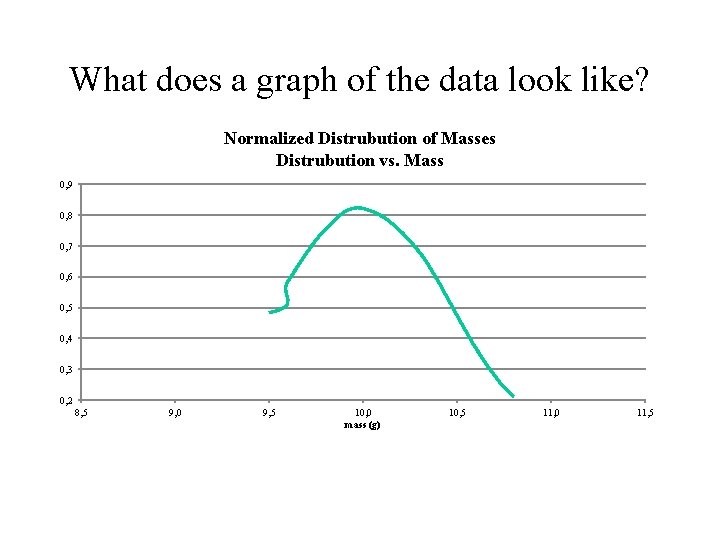
What does a graph of the data look like? Normalized Distrubution of Masses Distrubution vs. Mass 0, 9 0, 8 0, 7 0, 6 0, 5 0, 4 0, 3 0, 2 8, 5 9, 0 9, 5 10, 0 mass (g) 10, 5 11, 0 11, 5
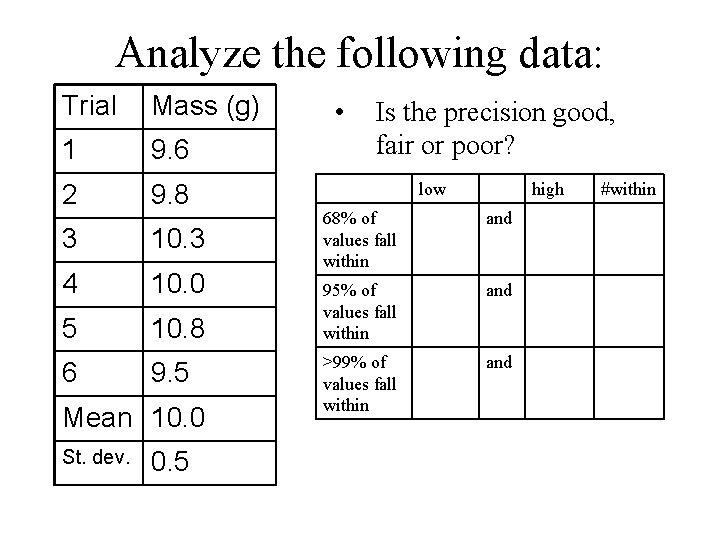
Analyze the following data: Trial Mass (g) 1 9. 6 2 9. 8 3 10. 3 4 10. 0 5 10. 8 6 9. 5 Mean 10. 0 St. dev. 0. 5 • Is the precision good, fair or poor? low high 68% of values fall within and 95% of values fall within and >99% of values fall within and #within
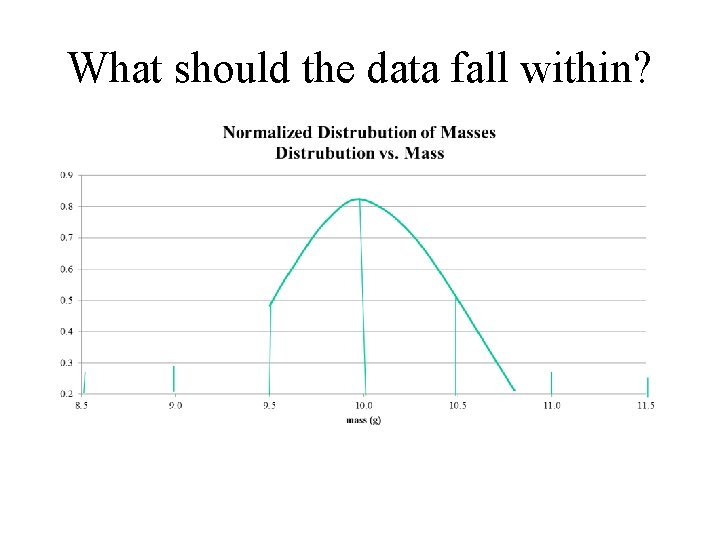
What should the data fall within?
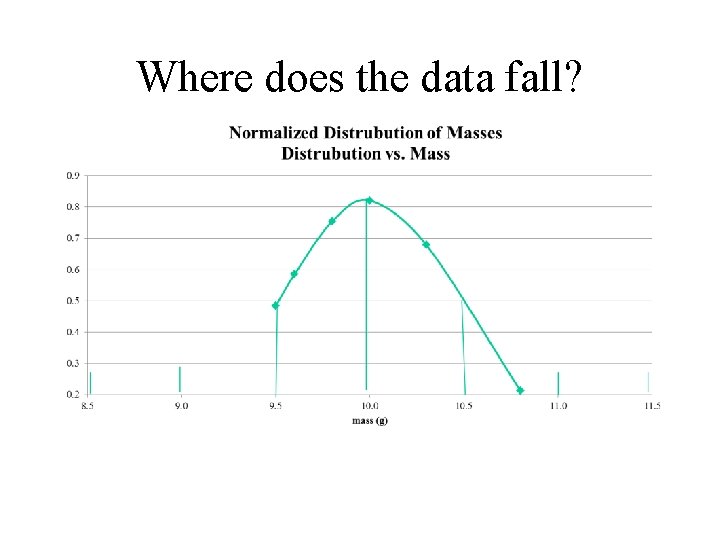
Where does the data fall?
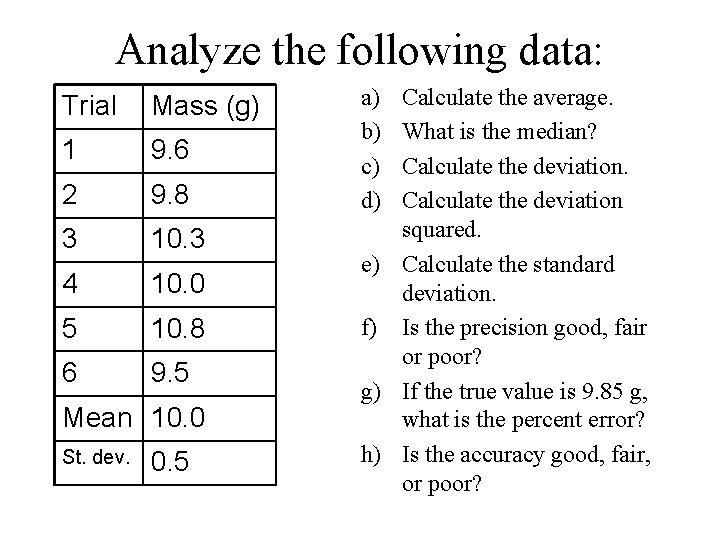
Analyze the following data: Trial Mass (g) 1 9. 6 2 9. 8 3 10. 3 4 10. 0 5 10. 8 6 9. 5 Mean 10. 0 St. dev. 0. 5 a) b) c) d) Calculate the average. What is the median? Calculate the deviation squared. e) Calculate the standard deviation. f) Is the precision good, fair or poor? g) If the true value is 9. 85 g, what is the percent error? h) Is the accuracy good, fair, or poor?
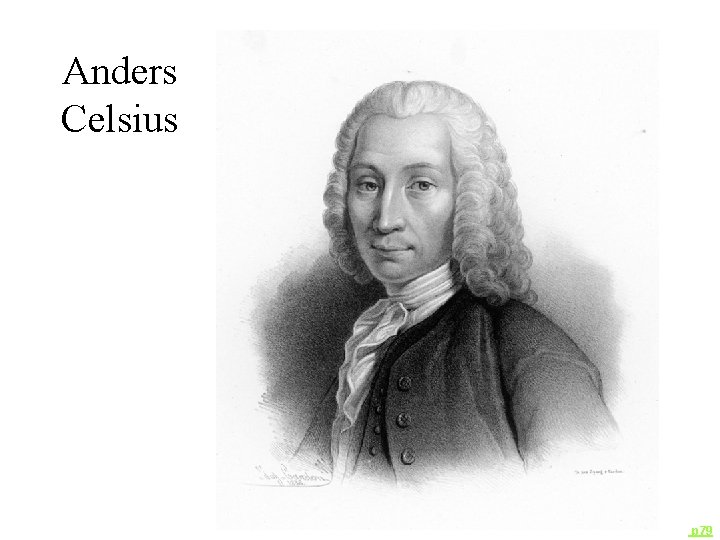
Anders Celsius p 79
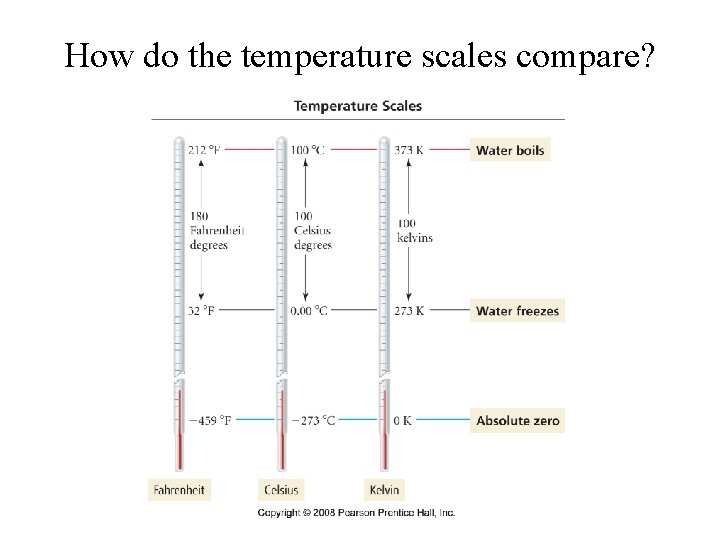
How do the temperature scales compare?
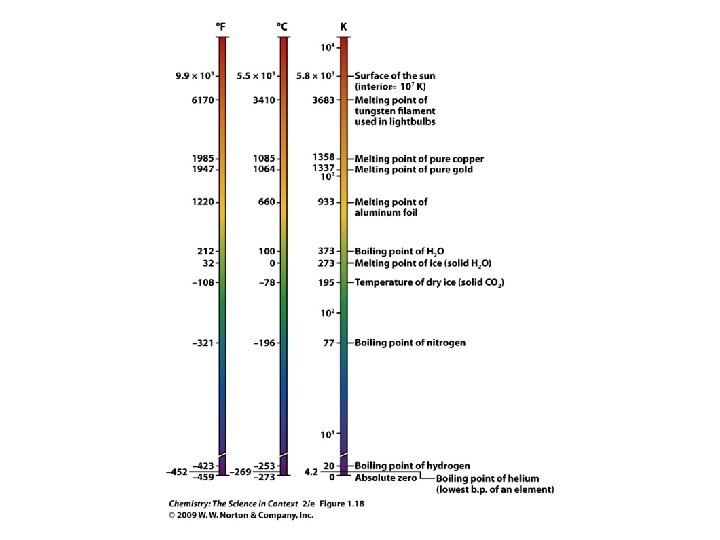
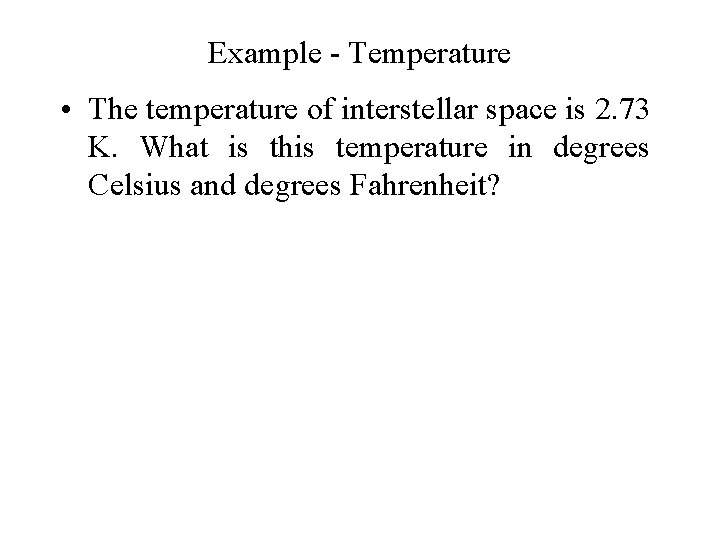
Example - Temperature • The temperature of interstellar space is 2. 73 K. What is this temperature in degrees Celsius and degrees Fahrenheit?
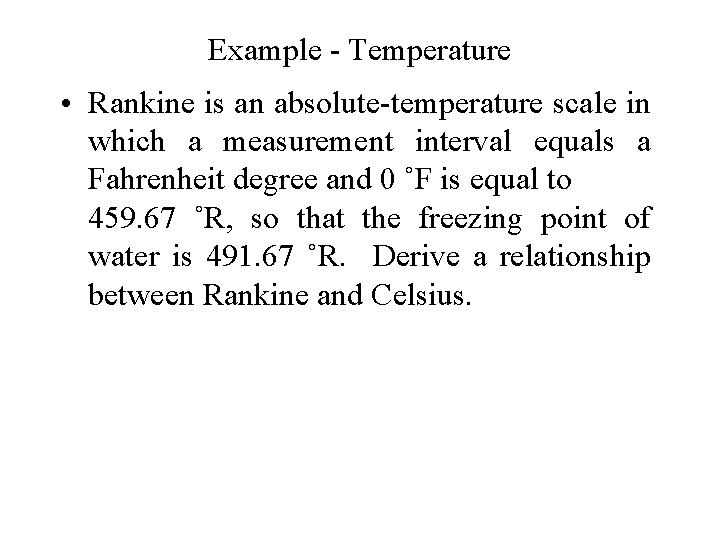
Example - Temperature • Rankine is an absolute-temperature scale in which a measurement interval equals a Fahrenheit degree and 0 ˚F is equal to 459. 67 ˚R, so that the freezing point of water is 491. 67 ˚R. Derive a relationship between Rankine and Celsius.
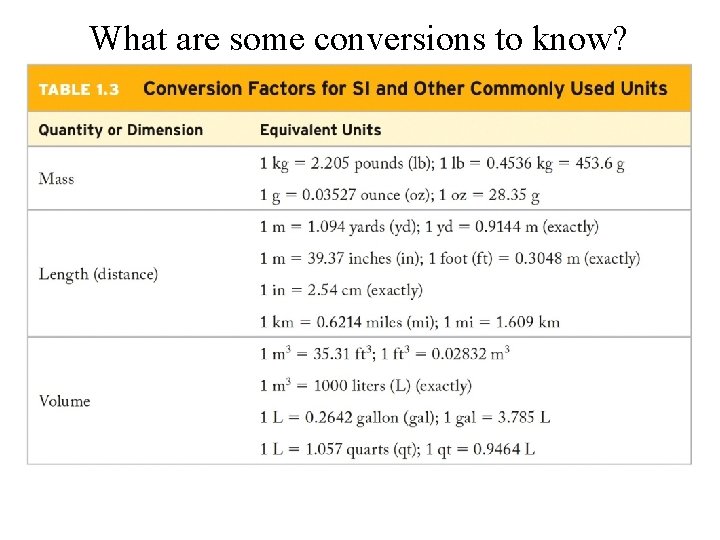
What are some conversions to know?
Example – Dimensional Analysis • A supplier packages hydrochloric acid in liters, but we need 2. 00 quarts. What volume in liters corresponds to 2. 00 qts?
Example – Dimensional Analysis • The diameter of a typical aerosol smog particle is 0. 1 μm. Express this diameter in inches.
Example – Dimensional Analysis • A meter monitoring the supply of oxygen gas to an incubator recorded the volume of gas delivered as 25. 4 in 3. Convert this value to centimeters cubed.
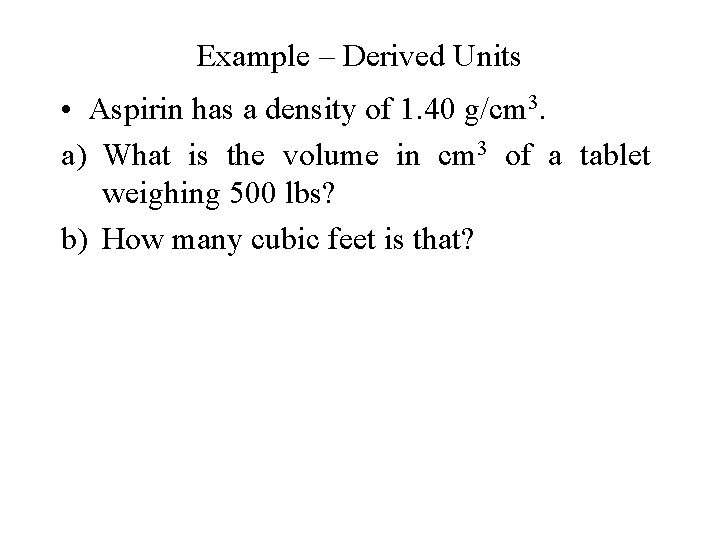
Example – Derived Units • Aspirin has a density of 1. 40 g/cm 3. a) What is the volume in cm 3 of a tablet weighing 500 lbs? b) How many cubic feet is that?
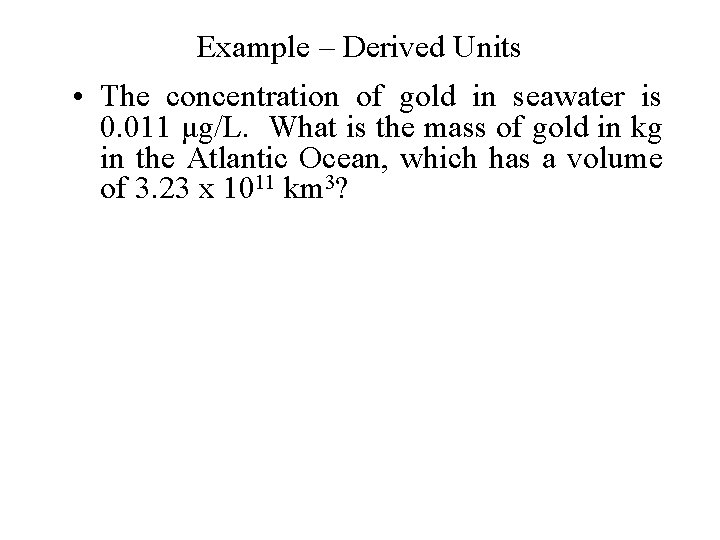
Example – Derived Units • The concentration of gold in seawater is 0. 011 μg/L. What is the mass of gold in kg in the Atlantic Ocean, which has a volume of 3. 23 x 1011 km 3?
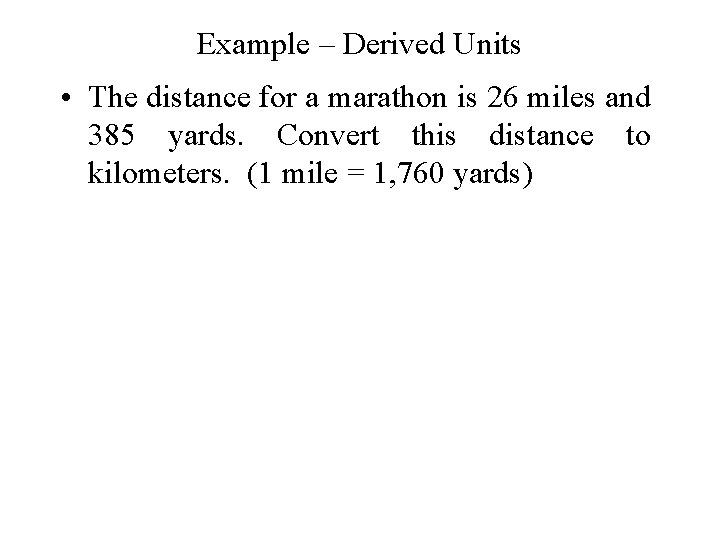
Example – Derived Units • The distance for a marathon is 26 miles and 385 yards. Convert this distance to kilometers. (1 mile = 1, 760 yards)
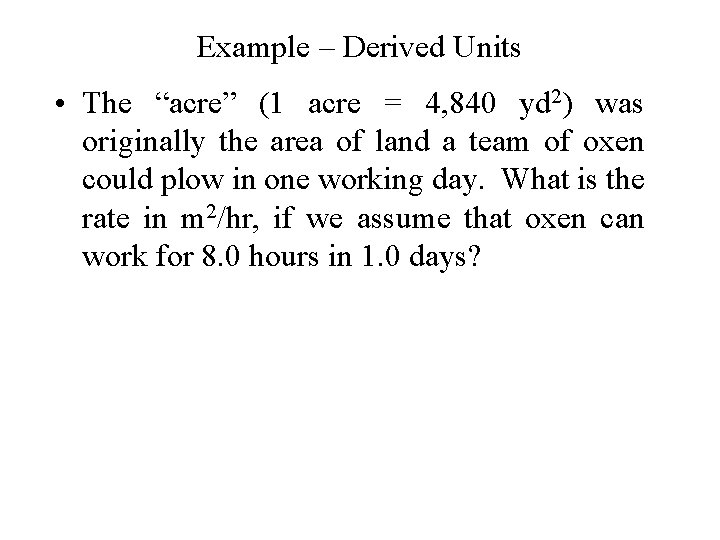
Example – Derived Units • The “acre” (1 acre = 4, 840 yd 2) was originally the area of land a team of oxen could plow in one working day. What is the rate in m 2/hr, if we assume that oxen can work for 8. 0 hours in 1. 0 days?
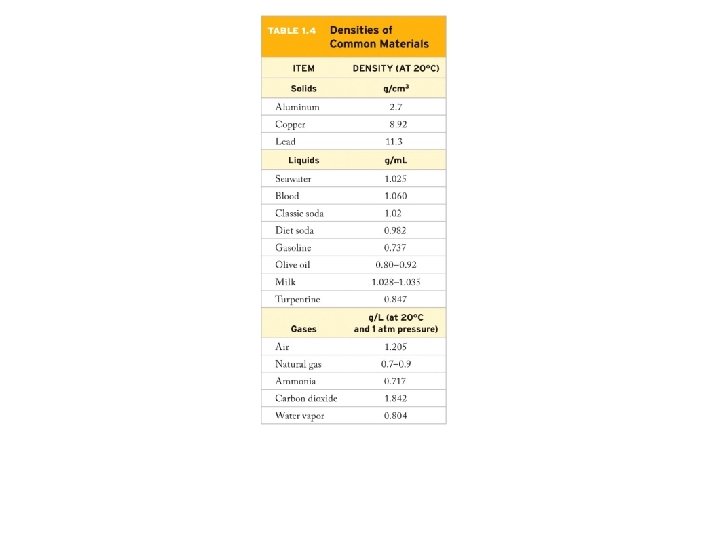
Example – Derived Units • The density of gold is 19. 3 g/cm 3. What volume of water will a gold nugget of mass 16. 7 kg displace when placed in a graduated cylinder containing water? The density of water at room temperature is 1. 00 g/cm 3.
Example – Derived Units • The density of benzene at 20 °C is 0. 88 g/m. L. How many liters of benzene would you get if you bought a pound of benzene?
Example – Derived Units • Which is more dense lead (ρ = 11. 34 g/cm 3) or platinum (ρ = 0. 3515 kg/in 3)?
- Slides: 48