
Chapter 1 Marriage and Family An Introduction Chapter

- Slides: 43
Chapter 1 Marriage and Family: An Introduction
Chapter Sections 1 -1 Marriage 1 -2 Family 1 -3 Changes in Marriage and the Family 1 -4 Theoretical Frameworks for Viewing Marriage and the Family • 1 -5 Choices in Relationships—View of the Text • 1 -6 Research—Process and Evaluation • •
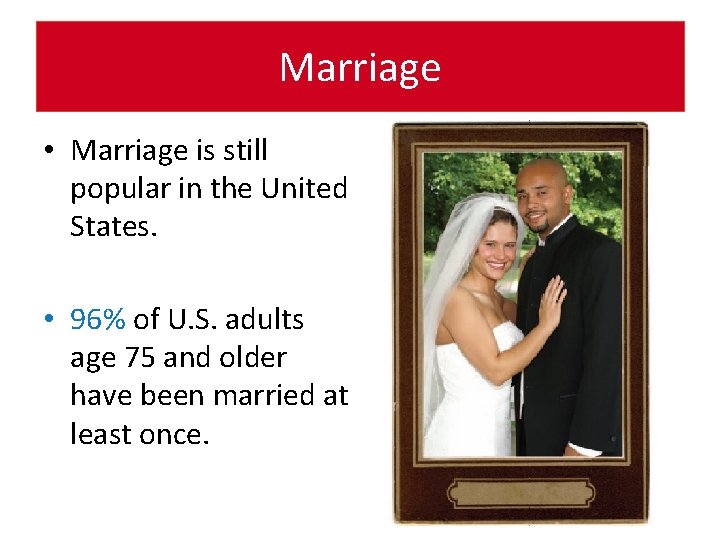
Marriage • Marriage is still popular in the United States. • 96% of U. S. adults age 75 and older have been married at least once.
Marriage • Marriage: a legal relationship that binds a couple together for reproduction, physical care, and socialization of the children • U. S. marriage: a legal contract between the couple and the state
Marriage Elements of marriage • Legal contract • Emotional relationship • Sexual monogamy • Legal responsibility for children • Announcement/ceremony
Marriage Types of Marriage • Polygamy: more than two spouses • Polygyny: one husband two or more wives • Polyandry: one wife and two or more husbands • Polyamory: multiple emotional and sexual partners • Pantagamy: group marriage
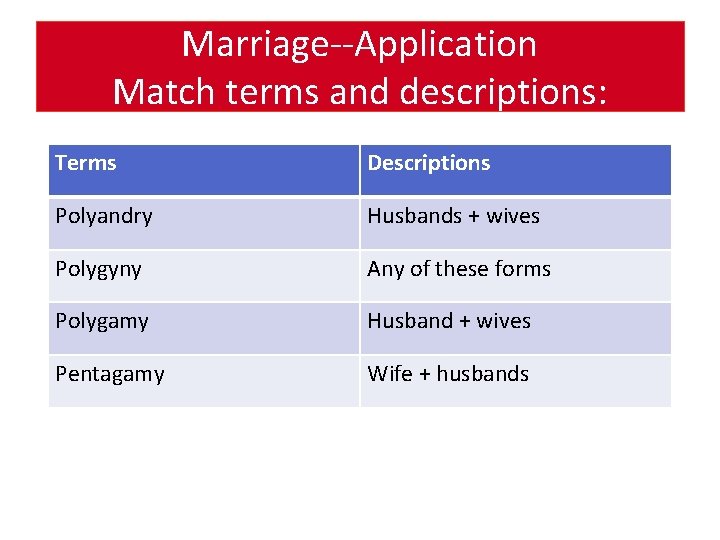
Marriage--Application Match terms and descriptions: Terms Descriptions Polyandry Husbands + wives Polygyny Any of these forms Polygamy Husband + wives Pentagamy Wife + husbands
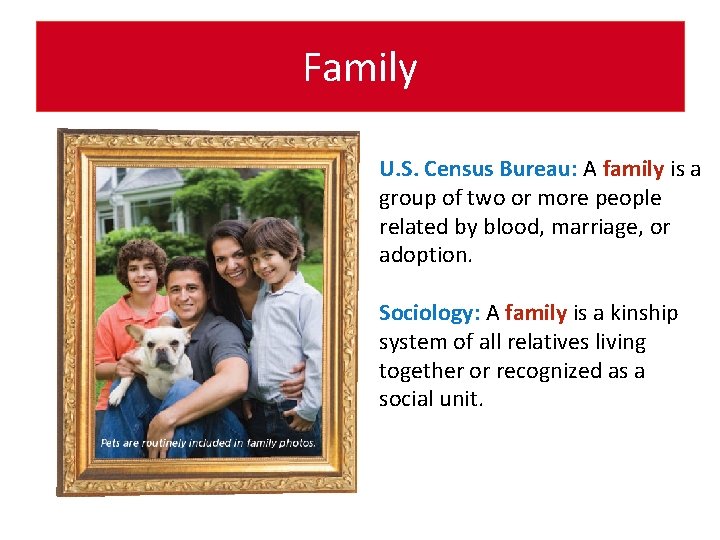
Family U. S. Census Bureau: A family is a group of two or more people related by blood, marriage, or adoption. Sociology: A family is a kinship system of all relatives living together or recognized as a social unit.
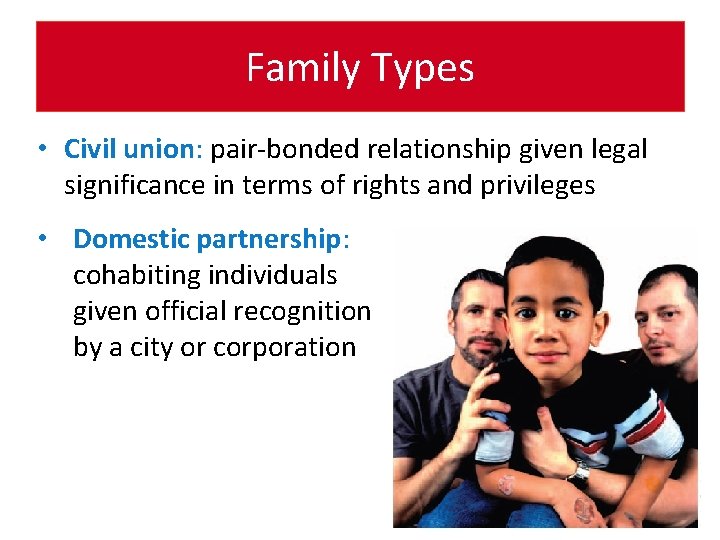
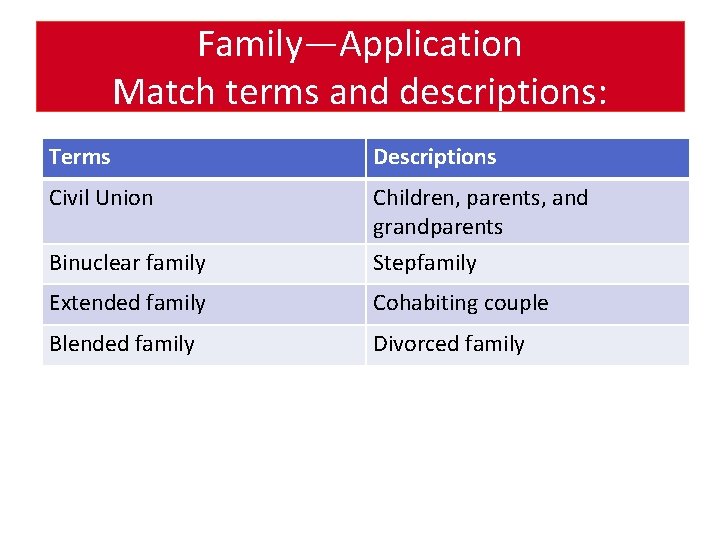
Family Types • Civil union: pair-bonded relationship given legal significance in terms of rights and privileges • Domestic partnership: cohabiting individuals given official recognition by a city or corporation
Family Types • Family of origin (orientation): the family in which an individual is born and/or reared • Family of procreation: the family an individual creates by getting married and/or having children
Family Types • Nuclear family: family consisting of an individual, his or her spouse, and his or her children, or an individual and his or her parents and siblings • Binuclear family: a family in which members live in two separate households • Blended family (stepfamily): a family created when two individuals marry and at least one of them has a child from a previous relationship
Family Types • Traditional family: two-parent nuclear family with the husband as breadwinner and wife as homemaker • Modern family: dual-earner family • Postmodern family: departs from the traditional and modern family forms
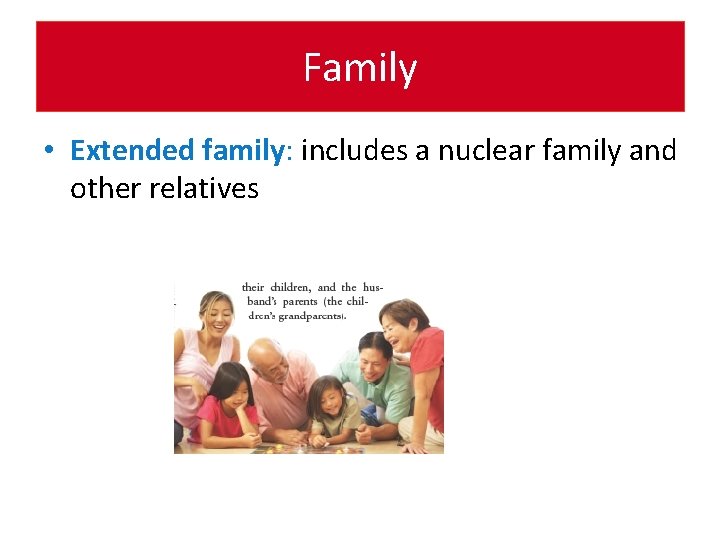
Family • Extended family: includes a nuclear family and other relatives
Family—Application Match terms and descriptions: Terms Descriptions Civil Union Children, parents, and grandparents Binuclear family Stepfamily Extended family Cohabiting couple Blended family Divorced family
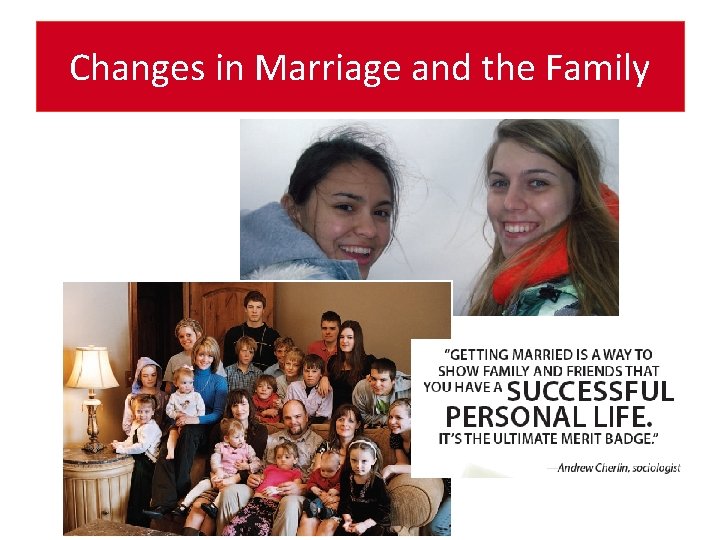
Changes in Marriage and the Family
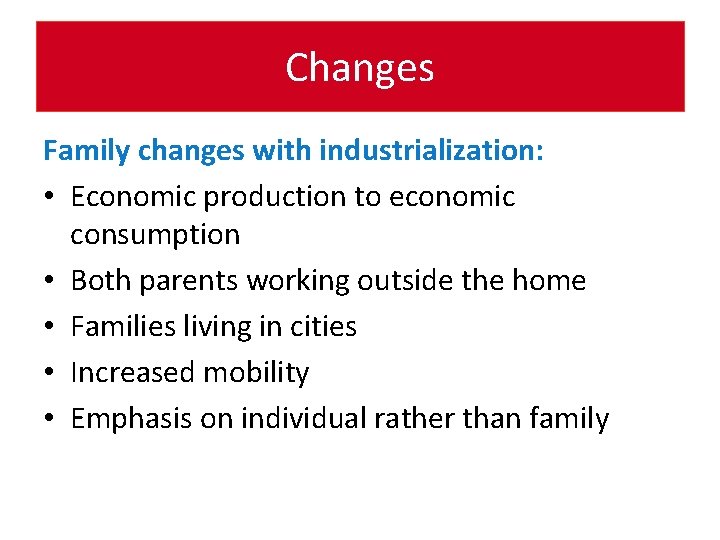
Changes Family changes with industrialization: • Economic production to economic consumption • Both parents working outside the home • Families living in cities • Increased mobility • Emphasis on individual rather than family
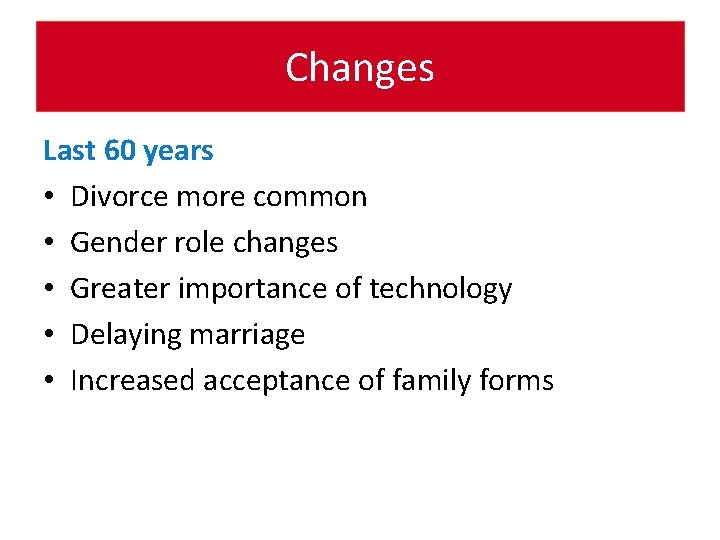
Changes Last 60 years • Divorce more common • Gender role changes • Greater importance of technology • Delaying marriage • Increased acceptance of family forms
Changes Marriage-resilience perspective • Marriage is not in decline. • The changes have had few negative consequences for adults, children, or wider society.
Theoretical Frameworks for Viewing Marriage and the Family Theoretical framework: set of interrelated principles designed to explain a particular phenomenon and provide a point of view
Theoretical Frameworks Social Exchange Framework • Based on utilitarianism—idea that individuals rationally weigh rewards and costs • Interactions and choices are viewed in terms of cost/profit. • Power revolves around the ability to influence.
Theoretical Frameworks Family Life Course Development Framework • Emphasizes important role transitions at different periods of life and in different social contexts Family Life Cycle Framework • Emphasizes stages and developmental tasks
Theoretical Frameworks Structure-Function Framework • Views the family as a social institution with values, norms, and activities meant to provide stability for the larger society • Families – Replenish society with socialized members – Promote emotional stability – Provide economic support
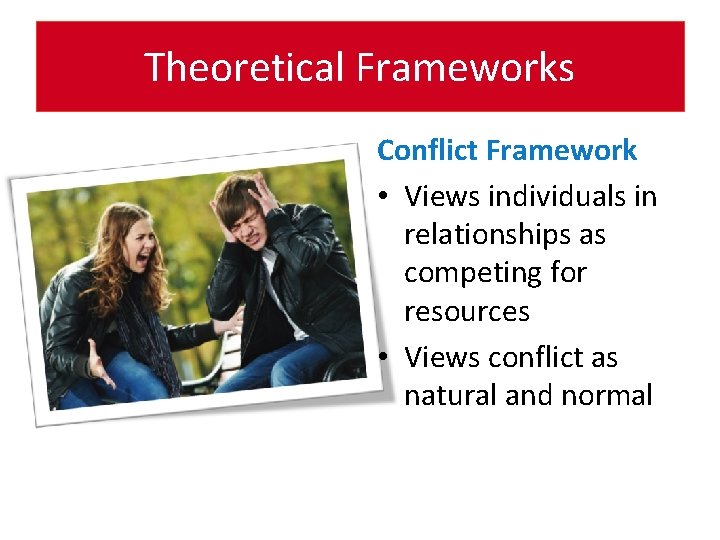
Theoretical Frameworks Conflict Framework • Views individuals in relationships as competing for resources • Views conflict as natural and normal
Theoretical Frameworks Symbolic Interaction Framework • Views marriages and families as symbolic worlds in which the various members give meaning to each other’s behavior • Definition of the situation: Individuals constantly define situations and respond to definitions.
Theoretical Frameworks Symbolic Interaction Framework • Looking-glass self: We see ourselves as we think others see us. • Self-fulfilling prophecy: Expectations of behavior influence the behavior.
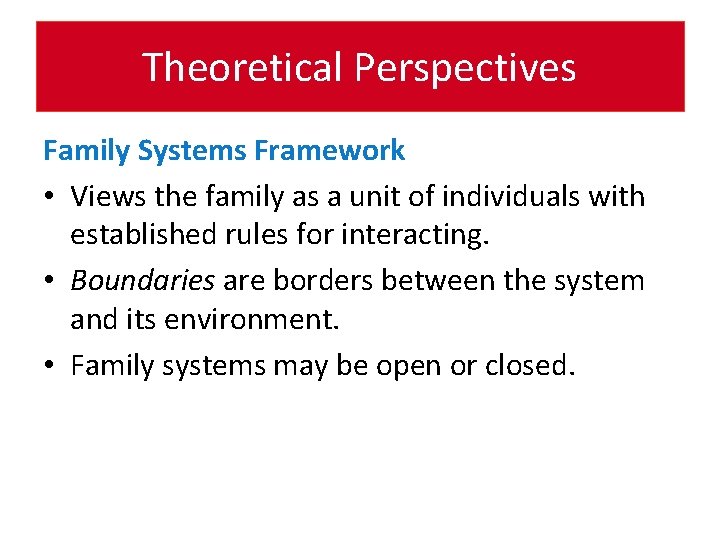
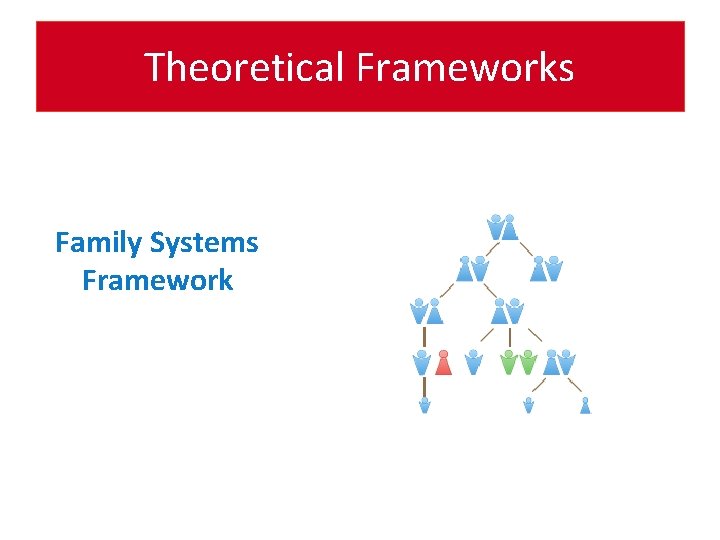
Theoretical Perspectives Family Systems Framework • Views the family as a unit of individuals with established rules for interacting. • Boundaries are borders between the system and its environment. • Family systems may be open or closed.
Theoretical Frameworks Family Systems Framework
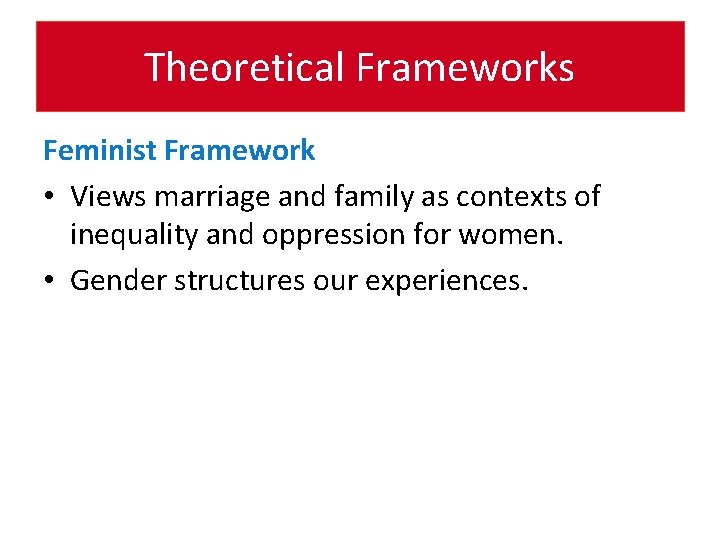
Theoretical Frameworks Feminist Framework • Views marriage and family as contexts of inequality and oppression for women. • Gender structures our experiences.
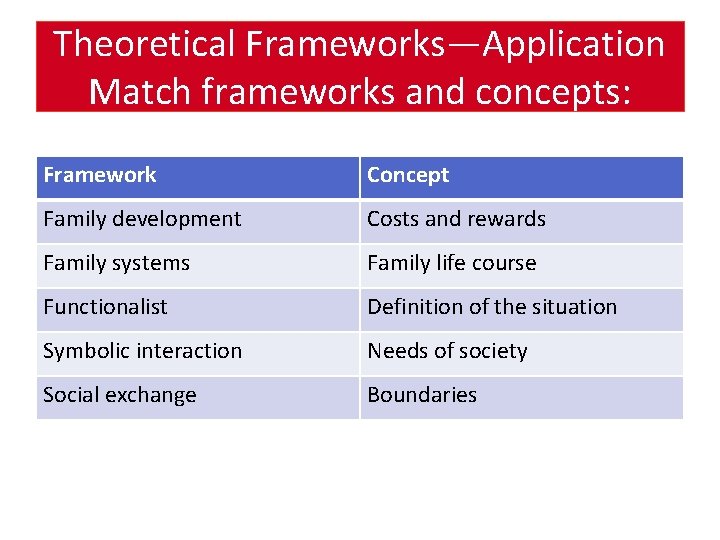
Theoretical Frameworks—Application Match frameworks and concepts: Framework Concept Family development Costs and rewards Family systems Family life course Functionalist Definition of the situation Symbolic interaction Needs of society Social exchange Boundaries
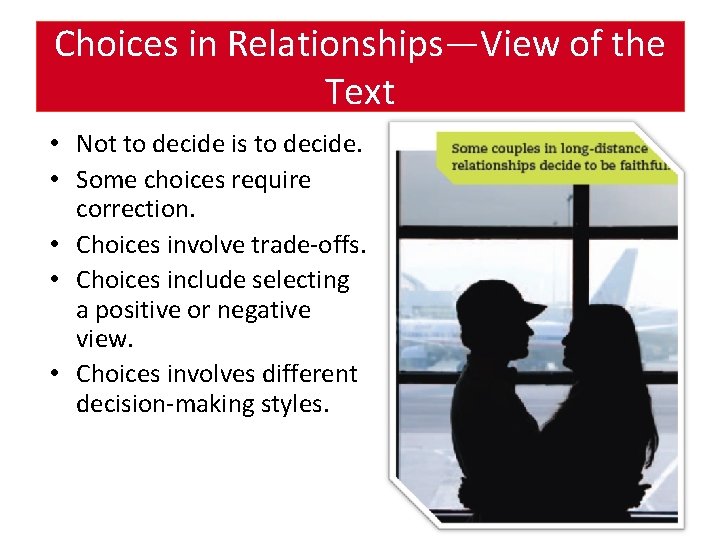
Choices in Relationships—View of the Text • Not to decide is to decide. • Some choices require correction. • Choices involve trade-offs. • Choices include selecting a positive or negative view. • Choices involves different decision-making styles.
Choices View of the Text • Choices produce ambivalence. – Sequential ambivalence: experiencing one wish and then another – Simultaneous ambivalence: experiencing conflicting wishes at the same time • Some choices are revocable; some are not.
Choices • Choices are influenced by the stage in the family life cycle. • Making wise choices is facilitated by learning decision-making skills. • Choices are influenced by global, structural/cultural, and media factors
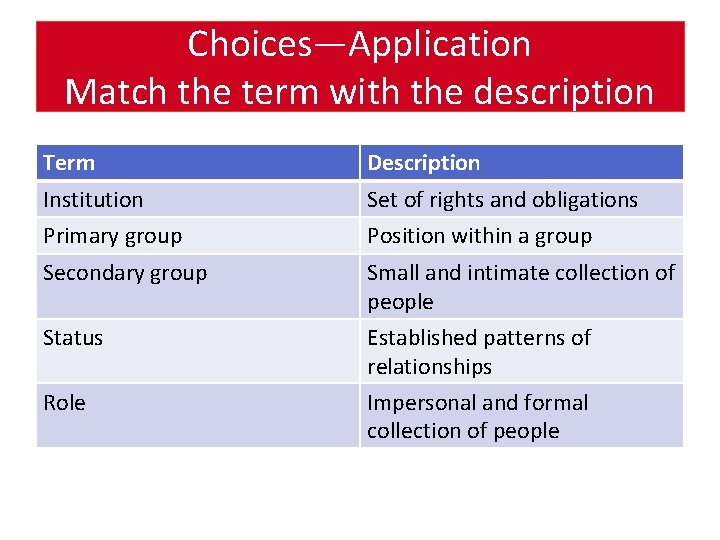
Choices Social Structure includes institutions, groups, statuses and roles. • Institutions: established and enduring patterns of social relationships (family, economy, education) • Social groups: two or more people who share a common identity, interact, and form a social relationship (a family, a college class, a work unit)
Choices Mating gradient • Women marry up in age and education. • Men marry down in age and education.
Choices • Status: a position a person occupies within a social group (father, mother, son, daughter) • Roles: sets of rights, obligations, and expectations associated with a status (Mother nurtures and disciplines. )
Choices are also influenced by culture: the meaning and ways of living that characterize a people in a society • Beliefs: definitions and explanations about what is true • Values: standards regarding good and bad, right and wrong, desirable and undesirable
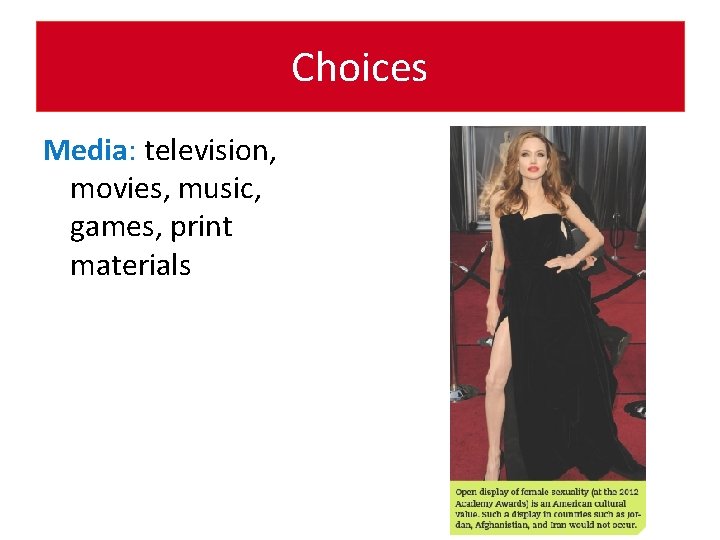
Choices Media: television, movies, music, games, print materials
Choices Sociological imagination: the perspective of how powerful social structure and culture are in influencing personal decision-making
Choices—Application Match the term with the description Term Description Institution Set of rights and obligations Primary group Position within a group Secondary group Small and intimate collection of people Status Established patterns of relationships Impersonal and formal collection of people Role
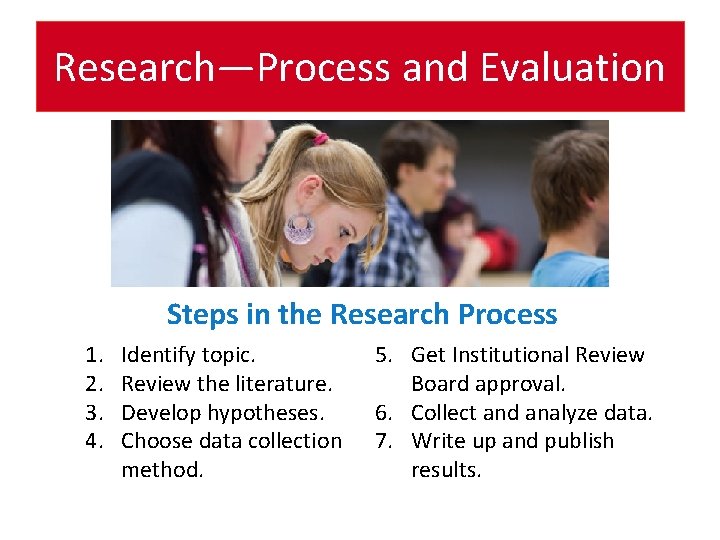
Research—Process and Evaluation Steps in the Research Process 1. 2. 3. 4. Identify topic. Review the literature. Develop hypotheses. Choose data collection method. 5. Get Institutional Review Board approval. 6. Collect and analyze data. 7. Write up and publish results.
Research • Random sample: each individual in the population has an equal chance of being included in the study • Control group: group that is not exposed to the independent variable • Experimental group: group that is exposed to the independent variable
Chapter Summary Marriage involves social expectations. Marriage is different in different societies. “Family” can be defined in different ways. There are different forms of family. Family structures have changed over time. Theoretical frameworks explain and provide a point of view. • Many factors influence our choices. • Research is used to gather data about families. • • •
Chapter Review 1. 2. 3. 4. What is a marriage? What is a family? How have marriages and families changed? What are the different theoretical perspectives for viewing marriage and the family? 5. What influences our choices about relationships? 6. Describe the research process.