
Chapter 1 Marketing Creating and Capturing Customer Value
- Slides: 30
Chapter 1 Marketing: Creating and Capturing Customer Value Copyright © 2014 by Pearson Education, Inc. All rights reserved
Creating and Capturing Customer Value Topic Outline • • What Is Marketing? Understanding the Marketplace and Customer Needs Designing a Customer-Driven Marketing Strategy Preparing an Integrated Marketing Plan and Program Building Customer Relationships Capturing Value from Customers The Changing Marketing Landscape Copyright © 2014 by Pearson Education, Inc. All rights reserved
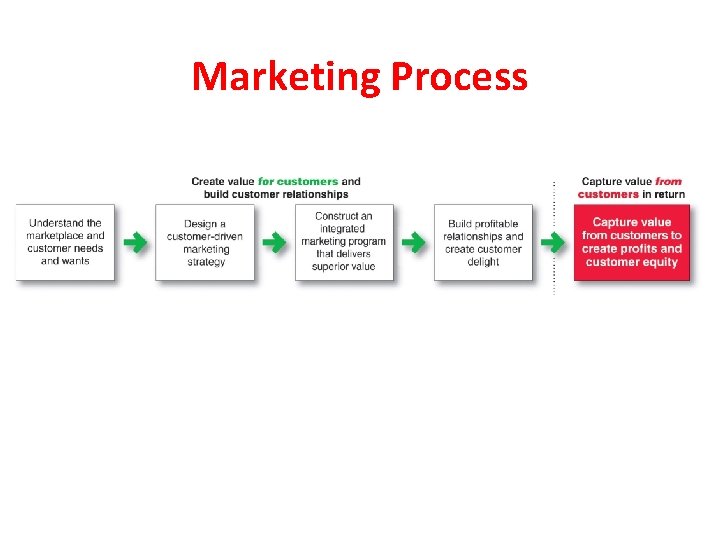
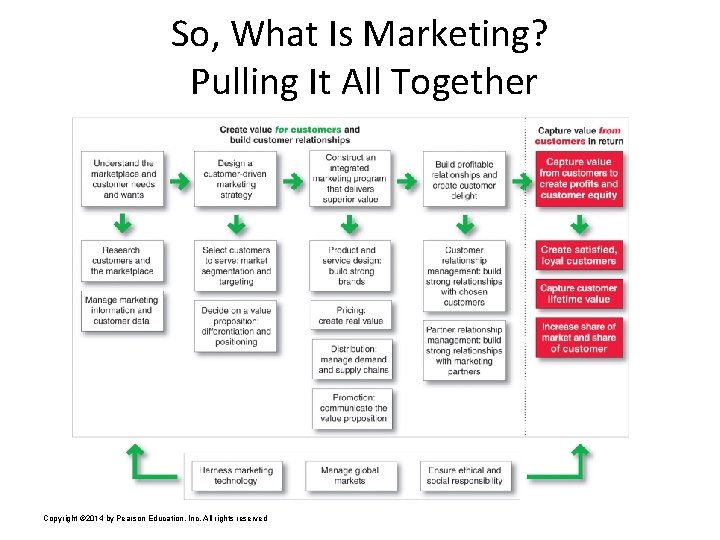
What Is Marketing? -Marketing is a process by which companies create value for customers and build strong customer relationships to capture value from customers in return. Copyright © 2014 by Pearson Education, Inc. All rights reserved
Marketing Process
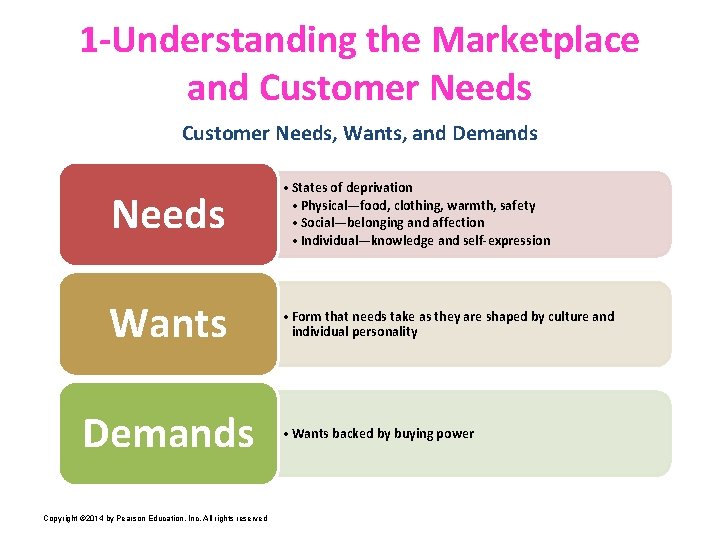
1 -Understanding the Marketplace and Customer Needs, Wants, and Demands Needs • States of deprivation • Physical—food, clothing, warmth, safety • Social—belonging and affection • Individual—knowledge and self-expression Wants • Form that needs take as they are shaped by culture and individual personality Demands Copyright © 2014 by Pearson Education, Inc. All rights reserved • Wants backed by buying power
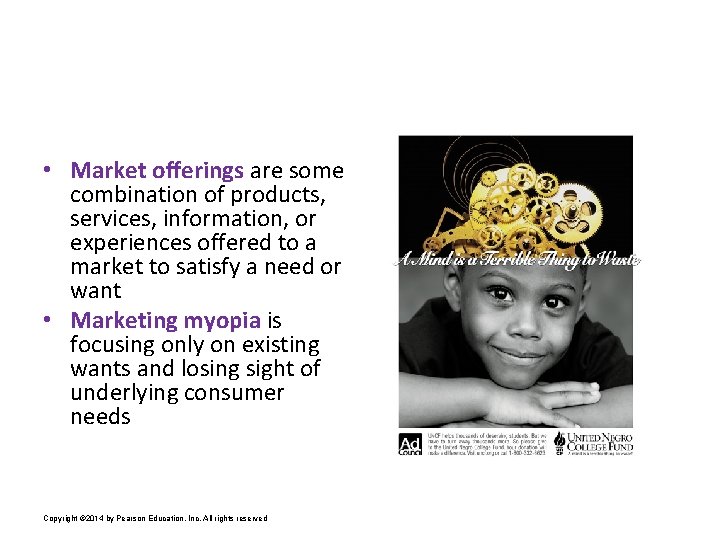
• Market offerings are some combination of products, services, information, or experiences offered to a market to satisfy a need or want • Marketing myopia is focusing only on existing wants and losing sight of underlying consumer needs Copyright © 2014 by Pearson Education, Inc. All rights reserved
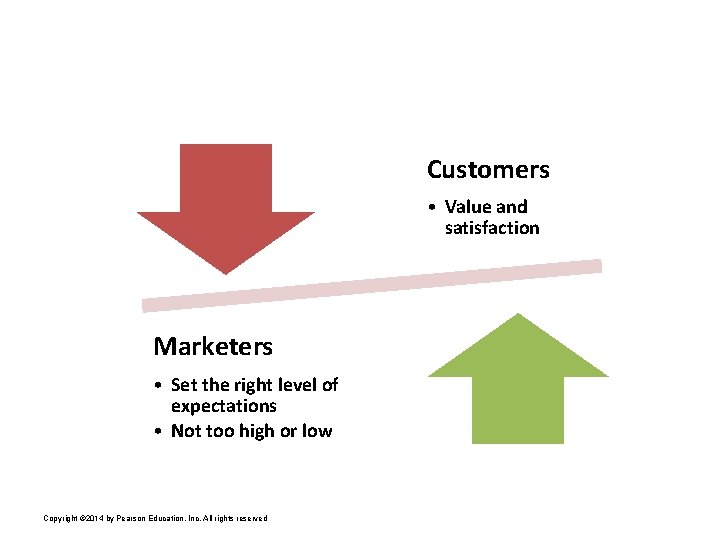
Customers • Value and satisfaction Marketers • Set the right level of expectations • Not too high or low Copyright © 2014 by Pearson Education, Inc. All rights reserved
Exchange is the act of obtaining a desired object from someone by offering something in return -Marketing actions try to create, maintain, grow exchange relationships. -Markets are the set of actual and potential buyers of a product Copyright © 2014 by Pearson Education, Inc. All rights reserved
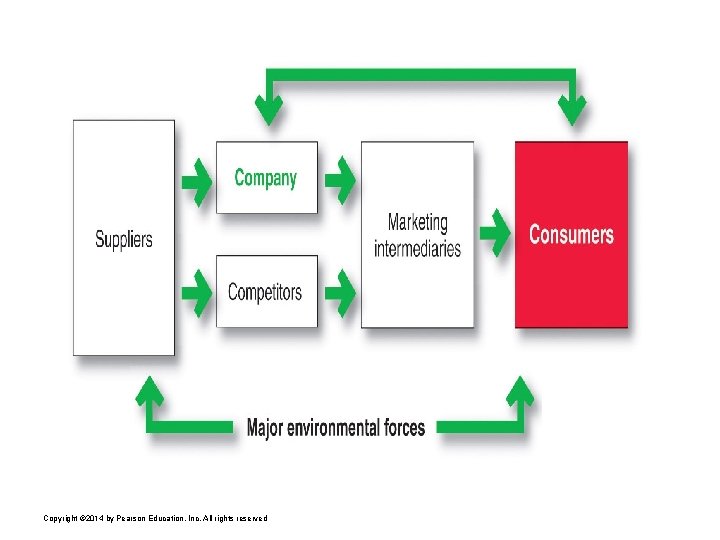
Copyright © 2014 by Pearson Education, Inc. All rights reserved
2 -Designing a Customer-Driven Marketing Strategy Marketing management is the art and science of choosing target markets and building profitable relationships with them – What customers will we serve? – How can we best serve these customers? Market segmentation refers to dividing the markets into segments of customers Target marketing refers to which segments to go after Copyright © 2014 by Pearson Education, Inc. All rights reserved
Designing a Customer-Driven Marketing Strategy Choosing a Value Proposition A brand’s Value Proposition is the set of benefits or values a company promises to deliver to customers to satisfy their needs Copyright © 2014 by Pearson Education, Inc. All rights reserved
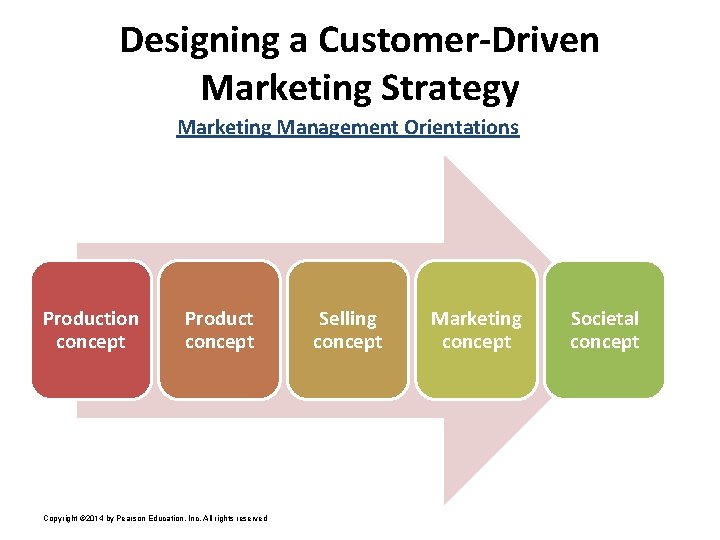
Designing a Customer-Driven Marketing Strategy Marketing Management Orientations Production concept Product concept Copyright © 2014 by Pearson Education, Inc. All rights reserved Selling concept Marketing concept Societal concept
Marketing Management Orientations a)Production concept: Consumers will favor products that are available and highly affordable b)Product concept: Consumers favor products that offer the most quality, performance, and features Focus is on continuous product improvements Copyright © 2014 by Pearson Education, Inc. All rights reserved
Marketing Management Orientations c)Selling concept: Consumers will not buy enough of the firm’s products unless it undertakes a large scale selling and promotion effort d)Marketing concept: Knowing the needs and wants of the target markets and delivering the desired satisfactions better than competitors do Copyright © 2014 by Pearson Education, Inc. All rights reserved
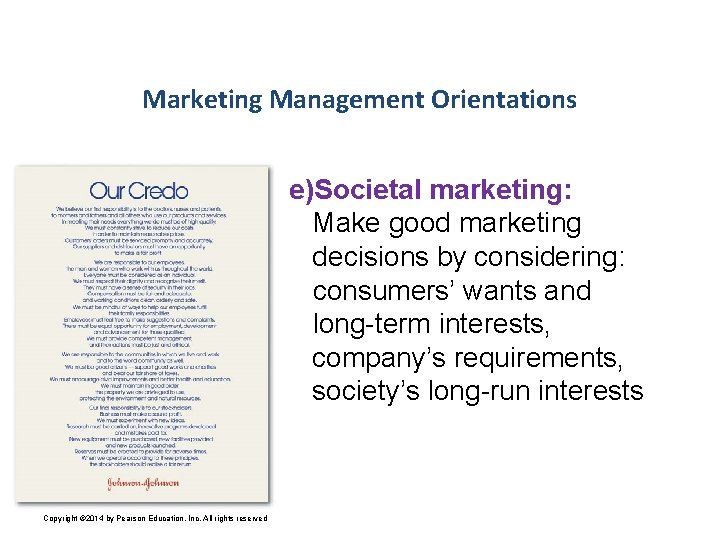
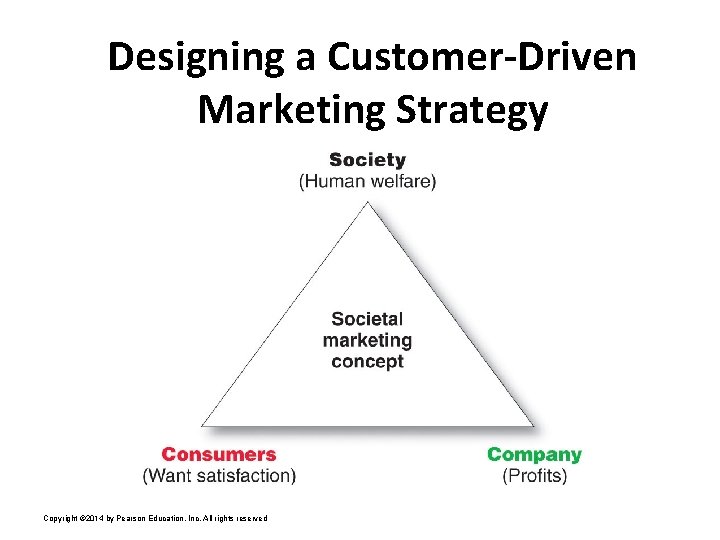
Marketing Management Orientations e)Societal marketing: Make good marketing decisions by considering: consumers’ wants and long-term interests, company’s requirements, society’s long-run interests Copyright © 2014 by Pearson Education, Inc. All rights reserved
Designing a Customer-Driven Marketing Strategy Copyright © 2014 by Pearson Education, Inc. All rights reserved
3 -Preparing an Integrated Marketing Plan and Program The marketing mix: set of tools (four Ps) the firm uses to implement its marketing strategy. It includes product, price, promotion, and place. Integrated marketing program: comprehensive plan that communicates and delivers the intended value to chosen customers. Copyright © 2014 by Pearson Education, Inc. All rights reserved
4 -Building Customer Relationships Customer Relationship Management (CRM) The overall process of building and maintaining profitable customer relationships by delivering superior customer value and satisfaction Copyright © 2014 by Pearson Education, Inc. All rights reserved
Relationship Building Blocks: Customer Value and Satisfaction Customerperceived value Customer satisfaction • The difference between total customer value and total customer cost • The extent to which a product’s perceived performance matches a buyer’s expectations Copyright © 2014 by Pearson Education, Inc. All rights reserved
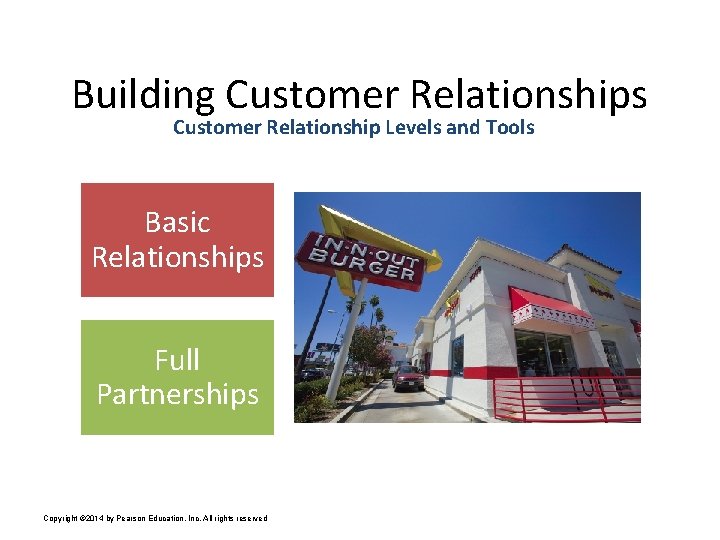
Building Customer Relationships Customer Relationship Levels and Tools Basic Relationships Full Partnerships Copyright © 2014 by Pearson Education, Inc. All rights reserved
The Changing Nature of Customer Relationships • Relating with more carefully selected customers uses selective relationship management to target fewer, more profitable customers • Relating more deeply and interactively by incorporating more interactive two way relationships through blogs, Websites, online communities and social networks Copyright © 2014 by Pearson Education, Inc. All rights reserved
The Changing Nature of Customer Relationships -Customer-managed relationships Customers, empowered by today’s new digital technologies, interact with companies and each other to shape their relationships with brands. -Partner relationship management involves working closely with partners in other company departments and outside the company to jointly bring greater value to customers Copyright © 2014 by Pearson Education, Inc. All rights reserved
Partner Relationship Management • Partners inside the company is every functional area interacting with customers – Electronically – Cross-functional teams - Marketers connect with their suppliers, channel partners, and competitors by developing partnerships -Supply chain is a channel that stretches from raw materials to components to final products to final buyers Copyright © 2014 by Pearson Education, Inc. All rights reserved
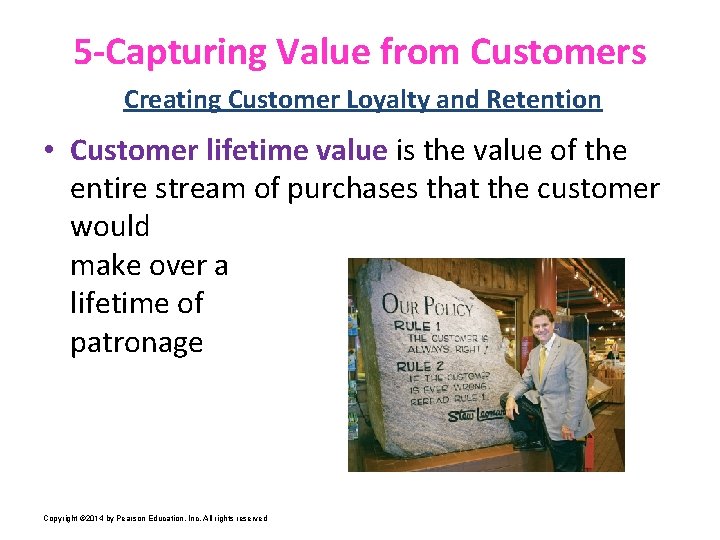
5 -Capturing Value from Customers Creating Customer Loyalty and Retention • Customer lifetime value is the value of the entire stream of purchases that the customer would make over a lifetime of patronage Copyright © 2014 by Pearson Education, Inc. All rights reserved
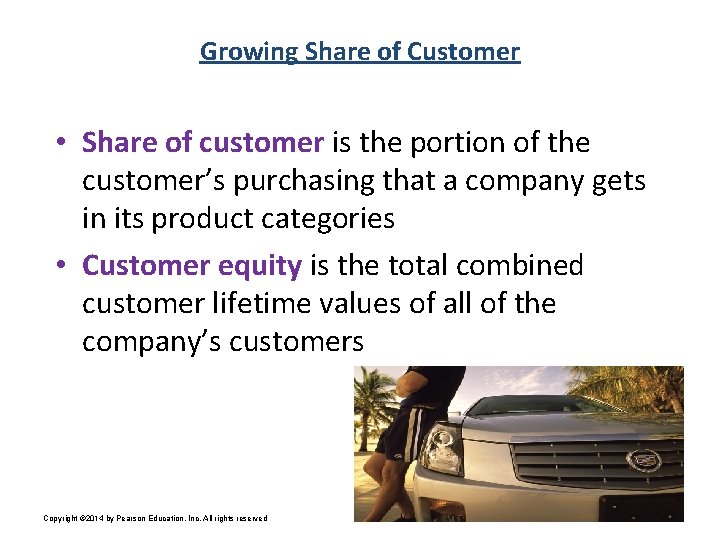
Growing Share of Customer • Share of customer is the portion of the customer’s purchasing that a company gets in its product categories • Customer equity is the total combined customer lifetime values of all of the company’s customers Copyright © 2014 by Pearson Education, Inc. All rights reserved
Building Customer Equity • Right relationships with the right customers involves treating customers as assets that need to be managed and maximized • Different types of customers require different relationship management strategies Copyright © 2014 by Pearson Education, Inc. All rights reserved
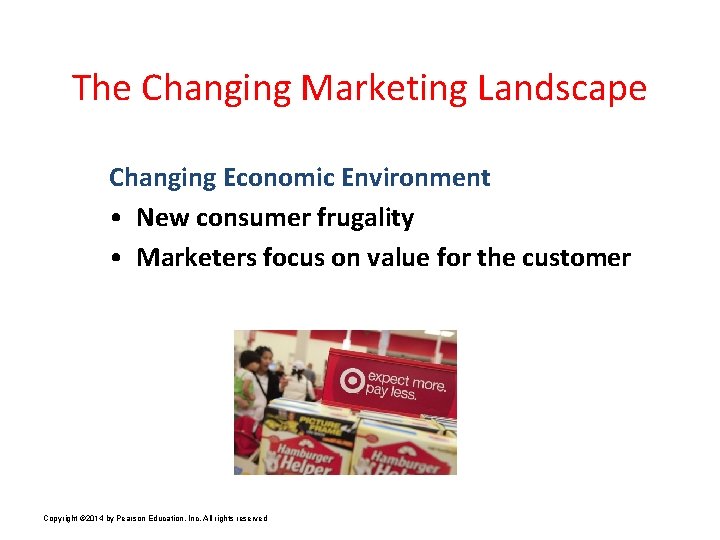
The Changing Marketing Landscape Changing Economic Environment • New consumer frugality • Marketers focus on value for the customer Copyright © 2014 by Pearson Education, Inc. All rights reserved
The Changing Marketing Landscape Digital Age • Online marketing is the fastest-growing • Click- and- mortar companies evolved Copyright © 2014 by Pearson Education, Inc. All rights reserved
The Changing Marketing Landscape • Not-for-profit marketing growth • Rapid Globalization • Sustainable marketing Copyright © 2014 by Pearson Education, Inc. All rights reserved
So, What Is Marketing? Pulling It All Together Copyright © 2014 by Pearson Education, Inc. All rights reserved