
Chapter 1 Marketing Channel Concepts Major Points for
- Slides: 29
Chapter 1 Marketing Channel Concepts
Major Points for Ch. 1 1 Let’s Learn about: 1. Key Terms and Definitions 2. Why Marketing Channels and Intermediaries? ** 3. Marketing Channels and other Marketing Concepts 4. The Flows in the Marketing Channels** 5. Basic Principles for Marketing Channels** 6. Evolution of Marketing Channel Concept
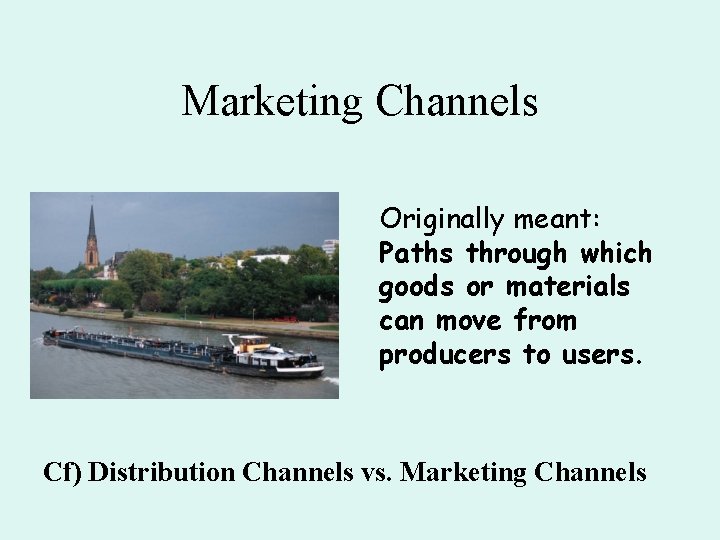
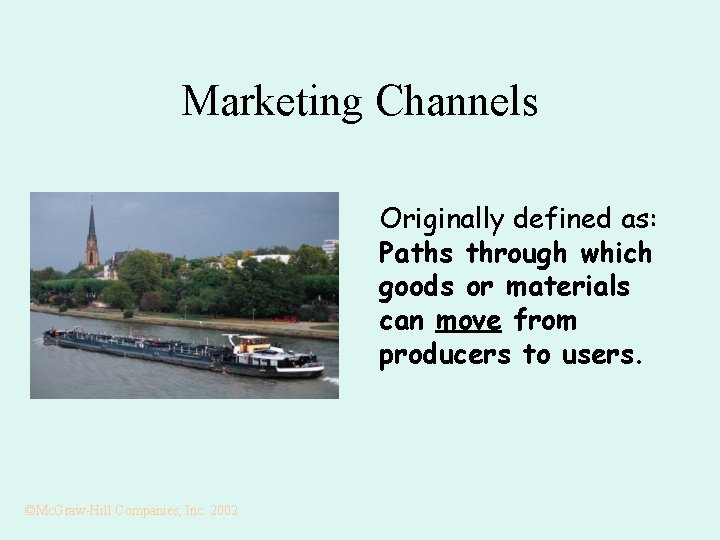
Marketing Channels Originally meant: Paths through which goods or materials can move from producers to users. Cf) Distribution Channels vs. Marketing Channels
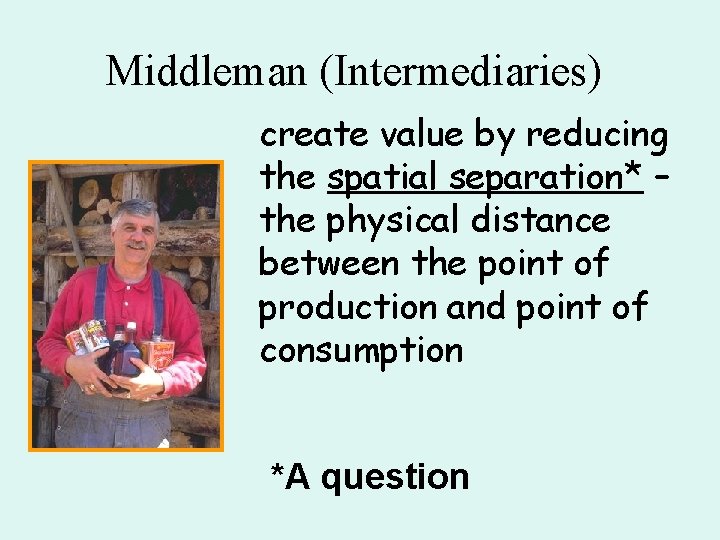
Middleman (Intermediaries) create value by reducing the spatial separation* – the physical distance between the point of production and point of consumption *A question
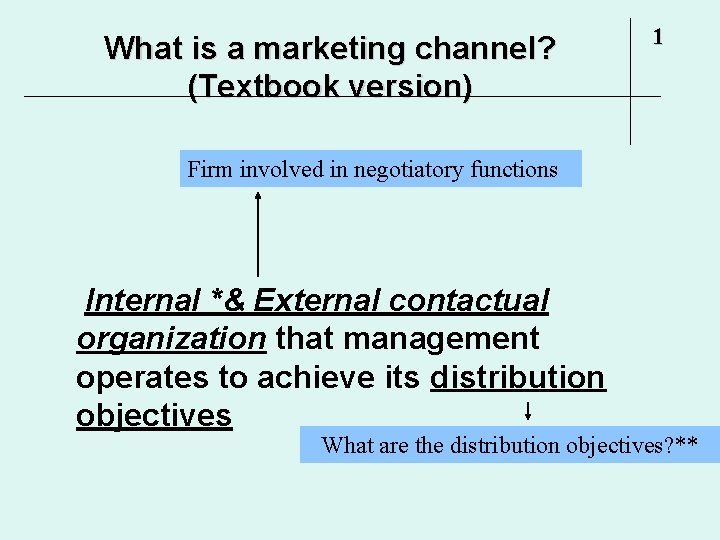
What is a marketing channel? (Textbook version) 1 Firm involved in negotiatory functions Internal *& External contactual organization that management operates to achieve its distribution objectives What are the distribution objectives? **
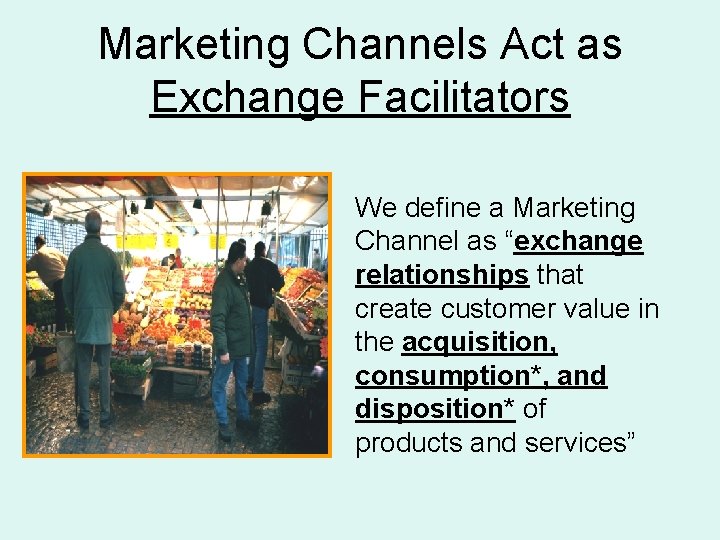
Marketing Channels Act as Exchange Facilitators We define a Marketing Channel as “exchange relationships that create customer value in the acquisition, consumption*, and disposition* of products and services”
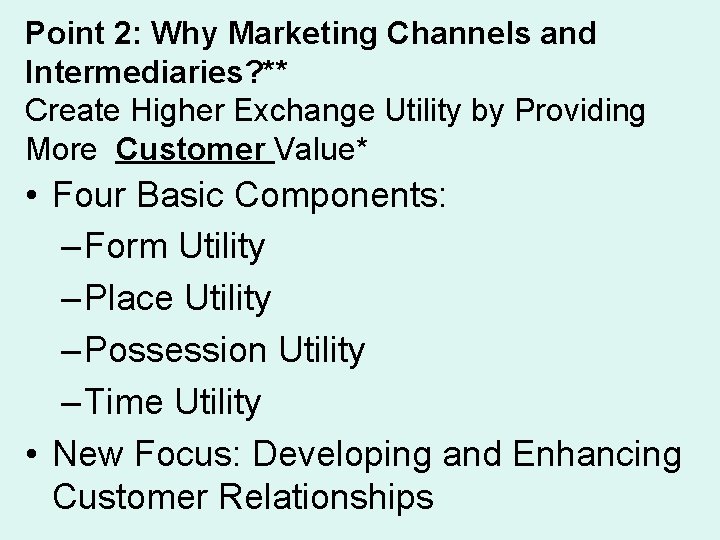
Point 2: Why Marketing Channels and Intermediaries? ** Create Higher Exchange Utility by Providing More Customer Value* • Four Basic Components: – Form Utility – Place Utility – Possession Utility – Time Utility • New Focus: Developing and Enhancing Customer Relationships
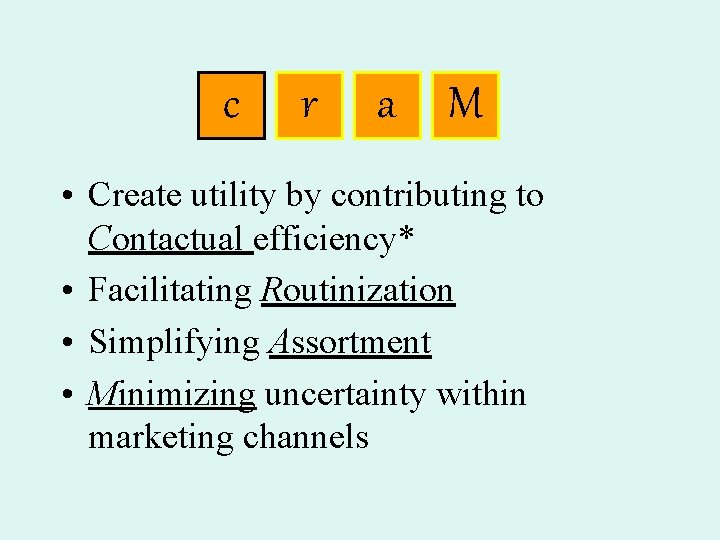
c r a M • Create utility by contributing to Contactual efficiency* • Facilitating Routinization • Simplifying Assortment • Minimizing uncertainty within marketing channels
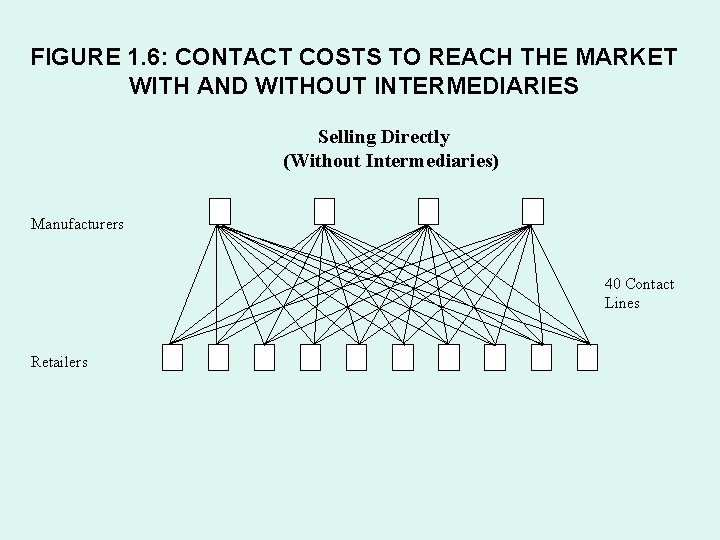
FIGURE 1. 6: CONTACT COSTS TO REACH THE MARKET WITH AND WITHOUT INTERMEDIARIES Selling Directly (Without Intermediaries) Manufacturers 40 Contact Lines Retailers
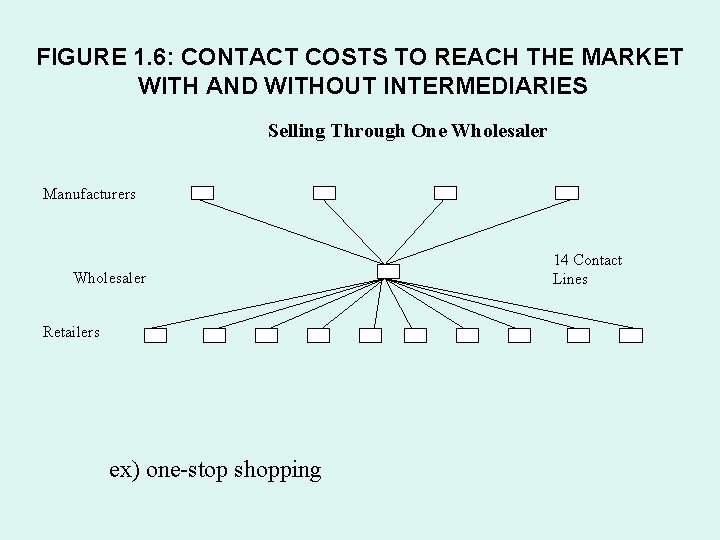
FIGURE 1. 6: CONTACT COSTS TO REACH THE MARKET WITH AND WITHOUT INTERMEDIARIES Selling Through One Wholesaler Manufacturers Wholesaler Retailers ex) one-stop shopping 14 Contact Lines
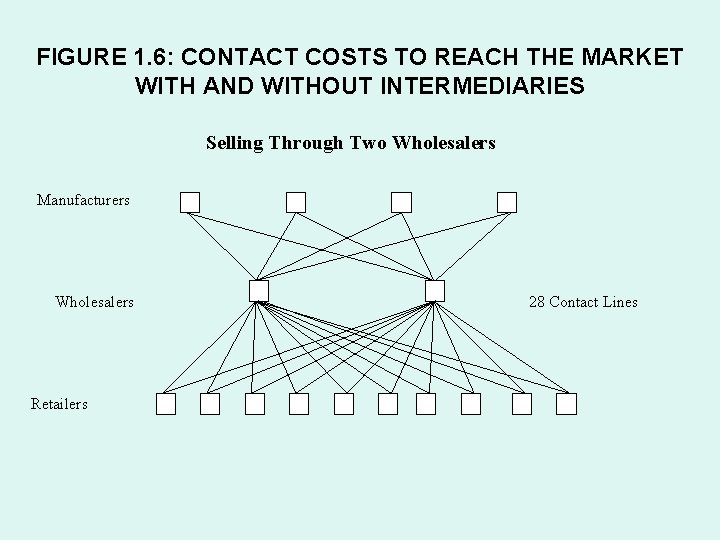
FIGURE 1. 6: CONTACT COSTS TO REACH THE MARKET WITH AND WITHOUT INTERMEDIARIES Selling Through Two Wholesalers Manufacturers Wholesalers Retailers 28 Contact Lines
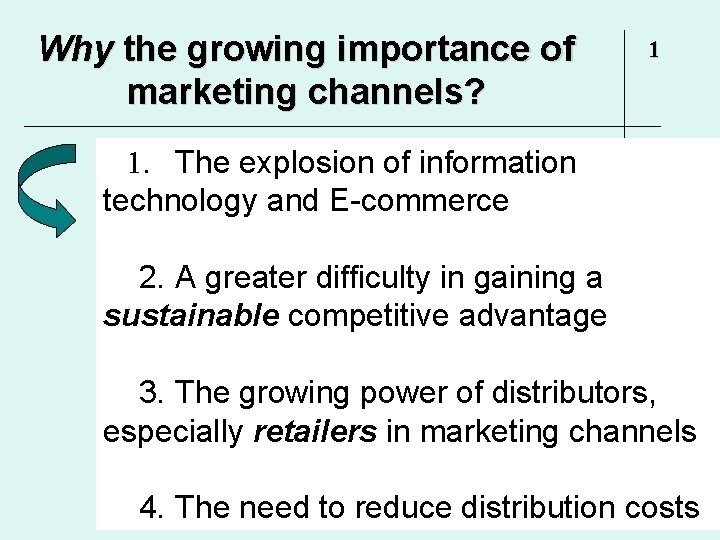
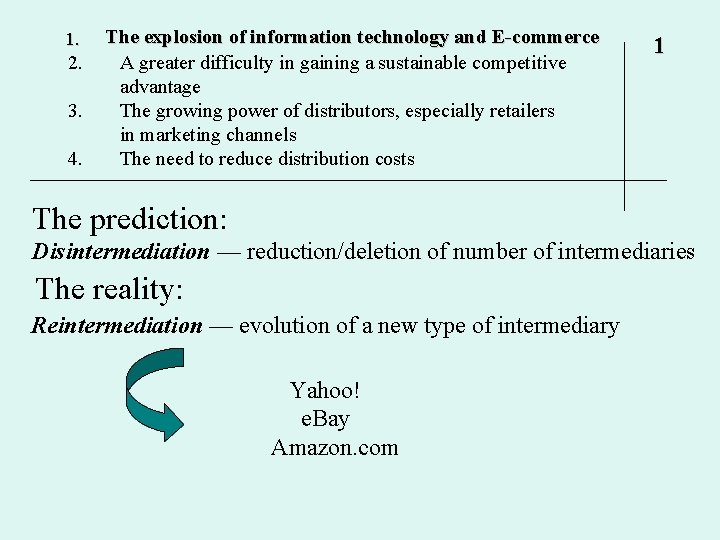
Why the growing importance of marketing channels? 1 The explosion of information technology and E-commerce 1. 2. A greater difficulty in gaining a sustainable competitive advantage 3. The growing power of distributors, especially retailers in marketing channels 4. The need to reduce distribution costs
1. The explosion of information technology and E-commerce 2. 3. 4. A greater difficulty in gaining a sustainable competitive advantage The growing power of distributors, especially retailers in marketing channels The need to reduce distribution costs 1 The prediction: Disintermediation — reduction/deletion of number of intermediaries The reality: Reintermediation — evolution of a new type of intermediary Yahoo! e. Bay Amazon. com
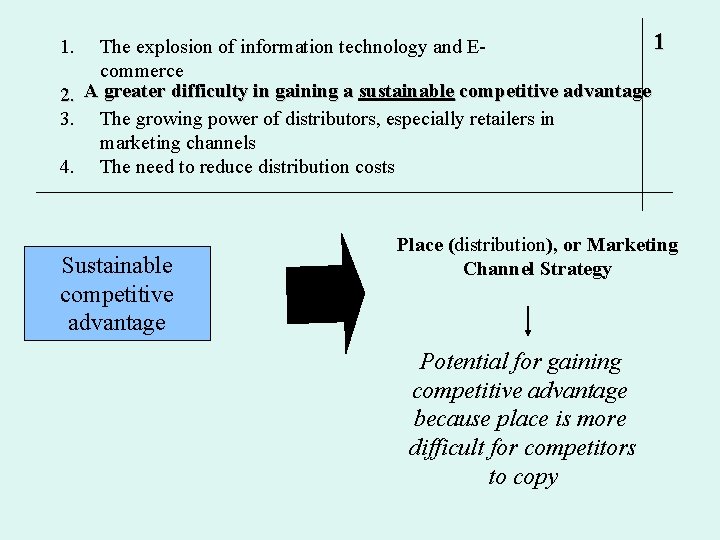
1. The explosion of information technology and E- 1 commerce 2. A greater difficulty in gaining a sustainable competitive advantage 3. The growing power of distributors, especially retailers in marketing channels 4. The need to reduce distribution costs Sustainable competitive advantage Place (distribution), or Marketing Channel Strategy Potential for gaining competitive advantage because place is more difficult for competitors to copy
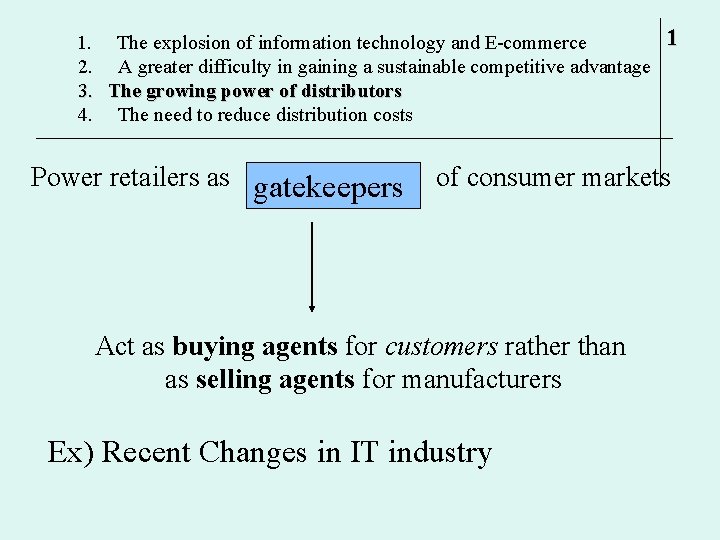
1. The explosion of information technology and E-commerce 1 2. A greater difficulty in gaining a sustainable competitive advantage 3. The growing power of distributors 4. The need to reduce distribution costs Power retailers as of consumer markets gatekeepers Act as buying agents for customers rather than as selling agents for manufacturers Ex) Recent Changes in IT industry
1. The explosion of information technology and E-commerce 2. A greater difficulty in gaining a sustainable competitive advantage 3. The growing power of distributors 4. The need to reduce distribution costs Marketing channels are the most recent target for reducing distribution costs. The focus is on channel structure and management. 1
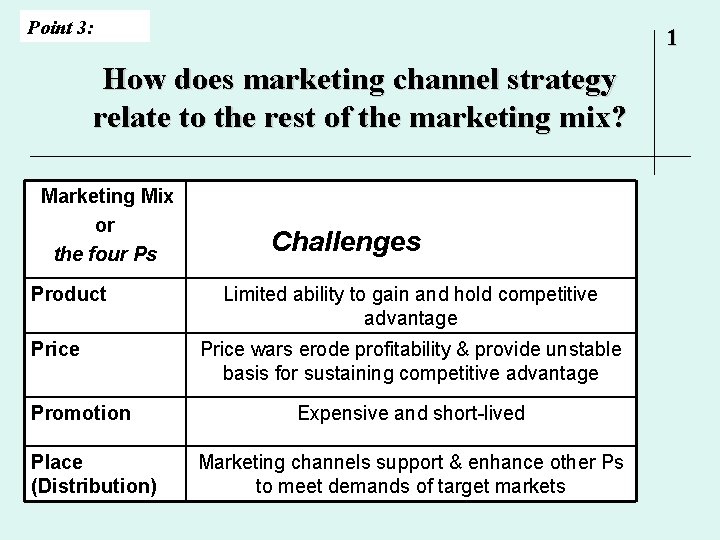
Point 3: 1 How does marketing channel strategy relate to the rest of the marketing mix? Marketing Mix or the four Ps Product Price Promotion Place (Distribution) Challenges Limited ability to gain and hold competitive advantage Price wars erode profitability & provide unstable basis for sustaining competitive advantage Expensive and short-lived Marketing channels support & enhance other Ps to meet demands of target markets
Marketing Channels Originally defined as: Paths through which goods or materials can move from producers to users. ©Mc. Graw-Hill Companies, Inc. 2002
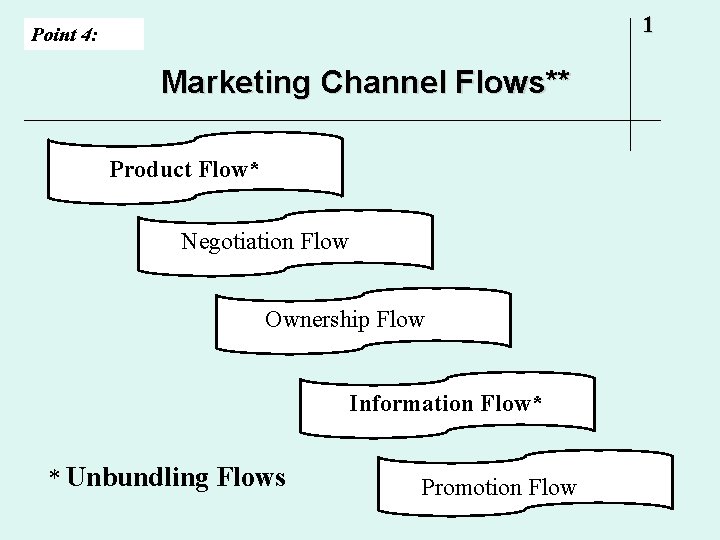
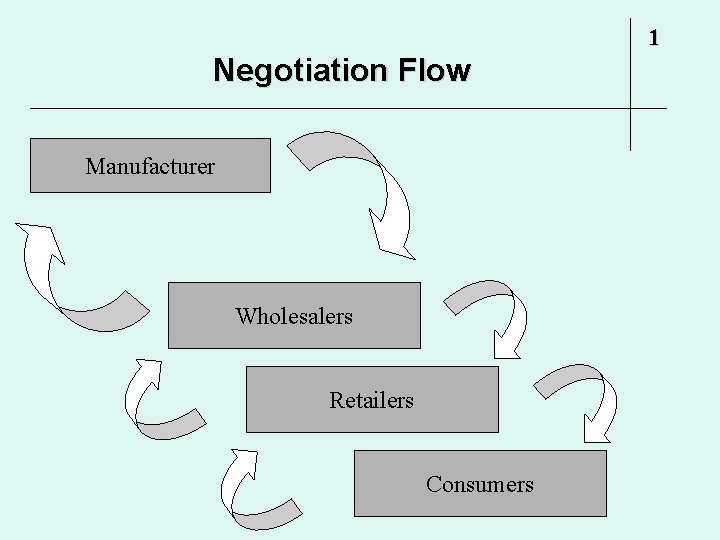
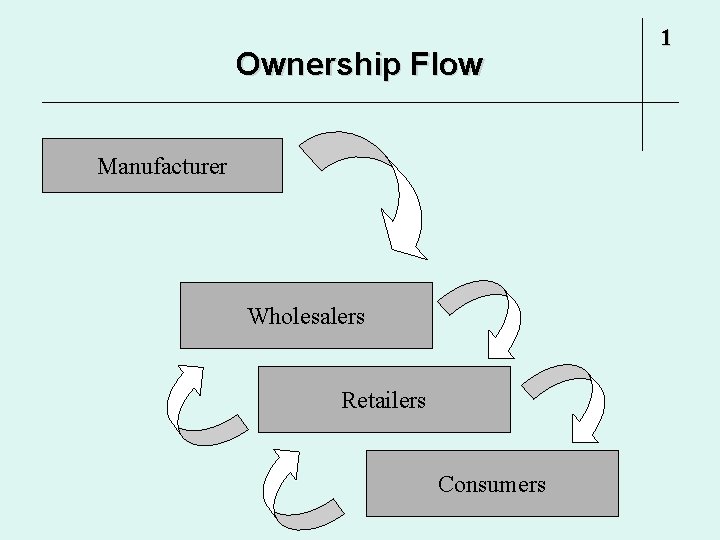
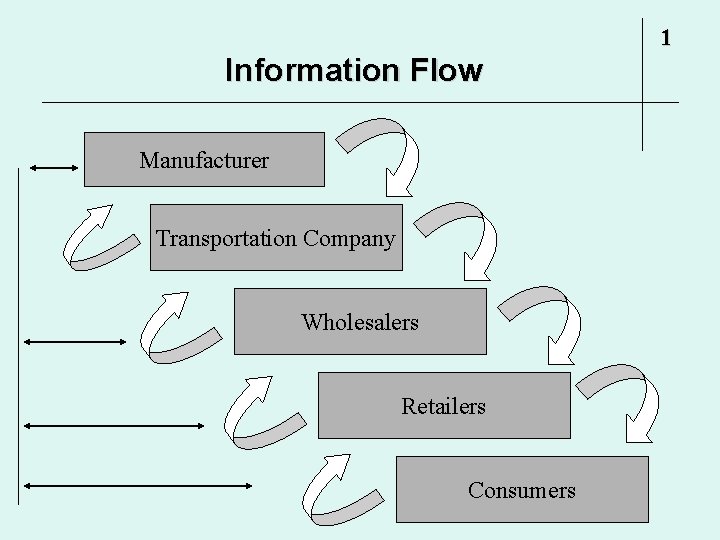
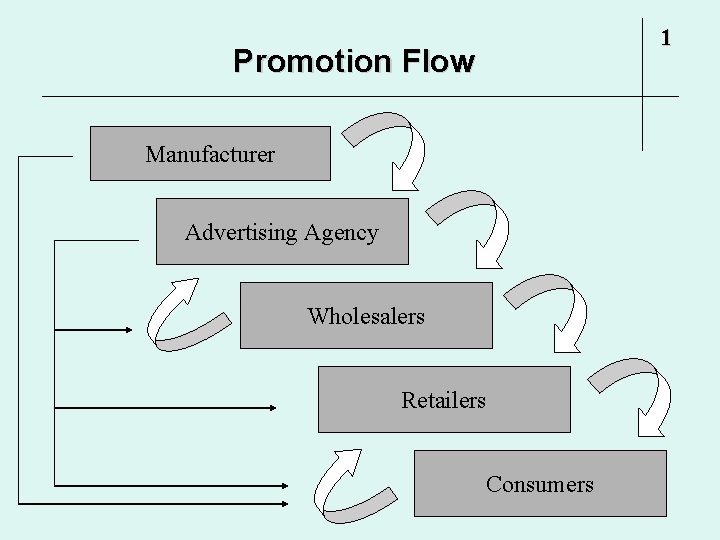
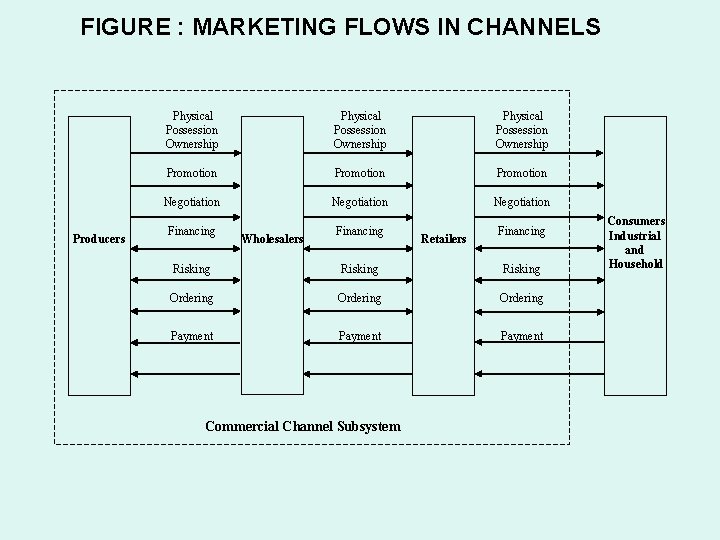
1 Point 4: Marketing Channel Flows** Product Flow* Negotiation Flow Ownership Flow Information Flow* * Unbundling Flows Promotion Flow
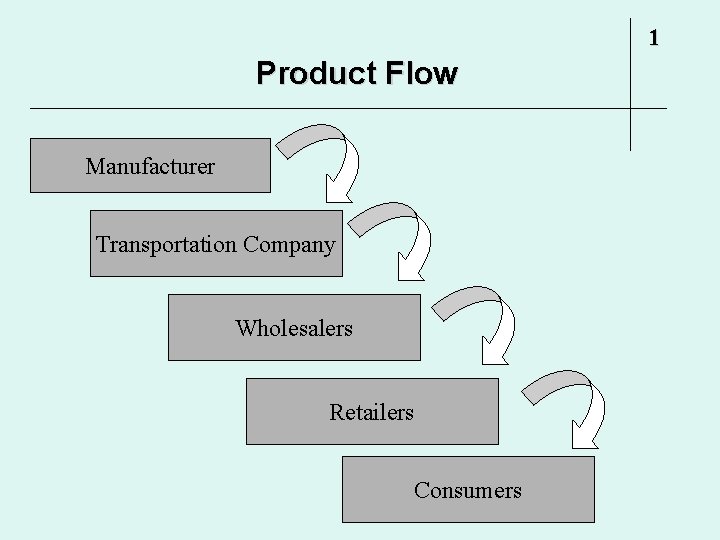
1 Product Flow Manufacturer Transportation Company Wholesalers Retailers Consumers
1 Negotiation Flow Manufacturer Wholesalers Retailers Consumers
Ownership Flow Manufacturer Wholesalers Retailers Consumers 1
1 Information Flow Manufacturer Transportation Company Wholesalers Retailers Consumers
1 Promotion Flow Manufacturer Advertising Agency Wholesalers Retailers Consumers
FIGURE : MARKETING FLOWS IN CHANNELS Producers Physical Possession Ownership Promotion Negotiation Financing Wholesalers Retailers Risking Ordering Payment Commercial Channel Subsystem Consumers Industrial and Household
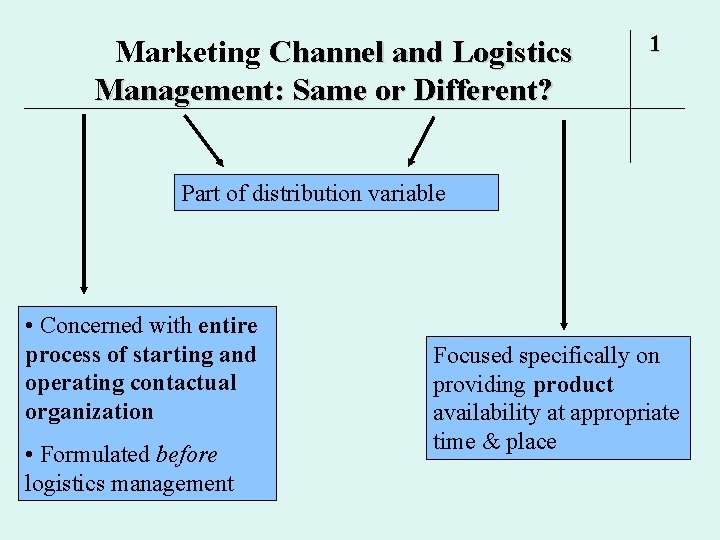
Marketing Channel and Logistics Management: Same or Different? 1 Part of distribution variable • Concerned with entire process of starting and operating contactual organization • Formulated before logistics management Focused specifically on providing product availability at appropriate time & place
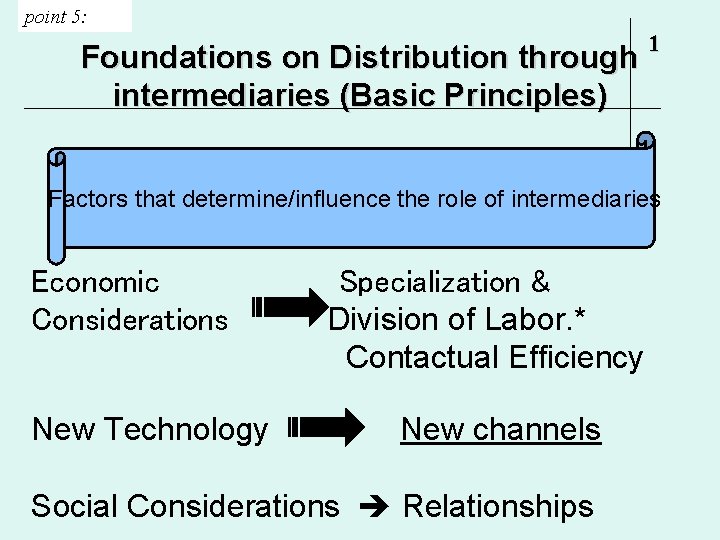
point 5: Foundations on Distribution through intermediaries (Basic Principles) 1 Factors that determine/influence the role of intermediaries Economic Considerations New Technology Specialization & Division of Labor. * Contactual Efficiency New channels Social Considerations Relationships
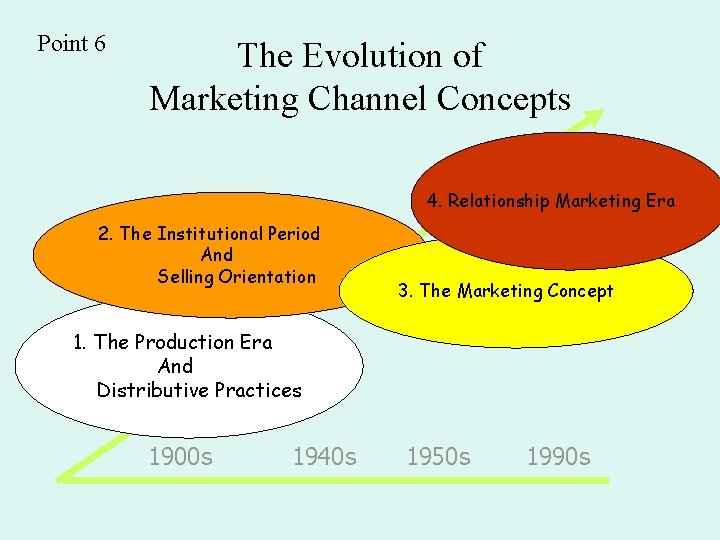
Point 6 The Evolution of Marketing Channel Concepts 4. Relationship Marketing Era 2. The Institutional Period And Selling Orientation 3. The Marketing Concept 1. The Production Era And Distributive Practices 1900 s 1940 s 1950 s 1990 s
1 The change of focus on channel strategy • Creates competitive advantage with long-term viability • Builds strong relationships between manufacturers and (selected) channel members • Use of Multichannel Strategy • IT-enabled, open channel systems