
Chapter 1 Living Organisms How are living things
- Slides: 20
Chapter 1 Living Organisms
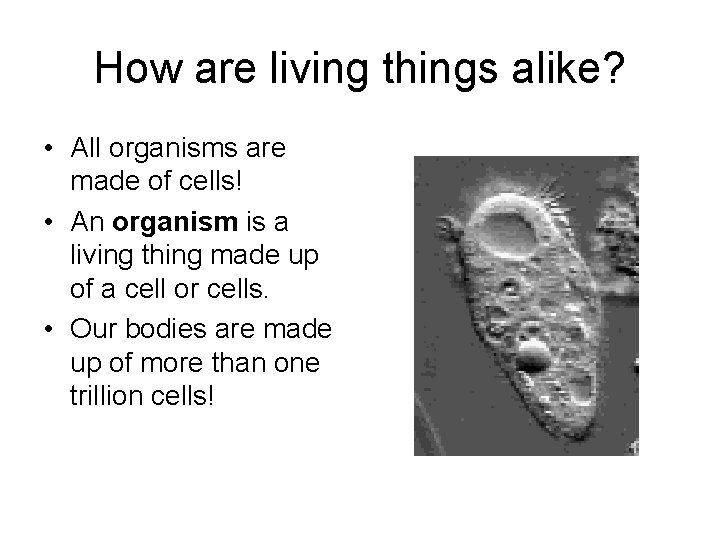
How are living things alike? • All organisms are made of cells! • An organism is a living thing made up of a cell or cells. • Our bodies are made up of more than one trillion cells!
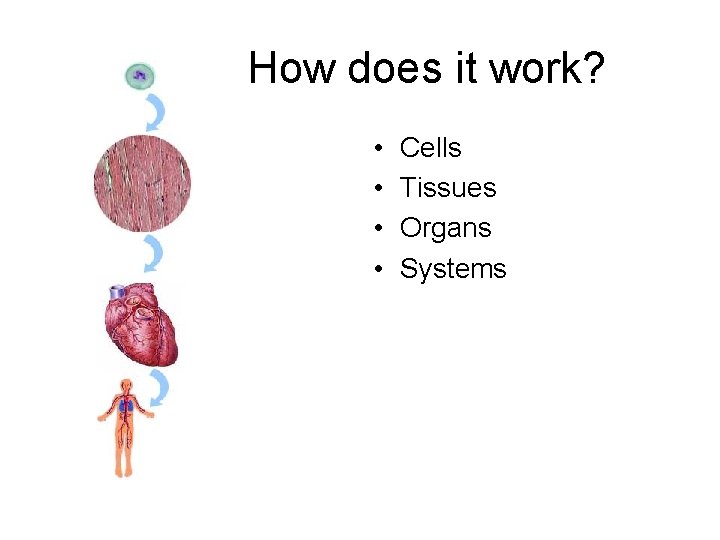
How does it work? • • Cells Tissues Organs Systems
What is a life process? • A life process is a function that living things must perform in order to stay alive. • There are 6 life processes! • 1. Getting energy and nutrients. • 2. Using energy. • 3. Reproducing. • 4. Growing. • 5. Getting rid of wastes. • 6. Reacting to outside changes.
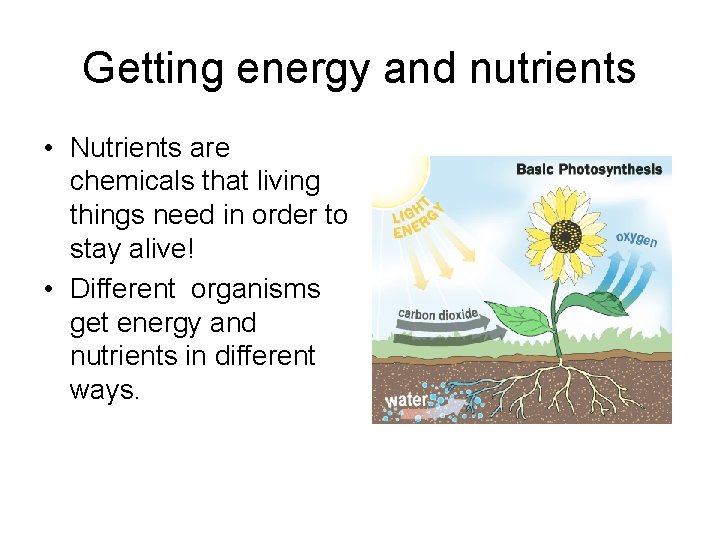
Getting energy and nutrients • Nutrients are chemicals that living things need in order to stay alive! • Different organisms get energy and nutrients in different ways.
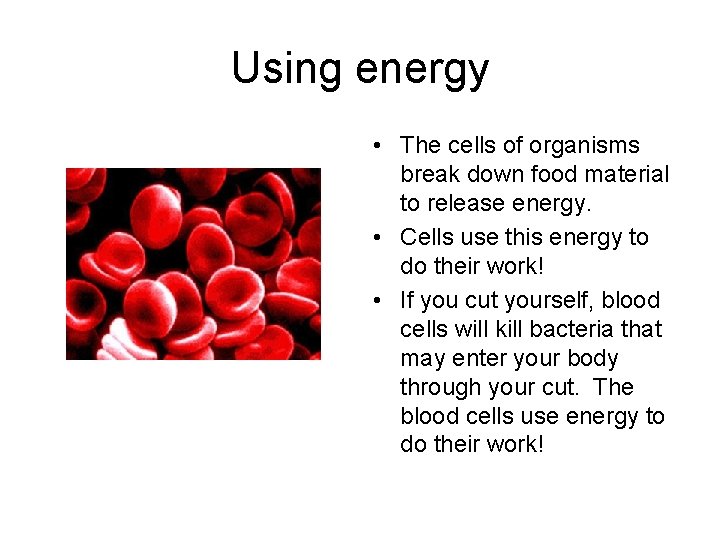
Using energy • The cells of organisms break down food material to release energy. • Cells use this energy to do their work! • If you cut yourself, blood cells will kill bacteria that may enter your body through your cut. The blood cells use energy to do their work!
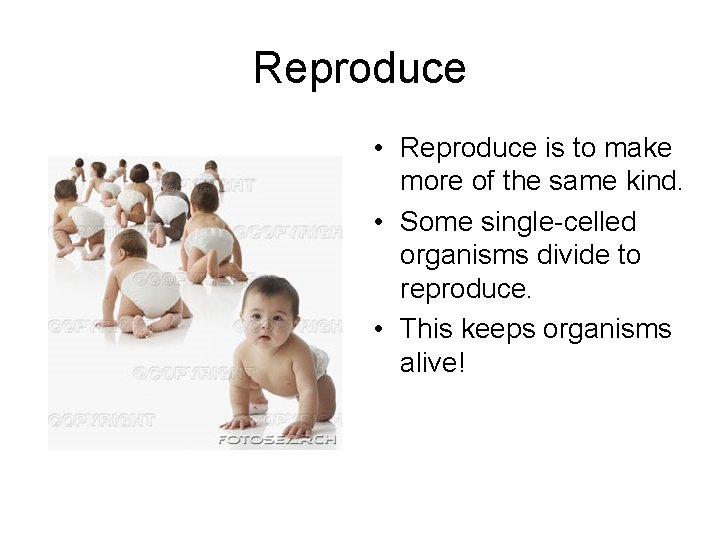
Reproduce • Reproduce is to make more of the same kind. • Some single-celled organisms divide to reproduce. • This keeps organisms alive!
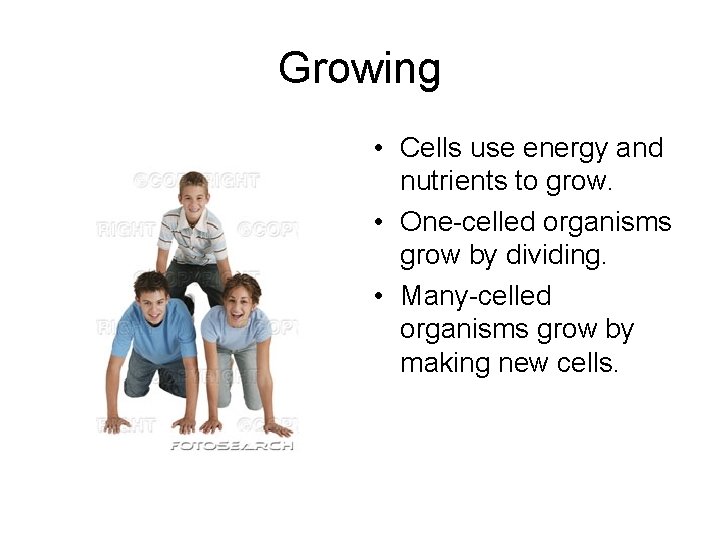
Growing • Cells use energy and nutrients to grow. • One-celled organisms grow by dividing. • Many-celled organisms grow by making new cells.
Getting rid of wastes • As an organism’s cells do work, the cells make different kinds of waste. • Some of these wastes are poison and need to be released in order to stay alive!
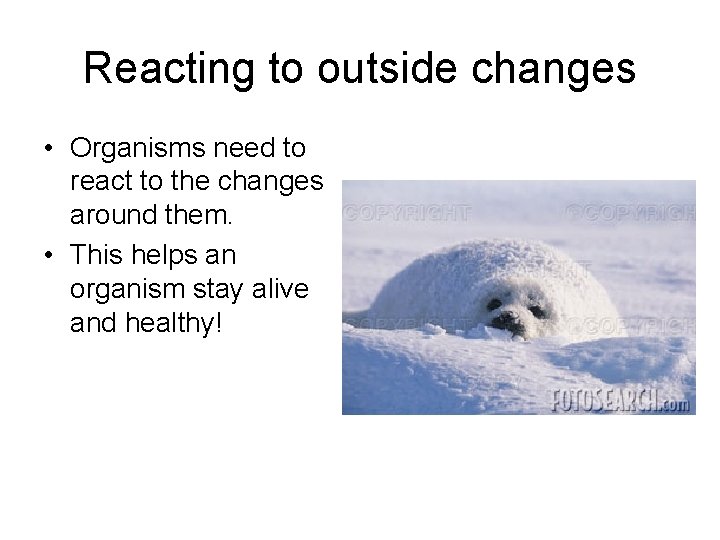
Reacting to outside changes • Organisms need to react to the changes around them. • This helps an organism stay alive and healthy!
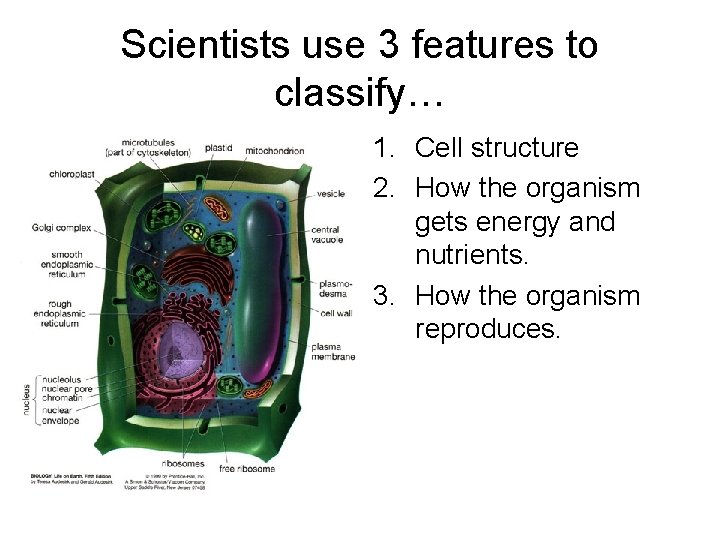
Scientists use 3 features to classify… 1. Cell structure 2. How the organism gets energy and nutrients. 3. How the organism reproduces.
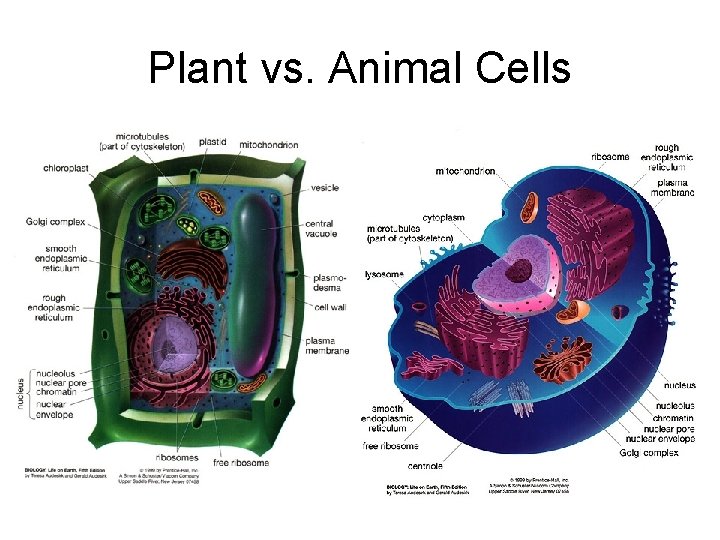
Plant vs. Animal Cells
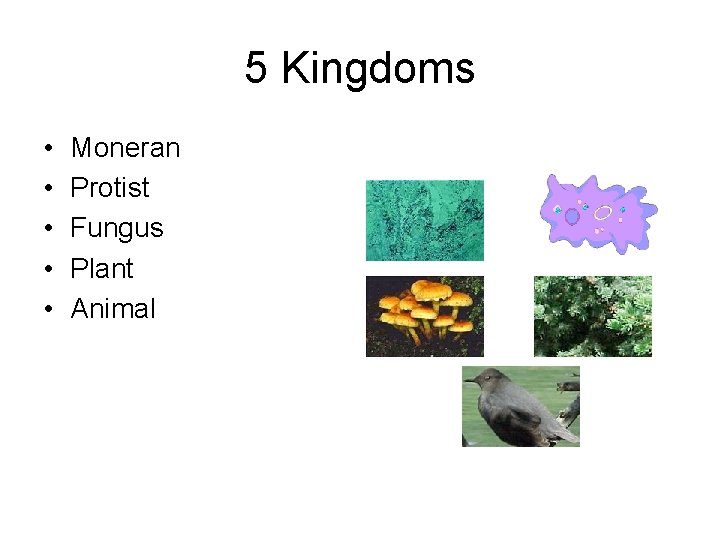
5 Kingdoms • • • Moneran Protist Fungus Plant Animal
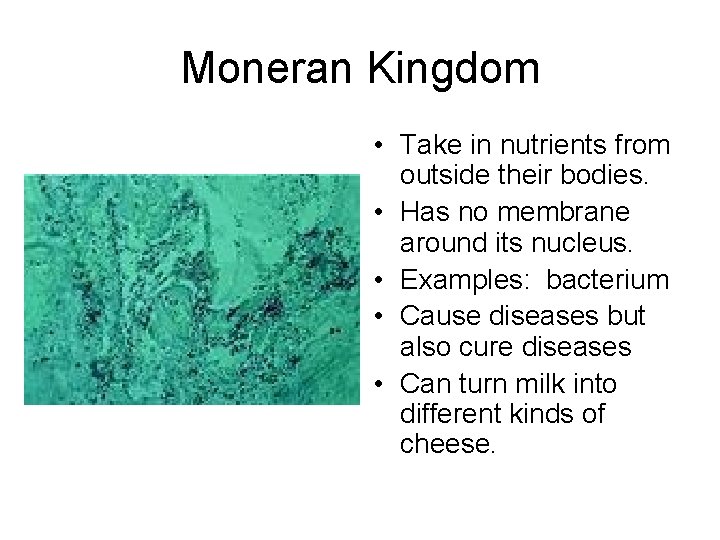
Moneran Kingdom • Take in nutrients from outside their bodies. • Has no membrane around its nucleus. • Examples: bacterium • Cause diseases but also cure diseases • Can turn milk into different kinds of cheese.
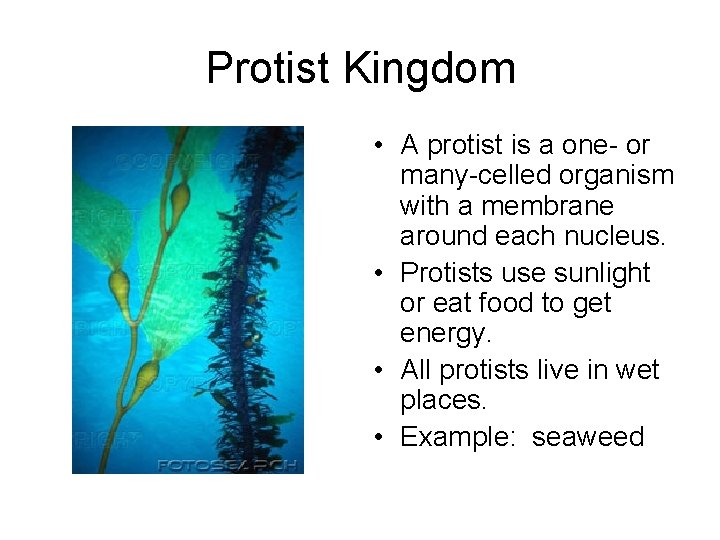
Protist Kingdom • A protist is a one- or many-celled organism with a membrane around each nucleus. • Protists use sunlight or eat food to get energy. • All protists live in wet places. • Example: seaweed
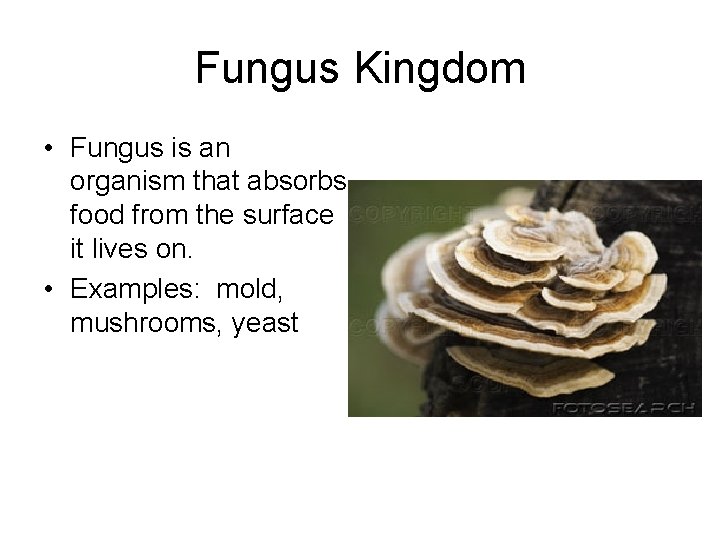
Fungus Kingdom • Fungus is an organism that absorbs food from the surface it lives on. • Examples: mold, mushrooms, yeast
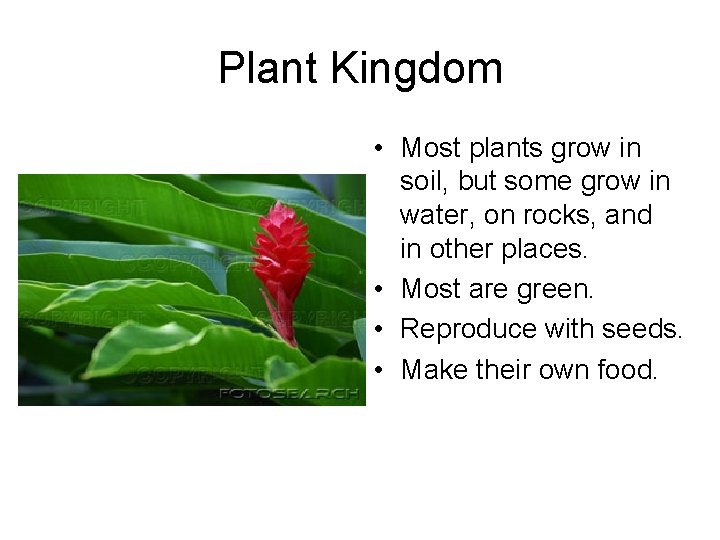
Plant Kingdom • Most plants grow in soil, but some grow in water, on rocks, and in other places. • Most are green. • Reproduce with seeds. • Make their own food.
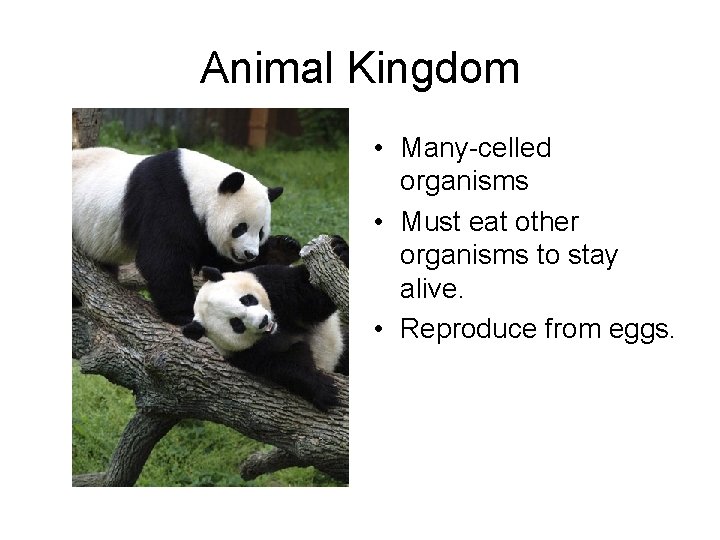
Animal Kingdom • Many-celled organisms • Must eat other organisms to stay alive. • Reproduce from eggs.
Dividing Kingdoms into Smaller Groups • KINGDOM • GENUS (GENERAL) • SPECIES (SPECIFIC) As each group gets smaller, the organisms have more in common!
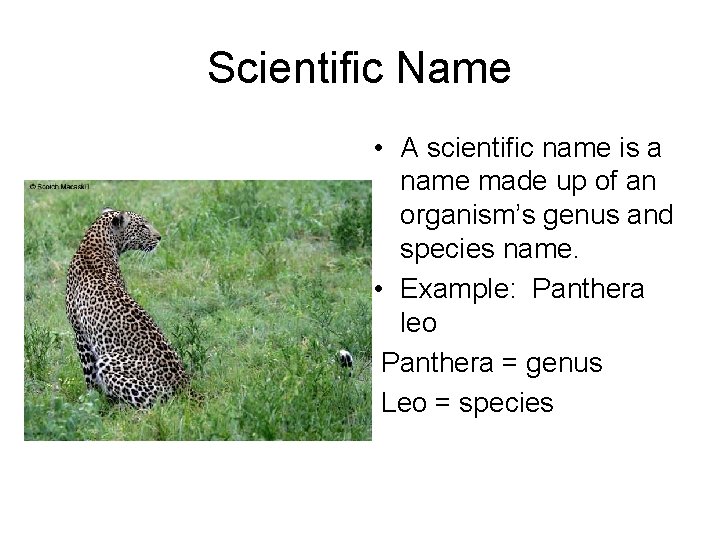
Scientific Name • A scientific name is a name made up of an organism’s genus and species name. • Example: Panthera leo Panthera = genus Leo = species