
Chapter 1 Lecture Pearson Physics Introduction to Physics

- Slides: 23
Chapter 1 Lecture Pearson Physics Introduction to Physics Prepared by Chris Chiaverina © 2014 Pearson Education, Inc.
Physics and the Scientific Method • Physics is a study of the fundamental laws of nature. • In fact, everything in nature—from atoms and subatomic particles to solar systems and galaxies—obeys the laws of physics. © 2014 Pearson Education, Inc.
Physics and the Scientific Method • The systematic approach scientists use to learn about the laws of nature is referred to as the scientific method. • The scientific method has certain steps that are taken when conducting a scientific study. These steps are as follows: • 1. state the question 2. collect information • 3. form hypothesis 4. test hypothesis • 5. observations 6. record and study data • 7. draw conclusion(was your hypothesis right? ) © 2014 Pearson Education, Inc.
Physics and the Scientific Method • A scientific theory is a detailed explanation of some aspect of nature that accounts for a set of • Example-big bang theory • laws of nature—like the law of the conservation of energy—are well supported descriptions of nature. © 2014 Pearson Education, Inc.
Physics and Society • A scientific research project can last months or even years. Once it is complete, the next step is to publish the results to make them known to the scientific community. • Respected scientific journals don't publish every report or paper that is submitted to them. Before a report can be published, it must undergo peer review. Peer review means that a report is sent to several experts in the field so that they can look for errors, biases, and oversights. Only after being recommended for publication by these experts can the report be published. © 2014 Pearson Education, Inc.
Physics and Society • To aid in collaboration and verification, scientists have developed a system of measurement referred to as the metric system. Scientists throughout the world use this system when collecting data and performing experiments. © 2014 Pearson Education, Inc.
Units and Dimensions • Measurements involve units. The standard "measuring stick" for a physical quantity is referred to as its base unit. • The base unit of length is the meter (abbreviated m). The base units of time and mass are the second (abbreviated s) and the kilogram (abbreviated kg), respectively. © 2014 Pearson Education, Inc.
Units and Dimensions • Weight and mass are quite different quantities. Mass is an intrinsic, unchanging property of an object. Weight, in contrast, is a measure of the gravitational force acting on an object and varies depending on the object's location. © 2014 Pearson Education, Inc.
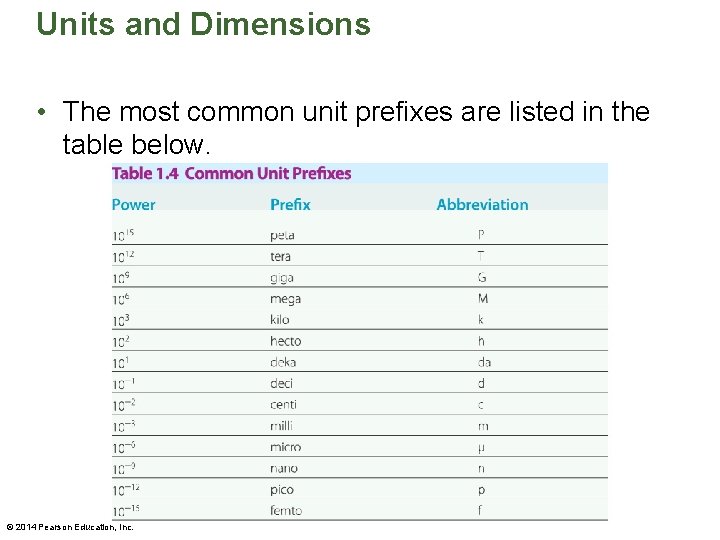
Units and Dimensions • Prefixes are used to designate common multiples the SI basic units in powers of 10. • For example, prefix kilo (abbreviated k) means one thousand, or equivalently 103. Thus, 1 kilogram is the same as 1000 grams or 103 grams. 1 kg =103 grams • Similarly, the prefix milli (abbreviated m) means one thousandth, or 10− 3. Thus, 1 millimeter (mm) is the same as 0. 001 m, or 10− 3 meter. 1 mm = 10− 3 m © 2014 Pearson Education, Inc.
Units and Dimensions • The most common unit prefixes are listed in the table below. © 2014 Pearson Education, Inc.
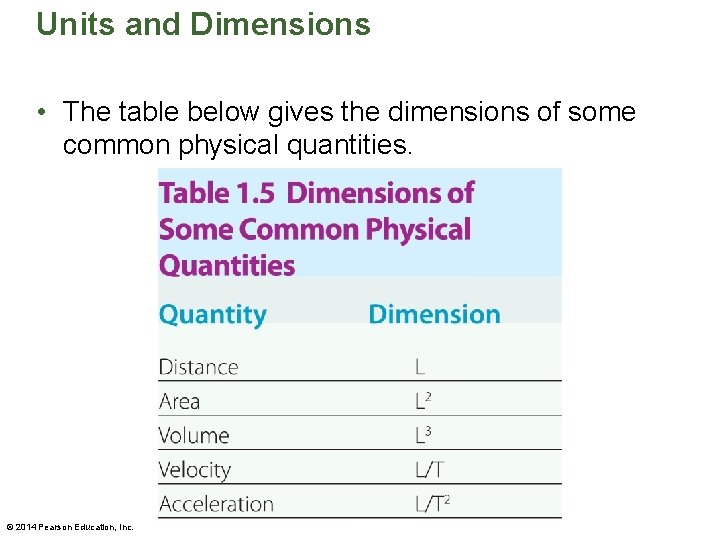
Units and Dimensions • The table below gives the dimensions of some common physical quantities. © 2014 Pearson Education, Inc.
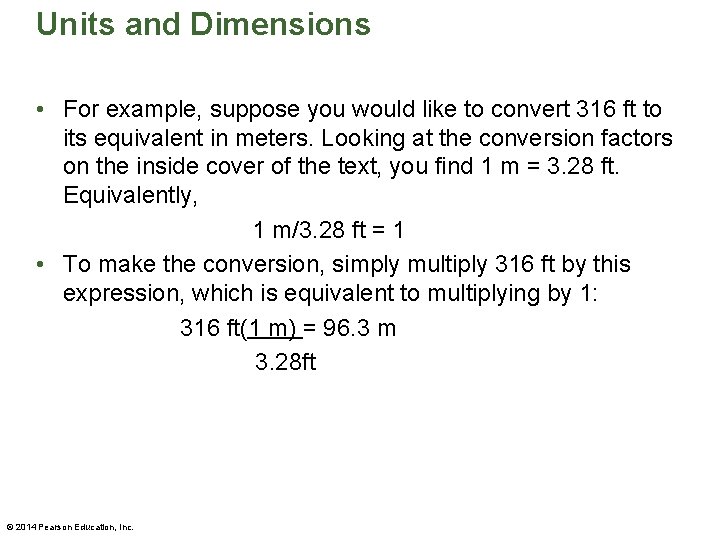
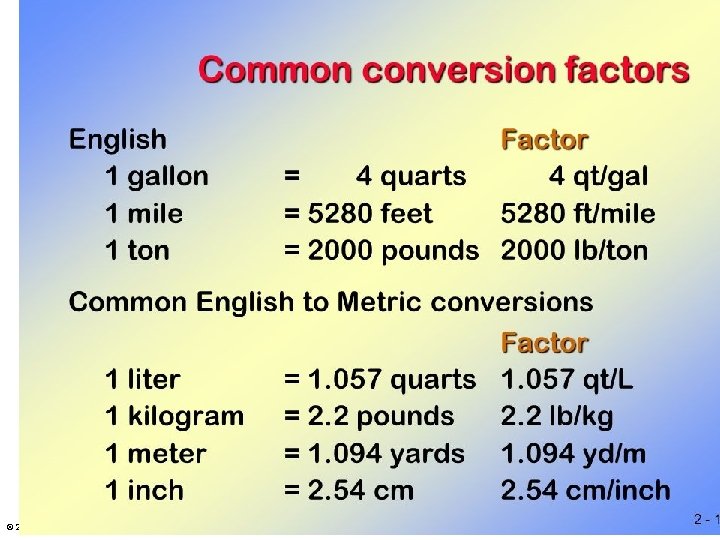
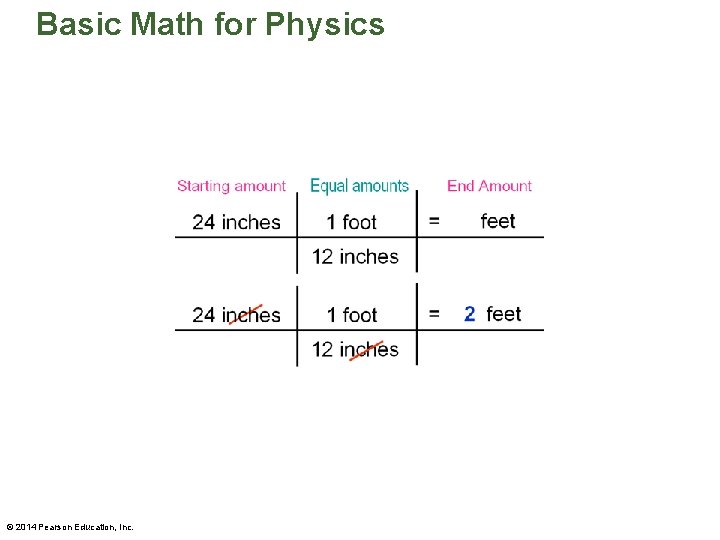
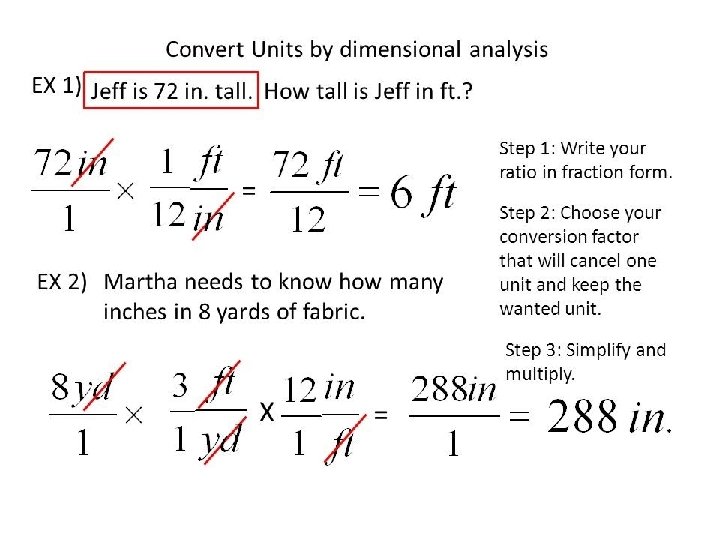
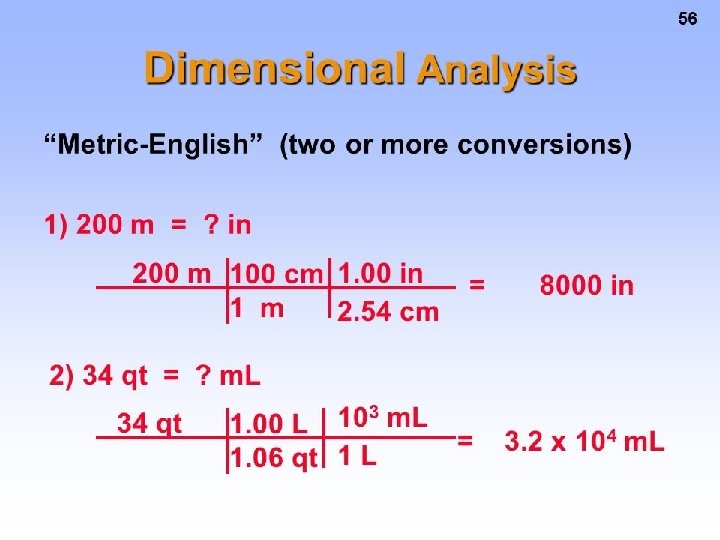
Units and Dimensions • For example, suppose you would like to convert 316 ft to its equivalent in meters. Looking at the conversion factors on the inside cover of the text, you find 1 m = 3. 28 ft. Equivalently, 1 m/3. 28 ft = 1 • To make the conversion, simply multiply 316 ft by this expression, which is equivalent to multiplying by 1: 316 ft(1 m) = 96. 3 m 3. 28 ft © 2014 Pearson Education, Inc.
conversions © 2014 Pearson Education, Inc.
Basic Math for Physics © 2014 Pearson Education, Inc.
Basic Math for Physics © 2014 Pearson Education, Inc.
Basic Math for Physics © 2014 Pearson Education, Inc.
Basic Math for Physics © 2014 Pearson Education, Inc.
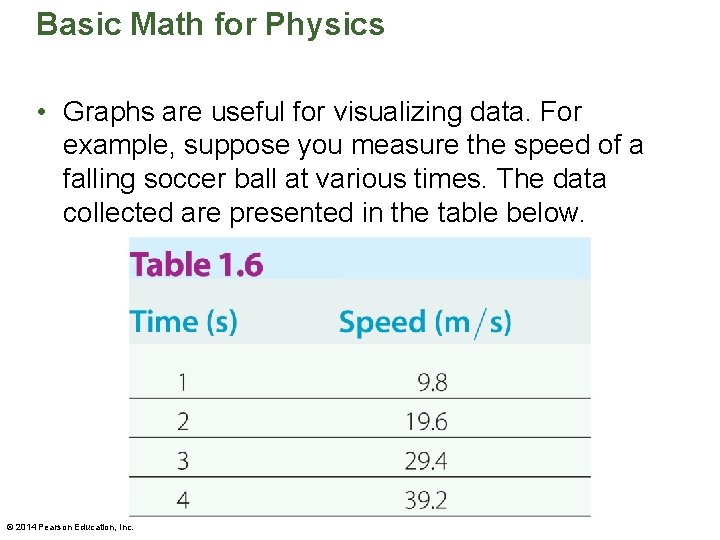
Basic Math for Physics • Graphs are useful for visualizing data. For example, suppose you measure the speed of a falling soccer ball at various times. The data collected are presented in the table below. © 2014 Pearson Education, Inc.
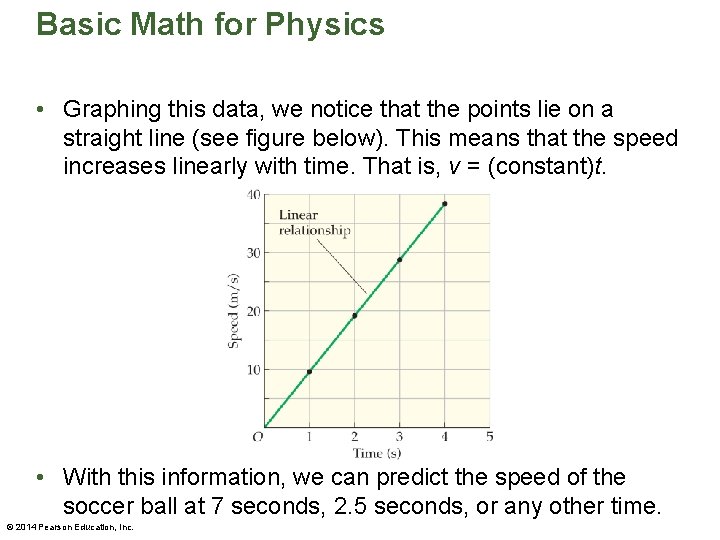
Basic Math for Physics • Graphing this data, we notice that the points lie on a straight line (see figure below). This means that the speed increases linearly with time. That is, v = (constant)t. • With this information, we can predict the speed of the soccer ball at 7 seconds, 2. 5 seconds, or any other time. © 2014 Pearson Education, Inc.
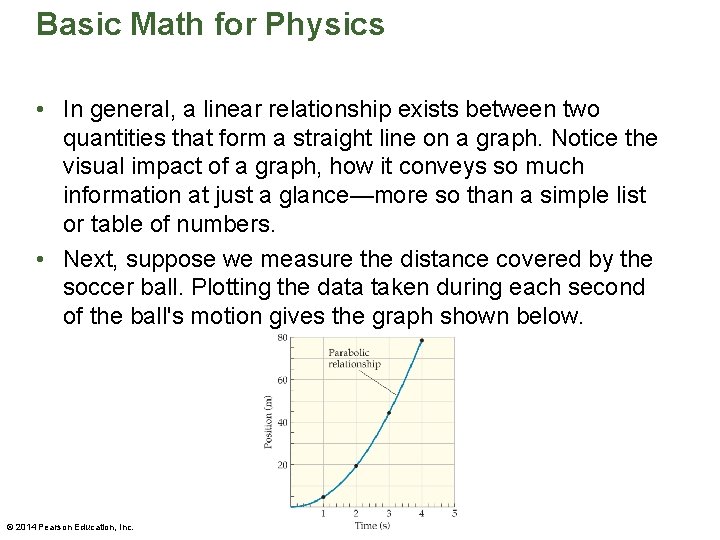
Basic Math for Physics • In general, a linear relationship exists between two quantities that form a straight line on a graph. Notice the visual impact of a graph, how it conveys so much information at just a glance—more so than a simple list or table of numbers. • Next, suppose we measure the distance covered by the soccer ball. Plotting the data taken during each second of the ball's motion gives the graph shown below. © 2014 Pearson Education, Inc.
Basic Math for Physics • In this case, the graph is not linear. The upwardcurving shape shown on the graph is a parabola. This shape indicates that the position depends on the time squared. That is, position = constant x time x = (constant)t 2 © 2014 Pearson Education, Inc.
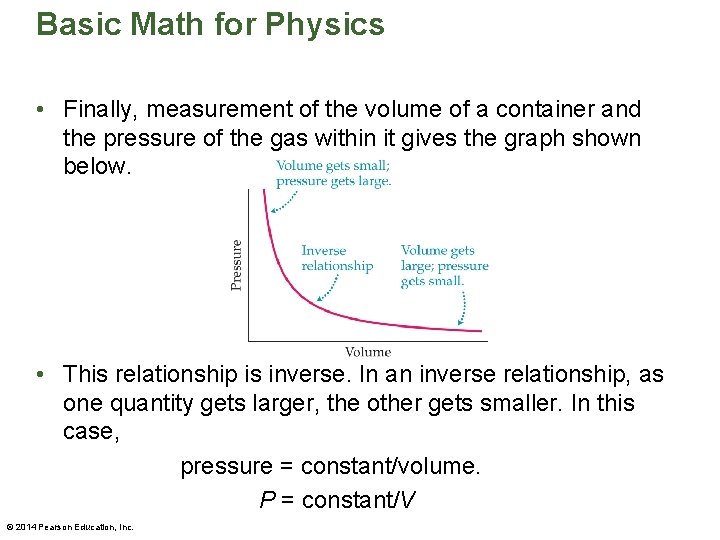
Basic Math for Physics • Finally, measurement of the volume of a container and the pressure of the gas within it gives the graph shown below. • This relationship is inverse. In an inverse relationship, as one quantity gets larger, the other gets smaller. In this case, pressure = constant/volume. P = constant/V © 2014 Pearson Education, Inc.
Basic Math for Physics • Quantities known as scalars are represented by a number with a unit. • Examples of scalars include temperature of an ice cube (− 10 C) and the speed of a car (25 m/s). • Speed is a scalar quantity that describes the rate of motion. • Other quantities, known as vectors, consist of a numerical value with its unit and a direction. • For example, when the speed of a car (25 m/s) is combined with a direction of travel (north), the result is a vector (25 m/s north). • Velocity describes the rate of motion and the direction of motion. © 2014 Pearson Education, Inc.