
Chapter 1 Introduction to Science Section 1 The
- Slides: 23
Chapter 1: Introduction to Science
Section 1: The Nature of Science By the end of this section, you should be able to: – Describe the main branches of natural science and relate them to each other. – Describe the relationship between science and technology. – Distinguish between scientific laws and scientific theories – Explain the roles of models and mathematics in scientific theories and laws.
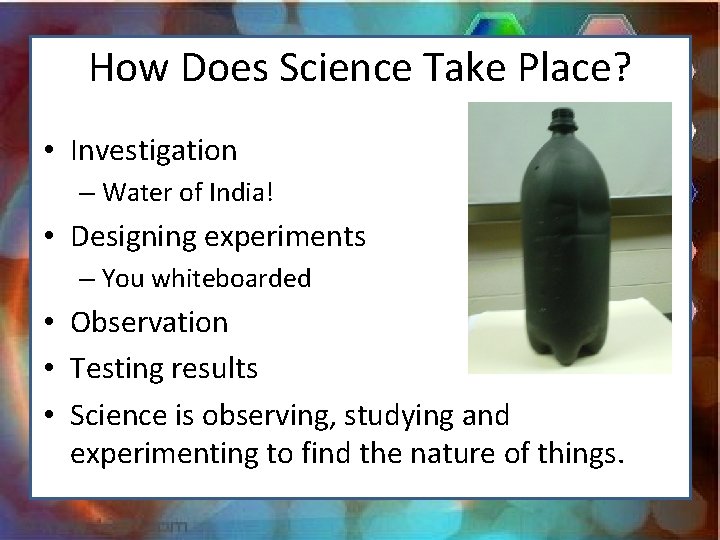
How Does Science Take Place? • Investigation – Water of India! • Designing experiments – You whiteboarded • Observation • Testing results • Science is observing, studying and experimenting to find the nature of things.
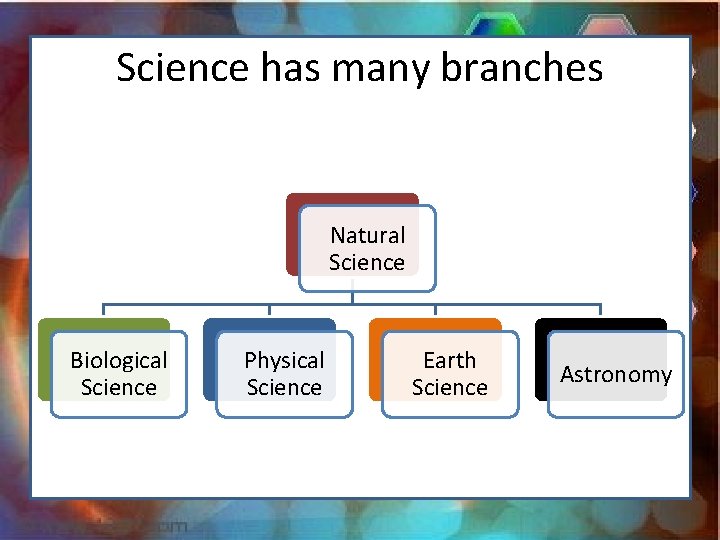
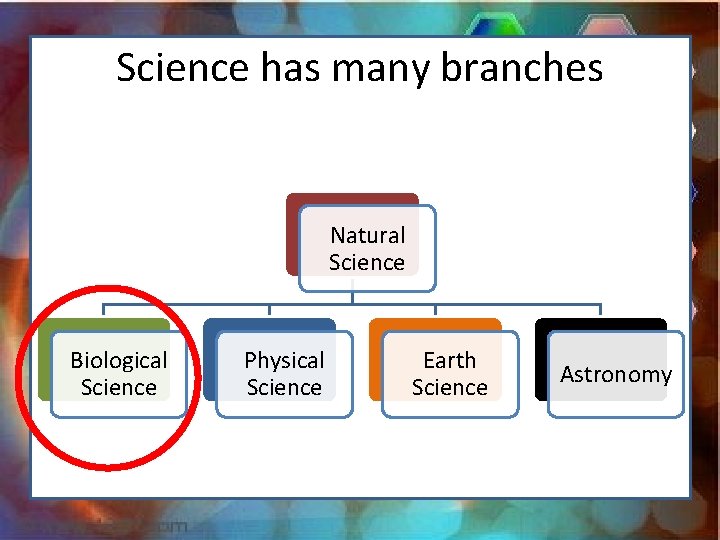
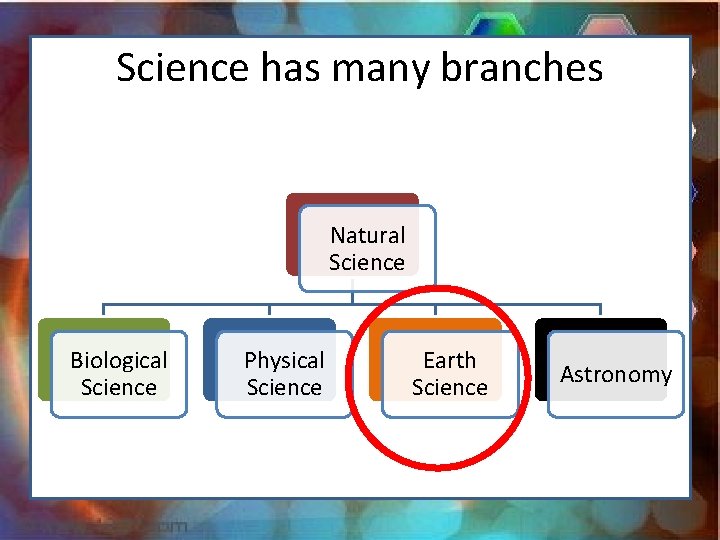
Science has many branches Natural Science Biological Science Physical Science Earth Science Astronomy
Science has many branches Natural Science Biological Science Physical Science Earth Science Astronomy
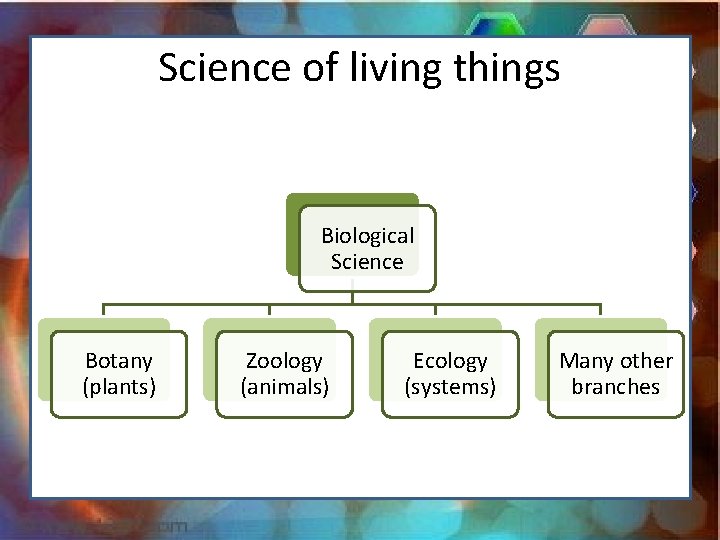
Science of living things Biological Science Botany (plants) Zoology (animals) Ecology (systems) Many other branches
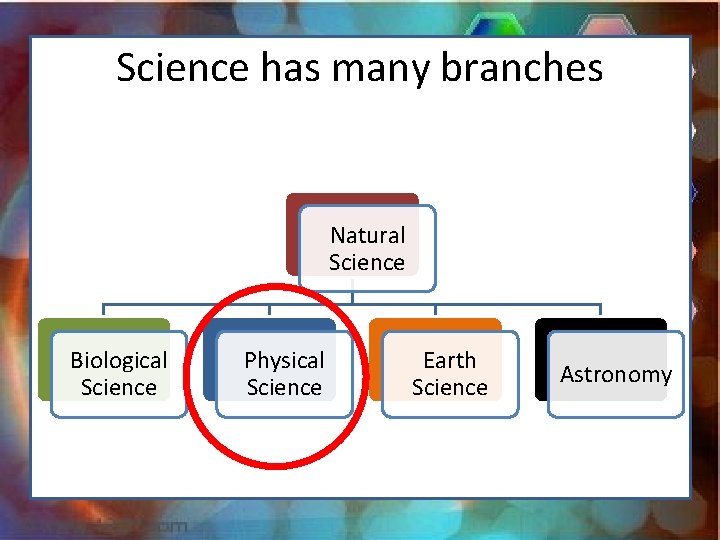
Science has many branches Natural Science Biological Science Physical Science Earth Science Astronomy
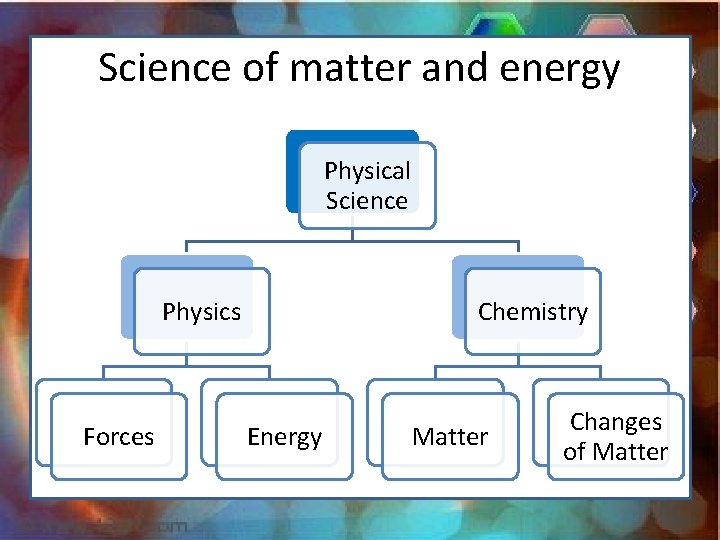
Science of matter and energy Physical Science Physics Forces Chemistry Energy Matter Changes of Matter
Science has many branches Natural Science Biological Science Physical Science Earth Science Astronomy
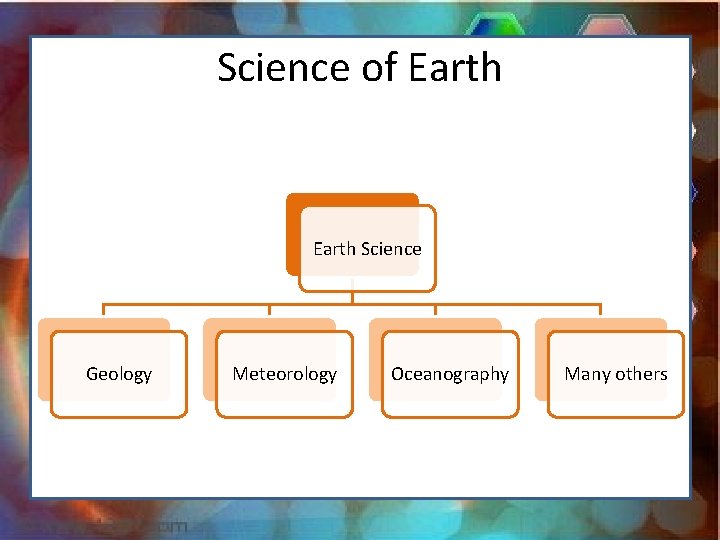
Science of Earth Science Geology Meteorology Oceanography Many others
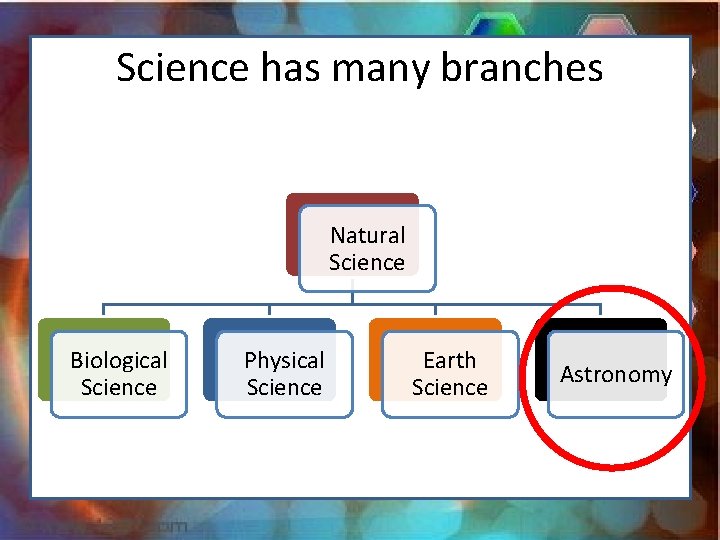
Science has many branches Natural Science Biological Science Physical Science Earth Science Astronomy
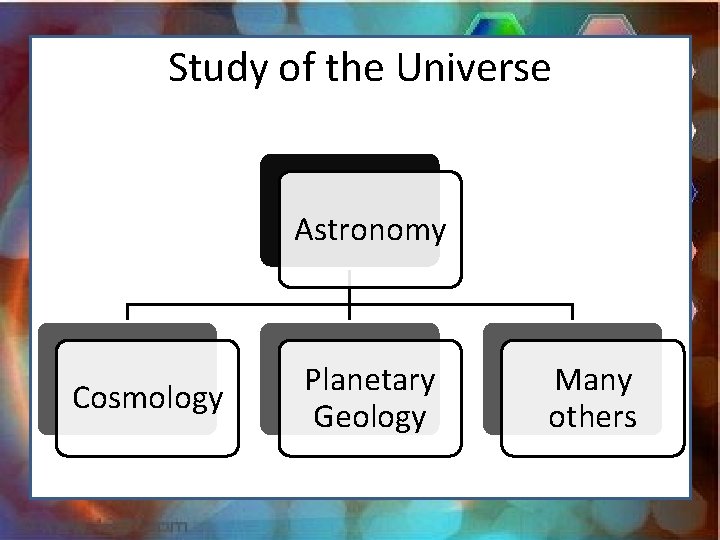
Study of the Universe Astronomy Cosmology Planetary Geology Many others
Science and Technology Work Together • Pure science: – Experimenting just to l earn more about the world – Not concerned with how useful the findings will be – EX: how do superconductors work? • Often funded by government & universities
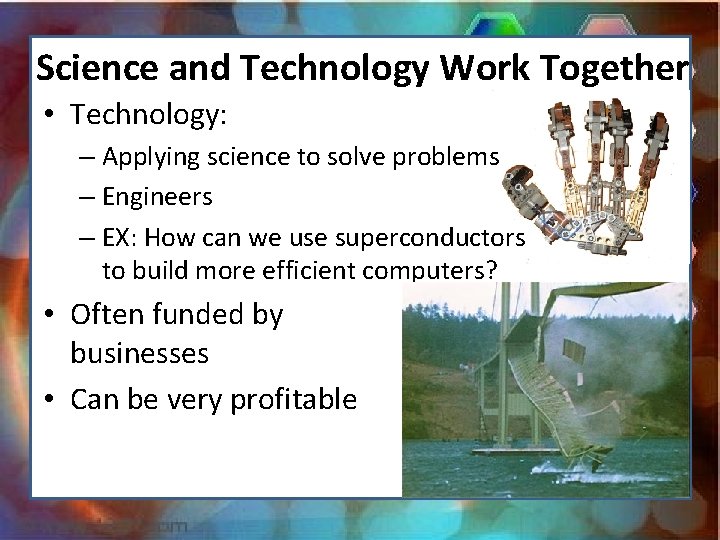
Science and Technology Work Together • Technology: – Applying science to solve problems – Engineers – EX: How can we use superconductors to build more efficient computers? • Often funded by businesses • Can be very profitable
Scientific Laws and Theories • BOTH are supported by experimental results: EVIDENCE!!! • A scientific law – Describes a process that can be tested – Predicts how a system will react – Does NOT try to explain HOW it happens – Can often be described mathematically – EX: • Gravity • Coulomb’s Law
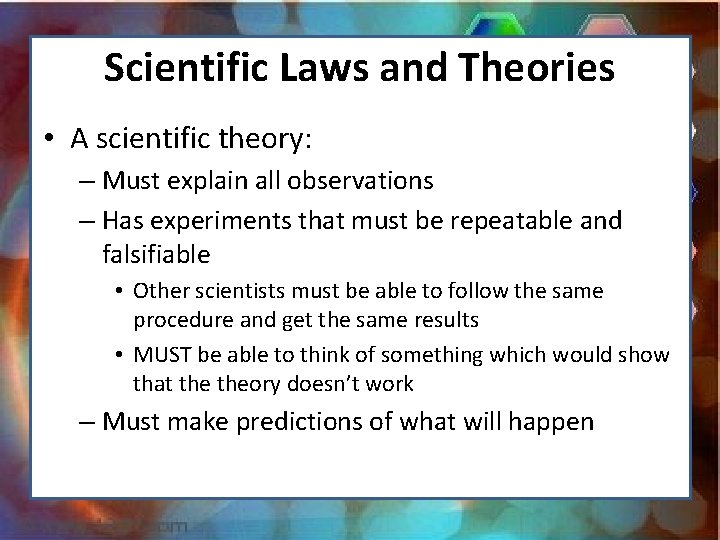
Scientific Laws and Theories • A scientific theory: – Must explain all observations – Has experiments that must be repeatable and falsifiable • Other scientists must be able to follow the same procedure and get the same results • MUST be able to think of something which would show that theory doesn’t work – Must make predictions of what will happen
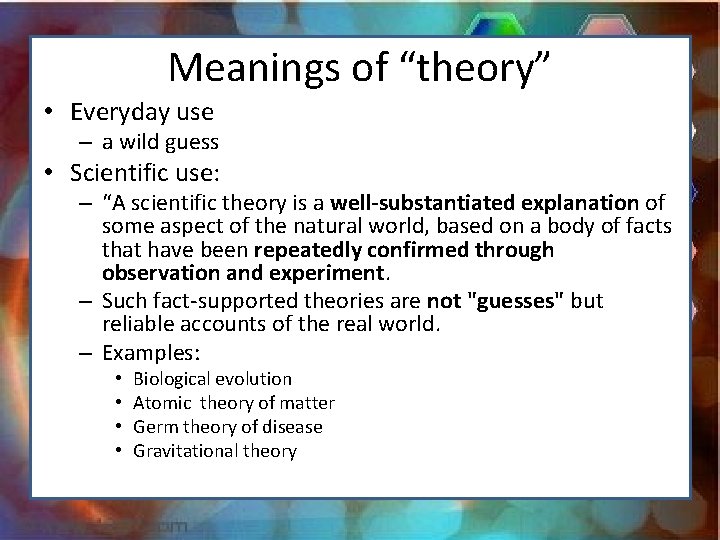
Meanings of “theory” • Everyday use – a wild guess • Scientific use: – “A scientific theory is a well-substantiated explanation of some aspect of the natural world, based on a body of facts that have been repeatedly confirmed through observation and experiment. – Such fact-supported theories are not "guesses" but reliable accounts of the real world. – Examples: • • Biological evolution Atomic theory of matter Germ theory of disease Gravitational theory
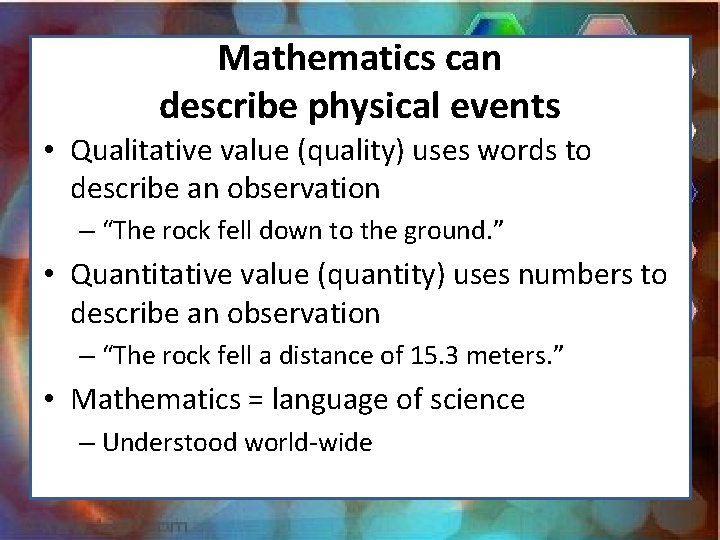
Mathematics can describe physical events • Qualitative value (quality) uses words to describe an observation – “The rock fell down to the ground. ” • Quantitative value (quantity) uses numbers to describe an observation – “The rock fell a distance of 15. 3 meters. ” • Mathematics = language of science – Understood world-wide
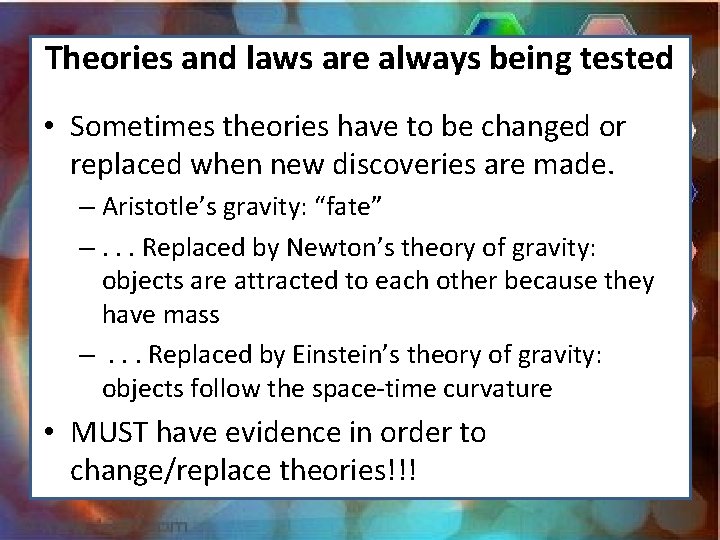
Theories and laws are always being tested • Sometimes theories have to be changed or replaced when new discoveries are made. – Aristotle’s gravity: “fate” –. . . Replaced by Newton’s theory of gravity: objects are attracted to each other because they have mass –. . . Replaced by Einstein’s theory of gravity: objects follow the space-time curvature • MUST have evidence in order to change/replace theories!!!
Models can represent physical events • Scientific Model: a representation of an object or event which may be – Too big (galaxies) – Too small (atomic nuclei) – Too complex (weather systems) • . . . To study easily. • BEWARE: The MODEL isn’t the thing itself! – Ex: cell as a “factory”
Homework for next time • Read through the lab for next time • Answer Review Questions 1 -10 from the end of Chapter 1 (online) • 3 rd try Safety Test: during seminar or your GPS if you haven't passed it yet