
Chapter 1 Introduction to Physical Fitness and Wellness






- Slides: 52
Chapter 1 Introduction to Physical Fitness and Wellness
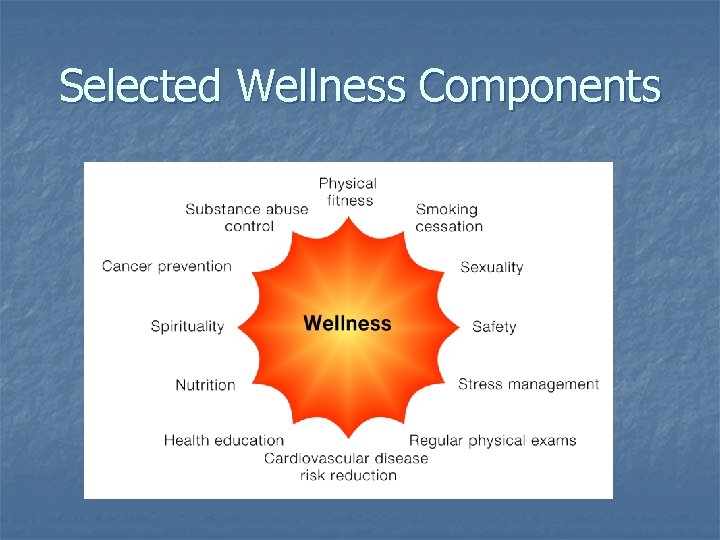
Selected Wellness Components
Physical Wellness n Physically Well People n What are common characteristics?
Physical Wellness n Physically Well People n n What are common characteristics? Health Related Components Cardiorespiratory Fitness n Body Composition n Muscular Strength and Endurance n Flexibility n
Emotional Wellness n Stability n Ability to enjoy success/ keep perspective on failure
Emotional Wellness n Stability n n Ability to enjoy success/ keep perspective on failure Happiness Sense of Daily Meaning n Positive Relationships: Giving and Receiving Love n Freedom from pervasive tension/depression n
Mental Wellness n n Application in New Experiences Awareness of Beliefs and Values
Mental Wellness n n n Application in New Experiences Awareness of Beliefs and Values “Reserve of Energy” n n Open minded, curious, respectful Effect on Self-Confidence
Social and Environmental Wellness n Social: Positive Self Image Respectfulness, honesty, loyalty n Concern for surroundings and environment n
Social and Environmental Wellness n Social: Positive Self Image Respectfulness, honesty, loyalty n Concern for surroundings and environment n n Environmental Sense of responsibility for the welfare of others n Connection with one’s surroundings n
Occupational Wellness n Results from the work setting being perceived as rewarding.
Occupational Wellness n n Results from the work setting being perceived as rewarding. The occupation can bring excitement, skill-development, recognition, sense of teamwork, and various types of support.
Spiritual Wellness n n Results in freedom, faith, love, closeness to others, peace, joy, and fulfillment. Is associated with better health, less distress, and a higher quality of life.
Spiritual Wellness n n Results in freedom, faith, love, closeness to others, peace, joy, and fulfillment. Is associated with better health, less distress, and a higher quality of life. Prayer is a hallmark of spirituality True concern for the welfare of others is called Altruism
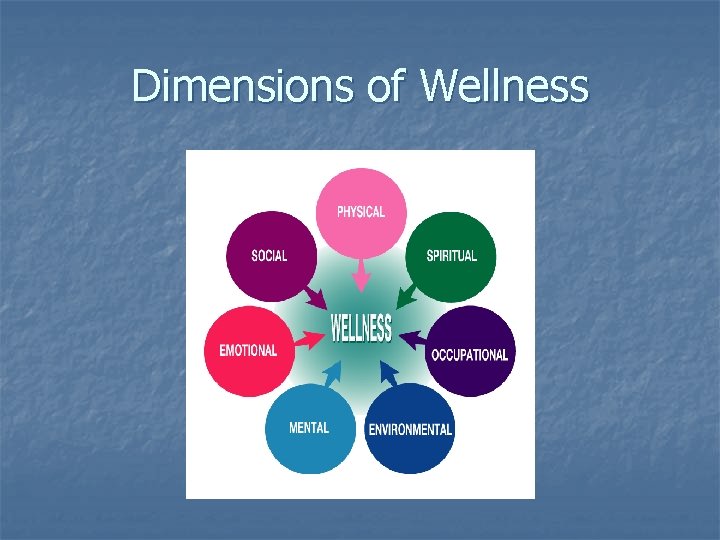
Dimensions of Wellness
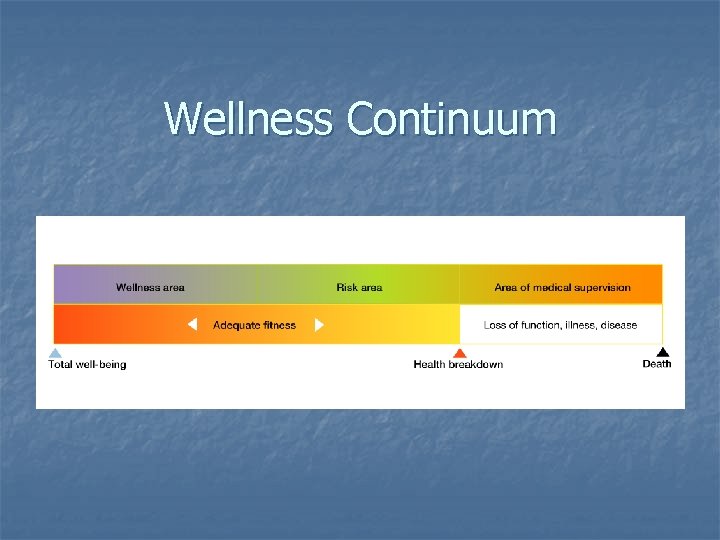
Wellness Continuum
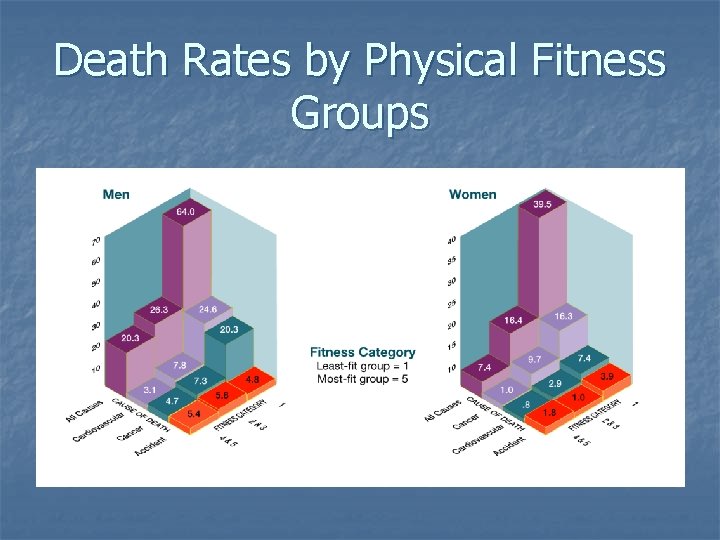
Death Rates by Physical Fitness Groups
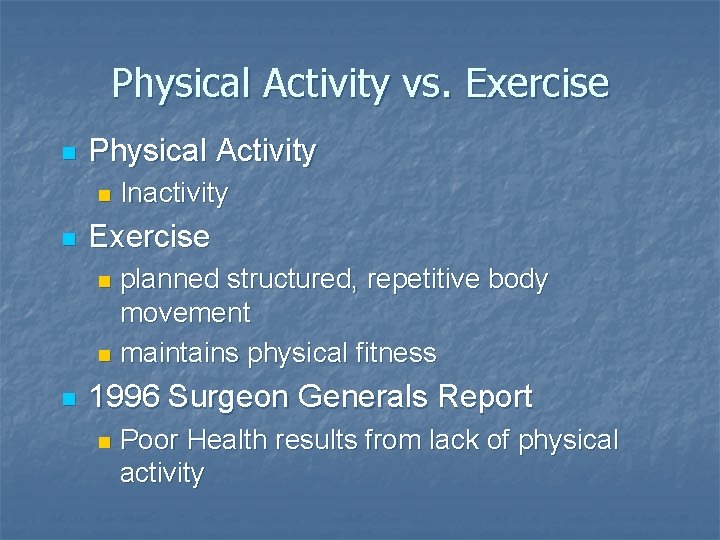
Physical Activity vs. Exercise n Physical Activity n n Inactivity Exercise planned structured, repetitive body movement n maintains physical fitness n n 1996 Surgeon Generals Report n Poor Health results from lack of physical activity
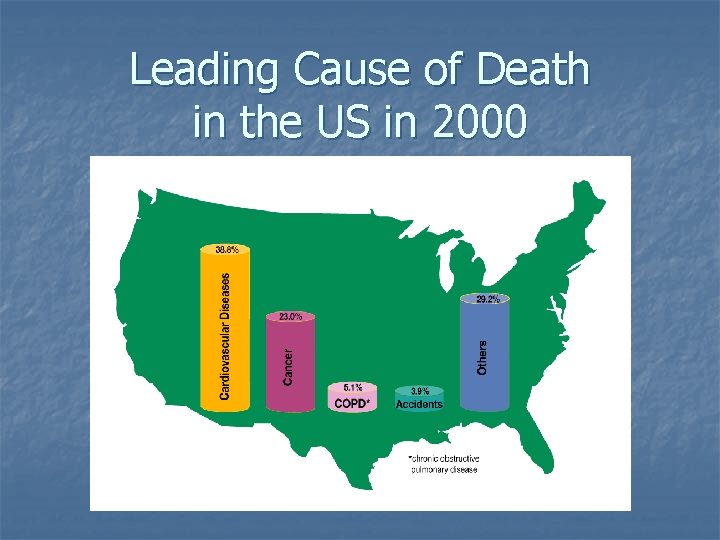
Leading Cause of Death in the US in 2000
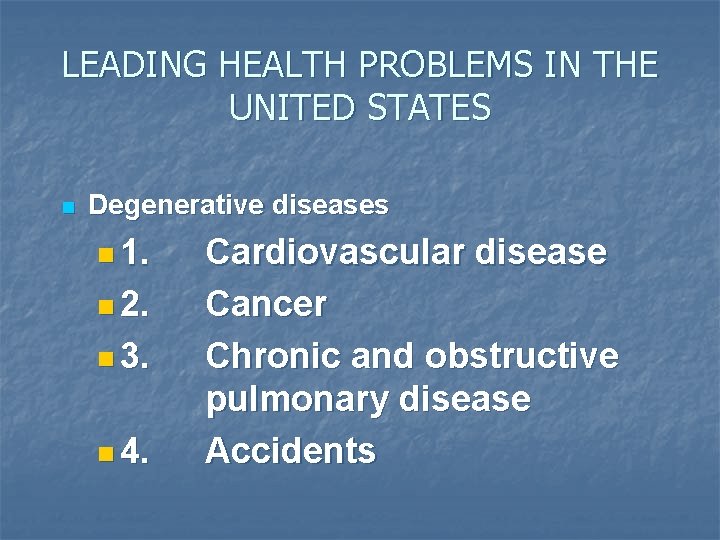
LEADING HEALTH PROBLEMS IN THE UNITED STATES n Degenerative diseases n 1. n 2. n 3. n 4. Cardiovascular disease Cancer Chronic and obstructive pulmonary disease Accidents
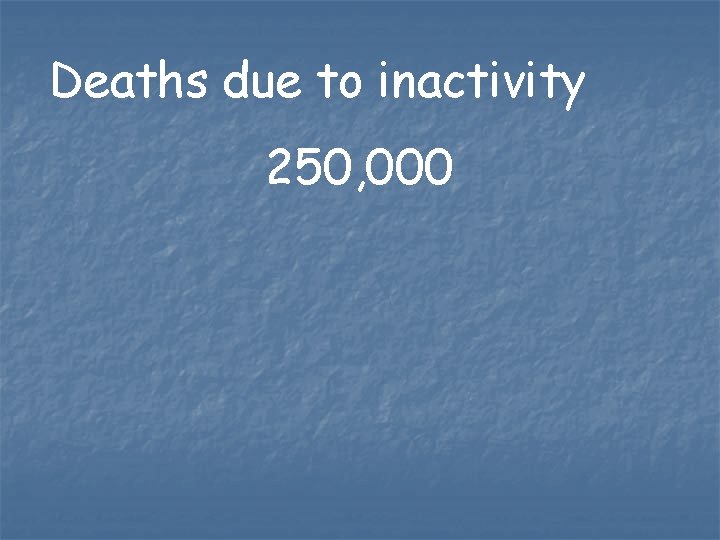
Deaths due to inactivity 250, 000
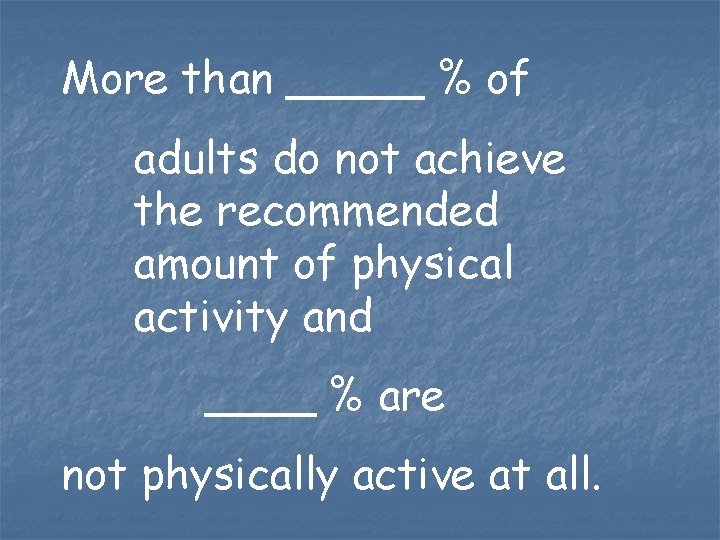
More than _____ % of adults do not achieve the recommended amount of physical activity and ____ % are not physically active at all.
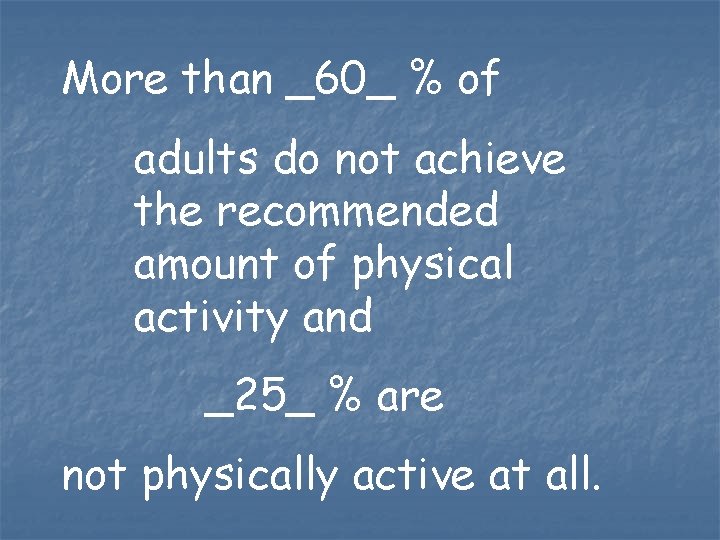
More than _60_ % of adults do not achieve the recommended amount of physical activity and _25_ % are not physically active at all.
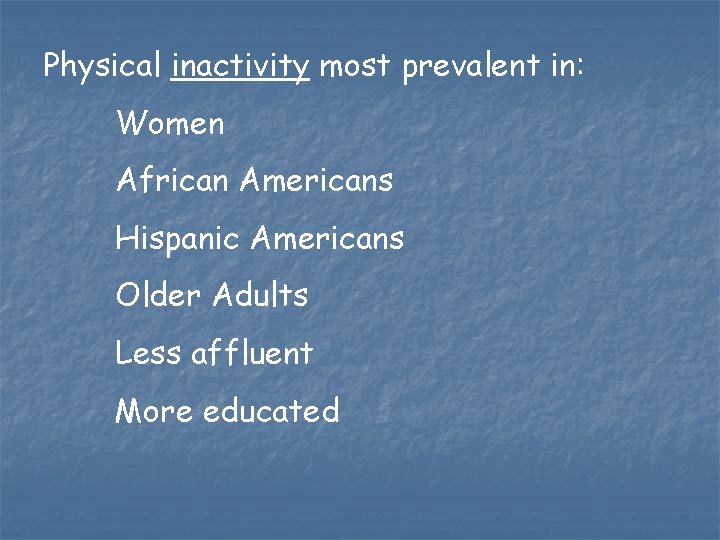
Physical inactivity most prevalent in: Women African Americans Hispanic Americans Older Adults Less affluent More educated
Moderate Activity ______ calories per day
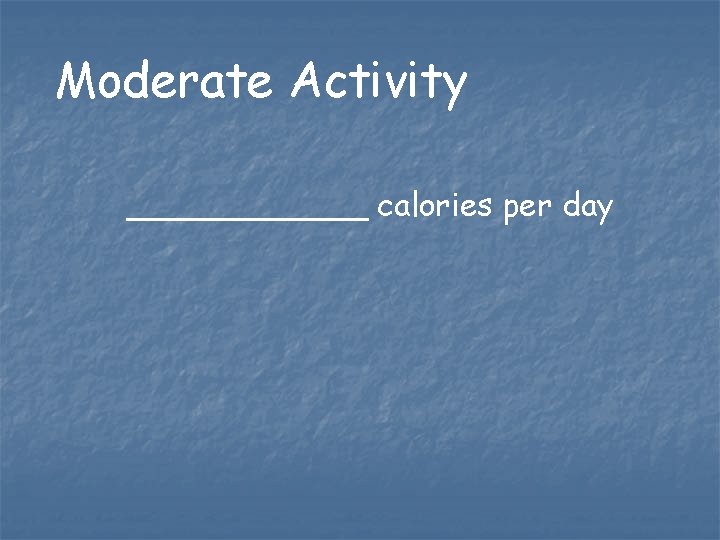
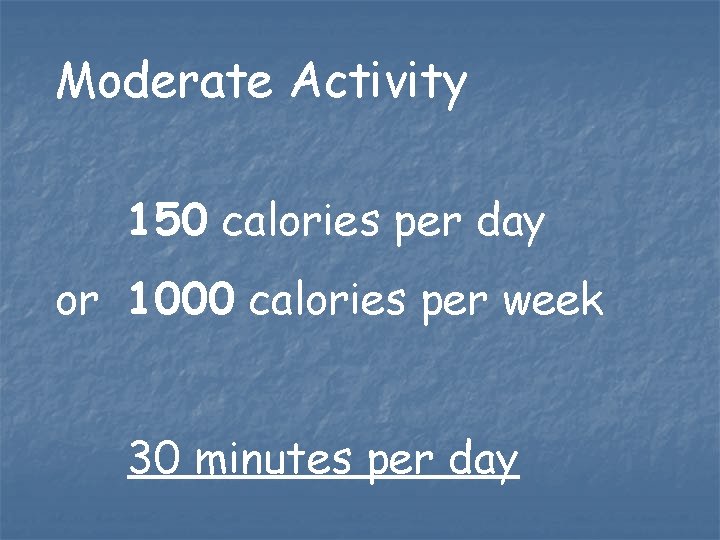
Moderate Activity 150 calories per day or 1000 calories per week 30 minutes per day
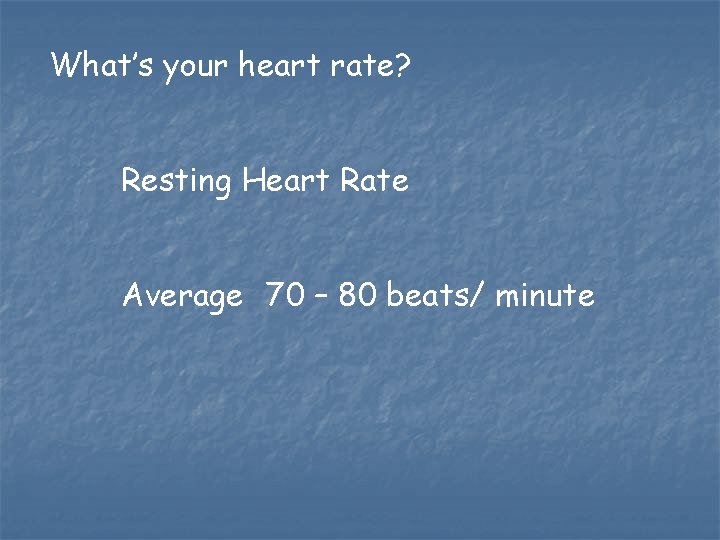
What’s your heart rate? Resting Heart Rate
What’s your heart rate? Resting Heart Rate Average 70 – 80 beats/ minute
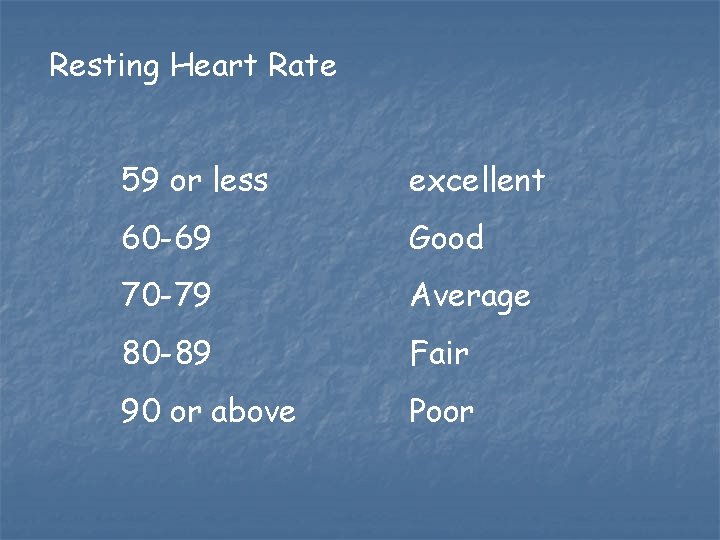
Resting Heart Rate 59 or less excellent 60 -69 Good 70 -79 Average 80 -89 Fair 90 or above Poor
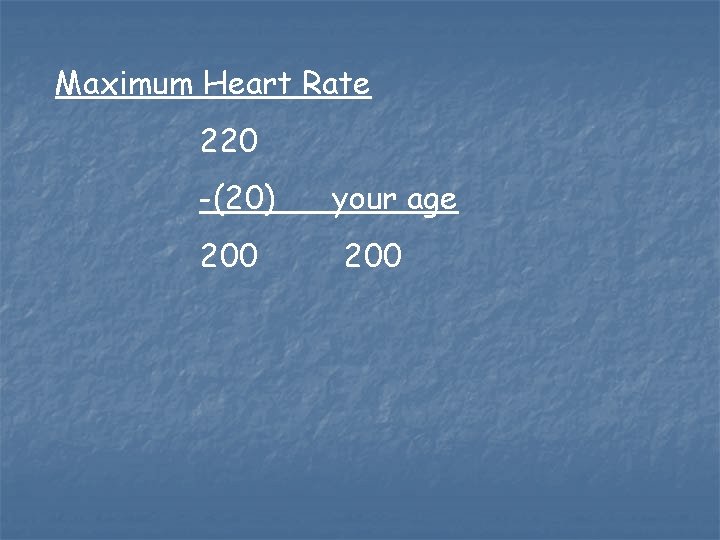
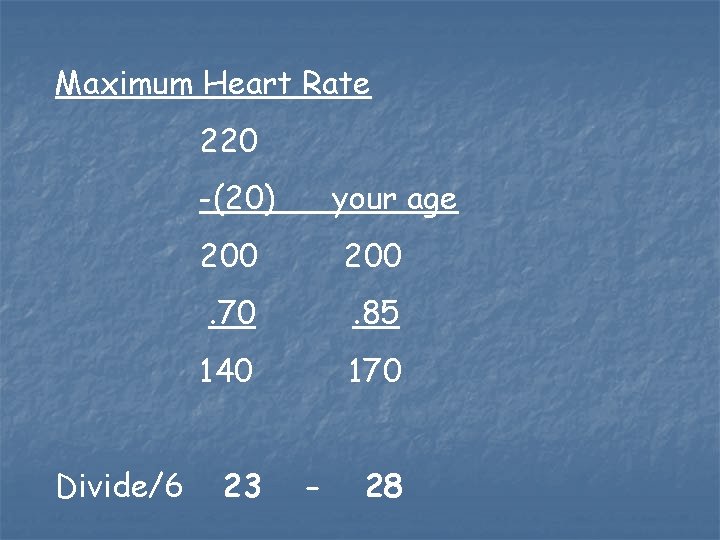
Maximum Heart Rate 220 -(20) 200 your age 200
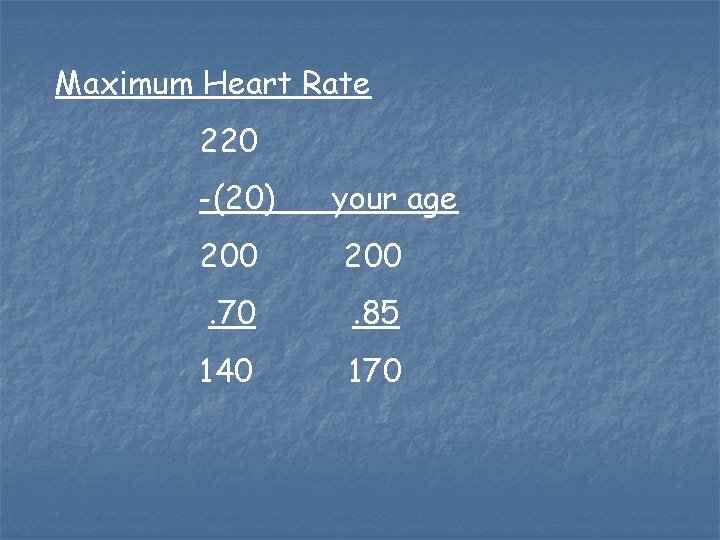
Maximum Heart Rate 220 -(20) your age 200 . 70 . 85 140 170
Maximum Heart Rate 220 -(20) Divide/6 your age 200 . 70 . 85 140 170 23 - 28
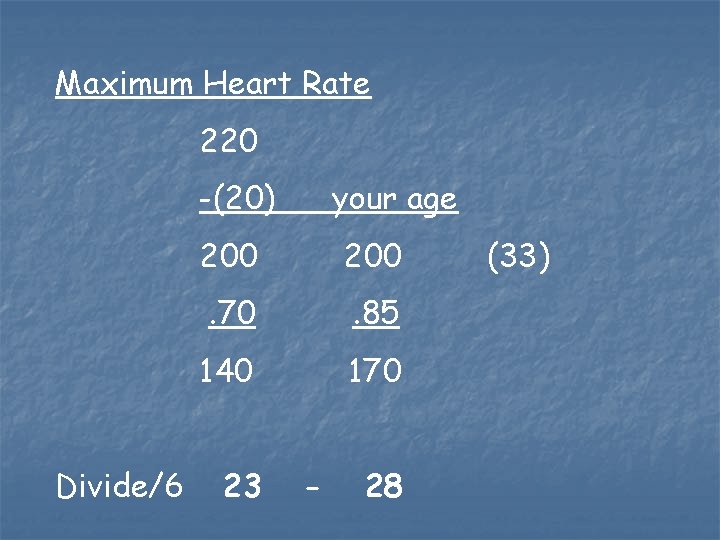
Maximum Heart Rate 220 -(20) Divide/6 your age 200 . 70 . 85 140 170 23 - 28 (33)
What lifestyle factors improve health?
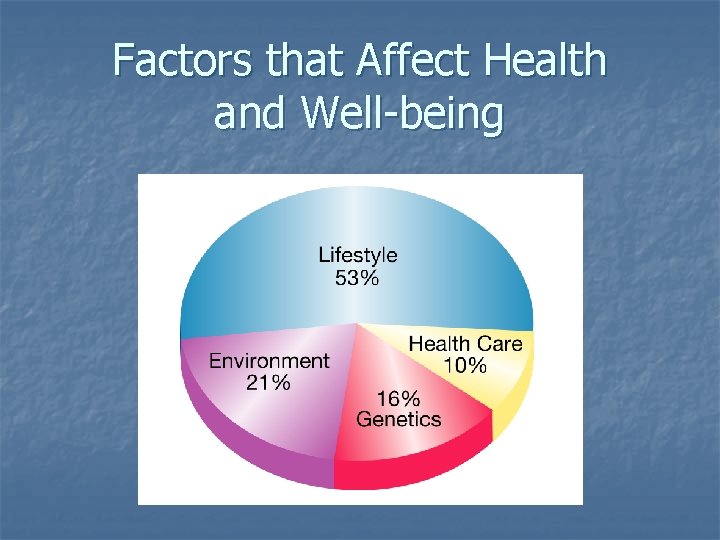
Factors that Affect Health and Well-being
How can a wellness program benefit you?
Benefits Look good Feel good Usually live longer Better quality of life
Improve cardiovascular health Better muscle tone, strength, flexibility and endurance Helps keep you lean Improves body’s ability to burn fat Improves immune system Lowers risk of disease
Thins the blood Manages cholesterol levels Prevents or controls diabetes Achieve peak bone mass Sleep better Relieves tension and stress Raises level of energy Improves productivity
Speeds recovery time after exercise and stress Improves physical stamina Enhances quality of life
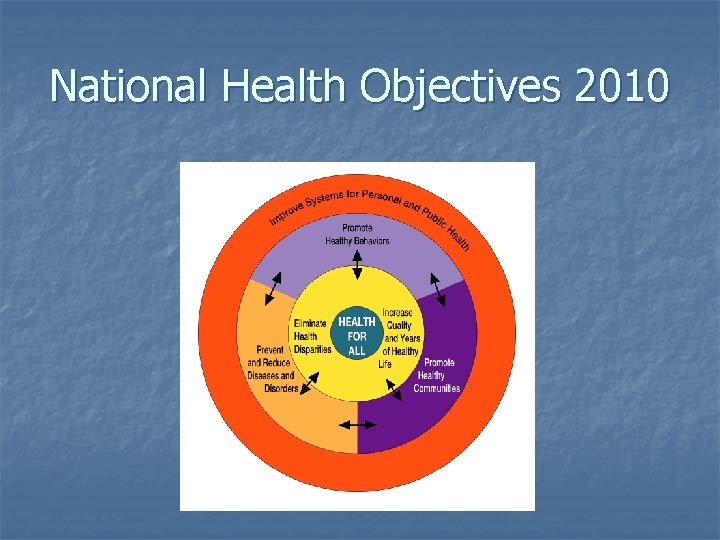
National Health Objectives 2010
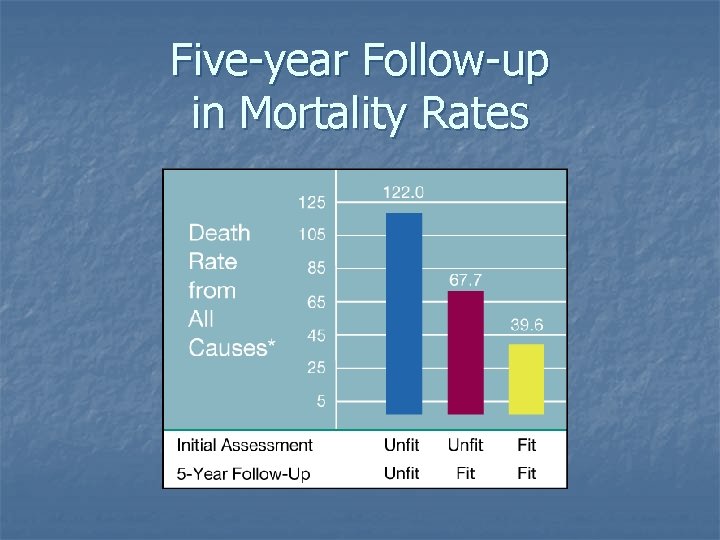
Five-year Follow-up in Mortality Rates
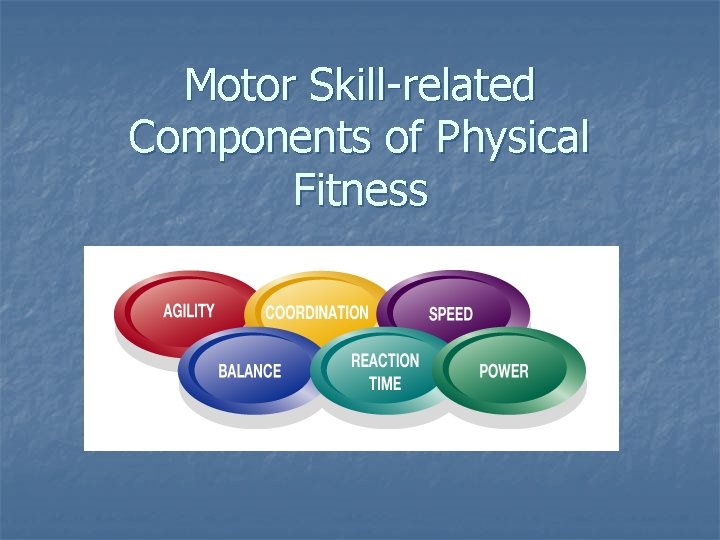
Motor Skill-related Components of Physical Fitness
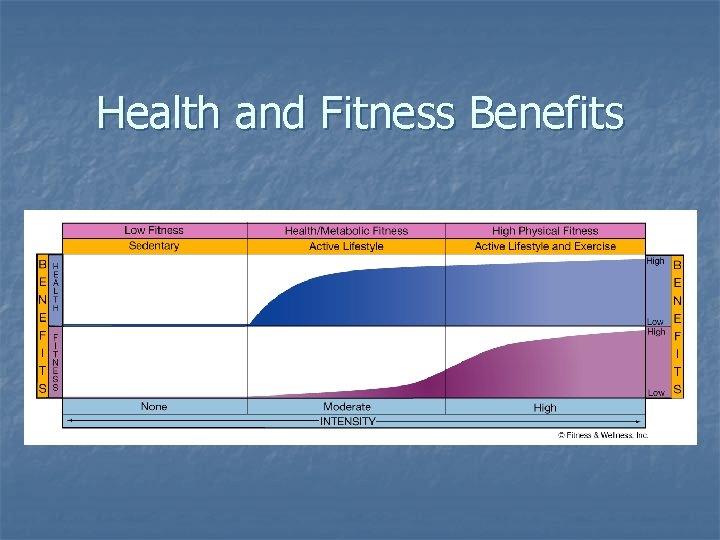
Health and Fitness Benefits
HEALTH VERSUS PHYSICAL FITNESS n n Health fitness standards Physical fitness standards Does a little exercise go a long way? High physical fitness and the health fitness standard.
Causes of Death in US for Selected Years
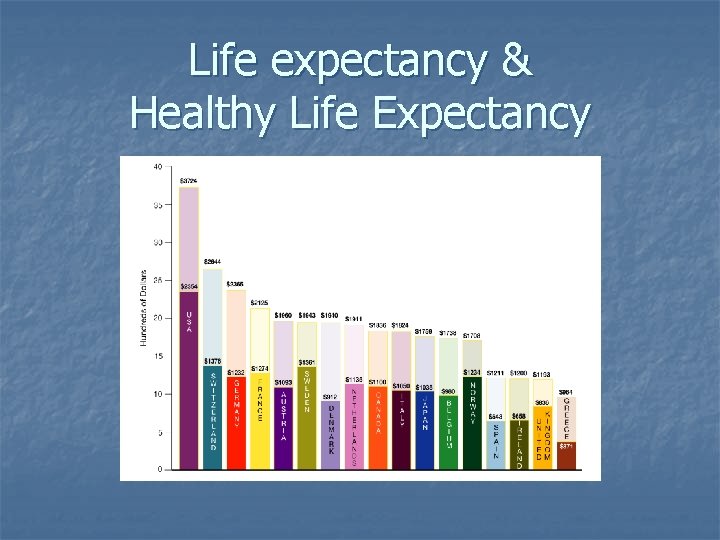
Physical Fitness and Wellness n Life Expectancy vs. Healthy Life Expectancy n Life Expectancy in US compared to other countries n Why is the US behind other countries?
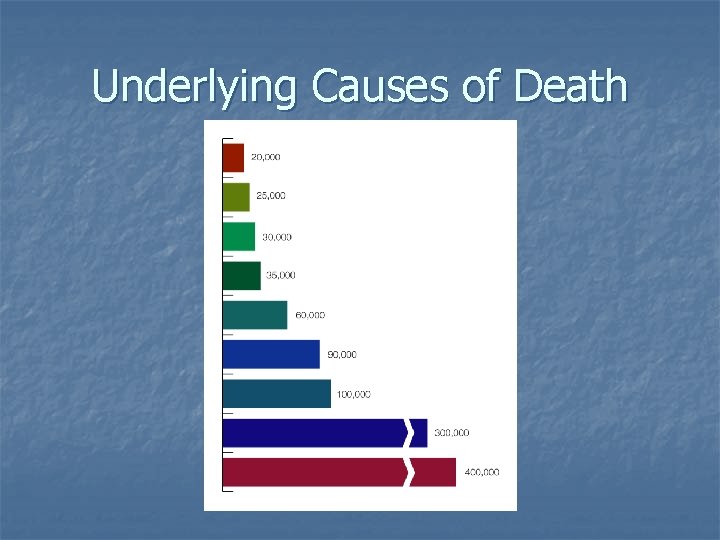
Underlying Causes of Death
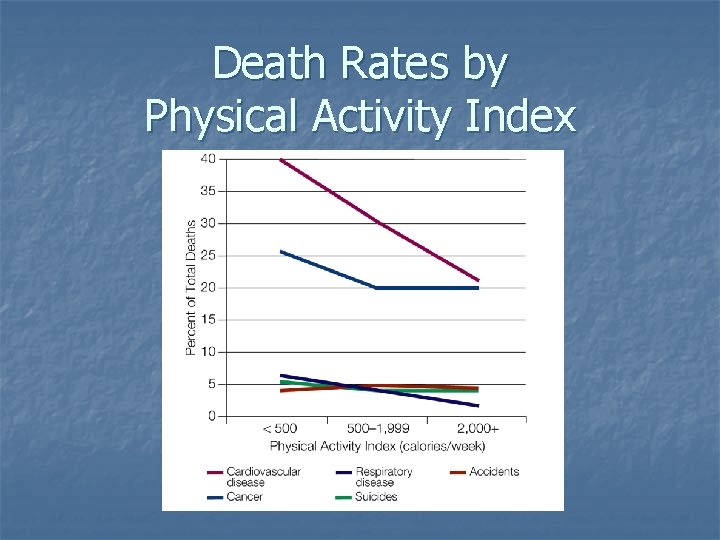
Inverse Relationship of Activity and Disease Risk n n n An active lifestyle after being sedentary greatly reduced mortality risk Vigorous activity associated with greater life longevity. Increase life expectancy
Death Rates by Physical Activity Index
Life expectancy & Healthy Life Expectancy