
CHAPTER 1 Introduction to Information Systems Adapted by
CHAPTER 1 Introduction to Information Systems Adapted by Celeste Ng, based on: Rainer, Kelly, Prince, Brad and Watson, Hugh, Management Information Systems: Moving Business Forward, John Willey & Sons, Inc. : New Jersey, 3 rd Edition,
1 Overview of Computer -Based IS’s • Computer-Based Information System (CBIS) – An information system that uses computer technology計算機技術to perform some or all of the its intended tasks預期 作
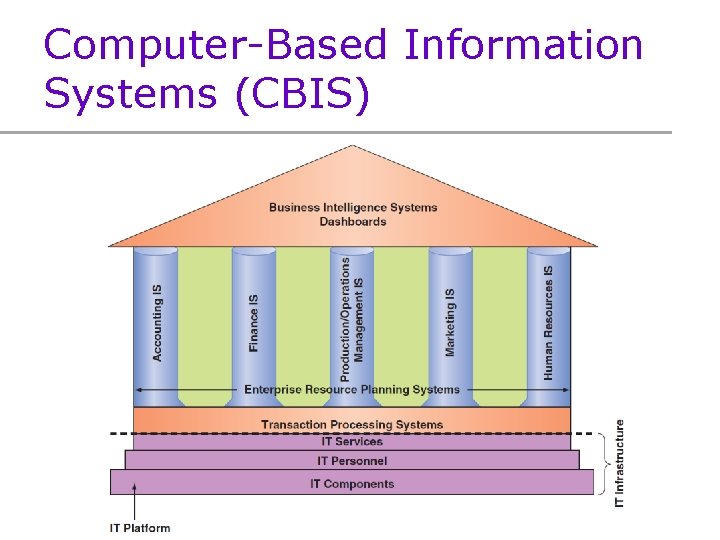
Computer-Based Information Systems (CBIS)
Components of an organizational CBIS IT Components: Hardware, Software, a database, a network, procedures, and people. IT Services: IT Personnel use IT Components to develop IS’s, oversee security & risk, and manage data. IT Infrastructure: The IT components and IT services. Application: A program designed to support a specific task or business process. Functional Area Information Systems (FAIS) : a collection of application programs in a single department or functional area.
Basic Components of a CBIS • Hardware: consists of devices such as the processor, monitor, keyboard, and printer. • Software: a program or collection of programs that enable the hardware to process data. • Database: a collection of related fi les or tables containing data. • Network: a connecting system (wireline or wireless) that permits different computers to share resources. • Procedures: are the instructions for combining the above components to process information and generate the desired output. • People: individuals who use the hardware and software, interface with it, or utilize its output.

Basic Components of a CBIS
2 Types of Computer Based Information Systems (CBIS) • Information Systems (IS)資訊系統 for – Organizational Employees
Information Systems (IS) – Organization (1) • Functional Area Information Systems (FAIS) – A collection of application programs in a single department or functional area功能領域. • Enterprise Resource Planning Systems (ERP) – Systems are designed to correct a lack of communication among the functional area IS. • Transaction Processing Systems (TPS) – systems that support the monitoring, collection, storage, and processing of data from the organization’s basic business transactions基本的業 務交易, each of which generates data
Information Systems (IS) – Organization (2) • Interorganizational Information Systems (IOS) – Information systems that connect two or more organizations • E-Commerce Systems – An interorganizational跨組織information system that enable organizations to conduct transactions, called business-to-business (B 2 B) electronic commerce, and customers to conduct transactions with businesses, called business-to-consumer (B 2 C) electronic commerce
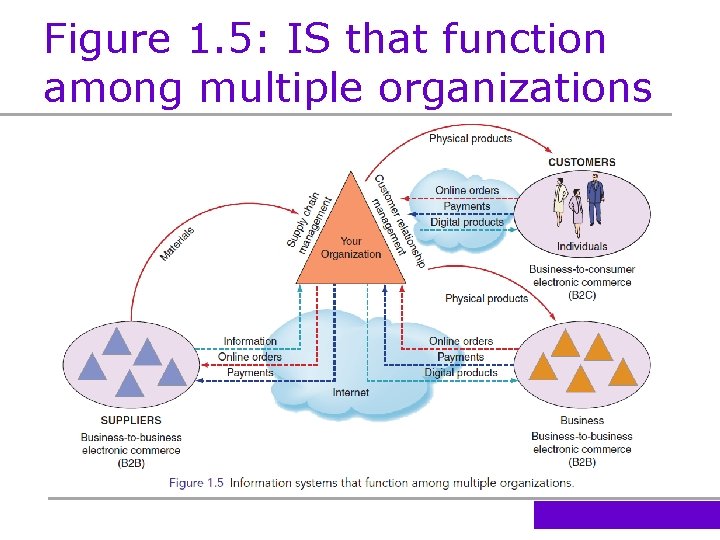
Figure 1. 5: IS that function among multiple organizations
Information Systems (IS) –for Organizational Employees – (1) • Knowledge Workers知識員 – Experts in a particular subject area主題領域(e. g. , financial and marketing analysts, engineers, lawyers, and accountants • Office Automation Systems辦公自動化系統(OASs) – typically support the clerical staff, lower and middle managers, and knowledge workers (e. g. , word processing and desktop publishing software排版軟件). • Business Intelligence商業情報(BI) Systems – systems that provide computer-based support for complex, nonroutine decisions非常規決策, primarily for middle managers and knowledge workers
Information Systems (IS) – Organizational Employees (2) • Expert Systems (ES) – systems that attempt to duplicate the work of human experts人類專家by applying reasoning capabilities推理能力, knowledge, and expertise within a specific domain • Dashboards儀表板 – a special form of IS that support all managers of the organization by providing rapid access to timely information and direct access to structured information結構化信息 in the form of reports在報告的形式
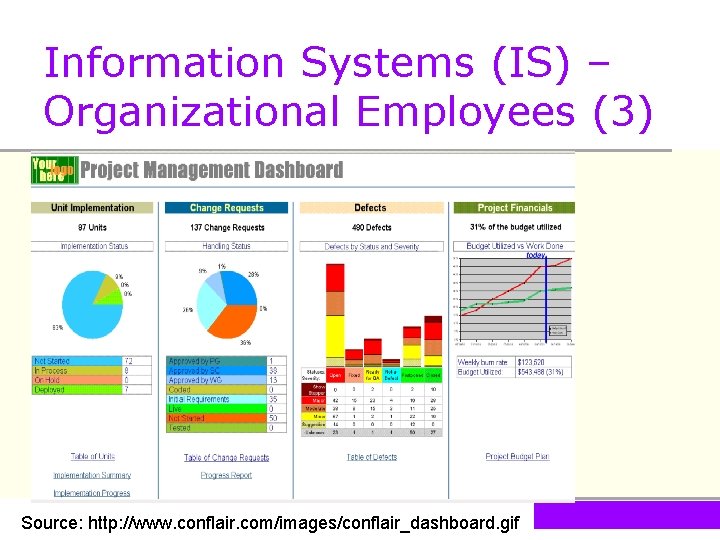
Information Systems (IS) – Organizational Employees (3) Source: http: //www. conflair. com/images/conflair_dashboard. gif
3 How Does IT Impact Organizations? • IT Reduces the Number of Middle Managers中層管理人員 • IT Changes the Manager’s Job – Stressful job (too many data, real-time data (needs)-> real-time decision) – Many IT tools • Will IT Eliminate Jobs消除 作機會? • IT Impacts Employees at Work
IT Impacts Employees at Work • IT Impacts Employees’ Health and Safety健康與安全 – Eye stress – Long-term use of keyboard (backaches, muscles tension肌肉拉緊 the wrist and fingers) • IT Provides Opportunities for People with Disabilities殘障人士 – Speech-recognition語音識別 – Vision-recognition視覺識別
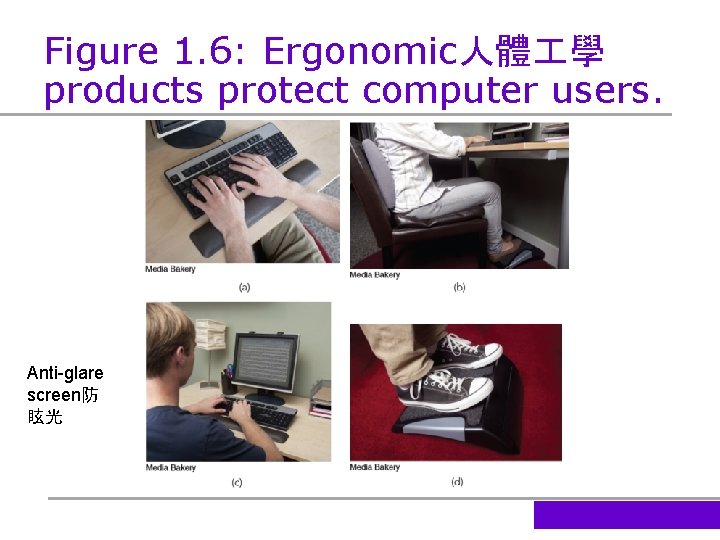
Figure 1. 6: Ergonomic人體 學 products protect computer users. Anti-glare screen防 眩光
4 Importance of IS to Society • IT Affects Our Quality of Life – Place employee on “constant call” • The Robot Revolution機器人革命is Here Now – (a) telepresence robots遠程呈現機器人, (b) autonomous cars自主車, and (c) drones無人機 • Improvements in Healthcare衛生保 – Make better and faster diagnosis using expert systems – Plan complex surgeries using virtual reality虛擬現 實技術 – Discuss complex medical cases via videoconferencing視訊會議
- Slides: 17