
CHAPTER 1 INTRODUCTION TO EVIDENCE What is Evidence
- Slides: 23
CHAPTER 1 INTRODUCTION TO EVIDENCE
What is Evidence? The data upon which a judgment or conclusion may be based, or by which proof or probability may be established.
Evidence Roles of Evidence: Criminal Complaint Review: DA files this after a police investigation and evidence which is recovered convinces him/her that there is legal cause for the arrest and prosecution.
Motions: during a “ 1538 Motion”, the defense has the opportunity to challenge the manner in which evidence was seized during a police search. ◦ View youtube video http: //www. youtube. com/watch? v=Io. IEb-vk. Eho
Filtering Process: a case may be filtered out because of lack of evidence ( a decisionmaking process whereby some cases are screened out because of insufficient evidence, while other cases with stronger evidence move forward.
Plea Bargaining: occurs when the defendant waives his/her due process and adversarial rights in exchange for a guilty plea to be negotiated and reduced sentence. Trial: the defendant’s guilt or innocence is determined by a jury or judge at trial. The DA presents inculpatory evidence (which tends to prove a guilt) and the defense counsel presents exculpatory evidence (which tends to prove guiltless or blameless).
Difference between Evidence Law and Criminal Law: Evidence Law: NO CRIMES and NO PUNISHMENTS in the Evidence Code Criminal Law: the corpus delicti (elements of the crime remain the same and contains punishments for violations. PROCEDURAL LAW: rules on how evidence is COLLECTED during a criminal investigation and becomes ADMISSIBLE later in the courtroom.
Legal Definition of Evidence: Evidence consists of: TESTIMONY: the sworn statement given by a witness WRITINGS: any documented and tangible form of communication, including handwriting, computer data, etc MATERIAL OBJECTS: physical objects including real evidence offered to the TRIER OF FACT (jury or judge) Establishing the existence or nonexistence of a fact offered for PROOF
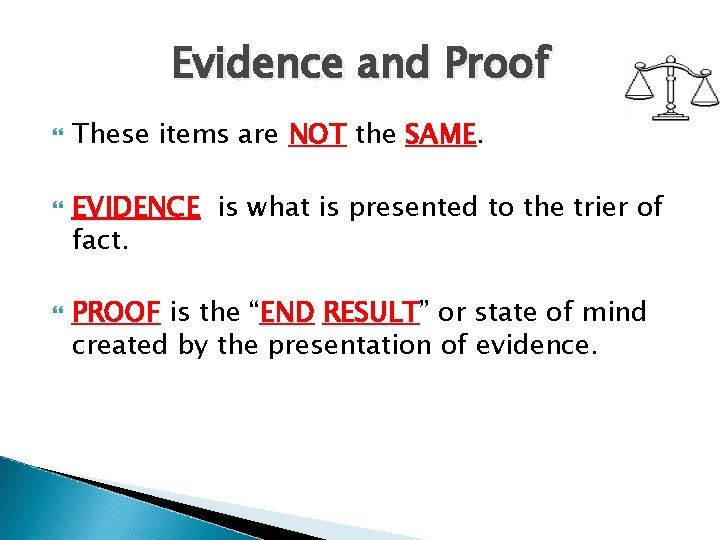
Evidence and Proof These items are NOT the SAME. EVIDENCE is what is presented to the trier of fact. PROOF is the “END RESULT” or state of mind created by the presentation of evidence.
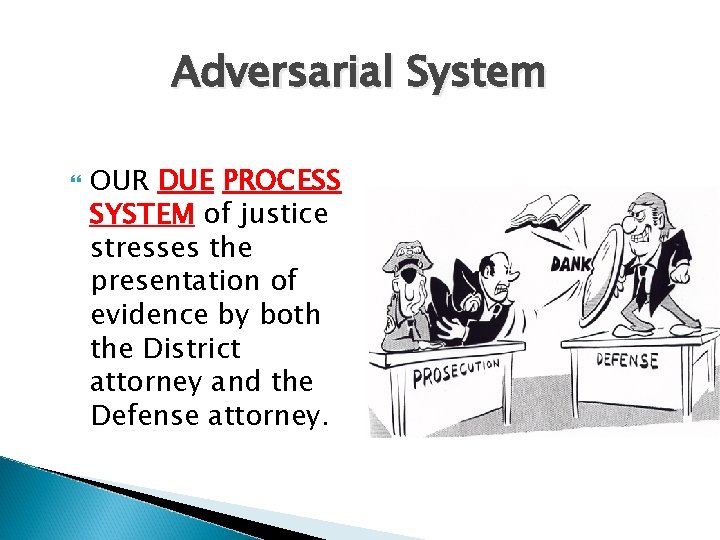
Adversarial System OUR DUE PROCESS SYSTEM of justice stresses the presentation of evidence by both the District attorney and the Defense attorney.
Reasons for the Rules of Evidence: 1. To seek the elements of fair justice and due process of law. 2. Prevent jurors from becoming confused or misled Ø The judge has the discretion to disallow evidence which is prejudicial, unrelliable, repetitive, or time-consuming (352 E. C. )
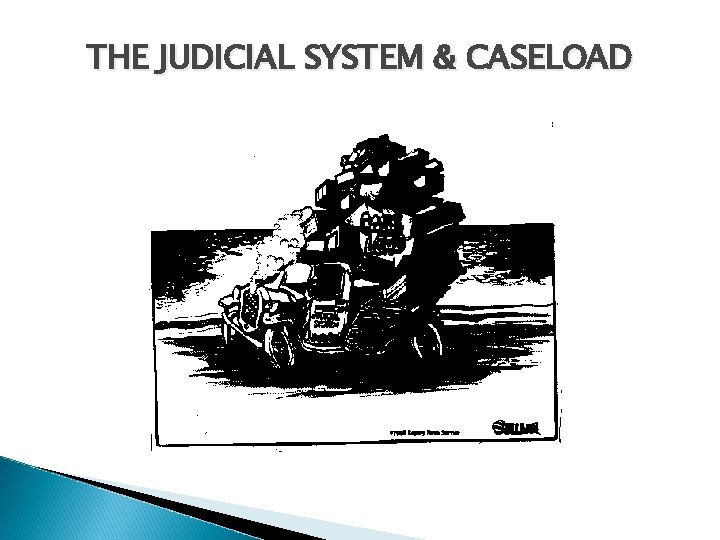
THE JUDICIAL SYSTEM & CASELOAD
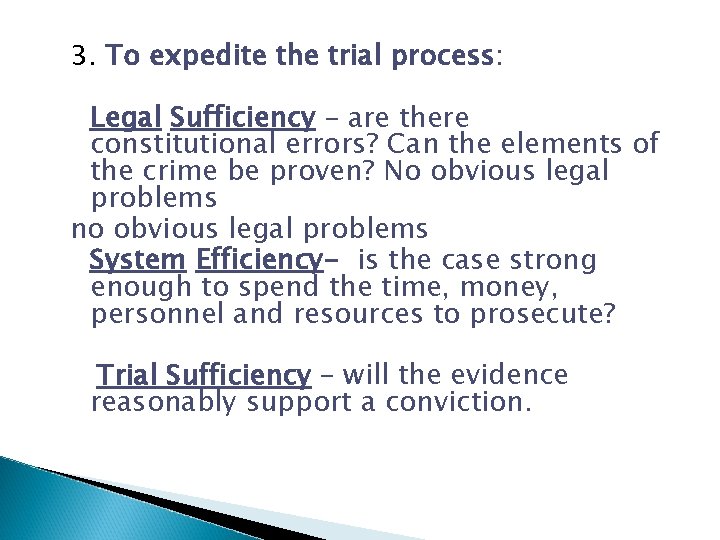
3. To expedite the trial process: Legal Sufficiency – are there constitutional errors? Can the elements of the crime be proven? No obvious legal problems no obvious legal problems System Efficiency- is the case strong enough to spend the time, money, personnel and resources to prosecute? Trial Sufficiency – will the evidence reasonably support a conviction. ence support a conviction through plea bargaining or at trial
Reasons Why Evidence Is Excluded: 1. Protect Constitutional Rights
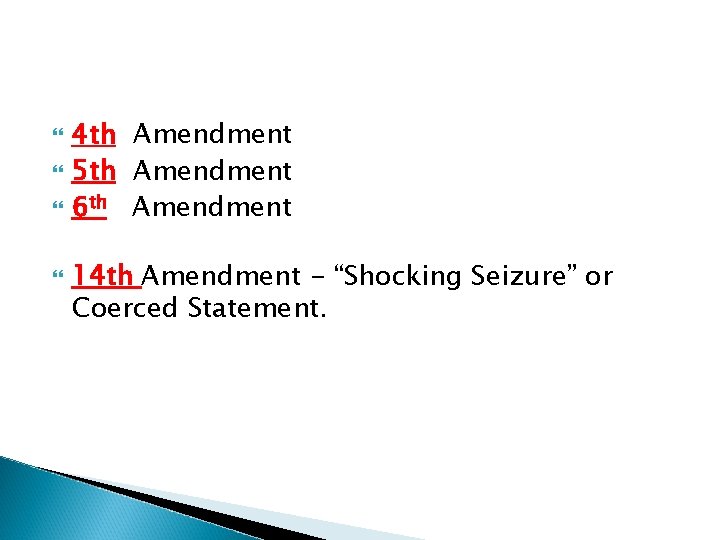
4 th Amendment - Search & Seizure 5 th Amendment Miranda Rule 6 th Amendment to Counsel or Suggestive Lineup/Show-up 14 th Amendment - “Shocking Seizure” or Coerced Statement.
4 th Amendment
2. To Protect a Privileged Relationship Privilege: A statutory reason where a witness can legally refuse to testify in court. self-incrimination ü husband-wife ü doctor-patient ü
3. To Avoid Undue Prejudice § The evidence is “ 352’d” (disallowed by the judge) because it will be too: Ø Prejudicial Ø Confusing Ø Time-Consuming
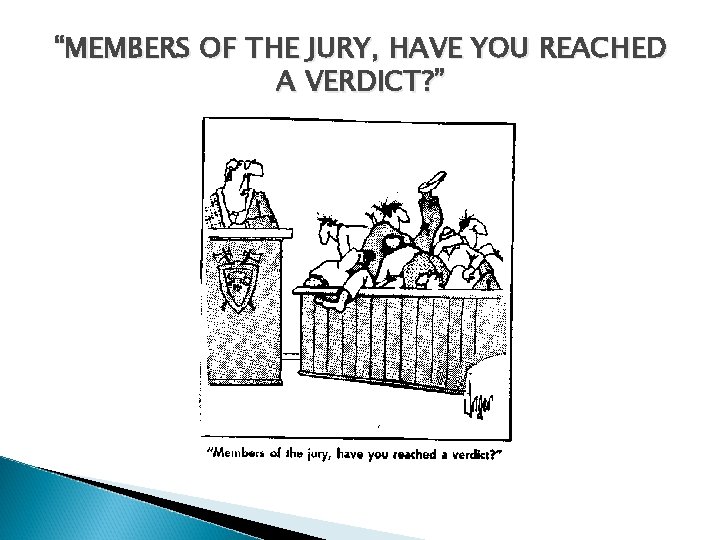
“MEMBERS OF THE JURY, HAVE YOU REACHED A VERDICT? ”
4. Protect the Introduction of unreliable evidence Evidence can be unreliable due to issues with: authentication chain of custody Kelly-Frye rule (scientific evidence) hearsay evidence witness competency
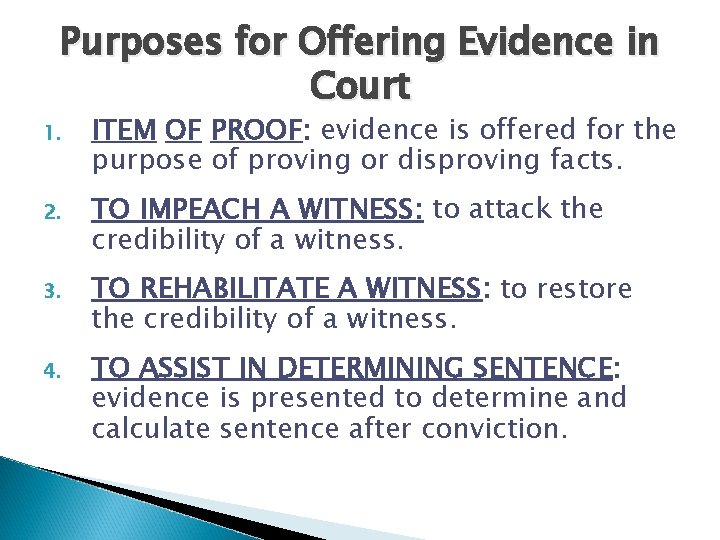
Purposes for Offering Evidence in Court 1. ITEM OF PROOF: evidence is offered for the purpose of proving or disproving facts. 2. TO IMPEACH A WITNESS: to attack the credibility of a witness. 3. TO REHABILITATE A WITNESS: to restore the credibility of a witness. 4. TO ASSIST IN DETERMINING SENTENCE: evidence is presented to determine and calculate sentence after conviction.
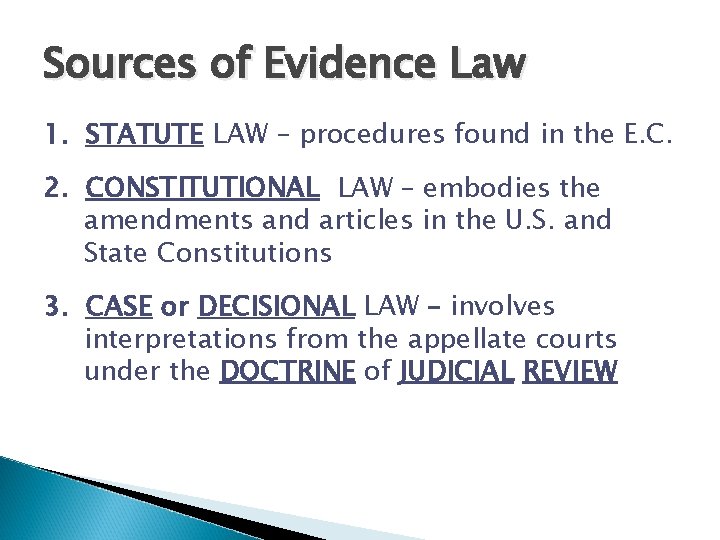
Sources of Evidence Law 1. STATUTE LAW – procedures found in the E. C. 2. CONSTITUTIONAL LAW – embodies the amendments and articles in the U. S. and State Constitutions 3. CASE or DECISIONAL LAW – involves interpretations from the appellate courts under the DOCTRINE of JUDICIAL REVIEW
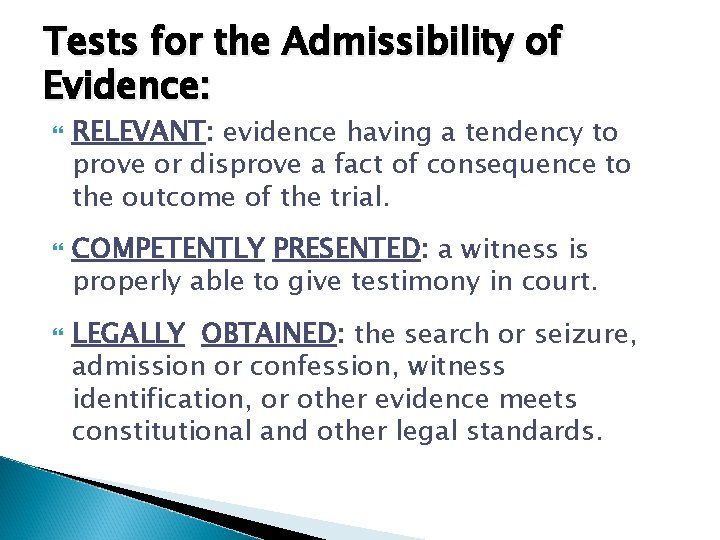
Tests for the Admissibility of Evidence: RELEVANT: evidence having a tendency to prove or disprove a fact of consequence to the outcome of the trial. COMPETENTLY PRESENTED: a witness is properly able to give testimony in court. LEGALLY OBTAINED: the search or seizure, admission or confession, witness identification, or other evidence meets constitutional and other legal standards.