
Chapter 1 Introduction OBJECTIVES After reading this chapter
Chapter 1 Introduction
OBJECTIVES After reading this chapter, the reader should be able to: Understand the concept of a black box, a data processor, and a programmable data processor. Define the von Neumann model and name its components: memory, arithmetic/logic unit, control unit, and input/output. Understand the stored program concept. Understand the sequential execution of statements in a program. Name the components of a computer: hardware, software, and data.
1. 1 THE COMPUTER AS A BLOCK BOX
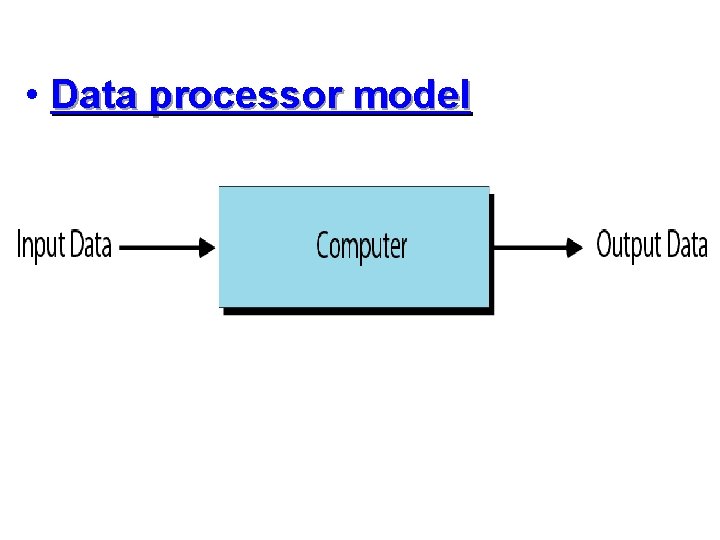
Figure 1 -1 Data processor model • Data processor model

Figure 1 -2 Programmable data processormachines model • Computers – general-purpose • Programmable Data processor model
Program l A program § is a set of instructions that tells the computer what to do with data. § written in a computer language.
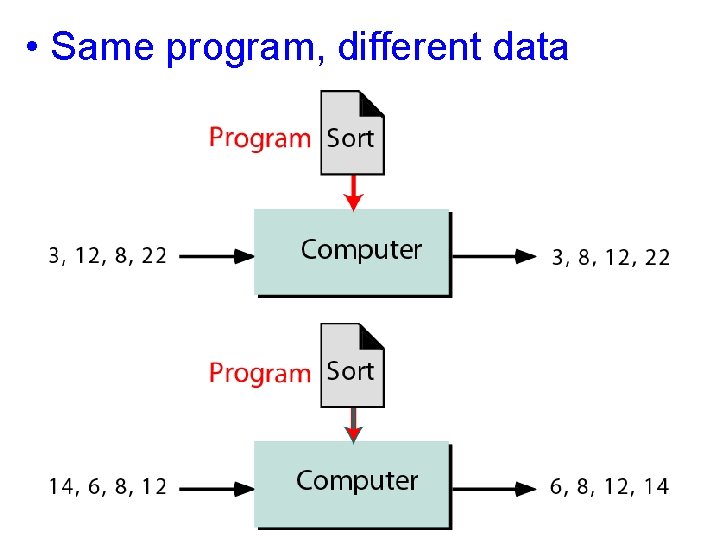
Figure 1 -3 program, differentdata • Same program, different
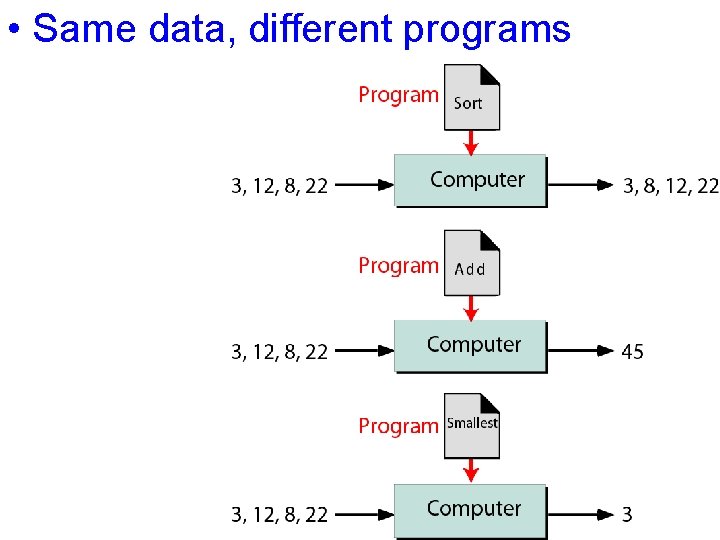
• Same data, different programs Figure 1 -4 Same data, different programs
1. 2 von NEUMANN MODEL
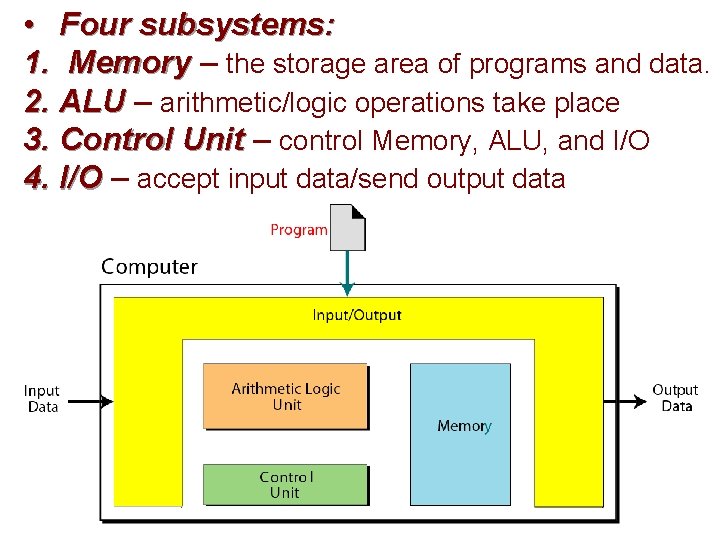
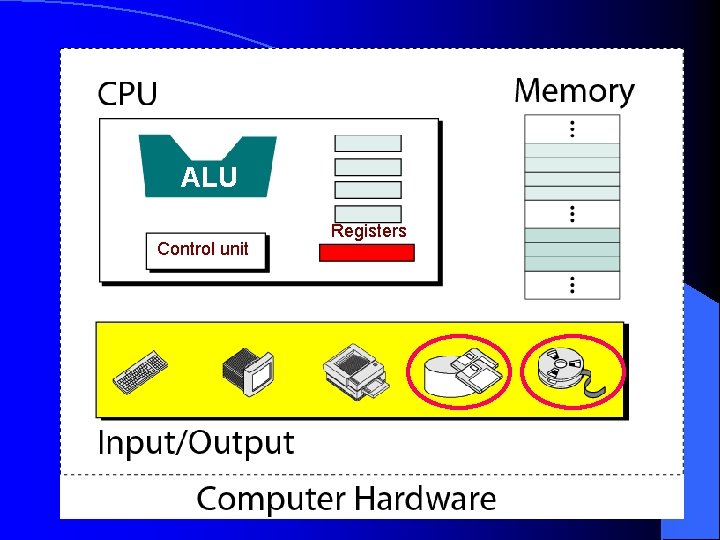
• Four subsystems: von Neumann model 1. Memory – the storage area of programs and data. 2. ALU – arithmetic/logic operations take place 3. Control Unit – control Memory, ALU, and I/O 4. I/O – accept input data/send output data Figure 1 -5
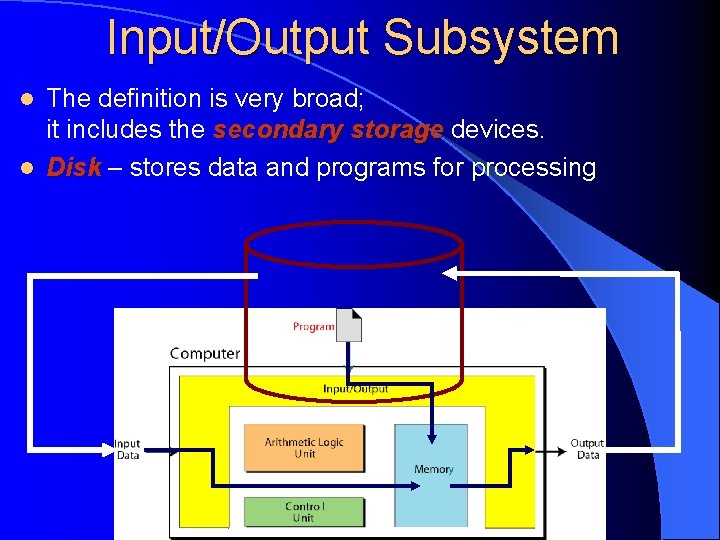
Input/Output Subsystem The definition is very broad; it includes the secondary storage devices. l Disk – stores data and programs for processing l
Stored Program Concept l The von Neumann model states that the program must be stored in memory. l The memory of modern computers hosts both § a program § its corresponding data
Sequential Execution of Instructions l. A program is made of a finite number of instructions. l The control unit § fetches one instruction from memory § interpret it § execute it l The instructions are executed one after another.
1. 3 COMPUTER HARDWARE
ALU Control unit Registers
1. 4 DATA
Storing Data l Store data in the form of an electrical signal, specially its presence or absence. l This implies that a computer can store data in one of two states. l Binary number system
1. 5 COMPUTER SOFTWARE
Requirements of von Neumann model The programs must be stored in memory. (Fig. 1. 6) 2. The programs must be a sequence of instructions. (Fig. 1. 7) 1.
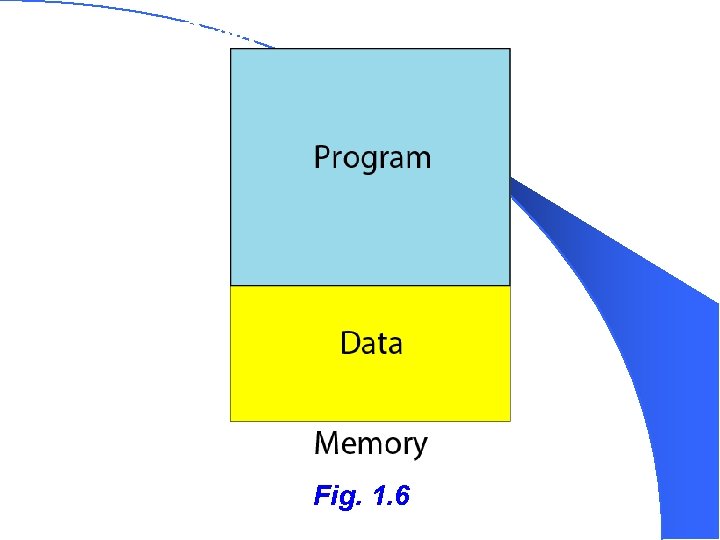
Figure 1 -6 Program and data in memory Fig. 1. 6
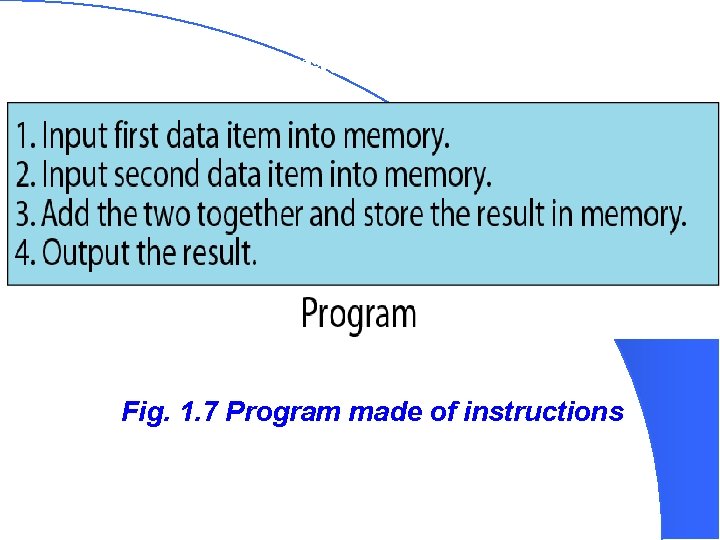
Figure 1 -7 Program made of instructions Fig. 1. 7 Program made of instructions
Algorithm l A programmer should 1. first solve the problem in a step-by-step manner and then 2. try to find the appropriate sequence of instructions that solves the problem. l The step-by-step solution is called an algorithm
Operating Systems l An operating system originally worked as a manager to facilitate access of the computer components for a program.
1. 6 HISTORY
Before 1950 l Mechanical machines (before 1930) l Early electronic computers (1930 -1950) l ENIAC (Electronic Numerical Integrator and Calculator) first general-purpose, totally electronic computer University of Pennsylvania, 1946
1950 l The preceding computers used memory only for storing data. l EDVAC the first computer based on von Neumann’s idea, University of Pennsylvania, 1950
Computer generations (1950 -present) l l l 1 st generation (1950 -1959) vacuum tubes 2 nd generation (1959 -1965) transistors, High-level languages(FORTRAN, COBOL) 3 rd generation (1965 -1975) IC(Integrated Circuit), Minicomputer, software industry was born 4 th generation (1975 -1985) VLSI, microcomputer 5 th generation (1985 -) laptop and palmtop computer
Microcomputer l Microcomputers are designed to be used by individuals, whether in the form of PCs, workstations or notebook computers. l A microcomputer contains § § a CPU on a microchip (the microprocessor), a memory system (typically ROM and RAM), a bus system and I/O ports, typically housed in a motherboard.
- Slides: 28