
CHAPTER 1 INTRODUCTION CELLS TISSUES PART 5 AP
- Slides: 18
CHAPTER 1 – INTRODUCTION / CELLS & TISSUES (PART 5) AP Biology
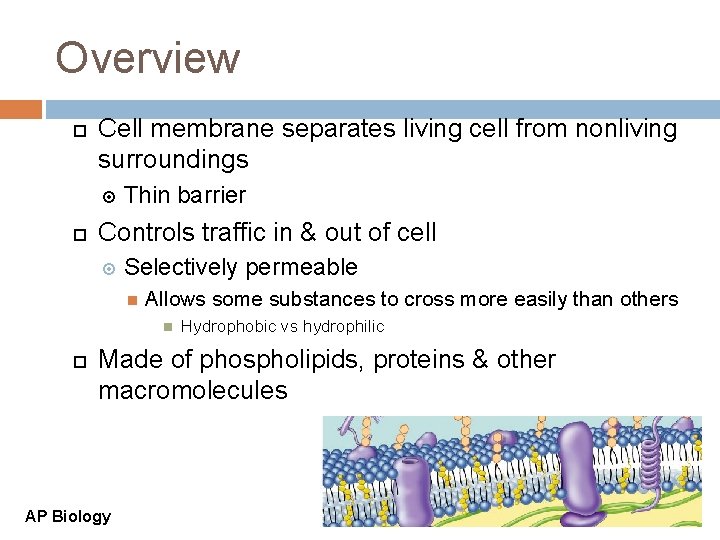
Overview Cell membrane separates living cell from nonliving surroundings Thin barrier Controls traffic in & out of cell Selectively permeable Allows some substances to cross more easily than others Hydrophobic vs hydrophilic Made of phospholipids, proteins & other macromolecules AP Biology
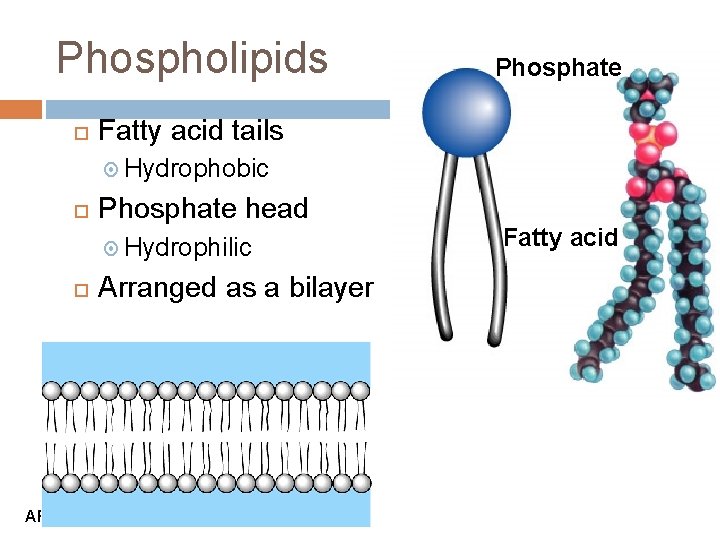
Phospholipids Phosphate Fatty acid tails Hydrophobic Phosphate head Hydrophilic Arranged as a bilayer AP Biology Fatty acid
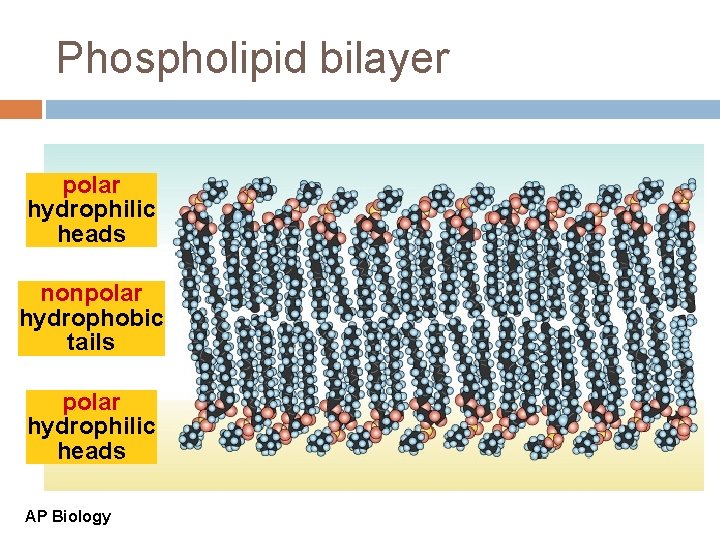
Phospholipid bilayer polar hydrophilic heads nonpolar hydrophobic tails polar hydrophilic heads AP Biology
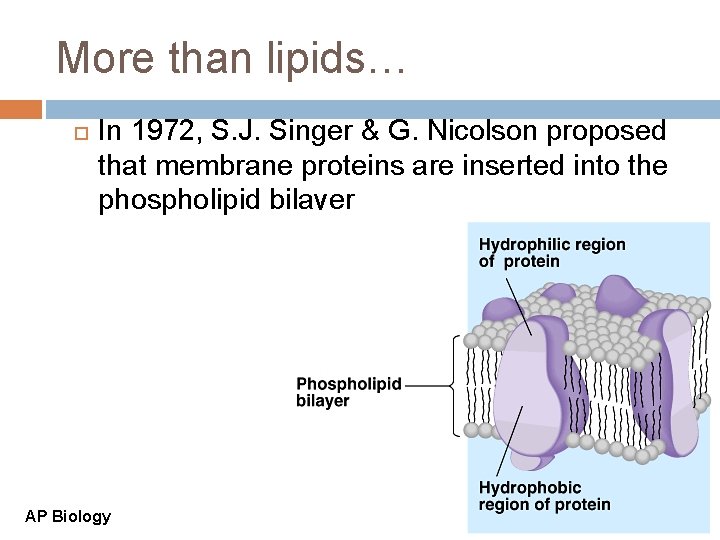
More than lipids… In 1972, S. J. Singer & G. Nicolson proposed that membrane proteins are inserted into the phospholipid bilayer AP Biology
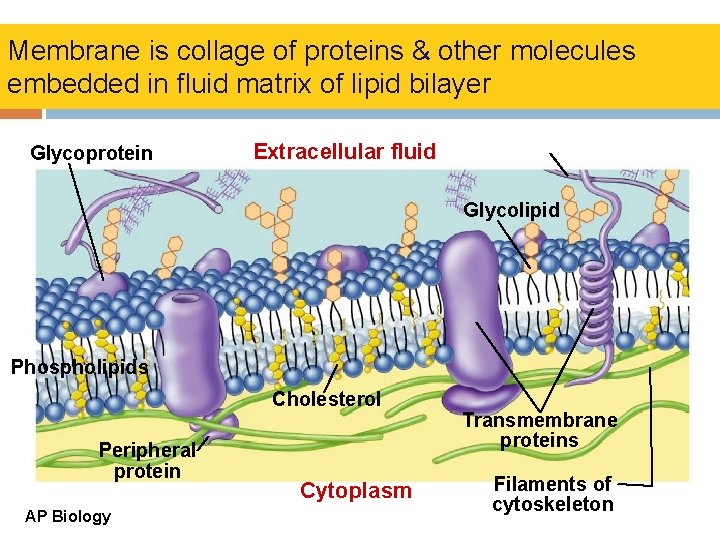
Membrane is collage of proteins & other molecules embedded in fluid matrix of lipid bilayer Glycoprotein Extracellular fluid Glycolipid Phospholipids Cholesterol Peripheral protein AP Biology Cytoplasm Transmembrane proteins Filaments of cytoskeleton
MOVEMENT ACROSS CELL MEMBRANES AP Biology
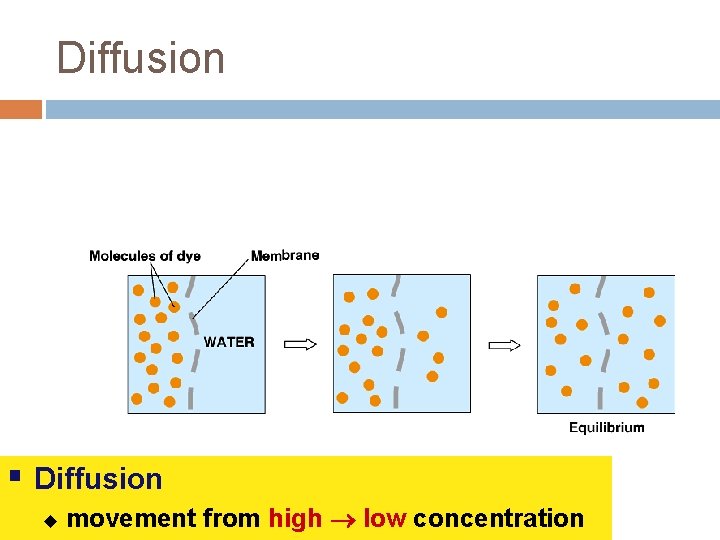
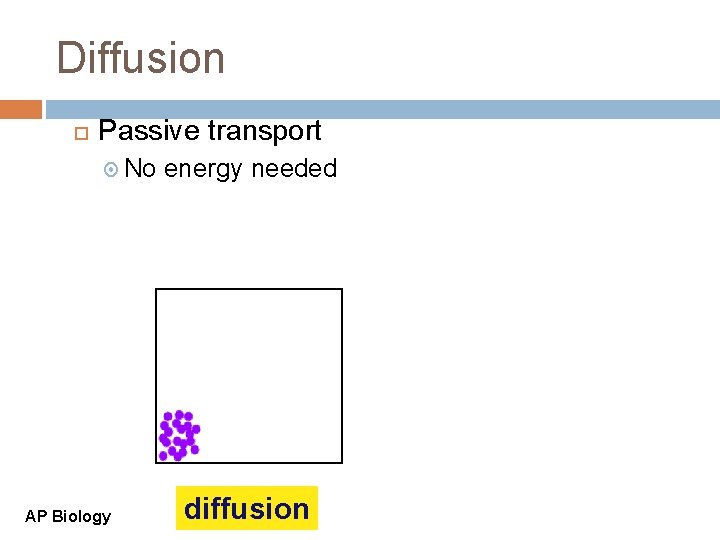
Diffusion § Diffusion movement from high low concentration APu. Biology
Diffusion Passive transport No AP Biology energy needed diffusion
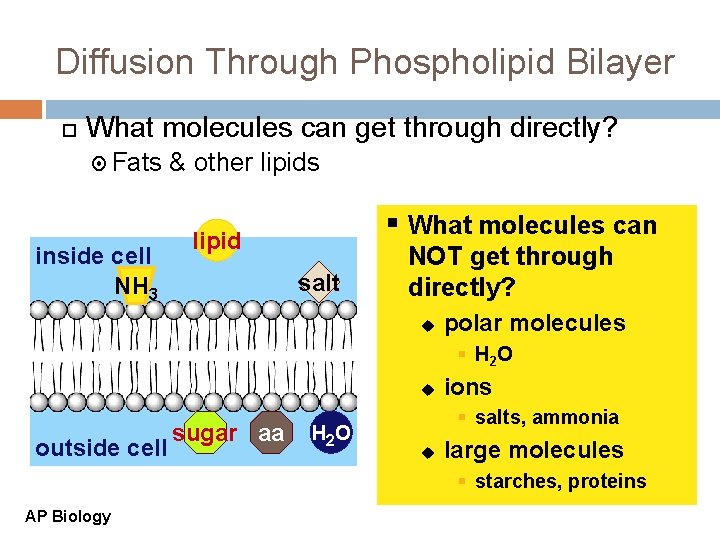
Diffusion Through Phospholipid Bilayer What molecules can get through directly? Fats inside cell NH 3 & other lipids § What molecules can lipid salt NOT get through directly? u polar molecules § H 2 O u outside cell sugar aa H 2 O ions § salts, ammonia u large molecules § starches, proteins AP Biology
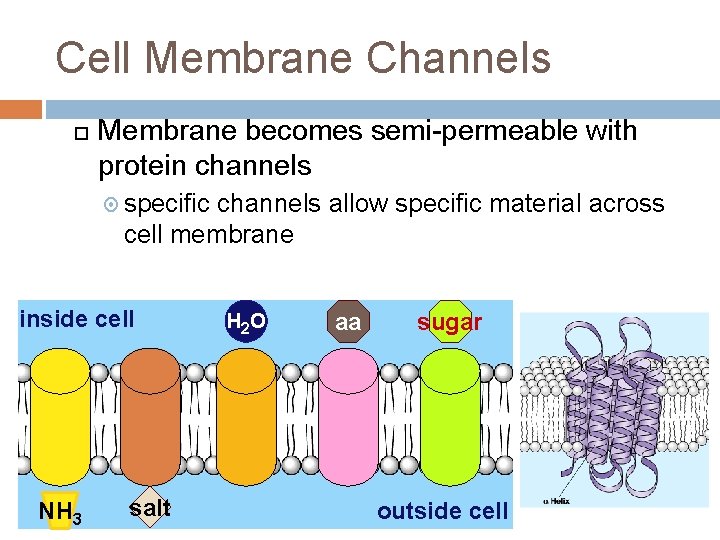
Cell Membrane Channels Membrane becomes semi-permeable with protein channels specific channels allow specific material across cell membrane inside cell NH AP Biology 3 salt H 2 O aa sugar outside cell
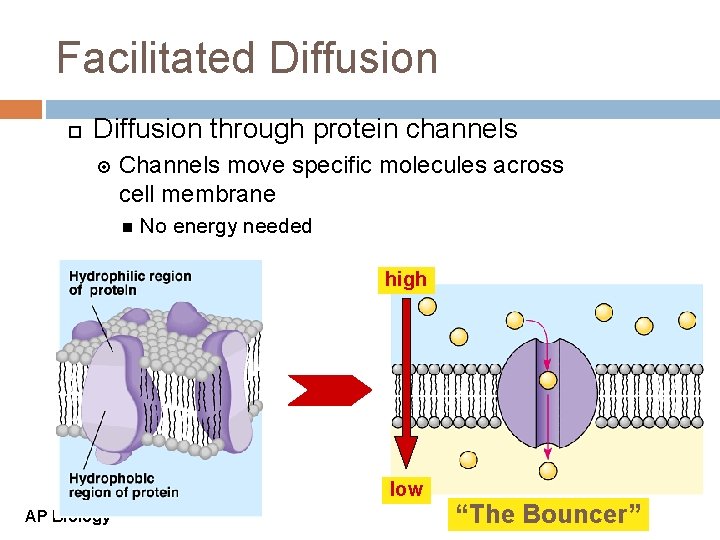
Facilitated Diffusion through protein channels Channels move specific molecules across cell membrane No energy needed high low AP Biology “The Bouncer”
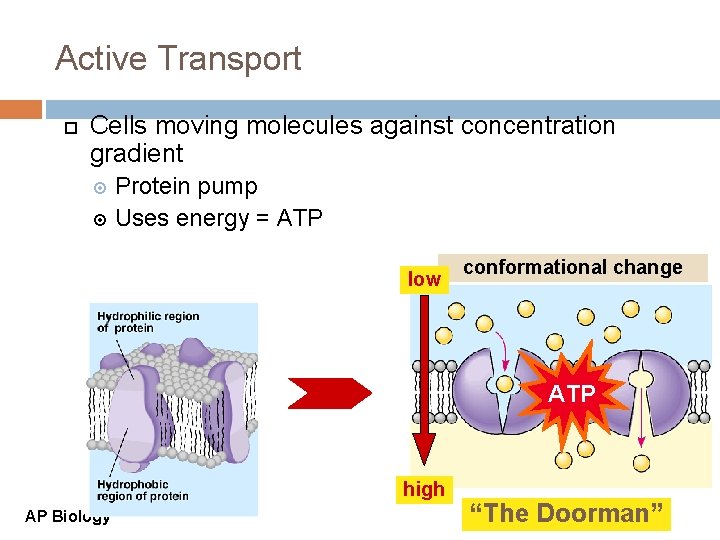
Active Transport Cells moving molecules against concentration gradient Protein pump Uses energy = ATP low conformational change ATP high AP Biology “The Doorman”
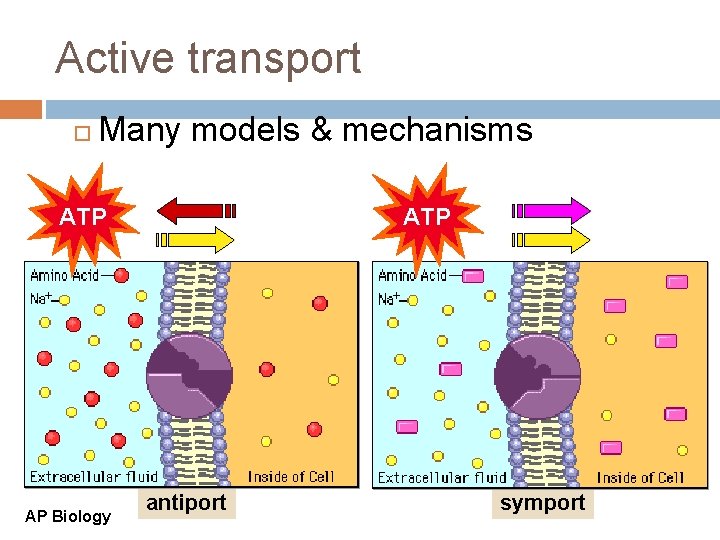
Active transport Many models & mechanisms ATP AP Biology ATP antiport symport
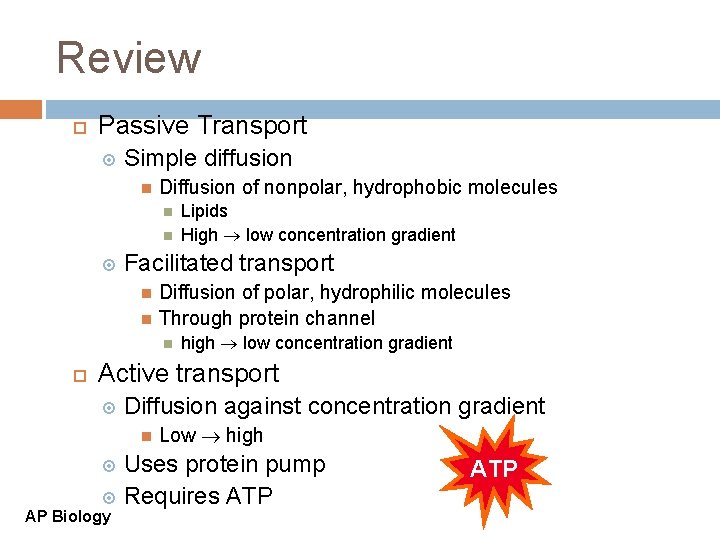
Review Passive Transport Simple diffusion Diffusion of nonpolar, hydrophobic molecules Facilitated transport Diffusion of polar, hydrophilic molecules Through protein channel Lipids High low concentration gradient high low concentration gradient Active transport Diffusion against concentration gradient Low high Uses protein pump Requires ATP AP Biology ATP
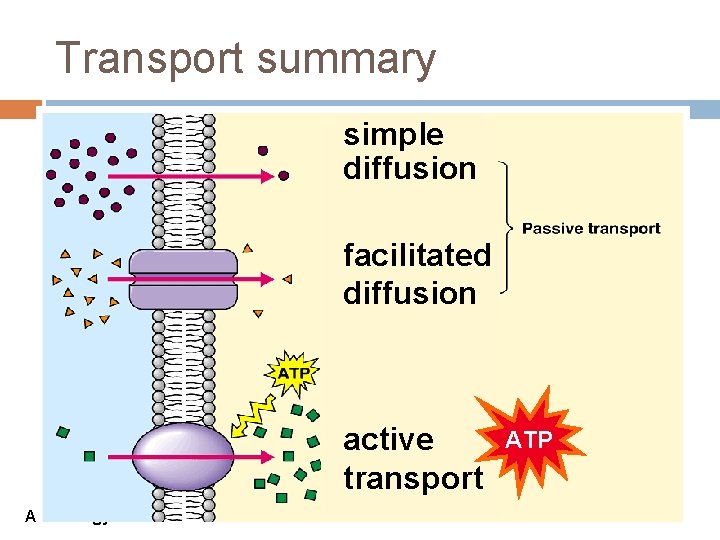
Transport summary simple diffusion facilitated diffusion active transport AP Biology ATP
MOVEMENT OF WATER ACROSS CELL MEMBRANE AP Biology
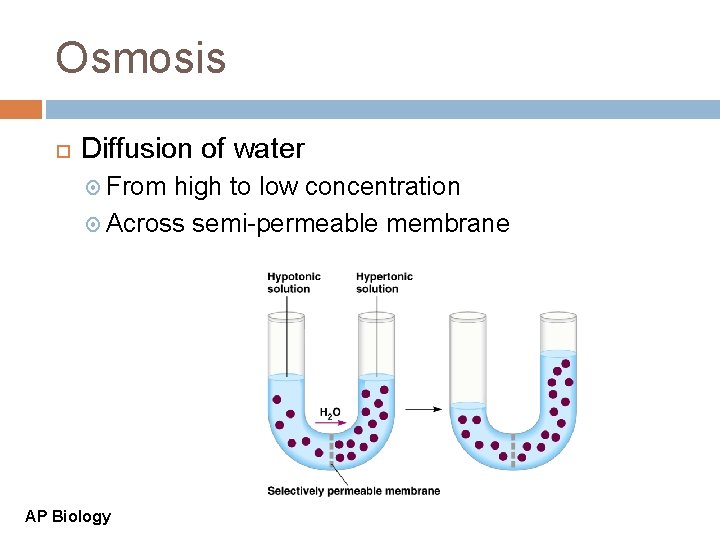
Osmosis Diffusion of water From high to low concentration Across semi-permeable membrane AP Biology