
CHAPTER 1 INTRODUCTION CELLS TISSUES PART 4 Organic
- Slides: 18
CHAPTER 1 – INTRODUCTION / CELLS & TISSUES (PART 4)
Organic Compounds 2 Compounds that contain carbon Large organic molecules called macromolecules copyright cmassengale
3 Carbon (C) Has 4 electrons in outer shell Can form covalent bonds with as many as 4 other atoms Usually with C, H, O or N copyright cmassengale
Macromolecules 4 Large organic molecules Made up of smaller building blocks Also called polymers Called monomers Examples: 1. Carbohydrates 2. Lipids 3. Proteins 4. Nucleic acids copyright cmassengale
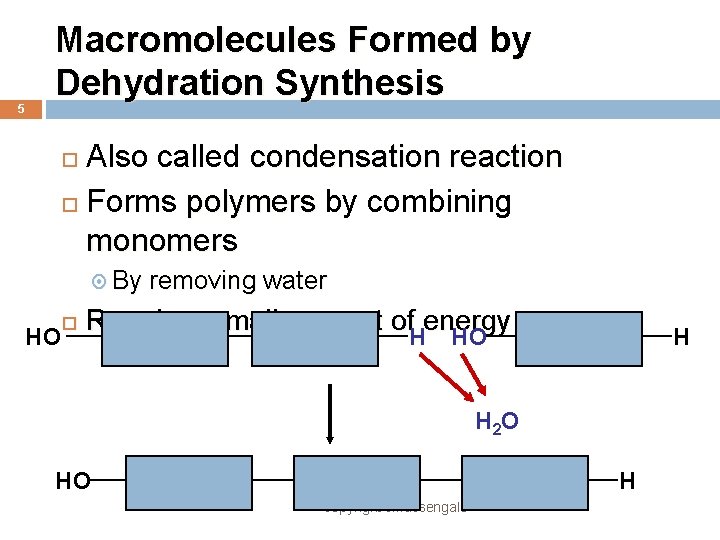
5 Macromolecules Formed by Dehydration Synthesis Also called condensation reaction Forms polymers by combining monomers By removing water Requires small amount of energy HO H HO H H 2 O HO H copyright cmassengale
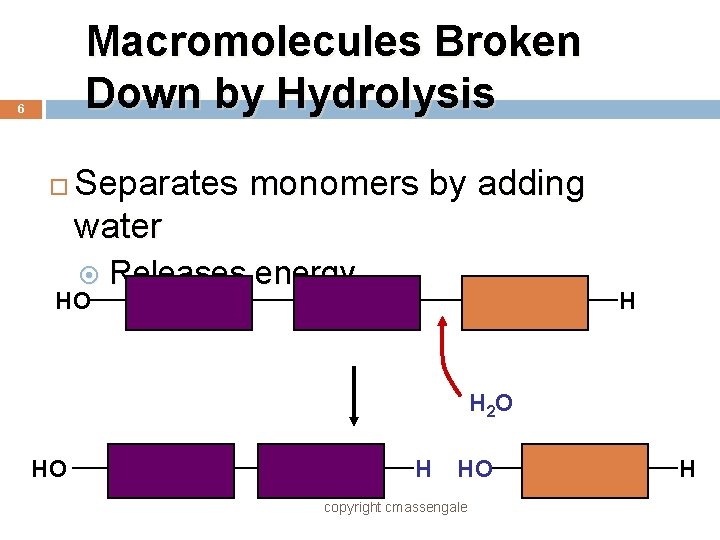
Macromolecules Broken Down by Hydrolysis 6 Separates monomers by adding water HO Releases energy H H 2 O HO H HO copyright cmassengale H
Carbohydrates 7 Sugar molecules Examples: Monosaccharide Disaccharide Polysaccharide copyright cmassengale
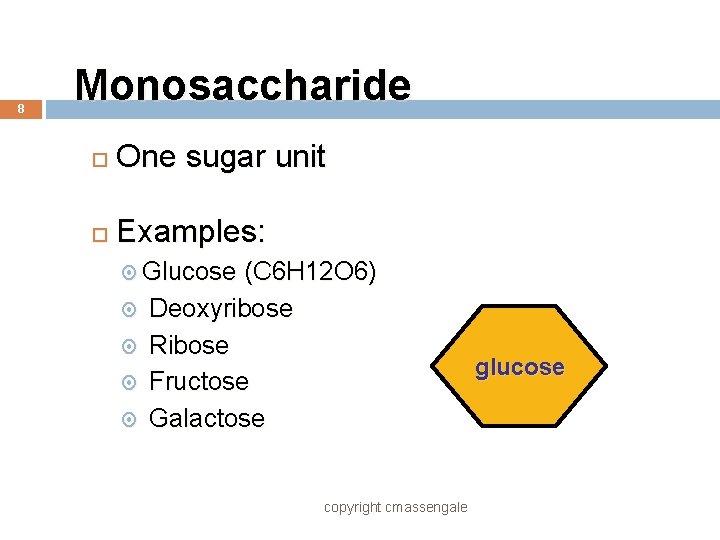
8 Monosaccharide One sugar unit Examples: Glucose (C 6 H 12 O 6) Deoxyribose Ribose Fructose Galactose copyright cmassengale glucose
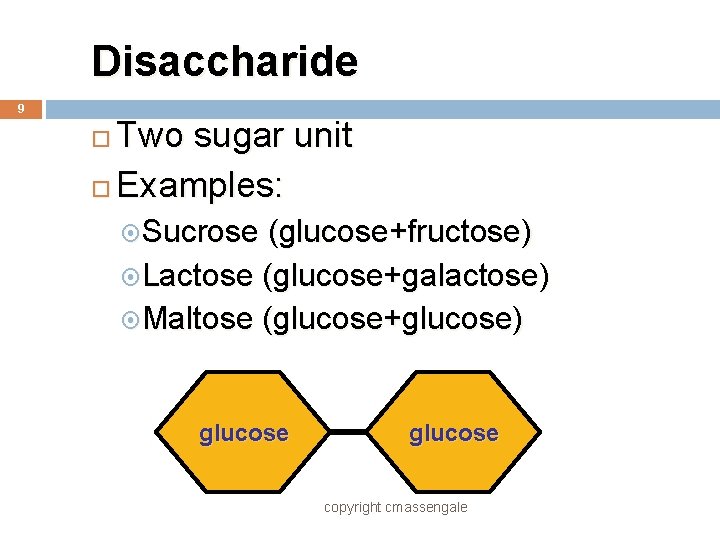
Disaccharide 9 Two sugar unit Examples: Sucrose (glucose+fructose) Lactose (glucose+galactose) Maltose (glucose+glucose) glucose copyright cmassengale
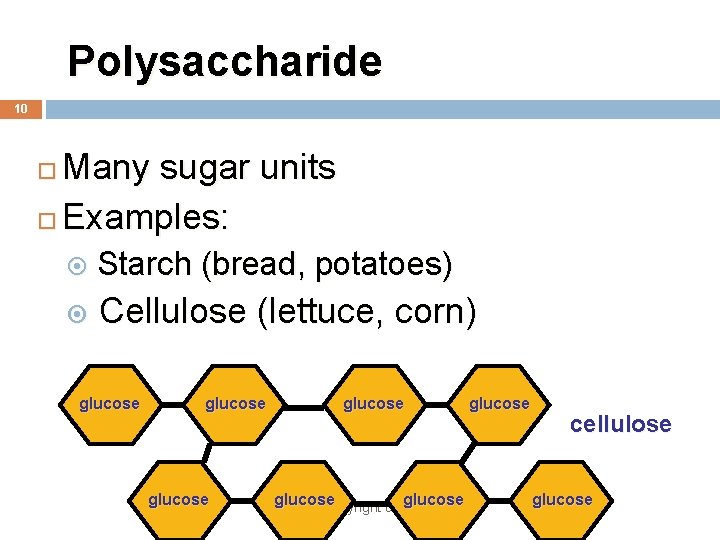
Polysaccharide 10 Many sugar units Examples: Starch (bread, potatoes) Cellulose (lettuce, corn) glucose glucose copyright cmassengale glucose cellulose glucose
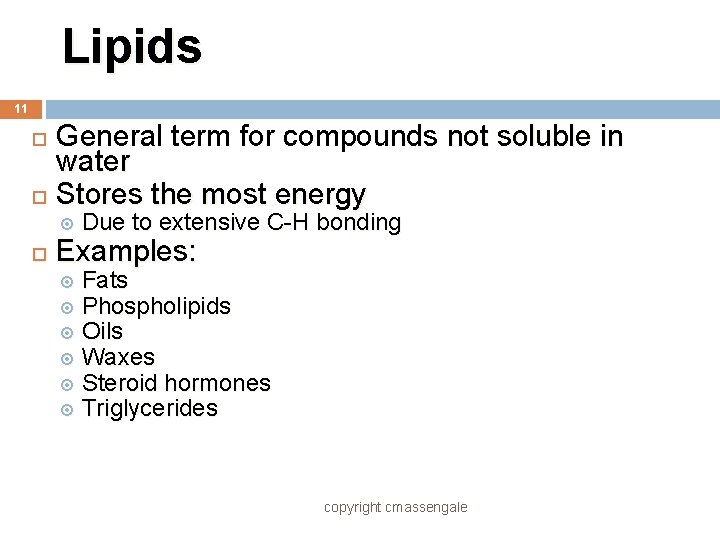
Lipids 11 General term for compounds not soluble in water Stores the most energy Due to extensive C-H bonding Fats Phospholipids Oils Waxes Steroid hormones Triglycerides Examples: copyright cmassengale
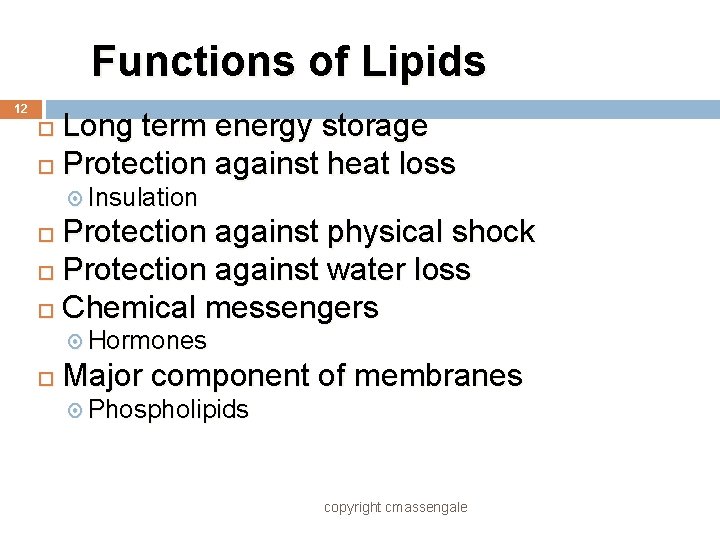
Functions of Lipids 12 Long term energy storage Protection against heat loss Insulation Protection against physical shock Protection against water loss Chemical messengers Hormones Major component of membranes Phospholipids copyright cmassengale
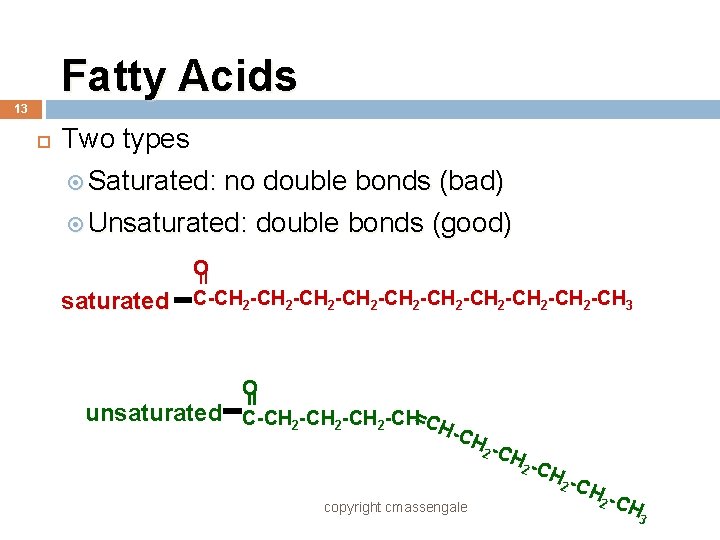
Fatty Acids 13 Two types Saturated: no double bonds (bad) Unsaturated: double bonds (good) = O C-CH 2 -CH 2 -CH 2 -CH 3 saturated = unsaturated O C-CH 2 -CH=CH -CH copyright cmassengale 2 -C H 2 C H 3
Proteins 14 Polymers of amino acids Bonded together by peptide bonds Functions: Storage: albumin (egg white) Transport: hemoglobin Regulatory: hormones Movement: muscles Structural: membranes, hair, nails Enzymes: cellular reactions copyright cmassengale
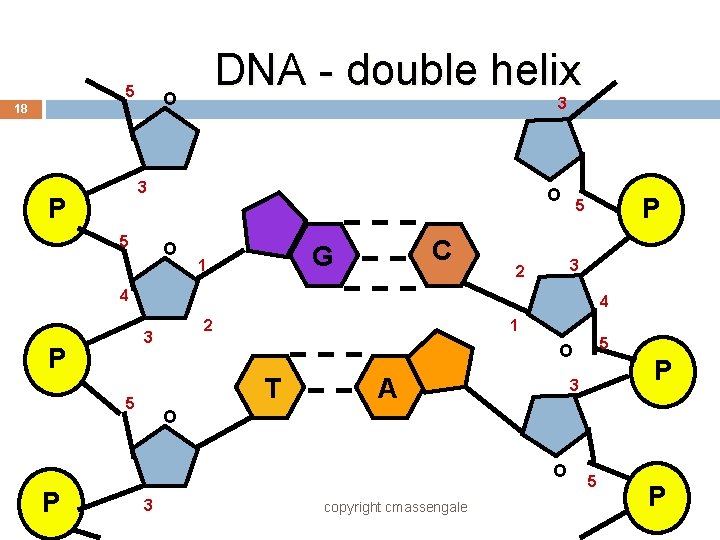
Nucleic acids 15 Two types: Deoxyribonucleic Double acid (DNA) helix Ribonucleic acid (RNA) Single strand Composed of long chains of nucleotides Linked by dehydration synthesis copyright cmassengale
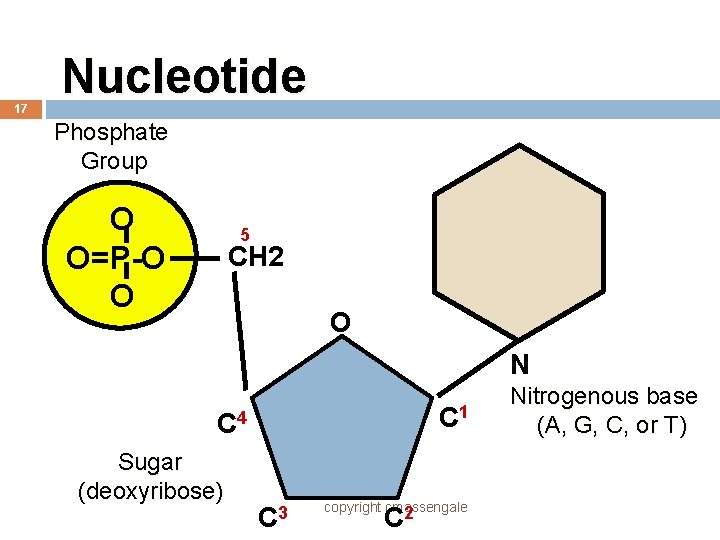
Nucleotides 16 Three parts: Phosphate group Pentose sugar (5 -carbon) Nitrogenous base: Adenine (A) Thymine (T) DNA only Uracil (U) RNA only Cytosine (C) Guanine (G) copyright cmassengale
17 Nucleotide Phosphate Group O O=P-O O 5 CH 2 O N C 1 C 4 Sugar (deoxyribose) C 3 copyright cmassengale 2 C Nitrogenous base (A, G, C, or T)
5 DNA - double helix O 18 3 3 P 5 O O C G 1 P 5 3 2 4 4 2 3 P 1 T 5 A P 3 O O P 5 O 3 copyright cmassengale 5 P