
Chapter 1 Introduction and DC Circuit AZRALMUKMIN BIN
Chapter 1: Introduction and DC Circuit AZRALMUKMIN BIN AZMI
Chapter 1. 1: Current, Voltage, Resistance, Conductor, Insulator, Active & Passive Element AZRALMUKMIN BIN AZMI

Electric Circuit � Interconnection between components or electrical devices for the purpose of communicating or transferring energy from one point to another.
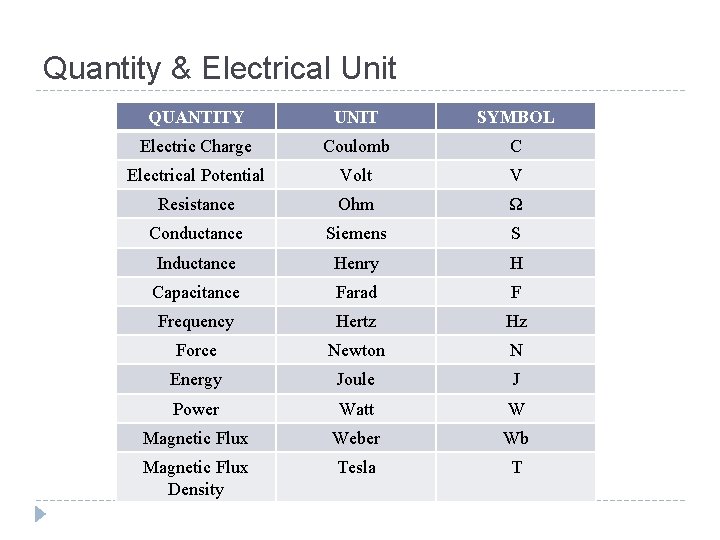
Quantity & Electrical Unit QUANTITY UNIT SYMBOL Electric Charge Coulomb C Electrical Potential Volt V Resistance Ohm Ω Conductance Siemens S Inductance Henry H Capacitance Farad F Frequency Hertz Hz Force Newton N Energy Joule J Power Watt W Magnetic Flux Weber Wb Magnetic Flux Density Tesla T
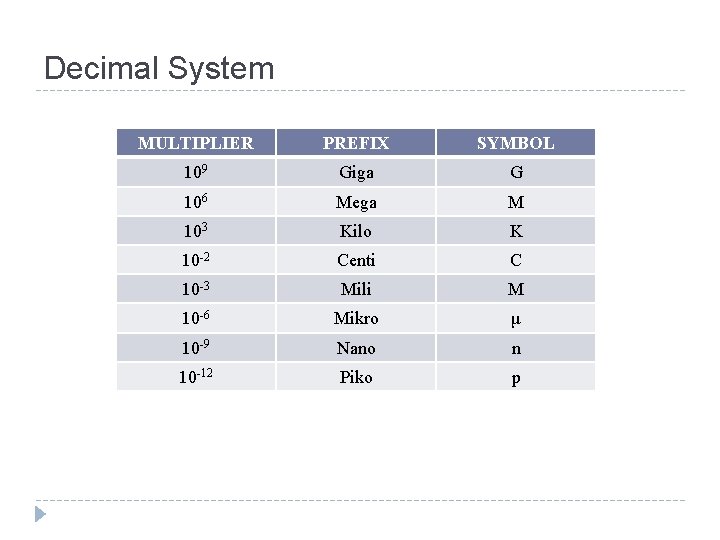
Decimal System MULTIPLIER PREFIX SYMBOL 109 Giga G 106 Mega M 103 Kilo K 10 -2 Centi C 10 -3 Mili M 10 -6 Mikro μ 10 -9 Nano n 10 -12 Piko p
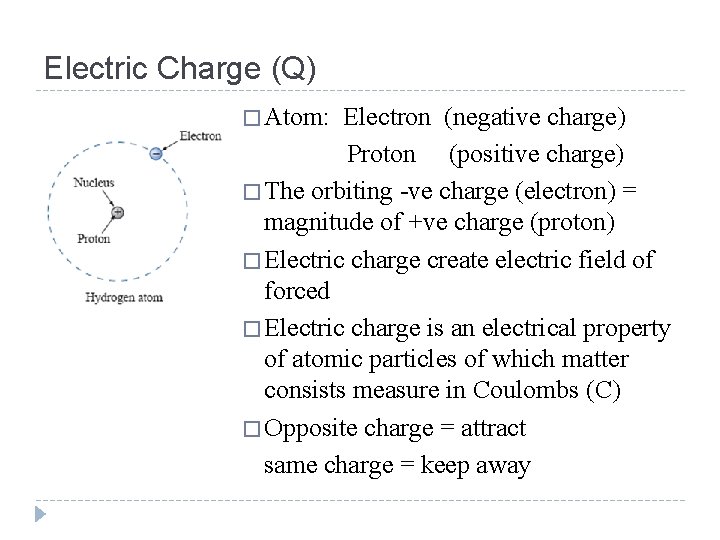
Electric Charge (Q) � Atom: Electron (negative charge) Proton (positive charge) � The orbiting -ve charge (electron) = magnitude of +ve charge (proton) � Electric charge create electric field of forced � Electric charge is an electrical property of atomic particles of which matter consists measure in Coulombs (C) � Opposite charge = attract same charge = keep away
Electric Charge (Cont…) � 1 coulomb (C) = total charge associated with 6. 242 x 1018 electrons.
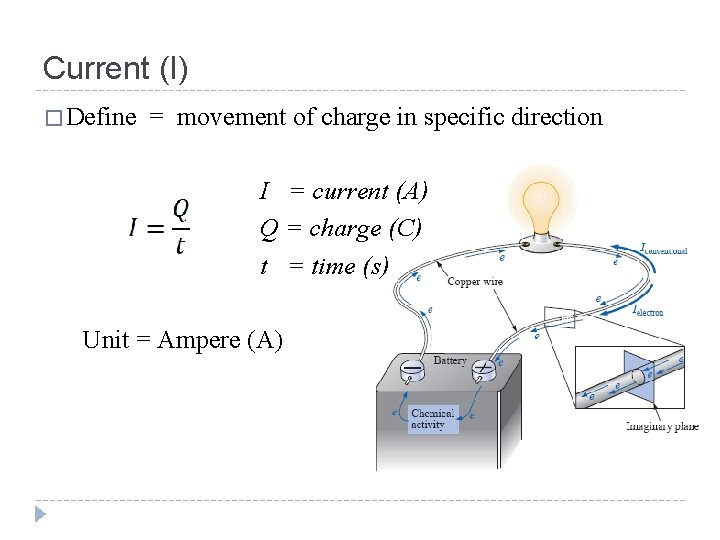
Current (I) � Define = movement of charge in specific direction I = current (A) Q = charge (C) t = time (s) Unit = Ampere (A)
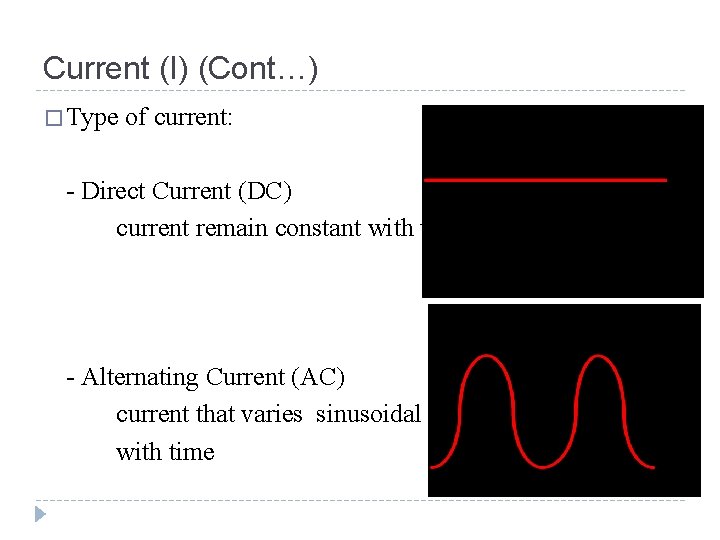
Current (I) (Cont…) � Type of current: - Direct Current (DC) current remain constant with time - Alternating Current (AC) current that varies sinusoidal with time
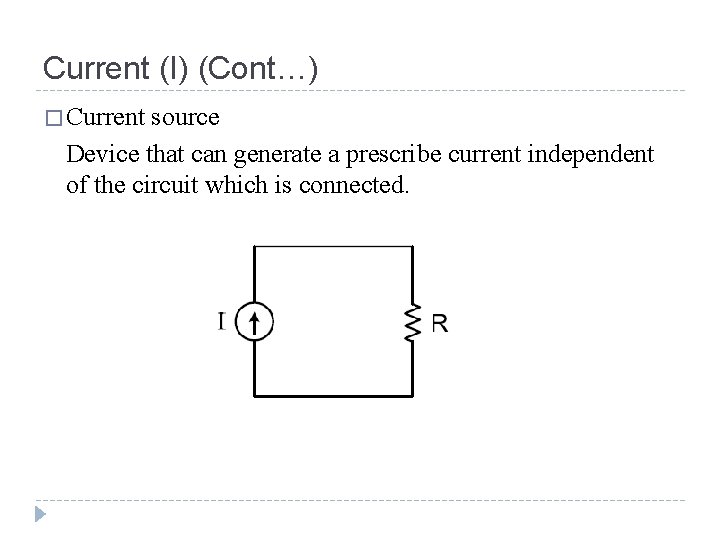
Current (I) (Cont…) � Current source Device that can generate a prescribe current independent of the circuit which is connected.
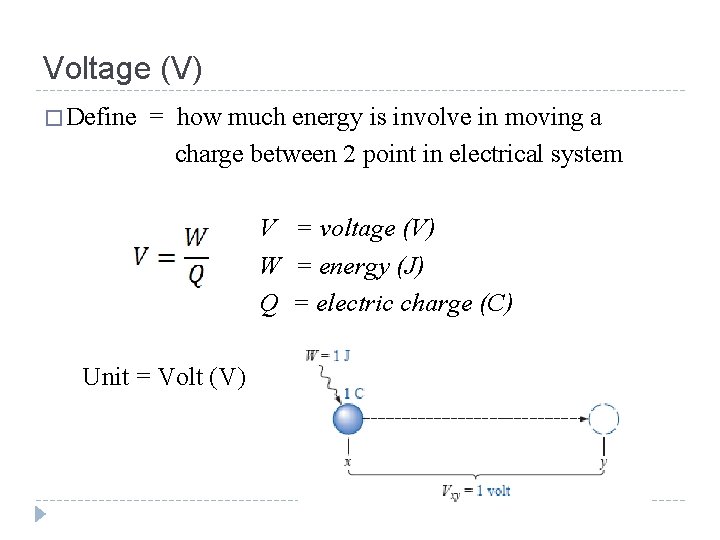
Voltage (V) � Define = how much energy is involve in moving a charge between 2 point in electrical system V = voltage (V) W = energy (J) Q = electric charge (C) Unit = Volt (V)
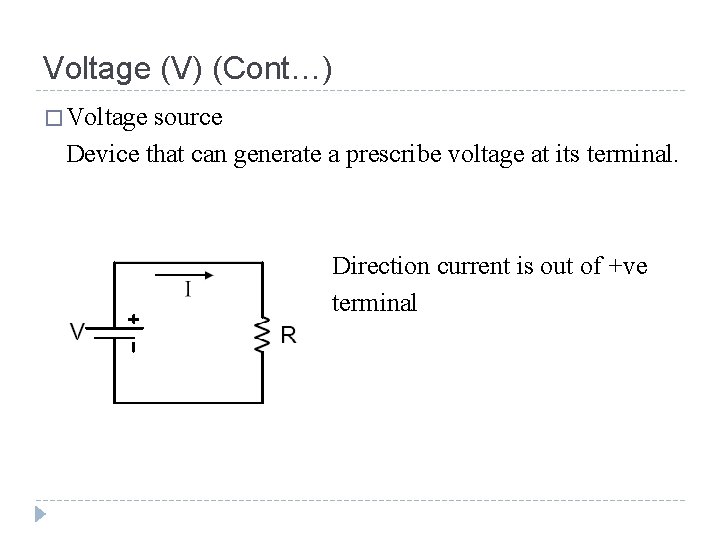
Voltage (V) (Cont…) � Voltage source Device that can generate a prescribe voltage at its terminal. Direction current is out of +ve terminal
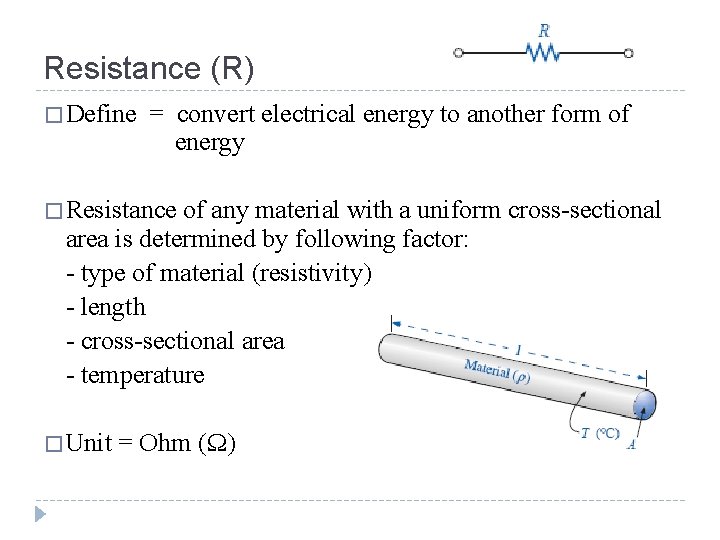
Resistance (R) � Define = convert electrical energy to another form of energy � Resistance of any material with a uniform cross-sectional area is determined by following factor: - type of material (resistivity) - length - cross-sectional area - temperature � Unit = Ohm (Ω)
Resistance (R) (Cont…)) � The higher the resistivity of a conductor, the higher its resistance � The longer the length of a conductor, the higher its resistance � The lower the temperature of a conductor, the higher its resistance � The higher the cross-sectional area of a conductor, the lower its resistance
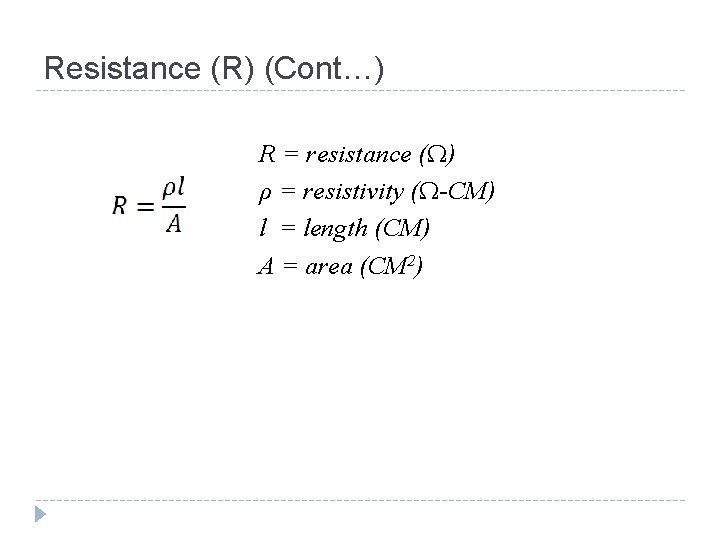
Resistance (R) (Cont…) R = resistance (Ω) ρ = resistivity (Ω-CM) l = length (CM) A = area (CM 2)
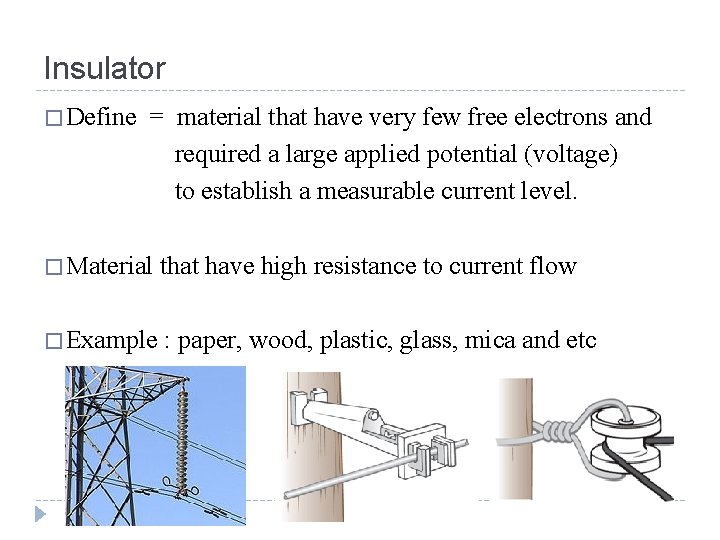
Insulator � Define = material that have very few free electrons and required a large applied potential (voltage) to establish a measurable current level. � Material that have high resistance to current flow � Example : paper, wood, plastic, glass, mica and etc
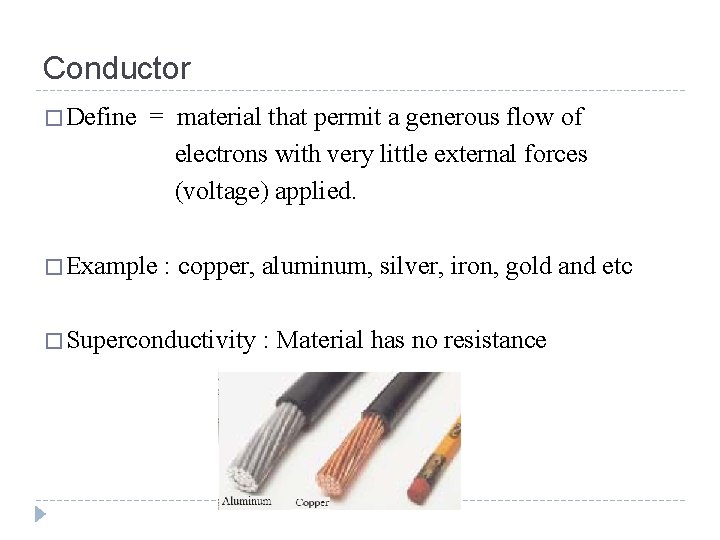
Conductor � Define = material that permit a generous flow of electrons with very little external forces (voltage) applied. � Example : copper, aluminum, silver, iron, gold and etc � Superconductivity : Material has no resistance
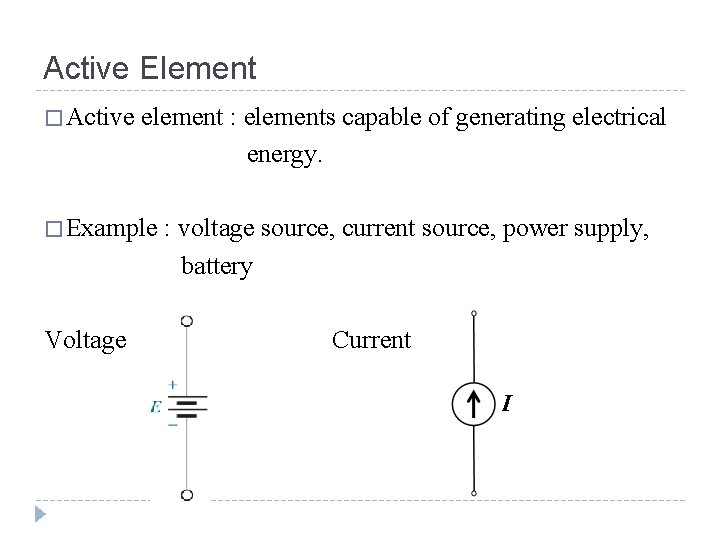
Active Element � Active element : elements capable of generating electrical energy. � Example Voltage : voltage source, current source, power supply, battery Current
Passive Element � Passive element : elements are not capable of generating electrical energy. � Example : resistor, capacitor, inductor
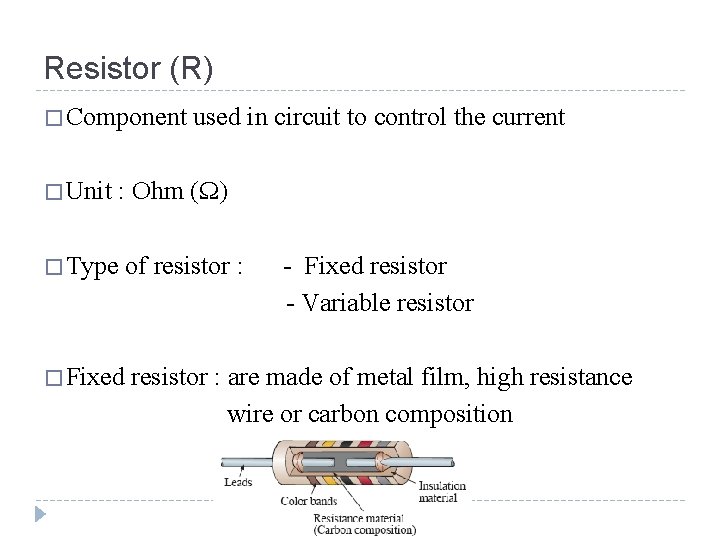
Resistor (R) � Component � Unit used in circuit to control the current : Ohm (Ω) � Type of resistor : - Fixed resistor - Variable resistor � Fixed resistor : are made of metal film, high resistance wire or carbon composition
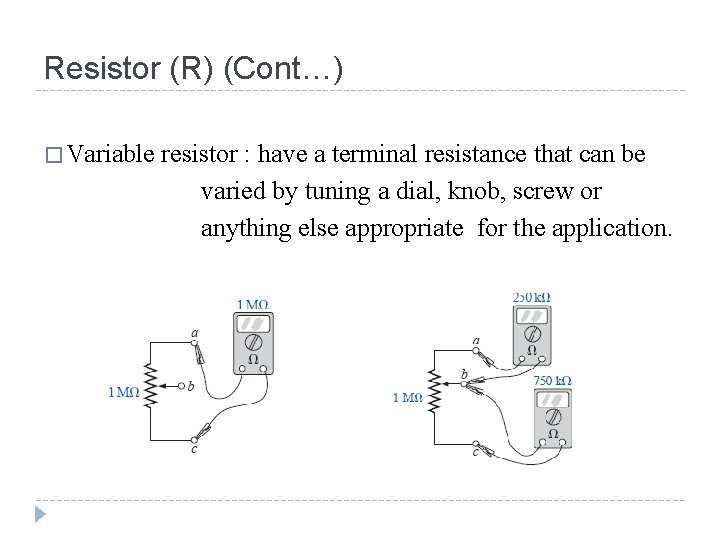
Resistor (R) (Cont…) � Variable resistor : have a terminal resistance that can be varied by tuning a dial, knob, screw or anything else appropriate for the application.
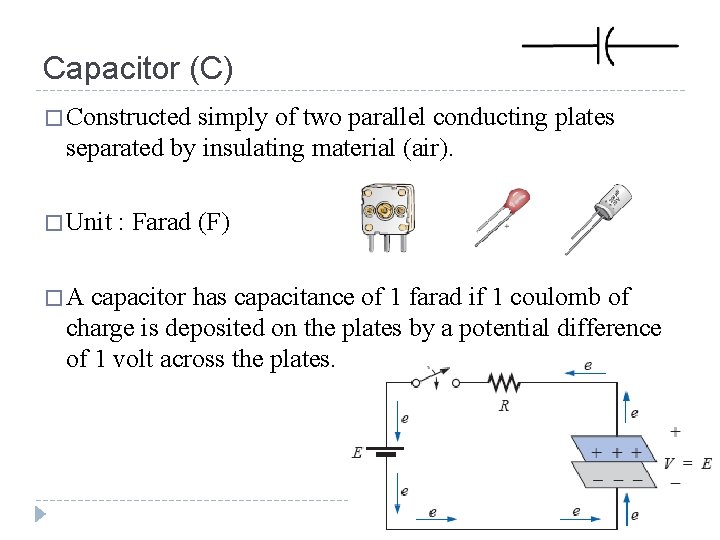
Capacitor (C) � Constructed simply of two parallel conducting plates separated by insulating material (air). � Unit �A : Farad (F) capacitor has capacitance of 1 farad if 1 coulomb of charge is deposited on the plates by a potential difference of 1 volt across the plates.
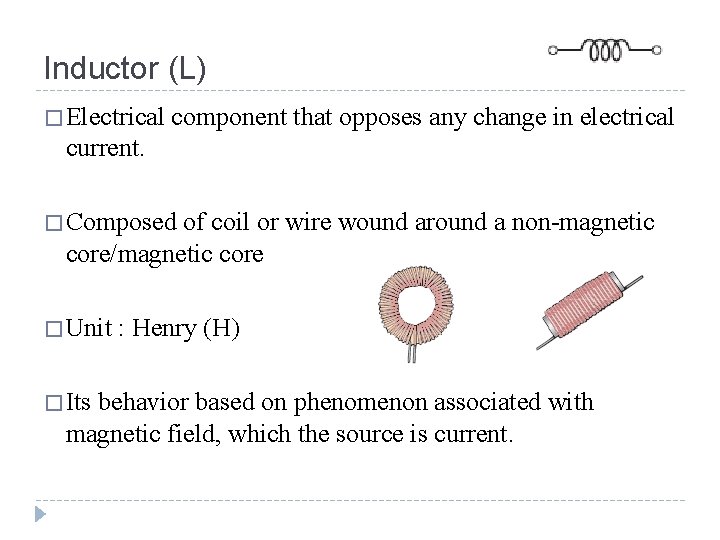
Inductor (L) � Electrical component that opposes any change in electrical current. � Composed of coil or wire wound around a non-magnetic core/magnetic core � Unit � Its : Henry (H) behavior based on phenomenon associated with magnetic field, which the source is current.
- Slides: 23