
Chapter 1 Introduction and Basic Concepts Yoav Peles

Chapter 1: Introduction and Basic Concepts Yoav Peles Department of Mechanical, Aerospace and Nuclear Engineering Rensselaer Polytechnic Institute Copyright © The Mc. Graw-Hill Companies, Inc. Permission required for reproduction or display.

Objectives When you finish studying this chapter, you should be able to: • Understand how thermodynamics and heat transfer are related to each other, • Distinguish thermal energy from other forms of energy, and heat transfer from other forms of energy transfer, • Perform general energy balances as well as surface energy balances, • Understand the basic mechanisms of heat transfer, which are conduction, convection, and radiation, and Fourier's law of heat conduction, Newton's law of cooling, and the Stefan–Boltzmann law of radiation, • Identify the mechanisms of heat transfer that occur simultaneously in practice, • Develop an awareness of the cost associated with heat losses, and • Solve various heat transfer problems encountered in practice.
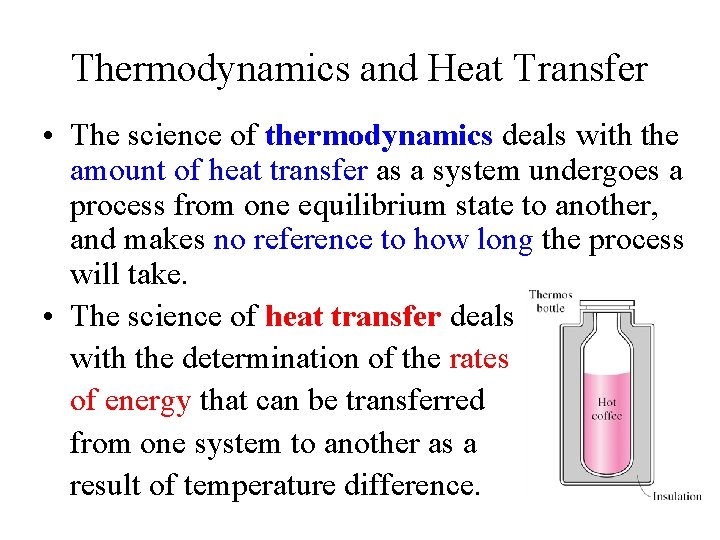
Thermodynamics and Heat Transfer • The science of thermodynamics deals with the amount of heat transfer as a system undergoes a process from one equilibrium state to another, and makes no reference to how long the process will take. • The science of heat transfer deals with the determination of the rates of energy that can be transferred from one system to another as a result of temperature difference.
Thermodynamics and Heat Transfer • Thermodynamics deals with equilibrium states and changes from one equilibrium state to another. Heat transfer, on the other hand, deals with systems that lack thermal equilibrium, and thus it is a nonequilibrium phenomenon. • Therefore, the study of heat transfer cannot be based on the principles of thermodynamics alone. • However, the laws of thermodynamics lay the framework for the science of heat transfer.

Heat Transfer • The basic requirement for heat transfer is the presence of a temperature difference. • The second law requires that heat be transferred in the direction of decreasing temperature. • The temperature difference is the driving force for heat transfer. • The rate of heat transfer in a certain direction depends on the magnitude of the temperature gradient in that direction. • The larger the temperature gradient, the higher the rate of heat transfer.
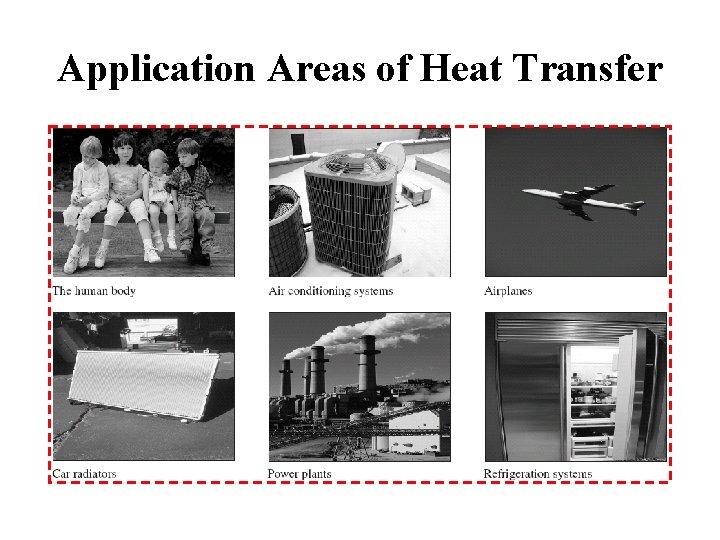
Application Areas of Heat Transfer
Heat and Other Forms of Energy • Energy can exist in numerous forms such as: – – – – thermal, mechanical, kinetic, potential, electrical, magnetic, chemical, and nuclear. • Their sum constitutes the total energy E (or e on a unit mass basis) of a system. • The sum of all microscopic forms of energy is called the internal energy of a system.
• Internal energy may be viewed as the sum of the kinetic and potential energies of the molecules. • The kinetic energy of the molecules is called sensible heat. • The internal energy associated with the phase of a system is called latent heat. • The internal energy associated with the atomic bonds in a molecule is called chemical (or bond) energy. • The internal energy associated with the bonds within the nucleus of the atom itself is called nuclear energy.
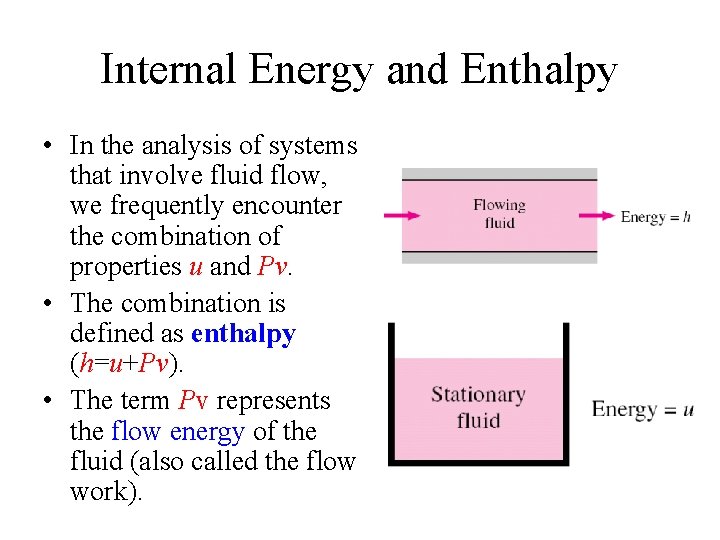
Internal Energy and Enthalpy • In the analysis of systems that involve fluid flow, we frequently encounter the combination of properties u and Pv. • The combination is defined as enthalpy (h=u+Pv). • The term Pv represents the flow energy of the fluid (also called the flow work).
Specific Heats of Gases, Liquids, and Solids • Specific heat is defined as the energy required to raise the temperature of a unit mass of a substance by one degree. • Two kinds of specific heats: – specific heat at constant volume cv, and – specific heat at constant pressure cp. • The specific heats of a substance, in general, depend on two independent properties such as temperature and pressure. • For an ideal gas, however, they depend on temperature only.
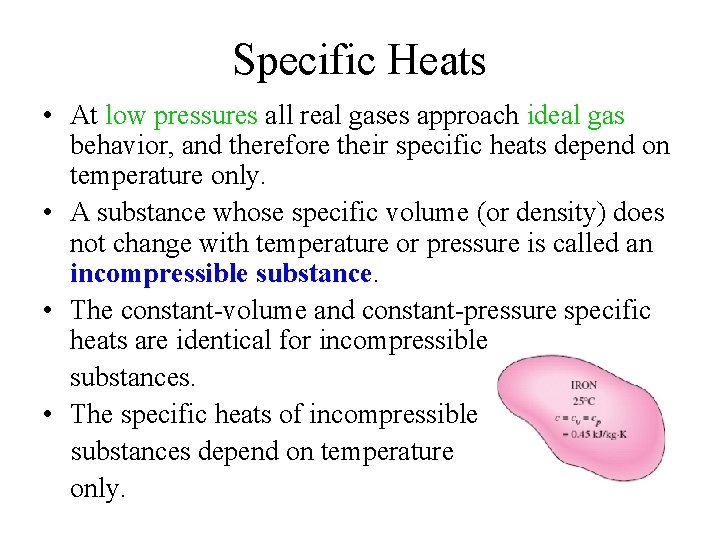
Specific Heats • At low pressures all real gases approach ideal gas behavior, and therefore their specific heats depend on temperature only. • A substance whose specific volume (or density) does not change with temperature or pressure is called an incompressible substance. • The constant-volume and constant-pressure specific heats are identical for incompressible substances. • The specific heats of incompressible substances depend on temperature only.
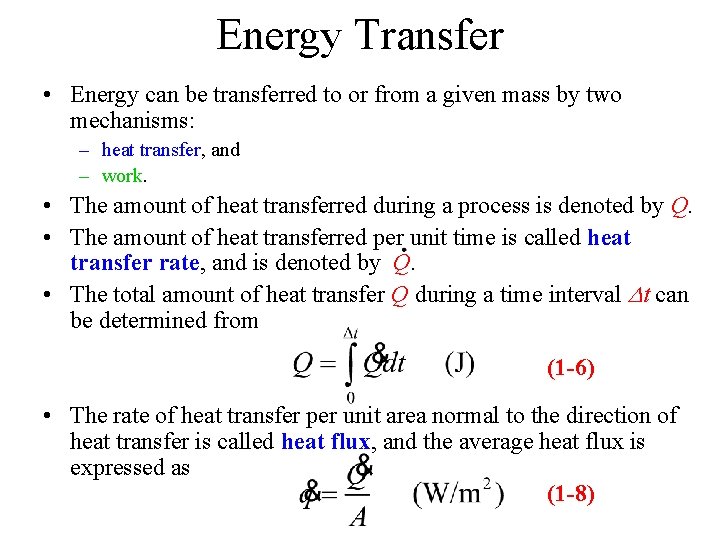
Energy Transfer • Energy can be transferred to or from a given mass by two mechanisms: – heat transfer, and – work. • The amount of heat transferred during a process is denoted by Q. • The amount of heat transferred per unit time is called heat transfer rate, and is denoted by Q. • The total amount of heat transfer Q during a time interval Dt can be determined from (1 -6) • The rate of heat transfer per unit area normal to the direction of heat transfer is called heat flux, and the average heat flux is expressed as (1 -8)
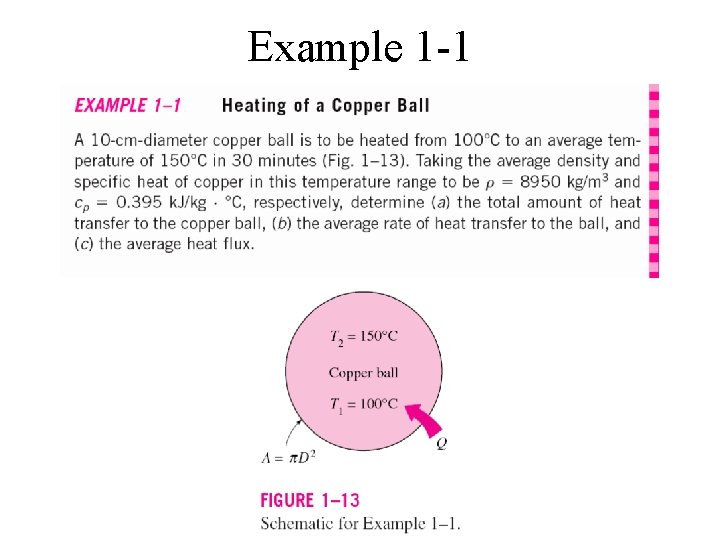
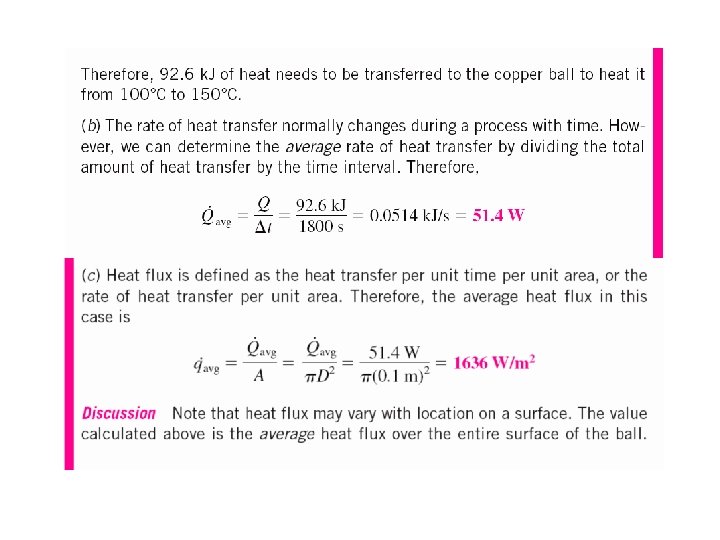
Example 1 -1

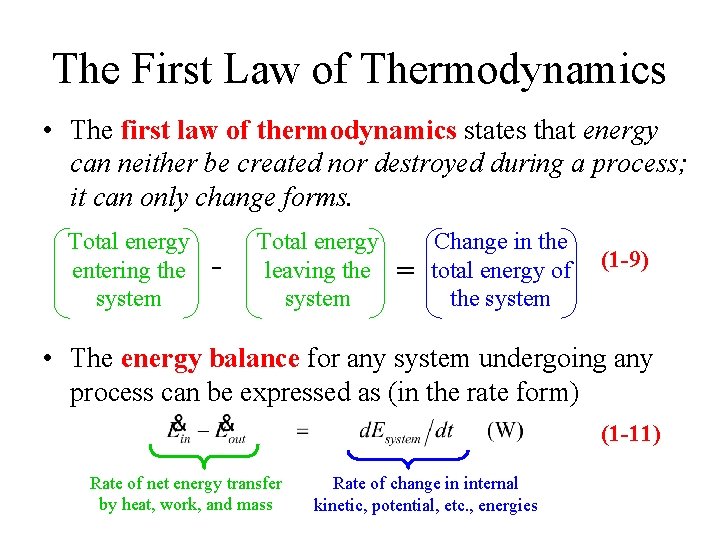
The First Law of Thermodynamics • The first law of thermodynamics states that energy can neither be created nor destroyed during a process; it can only change forms. Total energy entering the system - Total energy leaving the system = Change in the total energy of the system (1 -9) • The energy balance for any system undergoing any process can be expressed as (in the rate form) (1 -11) Rate of net energy transfer by heat, work, and mass Rate of change in internal kinetic, potential, etc. , energies
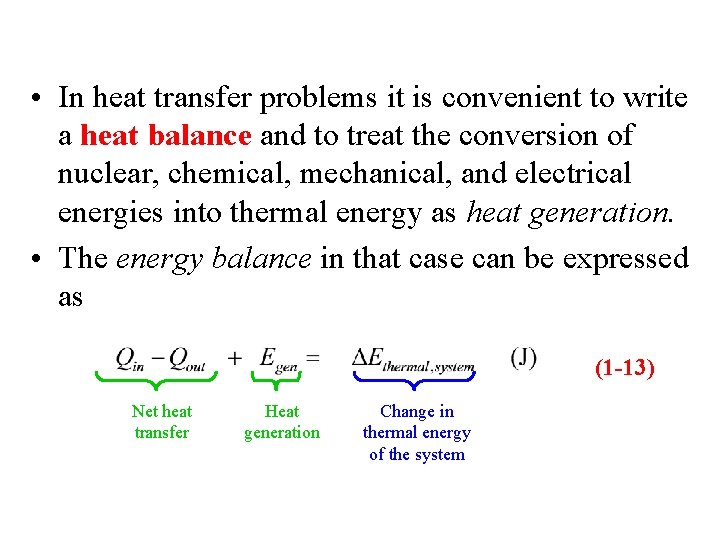
• In heat transfer problems it is convenient to write a heat balance and to treat the conversion of nuclear, chemical, mechanical, and electrical energies into thermal energy as heat generation. • The energy balance in that case can be expressed as (1 -13) Net heat transfer Heat generation Change in thermal energy of the system
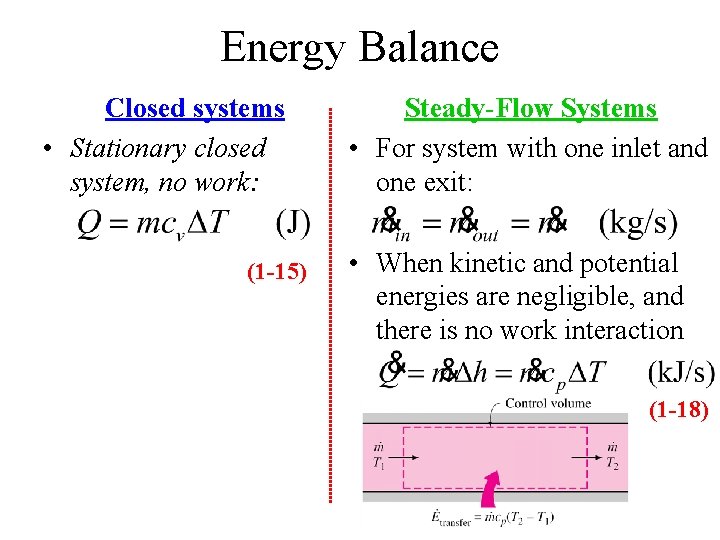
Energy Balance Closed systems • Stationary closed system, no work: (1 -15) Steady-Flow Systems • For system with one inlet and one exit: • When kinetic and potential energies are negligible, and there is no work interaction (1 -18)
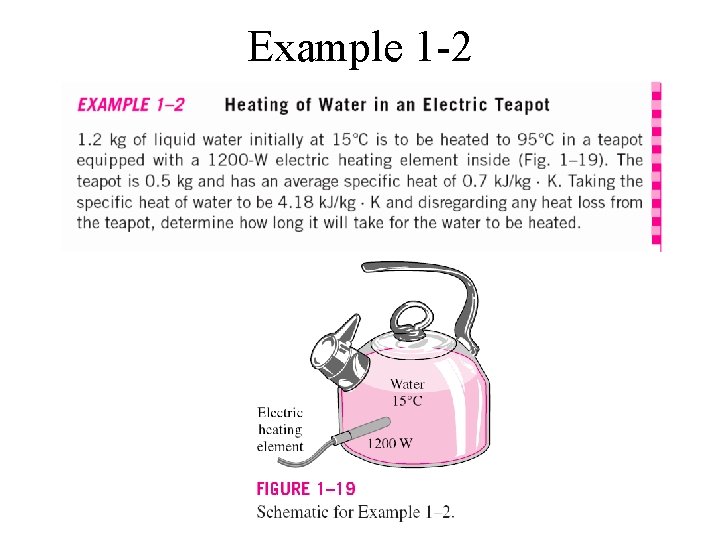
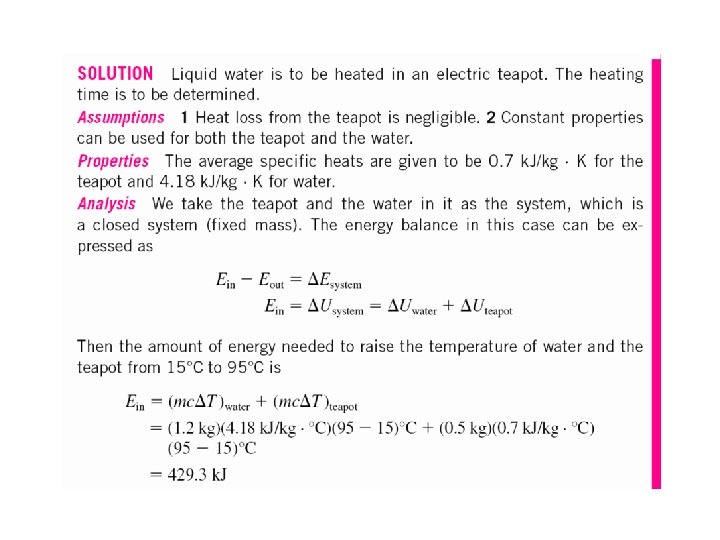
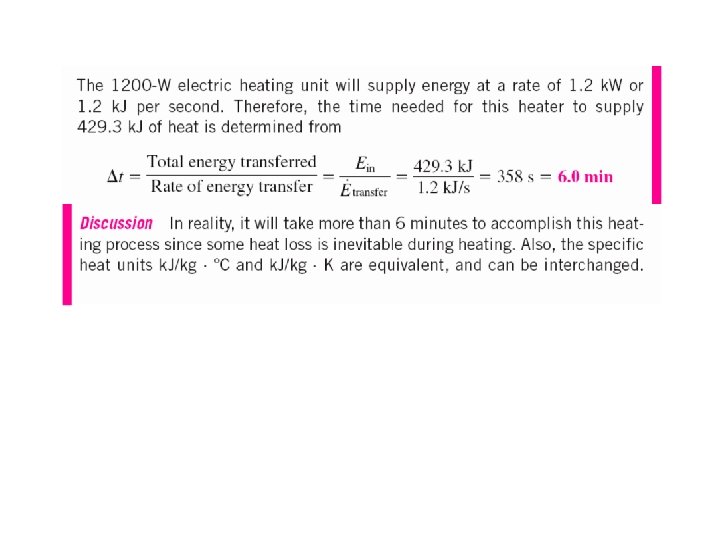
Example 1 -2
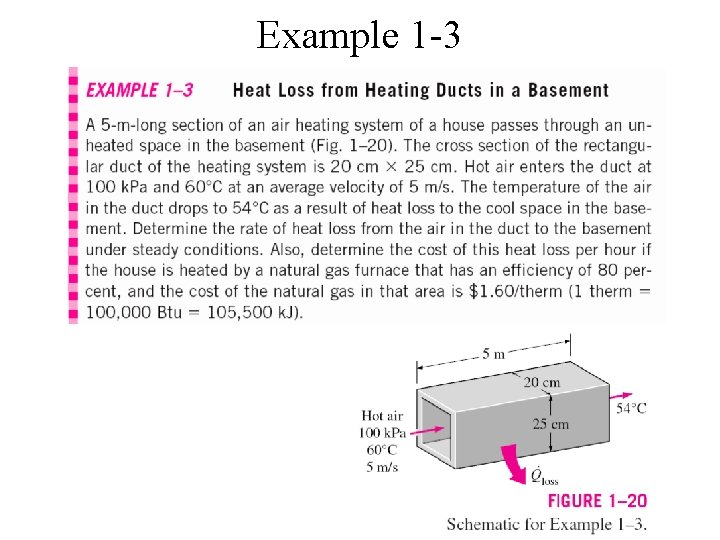
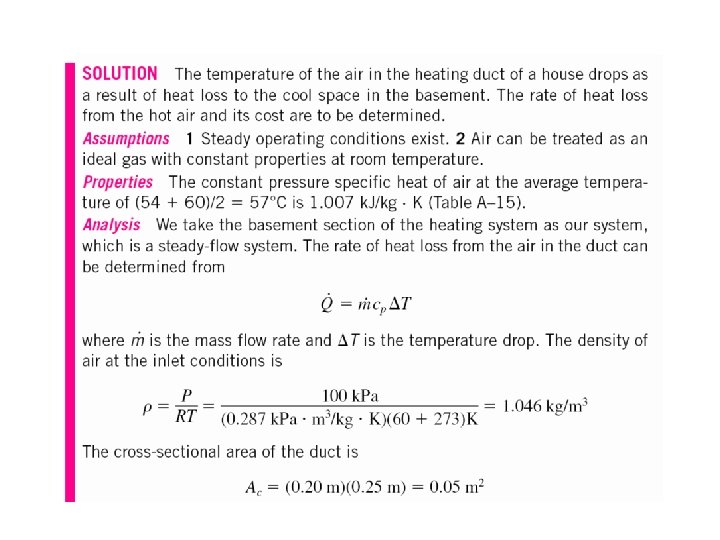
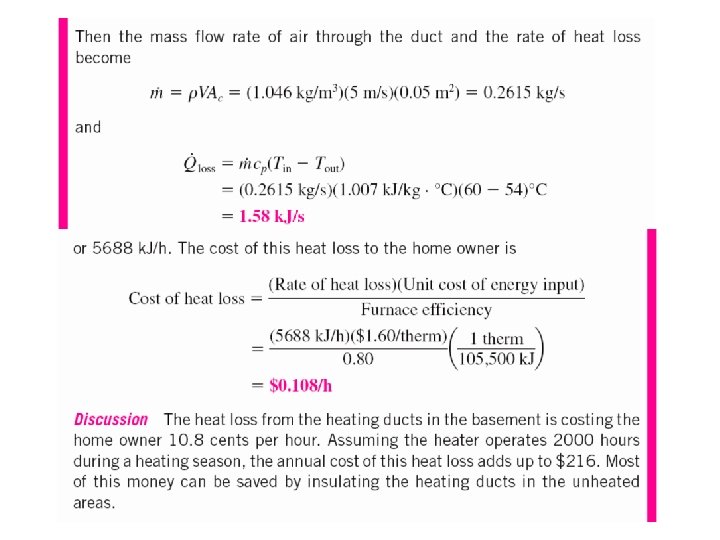
Example 1 -3
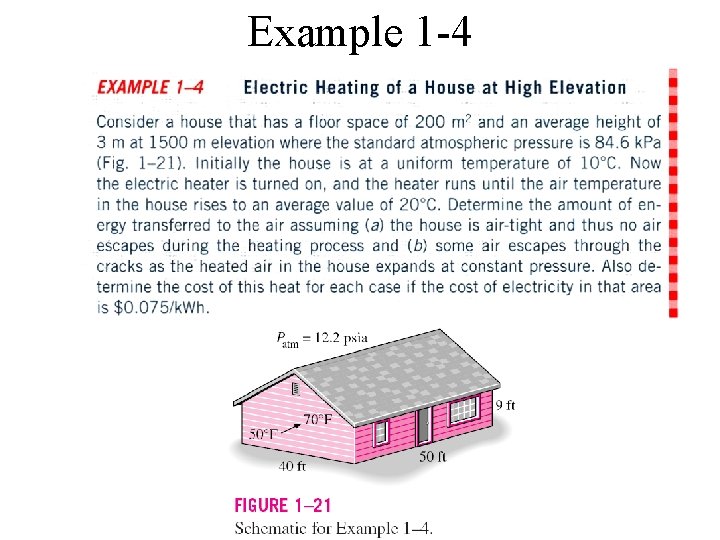
Example 1 -4
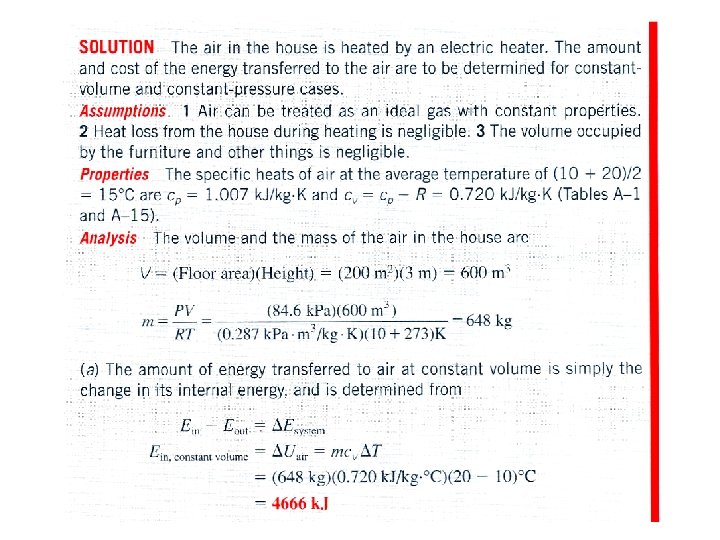
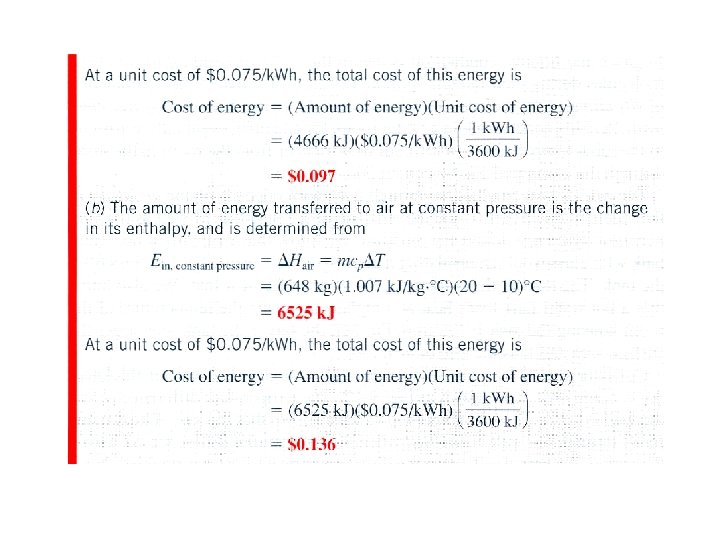
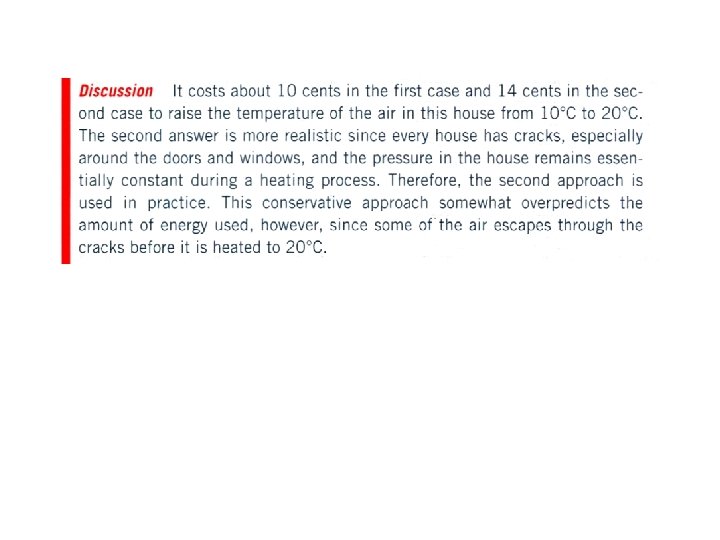
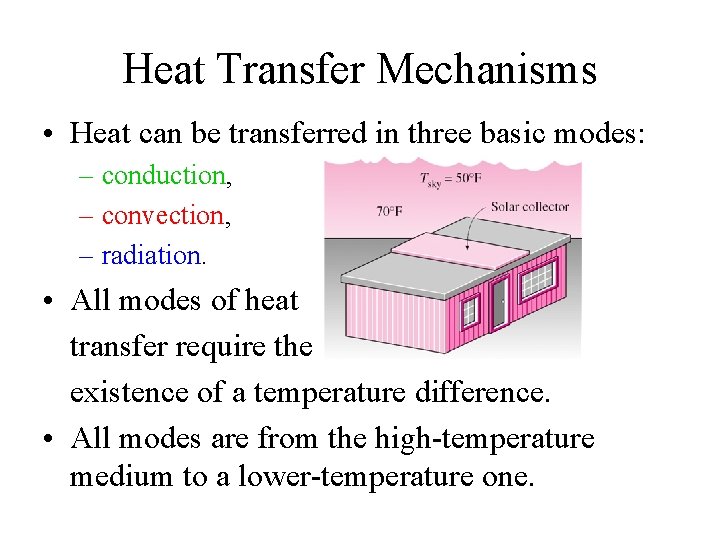
Heat Transfer Mechanisms • Heat can be transferred in three basic modes: – conduction, – convection, – radiation. • All modes of heat transfer require the existence of a temperature difference. • All modes are from the high-temperature medium to a lower-temperature one.
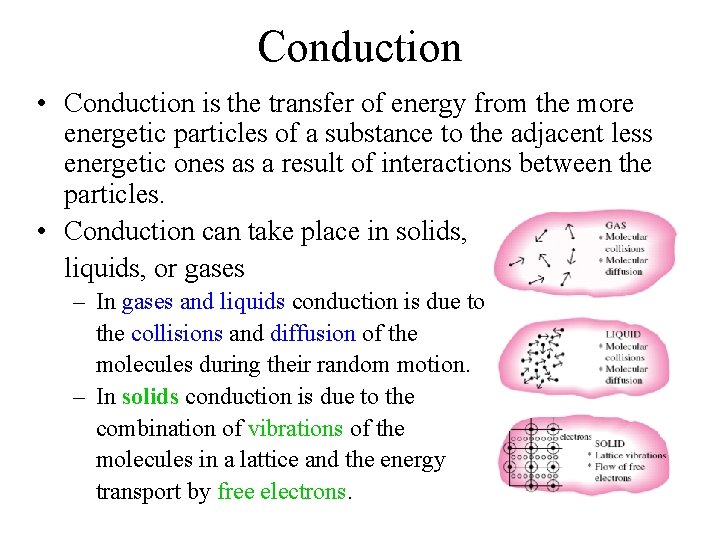
Conduction • Conduction is the transfer of energy from the more energetic particles of a substance to the adjacent less energetic ones as a result of interactions between the particles. • Conduction can take place in solids, liquids, or gases – In gases and liquids conduction is due to the collisions and diffusion of the molecules during their random motion. – In solids conduction is due to the combination of vibrations of the molecules in a lattice and the energy transport by free electrons.
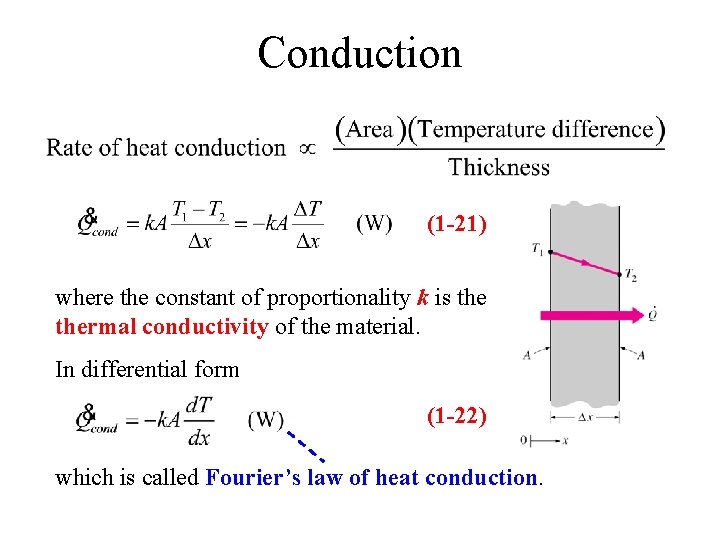
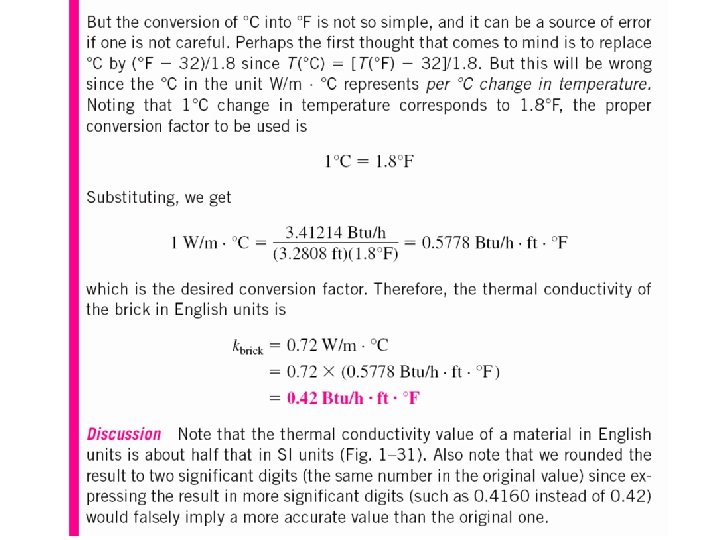
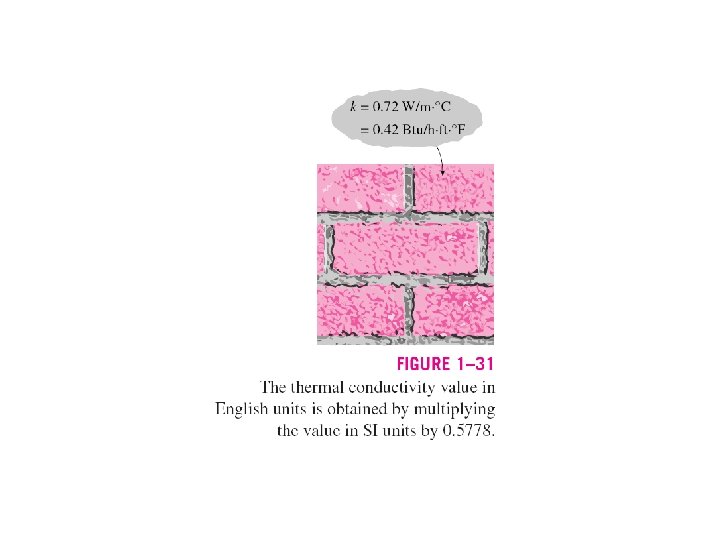
Conduction (1 -21) where the constant of proportionality k is thermal conductivity of the material. In differential form (1 -22) which is called Fourier’s law of heat conduction.
Thermal Conductivity • The thermal conductivity of a material is a measure of the ability of the material to conduct heat. • High value for thermal conductivity good heat conductor • Low value poor heat conductor or insulator.
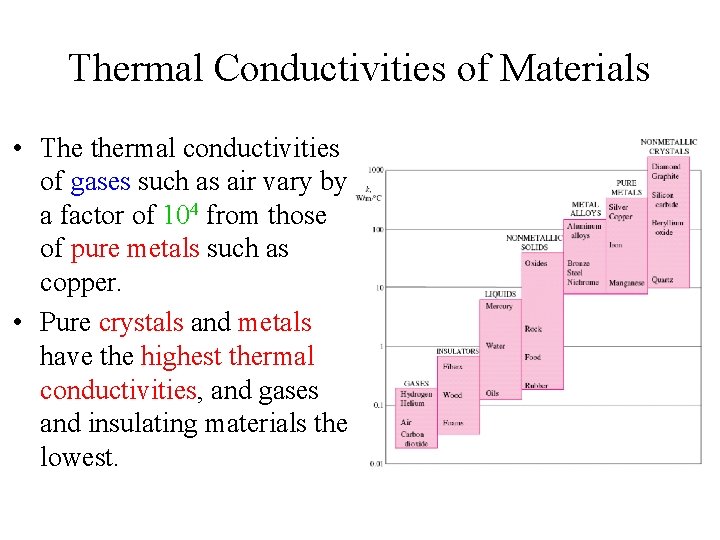
Thermal Conductivities of Materials • The thermal conductivities of gases such as air vary by a factor of 104 from those of pure metals such as copper. • Pure crystals and metals have the highest thermal conductivities, and gases and insulating materials the lowest.
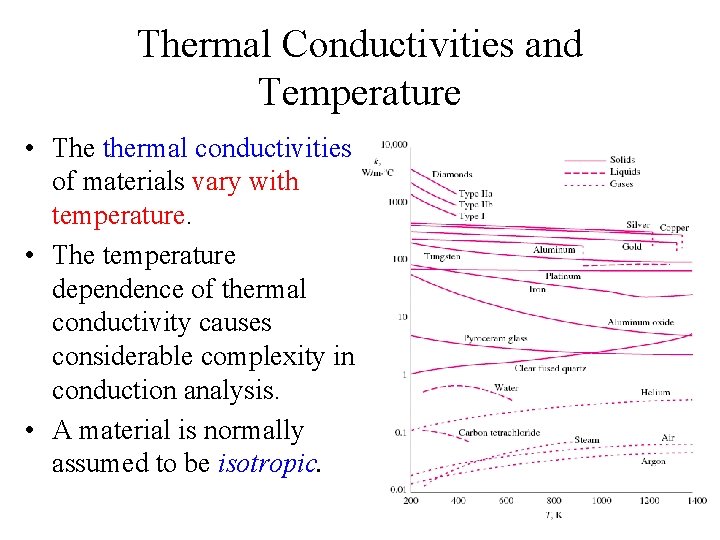
Thermal Conductivities and Temperature • The thermal conductivities of materials vary with temperature. • The temperature dependence of thermal conductivity causes considerable complexity in conduction analysis. • A material is normally assumed to be isotropic.
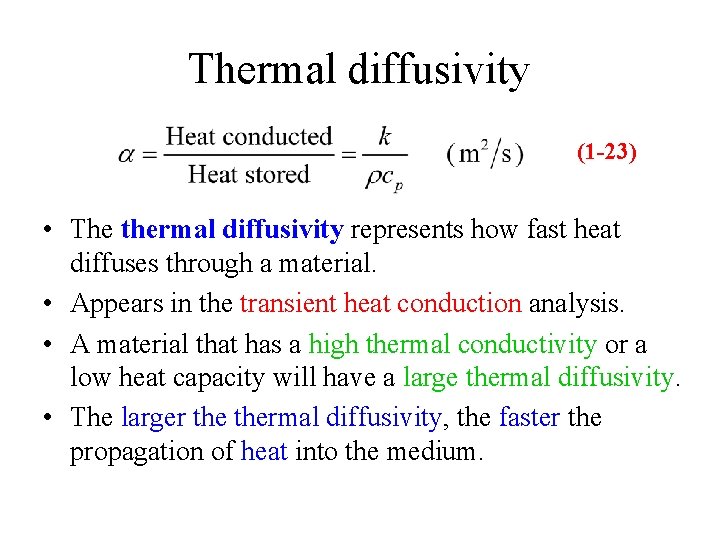
Thermal diffusivity (1 -23) • The thermal diffusivity represents how fast heat diffuses through a material. • Appears in the transient heat conduction analysis. • A material that has a high thermal conductivity or a low heat capacity will have a large thermal diffusivity. • The larger thermal diffusivity, the faster the propagation of heat into the medium.
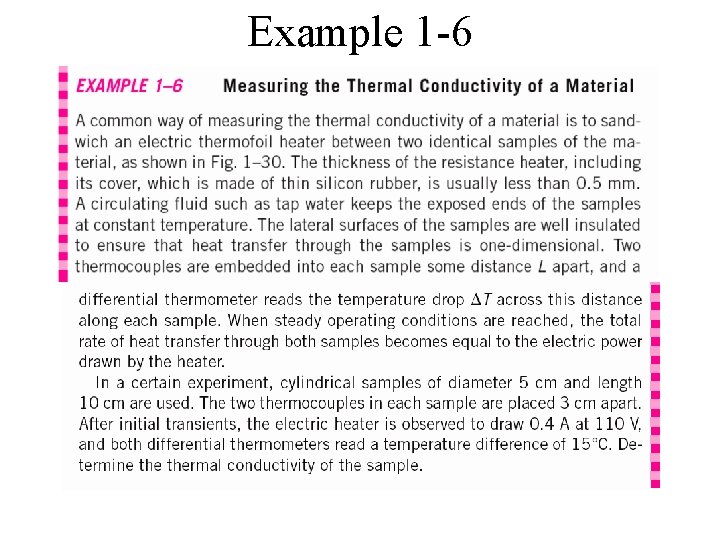
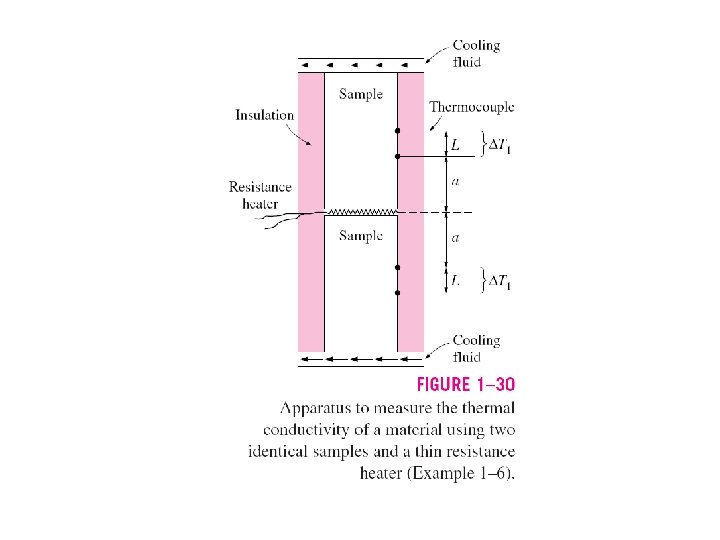
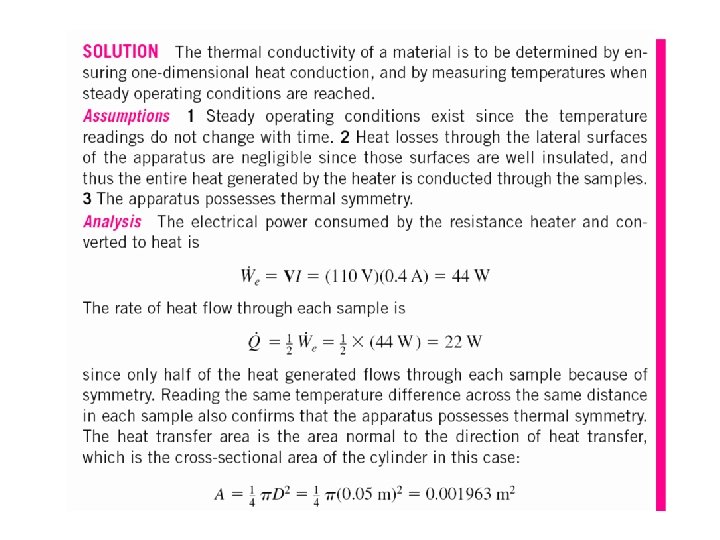
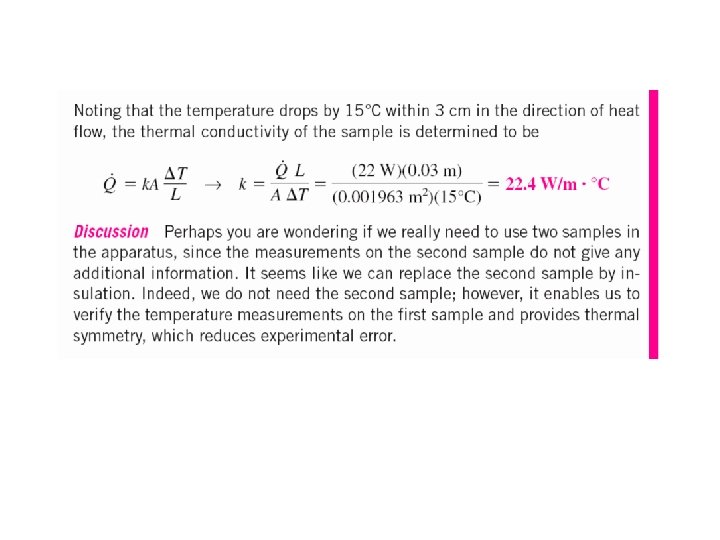
Example 1 -6
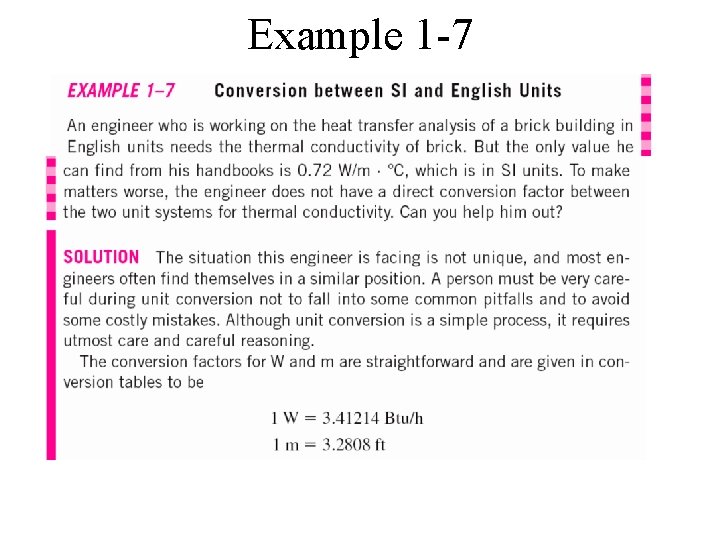
Example 1 -7
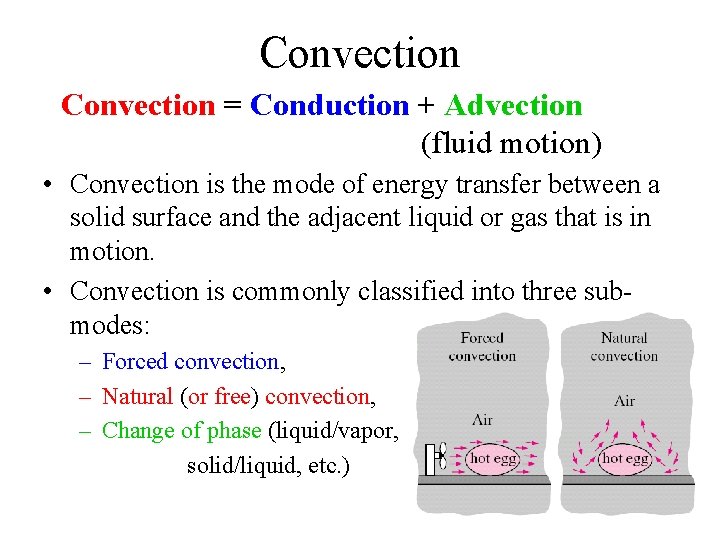
Convection = Conduction + Advection (fluid motion) • Convection is the mode of energy transfer between a solid surface and the adjacent liquid or gas that is in motion. • Convection is commonly classified into three submodes: – Forced convection, – Natural (or free) convection, – Change of phase (liquid/vapor, solid/liquid, etc. )
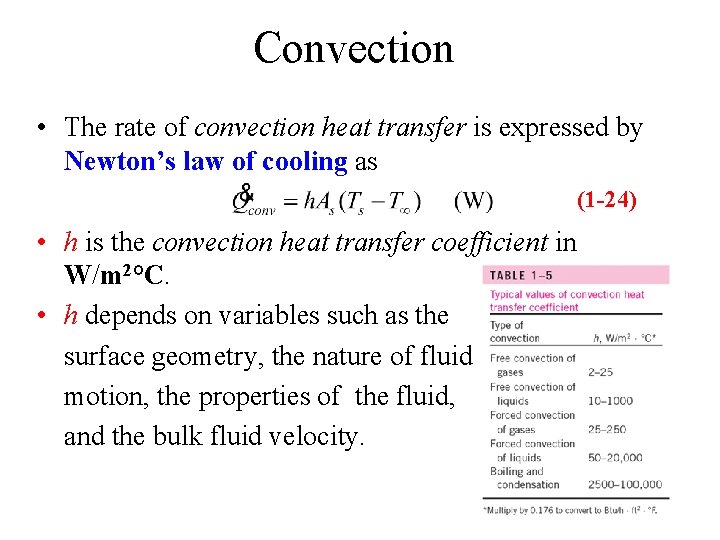
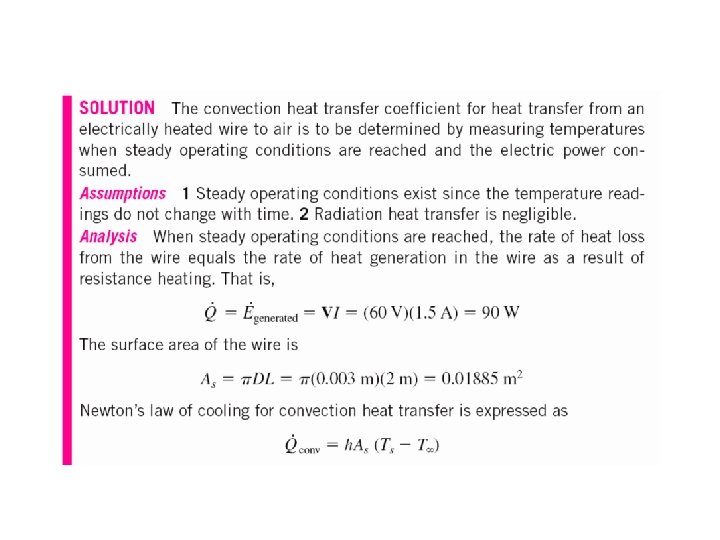
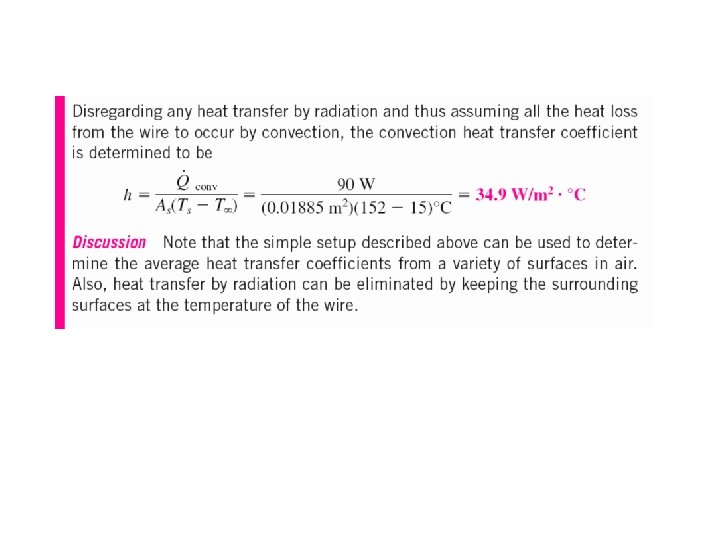
Convection • The rate of convection heat transfer is expressed by Newton’s law of cooling as (1 -24) • h is the convection heat transfer coefficient in W/m 2°C. • h depends on variables such as the surface geometry, the nature of fluid motion, the properties of the fluid, and the bulk fluid velocity.
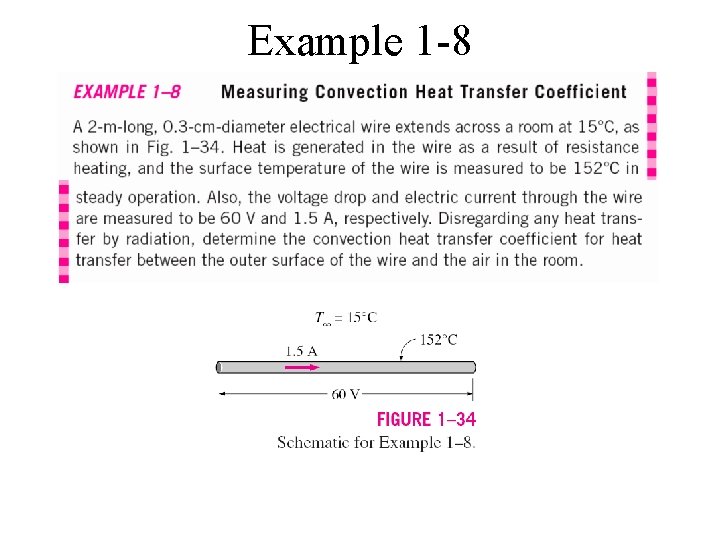
Example 1 -8
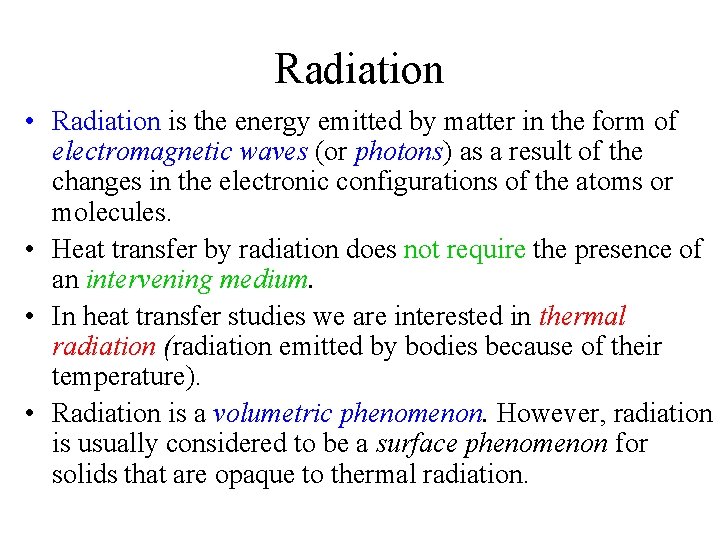
Radiation • Radiation is the energy emitted by matter in the form of electromagnetic waves (or photons) as a result of the changes in the electronic configurations of the atoms or molecules. • Heat transfer by radiation does not require the presence of an intervening medium. • In heat transfer studies we are interested in thermal radiation (radiation emitted by bodies because of their temperature). • Radiation is a volumetric phenomenon. However, radiation is usually considered to be a surface phenomenon for solids that are opaque to thermal radiation.
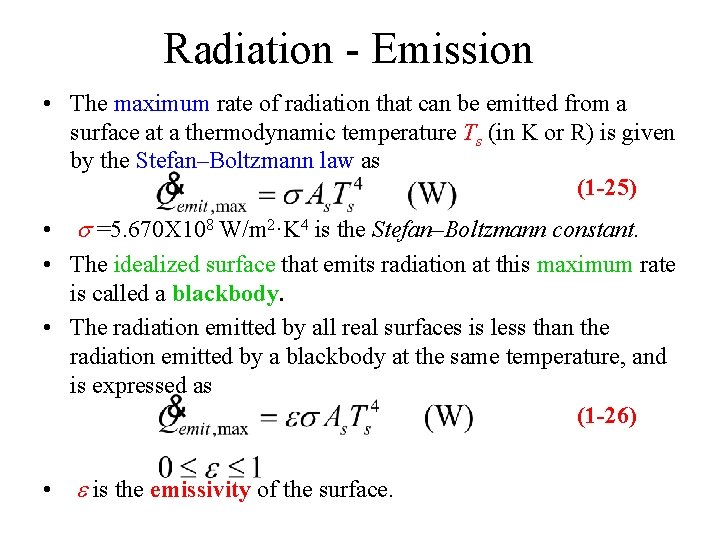
Radiation - Emission • The maximum rate of radiation that can be emitted from a surface at a thermodynamic temperature Ts (in K or R) is given by the Stefan–Boltzmann law as (1 -25) • s =5. 670 X 108 W/m 2·K 4 is the Stefan–Boltzmann constant. • The idealized surface that emits radiation at this maximum rate is called a blackbody. • The radiation emitted by all real surfaces is less than the radiation emitted by a blackbody at the same temperature, and is expressed as (1 -26) • e is the emissivity of the surface.
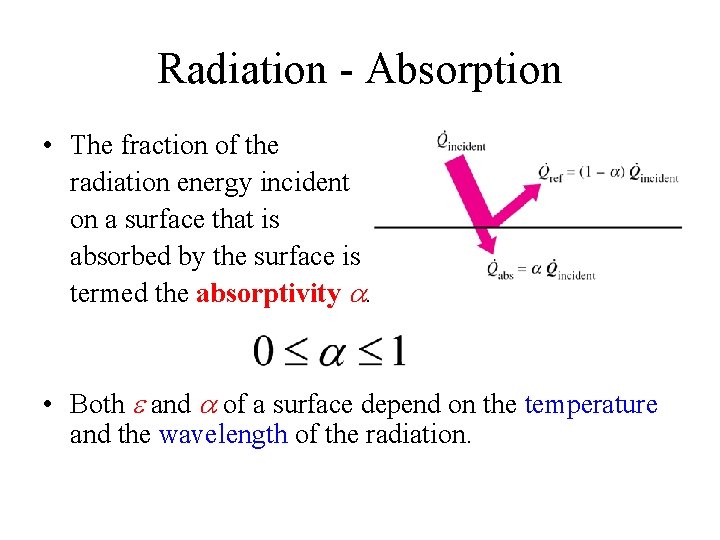
Radiation - Absorption • The fraction of the radiation energy incident on a surface that is absorbed by the surface is termed the absorptivity a. • Both e and a of a surface depend on the temperature and the wavelength of the radiation.
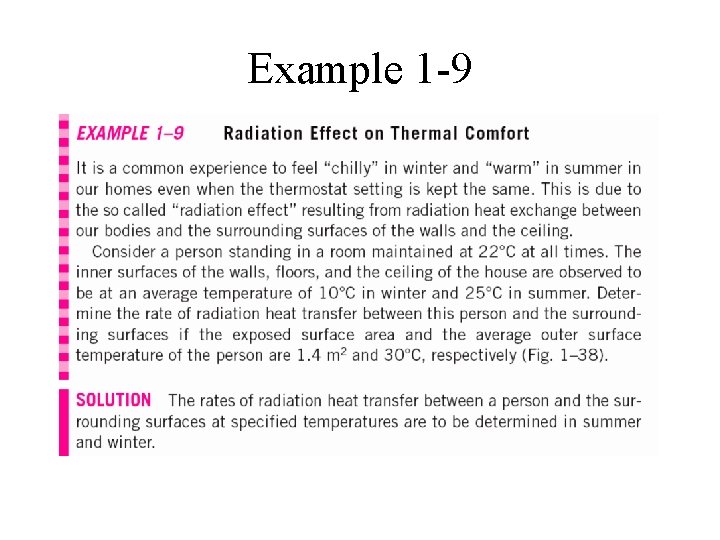
Example 1 -9
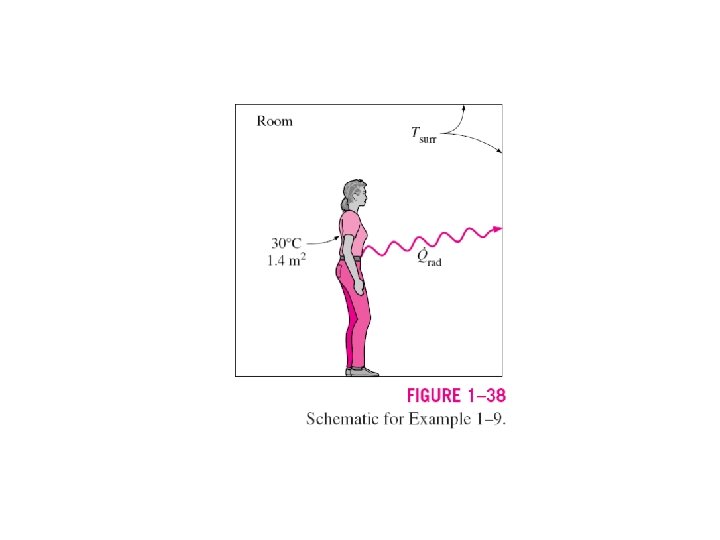
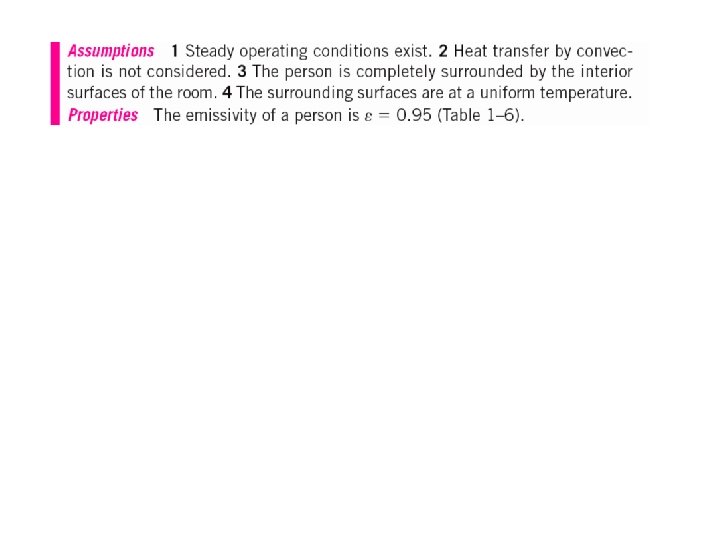
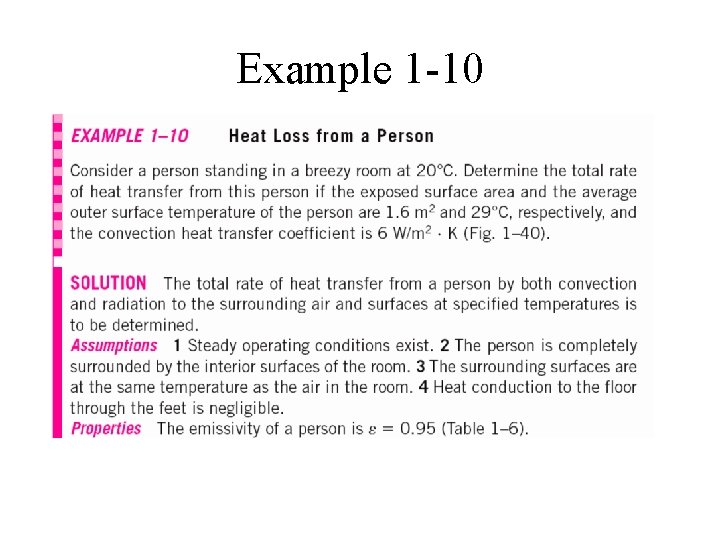
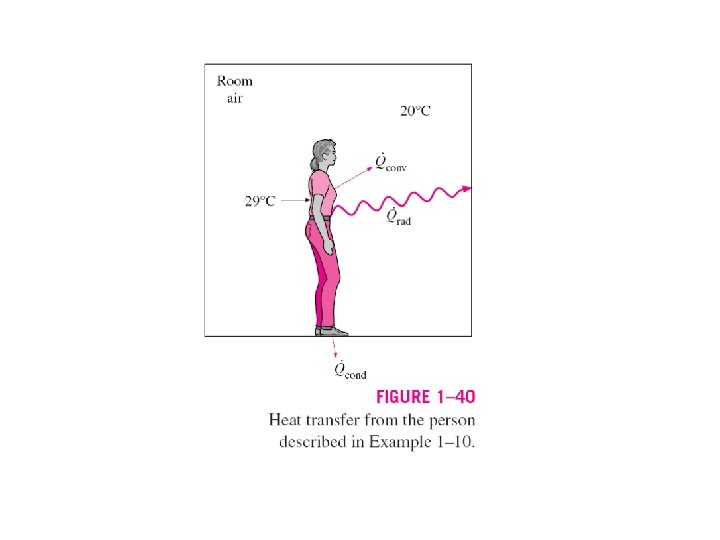
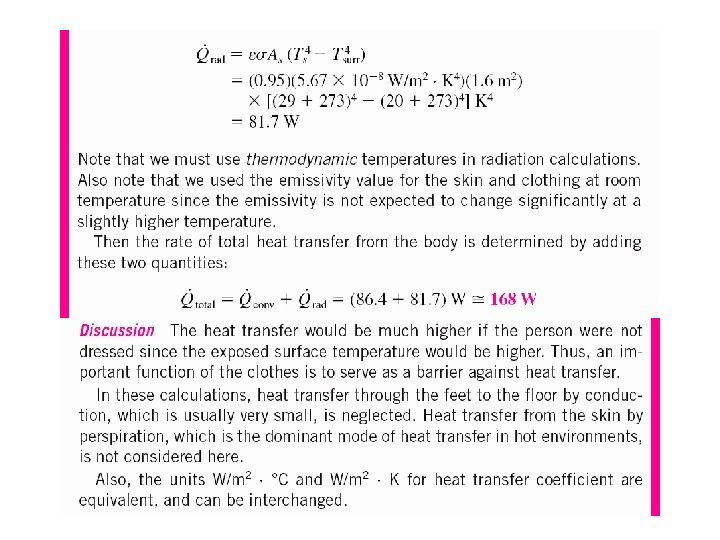
Example 1 -10

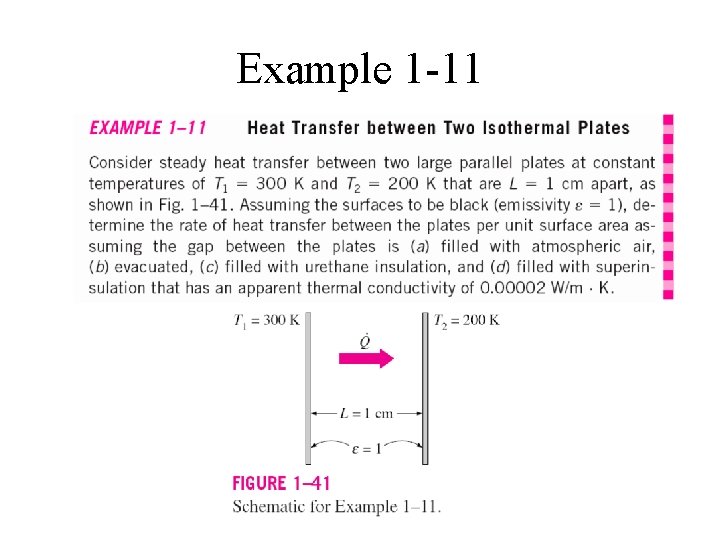
Example 1 -11
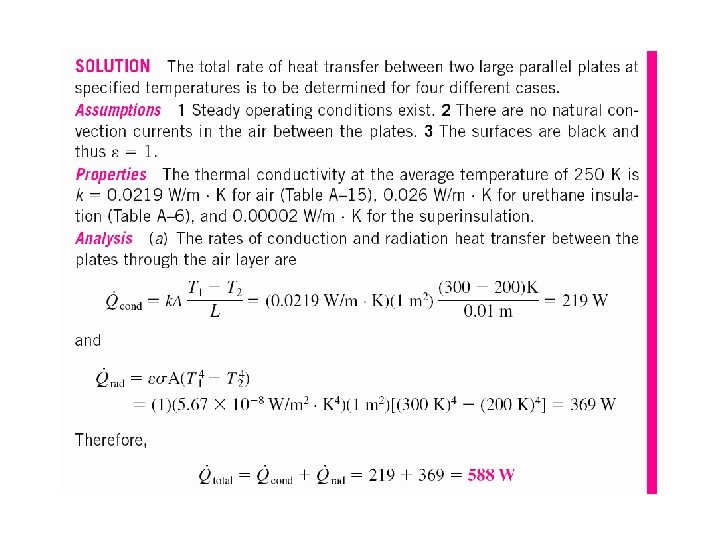
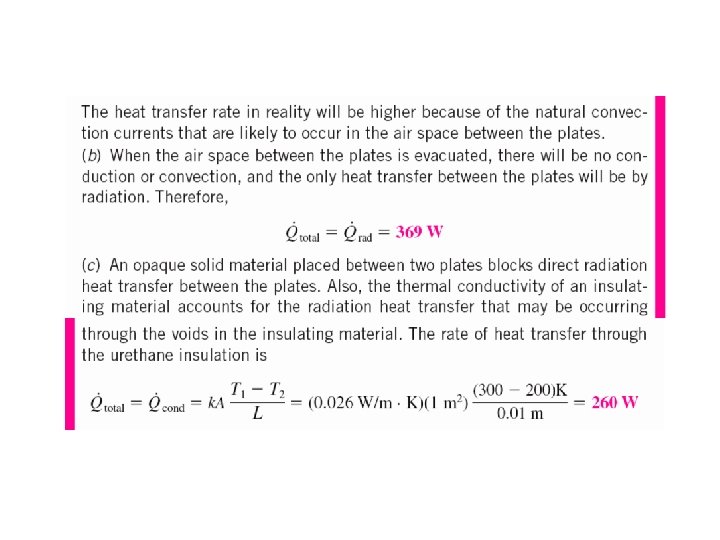
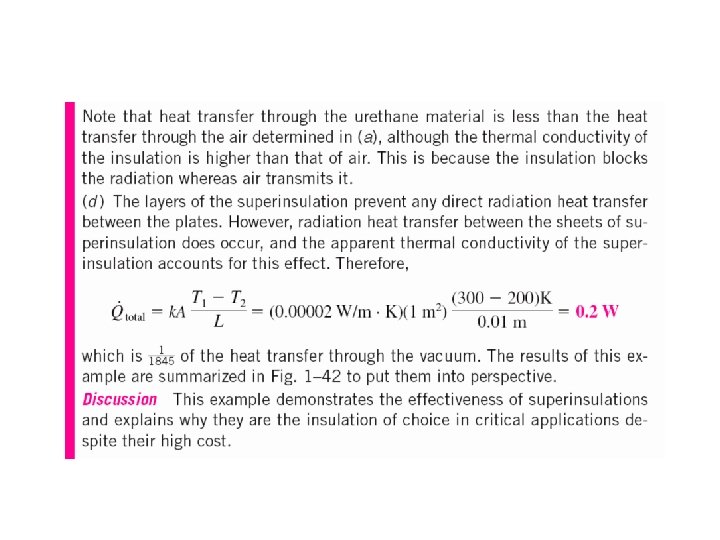

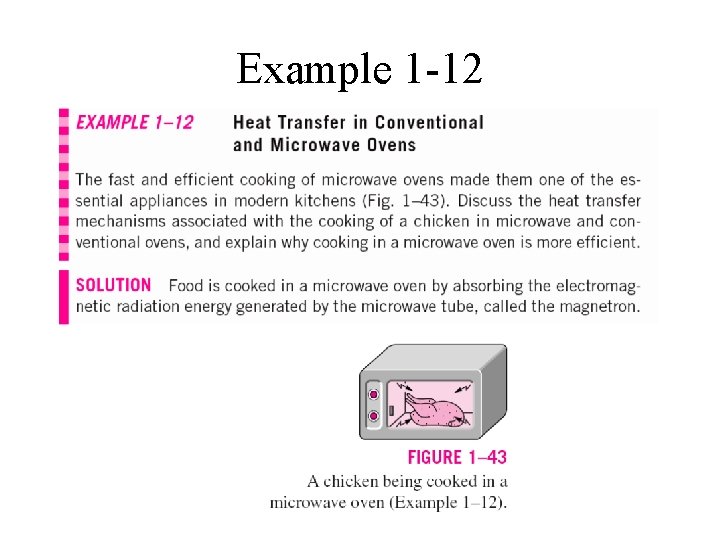
Example 1 -12

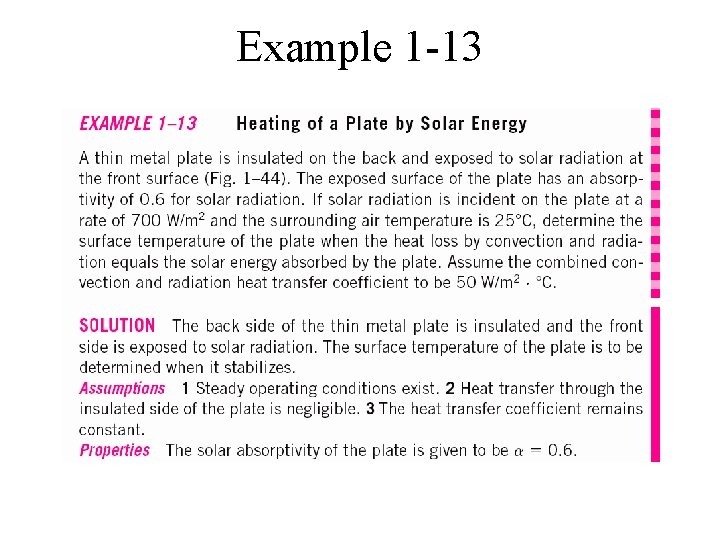
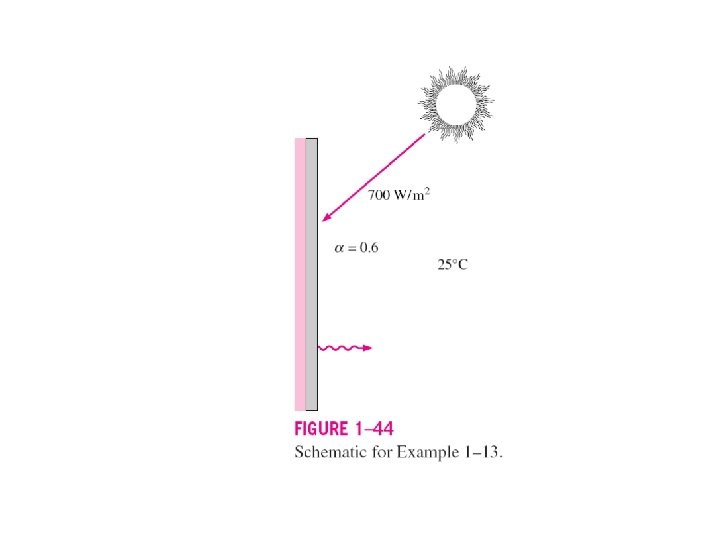
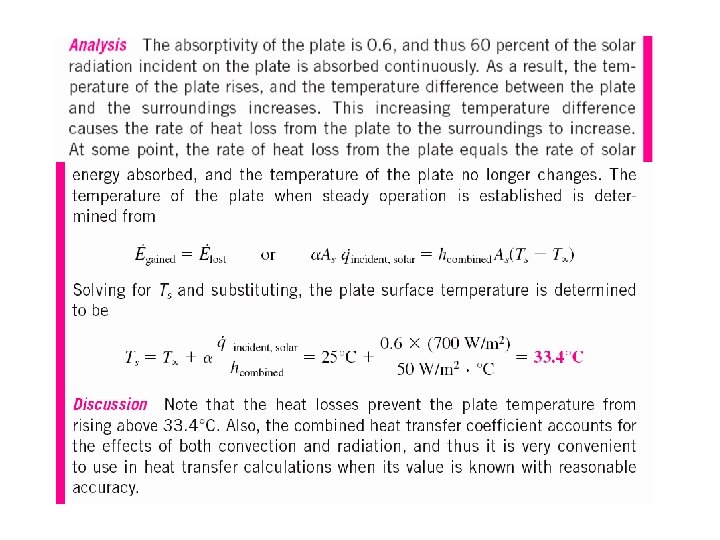
Example 1 -13
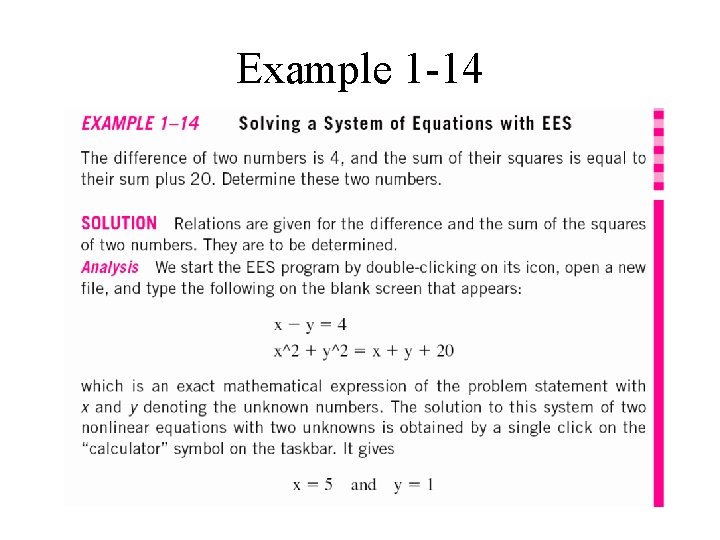
Example 1 -14
- Slides: 69