
Chapter 1 Introducing Quality Improvement SAFEQI Chapter 1
- Slides: 16
Chapter 1 Introducing Quality Improvement @SAFE_QI
Chapter 1: Introducing Quality Improvement S. A. F. E uses quality improvement (QI) as a core methodology. This chapter will focus on understand QI methods. @SAFE_QI
Resources • • Plan Do Study Act Checklist and Log Driver Diagram Measurement Plan Stakeholder Map @SAFE_QI
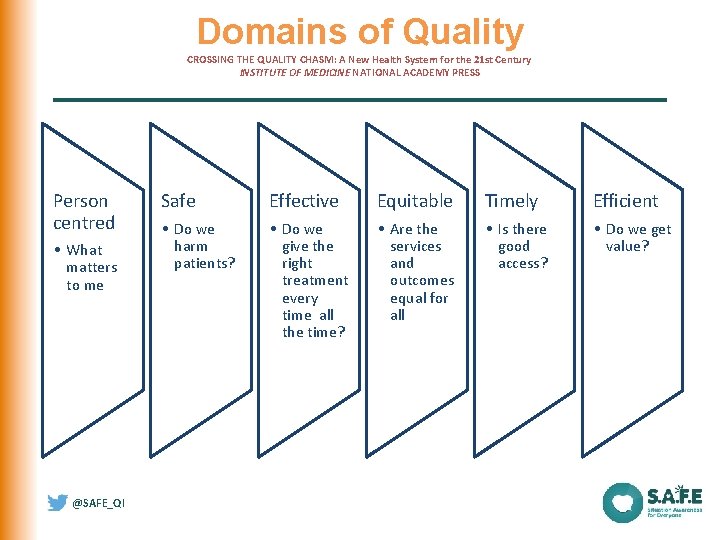
Domains of Quality CROSSING THE QUALITY CHASM: A New Health System for the 21 st Century INSTITUTE OF MEDICINE NATIONAL ACADEMY PRESS Person centred • What matters to me @SAFE_QI Safe Effective Equitable Timely Efficient • Do we harm patients? • Do we give the right treatment every time all the time? • Are the services and outcomes equal for all • Is there good access? • Do we get value?
What is Quality Improvement? Quality Improvement can be defined as the: “combined and unceasing efforts of everyone – healthcare professionals, patients and their families, researchers, payers, planners and educators – to make the changes that will lead to better patient outcomes (health), better system performance (care) and better professional development” Batalden and Davidoff @SAFE_QI
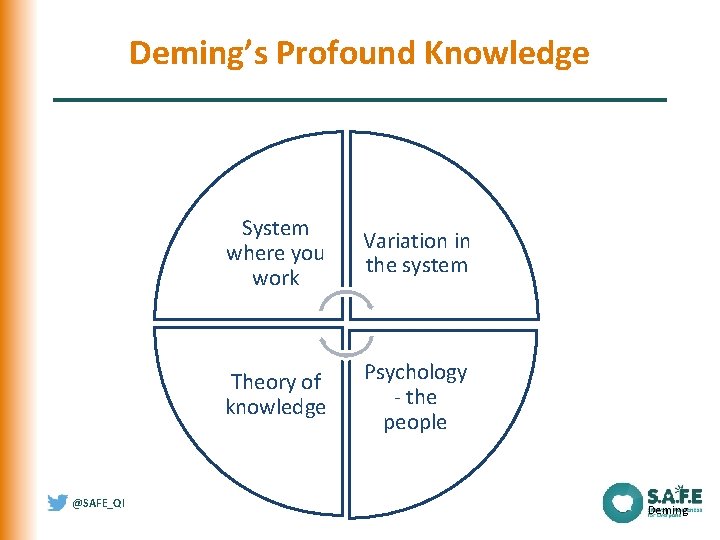
Deming’s Profound Knowledge @SAFE_QI System where you work Variation in the system Theory of knowledge Psychology - the people Deming
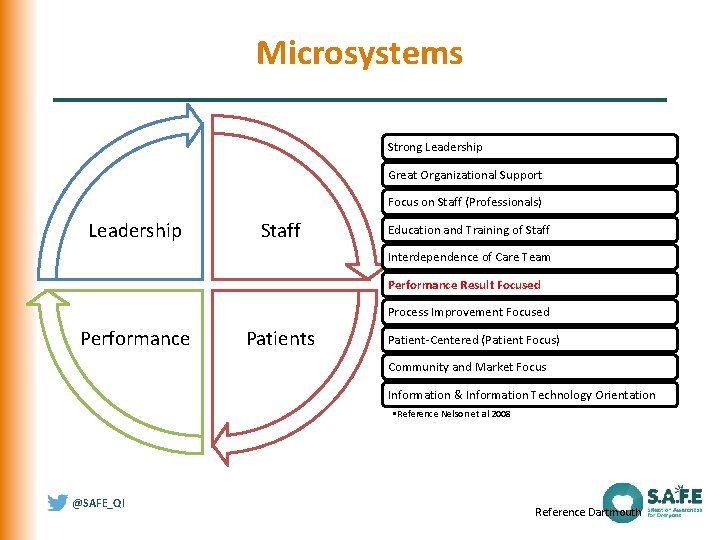
Microsystems Strong Leadership Great Organizational Support Focus on Staff (Professionals) Leadership Staff Education and Training of Staff Interdependence of Care Team Performance Result Focused Process Improvement Focused Performance Patients Patient-Centered (Patient Focus) Community and Market Focus Information & Information Technology Orientation • Reference Nelson et al 2008 @SAFE_QI Reference Dartmouth
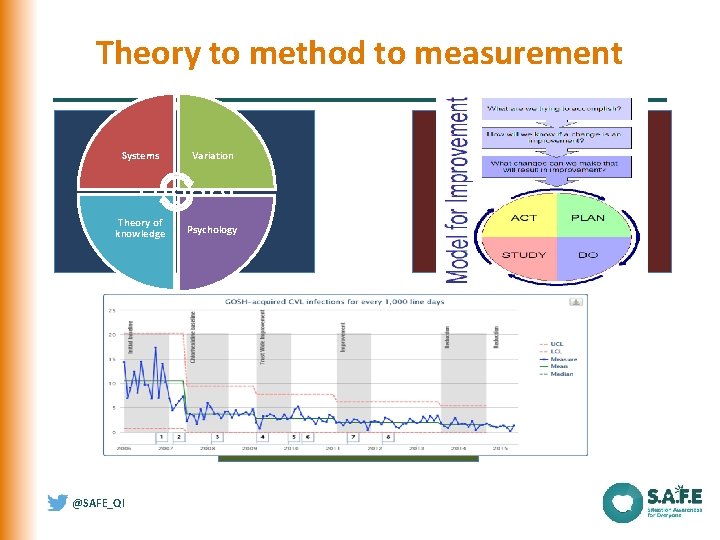
Theory to method to measurement Systems Variation Theory of knowledge Method Psychology Measure @SAFE_QI
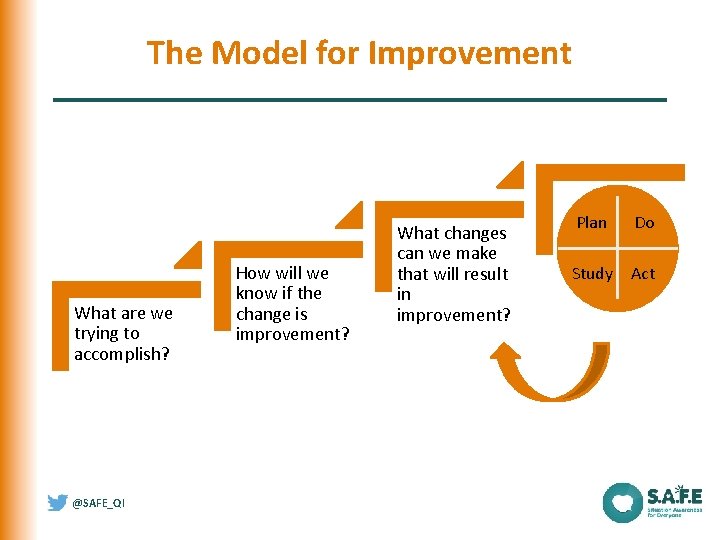
The Model for Improvement What are we trying to accomplish? @SAFE_QI How will we know if the change is improvement? What changes can we make that will result in improvement? Plan Do Study Act
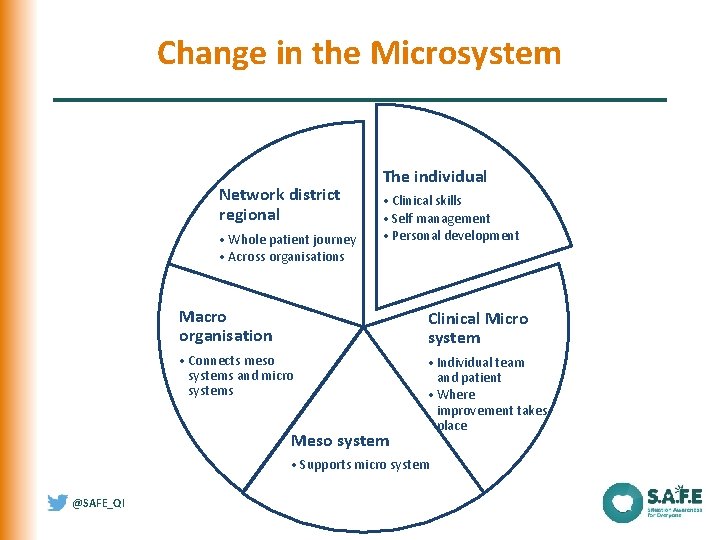
Change in the Microsystem Network district regional • Whole patient journey • Across organisations The individual • Clinical skills • Self management • Personal development Macro organisation Clinical Micro system • Connects meso systems and micro systems • Individual team and patient • Where improvement takes place Meso system • Supports micro system @SAFE_QI
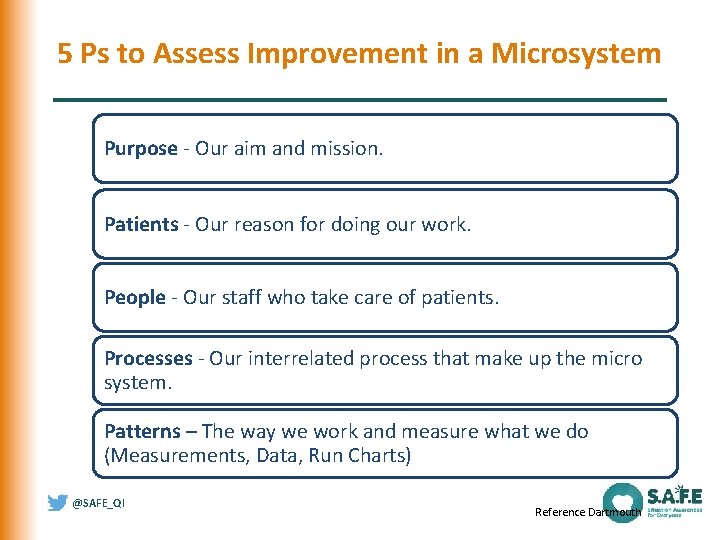
5 Ps to Assess Improvement in a Microsystem Purpose - Our aim and mission. Patients - Our reason for doing our work. People - Our staff who take care of patients. Processes - Our interrelated process that make up the micro system. Patterns – The way we work and measure what we do (Measurements, Data, Run Charts) @SAFE_QI Reference Dartmouth
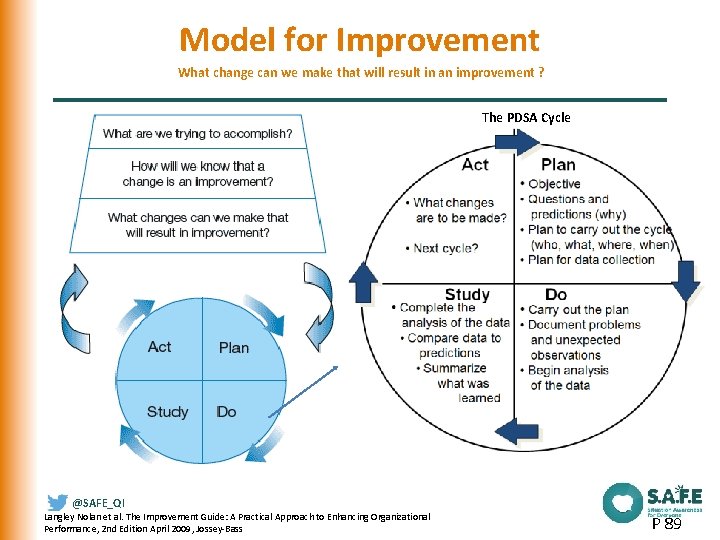
Model for Improvement What change can we make that will result in an improvement ? The PDSA Cycle @SAFE_QI Langley Nolan et al. The Improvement Guide: A Practical Approach to Enhancing Organizational Performance, 2 nd Edition April 2009, Jossey-Bass P 89
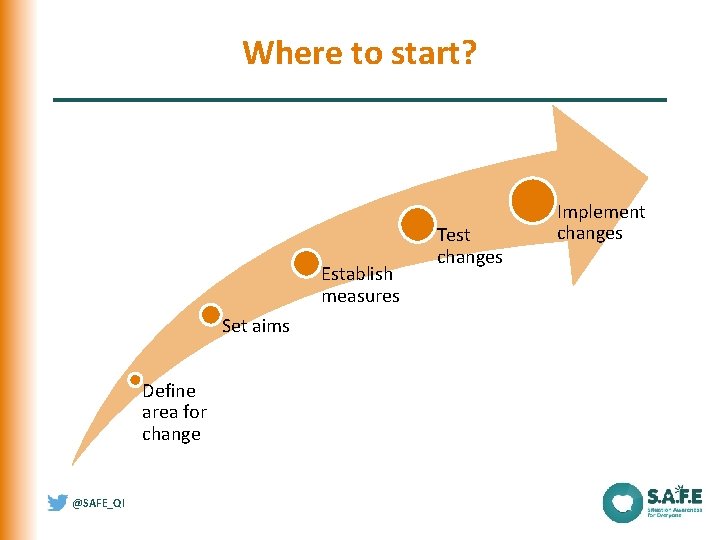
Where to start? Establish measures Set aims Define area for change @SAFE_QI Test changes Implement changes
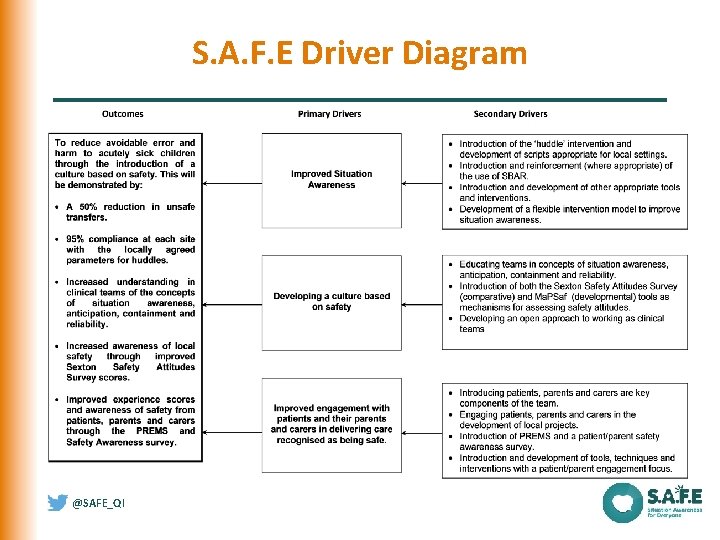
S. A. F. E Driver Diagram @SAFE_QI
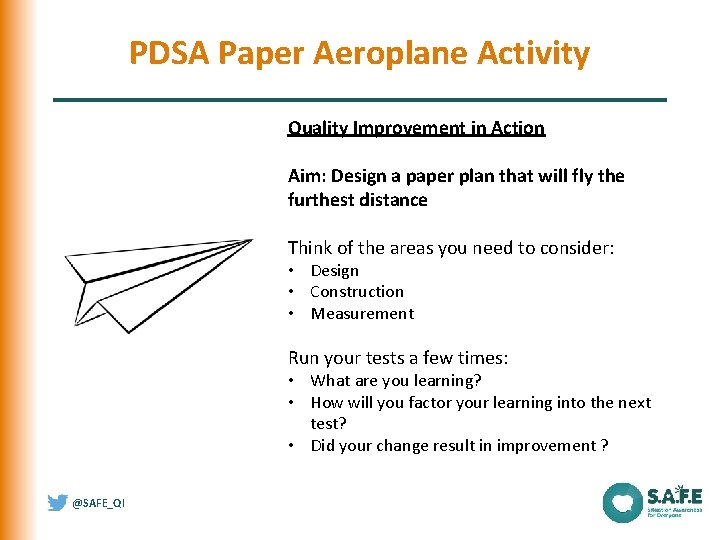
PDSA Paper Aeroplane Activity Quality Improvement in Action Aim: Design a paper plan that will fly the furthest distance Think of the areas you need to consider: • Design • Construction • Measurement Run your tests a few times: • What are you learning? • How will you factor your learning into the next test? • Did your change result in improvement ? @SAFE_QI
Spreading Change through Collaboration The success of S. A. F. E has been in establishing, encouraging, and supporting networks to share learning, experiences, and ultimately, change. What networks can you engage with to help spread your improvements? @SAFE_QI