
Chapter 1 Information Management In A Global Economy
Chapter 1 Information Management In A Global Economy
What is Information? Information is data that has been organized and interpreted, and possibly formatted, filtered, analyzed, and summarized 2
Role of Information In Organizations § Information As a Resource • Information is an input into the production of goods and services. § Information As an Asset • The property of a person or an organization that contributes to a company's output 3
Role of Information In Organizations § Information As a Product • Companies can also sell information, the output of its production, as a product or service or as an embedded component of a product. 4
Role of Information Technology § Role of Information Technology • Information technology has allowed individuals, groups, and organizations to manage information effectively and efficiently. 5
Role of Information Technology § Information Technology (IT) • Includes computer hardware, software, database management systems, and data communication systems 6
Managing Information and Information Systems § Information System • Combines information technology with data, procedures for processing data, and people who collect and use the data 7
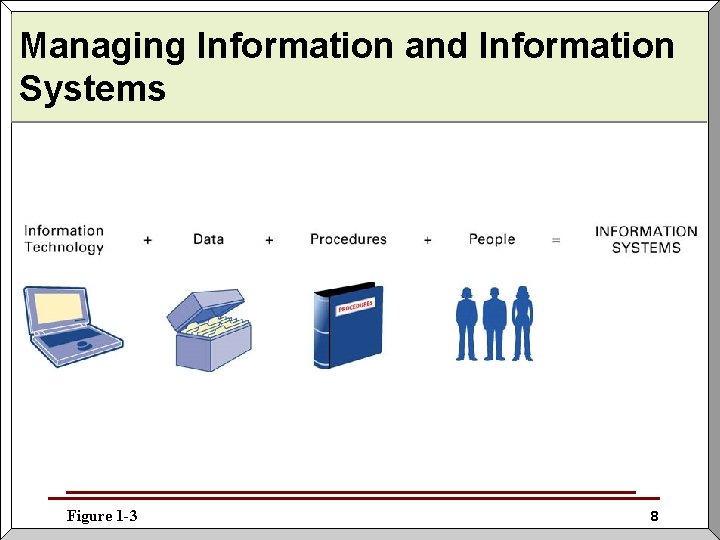
Managing Information and Information Systems Figure 1 -3 8
Types of Information Systems § Automation Systems • Use information technology to perform tasks or to make them easier or less labor intensive • Example v. The electronic key systems used by Marriott International 9
Types of Information Systems § Transaction Processing Systems • Process and record an organization's transactions • Example v. A unit of business activity, such as purchasing a product, making a banking deposit, or reserving an airline seat 10
Types of Information Systems § Management Support Systems • Supply information that managers need to make decisions and coordinate their activities • Example v. A human resources manager might use a management support system to evaluate the performance of an employee before deciding whether or not to give him a raise 11
Examples of Management Support Systems § Management Reporting Systems • Provide information that low-level managers need to make routine decisions § Decision Support Systems • Assist managers in making non-routine decisions 12
Examples of Management Support Systems § Groupware • Supports the group activities of managers and other workers § Executive Information Systems • Provide the information that top executives need to quickly identify problems, scan data for trends, communicate with employees, and set strategic objectives 13
The Scope of Information Systems § Individual Information Systems • Target a single person in the organization § Functional Information Systems • Address the needs of a function or department in an organization 14
The Scope of Information Systems § Enterprise Information Systems • Fully integrate the functions of an organization and provide a single, comprehensive repository for its information 15
The Scope of Information Systems § Inter-organizational Information Systems • Provide a common point of interaction and common repository of information for a company, its suppliers, distributors, customers, and/or shippers. 16
Why Managers Today Need to Use and Understand IT § To succeed in a global environment § To profit from the electronic economy § To focus on performance § To support a mobile workforce § To build individual capabilities and productivity 17
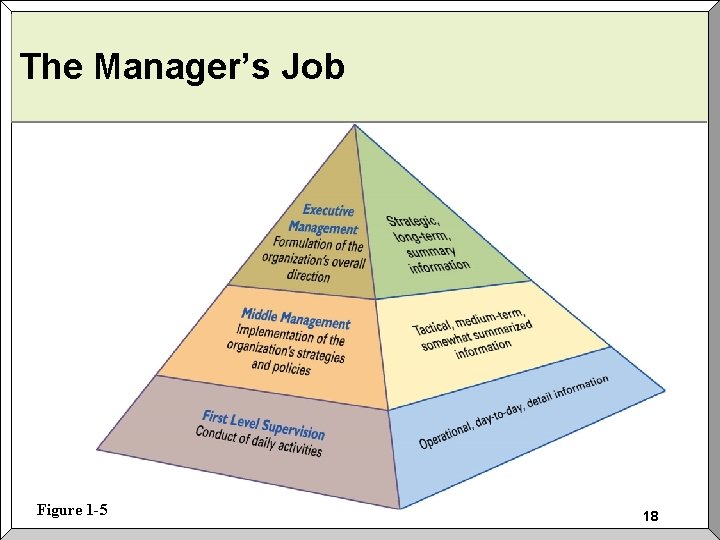
The Manager’s Job Figure 1 -5 18
The Roles of the Manager § Gathering information and monitoring the environment § Sharing information § Leading, motivating, and coaching employees § Making decisions and plans 19
The Roles of the Manager § Distributing and Negotiating about resources § Resolving problems and developing strategic responses § Providing control 20
The Challenges For Effective Information Management § Managers Need To: • Collect, process, and disseminate information quickly and accurately to help their organizations compete effectively in today’s global marketplace 21
The Challenges For Effective Information Management § Using technology appropriately to meet information needs § Dealing with too little, too much, or conflicting information § Responding in a timely fashion § Ensuring cost effectiveness § Ensuring security 22
Ethical Principles of Information Management § Ethics -- the study of how to apply your moral standards to particular situations § Ethical principles • Harm minimization • Consistency • Respect 23
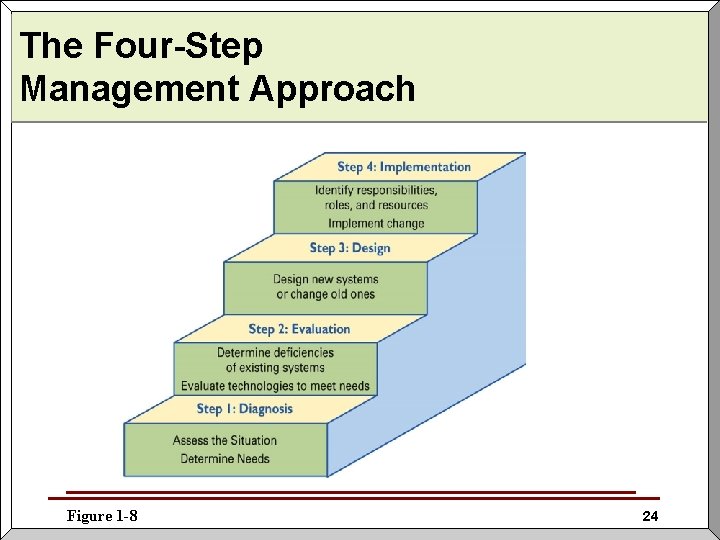
The Four-Step Management Approach Figure 1 -8 24
End of Chapter 1 Information Management In A Global Economy
- Slides: 25