
Chapter 1 Homeostasis A framework for human physiology


- Slides: 26
Chapter 1 Homeostasis (平衡): A framework for human physiology Copyright © The Mc. Graw-Hill Companies, Inc. Permission required for reproduction or display. 1
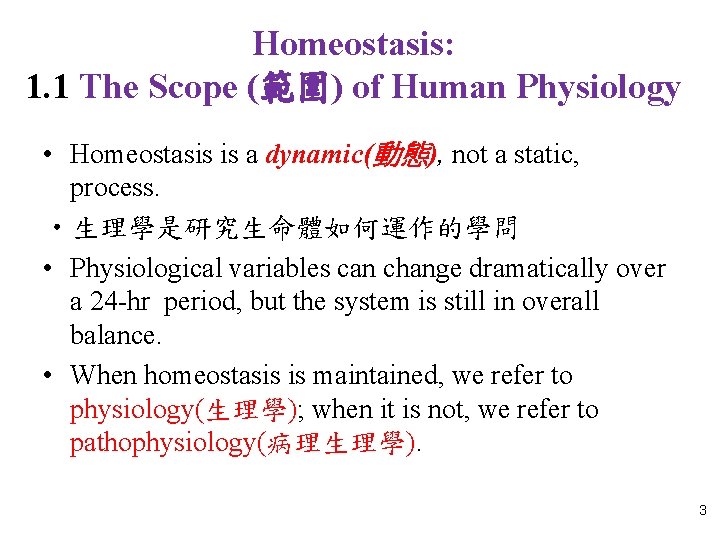
Homeostasis: 1. 1 The Scope (範圍) of Human Physiology • Homeostasis is a dynamic(動態), not a static, process. • 生理學是研究生命體如何運作的學問 • Physiological variables can change dramatically over a 24 -hr period, but the system is still in overall balance. • When homeostasis is maintained, we refer to physiology(生理學); when it is not, we refer to pathophysiology(病理生理學). 3
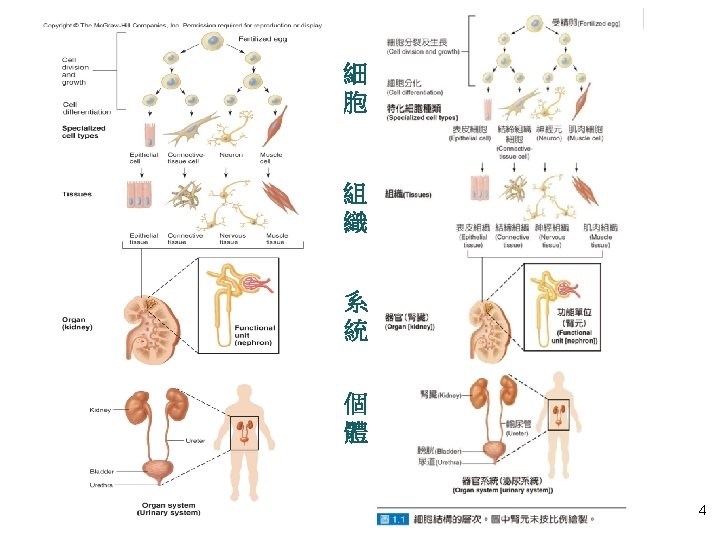
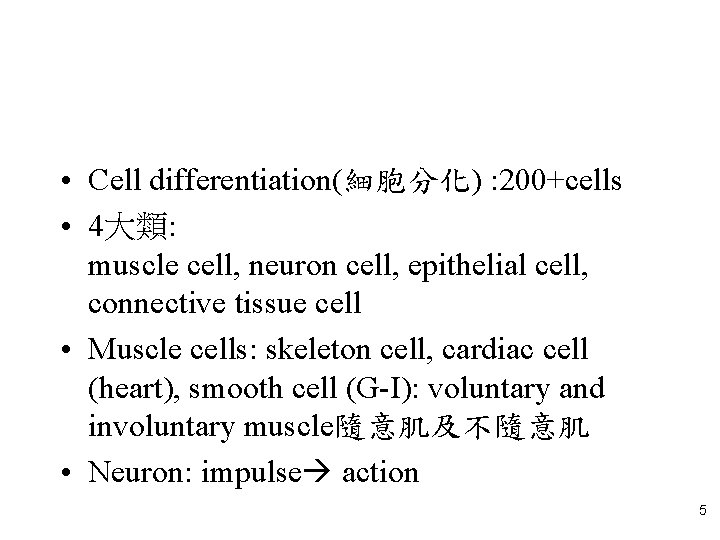
• Cell differentiation(細胞分化) : 200+cells • 4大類: muscle cell, neuron cell, epithelial cell, connective tissue cell • Muscle cells: skeleton cell, cardiac cell (heart), smooth cell (G-I): voluntary and involuntary muscle隨意肌及不隨意肌 • Neuron: impulse action 5
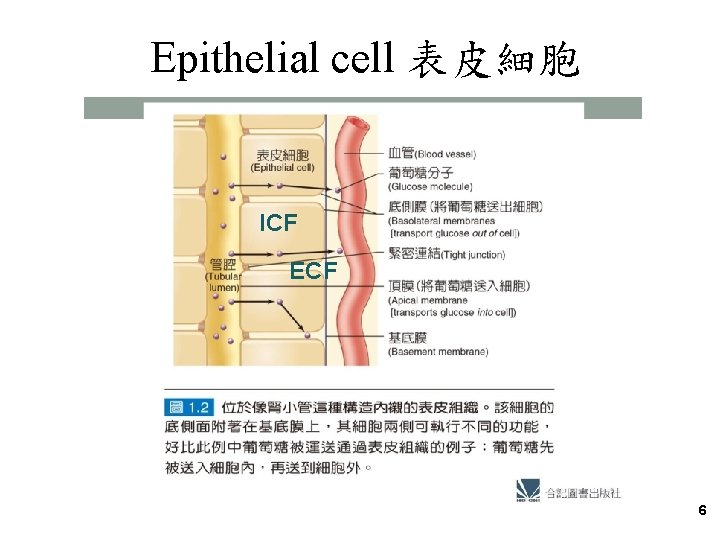
Epithelial cell 表皮細胞 ICF ECF 6
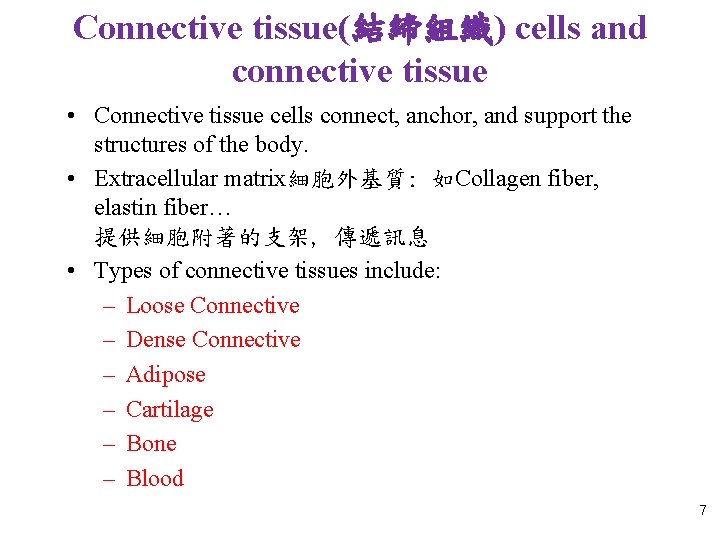
Connective tissue(結締組織) cells and connective tissue • Connective tissue cells connect, anchor, and support the structures of the body. • Extracellular matrix細胞外基質: 如Collagen fiber, elastin fiber… 提供細胞附著的支架, 傳遞訊息 • Types of connective tissues include: – Loose Connective – Dense Connective – Adipose – Cartilage – Bone – Blood 7
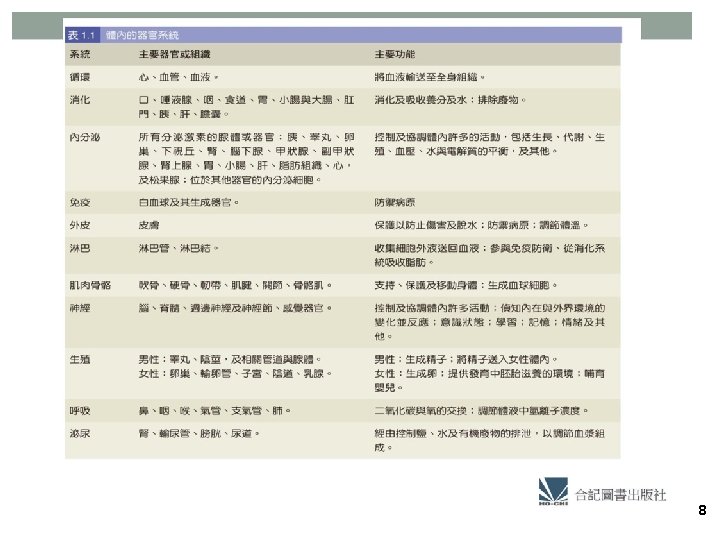
8
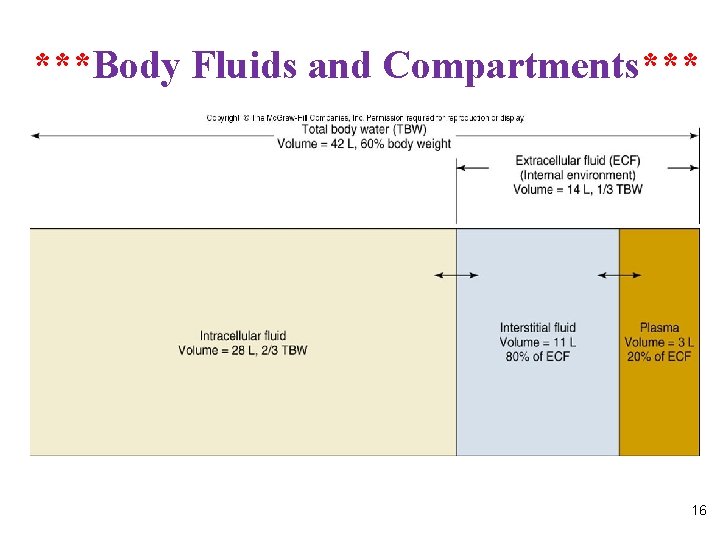
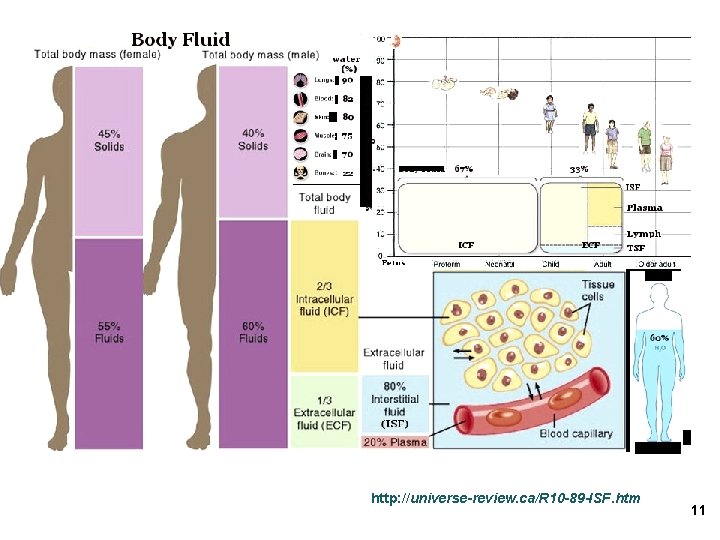
***Body Fluids and Compartments*** 16
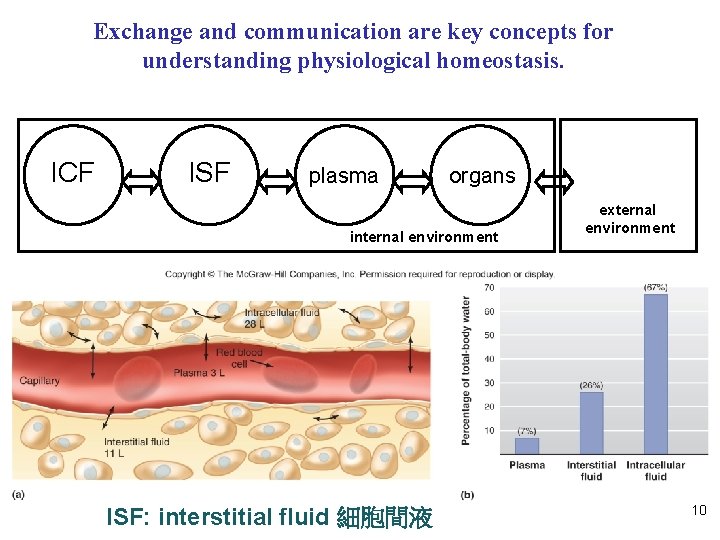
Exchange and communication are key concepts for understanding physiological homeostasis. ICF ISF plasma organs internal environment ISF: interstitial fluid 細胞間液 external environment 10
http: //universe-review. ca/R 10 -89 -ISF. htm 11
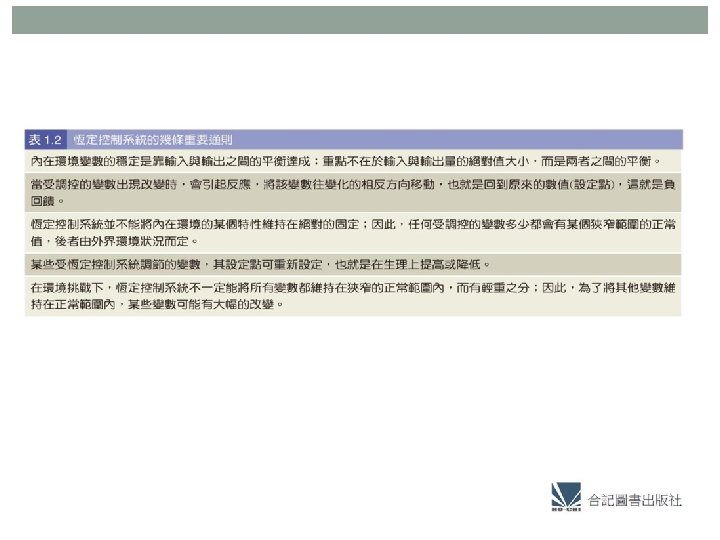
1. 4 恆定: A defining feature of physiology 生理學的決定特性 Homeostasis refers to the dynamic mechanisms that detect and respond to deviations in physiological variables from their “set point” values by initiating effector responses that restore the variables to the optimal physiological range. 12
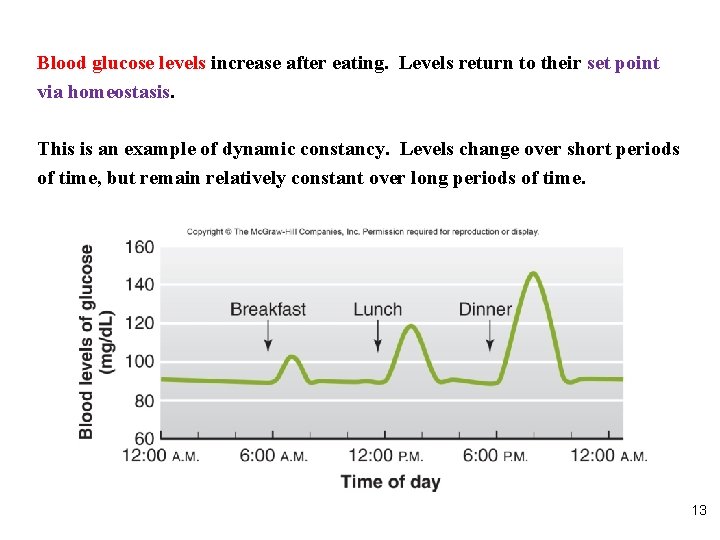
Blood glucose levels increase after eating. Levels return to their set point via homeostasis. This is an example of dynamic constancy. Levels change over short periods of time, but remain relatively constant over long periods of time. 13
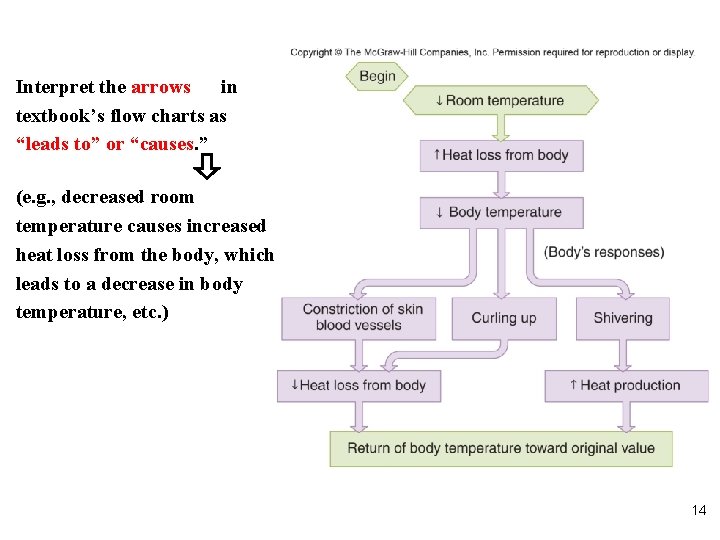
Interpret the arrows in textbook’s flow charts as “leads to” or “causes. ” (e. g. , decreased room temperature causes increased heat loss from the body, which leads to a decrease in body temperature, etc. ) 14
System Controls • Feedback loops or systems are a common mechanism to control physiological processes. • A positive feedback system enhances the production of the product. • A negative feedback system shuts the system off once the set point has been reached. 15
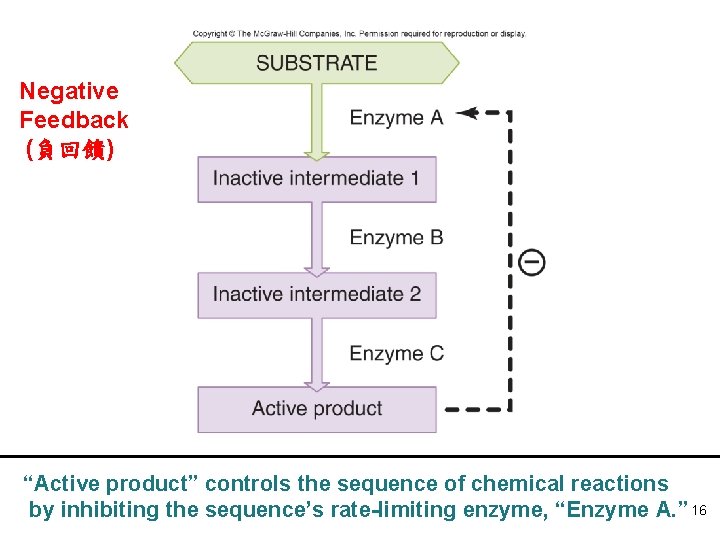
Negative Feedback (負回饋) “Active product” controls the sequence of chemical reactions by inhibiting the sequence’s rate-limiting enzyme, “Enzyme A. ” 16
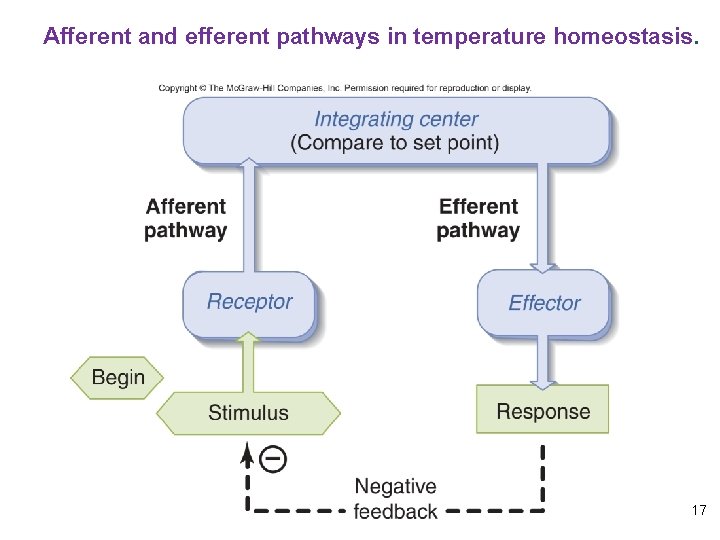
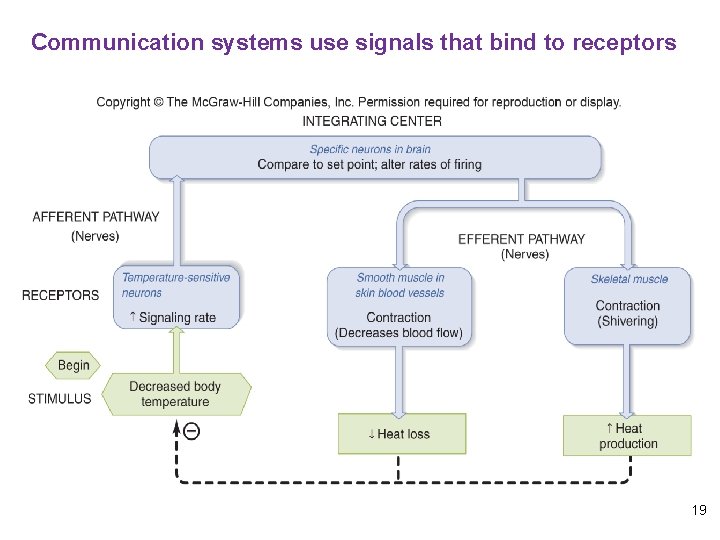
Afferent and efferent pathways in temperature homeostasis. 17
18
Communication systems use signals that bind to receptors 19
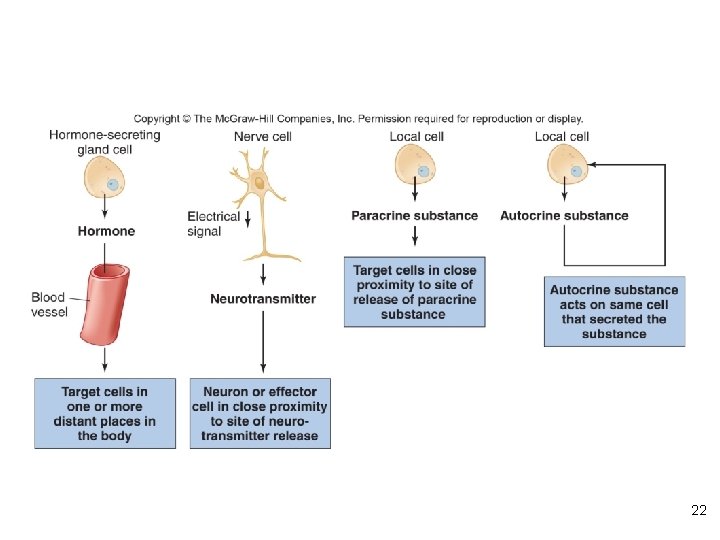
Types of Signals • Hormones are produced in and secreted from endocrine glands or in scattered cells that are distributed throughout another organ. Hormones travel through the blood to their target cells. • Neurotransmitters are chemical messengers that are released from the endings of neurons onto other neurons, muscle cells, or gland cells. 20
Chemical Messengers • Chemical messengers participate not only in reflexes, but also in local responses. • Communication signals in three categories: • Endocrine(內): signal reaches often-distant targets after transport in blood. • Paracrine(旁): signal reaches neighboring cells via the ISF. • Autocrine(自): signal affects the cell that synthesized the signal. 21
22
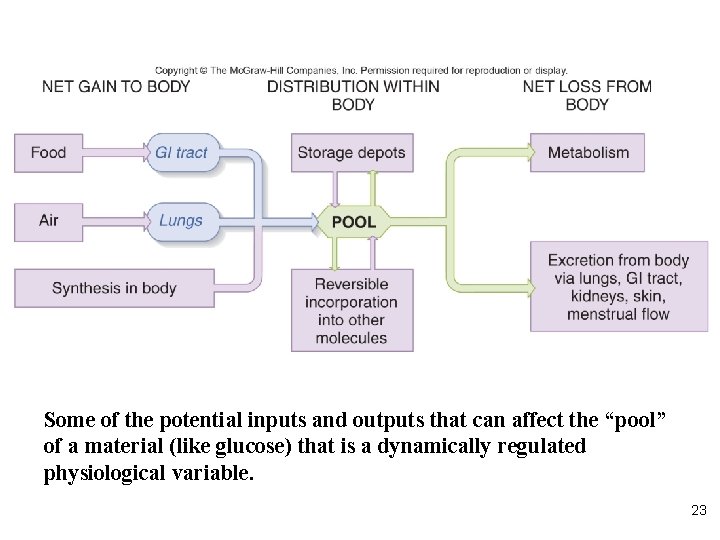
Some of the potential inputs and outputs that can affect the “pool” of a material (like glucose) that is a dynamically regulated physiological variable. 23
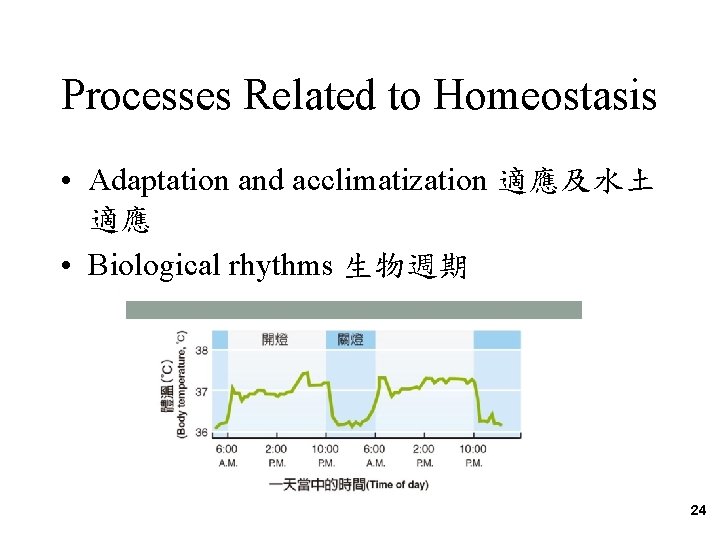
Processes Related to Homeostasis • Adaptation and acclimatization 適應及水土 適應 • Biological rhythms 生物週期 24