
Chapter 1 History and Role of Plant Breeding
Chapter 1. History and Role of Plant Breeding in Society 1
Not one man in a thousand has accuracy of eye and judgment sufficient to become an eminent breeder. If gifted with these qualities, and he studies his subject for years, and devotes his lifetime to it with indomitable perseverance, he will succeed and may make great improvements; if he wants any of these qualities, he will assuredly fail. Charles Darwin, The Origin of Species, 1 st Ed. , Chapter 1 2
The pangs of hunger, real or imaginary, will soon cause those who support plant breeders to realize that since energy used by man comes from the sun by way of the green plant, there will be a need for plant breeders who know how to improve the plant. Glenn Burton, 1996 3
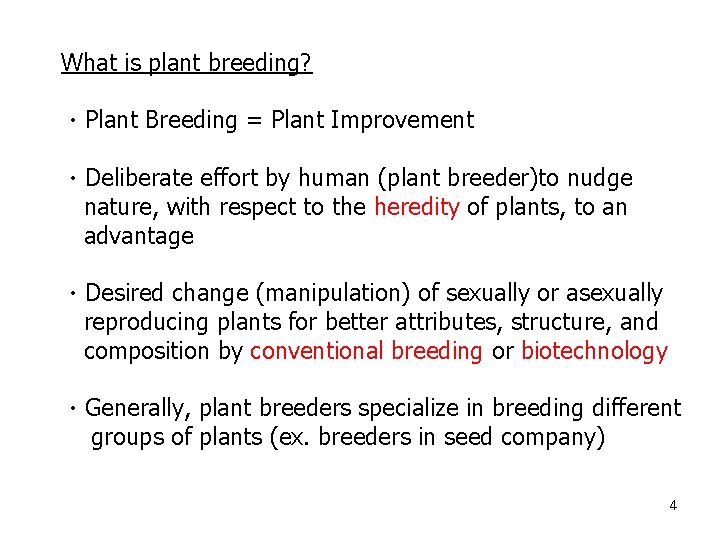
What is plant breeding? ㆍPlant Breeding = Plant Improvement ㆍDeliberate effort by human (plant breeder)to nudge nature, with respect to the heredity of plants, to an advantage ㆍDesired change (manipulation) of sexually or asexually reproducing plants for better attributes, structure, and composition by conventional breeding or biotechnology ㆍGenerally, plant breeders specialize in breeding different groups of plants (ex. breeders in seed company) 4
Goal of plant breeding ㆍBreeding objectives are defined based on 1) Producer (farmer) needs - mechanical harvesting resistance to abiotic stress disease resistance (less pesticides) high yield, ect 2) Consumer preferences and needs - high nutritional value better appeal, color, texture, taste fiber characteristics (cotton) high oleic content (sunflower) 5
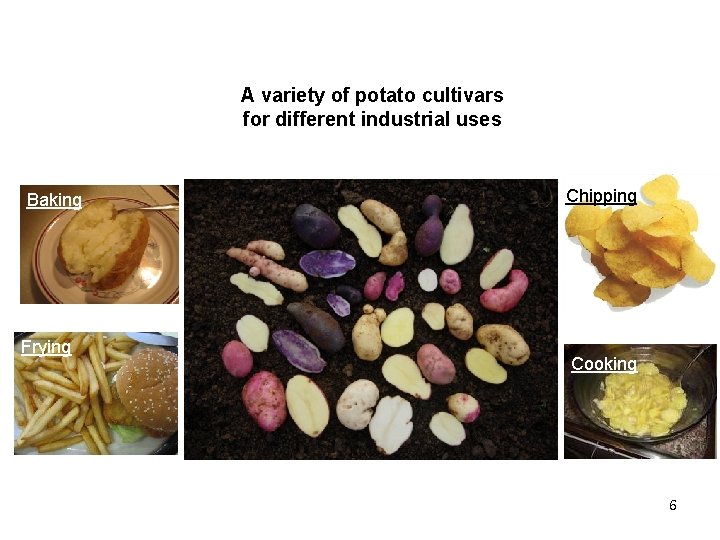
History and Role of Plant Breeding in Society A variety of potato cultivars for different industrial uses Baking Frying Chipping Cooking 6
Concept of genetic manipulation of plant attributes ㆍModification =change a trait or its expression ㆍChange a trait = change the genotype or environment ㆍPlant breeder modify plants with respect to the expression of certain attributes by modifying the genotype (gene) produce an alteration that is permanent (transferable from one generation to the next) 7
Why breed plants? • Addressing world food, feed, and nutritional needs • Addressing food needs for a growing world population • The need to adapt plants to environmental stresses • The need to adapt crops to specific production system • Developing new horticultural plant varieties • Satisfying industrial and other end-use requirement (See Table 1. 1) 8
Plant breeding through the ages ㆍOrigin of agriculture and plant breeding - Lifestyle change of primitive people - Plants transformed from independent wild progenitor to domesticated variety dependent on human - Old time breeding technique = Selection of naturally occurring variants (save seed form best-looking plant) ㆍPlant breeding past (pre-Mendelian) - Artificial pollination of date palm by Assyrians and Babylonians, 700 BC - Systemic investigations for plant hybridization (cross) by Joseph and Thomas, 1760~1766 - Bionomial systems of classification by Linnaeus, 1700’s 9 - first breeding institute by Vilmorin, 1727
Plant breeding through the ages ㆍPlant breeding present (post-Mendelian) (See Table 1. 2) - The application of Genetics in crop improvement Modern plant breeding based on Mendel’s law, 1865 Hybrid vigor(Heterosis) by Nilson pure-line theory by Johannsen, 1903 Old time breeding technique = Selection of naturally occurring variants (save seed form best-looking plant) - Green Revolution (dwarf-type rice and wheat cultivars) - Mutagenesis (the induction of mutations using mutagenic agents, mutagen like radiation or chemicals) - Molecular bases of heredity (discovery of DNA), 1944 - Genetic engineering (GMO) 10
Achivement of modern plant breeders ㆍYield increase - improve yield per se or its component - increase resistance to disease and insect pest - increase resistance to abiotic stress (heat, wind, cold, salts) and lodging ㆍEnhancement of compositional traits - improve nutritional quality (high protein, vitamin. . ) - enhance the quality traits for different products - high oleic sunflower, long shelf-life fruits and vegetables, rice with provitamin A… 11
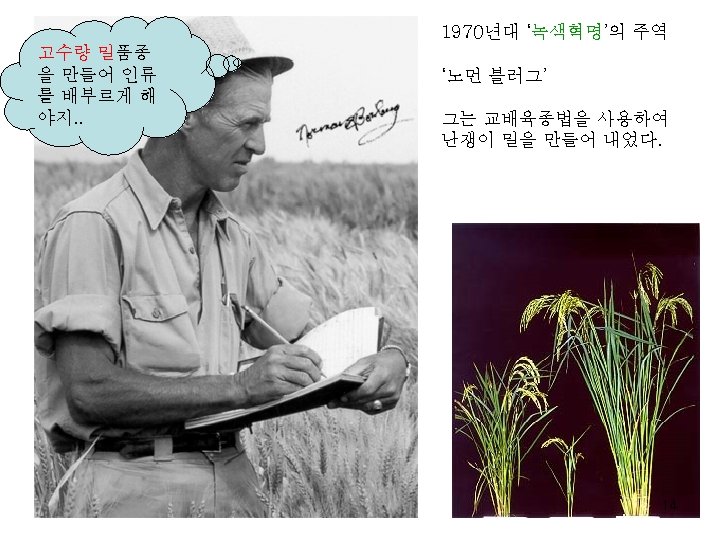
Achivement of modern plant breeders ㆍCrop adaptation - photoperiod insensitive cultivars - early maturing cultivars - tolerance to cold, salts, drought, frost ㆍGreen Revolution - started in 1943 by Rockefellar Foundation & Maxico - dramatically increased yields for wheat and rice in the developing countries - a dramatic impact on food production in third world - dwarf-type cultivars developed by ‘Norman Borlaug’ 12
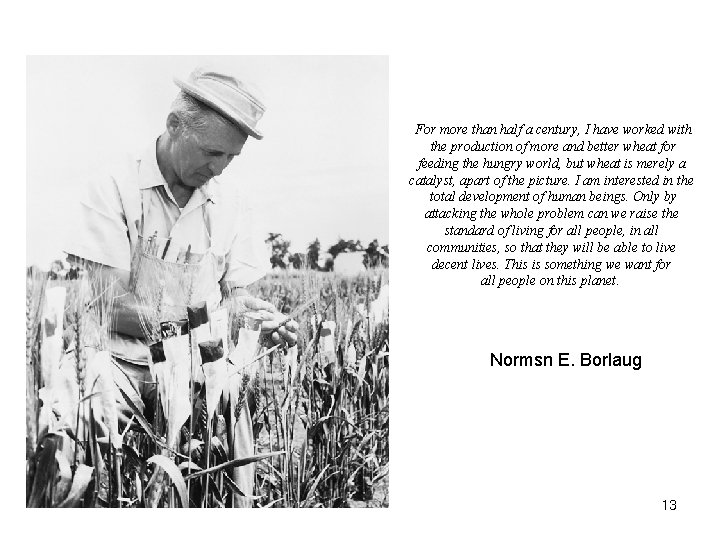
History and Role of Plant Breeding in Society For more than half a century, I have worked with the production of more and better wheat for feeding the hungry world, but wheat is merely a catalyst, apart of the picture. I am interested in the total development of human beings. Only by attacking the whole problem can we raise the standard of living for all people, in all communities, so that they will be able to live decent lives. This is something we want for all people on this planet. Normsn E. Borlaug 13
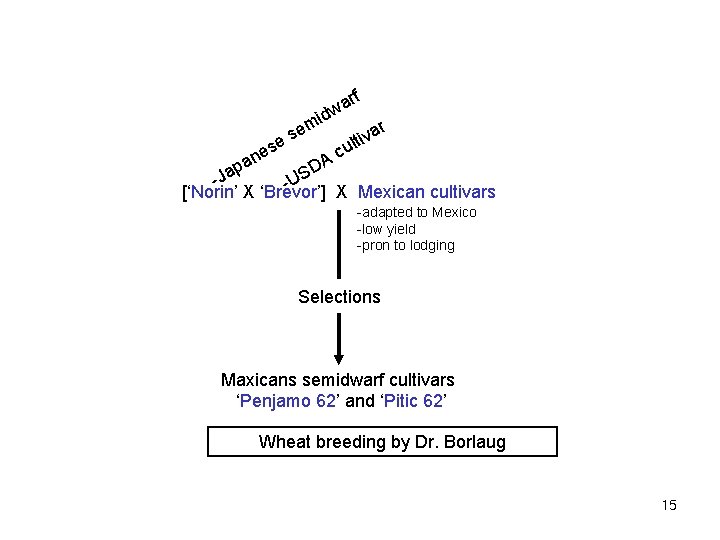
rf a w d e es n a i m se ar v i t ul c A D p -Ja US [‘Norin’ X ‘Brevor’] X Mexican cultivars -adapted to Mexico -low yield -pron to lodging Selections Maxicans semidwarf cultivars ‘Penjamo 62’ and ‘Pitic 62’ Wheat breeding by Dr. Borlaug 15
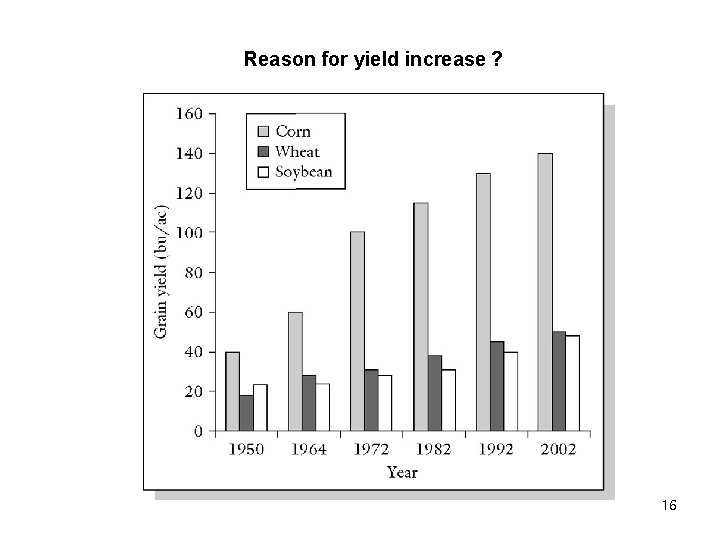
History and Role of Plant Breeding in Society Reason for yield increase ? 16
Future of plant breeding in society ㆍNew roles of plant breeding - Use plant as bioreactors to produce pharmaceuticals (Bio-pharming) - Antibody mediated pathogen resistance ㆍNew tools for plant breeding - Plant biotechnology - Molecular marker technology ㆍKey players in plant breeding industry - Technologies are controlled by a few of giant companies - Merging & Acquisition (M&A) - biotechnology debate (environment, technology transfer, intellectual property) 17
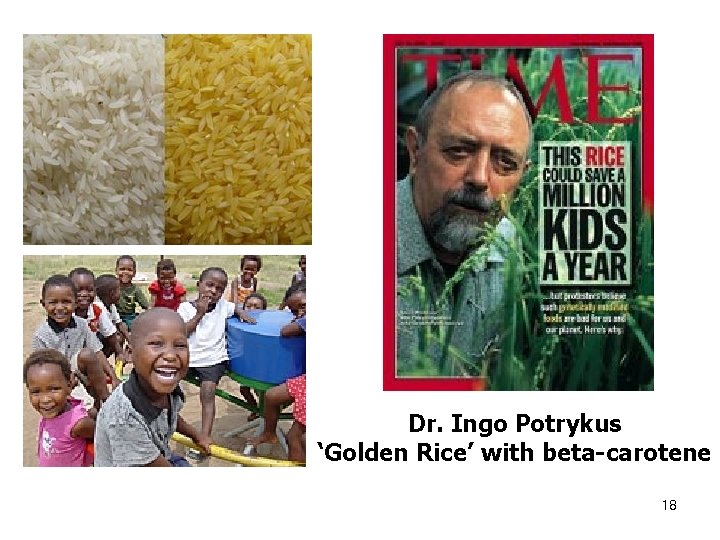
Dr. Ingo Potrykus ‘Golden Rice’ with beta-carotene 18
- Slides: 18