
Chapter 1 Fundamentals of Java Programming By Ms
Chapter 1 Fundamentals of Java Programming By Ms. Ramsha Sohail
�Computers and Computer Programming �Writing and Executing a Java Program �Elements of a Java Program �Features of Java �Accessing the Classes and Class Members �The Memory Usage by a Java Program �When Will the Error Occur?
� Understand how computers and computer programs work. � Understand how a Java program is written, compiled, and executed. � Understand what makes Java platform independent. � Identify the object-oriented features of Java. � Identify different elements of a Java program: primitive variable, reference variable, local variable, instance variable, method, and class.
�Identify where in memory the method invocations, objects, and variables are stored. �Understand how access modifiers define the accessibility of classes and class members. �Understand the concepts of early binding and late binding in the context of program errors.
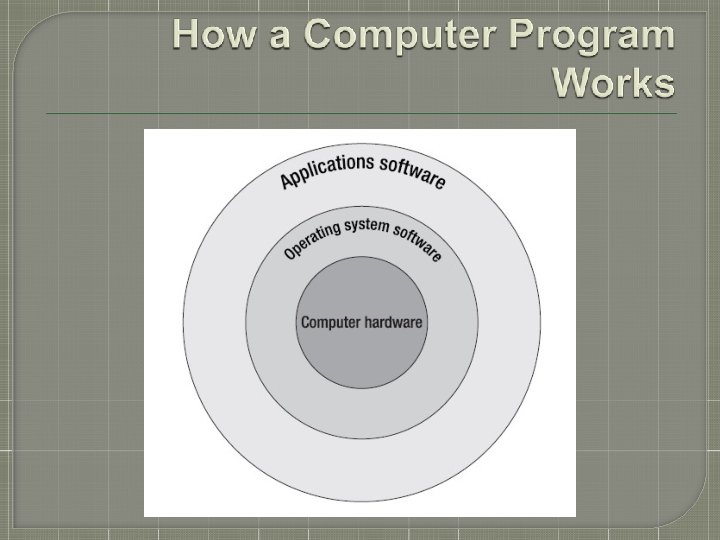
�How a Computer Works �How a Computer Program Works
From a computer program’s perspective, a computer consists of components to do the following: • Receive data from a user • Process the data according to instructions from a program or a user • Place the results somewhere
Places to Store Data: • Permanent storage: hard drive • Temporary storage: RAM �I/O Devices: monitor, keyboard, disk, and printer �CPU: The Brain of the Computer
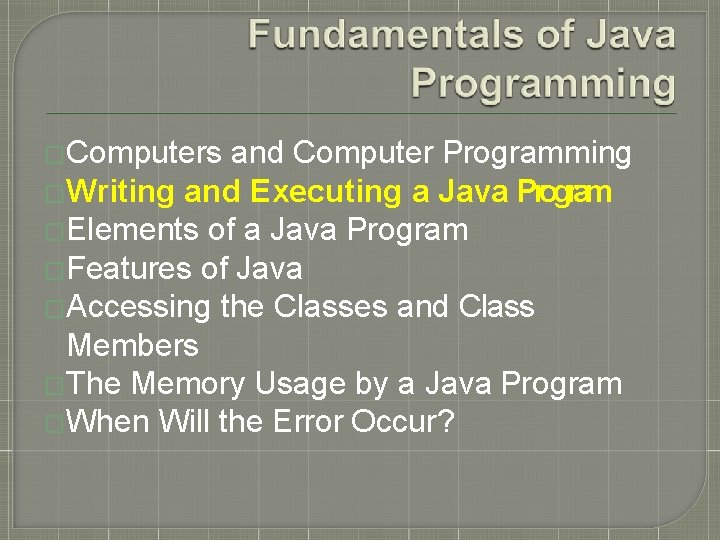
�Computers and Computer Programming �Writing and Executing a Java Program �Elements of a Java Program �Features of Java �Accessing the Classes and Class Members �The Memory Usage by a Java Program �When Will the Error Occur?
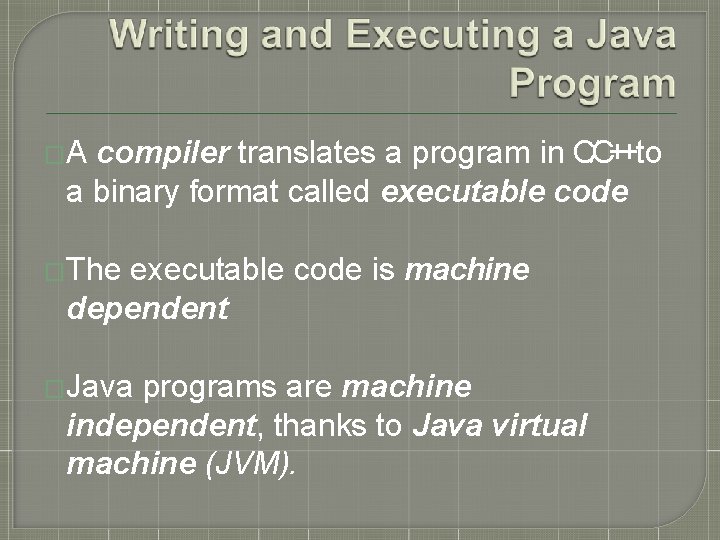
�A compiler translates a program in C/C++to a binary format called executable code �The executable code is machine dependent �Java programs are machine independent, thanks to Java virtual machine (JVM).
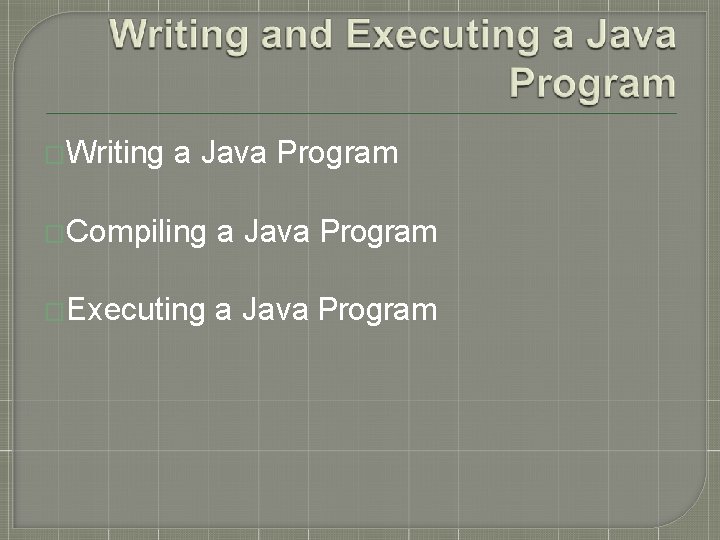
�Writing a Java Program �Compiling a Java Program �Executing a Java Program
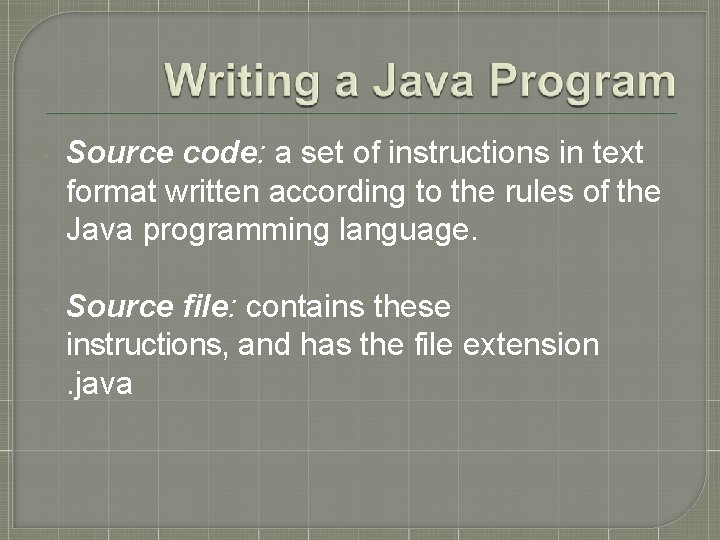
Source code: a set of instructions in text format written according to the rules of the Java programming language. Source file: contains these instructions, and has the file extension. java
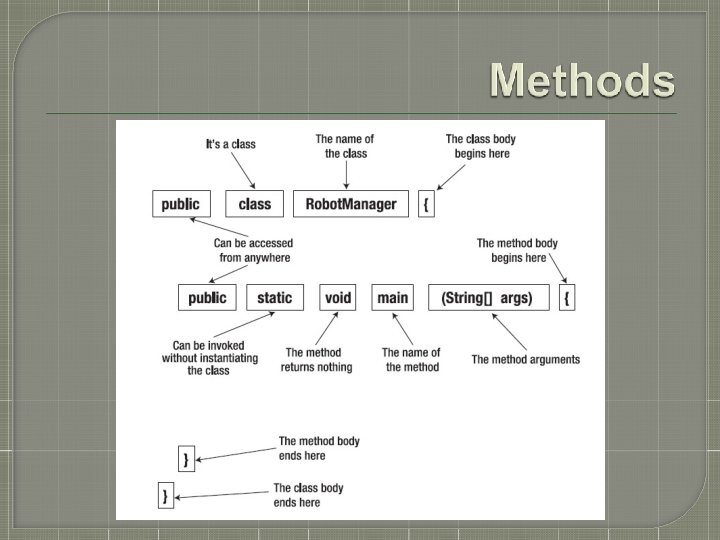
�Machine language: a binary format �In Java, the compiler compiles the source code into bytecode �To create the bytecode files (. class) from the source file Robot. Manager. java: javac Robot. Manager. java
�Executing a Java program by issuing the java command: java Robot. Manager Ginny 420 �The JVM reads the bytecode file and translates the instructions to the executable format that your computer can understand
�Computers and Computer Programming �Writing and Executing a Java Program �Elements of a Java Program �Features of Java �Accessing the Classes and Class Members �The Memory Usage by a Java Program �When Will the Error Occur?
�Classes and Objects �Methods �Variables and Data Types �Execution Flow of a Program
�A class is a template (or a blueprint) from which objects are created �Writing a class is called implementing a class: declaration & body �An object is instantiated from a class, and also called the instance of that class �Each object has a state, a set of characteristics, and a behavior represented by methods
�The state of an object is represented by a set of data items that are handled by using variables �The variable’s type determines what kind of values it can hold �The declaration of a variable: <type> <name>; �An object reference variable refer to an object: Robot robot;
�Expressions: combination of variables, operators, literals, and method calls �Statements: a complete execution unit of a program; contain one or more expressions �Blocks: a group of zero or more statements between an opening brace and a closing brace �Execution Flow Control: skip, execute, or repeatedly execute a block of statements
�Computers and Computer Programming �Writing and Executing a Java Program �Elements of a Java Program �Features of Java �Accessing the Classes and Class Members �The Memory Usage by a Java Program �When Will the Error Occur?
�Platform Independence �Object-Oriented Programming
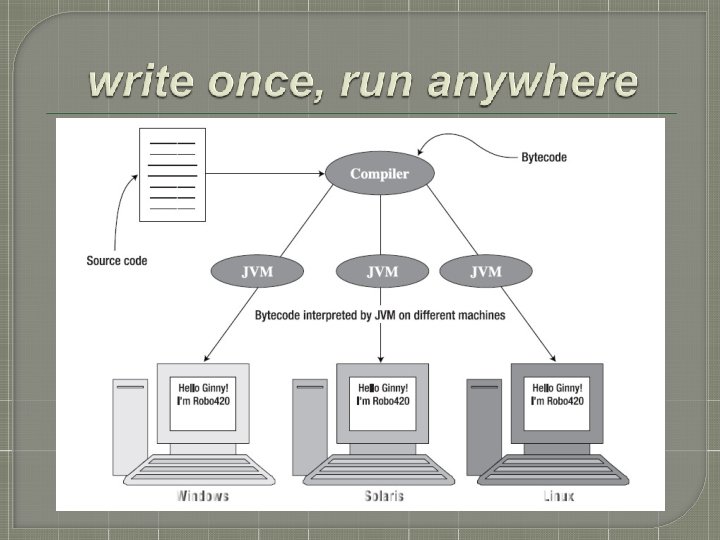
�“write once, run anywhere. ” �The Java compiler compiles the source code into bytecode, which can be interpreted by a suitable JVM on any platform �The JVM can prevent the code from generating side effects outside the system.
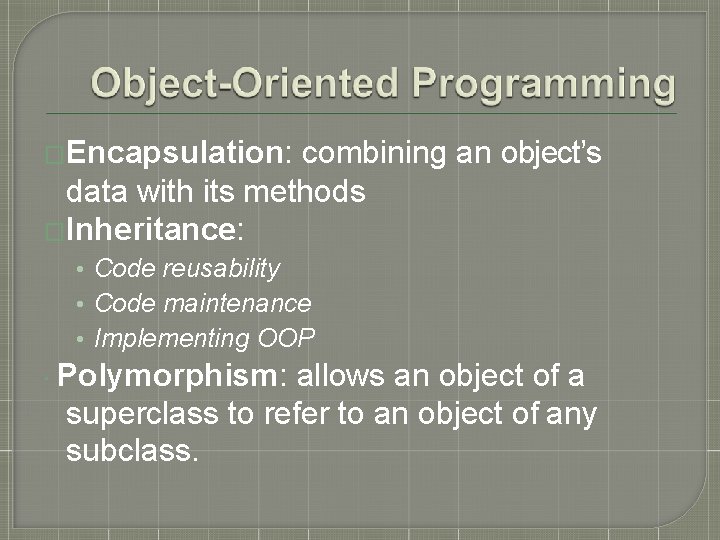
�Encapsulation: combining an object’s data with its methods �Inheritance: • Code reusability • Code maintenance • Implementing OOP Polymorphism: allows an object of a superclass to refer to an object of any subclass.
�Computers and Computer Programming �Writing and Executing a Java Program �Elements of a Java Program �Features of Java �Accessing the Classes and Class Members �The Memory Usage by a Java Program �When Will the Error Occur?
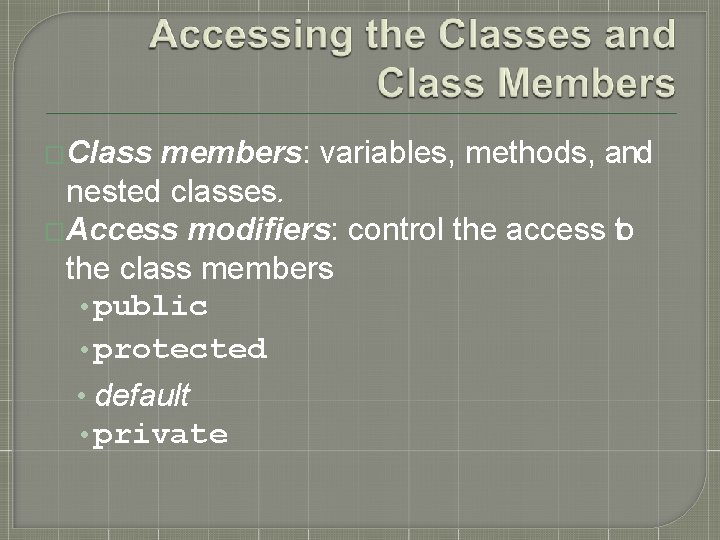
�Class members: variables, methods, and nested classes. �Access modifiers: control the access to the class members • public • protected • default • private
�Computers and Computer Programming �Writing and Executing a Java Program �Elements of a Java Program �Features of Java �Accessing the Classes and Class Members �The Memory Usage by a Java Program �When Will the Error Occur?
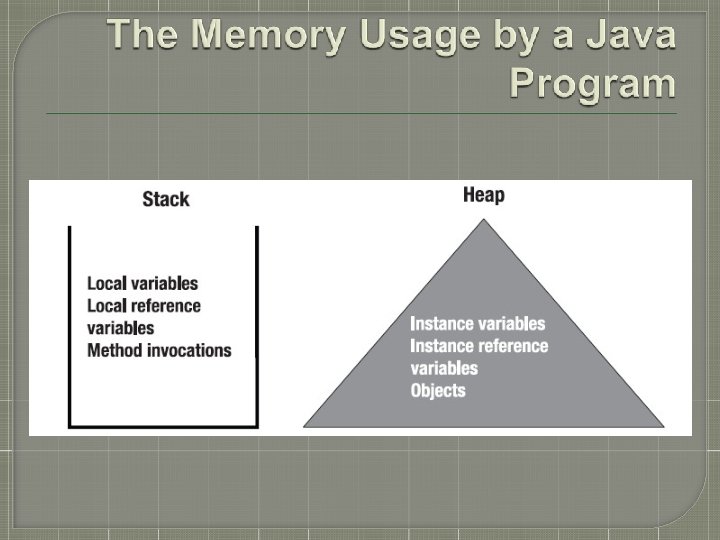
�Computers and Computer Programming �Writing and Executing a Java Program �Elements of a Java Program �Features of Java �Accessing the Classes and Class Members �The Memory Usage by a Java Program �When Will the Error Occur?
�Compilation �An fails exception is thrown at runtime
- Slides: 31