
Chapter 1 Foundations of Management and Organizations 1
- Slides: 27
Chapter 1 Foundations of Management and Organizations 1
Who Are Managers? � Manager ◦ Someone who works with and through other people by coordinating their work activities in order to accomplish organizational goals 2
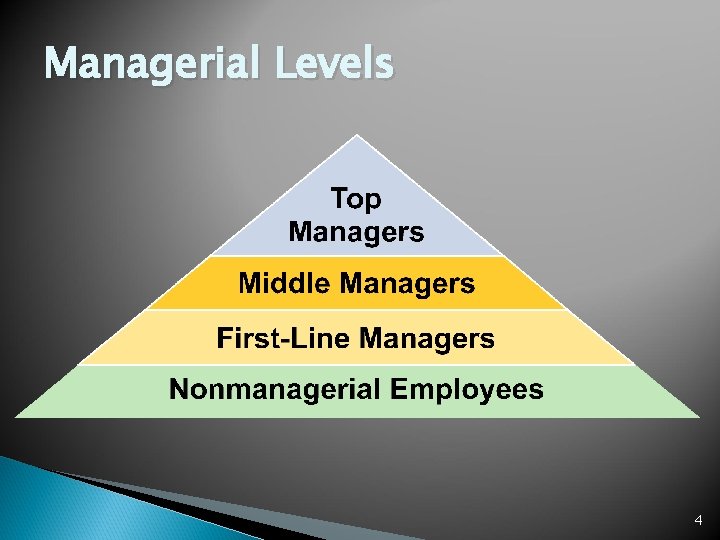
Types of Managers � First-line Managers ◦ Are at the lowest level of management and manage the work of nonmanagerial employees � Middle Managers ◦ Manage the work of first-line managers � Top Managers ◦ Are responsible for making organization-wide decisions and establishing plans and goals that affect the entire organization 3
Managerial Levels 4
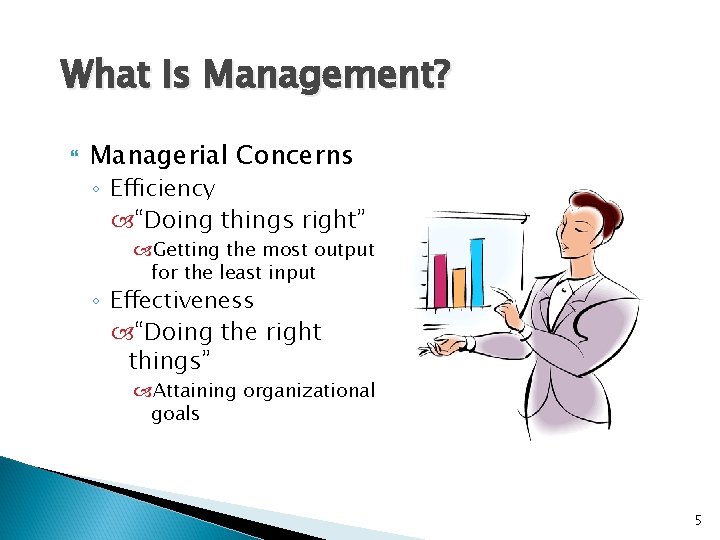
What Is Management? Managerial Concerns ◦ Efficiency “Doing things right” Getting the most output for the least input ◦ Effectiveness “Doing the right things” Attaining organizational goals 5
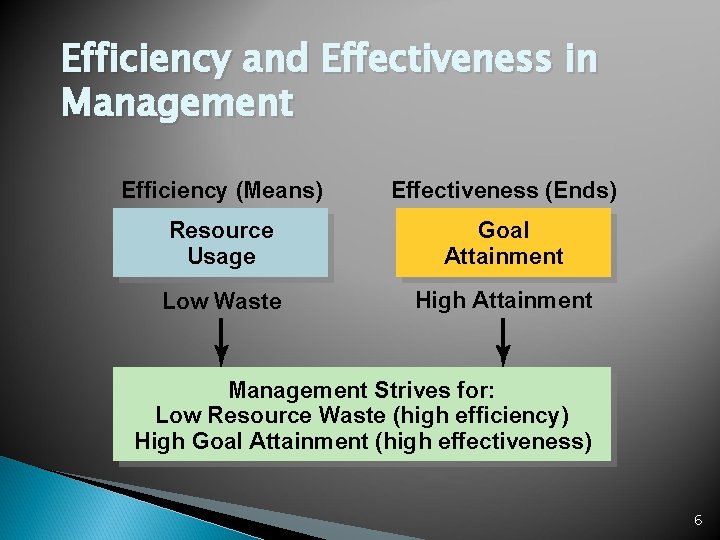
Efficiency and Effectiveness in Management Efficiency (Means) Effectiveness (Ends) Resource Usage Goal Attainment Low Waste High Attainment Management Strives for: Low Resource Waste (high efficiency) High Goal Attainment (high effectiveness) 6
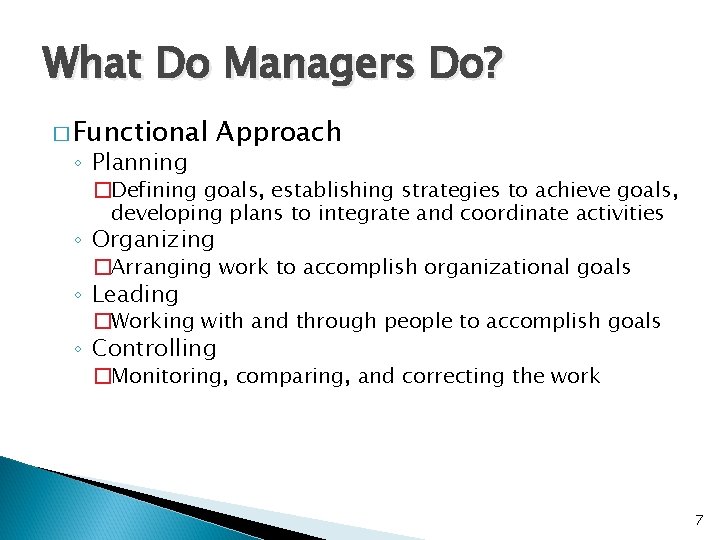
What Do Managers Do? � Functional ◦ Planning Approach �Defining goals, establishing strategies to achieve goals, developing plans to integrate and coordinate activities ◦ Organizing �Arranging work to accomplish organizational goals ◦ Leading �Working with and through people to accomplish goals ◦ Controlling �Monitoring, comparing, and correcting the work 7
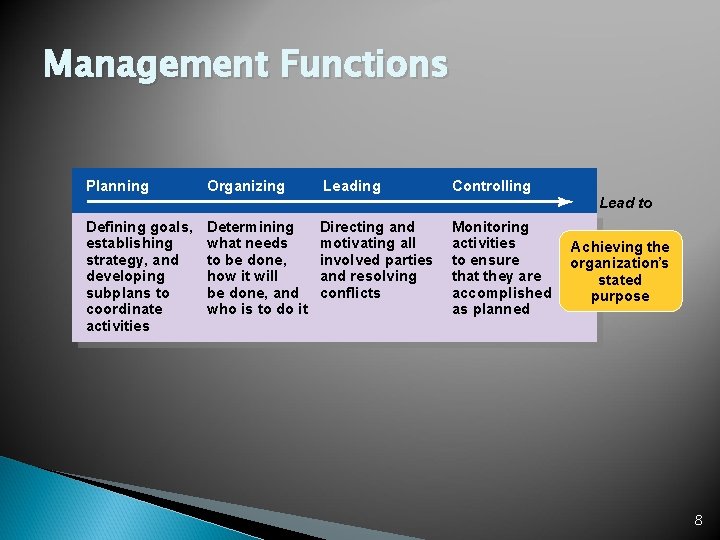
Management Functions Planning Organizing Leading Controlling Lead to Defining goals, establishing strategy, and developing subplans to coordinate activities Determining what needs to be done, how it will be done, and who is to do it Directing and motivating all involved parties and resolving conflicts Monitoring activities to ensure that they are accomplished as planned Achieving the organization’s stated purpose 8
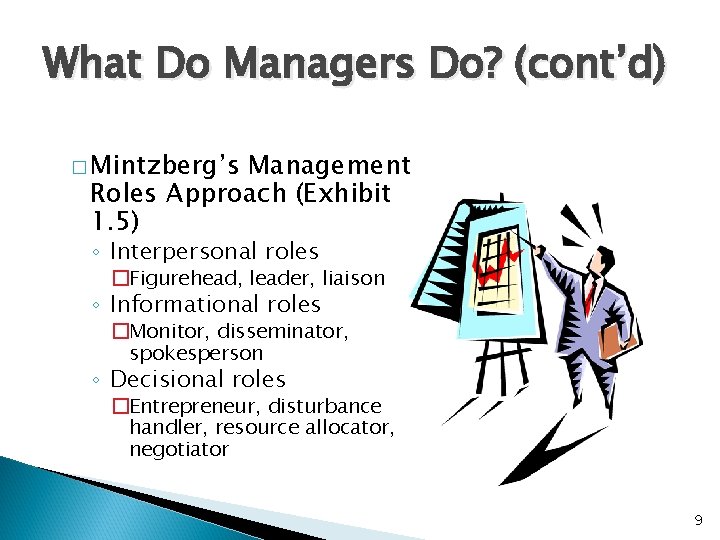
What Do Managers Do? (cont’d) � Mintzberg’s Management Roles Approach (Exhibit 1. 5) ◦ Interpersonal roles �Figurehead, leader, liaison ◦ Informational roles �Monitor, disseminator, spokesperson ◦ Decisional roles �Entrepreneur, disturbance handler, resource allocator, negotiator 9
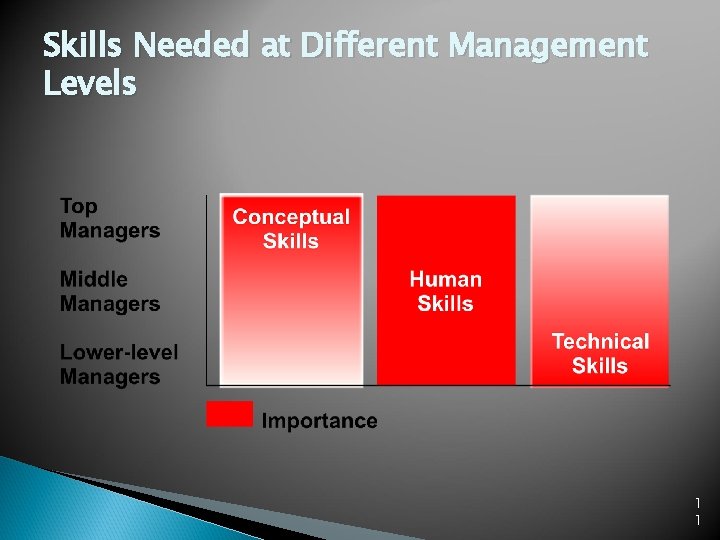
What Do Managers Do? (cont’d) � Skills Approach ◦ Technical skills �Knowledge and proficiency in a specific field ◦ Human skills �The ability to work well with other people ◦ Conceptual skills �The ability to think and conceptualize about abstract and complex situations concerning the organization 1 0
Skills Needed at Different Management Levels 1 1
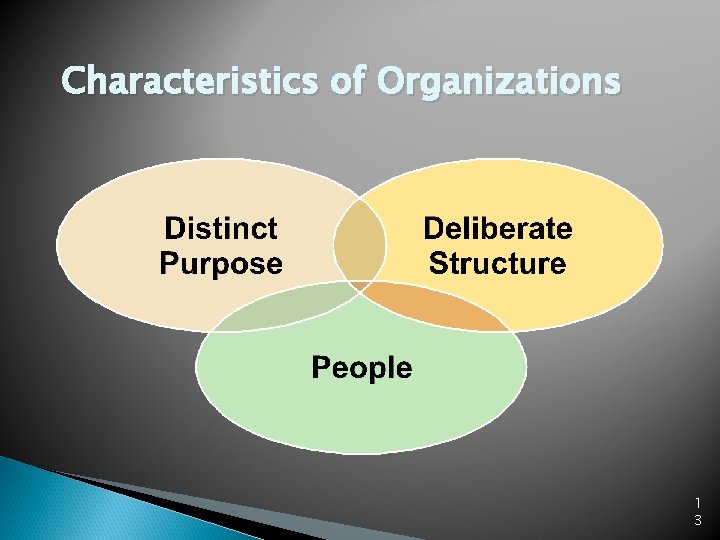
What Is An Organization? � An Organization Defined ◦ A deliberate arrangement of people to accomplish some specific purpose � Common Characteristics of Organizations ◦ Have a distinct purpose (goal) ◦ Are composed of people ◦ Have a deliberate structure 1 2
Characteristics of Organizations 1 3
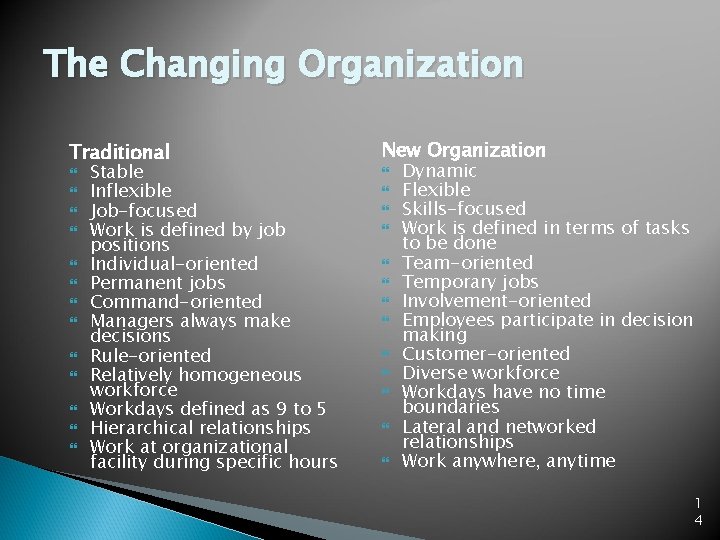
The Changing Organization Traditional New Organization Stable Inflexible Job-focused Work is defined by job positions Individual-oriented Permanent jobs Command-oriented Managers always make decisions Rule-oriented Relatively homogeneous workforce Workdays defined as 9 to 5 Hierarchical relationships Work at organizational facility during specific hours Dynamic Flexible Skills-focused Work is defined in terms of tasks to be done Team-oriented Temporary jobs Involvement-oriented Employees participate in decision making Customer-oriented Diverse workforce Workdays have no time boundaries Lateral and networked relationships Work anywhere, anytime 1 4
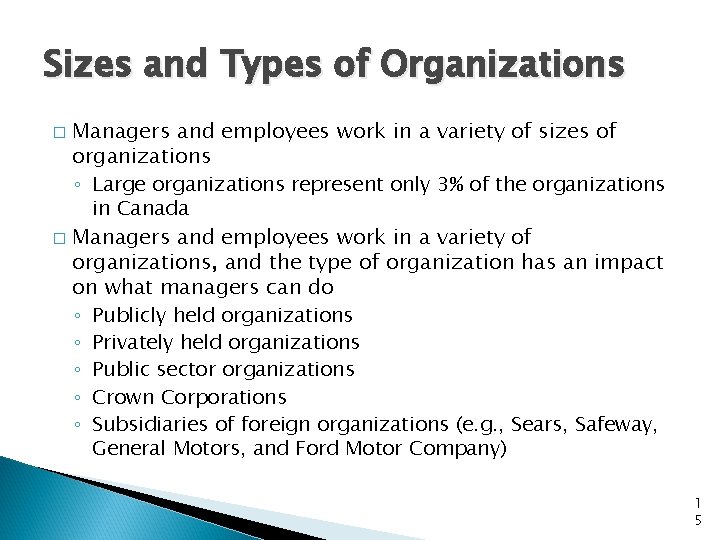
Sizes and Types of Organizations Managers and employees work in a variety of sizes of organizations ◦ Large organizations represent only 3% of the organizations in Canada � Managers and employees work in a variety of organizations, and the type of organization has an impact on what managers can do ◦ Publicly held organizations ◦ Privately held organizations ◦ Public sector organizations ◦ Crown Corporations ◦ Subsidiaries of foreign organizations (e. g. , Sears, Safeway, General Motors, and Ford Motor Company) � 1 5
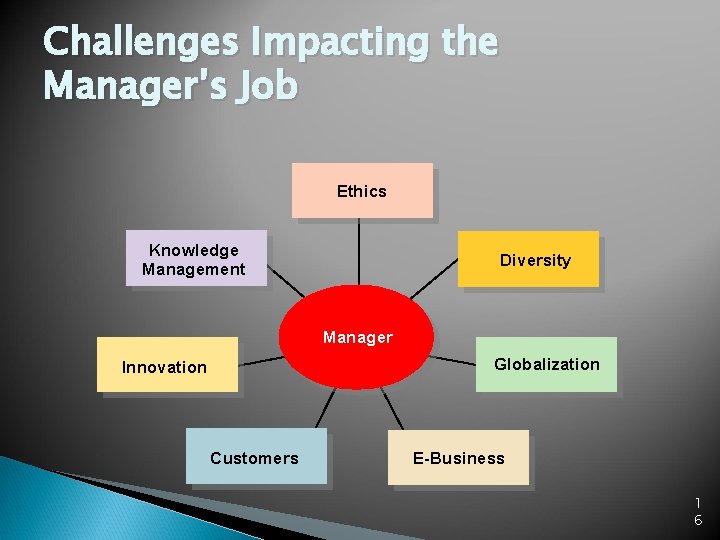
Challenges Impacting the Manager’s Job Ethics Knowledge Management Diversity Manager Globalization Innovation Customers E-Business 1 6
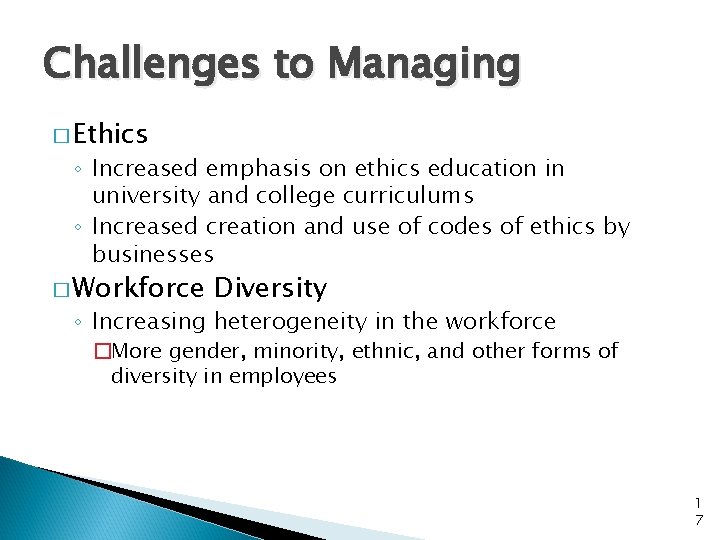
Challenges to Managing � Ethics ◦ Increased emphasis on ethics education in university and college curriculums ◦ Increased creation and use of codes of ethics by businesses � Workforce Diversity ◦ Increasing heterogeneity in the workforce �More gender, minority, ethnic, and other forms of diversity in employees 1 7
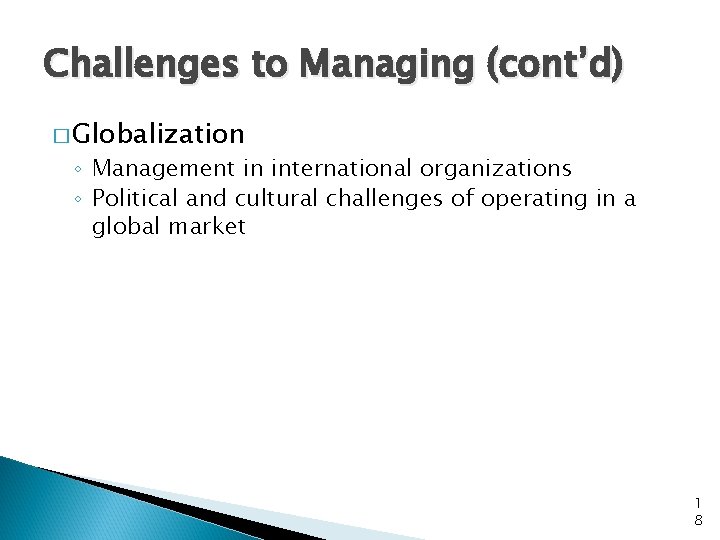
Challenges to Managing (cont’d) � Globalization ◦ Management in international organizations ◦ Political and cultural challenges of operating in a global market 1 8
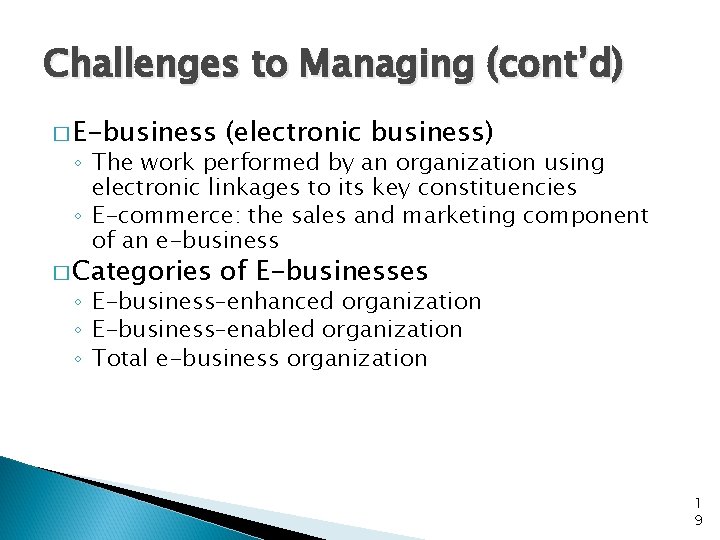
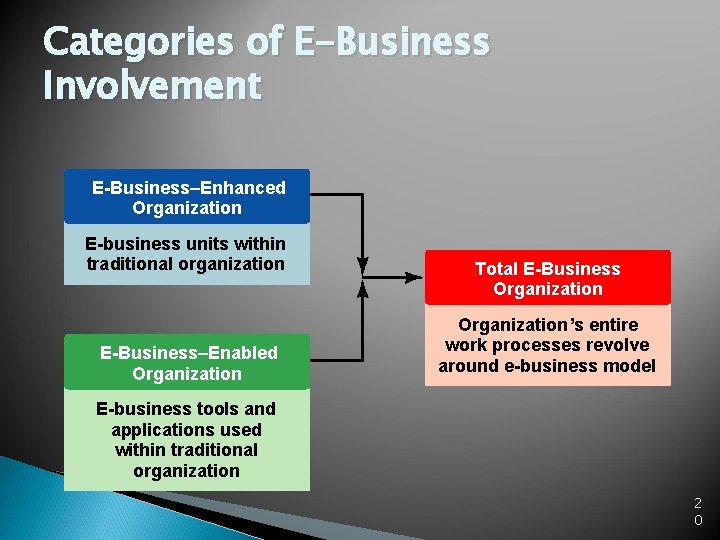
Challenges to Managing (cont’d) � E-business (electronic business) � Categories of E-businesses ◦ The work performed by an organization using electronic linkages to its key constituencies ◦ E-commerce: the sales and marketing component of an e-business ◦ E-business–enhanced organization ◦ E-business–enabled organization ◦ Total e-business organization 1 9
Categories of E-Business Involvement E-Business–Enhanced Organization E-business units within traditional organization E-Business–Enabled Organization Total E-Business Organization ’s entire work processes revolve around e-business model E-business tools and applications used within traditional organization 2 0
Challenges to Managing (cont’d) � Importance of Customers ◦ Customers have more opportunities than ever before ◦ Delivering consistent high-quality service is essential ◦ Managers need to create customer-responsive organizations 2 1
Challenges to Managing (cont’d) � Innovation ◦ Doing things differently, exploring new territory, and taking risks ◦ Managers need to encourage all employees to be innovative 2 2
Challenges to Managing (cont’d) � Entrepreneurship Defined � Entrepreneurship Process ◦ The process whereby an individual or group of individuals use organized efforts to create value and grow by fulfilling wants and needs through innovation and uniqueness ◦ Pursuit of opportunities ◦ Innovation in products, services, or business methods ◦ Desire for continual growth of the organization 2 3
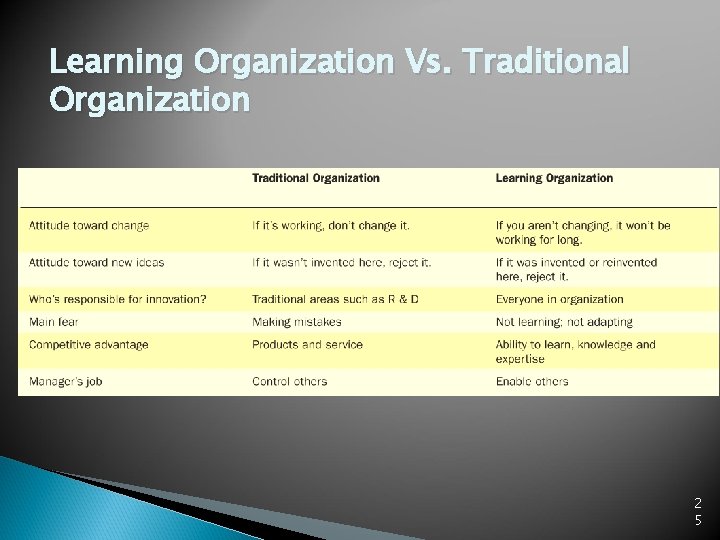
Challenges to Managing (cont’d) � Knowledge Management ◦ The cultivation of a learning culture where organizational members systematically gather and share knowledge with others in order to achieve better performance � Learning Organization ◦ An organization that has developed the capacity to continuously learn, adapt, and change 2 4
Learning Organization Vs. Traditional Organization 2 5
Why Study Management? � The Value of Studying Management ◦ The universality of management �Good management is needed in all organizations ◦ The reality of work �Employees either manage or are managed ◦ Entrepreneurship �The organized effort to pursue opportunities to create value and grow through innovation and uniqueness 2 6
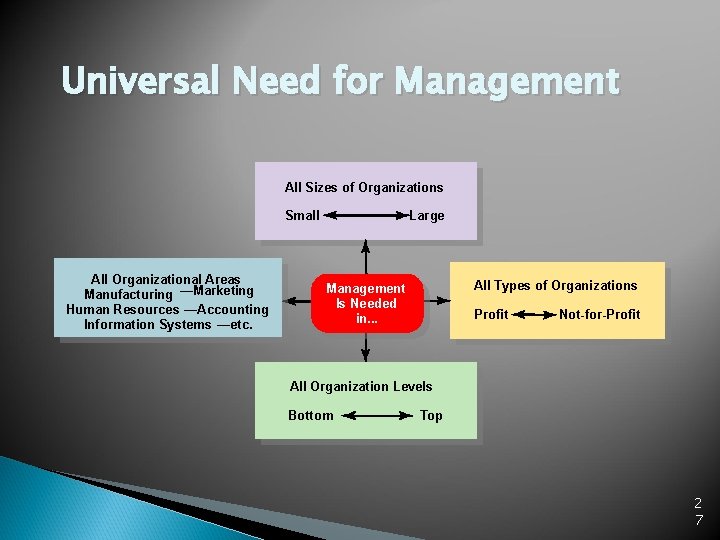
Universal Need for Management All Sizes of Organizations Small All Organizational Areas Manufacturing —Marketing Human Resources —Accounting Information Systems —etc. Large All Types of Organizations Management Is Needed in. . . Profit Not-for-Profit All Organization Levels Bottom Top 2 7