
Chapter 1 FOUNDATIONS OF A CIVILIZATION Studying History
- Slides: 28
Chapter 1 FOUNDATIONS OF A CIVILIZATION
Studying History Prehistory: period of time before people invented writing Artifacts: object made by humans, often left behind from various people throughout history
Historians: scholars who study and write about historical past Experience, background, opinions bias interpretations Sometimes don’t agree
Anthropologists Anthropology: study origins and development of people and societies Bones to see physical changes Characteristics of culture past and present Examine artifacts Languages of past & present Draw conclusions about beliefs, values, and activities Constantly revising old beliefs
Culture CULTURE: Way of life of a society Beliefs, values, and practices handed down from one generation to another
Leakey’s HOMINID: humans and closest relatives Walked upright Humans only hominids alive today Multiple Hominids in the past
Donald Johanson 1974: Ethiopia, several piece of a single hominid skeleton 1 st w/ so many bones 3 million+ years old Lucy 4 ft. tall
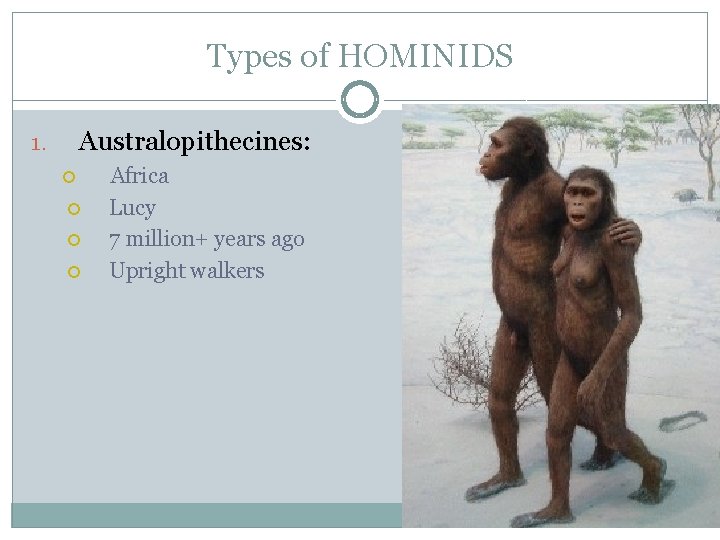
Types of HOMINIDS Australopithecines: 1. Africa Lucy 7 million+ years ago Upright walkers
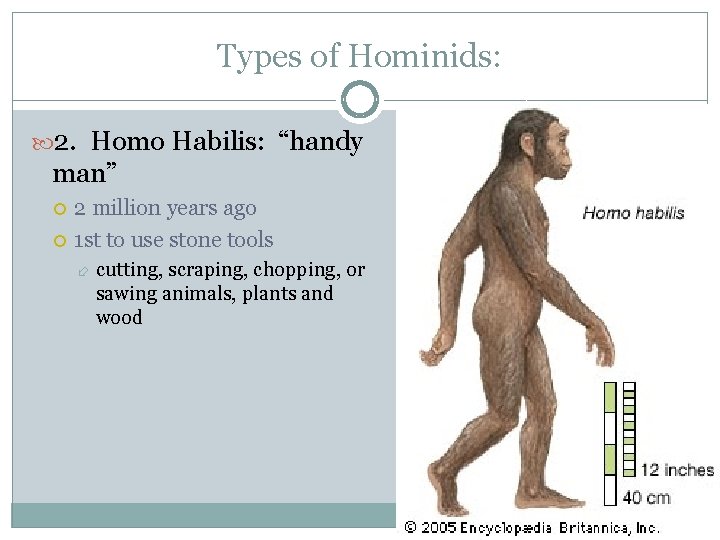
Types of Hominids: 2. Homo Habilis: “handy man” 2 million years ago 1 st to use stone tools cutting, scraping, chopping, or sawing animals, plants and wood
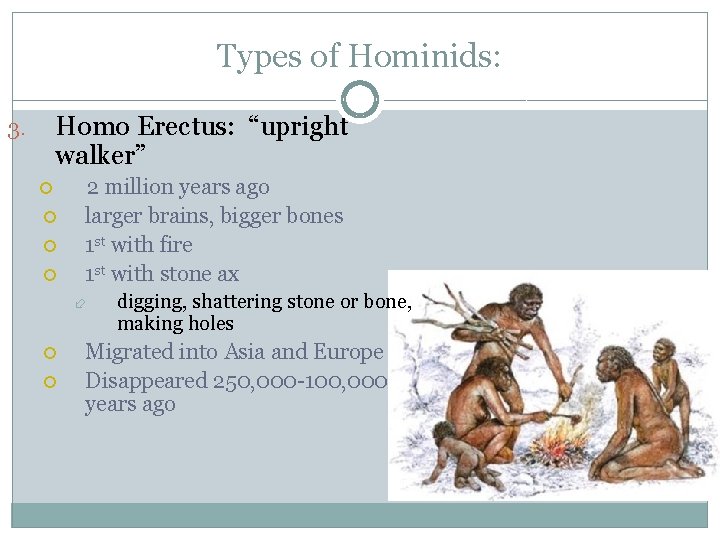
Types of Hominids: Homo Erectus: “upright walker” 3. 2 million years ago larger brains, bigger bones 1 st with fire 1 st with stone ax digging, shattering stone or bone, making holes Migrated into Asia and Europe Disappeared 250, 000 -100, 000 years ago
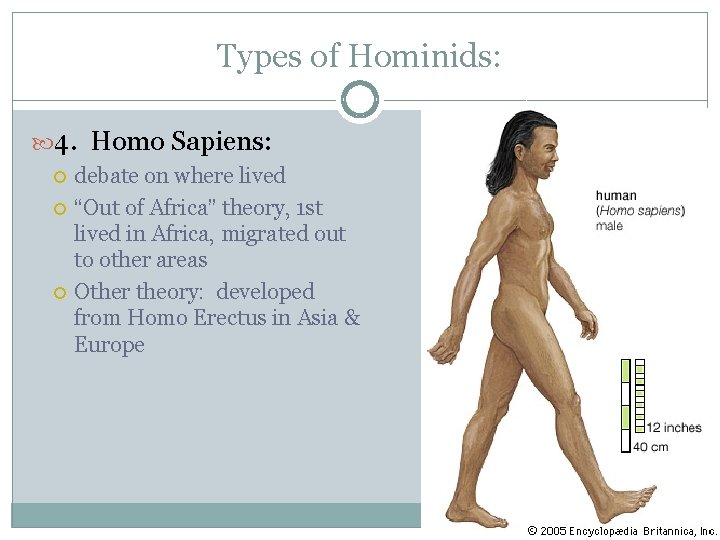
Types of Hominids: 4. Homo Sapiens: debate on where lived “Out of Africa” theory, 1 st lived in Africa, migrated out to other areas Other theory: developed from Homo Erectus in Asia & Europe
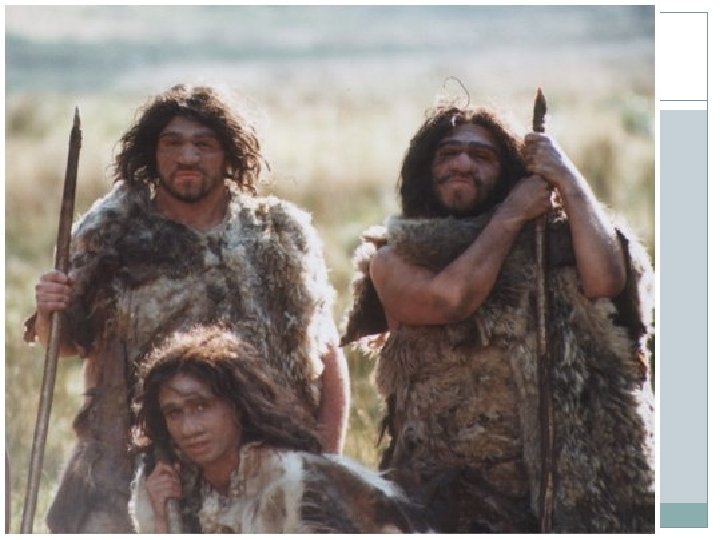
4. Homo Sapiens Split into two groups: A: Neanderthals: Europe & Western Asia disappeared 50, 000 -30, 000 years ago B. Early Modern Humans: only surviving Homo Sapien may have killed out Neanderthals
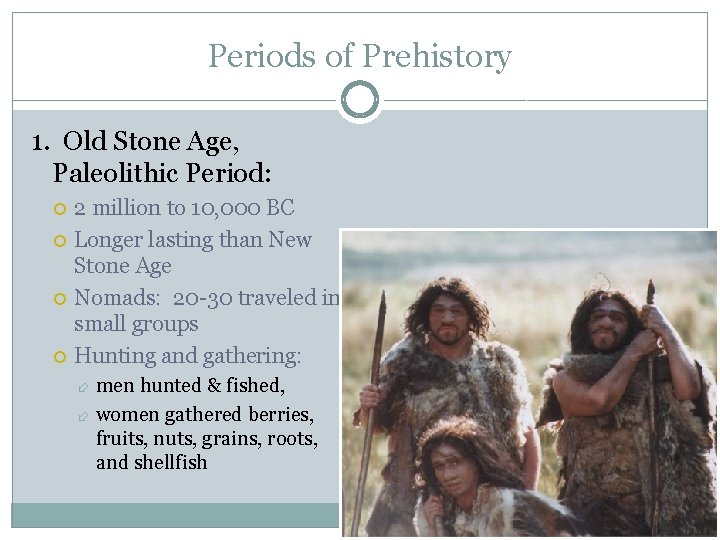
Periods of Prehistory 1. Old Stone Age, Paleolithic Period: 2 million to 10, 000 BC Longer lasting than New Stone Age Nomads: 20 -30 traveled in small groups Hunting and gathering: men hunted & fished, women gathered berries, fruits, nuts, grains, roots, and shellfish
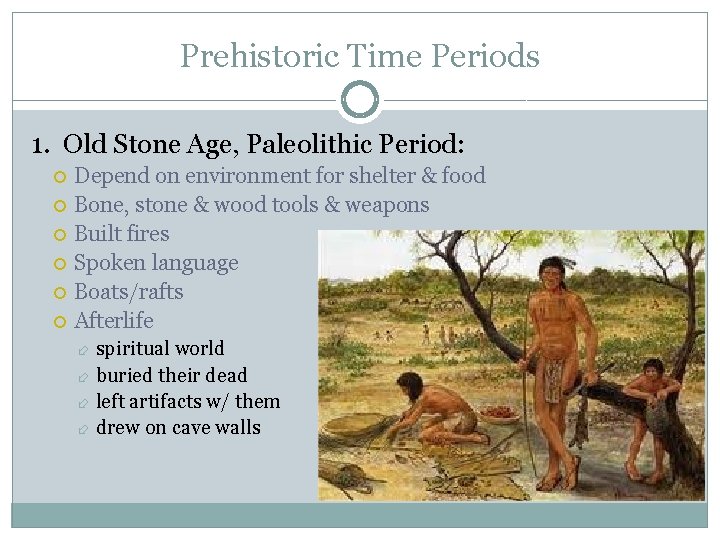
Prehistoric Time Periods 1. Old Stone Age, Paleolithic Period: Depend on environment for shelter & food Bone, stone & wood tools & weapons Built fires Spoken language Boats/rafts Afterlife spiritual world buried their dead left artifacts w/ them drew on cave walls
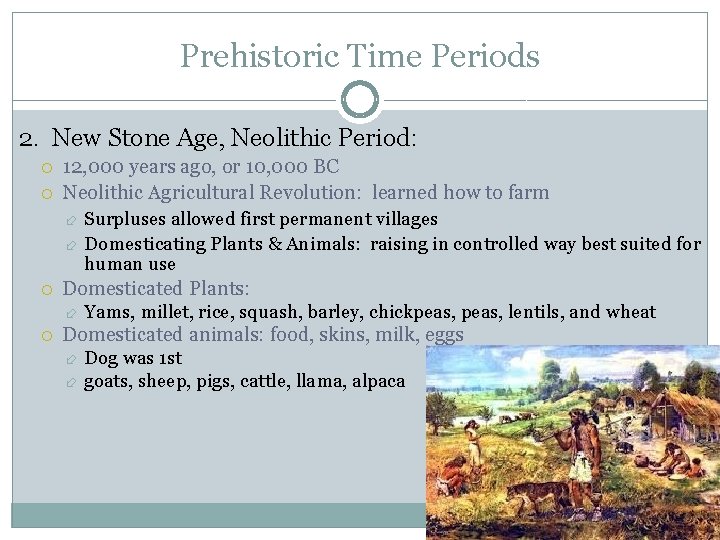
Prehistoric Time Periods 2. New Stone Age, Neolithic Period: 12, 000 years ago, or 10, 000 BC Neolithic Agricultural Revolution: learned how to farm Domesticated Plants: Surpluses allowed first permanent villages Domesticating Plants & Animals: raising in controlled way best suited for human use Yams, millet, rice, squash, barley, chickpeas, lentils, and wheat Domesticated animals: food, skins, milk, eggs Dog was 1 st goats, sheep, pigs, cattle, llama, alpaca
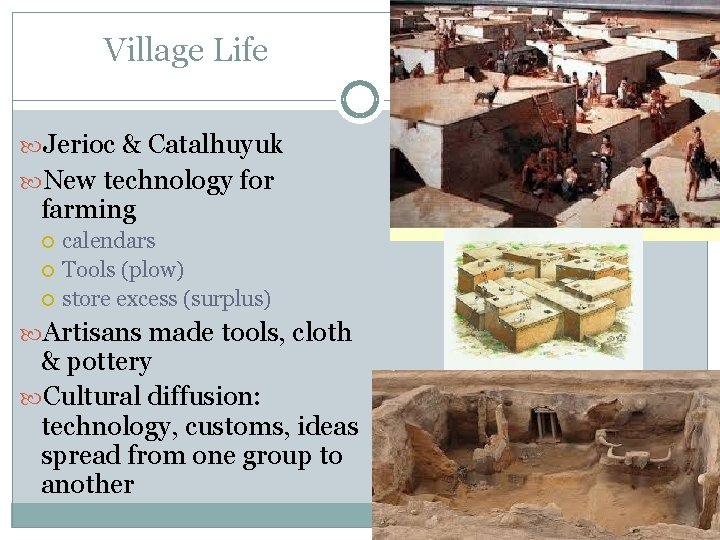
Village Life Jerioc & Catalhuyuk New technology for farming calendars Tools (plow) store excess (surplus) Artisans made tools, cloth & pottery Cultural diffusion: technology, customs, ideas spread from one group to another
Civilizations & River Valleys Surplus crops = population growth Population growth = job specialization Not everyone had to farm Artisans more plentiful Marked transition to civilization Villages develop into cities Cities develop into civilizations
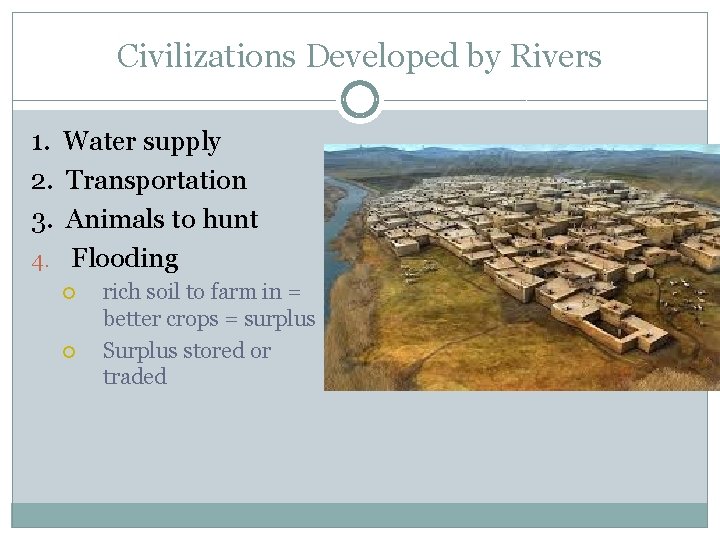
Civilizations Developed by Rivers 1. Water supply 2. Transportation 3. Animals to hunt 4. Flooding rich soil to farm in = better crops = surplus Surplus stored or traded
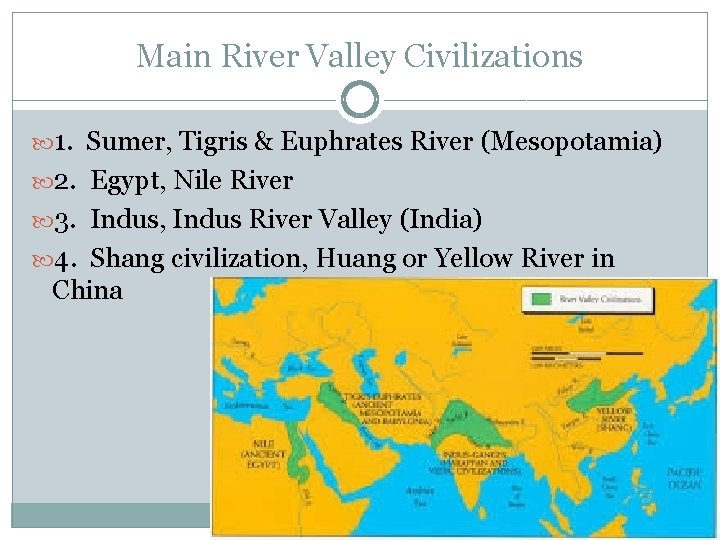
Main River Valley Civilizations 1. Sumer, Tigris & Euphrates River (Mesopotamia) 2. Egypt, Nile River 3. Indus, Indus River Valley (India) 4. Shang civilization, Huang or Yellow River in China
1. Organized Government Council or elders or chiefs Rulers Warriors or Priests Responsible for: supply of food planting and harvesting seasons dike and irrigation construction issuing laws collecting taxes organizing defense
2. Complex Religions Polytheistic: many gods sun, river, natural forces Ceremonies, dances, prayers, hymns, temples, sacrifices Goal: please gods & gain favor Priests specially trained and educated
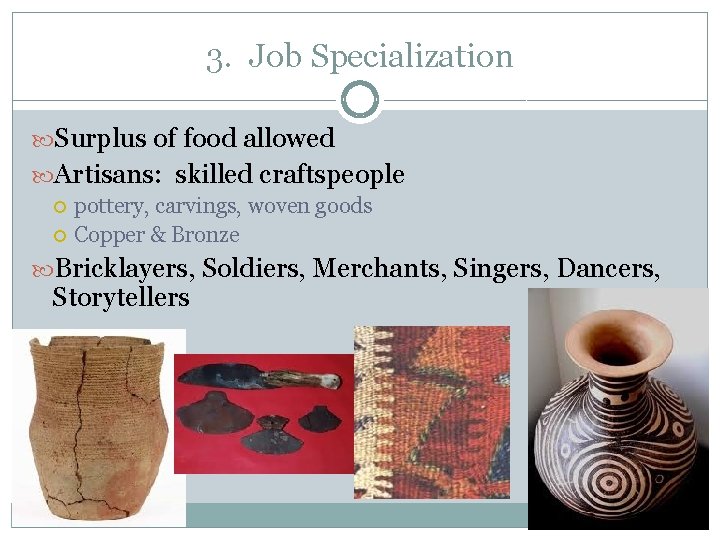
3. Job Specialization Surplus of food allowed Artisans: skilled craftspeople pottery, carvings, woven goods Copper & Bronze Bricklayers, Soldiers, Merchants, Singers, Dancers, Storytellers
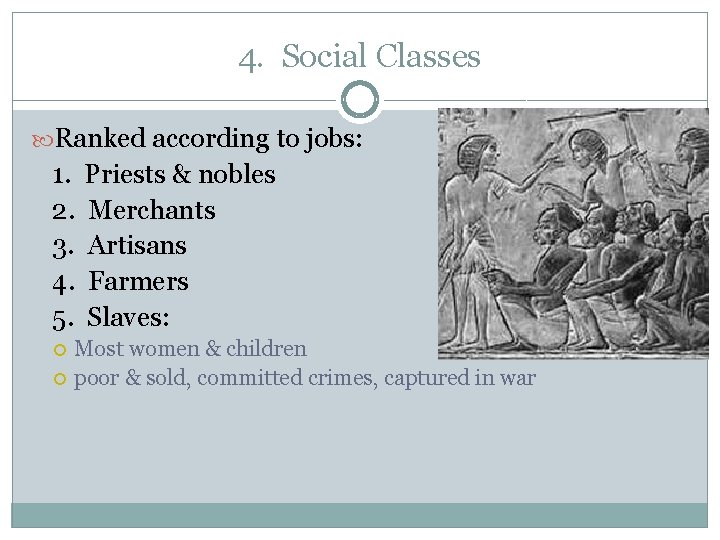
4. Social Classes Ranked according to jobs: 1. 2. 3. 4. 5. Priests & nobles Merchants Artisans Farmers Slaves: Most women & children poor & sold, committed crimes, captured in war
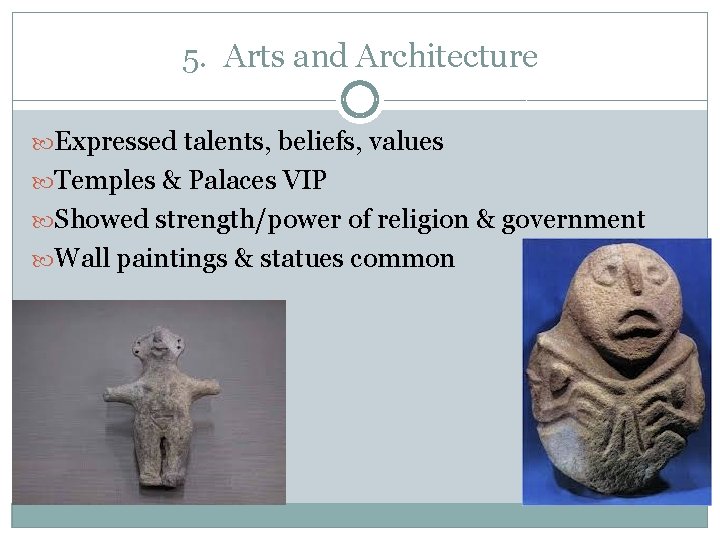
5. Arts and Architecture Expressed talents, beliefs, values Temples & Palaces VIP Showed strength/power of religion & government Wall paintings & statues common
6. Public Works Ordered by rulers for the good of the society Irrigation systems, roads, bridges, defense walls Ensured food, protection from attack, or uphold ruler reputation Slave labor or labor share
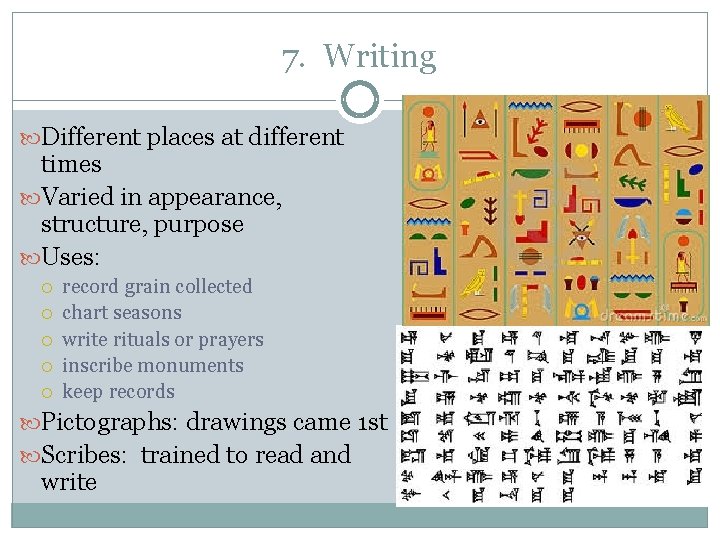
7. Writing Different places at different times Varied in appearance, structure, purpose Uses: record grain collected chart seasons write rituals or prayers inscribe monuments keep records Pictographs: drawings came 1 st Scribes: trained to read and write
Civilizations to Empires Depended on physical environment Earthquakes, volcanoes, soil exhaustion, famine, war Trade and war = more cultural diffusion Civilizations conquered rural outskirts city-states formed City state: political unit of city & surrounding lands City-states grew Rivals fought City-states conquered others = Empires Empire: group of states/territories controlled by 1 ruler Benefits: less war, common money, power, prosperous