
CHAPTER 1 FEATURES OF THE INDUSTRY In this

- Slides: 54
CHAPTER 1 FEATURES OF THE INDUSTRY In this section of the syllabus you will learn about: • The reasons for the rapid growth in the industry • Why its described as ‘the worlds biggest industry’ • Commercial and non-commercial organizations the work together to supply products/services • Significance of travel and tourism to the
NATURE OF TRAVEL AND TOURISM Tourism is the temporary short term movement of people to destinations outside places where they normally live and work, and their activities during their stay at these destinations
MAIN TYPES OF TOURISM Domestic Internationa l Outbound Inbound • When the trip or holiday takes place within a person’s home country • When the traveler(s) leave their home country to travel to another country • Simply means leaving from (the start point) • Arriving to (the end point)
DOMESTIC TRAVEL AND NEW ZEALAND Domestic travel in New Zealand grew by 10. 7% in 2011 The total domestic spend of 9. 4 million • Average spend for day trip was $115 Domestic travel is popular with some people because of the convenience Typically no language barrier • Average spend per overnight was $346 Same currency No passport or visa required Average international visitor stays for 19. 5 days and spends $2, 421 on various good and services ($125 per day) Tourism directly supports 91, 900 fulltime equivalent job (4. 8% of total workforce)
REASONS WHY PEOPLE TRAVEL People travel for numerous reasons and there are three primary reasons Leisure Travel Business Travel Visiting Friends and Relatives (VFR)
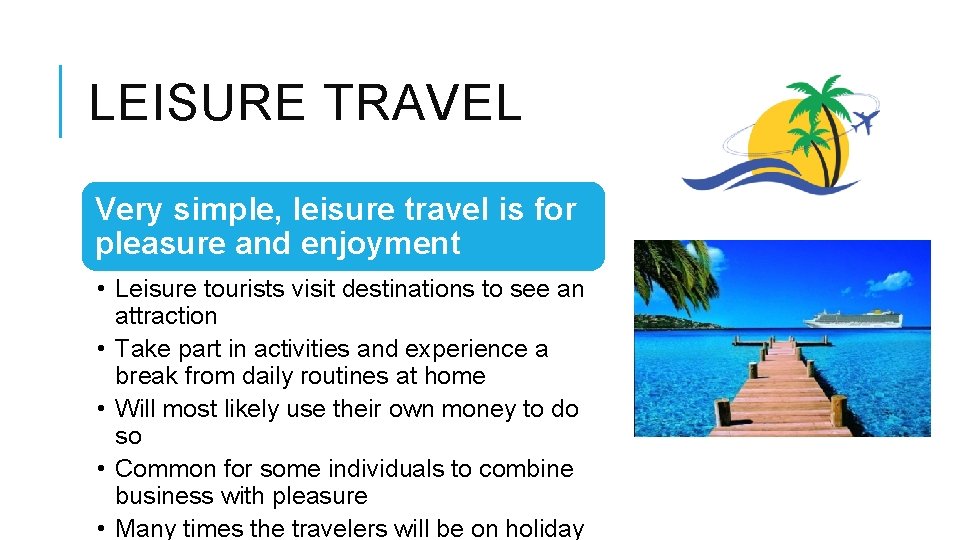
LEISURE TRAVEL Very simple, leisure travel is for pleasure and enjoyment • Leisure tourists visit destinations to see an attraction • Take part in activities and experience a break from daily routines at home • Will most likely use their own money to do so • Common for some individuals to combine business with pleasure • Many times the travelers will be on holiday
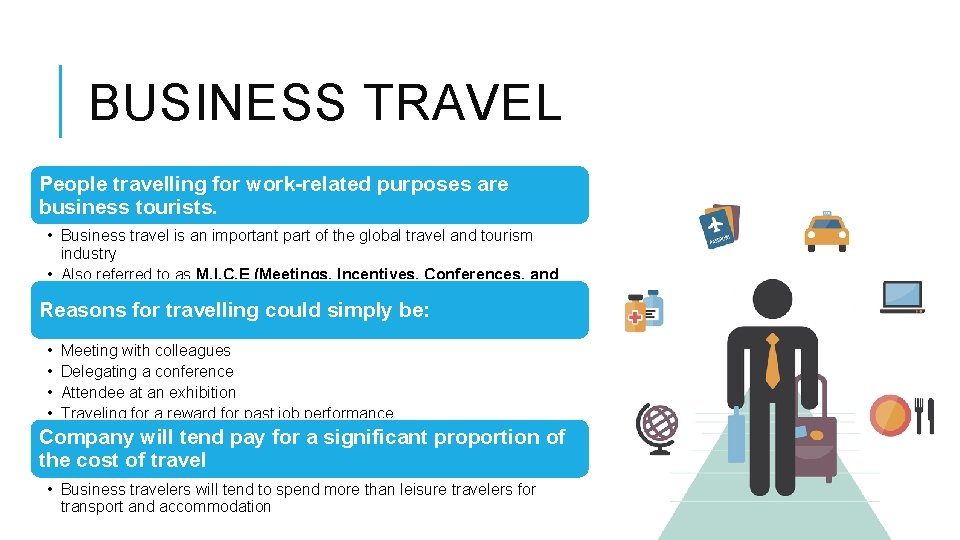
BUSINESS TRAVEL People travelling for work-related purposes are business tourists. • Business travel is an important part of the global travel and tourism industry • Also referred to as M. I. C. E (Meetings, Incentives, Conferences, and Exhibitions) Reasons for travelling could simply be: • • Meeting with colleagues Delegating a conference Attendee at an exhibition Traveling for a reward for past job performance Company will tend pay for a significant proportion of the cost of travel • Business travelers will tend to spend more than leisure travelers for transport and accommodation
VISITING FRIENDS AND RELATIVES (VFR) Simply put, the reason for the individuals travel is to see friends and family • Trend in MEDCs and LEDCs for international travel for the purpose of VFR Migration has resulted in large numbers of people working overseas while their families remain at home • Means there will be a regular flow of expatriate workers travelling for home visits throughout the year, particularly at holiday and festival times
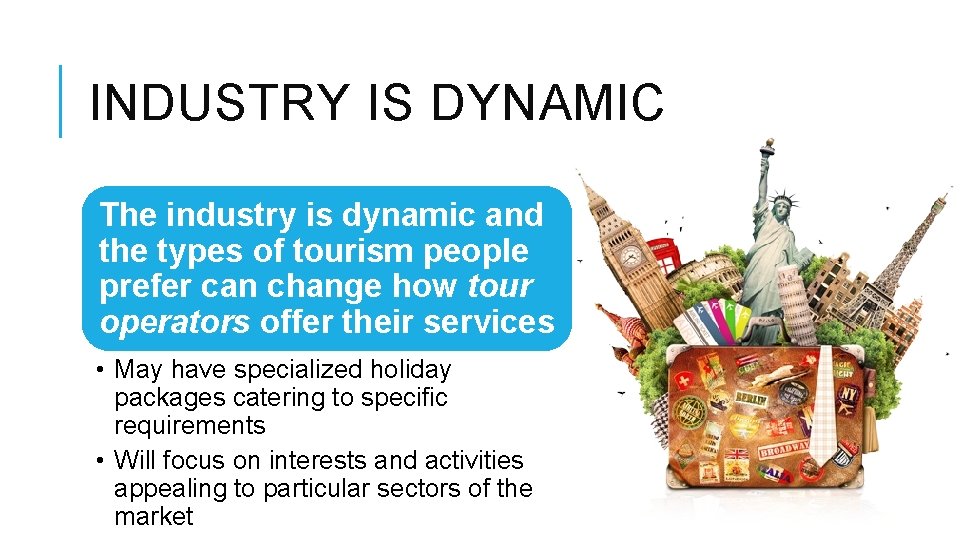
INDUSTRY IS DYNAMIC The industry is dynamic and the types of tourism people prefer can change how tour operators offer their services • May have specialized holiday packages catering to specific requirements • Will focus on interests and activities appealing to particular sectors of the market
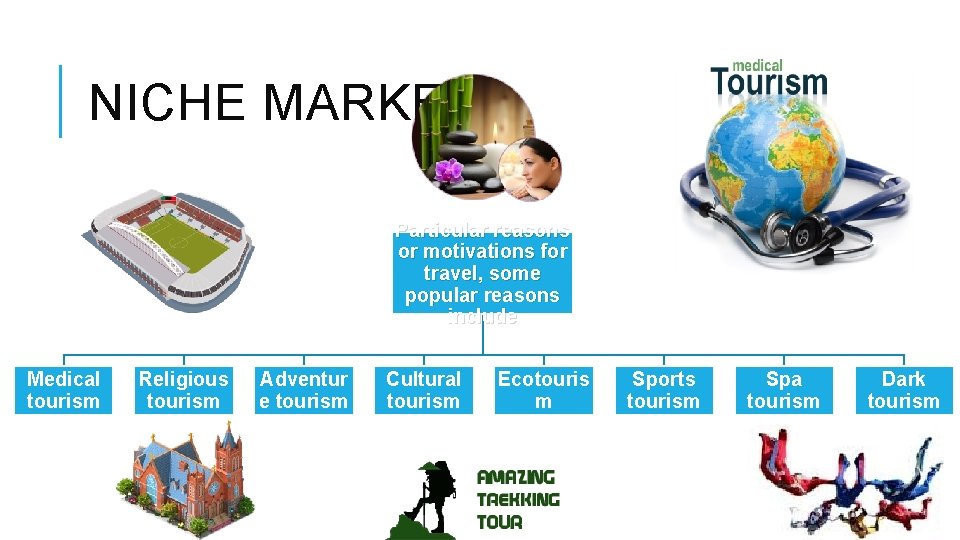
NICHE MARKETS Particular reasons or motivations for travel, some popular reasons include Medical tourism Religious tourism Adventur e tourism Cultural tourism Ecotouris m Sports tourism Spa tourism Dark tourism
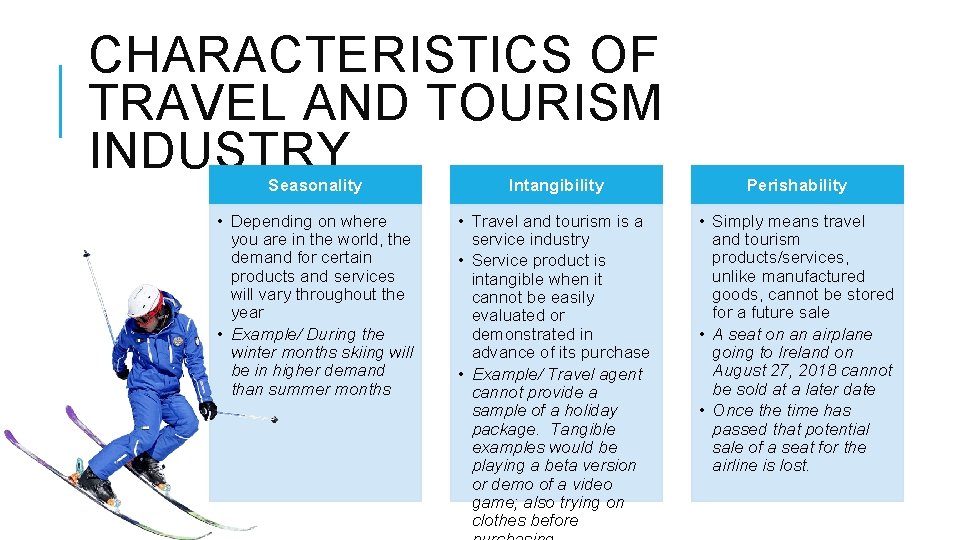
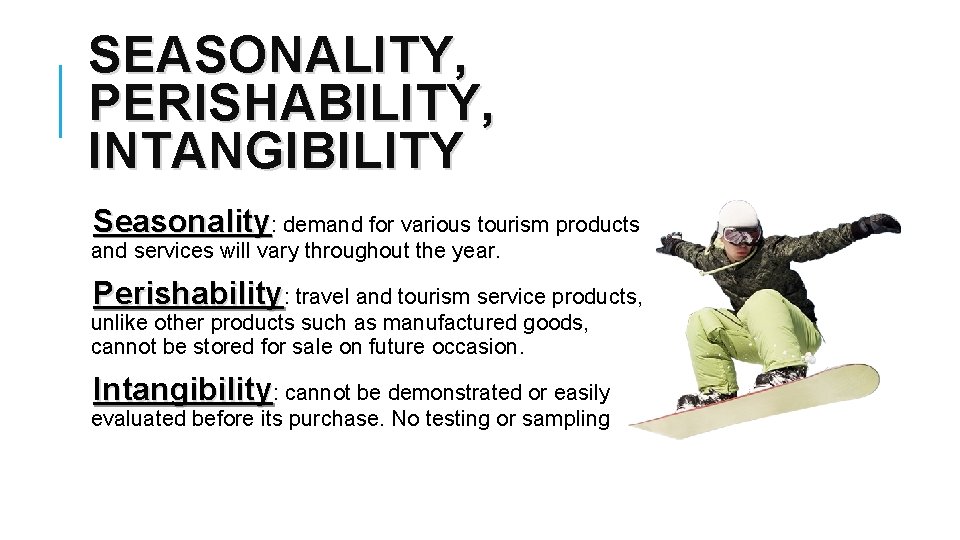
CHARACTERISTICS OF TRAVEL AND TOURISM INDUSTRY Seasonality Intangibility Perishability • Depending on where you are in the world, the demand for certain products and services will vary throughout the year • Example/ During the winter months skiing will be in higher demand than summer months • Travel and tourism is a service industry • Service product is intangible when it cannot be easily evaluated or demonstrated in advance of its purchase • Example/ Travel agent cannot provide a sample of a holiday package. Tangible examples would be playing a beta version or demo of a video game; also trying on clothes before • Simply means travel and tourism products/services, unlike manufactured goods, cannot be stored for a future sale • A seat on an airplane going to Ireland on August 27, 2018 cannot be sold at a later date • Once the time has passed that potential sale of a seat for the airline is lost.
TRAVEL AND TOURISM – GLOBAL ECONOMY Takes place in destinations across the world One of the worlds largest industries • • Capital cities Smaller towns and villages Rural and costal areas Even some of the most remote places in the world • Contributes trillions of dollars every year • Creates jobs and wealth • Boosts taxes and stimulates capital investments • Refer to Figure 1. 2 on pg. 8
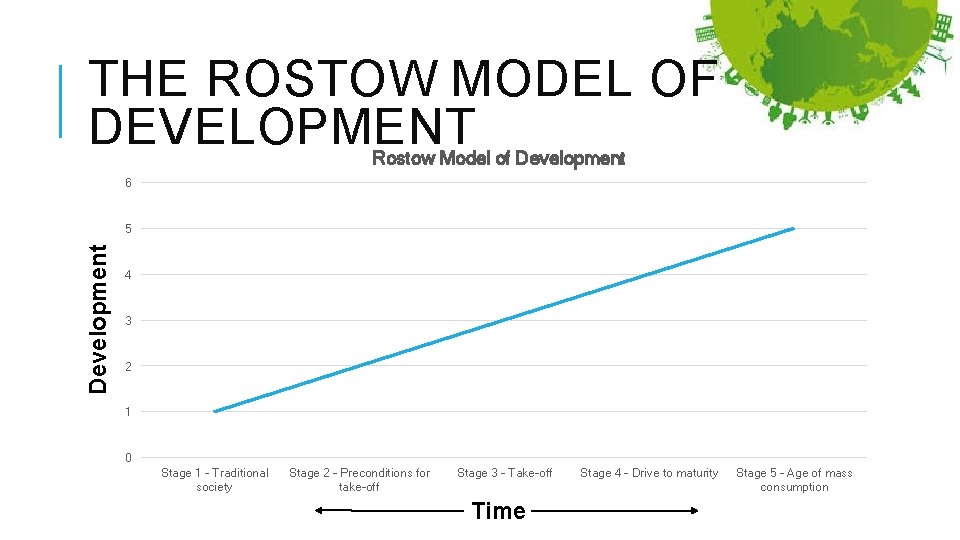
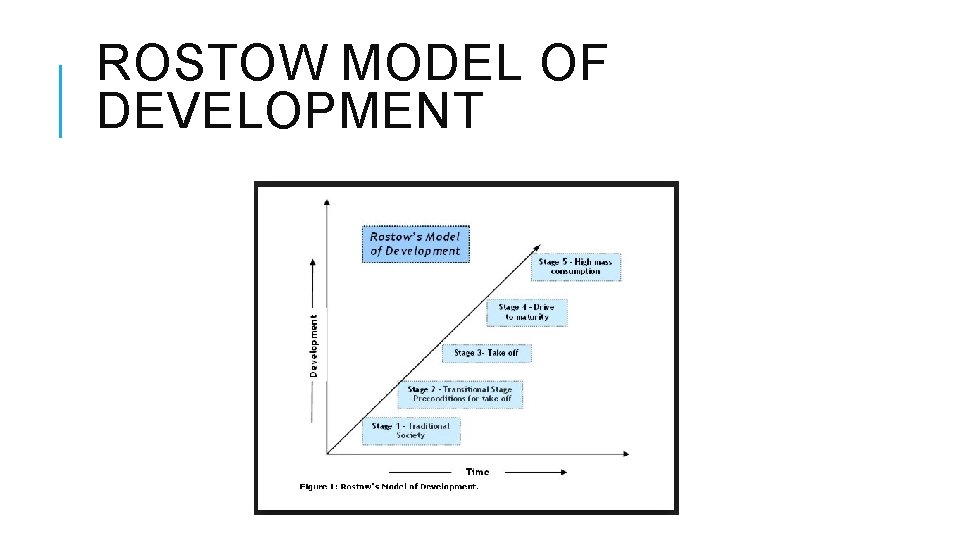
CHANGING SOCIOECONOMIC FACTORS There a range of factors that can explain the development of the travel and tourism industry in MEDCs and LEDCs A good way to examine the relationship between economic growth and a population’s standard of living over time is through the Rostow Model of Development Rostow proposed that economic growth occurs in five basic stages
THE ROSTOW MODEL OF DEVELOPMENT Rostow Model of Development 6 Development 5 4 3 2 1 0 Stage 1 - Traditional society Stage 2 - Preconditions for take-off Stage 3 - Take-off Time Stage 4 - Drive to maturity Stage 5 - Age of mass consumption
STAGE 1 – TRADITIONAL SOCIETY Subsistence economy based mainly on farming Very limited technology or capital to process raw materials or develop services Both GDP and per capita income levels low Situation common with some of the poorest nations in the world
STAGE 2 – PRECONDITIONS FOR TAKE-OFF Takes place when levels of technology develop Development of transport system encourages trade Increase in GDP and per capita incomes start to rise
STAGE 3 – TAKE-OFF Manufacturing industries grow rapidly Airports, roads, and railways are built GDP and per capita incomes quickly rise and a large section of the population These conditions characterize many LEDC nations presently as they pursue development policies
STAGE 4 – DRIVE TO MATURITY Growth becomes self-sustaining having spread to all parts of country Industries and types increase More complex transport systems in place Manufacturing expands as transportation develops Rapid urbanization occurs, old industries begin to decline GDP and per capita income continues to increase
STAGE 5 – AGE OF MASS CONSUMPTION Rapid expansion of tertiary industries occurs, manufacturing declines • Occurs in most MEDC nations where GDP levels are high but growth is slow Per capita incomes are high and large sections of the population have more disposable income to consume variety of goods and services
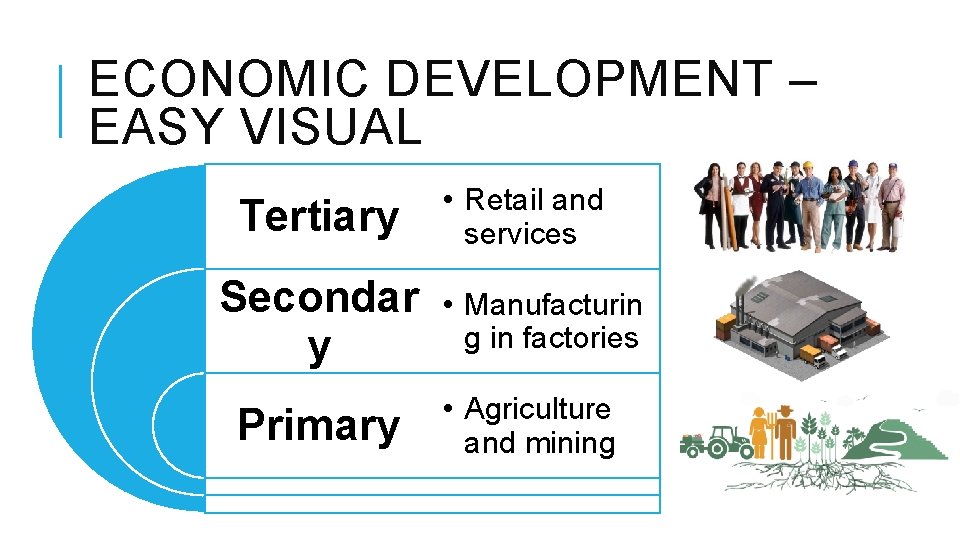
ECONOMIC DEVELOPMENT – EASY VISUAL Tertiary Secondar y Primary • Retail and services • Manufacturin g in factories • Agriculture and mining
INCREASE OF DISPOSABLE INCOME The increase of disposable income is very significant for the travel and tourism industry Table 1. 5 on pg. 13 For the most part, people will always get what they NEED first and get what they WANT last Example/ Example With only enough money for necessities an individual may want to go play a round of golf but not due to the lack of disposable income. They would use that money for bills, food, water, etc…
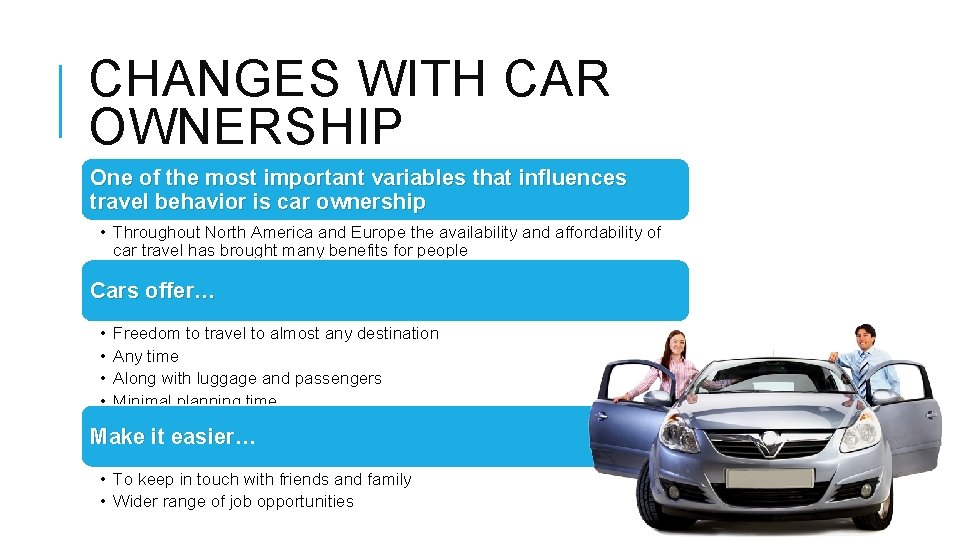
CHANGES WITH CAR OWNERSHIP One of the most important variables that influences travel behavior is car ownership • Throughout North America and Europe the availability and affordability of car travel has brought many benefits for people Cars offer… • • Freedom to travel to almost any destination Any time Along with luggage and passengers Minimal planning time Make it easier… • To keep in touch with friends and family • Wider range of job opportunities
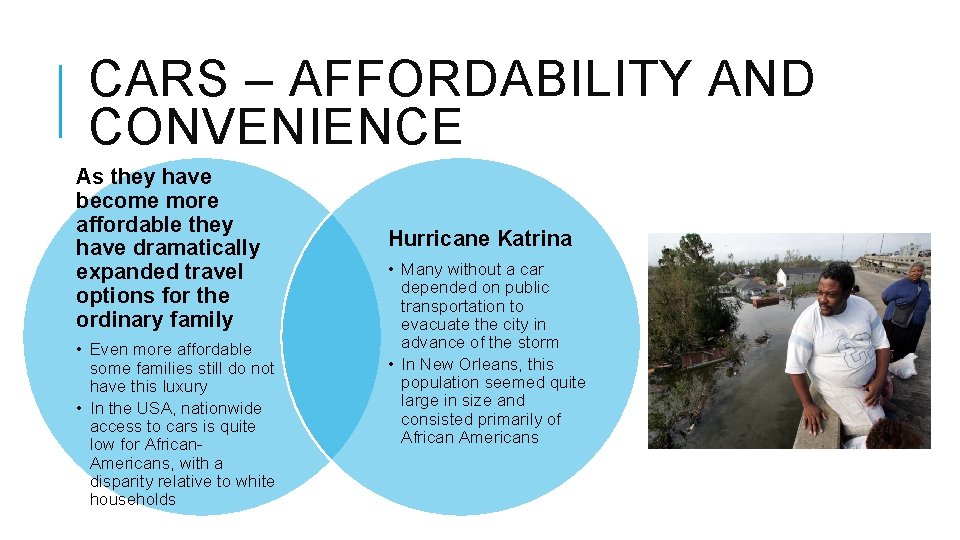
CARS – AFFORDABILITY AND CONVENIENCE As they have become more affordable they have dramatically expanded travel options for the ordinary family • Even more affordable some families still do not have this luxury • In the USA, nationwide access to cars is quite low for African. Americans, with a disparity relative to white households Hurricane Katrina • Many without a car depended on public transportation to evacuate the city in advance of the storm • In New Orleans, this population seemed quite large in size and consisted primarily of African Americans
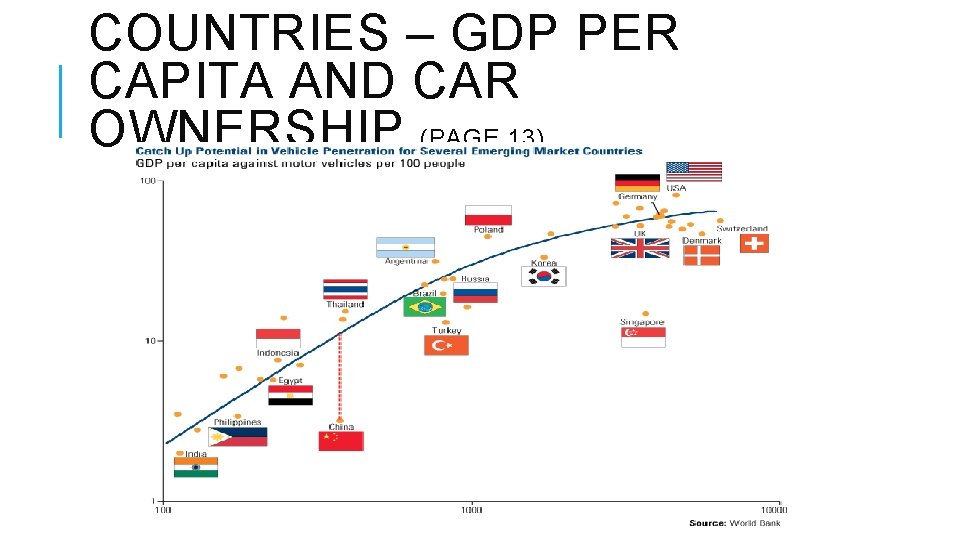
COUNTRIES – GDP PER CAPITA AND CAR OWNERSHIP (PAGE 13)
CARS – PROGRESSING TOURISM Motoring tourism is a popular form that has contributed to the development of tourism in many nations Explosion of private car ownership has had a multiplier effect that stimulates the economy Tourists can use privately owned cars for independent and flexible holidays both domestic and international A need for motels/hotels Can take day excursions or longer trips Bed and breakfasts Restaurants Uber, Taxis, and Buses
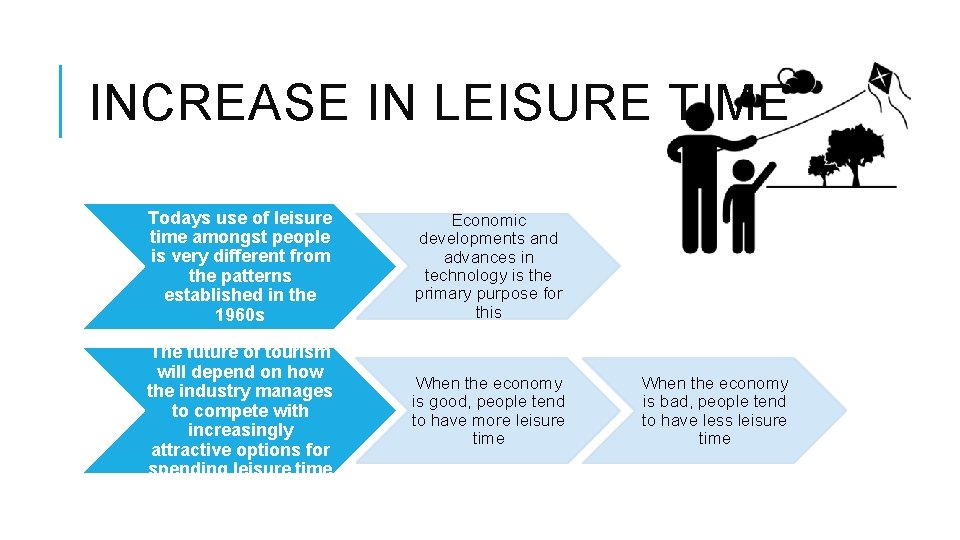
INCREASE IN LEISURE TIME Todays use of leisure time amongst people is very different from the patterns established in the 1960 s Economic developments and advances in technology is the primary purpose for this The future of tourism will depend on how the industry manages to compete with increasingly attractive options for spending leisure time When the economy is good, people tend to have more leisure time When the economy is bad, people tend to have less leisure time
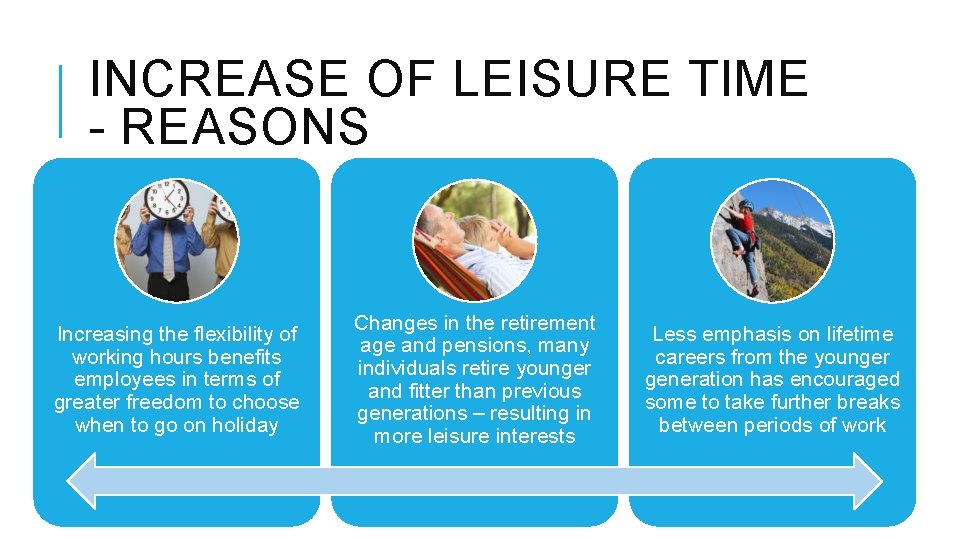
INCREASE OF LEISURE TIME - REASONS Increasing the flexibility of working hours benefits employees in terms of greater freedom to choose when to go on holiday Changes in the retirement age and pensions, many individuals retire younger and fitter than previous generations – resulting in more leisure interests Less emphasis on lifetime careers from the younger generation has encouraged some to take further breaks between periods of work
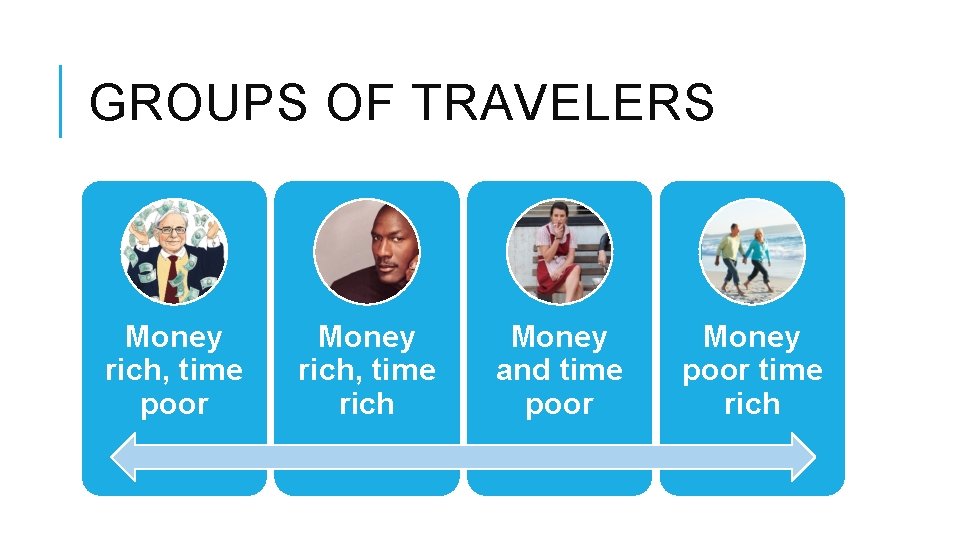
GROUPS OF TRAVELERS Money rich, time poor Money rich, time rich Money and time poor Money poor time rich
MONEY RICH, TIME POOR Interested in a wide range of high style, high fashion, short breaks Time is more valuable to them than their money Expect excellent products that can be tailored to their tight schedules
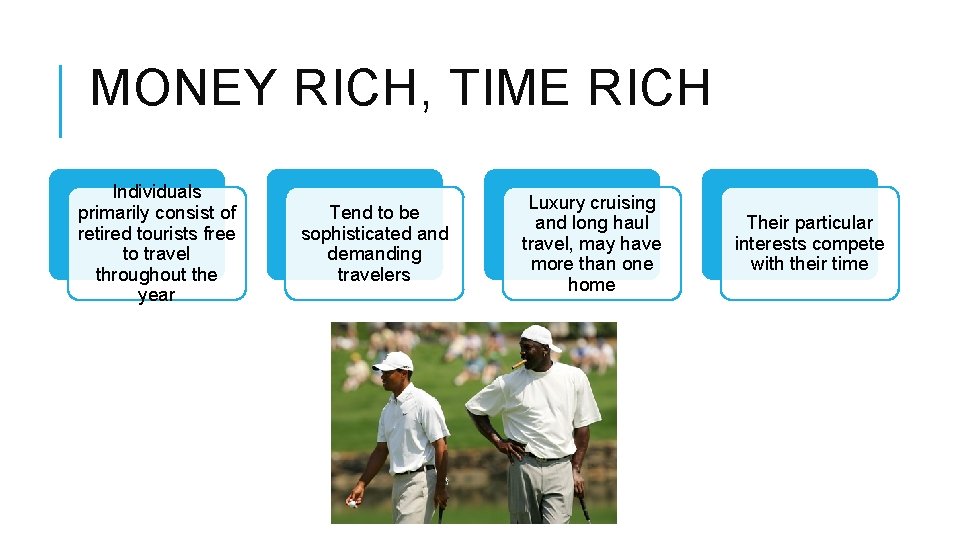
MONEY RICH, TIME RICH Individuals primarily consist of retired tourists free to travel throughout the year Tend to be sophisticated and demanding travelers Luxury cruising and long haul travel, may have more than one home Their particular interests compete with their time
MONEY AND TIME POOR Interested in a wide range of affordable holiday, often in domestic market Work breaks will incline them to get away for short breaks when they can, often on short notice
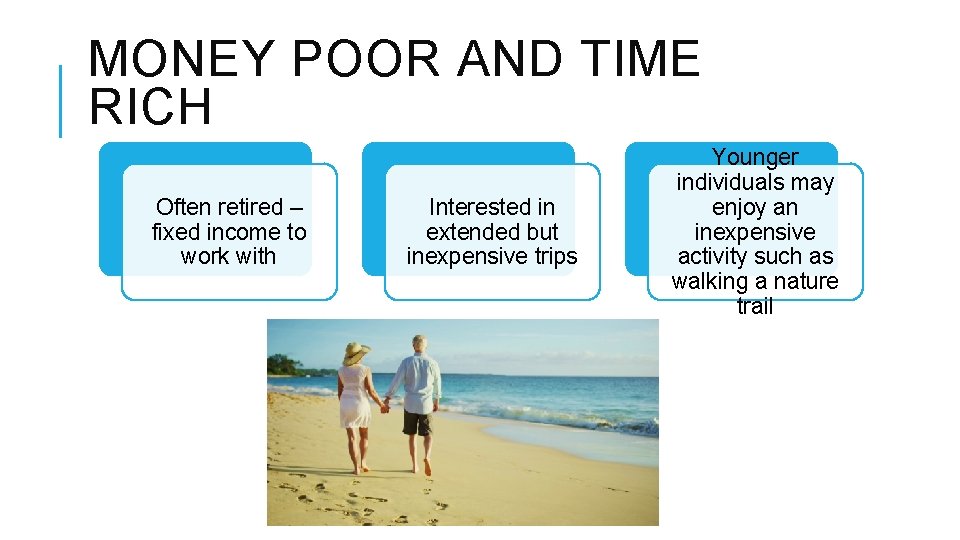
MONEY POOR AND TIME RICH Often retired – fixed income to work with Interested in extended but inexpensive trips Younger individuals may enjoy an inexpensive activity such as walking a nature trail
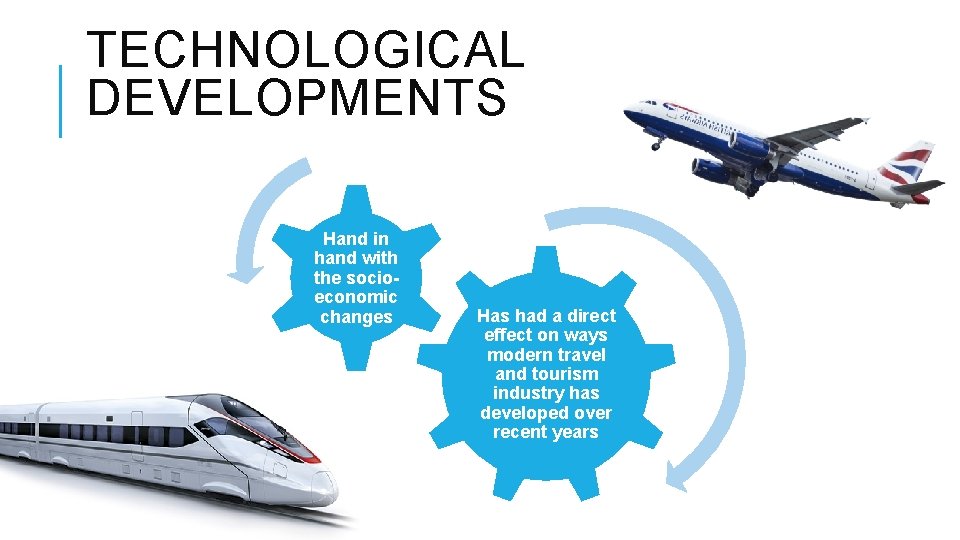
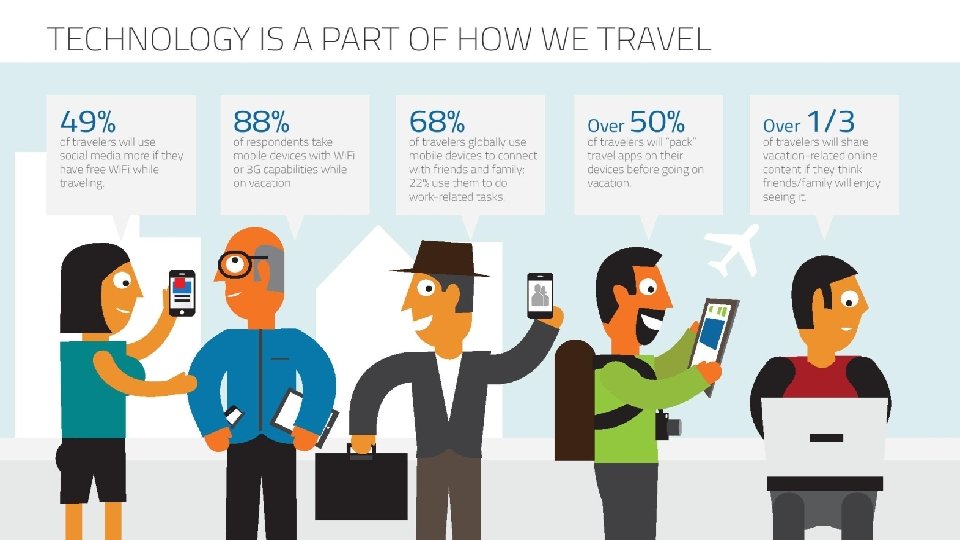
TECHNOLOGICAL DEVELOPMENTS Hand in hand with the socioeconomic changes Has had a direct effect on ways modern travel and tourism industry has developed over recent years
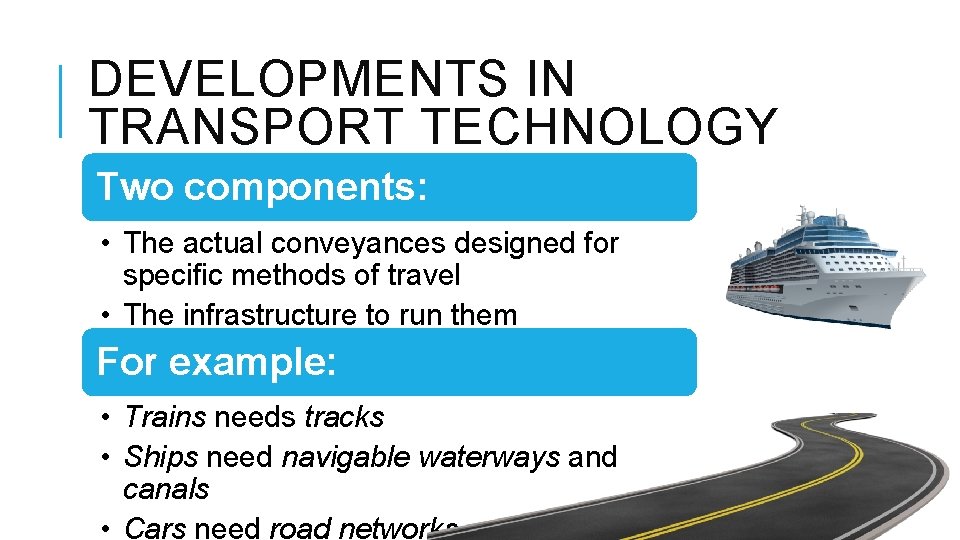
DEVELOPMENTS IN TRANSPORT TECHNOLOGY Two components: • The actual conveyances designed for specific methods of travel • The infrastructure to run them For example: • Trains needs tracks • Ships need navigable waterways and canals • Cars need road networks
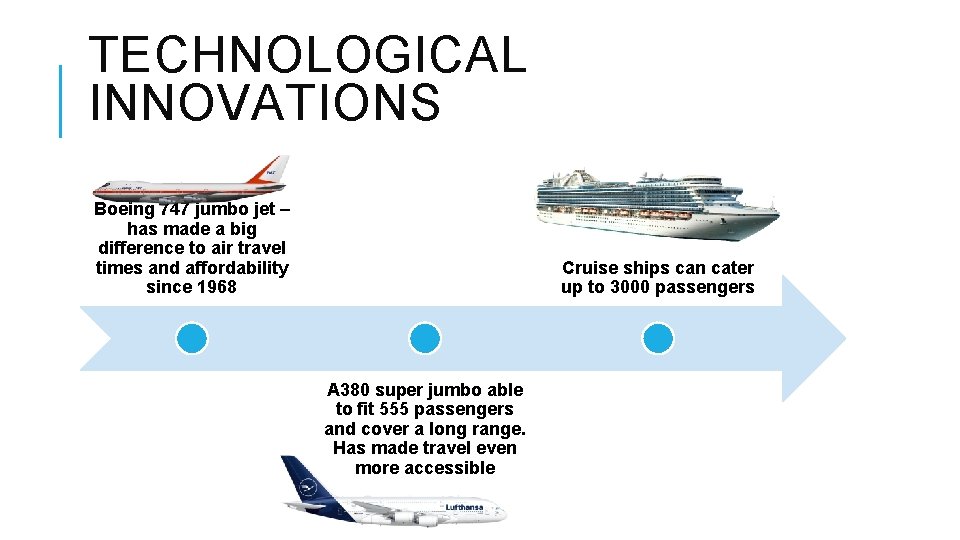
TECHNOLOGICAL INNOVATIONS Boeing 747 jumbo jet – has made a big difference to air travel times and affordability since 1968 Cruise ships can cater up to 3000 passengers A 380 super jumbo able to fit 555 passengers and cover a long range. Has made travel even more accessible
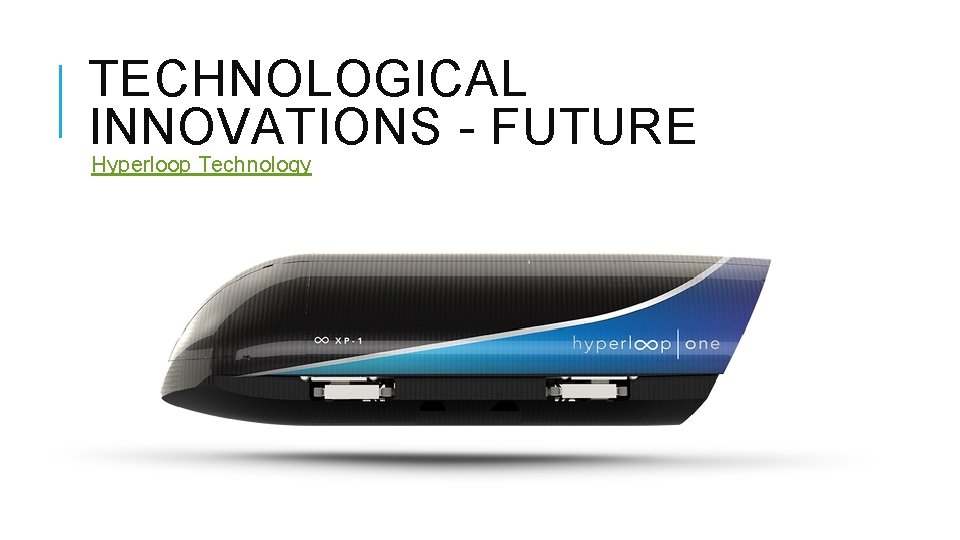
TECHNOLOGICAL INNOVATIONS - FUTURE Hyperloop Technology
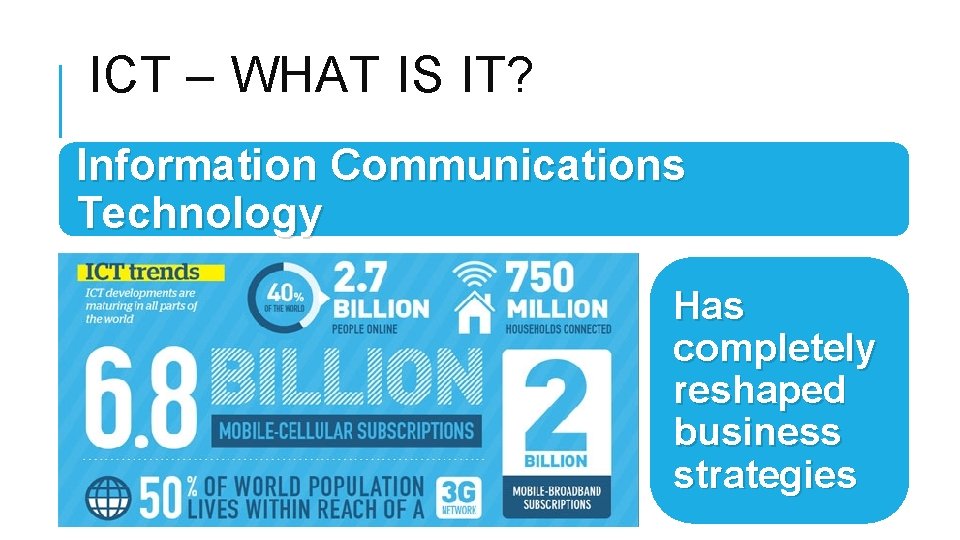
ICT – WHAT IS IT? Information Communications Technology Has completely reshaped business strategies
DEVELOPMENTS IN ICT The availability of new technologies has lead to: • • New skills to be learned New materials New services New forms of organization In tourism, technology has created a new form of business called e-tourism • Currently the biggest force in e-commerce
DEVELOPMENTS IN ICT Most travel and tourism organizations have adopted developments in ICT to aid the efficient running of their business operations, which in turn has developed into larger profits Websites have allowed hotels and other service industries to have 24/7 booking available online New technology has allowed companies to streamline operating procedures resulting in better customer service and profitability Online booking has allowed for streamlined payments Has made organizations become more competitive
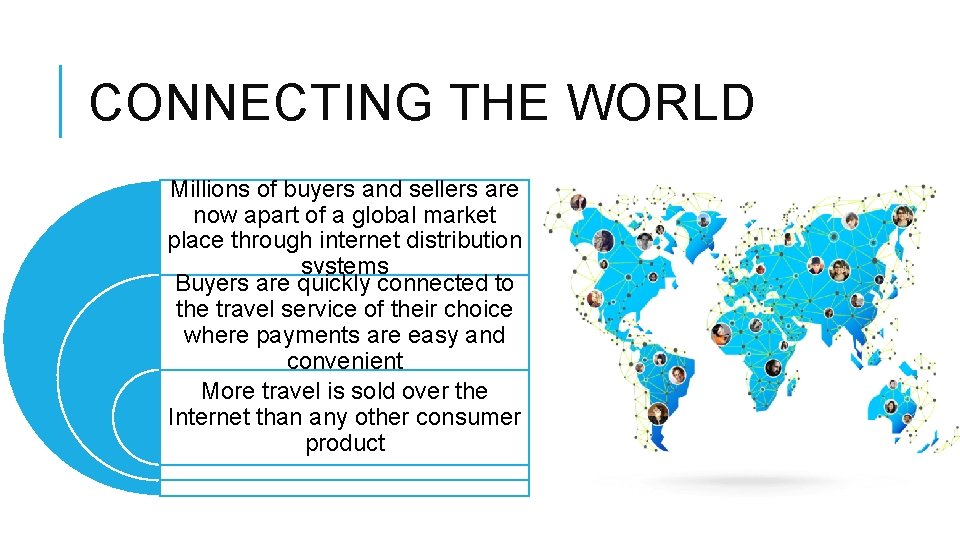
CONNECTING THE WORLD Millions of buyers and sellers are now apart of a global market place through internet distribution systems Buyers are quickly connected to the travel service of their choice where payments are easy and convenient More travel is sold over the Internet than any other consumer product
FILL IN THE BLANK In, Europe the ________were created following a European directive, which answered numerous complaints throughout Europe, of the lack of redress a consumer had in a package holiday contract. Package Travel Regulations
CHAPTER 1: FEATURES OF THE INDUSTRY Key Terms • • • Domestic: Traveling within a countries boarders International: Traveling outside of a countries boarders Outbound: Going from Inbound: Going to Accommodation: Hotels, Building, RV, Boat, etc… Niche Market: Specialized interests activities which appeal to a particular sector of the tourist mkt. • I. C. T: Information Communication Technology • M. I. C. E: Meetings, Incentives, Conferences, Exhibitions • VFR: Visiting Friends and Relatives
FILL IN THE BLANK _________ has had the most impact on holiday consumer protection Regulation 15
FILL IN THE BLANK These focus on interests and activities which appeal to a particular sector of the tourist market ___________ Niche Markets
RESPONSIBLE TOURISM Responsible Tourism emphasizes that all stakeholders are responsible for the kind of tourism they develop or engage in.
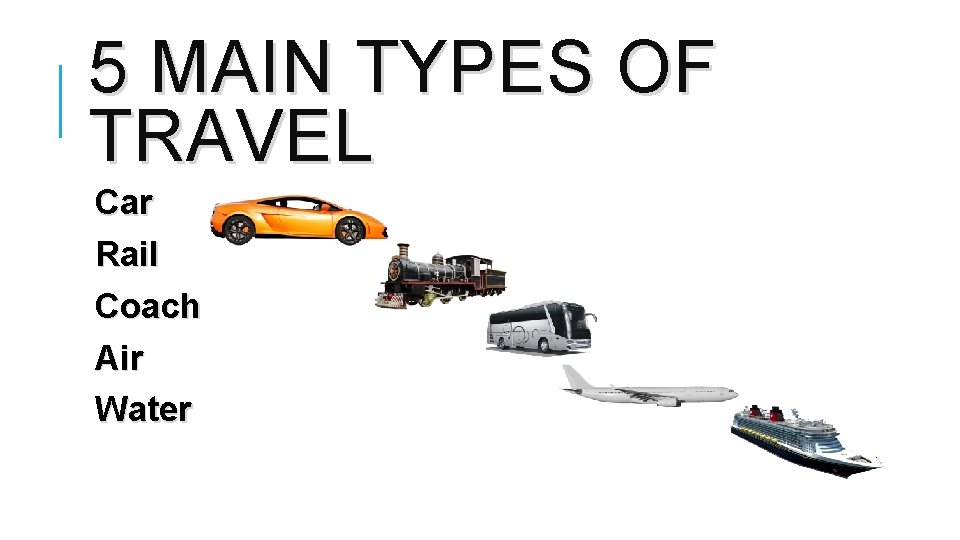
5 MAIN TYPES OF TRAVEL Car Rail Coach Air Water
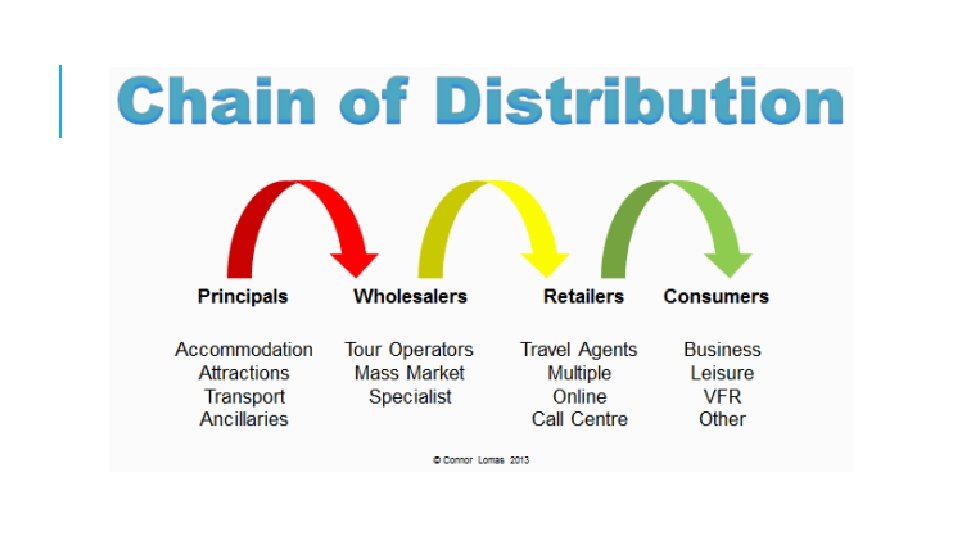
TRAVEL AGENCIES & TOUR OPERATORS The purpose of a Tour Operator is to “package the deals together” • For example: The cost of transportation, accommodations, food, etc will all be included for The Operator then gets the one. Tour lump sum. “packaged deals” to the Travel Agencies which are then sold to the consumer/tourist(s).
SEASONALITY, PERISHABILITY, INTANGIBILITY Seasonality: demand for various tourism products and services will vary throughout the year. Perishability: travel and tourism service products, unlike other products such as manufactured goods, cannot be stored for sale on future occasion. Intangibility: cannot be demonstrated or easily evaluated before its purchase. No testing or sampling
ROSTOW MODEL OF DEVELOPMENT
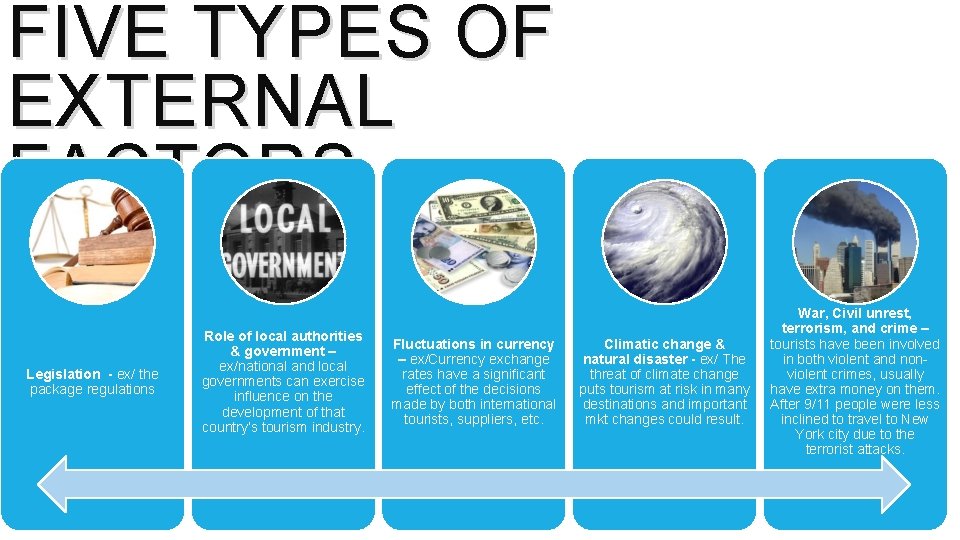
FIVE TYPES OF EXTERNAL FACTORS Legislation - ex/ the package regulations Role of local authorities & government – ex/national and local governments can exercise influence on the development of that country’s tourism industry. Fluctuations in currency – ex/Currency exchange rates have a significant effect of the decisions made by both international tourists, suppliers, etc. Climatic change & natural disaster - ex/ The threat of climate change puts tourism at risk in many destinations and important mkt changes could result. War, Civil unrest, terrorism, and crime – tourists have been involved in both violent and nonviolent crimes, usually have extra money on them. After 9/11 people were less inclined to travel to New York city due to the terrorist attacks.
THE 6 SUB-SECTORS OF TRAVEL & TOURISM Transportation Attractions Accommodation and catering Tourist Info & Guiding Services Tour Operators Travel Agents
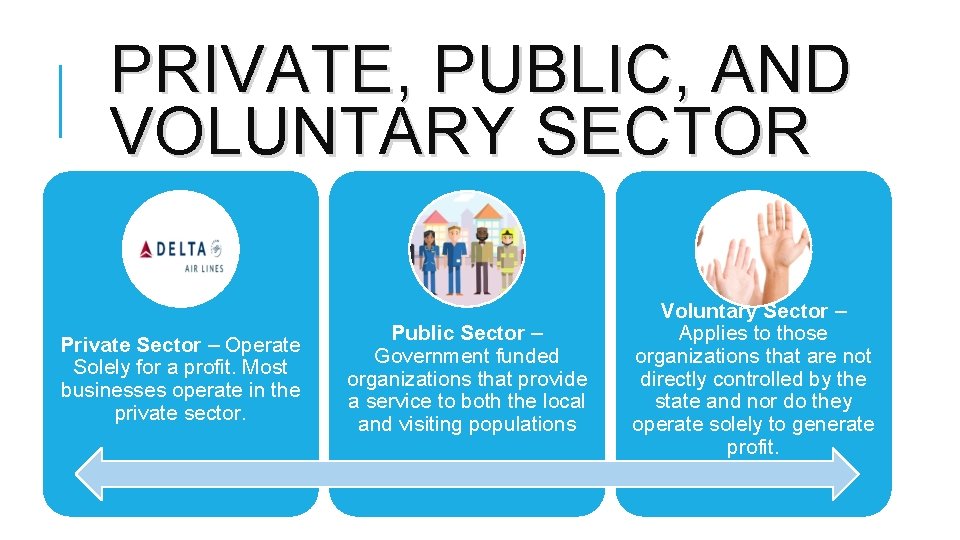
PRIVATE, PUBLIC, AND VOLUNTARY SECTOR Private Sector – Operate Solely for a profit. Most businesses operate in the private sector. Public Sector – Government funded organizations that provide a service to both the local and visiting populations Voluntary Sector – Applies to those organizations that are not directly controlled by the state and nor do they operate solely to generate profit.