
Chapter 1 Exploring Life Copyright 2005 Pearson Education
- Slides: 30
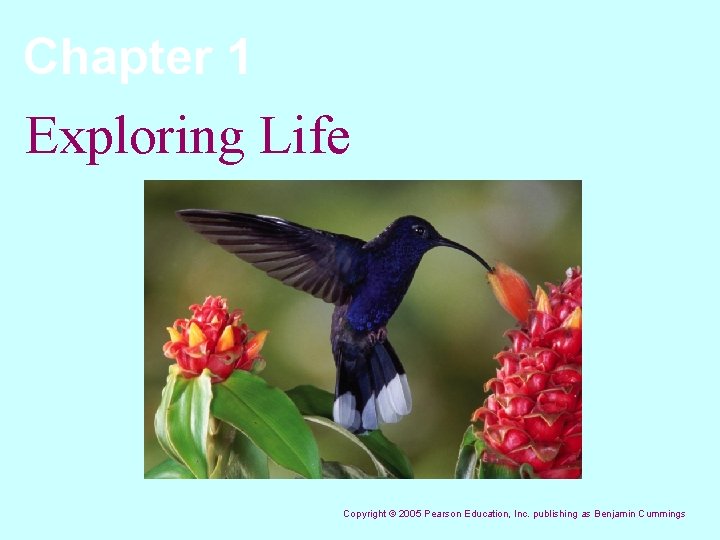
Chapter 1 Exploring Life Copyright © 2005 Pearson Education, Inc. publishing as Benjamin Cummings
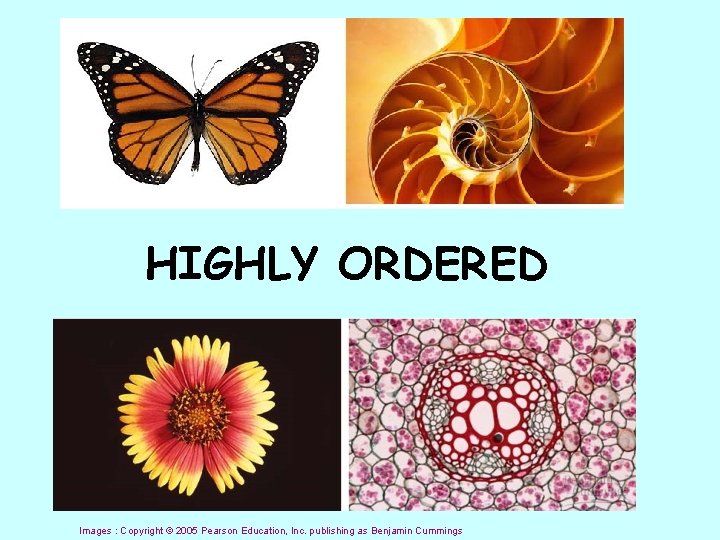
HIGHLY ORDERED Images : Copyright © 2005 Pearson Education, Inc. publishing as Benjamin Cummings
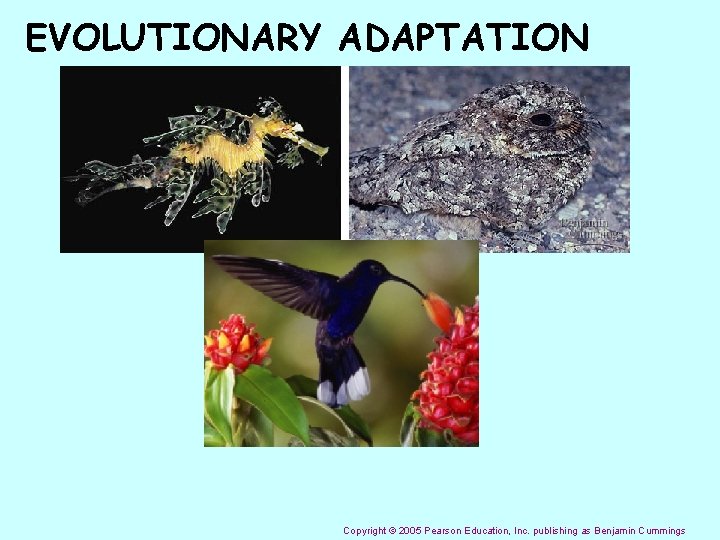
EVOLUTIONARY ADAPTATION Copyright © 2005 Pearson Education, Inc. publishing as Benjamin Cummings
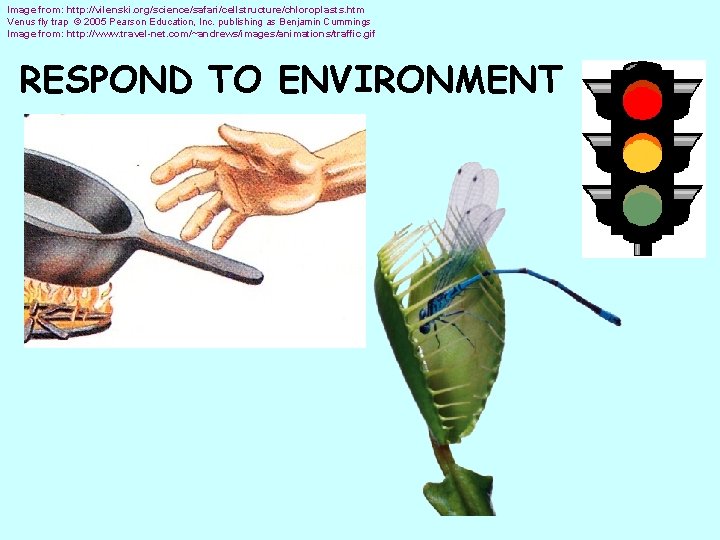
Image from: http: //vilenski. org/science/safari/cellstructure/chloroplasts. htm Venus fly trap © 2005 Pearson Education, Inc. publishing as Benjamin Cummings Image from: http: //www. travel-net. com/~andrews/images/animations/traffic. gif RESPOND TO ENVIRONMENT
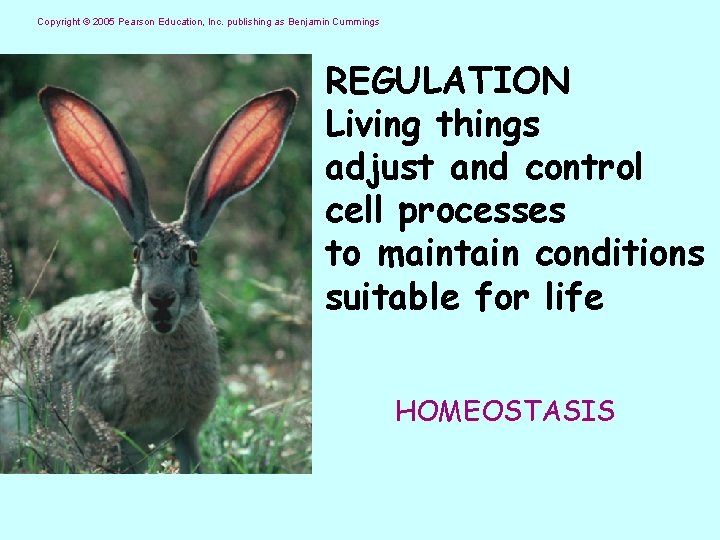
Copyright © 2005 Pearson Education, Inc. publishing as Benjamin Cummings REGULATION Living things adjust and control cell processes to maintain conditions suitable for life HOMEOSTASIS
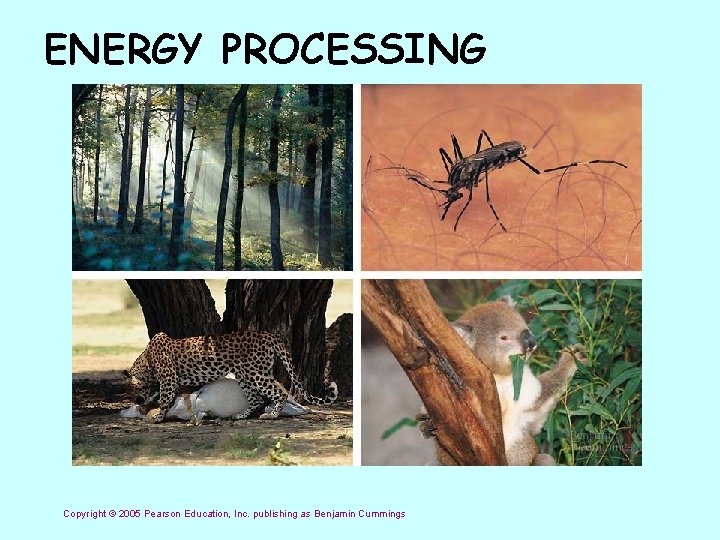
ENERGY PROCESSING Copyright © 2005 Pearson Education, Inc. publishing as Benjamin Cummings
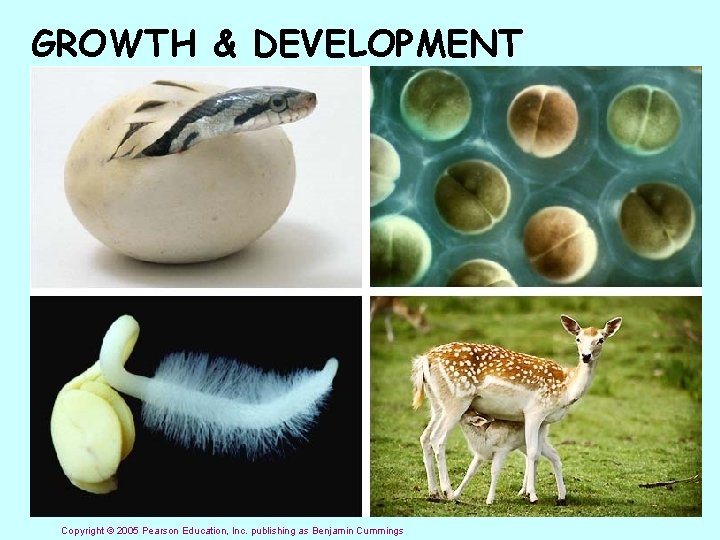
GROWTH & DEVELOPMENT Copyright © 2005 Pearson Education, Inc. publishing as Benjamin Cummings
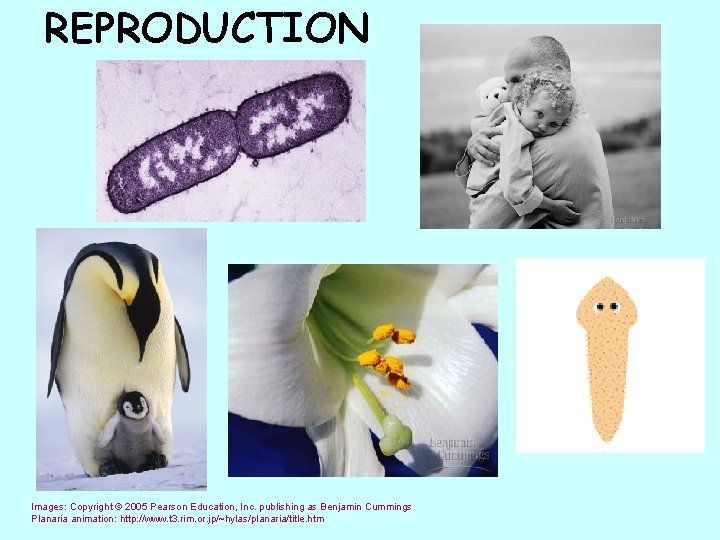
REPRODUCTION Images: Copyright © 2005 Pearson Education, Inc. publishing as Benjamin Cummings Planaria animation: http: //www. t 3. rim. or. jp/~hylas/planaria/title. htm
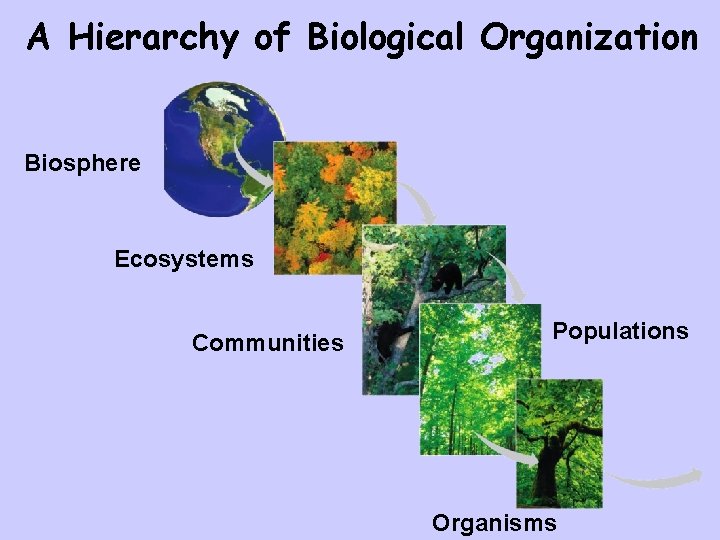
A Hierarchy of Biological Organization Biosphere Ecosystems Communities Populations Organisms
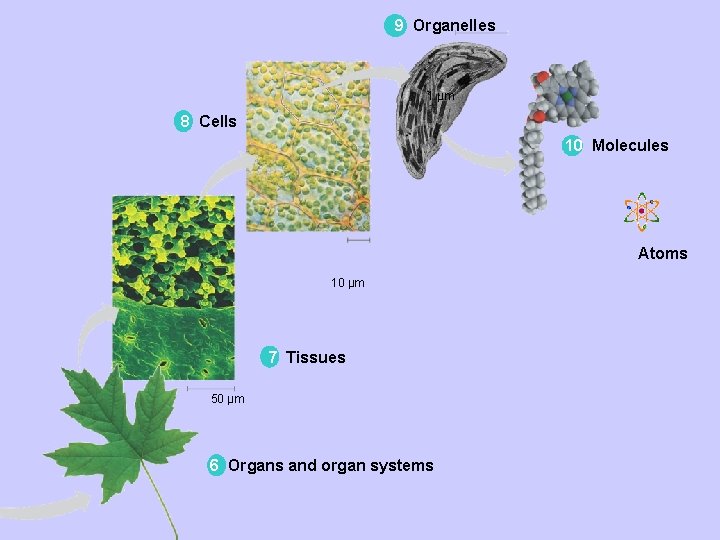
9 Organelles 1 µm 8 Cells 10 Molecules Atoms 10 µm 7 Tissues 50 µm 6 Organs and organ systems
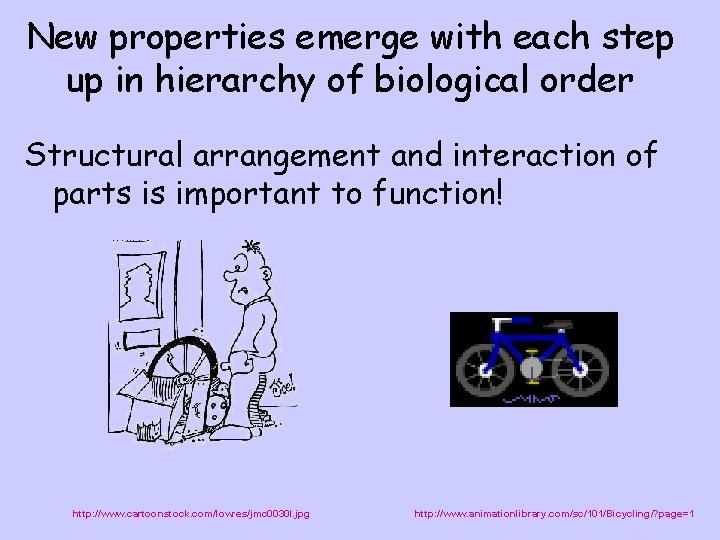
New properties emerge with each step up in hierarchy of biological order Structural arrangement and interaction of parts is important to function! http: //www. cartoonstock. com/lowres/jmc 0030 l. jpg http: //www. animationlibrary. com/sc/101/Bicycling/? page=1
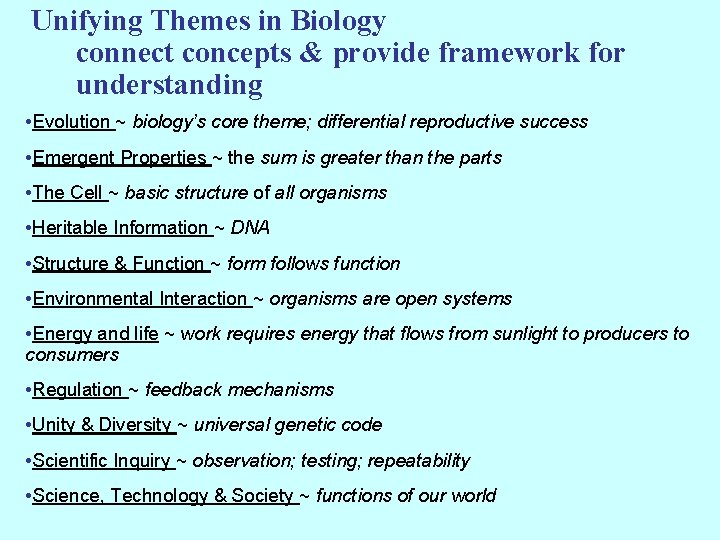
Unifying Themes in Biology connect concepts & provide framework for understanding • Evolution ~ biology’s core theme; differential reproductive success • Emergent Properties ~ the sum is greater than the parts • The Cell ~ basic structure of all organisms • Heritable Information ~ DNA • Structure & Function ~ form follows function • Environmental Interaction ~ organisms are open systems • Energy and life ~ work requires energy that flows from sunlight to producers to consumers • Regulation ~ feedback mechanisms • Unity & Diversity ~ universal genetic code • Scientific Inquiry ~ observation; testing; repeatability • Science, Technology & Society ~ functions of our world
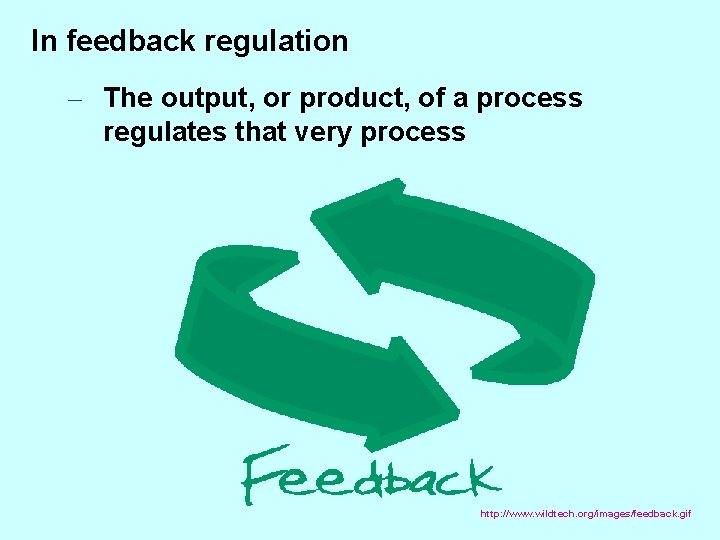
In feedback regulation – The output, or product, of a process regulates that very process http: //www. wildtech. org/images/feedback. gif
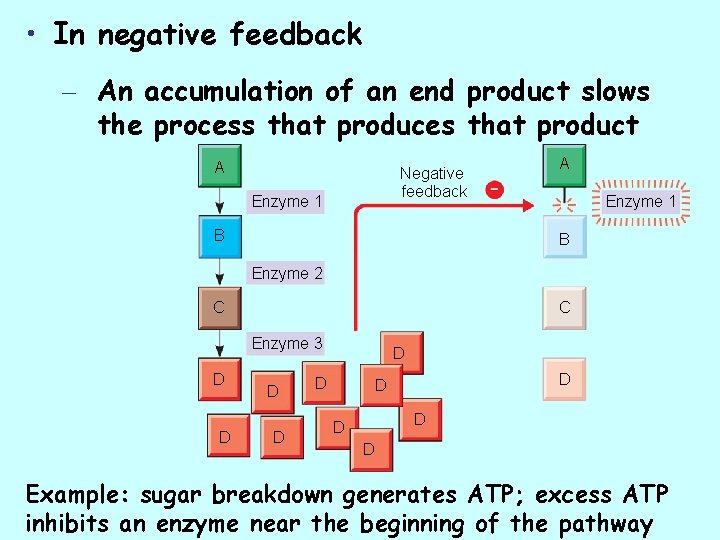
• In negative feedback – An accumulation of an end product slows the process that produces that product A Negative feedback Enzyme 1 B A Enzyme 1 B Enzyme 2 C C Enzyme 3 D D D Example: sugar breakdown generates ATP; excess ATP inhibits an enzyme near the beginning of the pathway
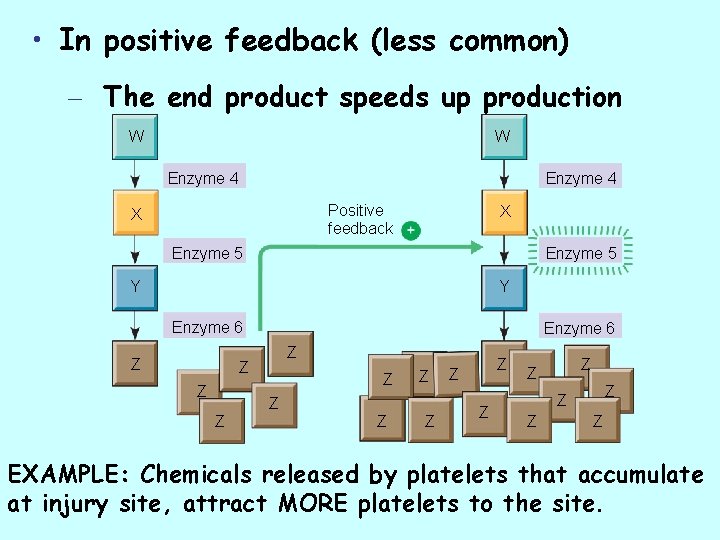
• In positive feedback (less common) – The end product speeds up production W W Enzyme 4 Positive feedback X X Enzyme 5 Y Y Enzyme 6 Z Z Z Z Z EXAMPLE: Chemicals released by platelets that accumulate at injury site, attract MORE platelets to the site.
Concept 1. 5: Biologists use various forms of inquiry to explore life • At the heart of science is inquiry – A search for information and explanation, often focusing on specific questions • Biology blends two main processes of scientific inquiry – Discovery science – Hypothesis-based science
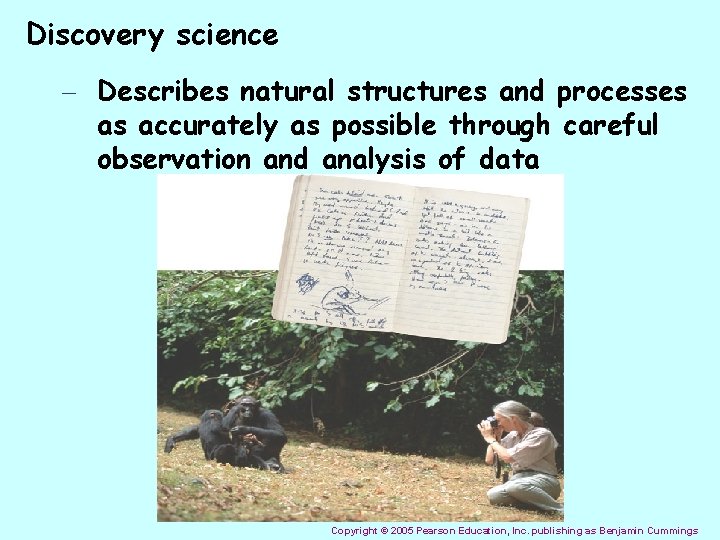
Discovery science – Describes natural structures and processes as accurately as possible through careful observation and analysis of data Copyright © 2005 Pearson Education, Inc. publishing as Benjamin Cummings
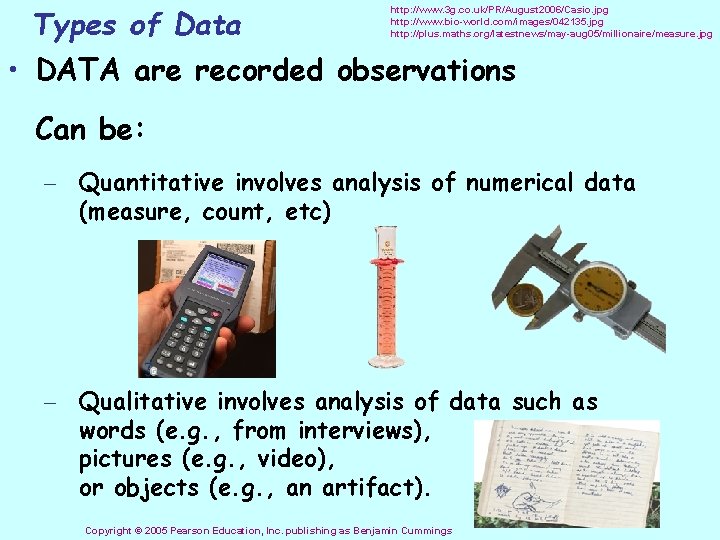
Types of Data • DATA are recorded observations http: //www. 3 g. co. uk/PR/August 2006/Casio. jpg http: //www. bio-world. com/images/042135. jpg http: //plus. maths. org/latestnews/may-aug 05/millionaire/measure. jpg Can be: – Quantitative involves analysis of numerical data (measure, count, etc) – Qualitative involves analysis of data such as words (e. g. , from interviews), pictures (e. g. , video), or objects (e. g. , an artifact). Copyright © 2005 Pearson Education, Inc. publishing as Benjamin Cummings
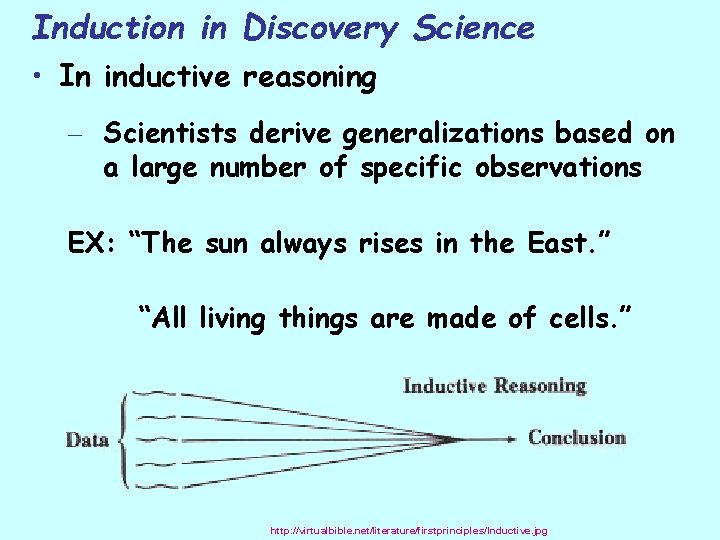
Induction in Discovery Science • In inductive reasoning – Scientists derive generalizations based on a large number of specific observations EX: “The sun always rises in the East. ” “All living things are made of cells. ” http: //virtualbible. net/literature/firstprinciples/Inductive. jpg
Hypothesis-Based Science (Deductive reasoning) • Inquiry that asks specific questions – Usually involves the proposing and testing of hypothetical explanations, or hypotheses • Hypothesis – Is a tentative answer to a well-framed question, an explanation on trial – Makes predictions that can be tested – Usually expressed as an: If…. , then …. statement
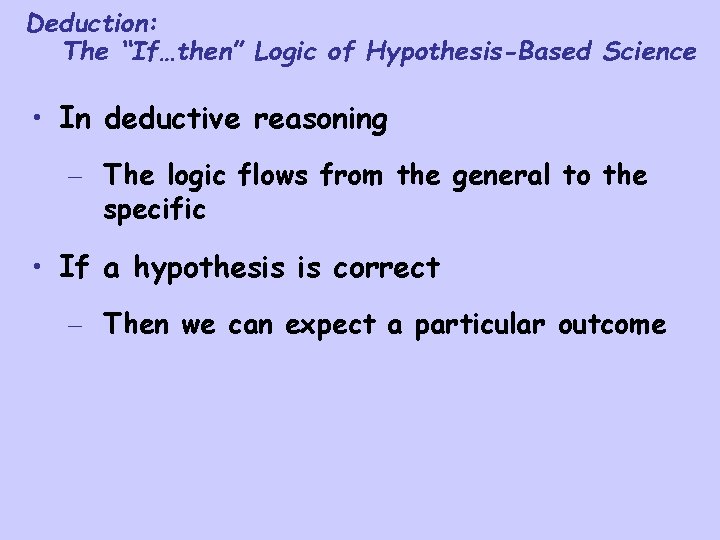
Deduction: The “If…then” Logic of Hypothesis-Based Science • In deductive reasoning – The logic flows from the general to the specific • If a hypothesis is correct – Then we can expect a particular outcome
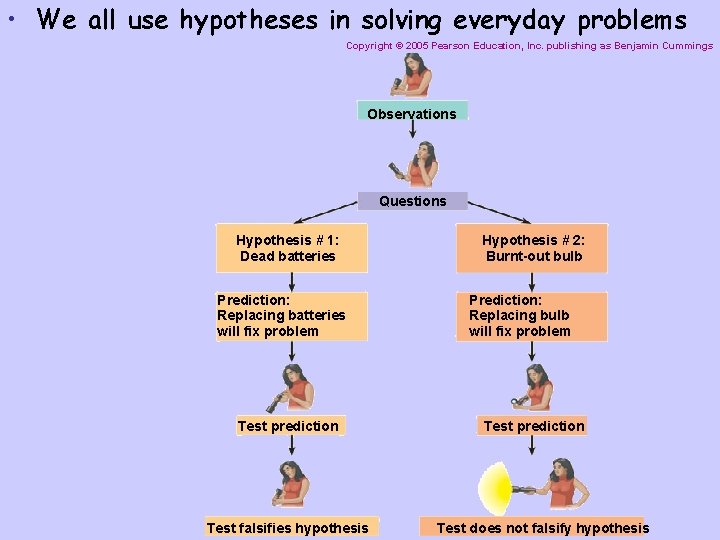
• We all use hypotheses in solving everyday problems Copyright © 2005 Pearson Education, Inc. publishing as Benjamin Cummings Observations Questions Hypothesis # 1: Dead batteries Prediction: Replacing batteries will fix problem Test prediction Test falsifies hypothesis Hypothesis # 2: Burnt-out bulb Prediction: Replacing bulb will fix problem Test prediction Test does not falsify hypothesis
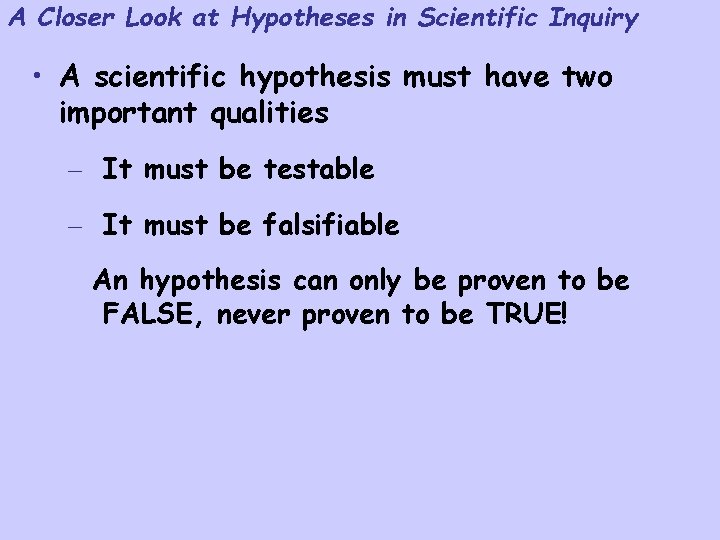
A Closer Look at Hypotheses in Scientific Inquiry • A scientific hypothesis must have two important qualities – It must be testable – It must be falsifiable An hypothesis can only be proven to be FALSE, never proven to be TRUE!
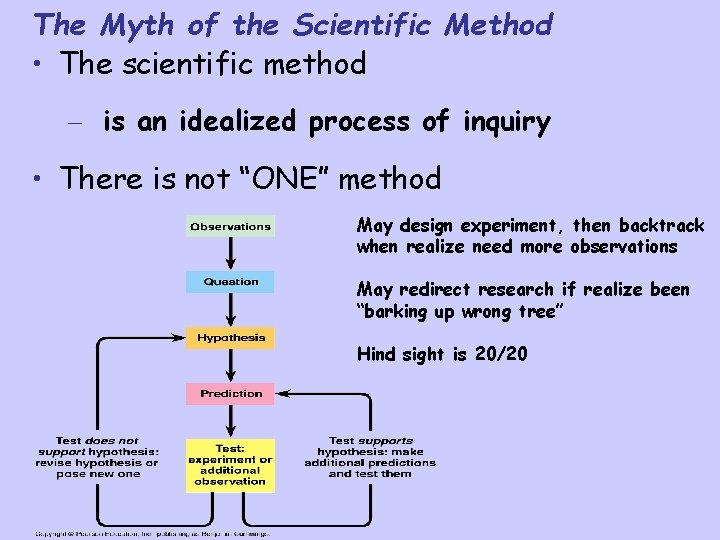
The Myth of the Scientific Method • The scientific method – is an idealized process of inquiry • There is not “ONE” method May design experiment, then backtrack when realize need more observations May redirect research if realize been “barking up wrong tree” Hind sight is 20/20
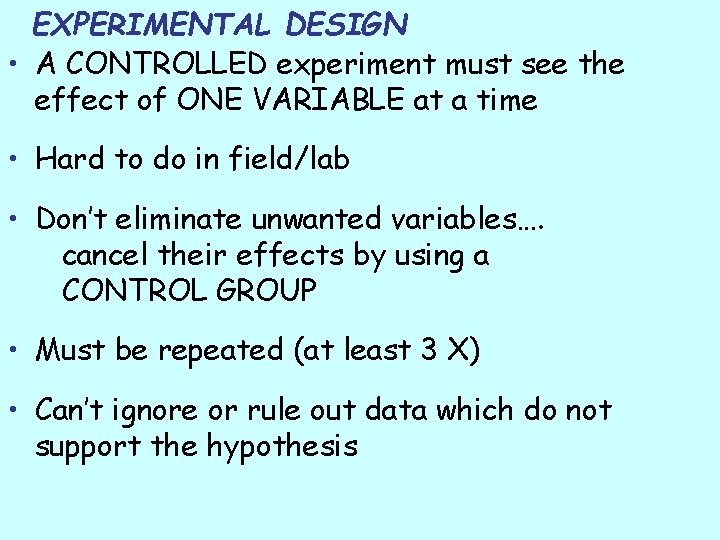
EXPERIMENTAL DESIGN • A CONTROLLED experiment must see the effect of ONE VARIABLE at a time • Hard to do in field/lab • Don’t eliminate unwanted variables…. cancel their effects by using a CONTROL GROUP • Must be repeated (at least 3 X) • Can’t ignore or rule out data which do not support the hypothesis
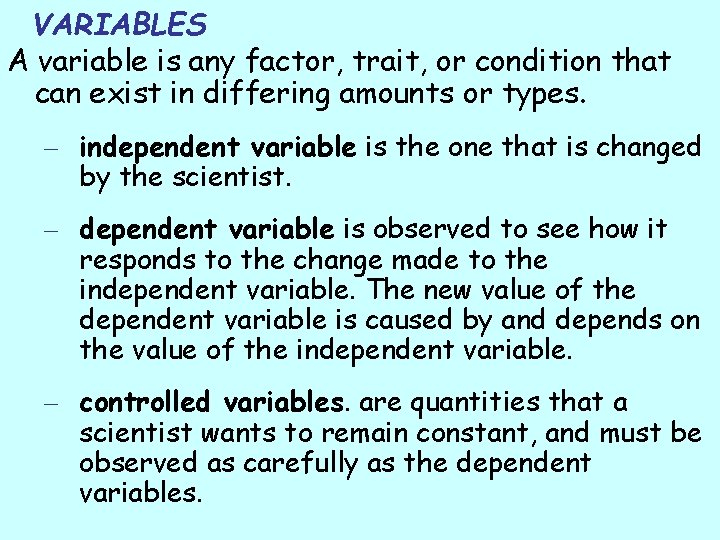
VARIABLES A variable is any factor, trait, or condition that can exist in differing amounts or types. – independent variable is the one that is changed by the scientist. – dependent variable is observed to see how it responds to the change made to the independent variable. The new value of the dependent variable is caused by and depends on the value of the independent variable. – controlled variables. are quantities that a scientist wants to remain constant, and must be observed as carefully as the dependent variables.
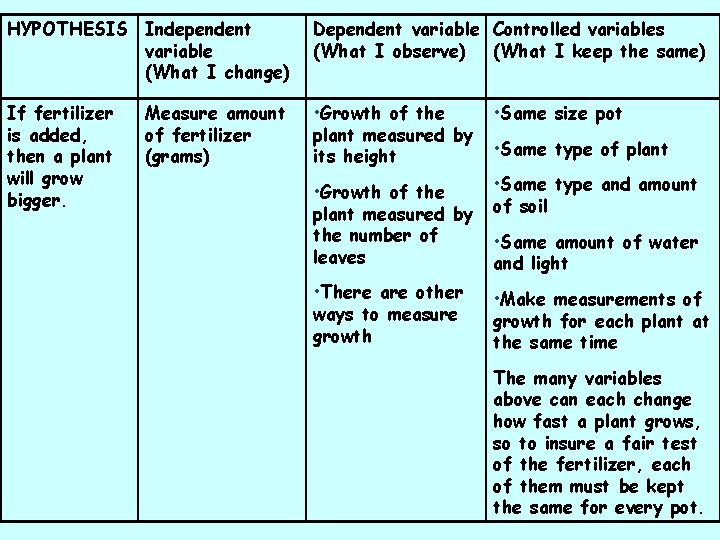
HYPOTHESIS Independent variable (What I change) Dependent variable Controlled variables (What I observe) (What I keep the same) If fertilizer is added, then a plant will grow bigger. • Growth of the plant measured by its height • Same size pot • Growth of the plant measured by the number of leaves • Same type and amount of soil • There are other ways to measure growth • Make measurements of growth for each plant at the same time Measure amount of fertilizer (grams) • Same type of plant • Same amount of water and light The many variables above can each change how fast a plant grows, so to insure a fair test of the fertilizer, each of them must be kept the same for every pot.
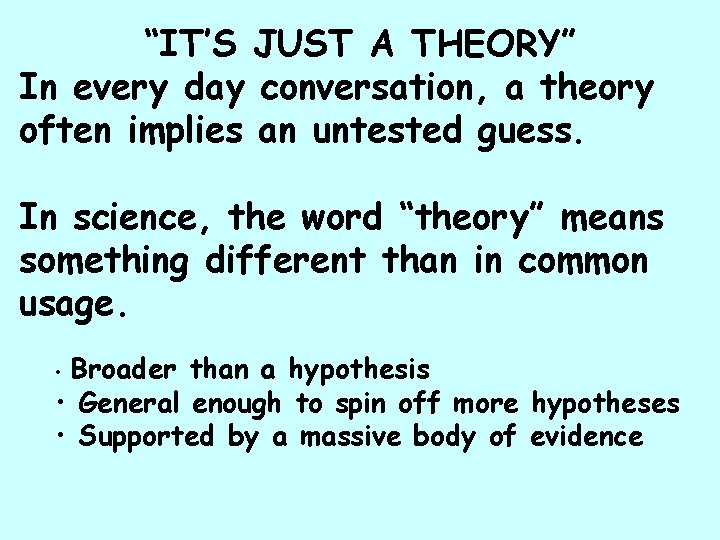
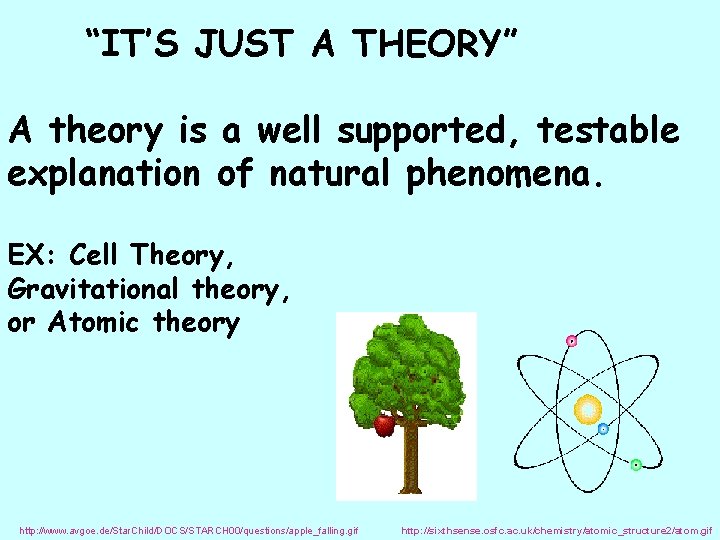
“IT’S JUST A THEORY” In every day conversation, a theory often implies an untested guess. In science, the word “theory” means something different than in common usage. Broader than a hypothesis • General enough to spin off more hypotheses • Supported by a massive body of evidence •
“IT’S JUST A THEORY” A theory is a well supported, testable explanation of natural phenomena. EX: Cell Theory, Gravitational theory, or Atomic theory http: //www. avgoe. de/Star. Child/DOCS/STARCH 00/questions/apple_falling. gif http: //sixthsense. osfc. ac. uk/chemistry/atomic_structure 2/atom. gif
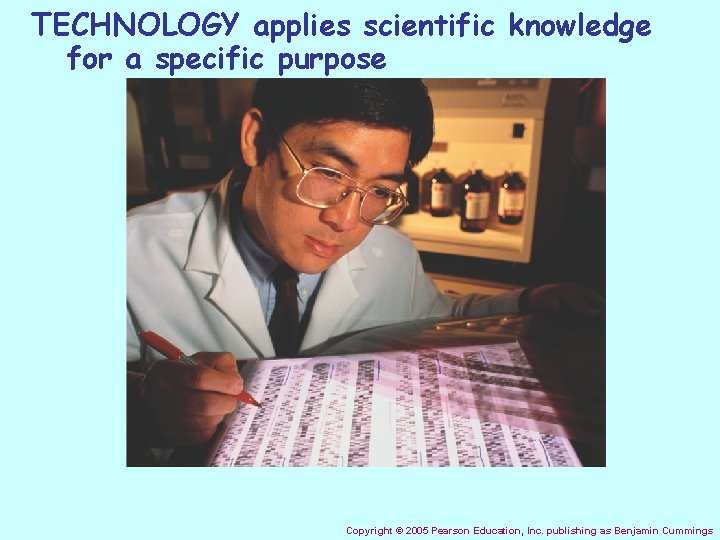
TECHNOLOGY applies scientific knowledge for a specific purpose Copyright © 2005 Pearson Education, Inc. publishing as Benjamin Cummings