
Chapter 1 Exploring and Classifying Life Science and



- Slides: 34
Chapter 1 Exploring and Classifying Life
Science and Technology � What - is Science is the process of trying to understand the world around you. ● What do you call someone who practices science? - A scientist - Technology is the use of knowledge learned through science Examples of Technology Computers, machines, cars. ● We use science to create technology. -
Types of Science � Many different types of science exist. And they are all named based on the subject matter they are studying. -Ex: - Biology= Biology the study of life - Earth Science = study of Earth and Space - Chemistry= Chemistry the study of the composition and structure of matter. - Biochemistry= Biochemistry study of chemical composition of biological forms. - Physics= Physics study of the interactions between matter and energy
� Science begins with observations � data - the information gathered from observations quantitative data = numbers qualitative data = descriptive � inference - a logical interpretation based on prior knowledge or experience � hypothesis - a proposed scientific explanation � ***Science is and ongoing process***
Doing Science � Whenever you do science you want to solve a problem What are some problems that you can solve? - Why does a plant grow? , How do we use oxygen? � In order to solve your scientific problem you must conduct an experiment, experiment which a series of tests that you perform in order to solve your problem.
Conducting Experiments � - In order to conduct an experiment scientist refer to the Scientific Method The scientific method is a series of steps taken during an experiment in order to solve a problem.
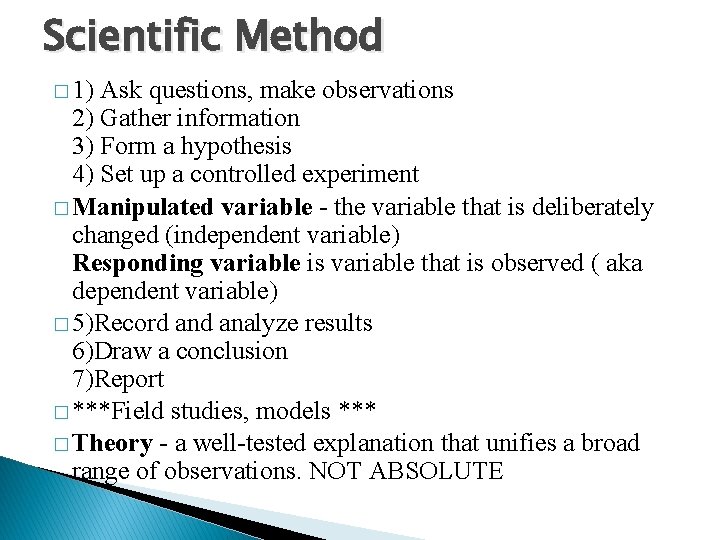
Scientific Method � 1) Ask questions, make observations 2) Gather information 3) Form a hypothesis 4) Set up a controlled experiment � Manipulated variable - the variable that is deliberately changed (independent variable) Responding variable is variable that is observed ( aka dependent variable) � 5)Record analyze results 6)Draw a conclusion 7)Report � ***Field studies, models *** � Theory - a well-tested explanation that unifies a broad range of observations. NOT ABSOLUTE
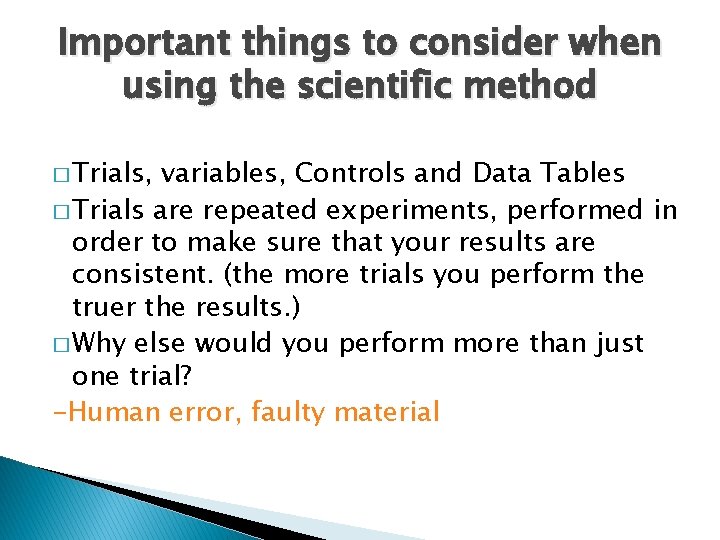
Important things to consider when using the scientific method � Trials, variables, Controls and Data Tables � Trials are repeated experiments, performed in order to make sure that your results are consistent. (the more trials you perform the truer the results. ) � Why else would you perform more than just one trial? -Human error, faulty material
� Variables are factors in an experiment that can change. - Independent Variables- are variables that change during an experiment. (If you wanted to see what soap cleaned dishes the best, all the different soaps used would be independent variables. ) - Dependent variables- are the variables being measured. (So you would measure how clean the dishes are after using a specific soap. That result is dependant on the soap used to clean that dish. )
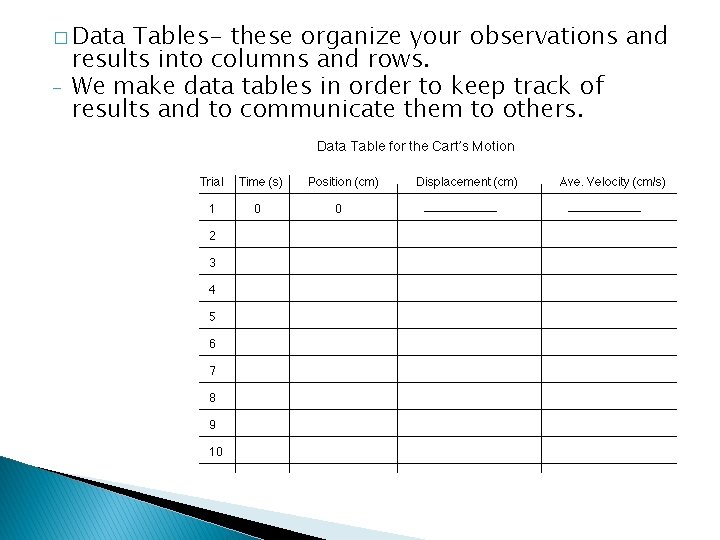
� Data - Tables- these organize your observations and results into columns and rows. We make data tables in order to keep track of results and to communicate them to others.
CONTROLS �Controls-Controls are variables that never change over the course of an experiment.
Analyzing Data � Information and results during experiments needs to be kept organized � Data Tables � Graphs ◦ Bar ◦ Circle (pie chart) ◦ Line � Drawing ◦ Observations � Models ◦ Replica of actual figure (downsized or upsized)
Developing Theories � After a scientist completes an experiment and analyzed his/her data they than can propose a scientific theory � A theory is an explanation of things or events based on scientific knowledge that is the result of an experiment. � A scientific law however, is a statement about how things work in nature that seems to be true all the time. -Ex: gravity
Examples of How Scientist Work � Spontaneous Generation – the idea that life could arise from non-living matter � Francesco Redi http: //www. scientus. org/Redi. Galileo. html ◦ Control – ◦ IV – ◦ DV – ◦ Conclusion-
Spallanzani’s Experiment � http: //faculty. sdmiramar. edu/dtrubovitz/mic ro/history/spallanzani. html � Heated flask of gravy to disprove spontaneous generation � Hypothesis: � Controlled Variables: � IV: � DV: � Conclusion
Your Assignment: � http: //bcs. whfreeman. com/thelifewire/content/c hp 03/0302003. html � Read through Louis Pasteur’s experiment to disprove spontaneous generation and answer the following question: � What was the hypothesis Pasteur tested for in his experiment? � In what ways did Pasteur improve Spallanzani’s experiment? � Determine and list the controlled variables, independent variables and dependent variables. � What was the purpose of the curved neck in Pasteur’s setup? � In your own words write a conclusion that would be fitting to Pasteur’s experiment.
Measuring with Scientific Units � An - important part of experimentation in science is making accurate measurements Everyday things that we use are or have been measured ● And the way all of these things are measured all over the world are in Scientific Units or SI Units
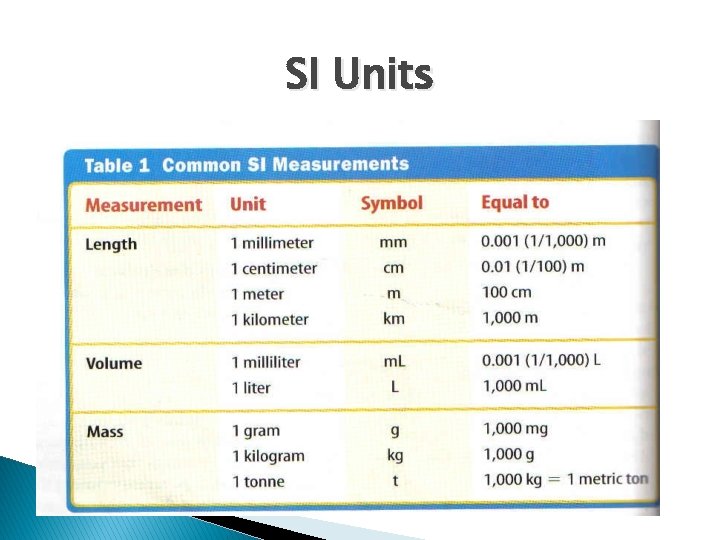
SI Units
Living Things What are some examples of living things? � -Humans -Plants -bugs � ◦ ◦ What about these things? Rocks, bicycles, books Abiotic vs. Biotic Abiotic are nonliving objects or factors Biotic are living organisms or factors
How to distinguish a living thing from a non living thing. All living things share some basic properties ü Cellular Organization ü Reproduction ü Metabolism (Obtain and Use Energy) ü Homeostasis ü Heredity ü Responsiveness ü Growth and Development ü Adapt Through Evolution
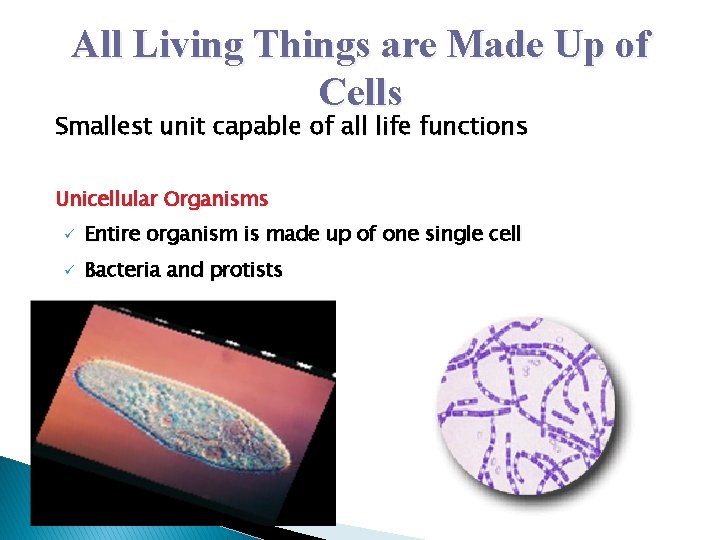
All Living Things are Made Up of Cells Smallest unit capable of all life functions Unicellular Organisms ü Entire organism is made up of one single cell ü Bacteria and protists
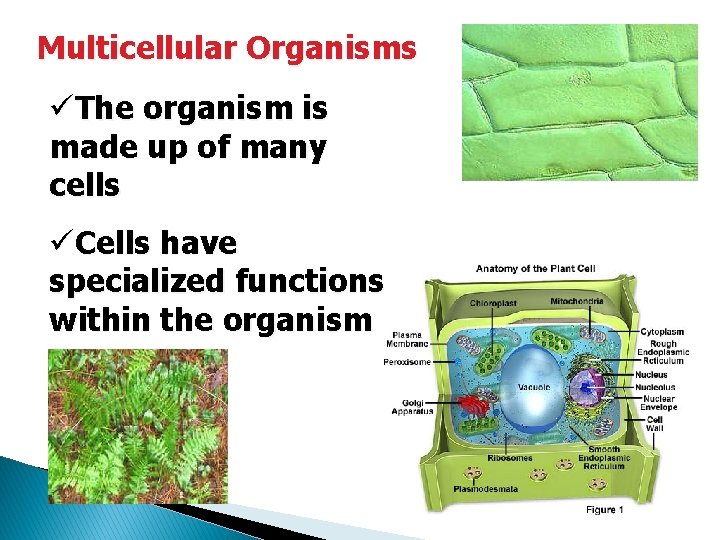
Multicellular Organisms üThe organism is made up of many cells üCells have specialized functions within the organism
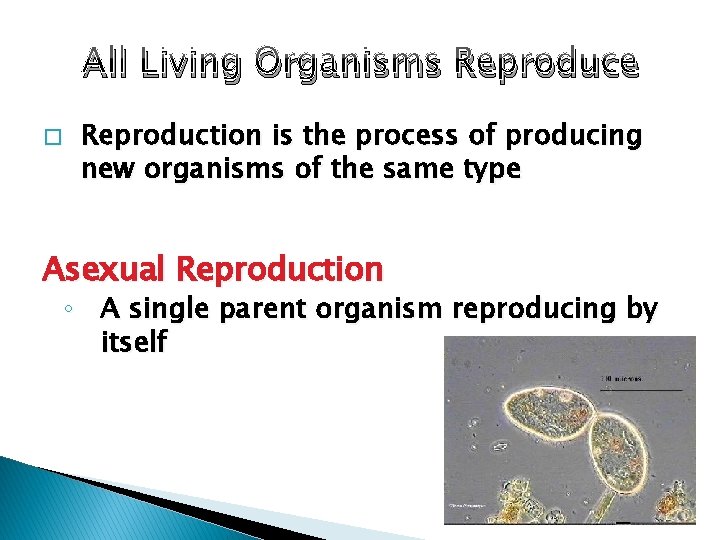
All Living Organisms Reproduce � Reproduction is the process of producing new organisms of the same type Asexual Reproduction ◦ A single parent organism reproducing by itself
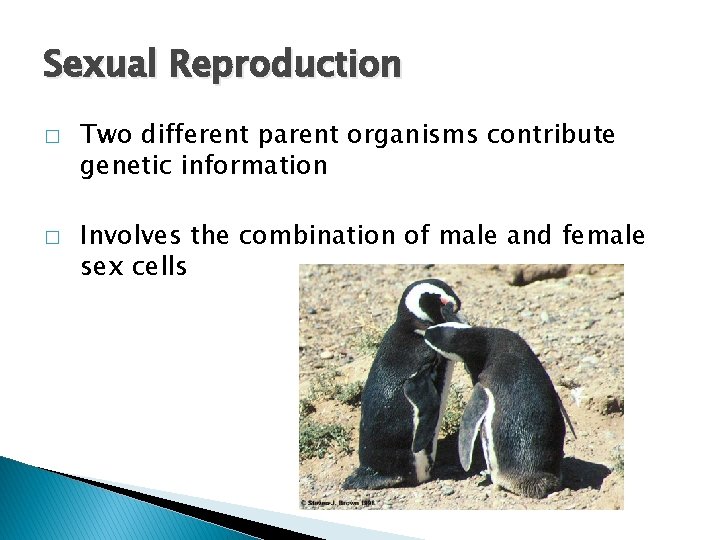
Sexual Reproduction � � Two different parent organisms contribute genetic information Involves the combination of male and female sex cells
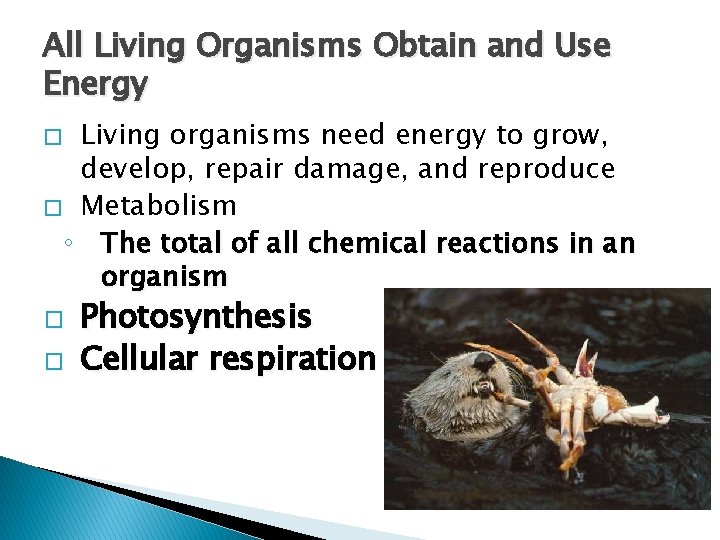
All Living Organisms Obtain and Use Energy Living organisms need energy to grow, develop, repair damage, and reproduce � Metabolism ◦ The total of all chemical reactions in an organism � � � Photosynthesis Cellular respiration
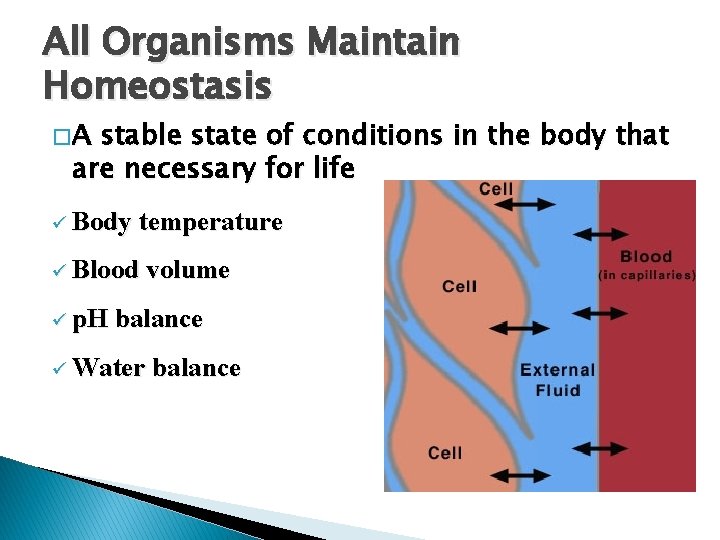
All Organisms Maintain Homeostasis �A stable state of conditions in the body that are necessary for life ü Body temperature ü Blood volume ü p. H balance ü Water balance
All Living Organisms Pass Along Heredity Traits � Genes carry hereditary information � Genes are composed of DNA � Heredity parents is the reason children resemble their � Mutations change DNA
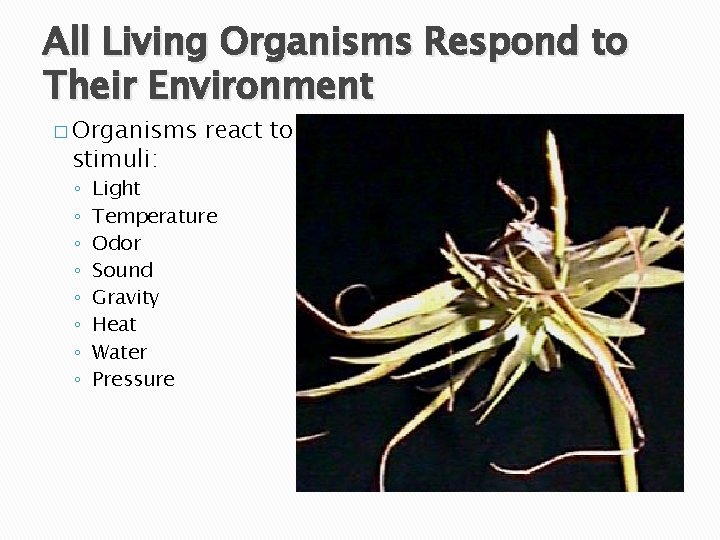
All Living Organisms Respond to Their Environment � Organisms stimuli: ◦ ◦ ◦ ◦ react to Light Temperature Odor Sound Gravity Heat Water Pressure
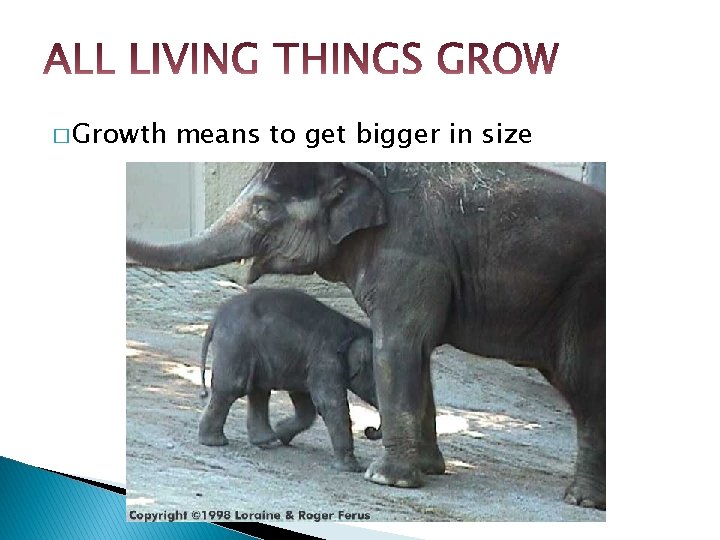
� Growth means to get bigger in size
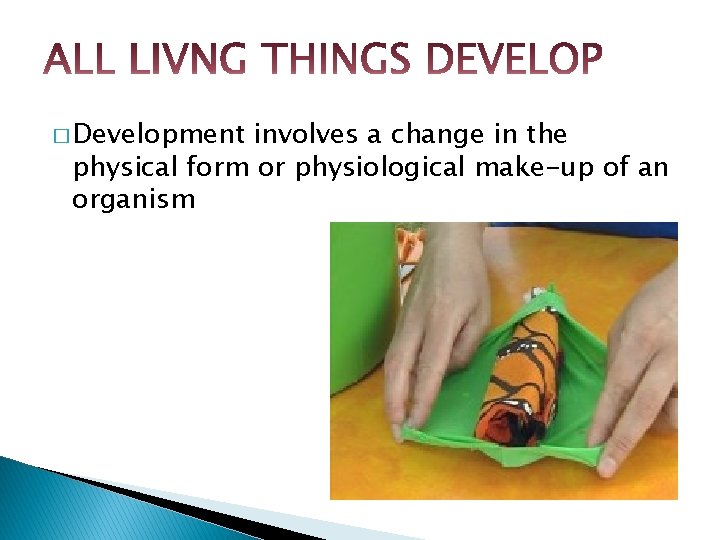
� Development involves a change in the physical form or physiological make-up of an organism
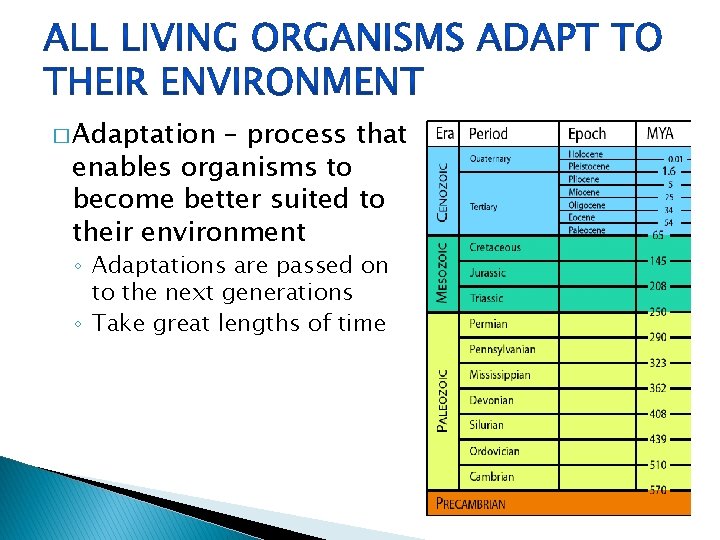
� Adaptation – process that enables organisms to become better suited to their environment ◦ Adaptations are passed on to the next generations ◦ Take great lengths of time
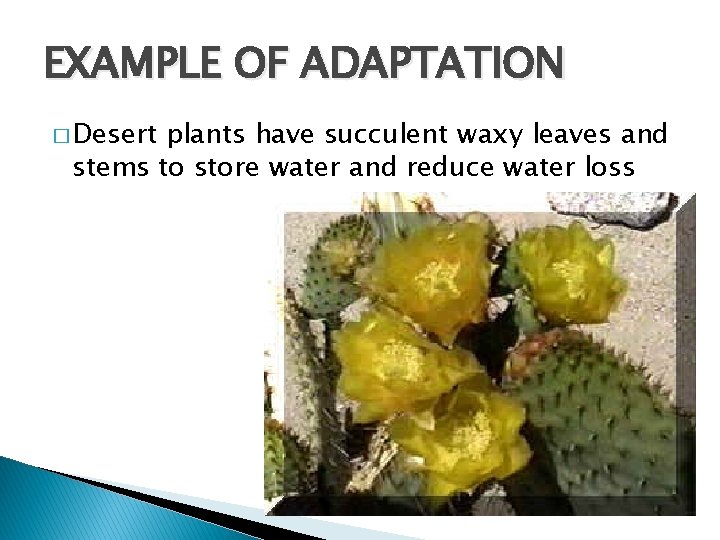
EXAMPLE OF ADAPTATION � Desert plants have succulent waxy leaves and stems to store water and reduce water loss
Needs of living things � � Energy- needed for all of the traits of life. Without energy an organism could not survive. Food and Sunlight) Water- Every living thing needs a constant supply of water. Our body is 70% water and our cells use water to carry out specials tasks like breaking down food. Plants need water to make their own food.
Needs of living things � � Oxygen- Living organisms use oxygen in order to release energy from food. We get Oxygen from the air what about fish, where does their Oxygen come from? Minerals- Chemicals found in the water soil, and air and can not be made by living things, however living things need minerals to survive. (we get them from eating plants and animals, plants get them from the soil. ) Ex: Calcium and Potassium