
Chapter 1 Environmental Science Themes Environmental Science Definitions


- Slides: 35
Chapter 1 Environmental Science - Themes • Environmental Science - Definitions • Human Dimensions • • v Rich and Poor Countries v Sustainability Science is the Key to Understanding our Environment v The Process of Science v Approaches to Thinking Historical Context
Learning Outcomes – Chapter 1 After studying this chapter, you should be able to answer the following questions: • Describe several important environmental problems facing the world. • List several examples of progress in environmental quality. • Explain the idea of sustainability and some of its aims. • Why are scientists cautious about claiming absolute proof of particular theories? • What is critical thinking, and why is it important in environmental science? • Why do we use graphs and data to answer questions in science? • Identify several people who helped shape our ideas of resource conservation and preservation—why did they promote these ideas when they did?
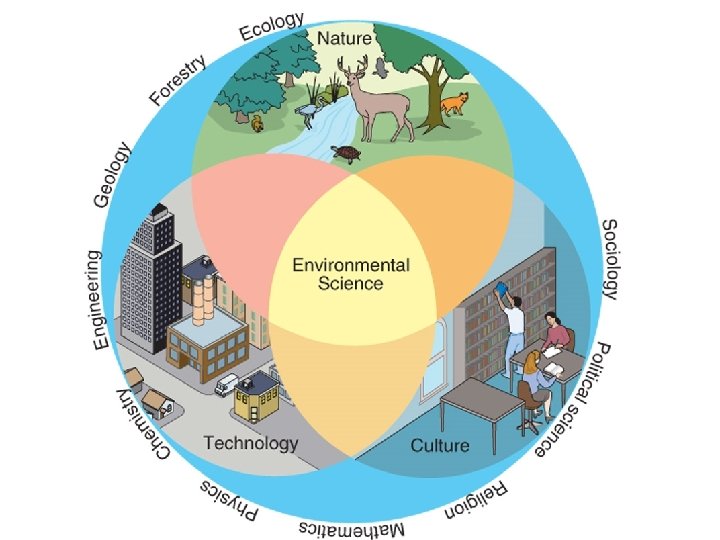
• What is Environment ? v v Circumstances and conditions that surround an organism or group of organisms Social, cultural, bio-physical conditions that affect an individual or community
• Environmental Science is the systematic study of our environment and our place in it v Highly interdisciplinary v Inclusive v Holistic v Applied science
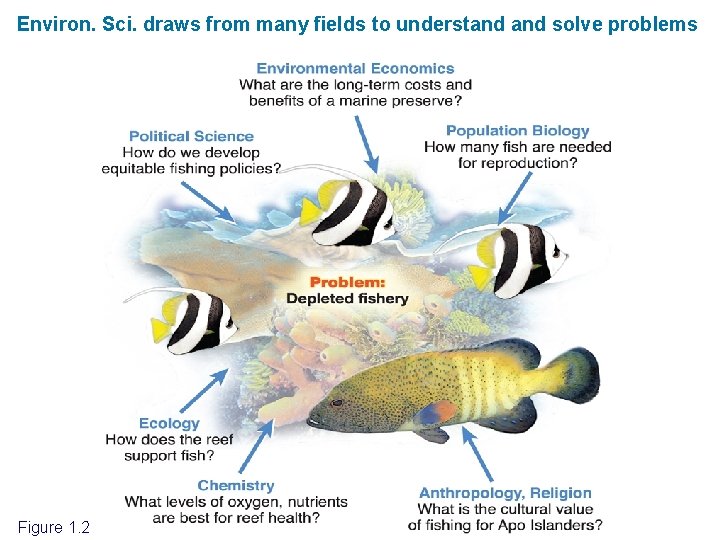
Environ. Sci. draws from many fields to understand solve problems Figure 1. 2
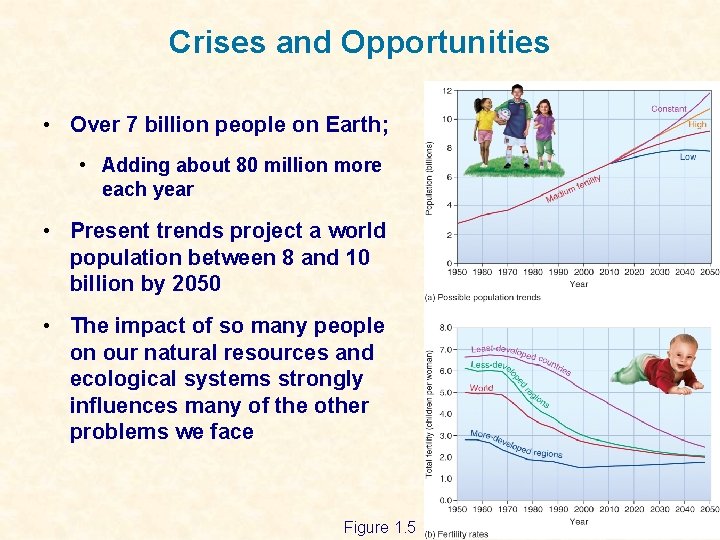
Crises and Opportunities • Over 7 billion people on Earth; • Adding about 80 million more each year • Present trends project a world population between 8 and 10 billion by 2050 • The impact of so many people on our natural resources and ecological systems strongly influences many of the other problems we face Figure 1. 5
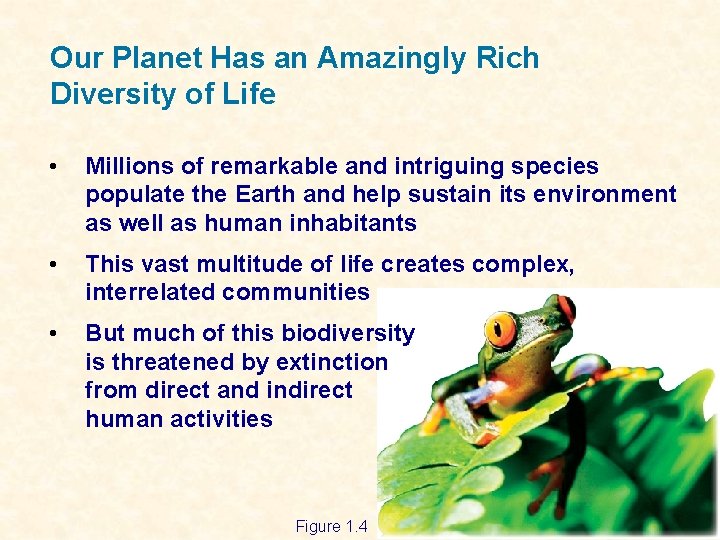
Our Planet Has an Amazingly Rich Diversity of Life • Millions of remarkable and intriguing species populate the Earth and help sustain its environment as well as human inhabitants • This vast multitude of life creates complex, interrelated communities • But much of this biodiversity is threatened by extinction from direct and indirect human activities Figure 1. 4
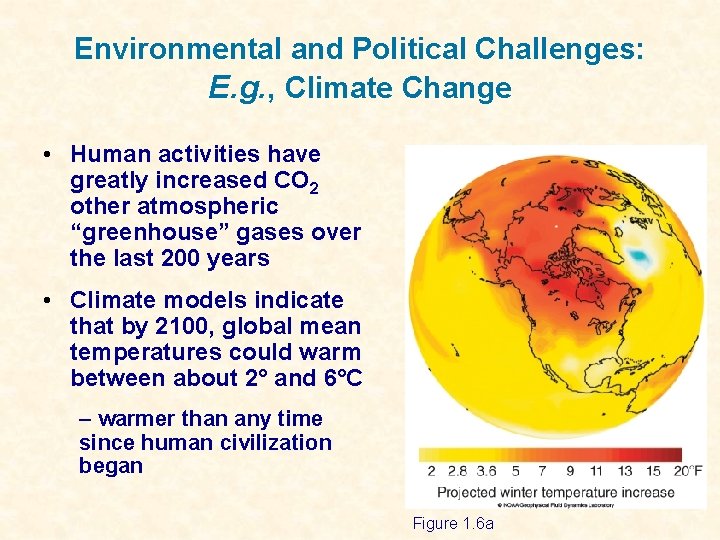
Environmental and Political Challenges: E. g. , Climate Change • Human activities have greatly increased CO 2 other atmospheric “greenhouse” gases over the last 200 years • Climate models indicate that by 2100, global mean temperatures could warm between about 2° and 6°C – warmer than any time since human civilization began Figure 1. 6 a
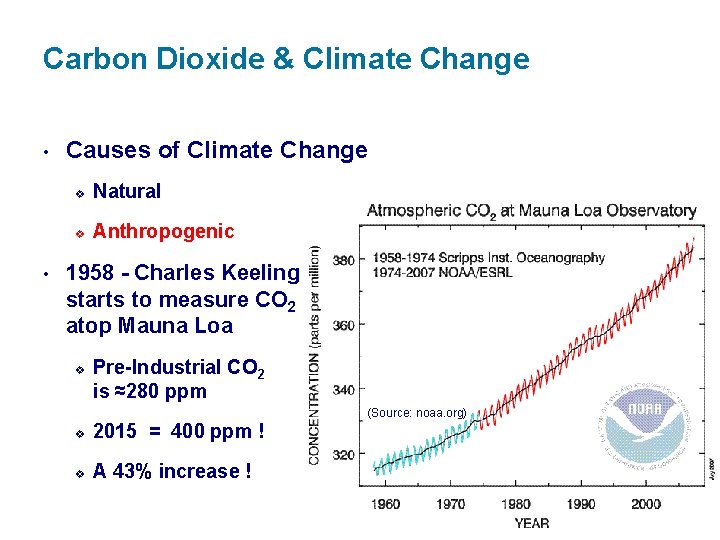
Carbon Dioxide & Climate Change • • Causes of Climate Change v Natural v Anthropogenic 1958 - Charles Keeling starts to measure CO 2 atop Mauna Loa v Pre-Industrial CO 2 is ≈280 ppm v 2015 = 400 ppm ! v A 43% increase ! (Source: noaa. org)
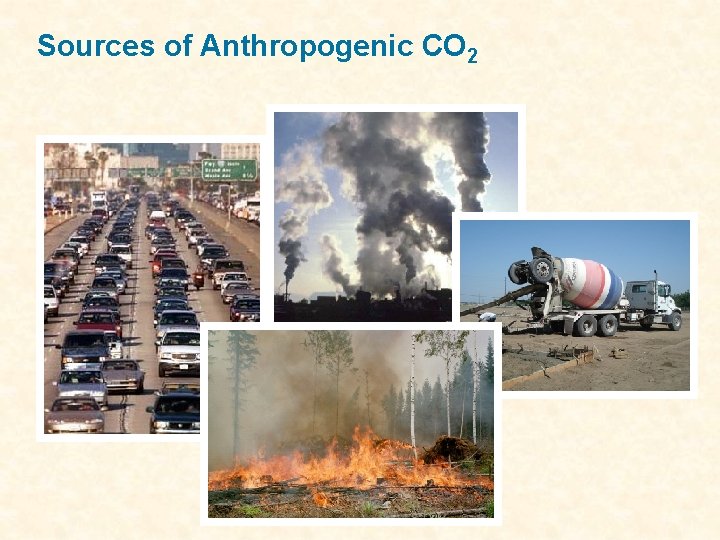
Sources of Anthropogenic CO 2
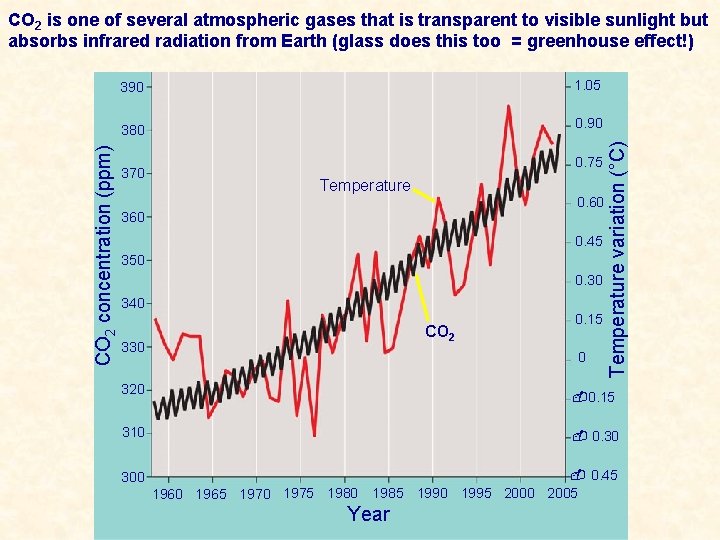
390 1. 05 380 0. 90 370 0. 75 Temperature 0. 60 360 0. 45 350 0. 30 340 CO 2 330 0. 15 0 320 Temperature variation (°C) CO 2 concentration (ppm) CO 2 is one of several atmospheric gases that is transparent to visible sunlight but absorbs infrared radiation from Earth (glass does this too = greenhouse effect!) 0. 15 310 0. 30 300 0. 45 1960 1965 1970 1975 1980 1985 1990 1995 2000 2005 Year
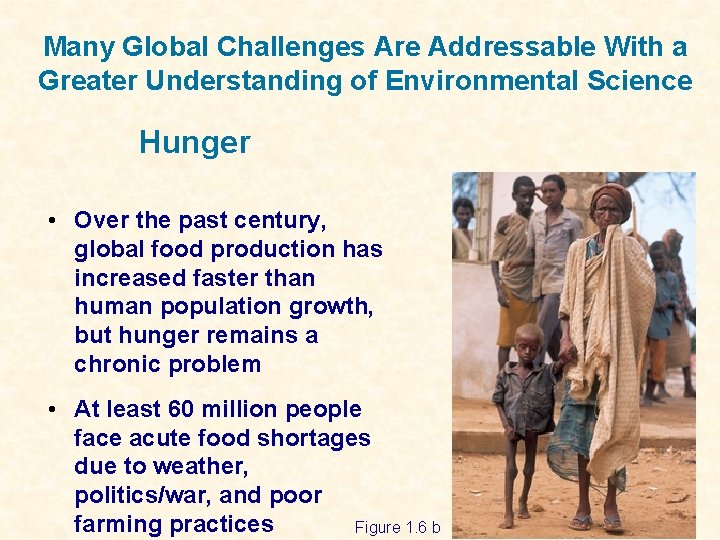
Many Global Challenges Are Addressable With a Greater Understanding of Environmental Science Hunger • Over the past century, global food production has increased faster than human population growth, but hunger remains a chronic problem • At least 60 million people face acute food shortages due to weather, politics/war, and poor farming practices Figure 1. 6 b
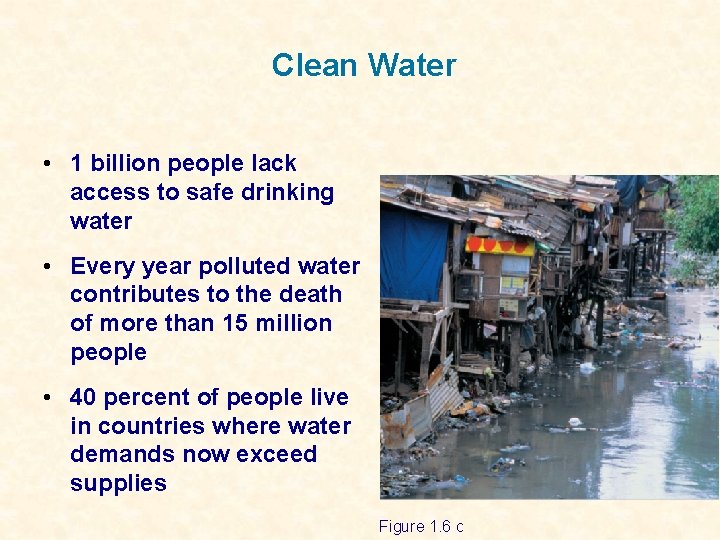
Clean Water • 1 billion people lack access to safe drinking water • Every year polluted water contributes to the death of more than 15 million people • 40 percent of people live in countries where water demands now exceed supplies Figure 1. 6 c
Air Quality • Air quality has worsened dramatically in many areas, especially China and India • Nobel laureate Paul Crutzen estimates that at least 3 million people die each year from diseases triggered by air pollution • Worldwide, the United Nations estimates that more than 2 billion metric tons of air pollutants (not including carbon dioxide or wind-blown soil) are released each year
Energy Resources • Fossil fuels (oil, coal, and natural gas) presently provide around 80 percent of the energy used in industrialized countries • Easily accessible supplies of these fuels are diminishing, and there are many problems associated with their acquisition and use • Investing in renewable energy and energy conservation measures could give us cleaner, less destructive options
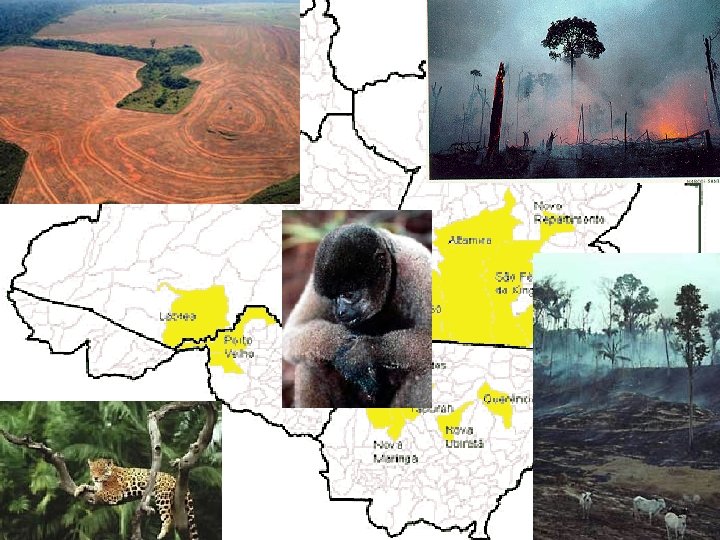
Biodiversity Loss • Habitat destruction, over hunting, pollution, and introduction of exotic organisms are eliminating species at a rate comparable to the great extinction that marked the end of the age of dinosaurs • >10, 000 species are now considered threatened – including more than half of all primates, freshwater fish, and amphibians. Top predators, including nearly all the big cats in the world, are particularly rare and endangered • At the same time, domestic cat populations have soared (they kill more than a billion birds in the United States every year)
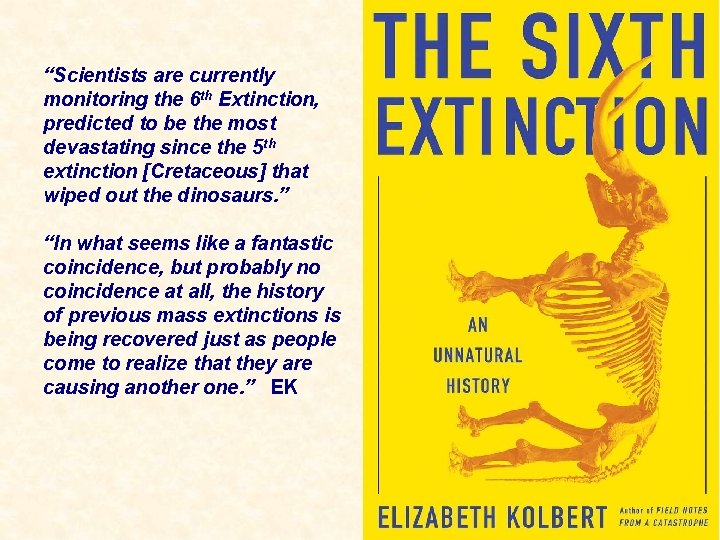
“Scientists are currently monitoring the 6 th Extinction, predicted to be the most devastating since the 5 th extinction [Cretaceous] that wiped out the dinosaurs. ” “In what seems like a fantastic coincidence, but probably no coincidence at all, the history of previous mass extinctions is being recovered just as people come to realize that they are causing another one. ” EK
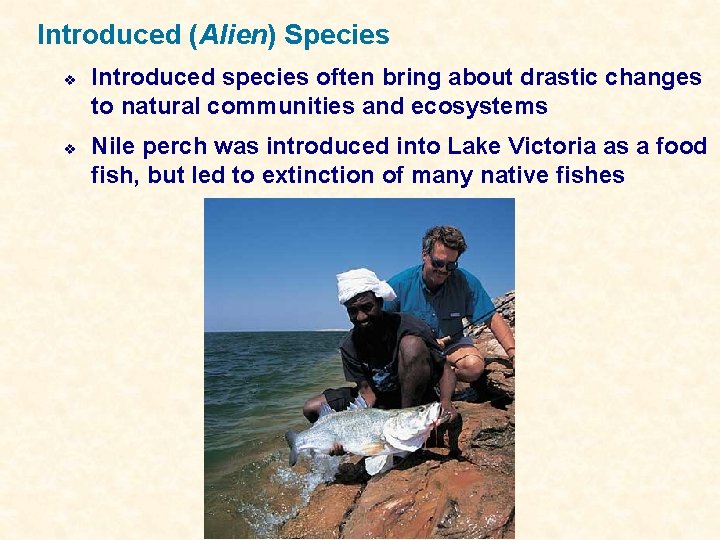
Introduced (Alien) Species v v Introduced species often bring about drastic changes to natural communities and ecosystems Nile perch was introduced into Lake Victoria as a food fish, but led to extinction of many native fishes
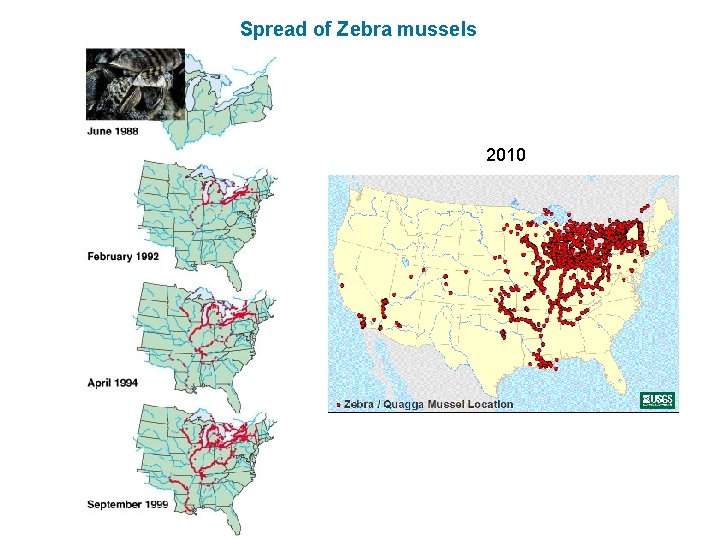
Spread of Zebra mussels 2010
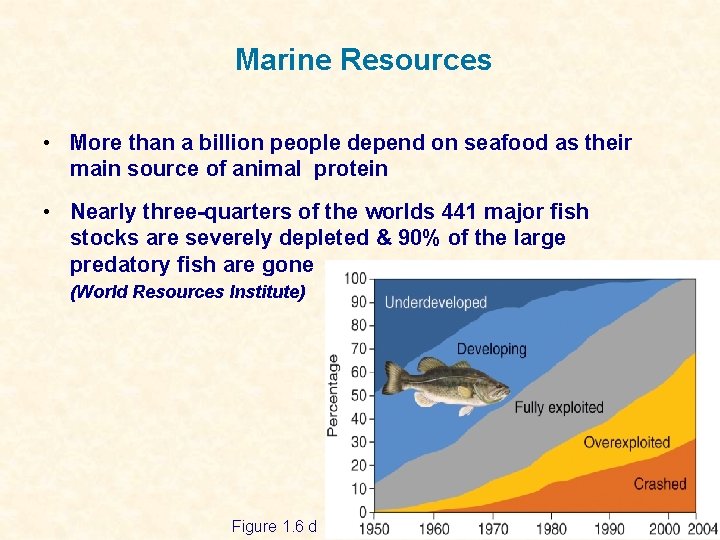
Marine Resources • More than a billion people depend on seafood as their main source of animal protein • Nearly three-quarters of the worlds 441 major fish stocks are severely depleted & 90% of the large predatory fish are gone (World Resources Institute) Figure 1. 6 d
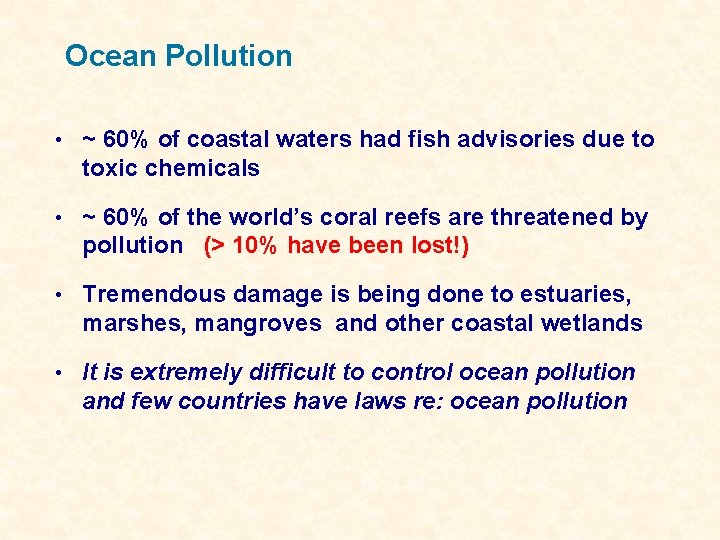
Ocean Pollution • ~ 60% of coastal waters had fish advisories due to toxic chemicals • ~ 60% of the world’s coral reefs are threatened by pollution (> 10% have been lost!) • Tremendous damage is being done to estuaries, marshes, mangroves and other coastal wetlands • It is extremely difficult to control ocean pollution and few countries have laws re: ocean pollution
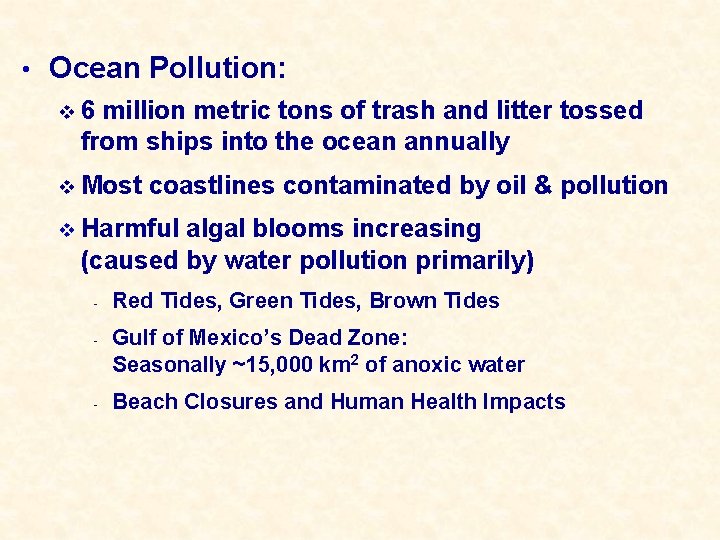
• Ocean Pollution: v 6 million metric tons of trash and litter tossed from ships into the ocean annually v Most coastlines contaminated by oil & pollution v Harmful algal blooms increasing (caused by water pollution primarily) - - Red Tides, Green Tides, Brown Tides Gulf of Mexico’s Dead Zone: Seasonally ~15, 000 km 2 of anoxic water Beach Closures and Human Health Impacts
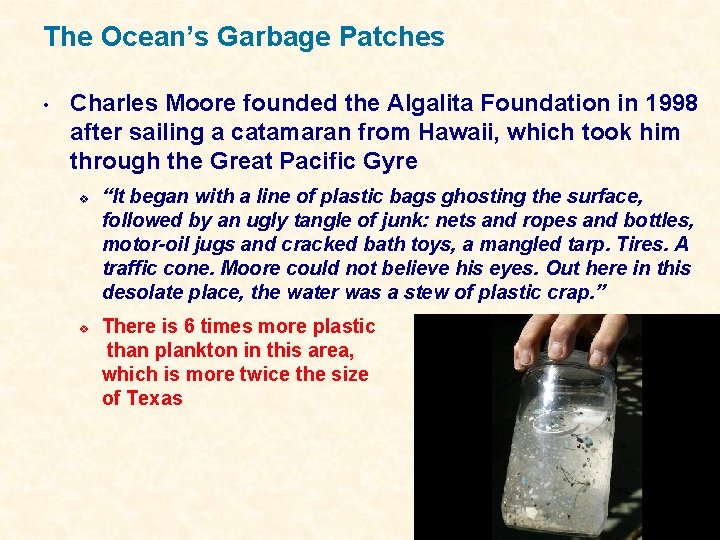
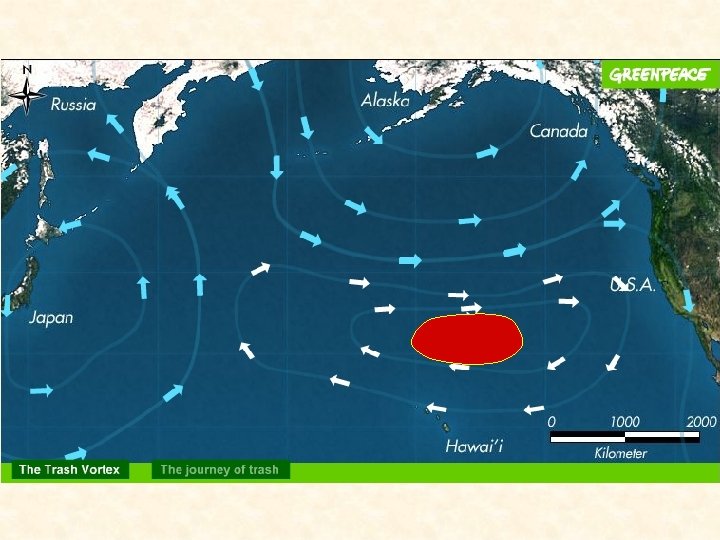
The Ocean’s Garbage Patches • Charles Moore founded the Algalita Foundation in 1998 after sailing a catamaran from Hawaii, which took him through the Great Pacific Gyre v v “It began with a line of plastic bags ghosting the surface, followed by an ugly tangle of junk: nets and ropes and bottles, motor-oil jugs and cracked bath toys, a mangled tarp. Tires. A traffic cone. Moore could not believe his eyes. Out here in this desolate place, the water was a stew of plastic crap. ” There is 6 times more plastic than plankton in this area, which is more twice the size of Texas
Signs of Progress: Population and Pollution • Pollution has been decreased and the population has stabilized in most industrialized countries and even in some very poor countries where democracy has been established – Over the past 50 years, the average number of children born per woman worldwide has decreased from 5 to 2. 5 – The UN Population Division predicts that the world population will stabilize at about 9 billion by the year 2050
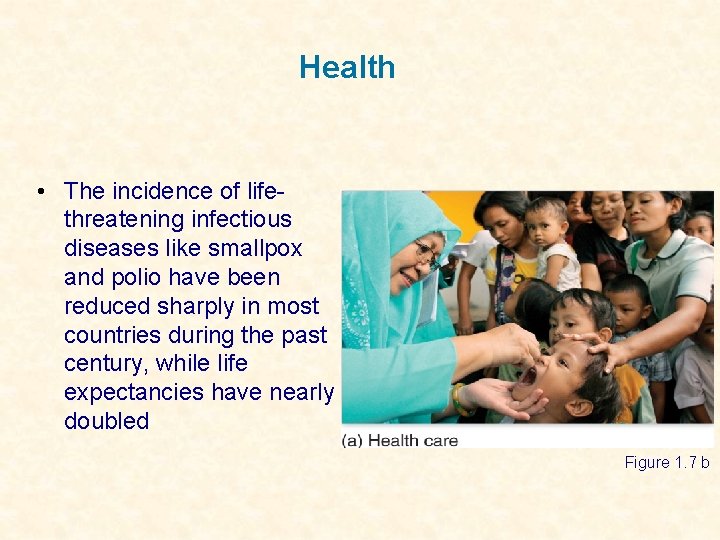
Health • The incidence of lifethreatening infectious diseases like smallpox and polio have been reduced sharply in most countries during the past century, while life expectancies have nearly doubled Figure 1. 7 b
Renewable Energy • Renewable energy: Encouraging progress is being made in a transition to renewable energy sources – The European Union and China are developing wind energy, solar, wave and tidal energy, and improvements in efficiency to cut reliance on fossil fuels – At the Copenhagen climate summit in 2009, the world's wealthiest countries agreed to aid developing nations in finding alternative energy technologies
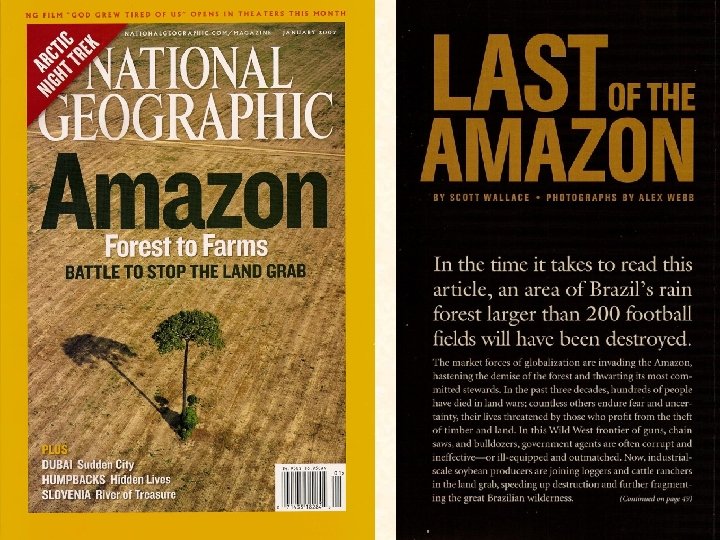
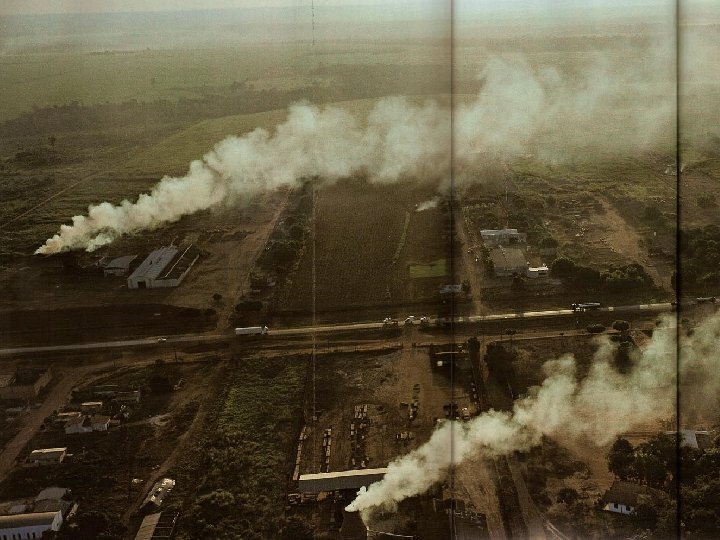
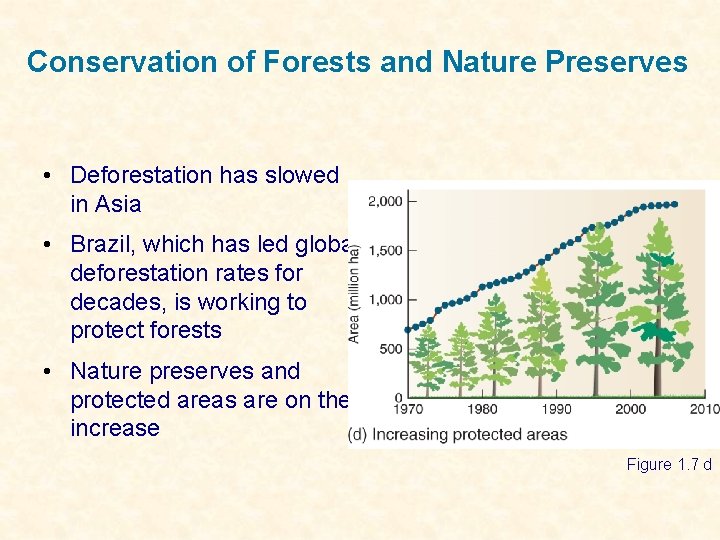
Conservation of Forests and Nature Preserves • Deforestation has slowed in Asia • Brazil, which has led global deforestation rates for decades, is working to protect forests • Nature preserves and protected areas are on the increase Figure 1. 7 d
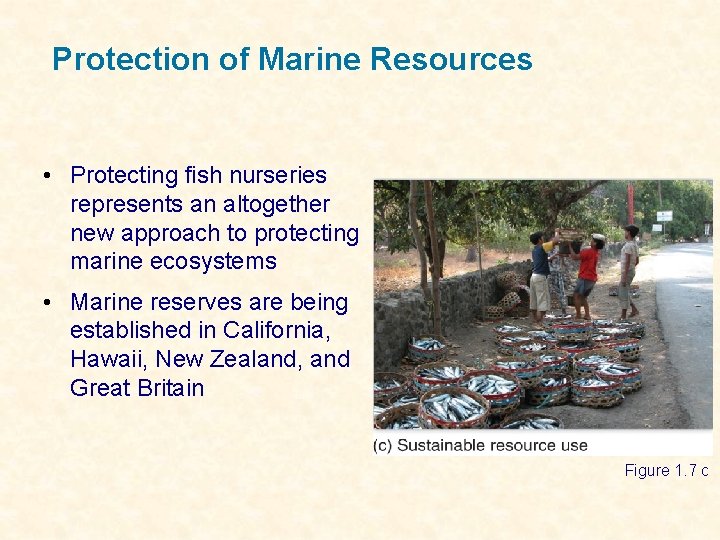
Protection of Marine Resources • Protecting fish nurseries represents an altogether new approach to protecting marine ecosystems • Marine reserves are being established in California, Hawaii, New Zealand, and Great Britain Figure 1. 7 c
Signs of Progress: Information and Education • Literacy and access to education are expanding in most regions of the world • The Internet makes it easier to share environmental solutions • Expanding education for girls is driving declining birth rates worldwide