
Chapter 1 Environmental Problems Their Causes and Sustainability
Chapter 1 Environmental Problems, Their Causes, and Sustainability
Chapter Overview Questions Ø What are the main themes of this book? Ø What keeps us alive? What is an environmentally sustainable society? Ø How fast is the human population growing? Ø What is the difference between economic growth, economic development, and environmentally sustainable economic development?
Chapter Overview Questions (cont’d) Ø What are the harmful environmental effects of poverty and affluence? Ø What three major human cultural changes have taken place since humans arrived? Ø What are the four scientific principles of sustainability and how can we use them and shared visions to build more environmentally sustainable and just societies during this century?
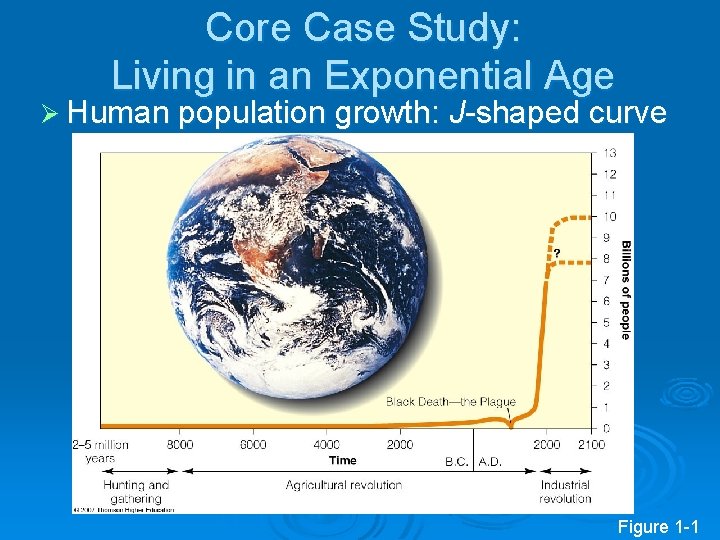
Core Case Study: Living in an Exponential Age Ø Human population growth: J-shaped curve Figure 1 -1
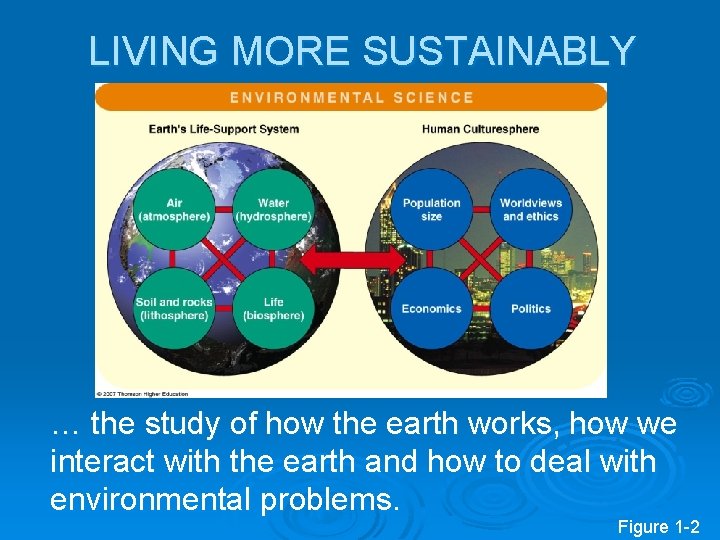
LIVING MORE SUSTAINABLY … the study of how the earth works, how we interact with the earth and how to deal with environmental problems. Figure 1 -2
What is Environmental Science? Ø The goals of environmental science are to learn: l l how nature works. how the environment effects us. how we effect the environment. how we can live more sustainably without degrading our life-support system.
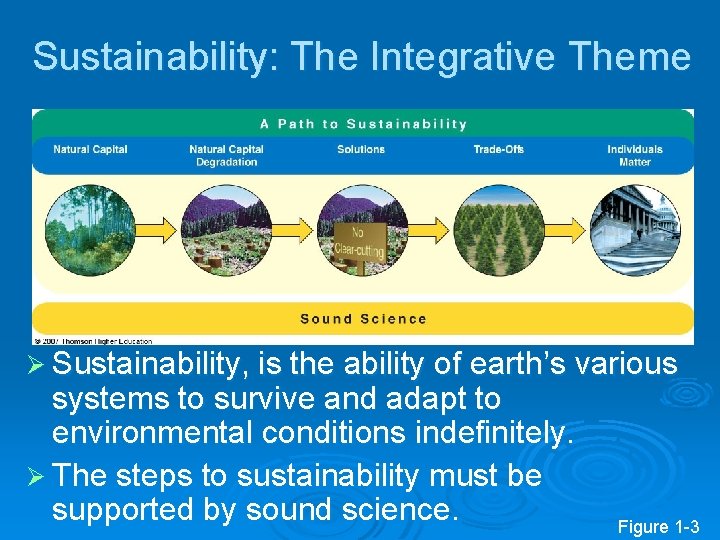
Sustainability: The Integrative Theme Ø Sustainability, is the ability of earth’s various systems to survive and adapt to environmental conditions indefinitely. Ø The steps to sustainability must be supported by sound science. Figure 1 -3
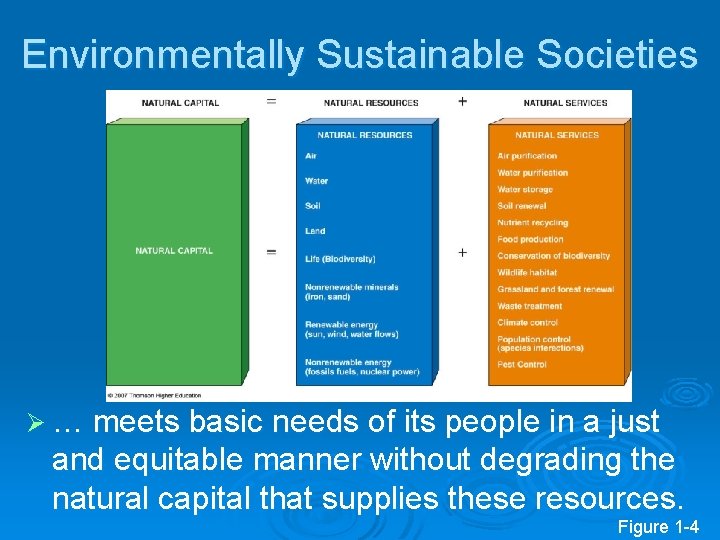
Environmentally Sustainable Societies Ø … meets basic needs of its people in a just and equitable manner without degrading the natural capital that supplies these resources. Figure 1 -4
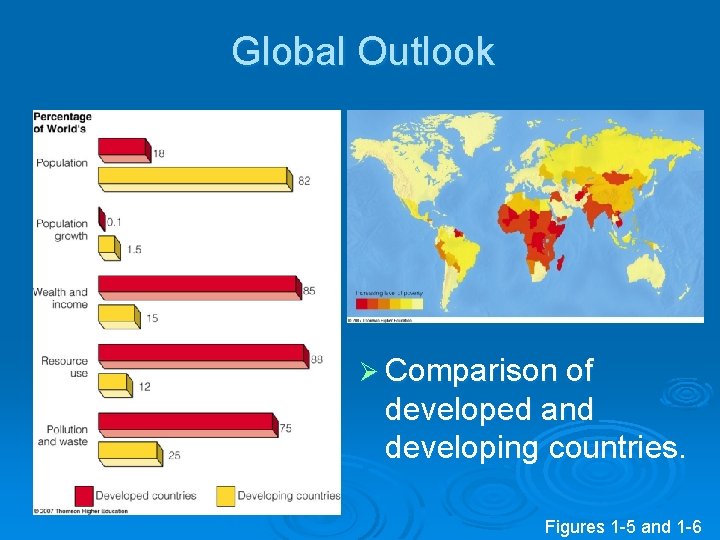
Global Outlook Ø Comparison of developed and developing countries. Figures 1 -5 and 1 -6
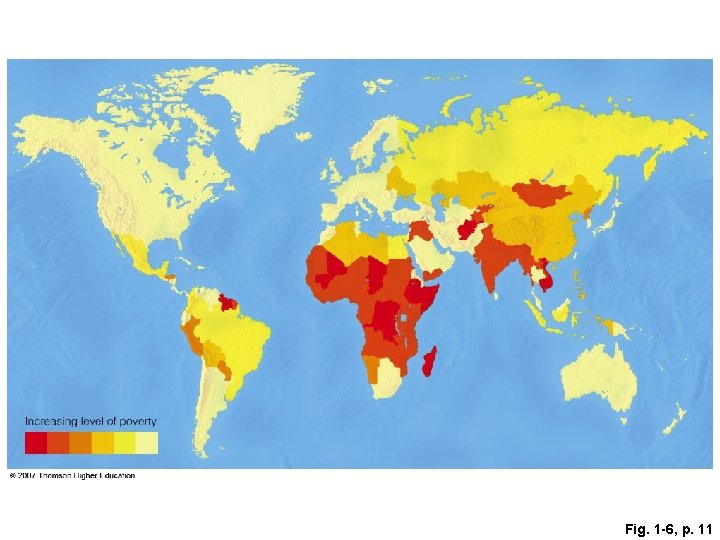
Fig. 1 -6, p. 11
• Countries that have a high per capita or gross domestic product are considered to be developed countries. • Some developing countries are located in China, India, and Africa
RESOURCES Ø Perpetual: On a human time scale are continuous. Ø Renewable: On a human time scale can be replenished rapidly (e. g. hours to several decades). Ø Nonrenewable: On a human time scale are in fixed supply.
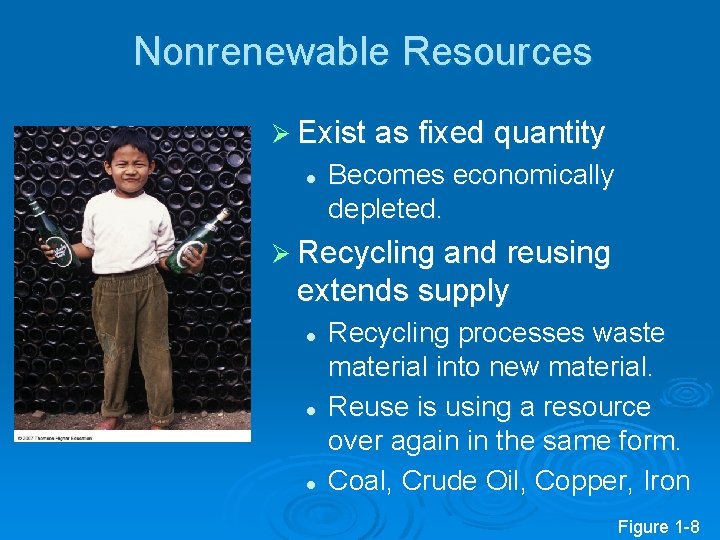
Nonrenewable Resources Ø Exist as fixed quantity l Becomes economically depleted. Ø Recycling and reusing extends supply l l l Recycling processes waste material into new material. Reuse is using a resource over again in the same form. Coal, Crude Oil, Copper, Iron Figure 1 -8
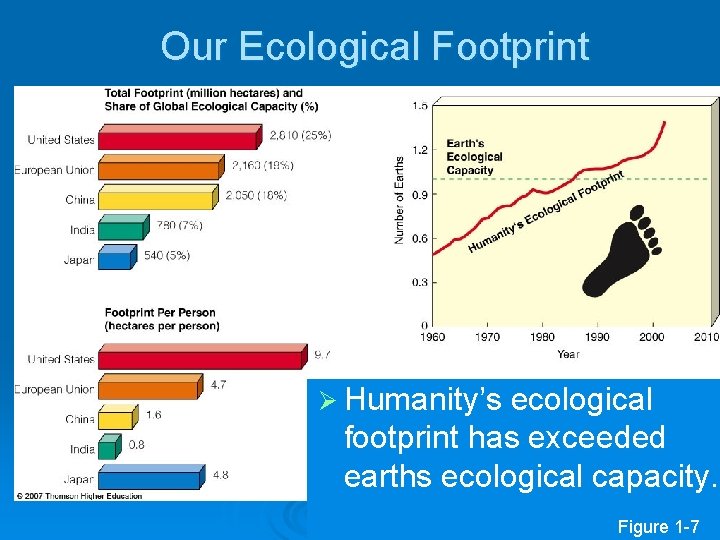
Our Ecological Footprint Ø Humanity’s ecological footprint has exceeded earths ecological capacity. Figure 1 -7
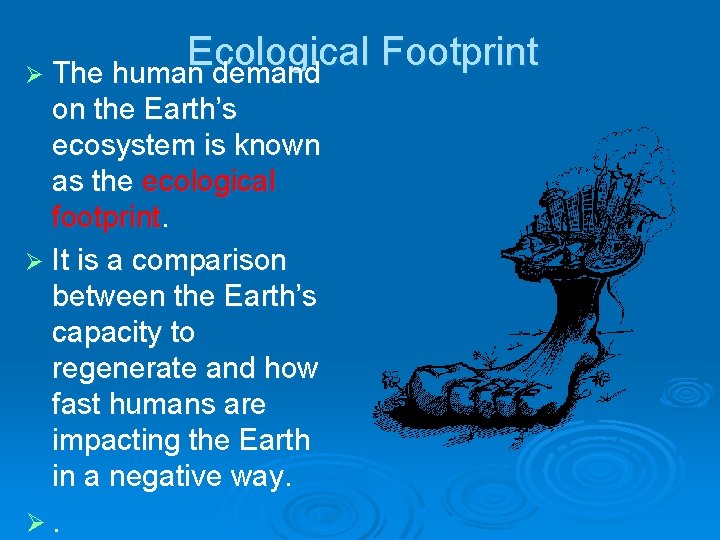
Ecological Footprint Ø The human demand on the Earth’s ecosystem is known as the ecological footprint. Ø It is a comparison between the Earth’s capacity to regenerate and how fast humans are impacting the Earth in a negative way. Ø.
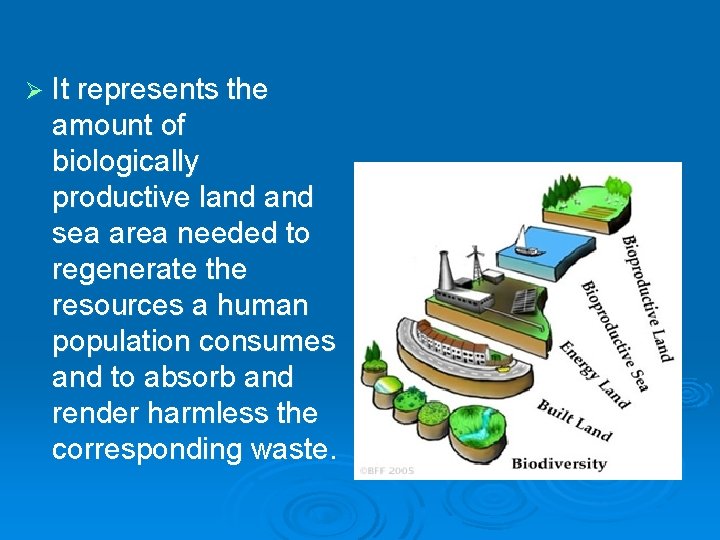
Ø It represents the amount of biologically productive land sea area needed to regenerate the resources a human population consumes and to absorb and render harmless the corresponding waste.
Worst Ecological Footprints �As of 2006, the following countries had the highest ecological footprints (gha/person). 1) United Arab Emirates 10. 3 2) Qatar 9. 7 3) United States 9. 0 4) Ireland 8. 2 5) Kuwait 7. 9 � This means they use a lot of resources person. � Why is there footprint so large? ? ?
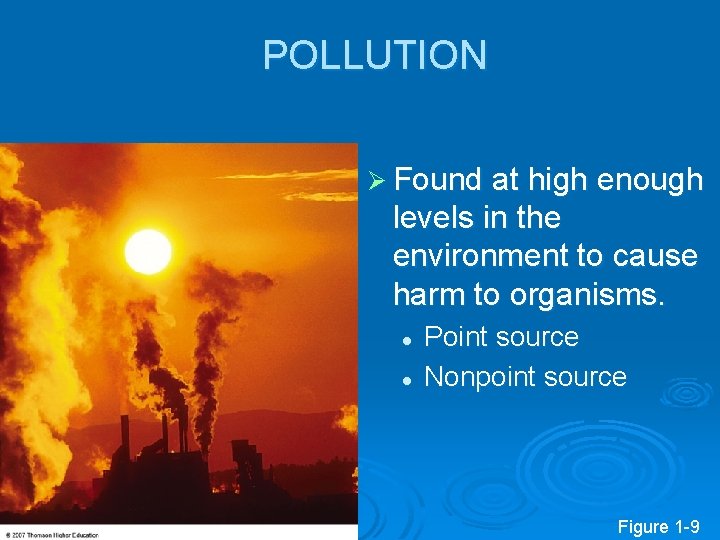
POLLUTION Ø Found at high enough levels in the environment to cause harm to organisms. l l Point source Nonpoint source Figure 1 -9
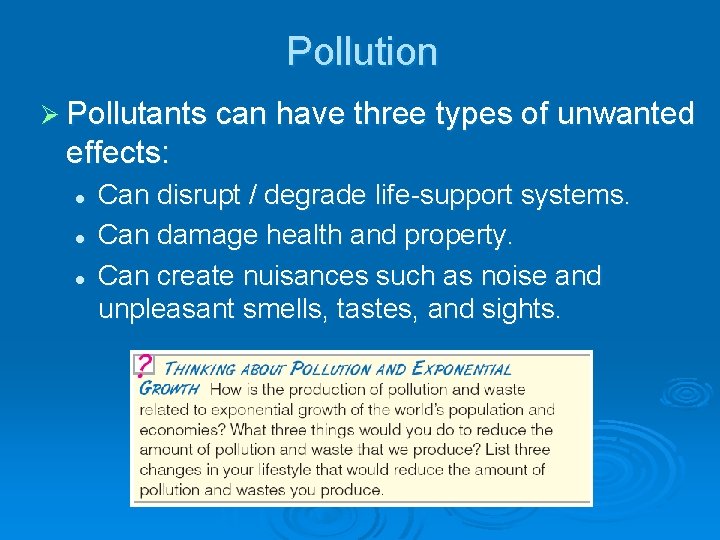
Pollution Ø Pollutants can have three types of unwanted effects: l l l Can disrupt / degrade life-support systems. Can damage health and property. Can create nuisances such as noise and unpleasant smells, tastes, and sights.
ENVIRONMENTAL PROBLEMS: CAUSES AND CONNECTIONS Ø The major causes of environmental problems are: l l l Population growth Wasteful resource use Poverty Poor environmental accounting Ecological ignorance
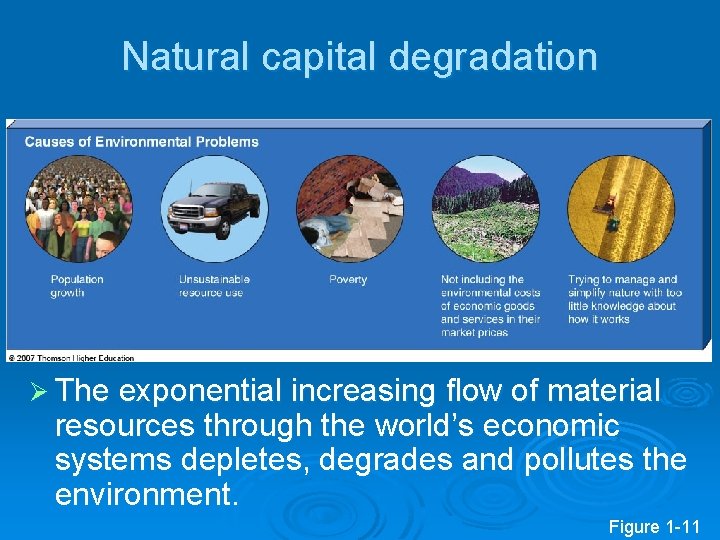
Natural capital degradation Ø The exponential increasing flow of material resources through the world’s economic systems depletes, degrades and pollutes the environment. Figure 1 -11
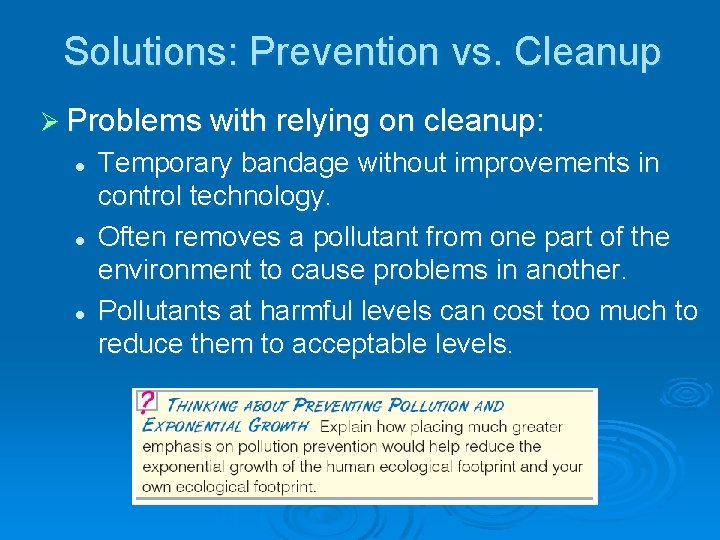
Solutions: Prevention vs. Cleanup Ø Problems with relying on cleanup: l l l Temporary bandage without improvements in control technology. Often removes a pollutant from one part of the environment to cause problems in another. Pollutants at harmful levels can cost too much to reduce them to acceptable levels.
Resource Consumption and Environmental Problems Ø Underconsumption Ø Overconsumption l Affluenza: unsustainable addiction to overconsumption and materialism.
CULTURAL CHANGES AND THE ENVIRONMENT Ø Agricultural revolution l Allowed people to stay in one place. Ø Industrial-medical revolution l l Led shift from rural villages to urban society. Science improved sanitation and disease control. Ø Information-globalization revolution l Rapid access to information.
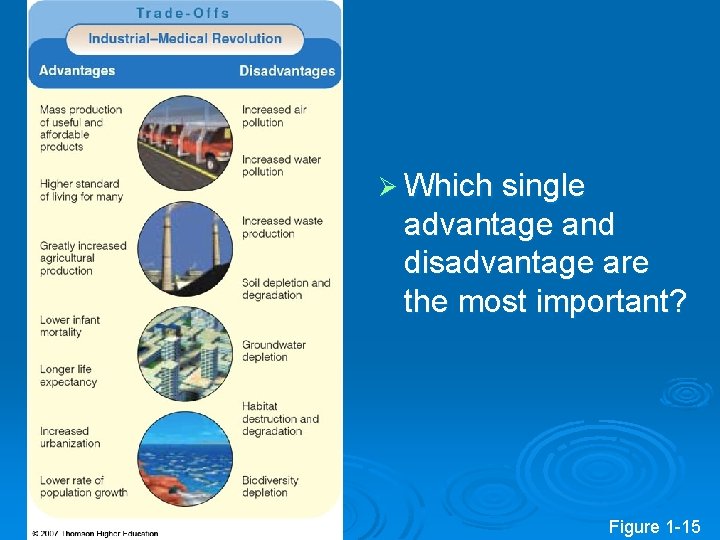
Ø Which single advantage and disadvantage are the most important? Figure 1 -15
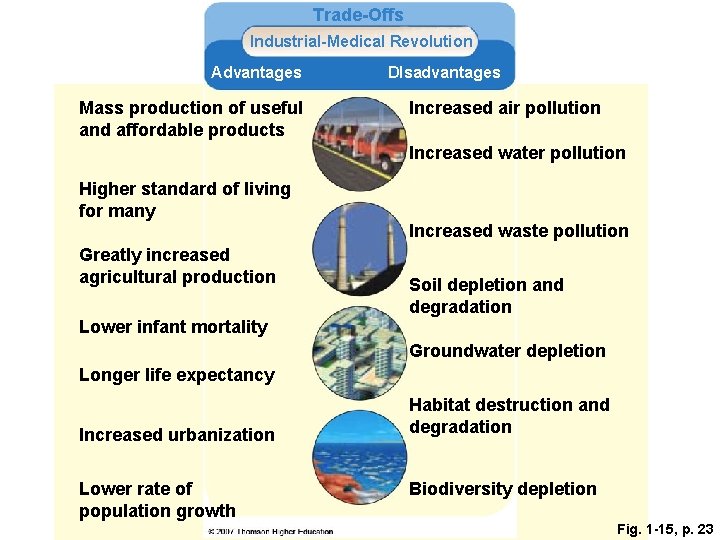
Trade-Offs Industrial-Medical Revolution Advantages Mass production of useful and affordable products DIsadvantages Increased air pollution Increased water pollution Higher standard of living for many Increased waste pollution Greatly increased agricultural production Soil depletion and degradation Lower infant mortality Groundwater depletion Longer life expectancy Increased urbanization Lower rate of population growth Habitat destruction and degradation Biodiversity depletion Fig. 1 -15, p. 23
SUSTAINABILITY AND ENVIRONMENTAL WORLDVIEWS Ø Technological optimists: l suggest that human ingenuity will keep the environment sustainable. Ø Environmental pessimists: l overstate the problems where our environmental situation seems hopeless.
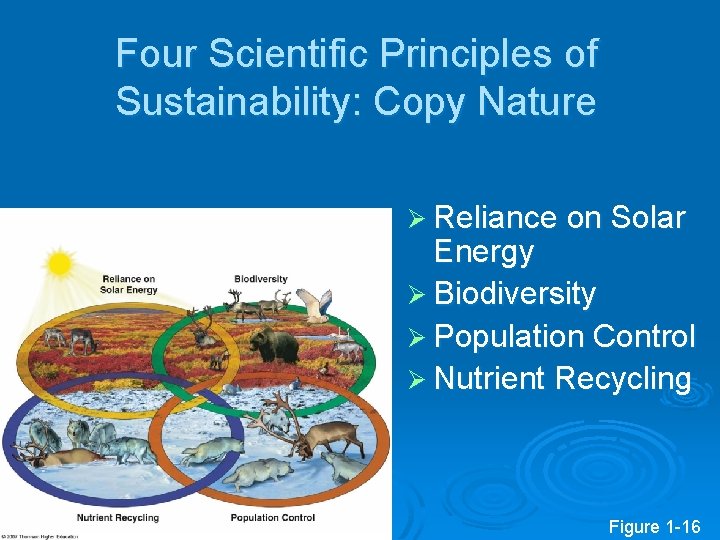
Four Scientific Principles of Sustainability: Copy Nature Ø Reliance on Solar Energy Ø Biodiversity Ø Population Control Ø Nutrient Recycling Figure 1 -16
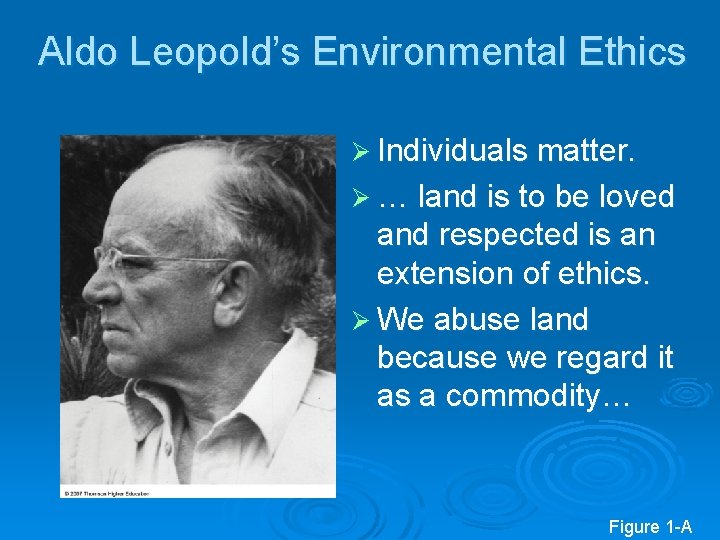
Aldo Leopold’s Environmental Ethics Ø Individuals matter. Ø … land is to be loved and respected is an extension of ethics. Ø We abuse land because we regard it as a commodity… Figure 1 -A
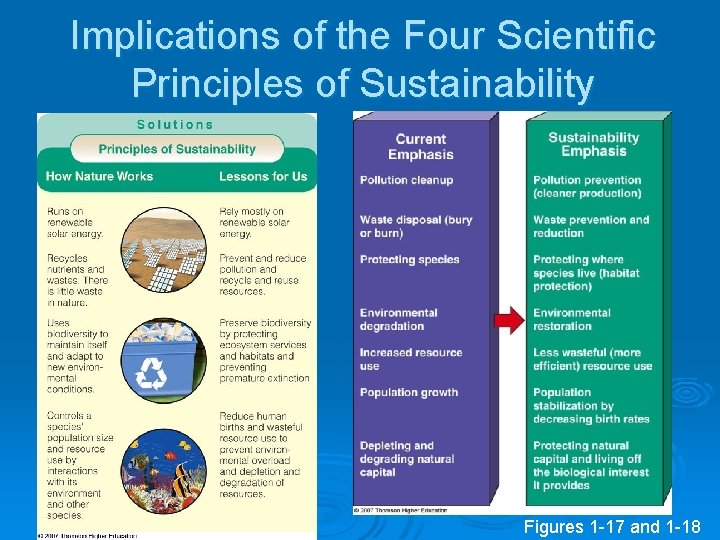
Implications of the Four Scientific Principles of Sustainability Figures 1 -17 and 1 -18
Tragedy of the Commons The Tragedy of the Commons is a phrase used to refer to the conflict for resources between individual interests and the common good (i. e. , society). Ø In a nutshell, the Tragedy of the Commons suggests that free access and unrestricted demand for a finite resource ultimately dooms the resource through its over -exploitation. This occurs because the benefits of exploitation accrue to individuals who are motivated to maximize his or her use of the resource, while the costs of exploitation are distributed between all those to whom the resource is available. That is, the individual benefits while the group pays for the use, extraction and consequences.
Tragedy of the Commons • A resource that is free and available to everyone in a population. • Examples: Open Ocean, Rivers, Rangelands • Commons are more vulnerable to depletion due to exploitation • The result is degradation of the resource and therein is the tragedy of the commons.
Example Individuals use communally-owned land for the grazing of cattle. The cattle are owned privately by the individuals. The individual benefits by increasing the size of her/his herd; yet, the cost of that action (e. g. , impact of grazing) is borne by all members of the community. The individual bears little cost with maximum return. Individuals overuse the resource until it is depleted. Hardin suggested. “Freedom in a commons brings ruin to all. ”
- Slides: 33