
Chapter 1 Economic Geography An Introduction Geographic Perspectives
- Slides: 32
Chapter 1 Economic Geography: An Introduction • • Geographic Perspectives Economic Geography of the World Economy Globalization World Development Problems Four Major Questions of the World Economy Political Economies Geographical Information Systems
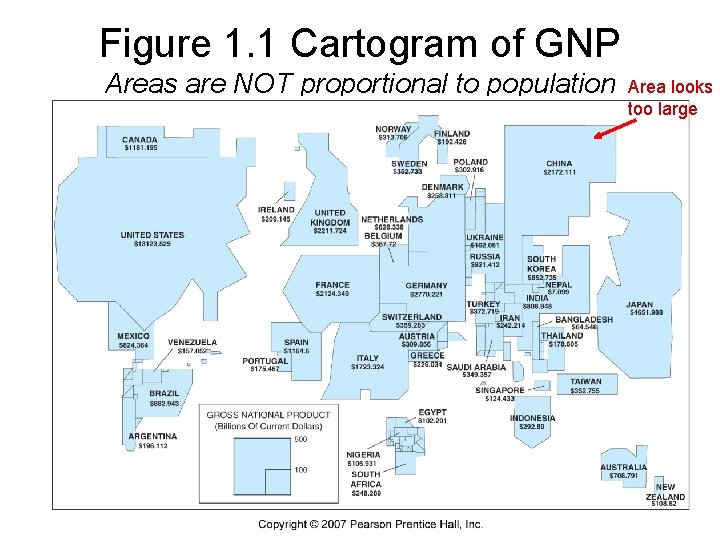
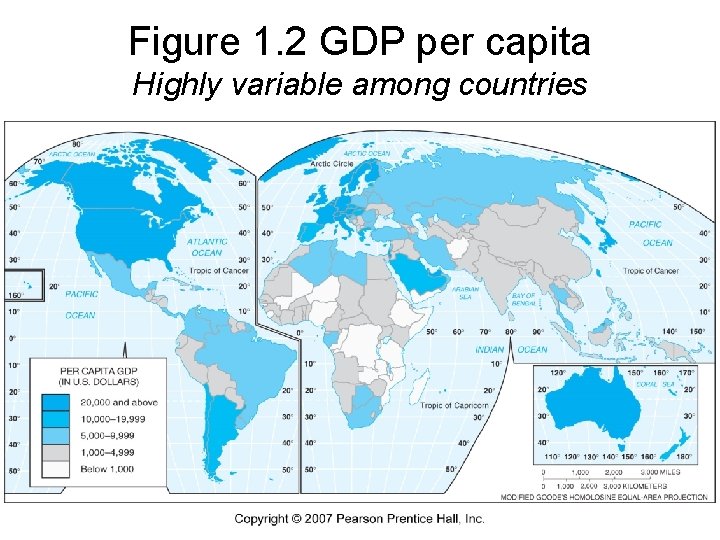
Geographic Perspectives • Barney Warf’s Style: anything goes • The geographic perspective • Key Point: Why are activities located where they are? Space and time are interdependent • Geographic Perspectives: Fig 1. 1, Fig 1. 2 Economic space is highly unequal Economic Geography as a field
Figure 1. 1 Cartogram of GNP Areas are NOT proportional to population Area looks too large
Figure 1. 2 GDP per capita Highly variable among countries
Geographic Perspectives – Economic Geography • Different paradigms abound in economic geography – Logical positivism, use of scientific method (development of hypotheses, data collection, and development of predictive models – Predominant approach to location theory and models of spatial interaction, representation of spatial structures, based on “homo economicus” – – Other approaches: behavioral, humanist, structuralist, post-structuralist & the “cultural turn”
Economic Geography of the World Economy • The global perspective – an interdependent network of people and industries linked in a dynamic system of resource distribution, wealth creation, and power structures • Shifting technologies, geopolitical forces, transportation and IT, culture, environment • Transport & communication cost reductions • Fall of centrally planned economies • Rise of global capital markets • Rise of institutions such as World Bank, IMF, WTO, OPEC, OECD….
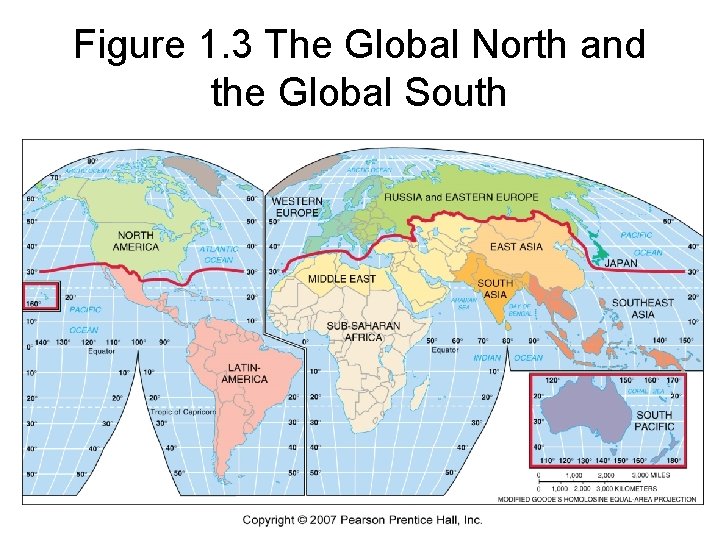
Figure 1. 3 The Global North and the Global South
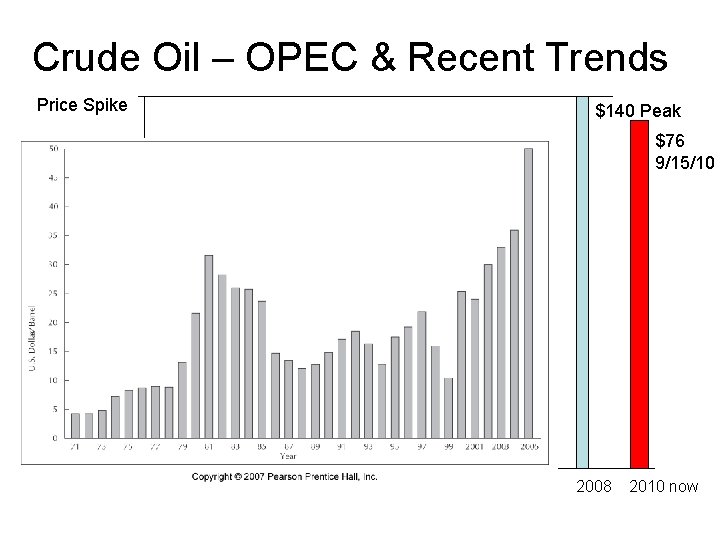
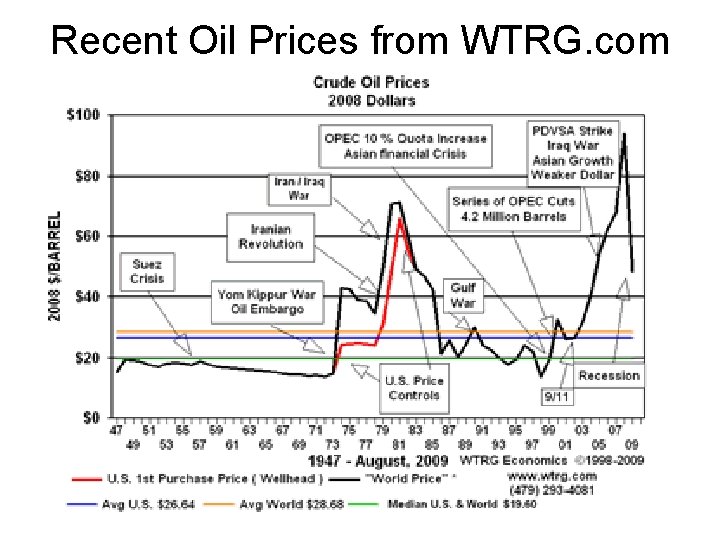
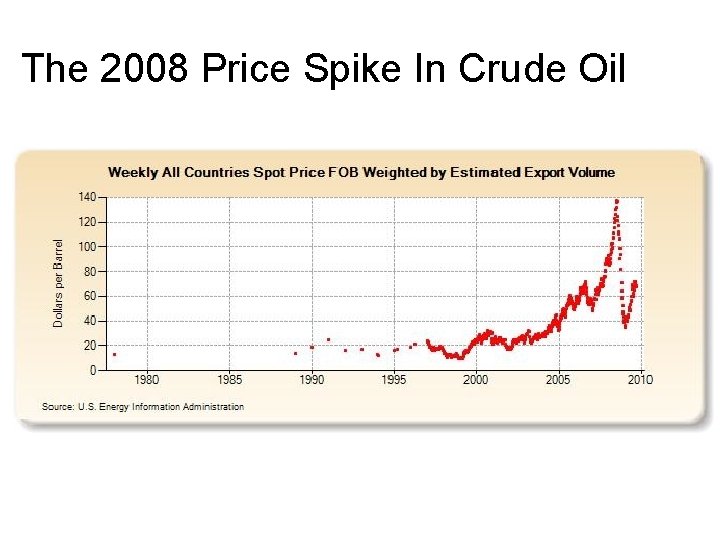
Crude Oil – OPEC & Recent Trends Price Spike $140 Peak $76 9/15/10 2008 2010 now
Recent Oil Prices from WTRG. com
The 2008 Price Spike In Crude Oil
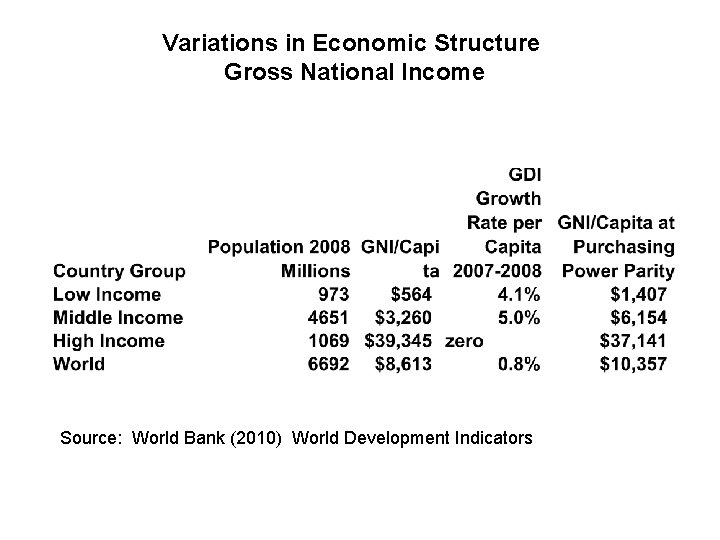
Variations in Economic Structure Gross National Income Source: World Bank (2010) World Development Indicators
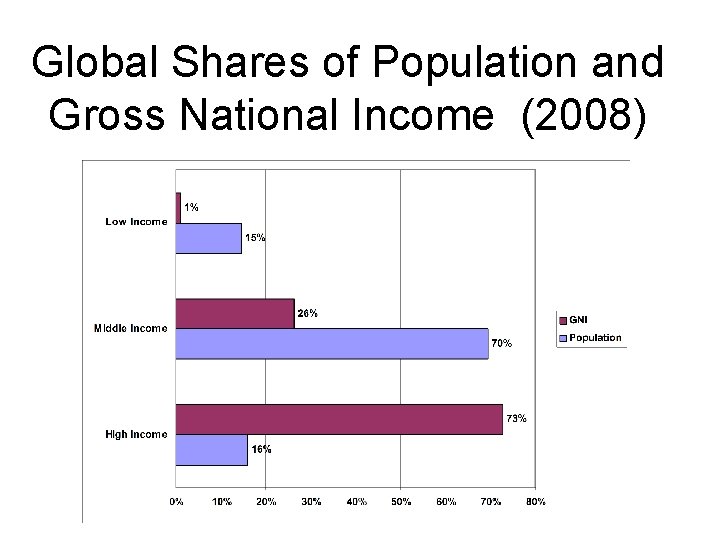
Global Shares of Population and Gross National Income (2008)
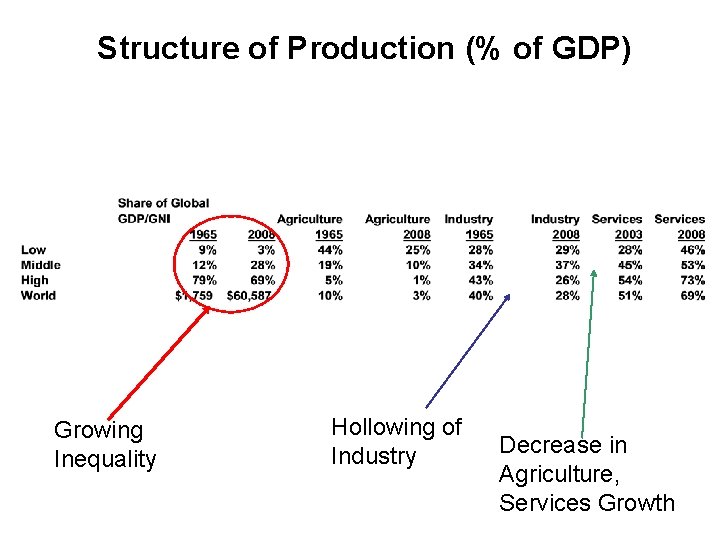
Structure of Production (% of GDP) Growing Inequality Hollowing of Industry Decrease in Agriculture, Services Growth
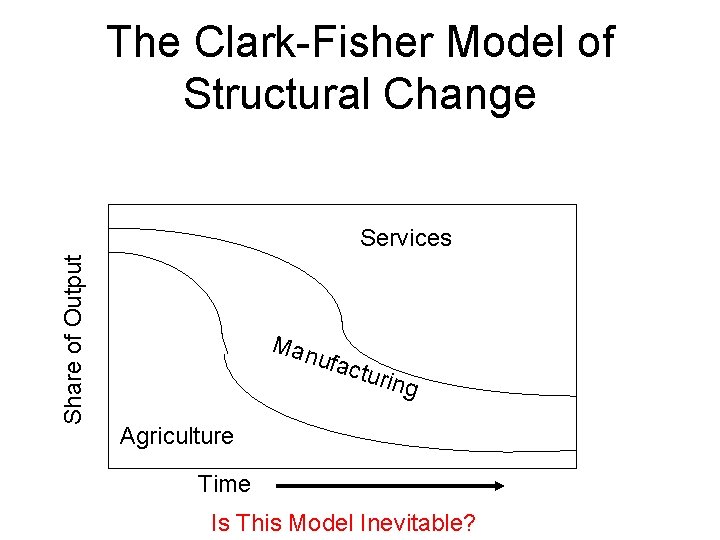
The Clark-Fisher Model of Structural Change Share of Output Services Man u factu ring Agriculture Time Is This Model Inevitable?
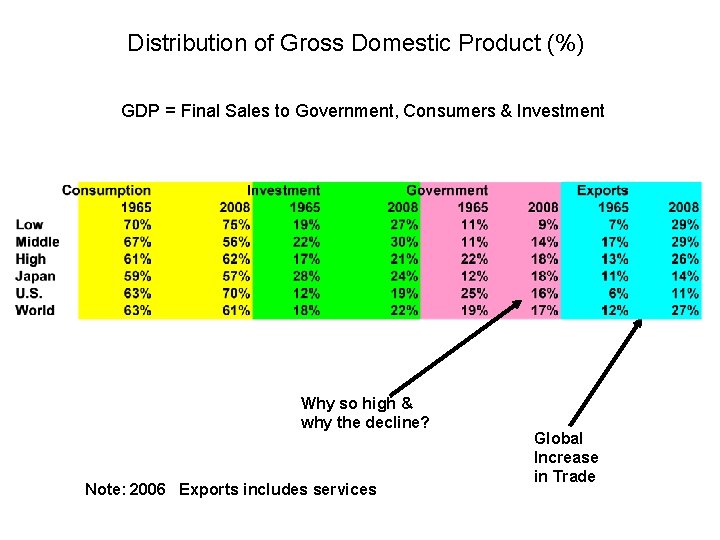
Distribution of Gross Domestic Product (%) GDP = Final Sales to Government, Consumers & Investment Why so high & why the decline? Note: 2006 Exports includes services Global Increase in Trade
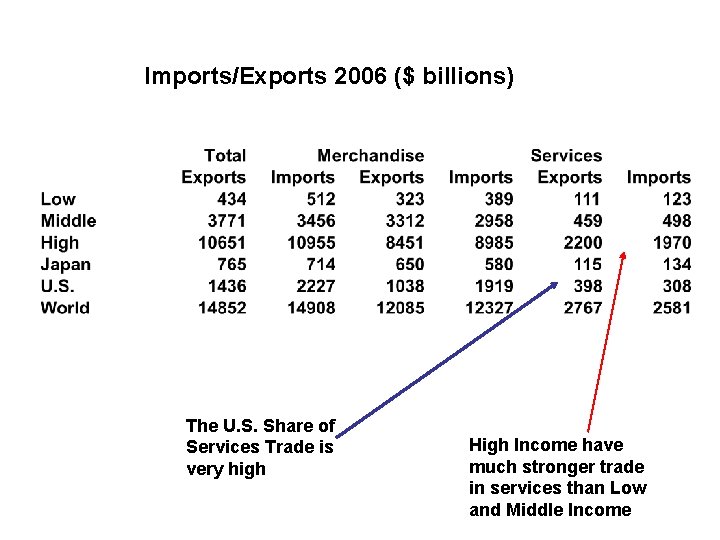
Imports/Exports 2006 ($ billions) The U. S. Share of Services Trade is very high High Income have much stronger trade in services than Low and Middle Income
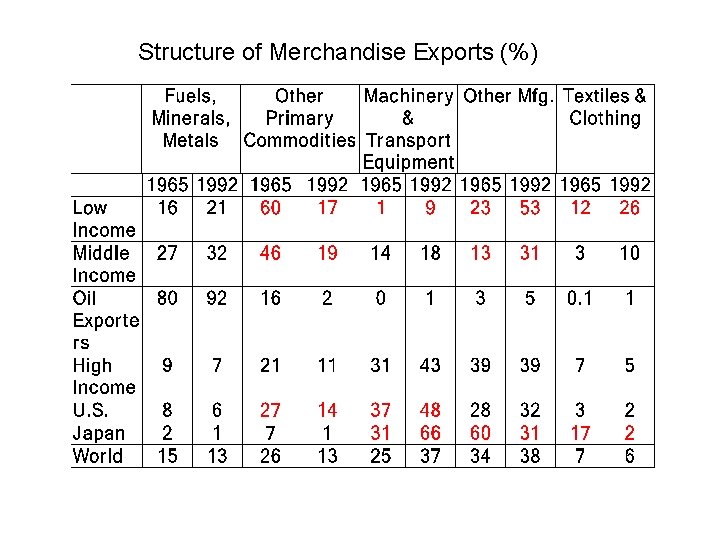
Structure of Merchandise Exports (%)
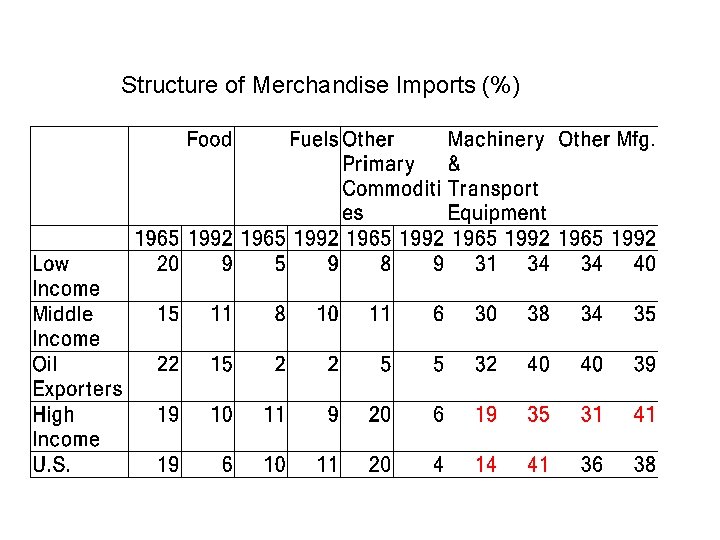
Structure of Merchandise Imports (%)
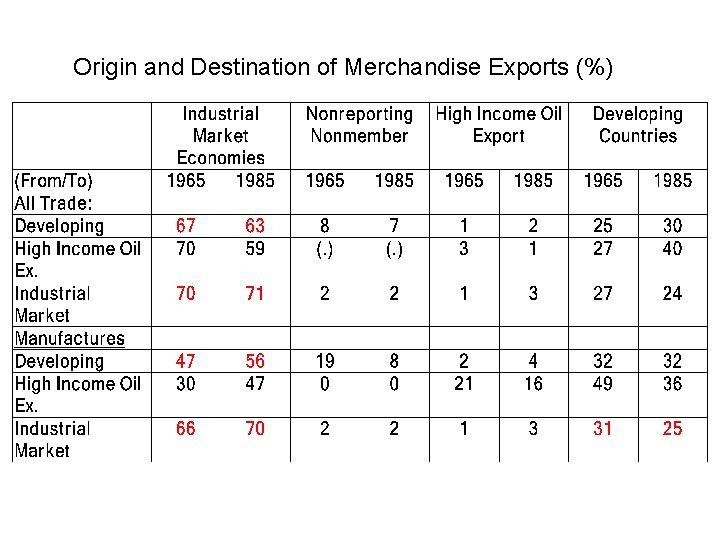
Origin and Destination of Merchandise Exports (%)
Globalization • P. 9 “processes that make the world, its economic system, and its society more uniform, more integrated, and more interdependent. ” Some dispute uniform • Elements: culture, consumption, telecommunications, economy, transnational corporations, investment, labor, services, tourism. Role of IT. • Globalization & Local Diversity
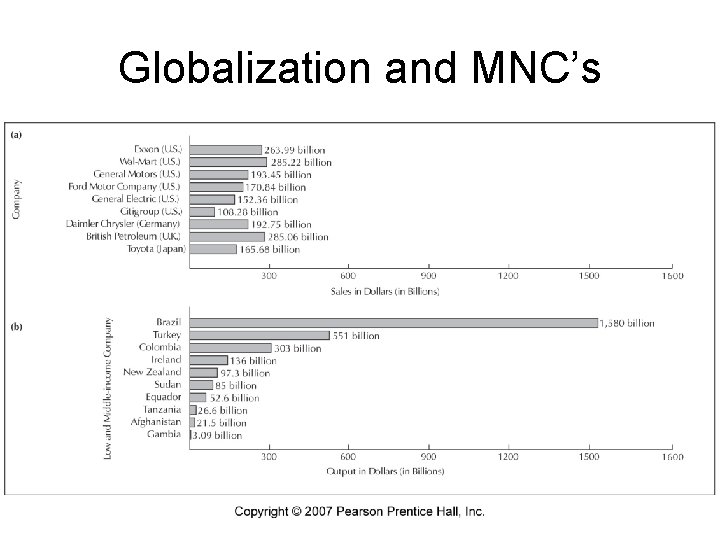
Globalization and MNC’s
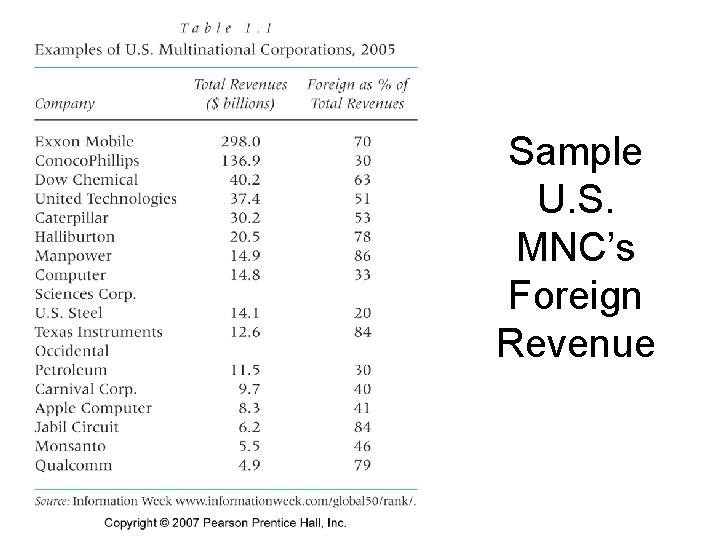
Sample U. S. MNC’s Foreign Revenue
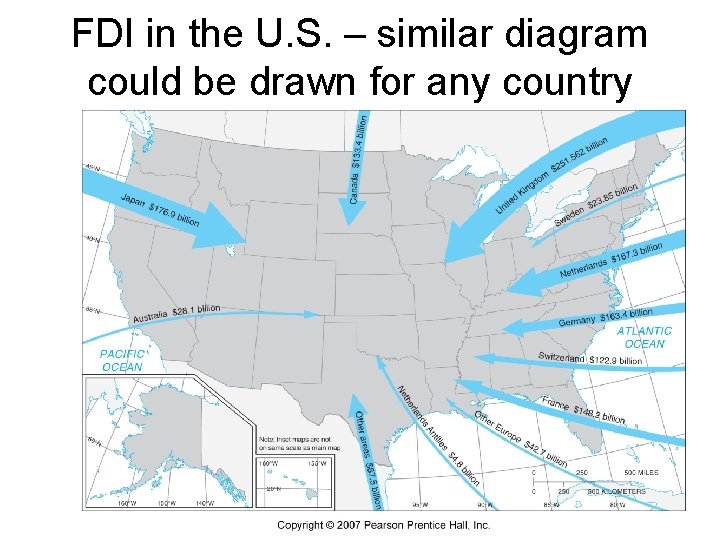
FDI in the U. S. – similar diagram could be drawn for any country
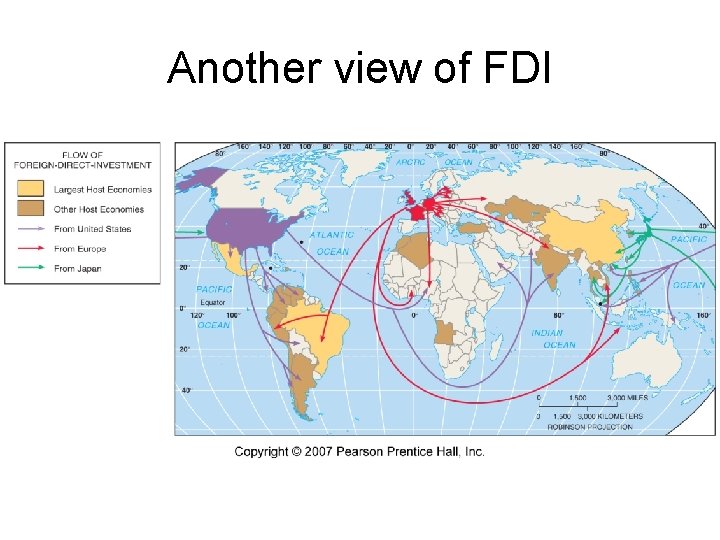
Another view of FDI
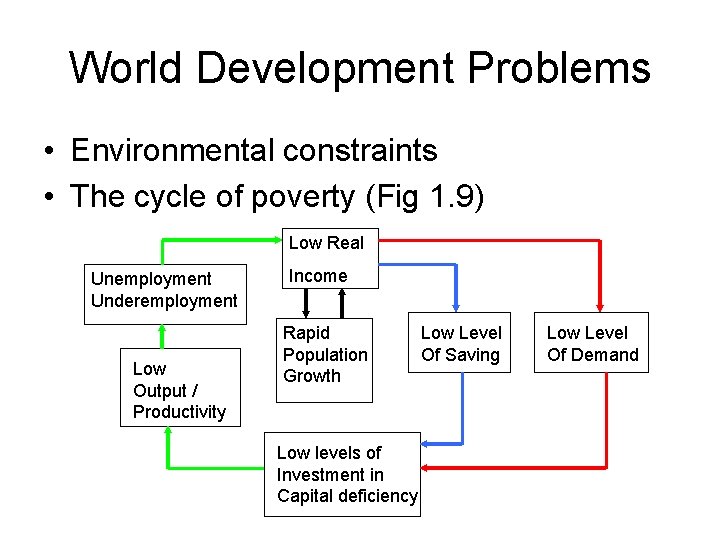
World Development Problems • Environmental constraints • The cycle of poverty (Fig 1. 9) Low Real Unemployment Underemployment Low Output / Productivity Income Rapid Population Growth Low levels of Investment in Capital deficiency Low Level Of Saving Low Level Of Demand
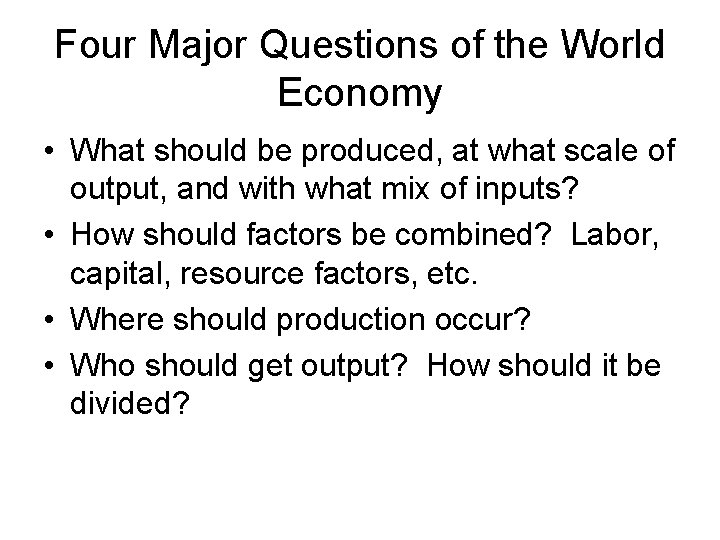
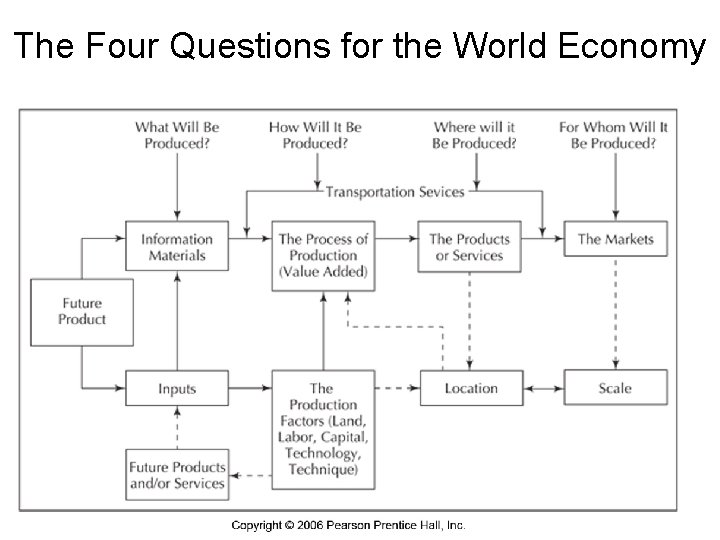
Four Major Questions of the World Economy • What should be produced, at what scale of output, and with what mix of inputs? • How should factors be combined? Labor, capital, resource factors, etc. • Where should production occur? • Who should get output? How should it be divided?
The Four Questions for the World Economy
Economics – Key Topics • Allocation of Scarce Resources • Markets for Production, Distribution, and Consumption • The Division of Labor • Solving What, How, What Price, What Quantity, and Where Production Takes Place • Types of Economic Systems • Neoclassical versus Behavioral and Structural Approaches
Political Economies • Alternative Systems: capitalism, command, and traditional – with systems of power & class that shape output • Capitalist System (Fig 1. 11) • Command Economies • Traditional economies • The general demise of command traditional economies in the face of globalization
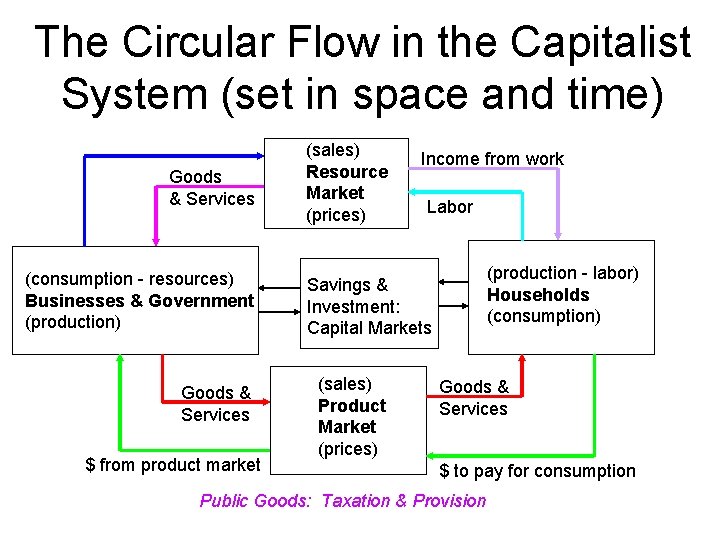
The Circular Flow in the Capitalist System (set in space and time) Goods & Services (consumption - resources) Businesses & Government (production) Goods & Services $ from product market (sales) Resource Market (prices) Income from work Labor (production - labor) Households (consumption) Savings & Investment: Capital Markets (sales) Product Market (prices) Goods & Services $ to pay for consumption Public Goods: Taxation & Provision
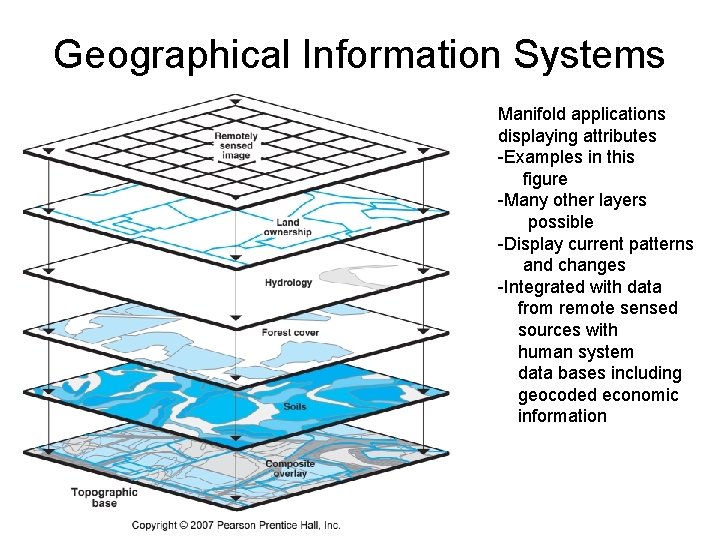
Geographical Information Systems Manifold applications displaying attributes -Examples in this figure -Many other layers possible -Display current patterns and changes -Integrated with data from remote sensed sources with human system data bases including geocoded economic information
Summary and Plan • The chapter plan • Learning objectives at beginning of each chapter • Study questions at end of each chapter • Key terms • Suggested readings • Web sites