
Chapter 1 Earth Moon and Sun Section 1

- Slides: 51
Chapter 1 Earth, Moon, and Sun Section 1 Earth in Space
Section 1 – Earth in Space Objectives u After this lesson, you should be able to: – Identify the effects of Earth’s rotation and revolution – Explain what causes the seasons
Vocab u 1. astronomy The study of the moon, stars, and other objects in space.
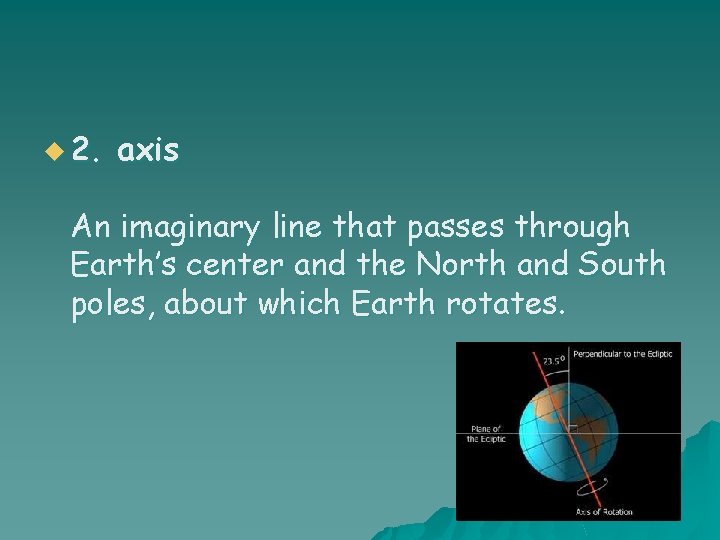
u 2. axis An imaginary line that passes through Earth’s center and the North and South poles, about which Earth rotates.
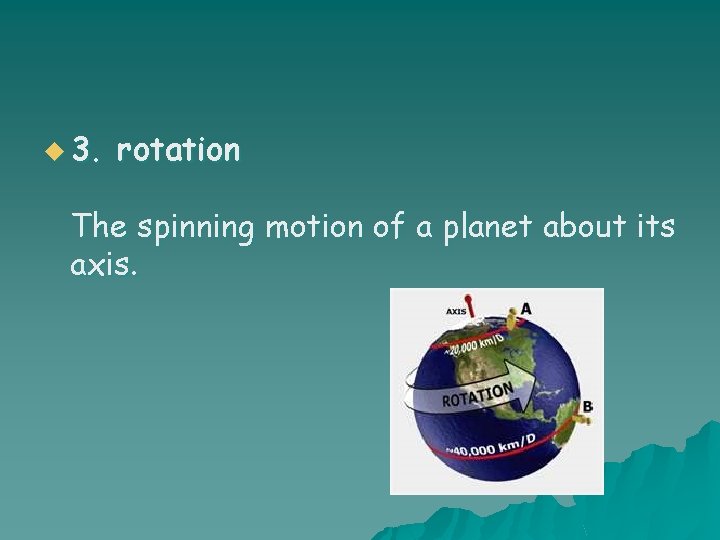
u 3. rotation The spinning motion of a planet about its axis.
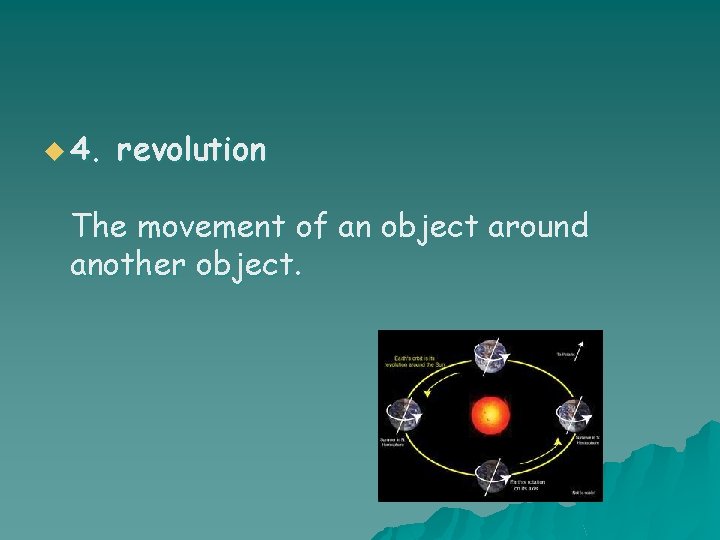
u 4. revolution The movement of an object around another object.
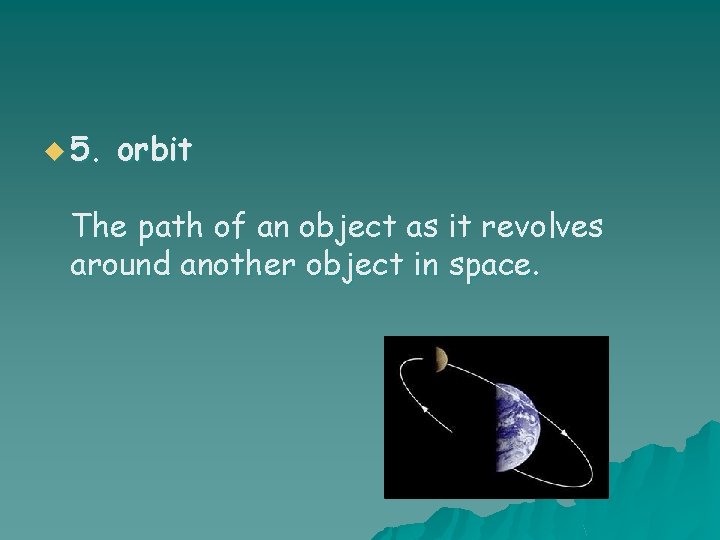
u 5. orbit The path of an object as it revolves around another object in space.
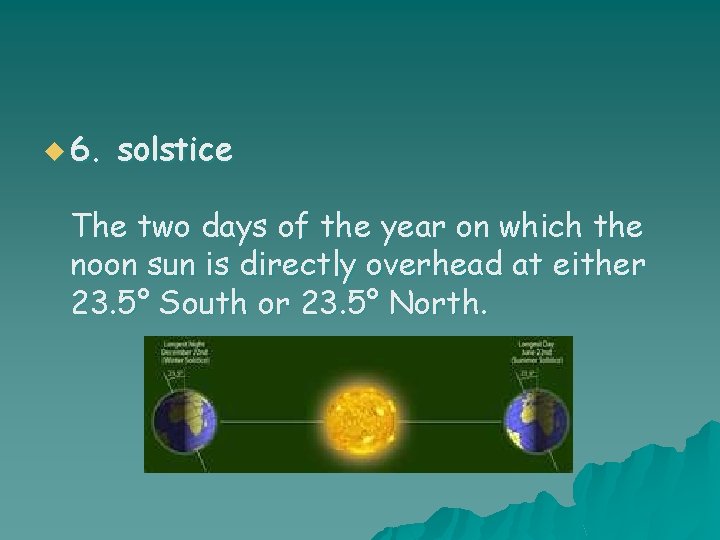
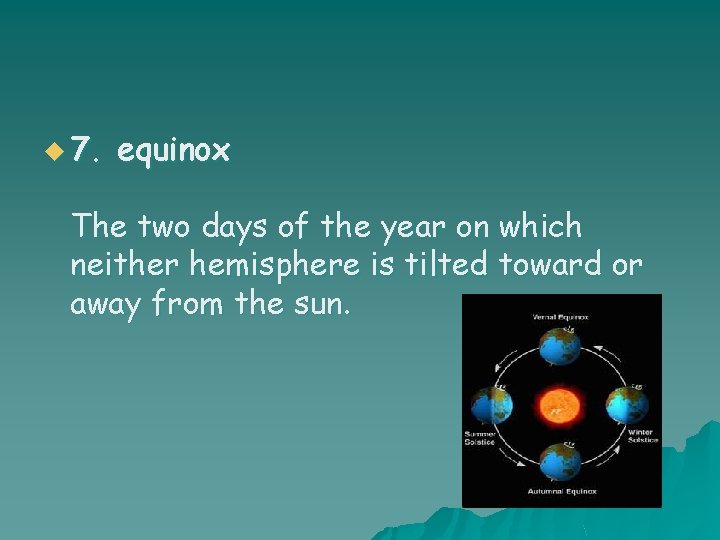
u 6. solstice The two days of the year on which the noon sun is directly overhead at either 23. 5° South or 23. 5° North.
u 7. equinox The two days of the year on which neither hemisphere is tilted toward or away from the sun.
u 8. vernal equinox The day of the year that marks the beginning of spring in the Northern Hemisphere.
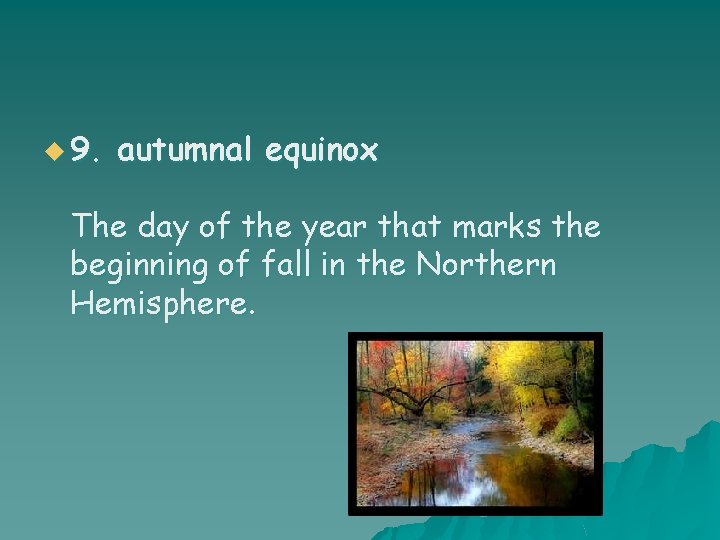
u 9. autumnal equinox The day of the year that marks the beginning of fall in the Northern Hemisphere.
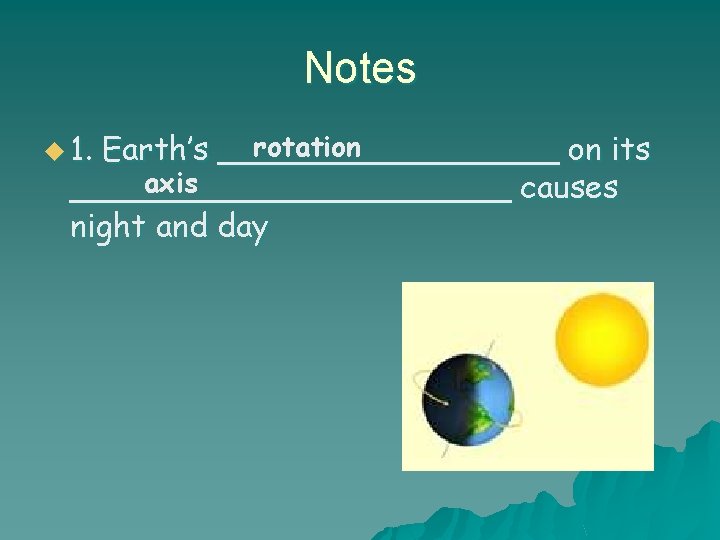
Notes u 1. rotation Earth’s _________ on its axis ___________ causes night and day
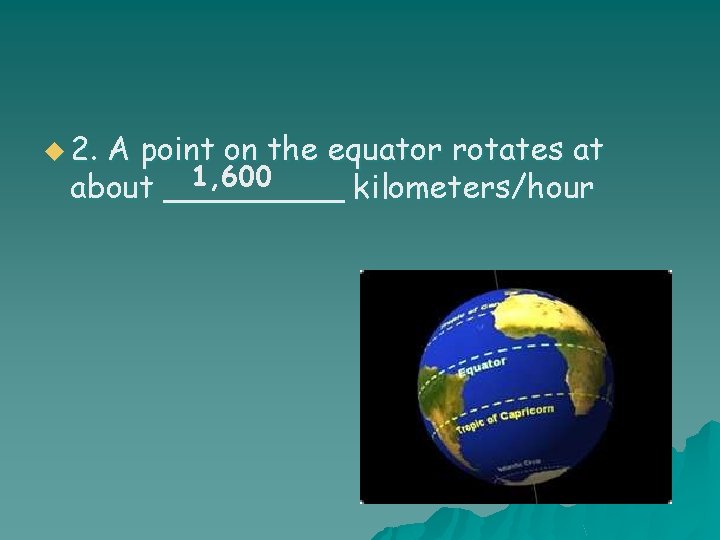
u 2. A point on the equator rotates at 1, 600 about _____ kilometers/hour
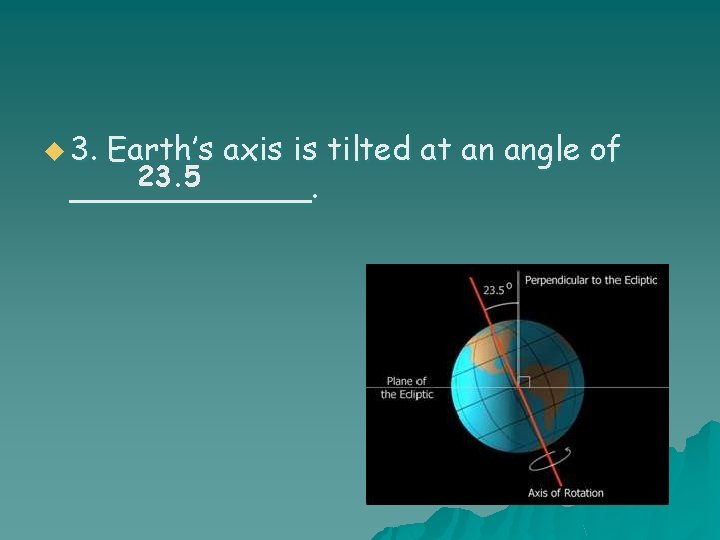
u 3. Earth’s axis is tilted at an angle of 23. 5 ______.
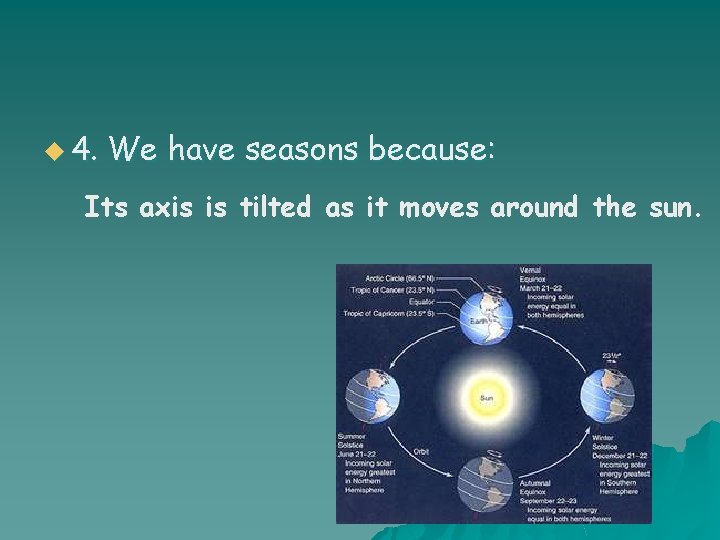
u 4. We have seasons because: Its axis is tilted as it moves around the sun.
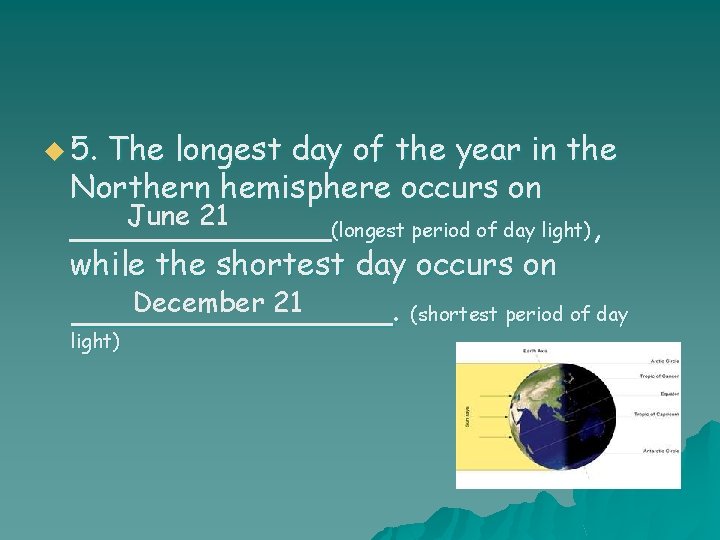
u 5. The longest day of the year in the Northern hemisphere occurs on June 21 _______ (longest period of day light), while the shortest day occurs on December 21 ________. (shortest period of day light)
Chapter 1 Earth, Moon, and Sun Section 2 Earth in Space
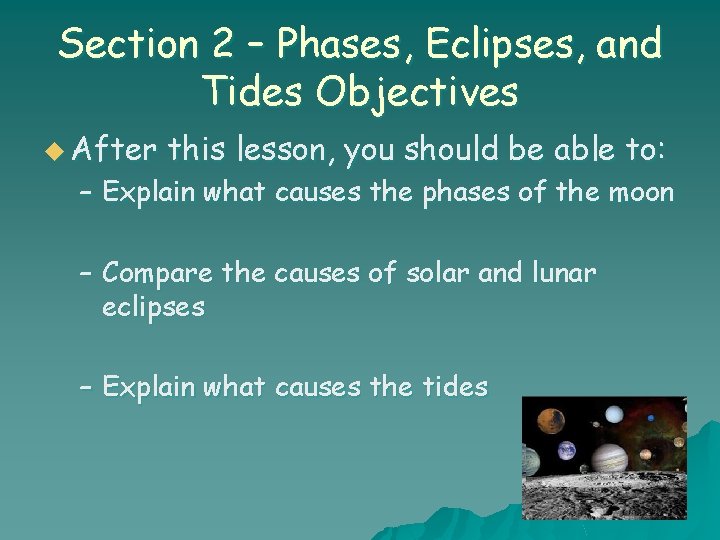
Section 2 – Phases, Eclipses, and Tides Objectives u After this lesson, you should be able to: – Explain what causes the phases of the moon – Compare the causes of solar and lunar eclipses – Explain what causes the tides
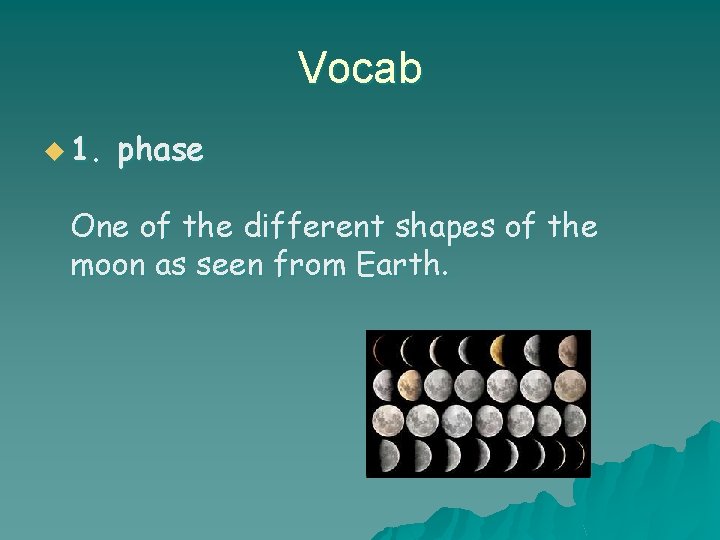
Vocab u 1. phase One of the different shapes of the moon as seen from Earth.
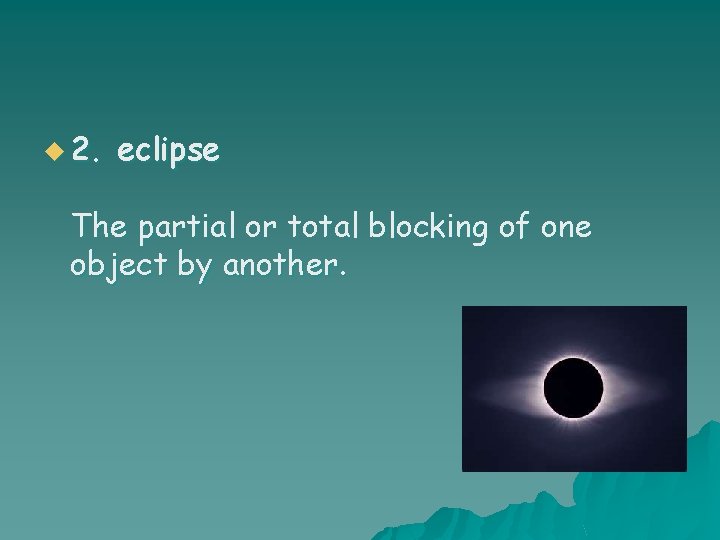
u 2. eclipse The partial or total blocking of one object by another.
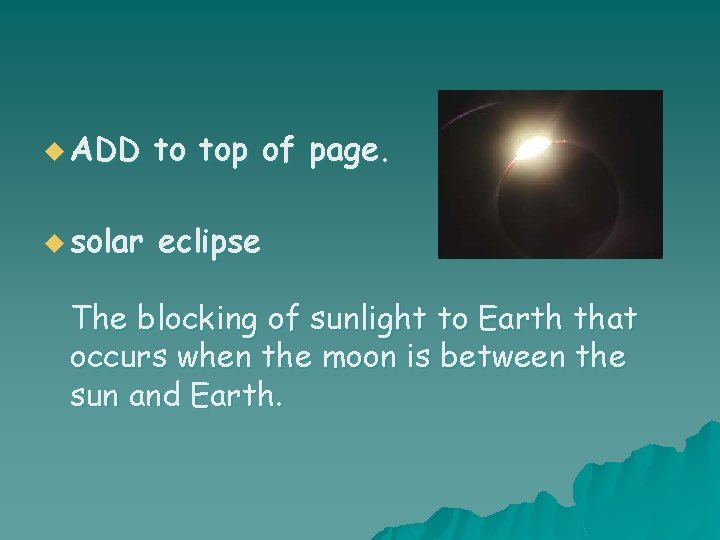
u ADD to top of page. u solar eclipse The blocking of sunlight to Earth that occurs when the moon is between the sun and Earth.
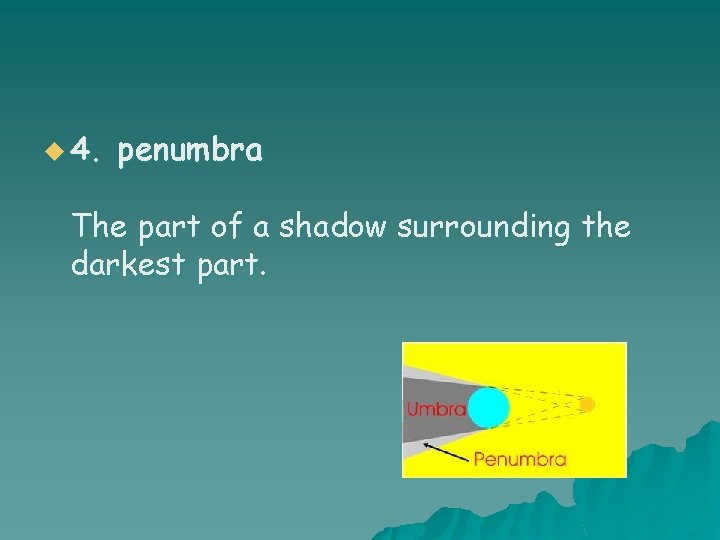
u 3. umbra The darkest part of a shadow.
u 4. penumbra The part of a shadow surrounding the darkest part.
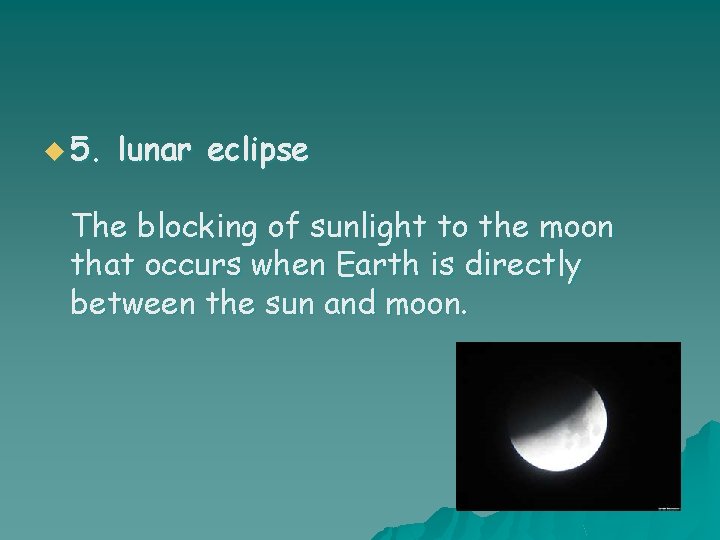
u 5. lunar eclipse The blocking of sunlight to the moon that occurs when Earth is directly between the sun and moon.
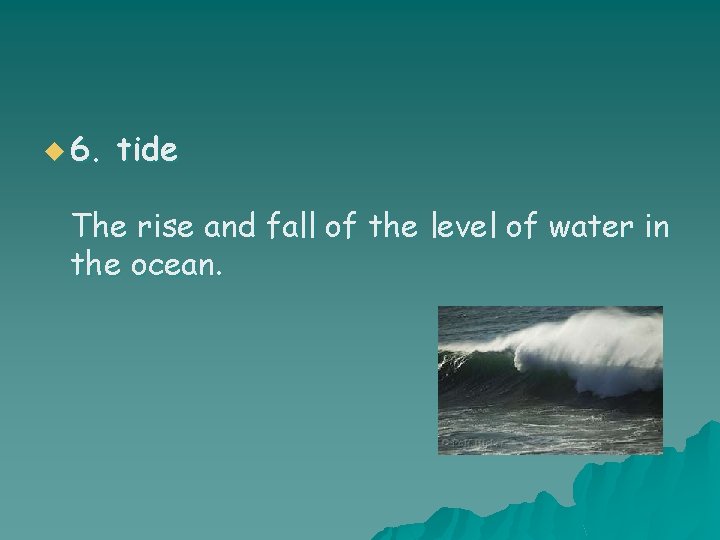
u 6. tide The rise and fall of the level of water in the ocean.
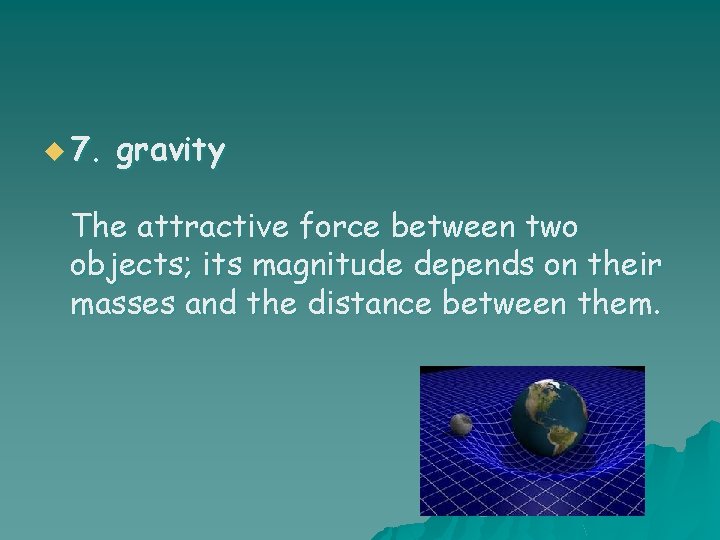
u 7. gravity The attractive force between two objects; its magnitude depends on their masses and the distance between them.
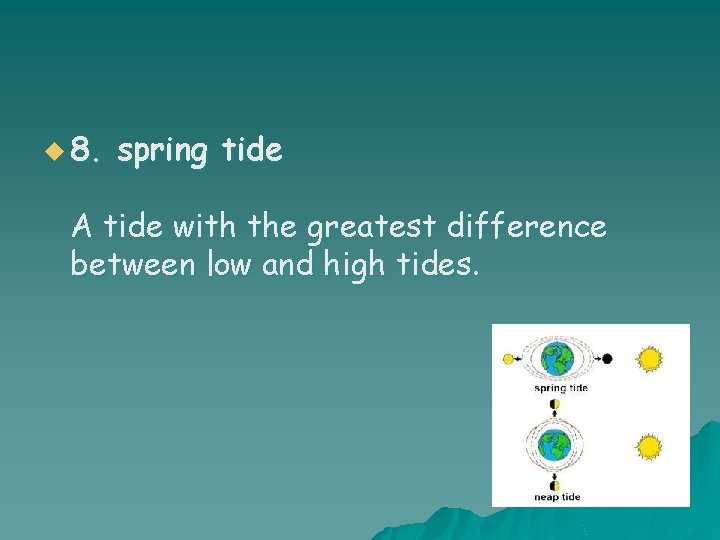
u 8. spring tide A tide with the greatest difference between low and high tides.
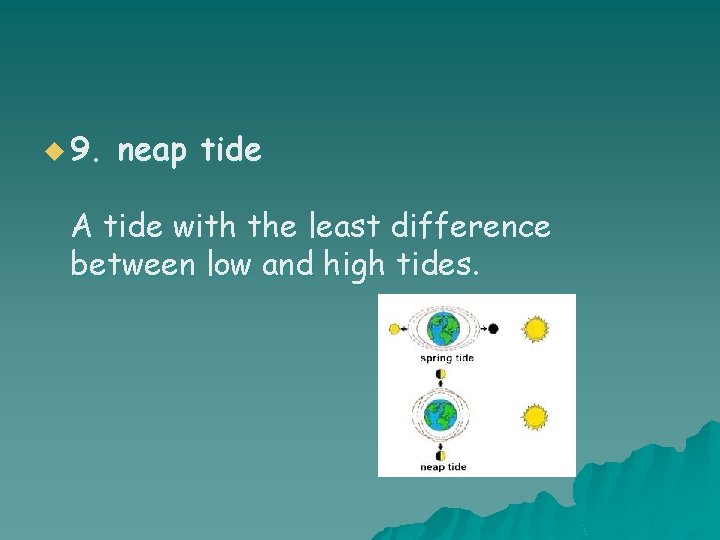
u 9. neap tide A tide with the least difference between low and high tides.
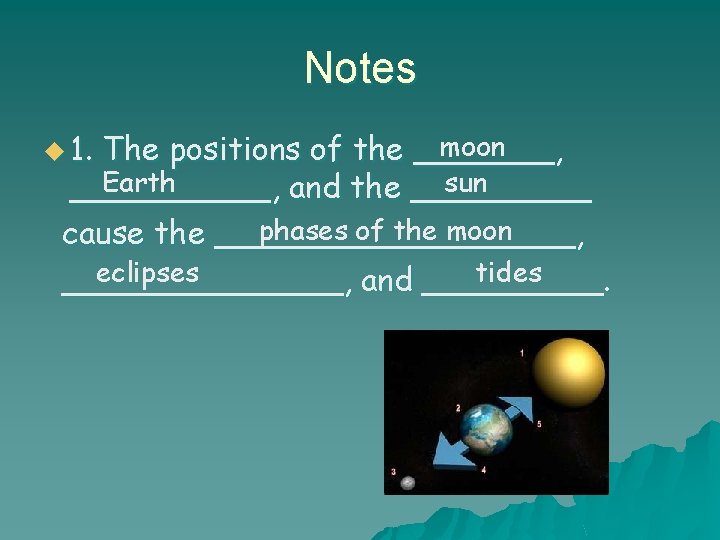
Notes u 1. moon The positions of the _______, Earth sun _____, and the _____ phases of the moon cause the _________, eclipses tides _______, and _____.
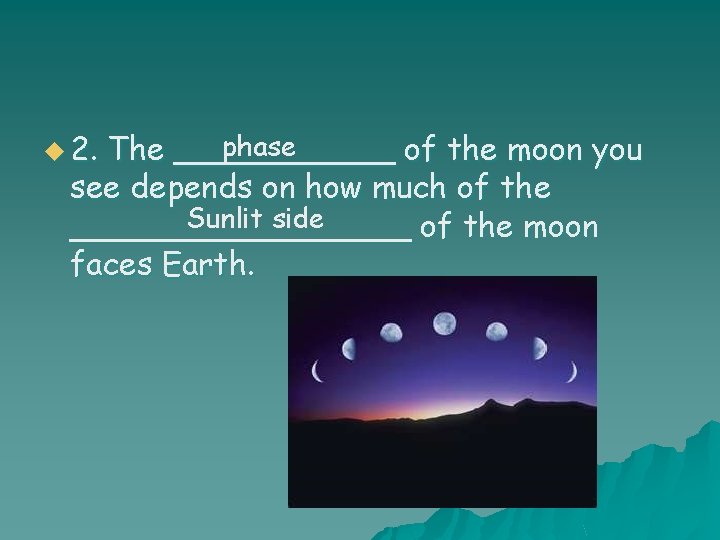
u 2. phase The ______ of the moon you see depends on how much of the Sunlit side _________ of the moon faces Earth.
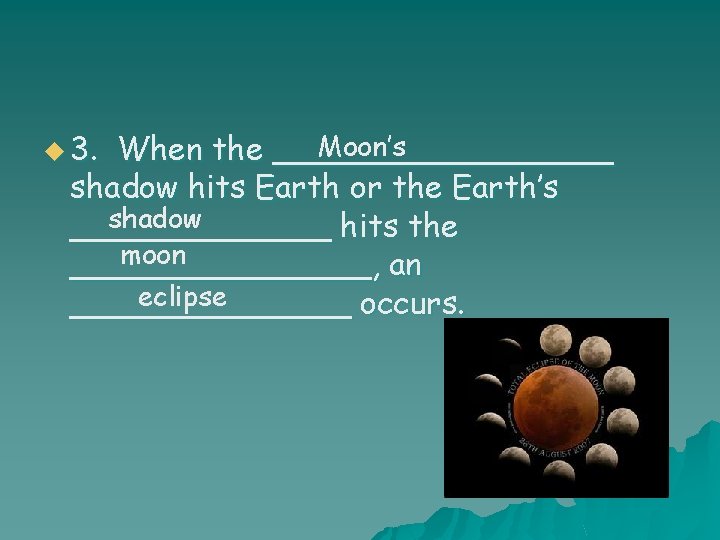
u 3. Moon’s When the _________ shadow hits Earth or the Earth’s shadow _______ hits the moon ________, an eclipse _______ occurs.
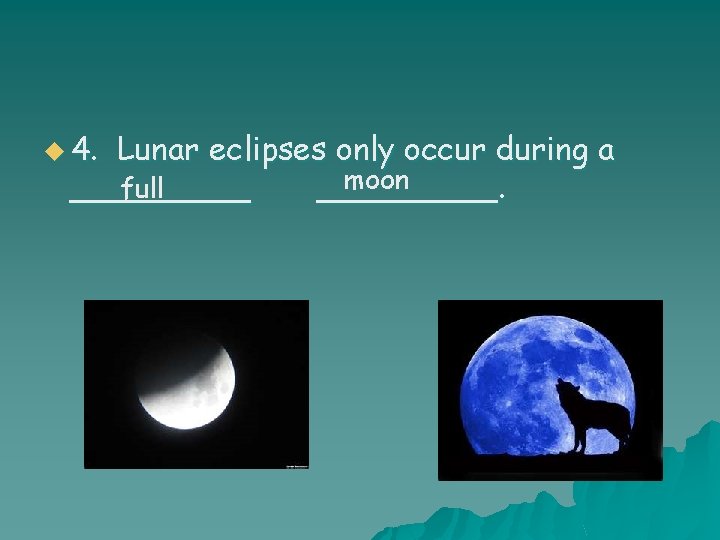
u 4. Lunar eclipses only occur during a moon full _________.
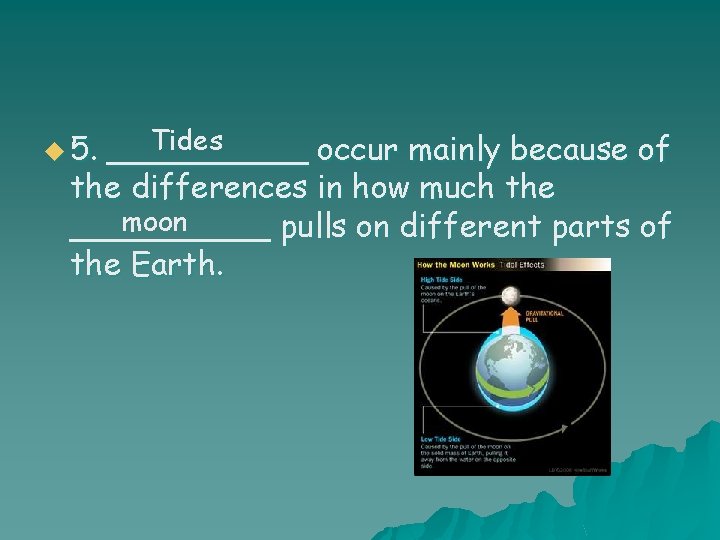
Tides _____ occur mainly because of the differences in how much the moon _____ pulls on different parts of the Earth. u 5.
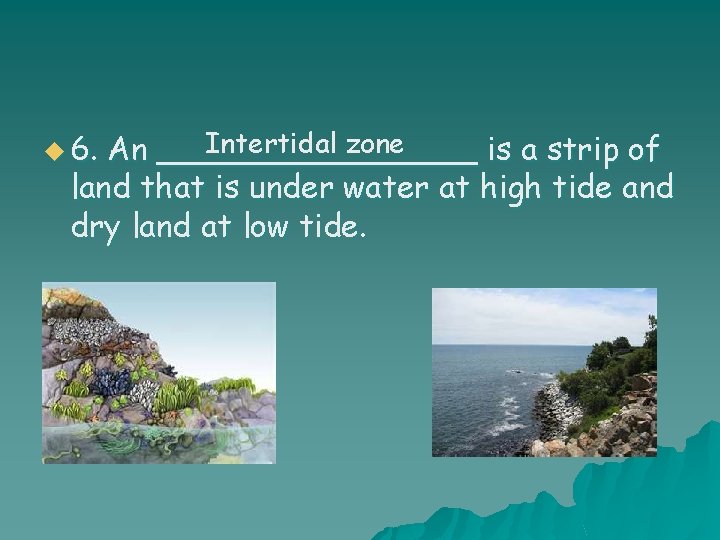
Intertidal zone An ________ is a strip of land that is under water at high tide and dry land at low tide. u 6.
Chapter 1 Earth, Moon, and Sun Section 3 Rockets and Satellites
Section 3 – Rockets and Satellites Objectives u After this lesson, you should be able to: – Explain how rockets travel in space – Describe what satellites and space stations are used for
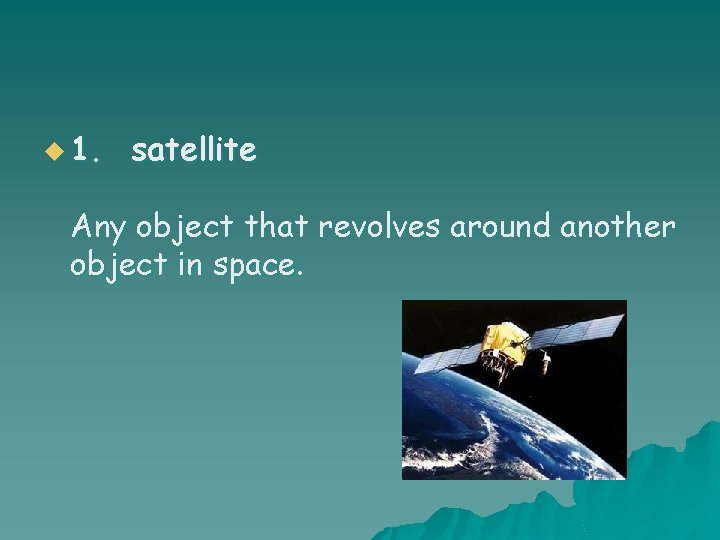
u 1. satellite Any object that revolves around another object in space.
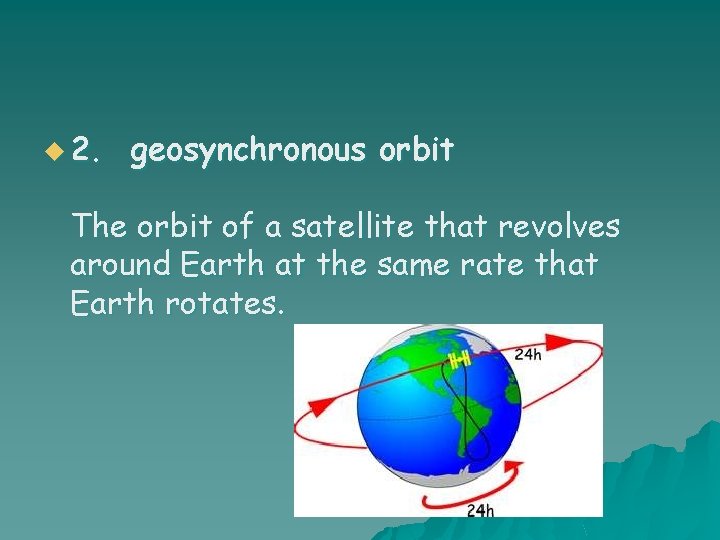
u 2. geosynchronous orbit The orbit of a satellite that revolves around Earth at the same rate that Earth rotates.
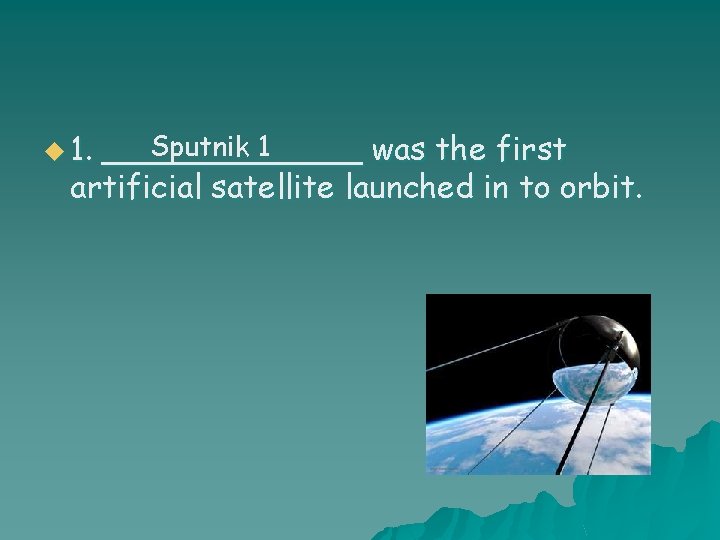
u 1. Sputnik 1 _______ was the first artificial satellite launched in to orbit.
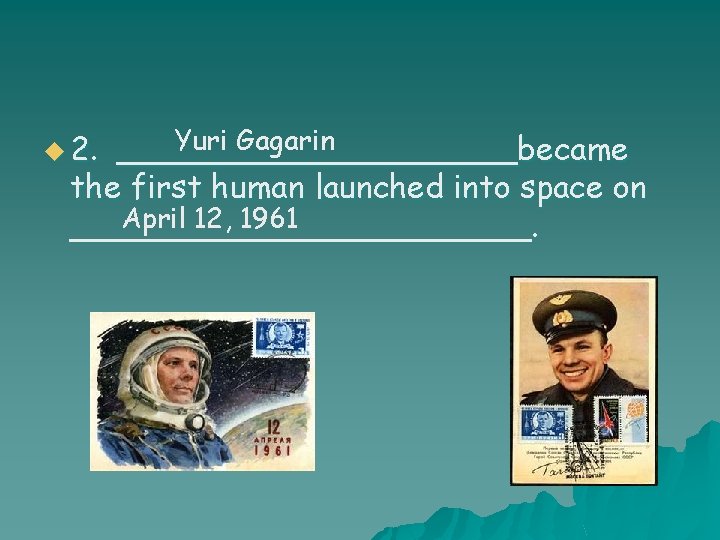
Yuri Gagarin __________became the first human launched into space on April 12, 1961 ____________. u 2.
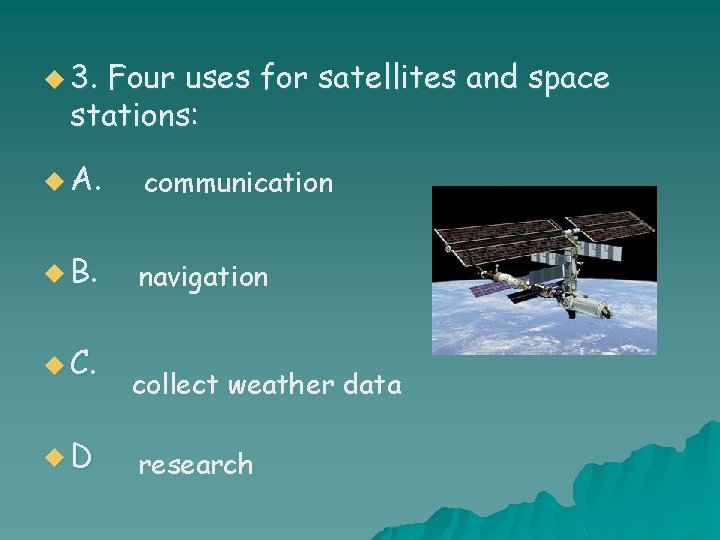
u 3. Four uses for satellites and space stations: u A. communication u B. navigation u C. u. D collect weather data research
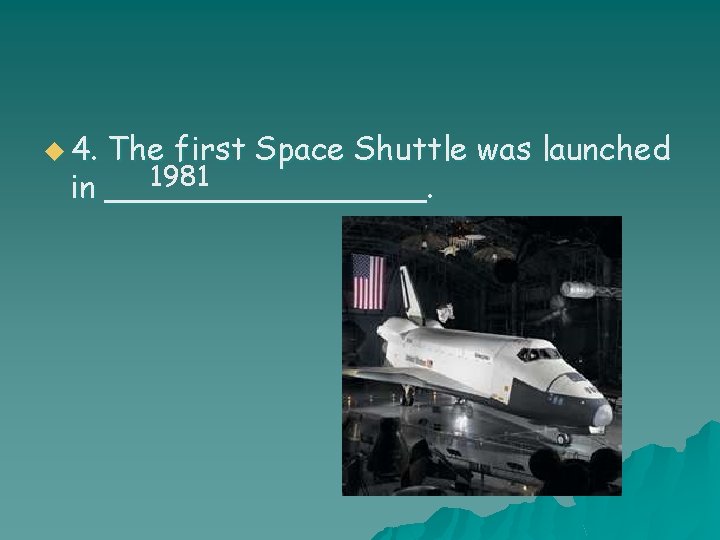
u 4. The first Space Shuttle was launched 1981 in ________.
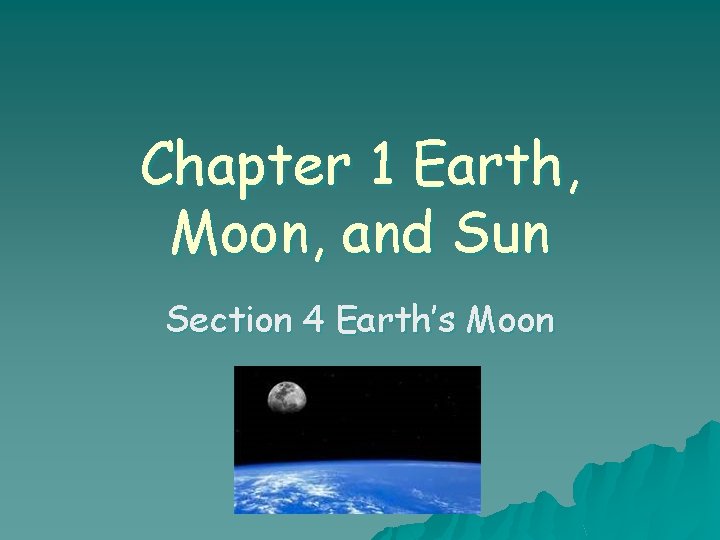
Chapter 1 Earth, Moon, and Sun Section 4 Earth’s Moon
Section 4 – Earth’s Moon Objectives u After this lesson, you should be able to: – Describe features of the moon’s surface – Explain what scientists learned about the moon from space exploration – Describe the origin and structure of the moon.
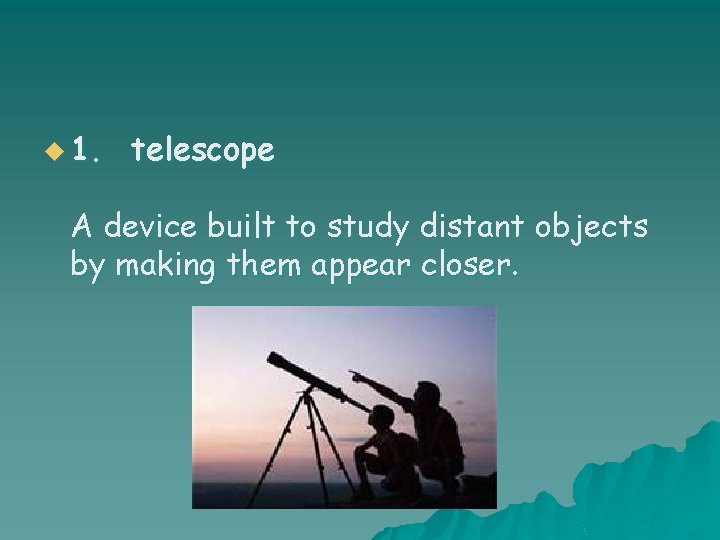
u 1. telescope A device built to study distant objects by making them appear closer.
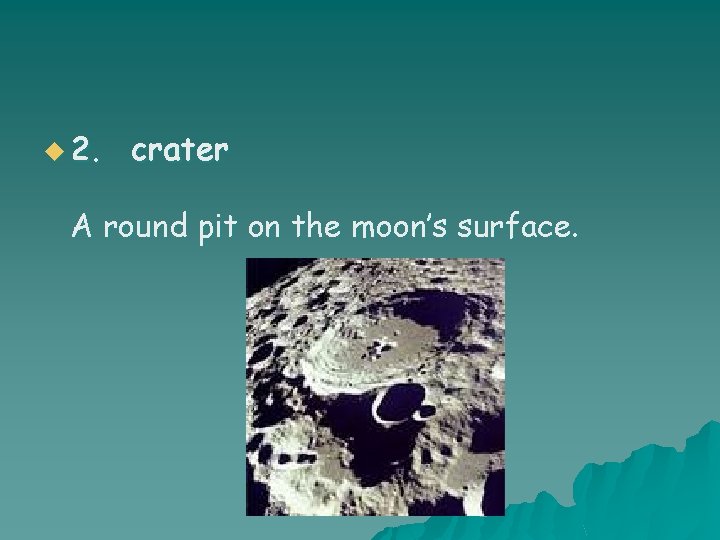
u 2. crater A round pit on the moon’s surface.
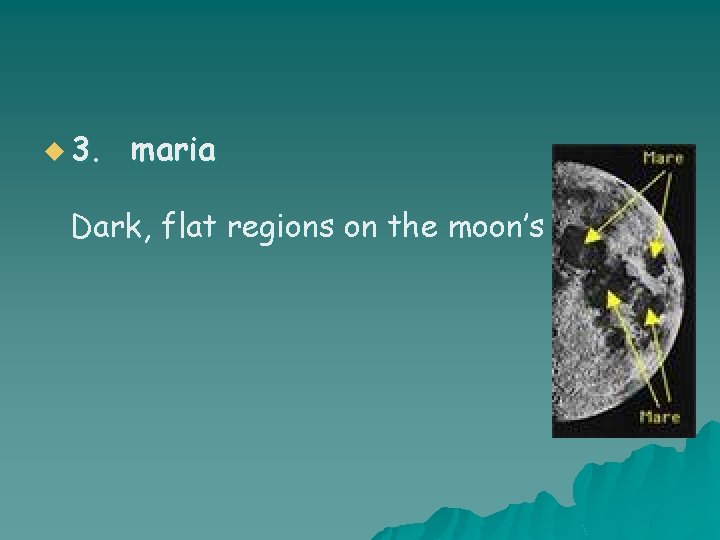
u 3. maria Dark, flat regions on the moon’s surface.
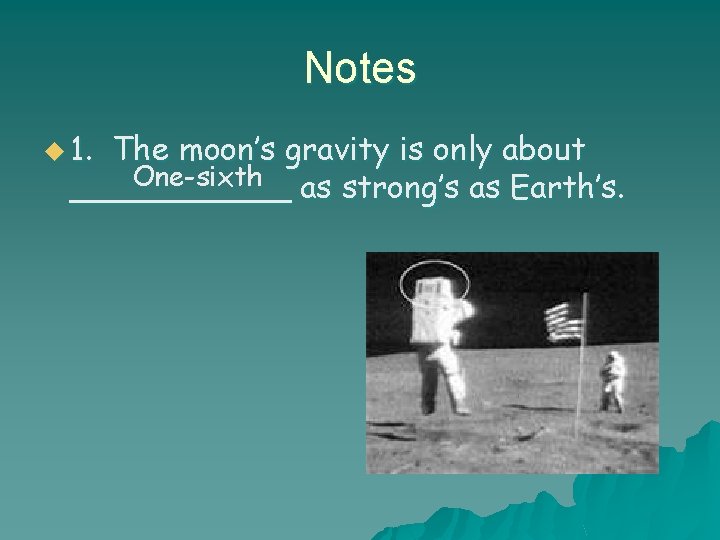
Notes u 1. The moon’s gravity is only about One-sixth as strong’s as Earth’s. ______
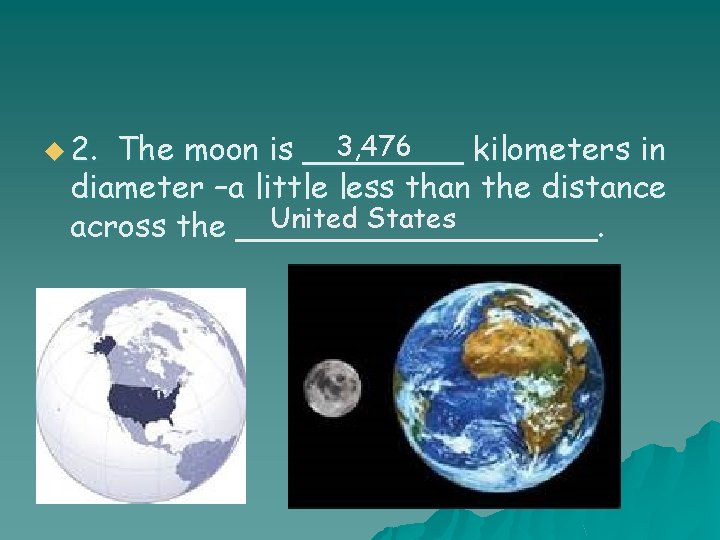
u 2. 3, 476 The moon is ____ kilometers in diameter –a little less than the distance United States across the _________.
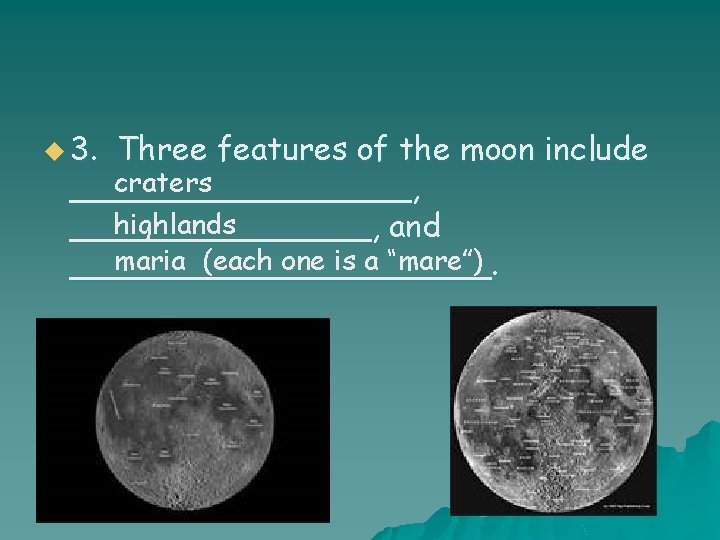
u 3. Three features of the moon include craters _________, highlands ________, and maria (each one is a “mare”) ___________.
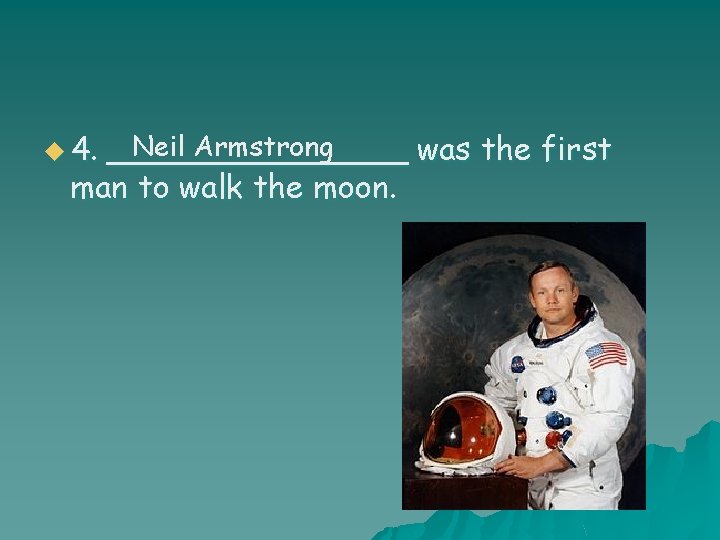
u 4. Neil Armstrong ________ was the first man to walk the moon.