
Chapter 1 Differing Perspectives on Quality Chapter Objectives

Chapter 1 Differing Perspectives on Quality

Chapter Objectives 1. Recognize that different dimensions of quality exist. 2. Be able to discuss the quality dimensions. 3. Communicate the seven different functional perspectives on quality. 4. Understand why it is important to know that the different perspectives exist. 5. Define a quality system using the three spheres. 6. Understand how the three spheres complement each other. 7. Understand the value-added perspective on quality. 8. Discuss differing cultural perspectives on quality. Copyright © 2017 Pearson Education, Ltd. 1 -2

Product Quality Dimensions • Performance – Efficiency with which a product achieves its intended purpose • Features – Attributes of a product that supplement the product’s basic performance • Reliability – The propensity for a product to perform consistently over its useful design life • Conformance – Adherence to certain numeric dimensions for the product’s performance Garvin, D. , “What Does ‘Product Quality’ Really Mean? ” Sloan Management Review (Fall 1984): 25 -43. Copyright © 2017 Pearson Education, Ltd. 1 -3

Product Quality Dimensions • Durability – The degree to which a product tolerates stress or trauma without failing • Serviceability – The ease of repair for a product • Aesthetics – The degree to which product attributes are matched to consumer preferences • Perceived quality – A customer’s understanding of the goodness of a product Garvin, D. , “What Does ‘Product Quality’ Really Mean? ” Sloan Management Review (Fall 1984): 25 -43. Copyright © 2017 Pearson Education, Ltd. 1 -4

Service Quality Dimensions • Tangibles – The physical appearance of the service facility, the equipment, the personnel, and the communication materials • Service reliability – The ability of the service provider to perform the promised service dependably and accurately • Responsiveness – The willingness of the service provider to be helpful and prompt in providing service • Assurance – The knowledge and courtesy of employees and their ability to inspire trust and confidence • Empathy – Caring, individualized attention from the service firm Adapted from Parasuraman, A. , Zeithamel, V. , and Berry, L. , “A Conceptual Model of Service Quality” (Report No. 84 -106). Copyright © 1984 by Marketing Science Institute. Reprinted by permission. Copyright © 2017 Pearson Education, Ltd. 1 -5

Functional Perspective on Quality Organic view of the organization: • Sees the whole as the sum of different parts, uniting to achieve an end Copyright © 2017 Pearson Education, Ltd. 1 -6
A Supply Chain Perspective Global supply chain model: • Upstream processes (supply management) – All activities involving interaction with suppliers • Core processes (operations management) – Traditional process improvement • Downstream processes (customer relationship management) – All activities involving interaction with customers Copyright © 2017 Pearson Education, Ltd. 1 -7
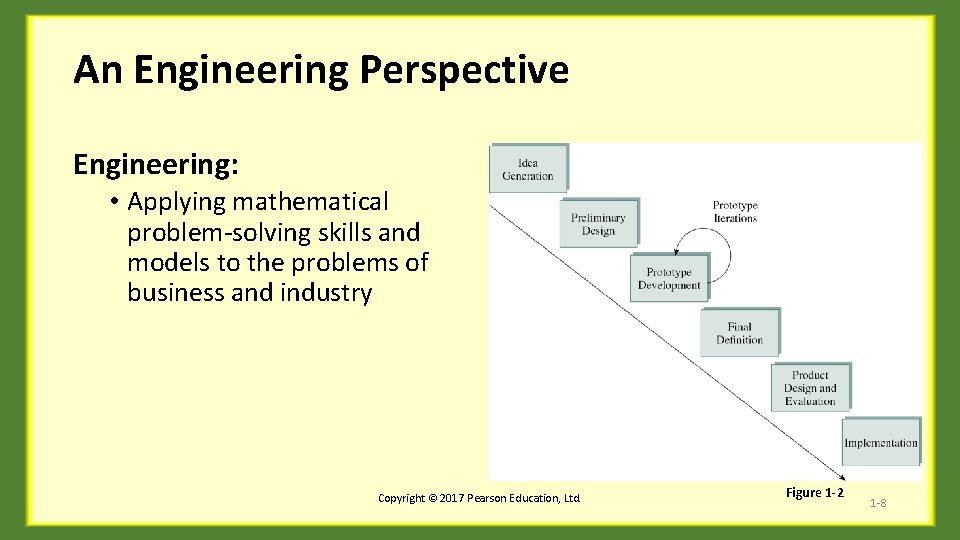
An Engineering Perspective Engineering: • Applying mathematical problem-solving skills and models to the problems of business and industry Copyright © 2017 Pearson Education, Ltd. Figure 1 -2 1 -8
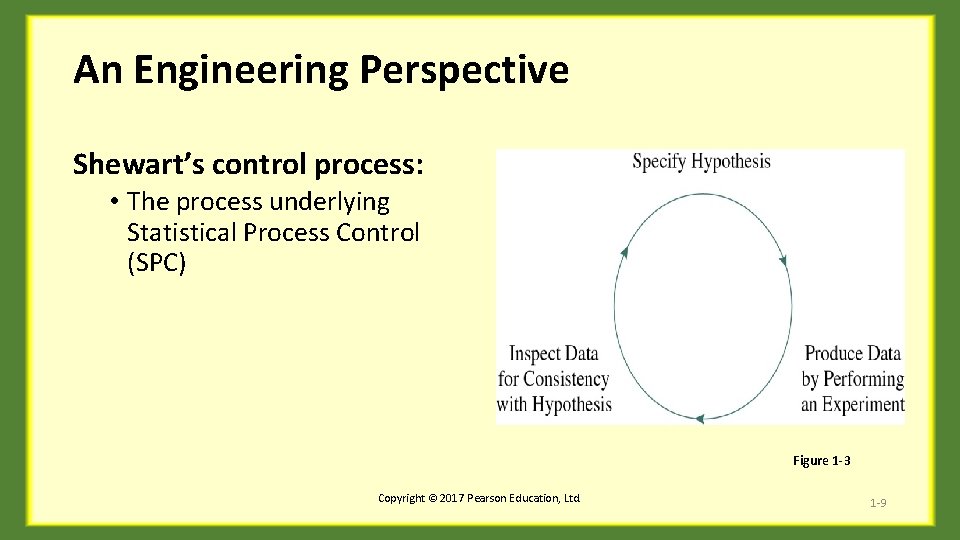
An Engineering Perspective Shewart’s control process: • The process underlying Statistical Process Control (SPC) Figure 1 -3 Copyright © 2017 Pearson Education, Ltd. 1 -9
An Operations Perspective Systems view: • Understanding that product quality is the result of the interactions of several variables, such as machines, labor, procedures, planning, and management • Focuses management on the system as the cause of quality problems Copyright © 2017 Pearson Education, Ltd. 1 -10
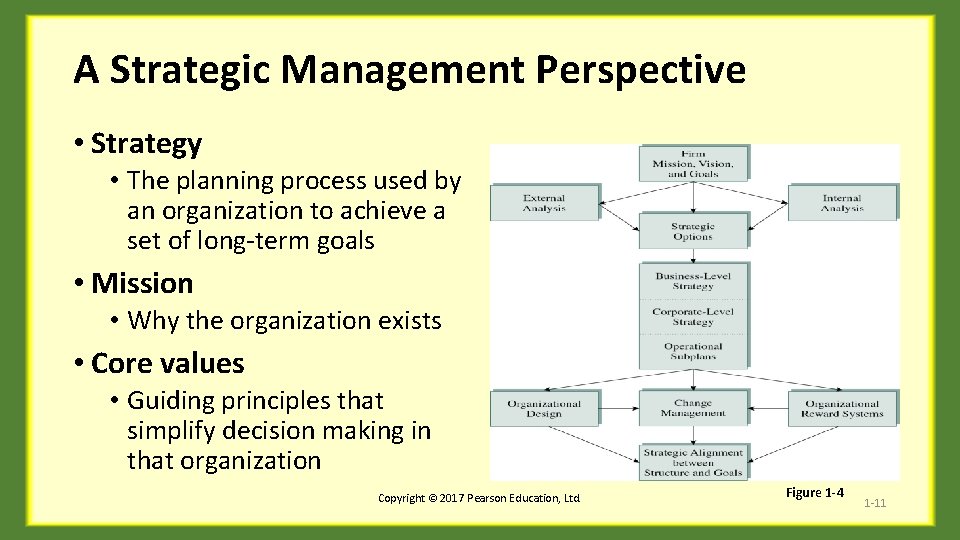
A Strategic Management Perspective • Strategy • The planning process used by an organization to achieve a set of long-term goals • Mission • Why the organization exists • Core values • Guiding principles that simplify decision making in that organization Copyright © 2017 Pearson Education, Ltd. Figure 1 -4 1 -11
A Marketing Perspective • Marketing • Activities involved with directing the flows of products and services from the producer to the consumer • Customer relationship management • Satisfying the customer and delivering value to the customer • Perceived quality • The customer’s view of quality Copyright © 2017 Pearson Education, Ltd. 1 -12
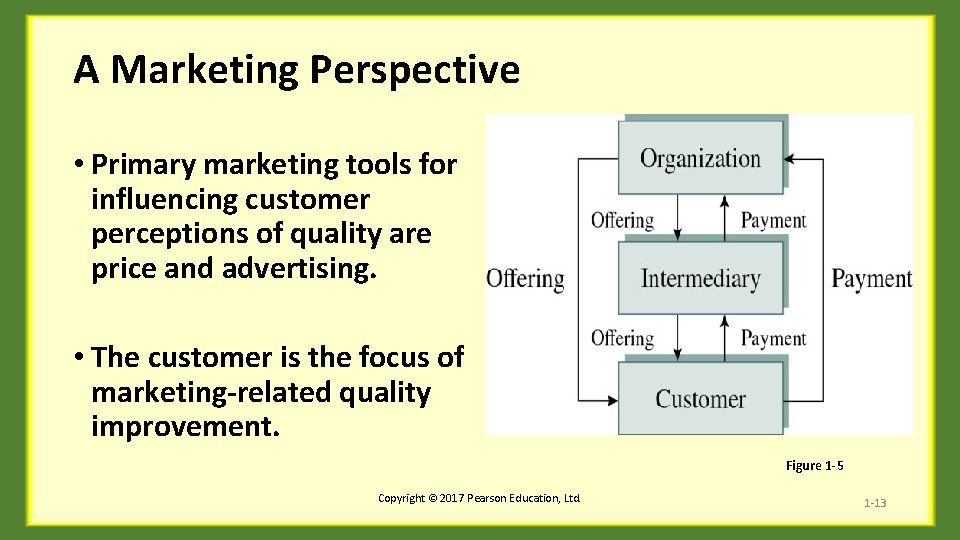
A Marketing Perspective • Primary marketing tools for influencing customer perceptions of quality are price and advertising. • The customer is the focus of marketing-related quality improvement. Figure 1 -5 Copyright © 2017 Pearson Education, Ltd. 1 -13
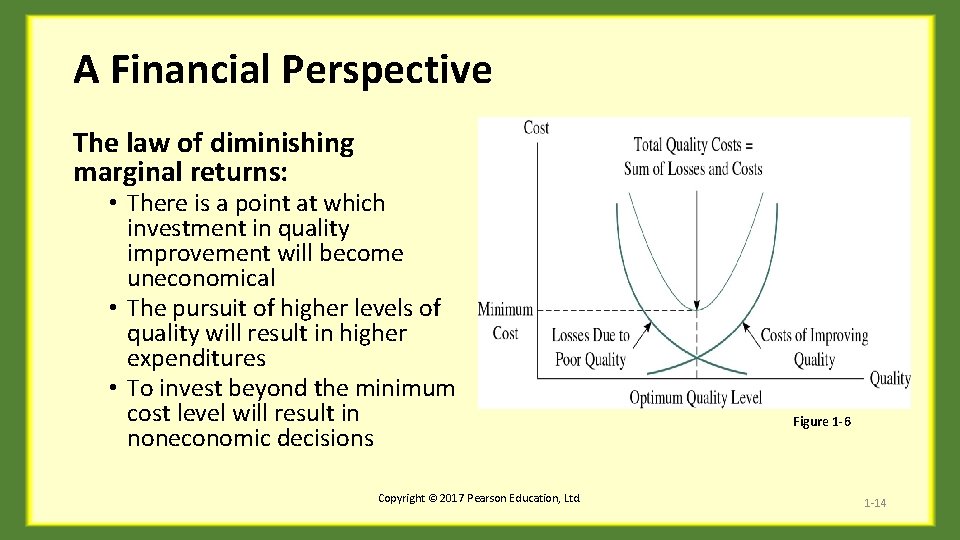
A Financial Perspective The law of diminishing marginal returns: • There is a point at which investment in quality improvement will become uneconomical • The pursuit of higher levels of quality will result in higher expenditures • To invest beyond the minimum cost level will result in noneconomic decisions Copyright © 2017 Pearson Education, Ltd. Figure 1 -6 1 -14
The Human Resources Perspective • Employee empowerment • Moving decision making to the lowest level possible in the organization • Organizational design • Design of reward systems, pay systems, organizational structure, compensation, training mechanisms, and employee grievance arbitration • Job analysis • Collecting detailed information about a particular job Copyright © 2017 Pearson Education, Ltd. 1 -15
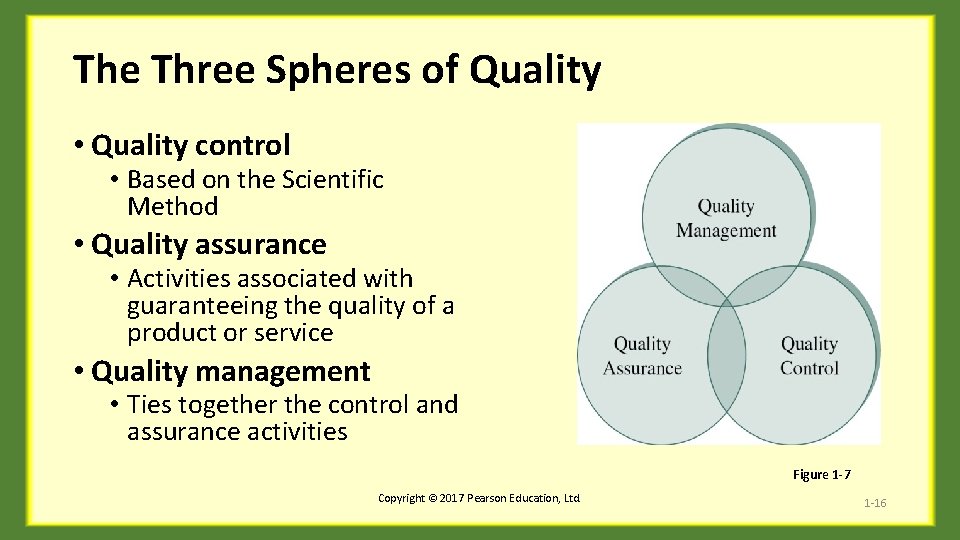
The Three Spheres of Quality • Quality control • Based on the Scientific Method • Quality assurance • Activities associated with guaranteeing the quality of a product or service • Quality management • Ties together the control and assurance activities Figure 1 -7 Copyright © 2017 Pearson Education, Ltd. 1 -16
Other Perspectives on Quality • Value-added perspective • A subjective assessment of the efficacy of every step of the process for the customer • Cultural perspectives • Differences in tastes and preferences among different cultures • Contingency theory perspective • There is no theory or method for operating a business that can be applied in all instances Copyright © 2017 Pearson Education, Ltd. 1 -17
- Slides: 17