
Chapter 1 conduction and Breakdown Mardianaliza Othman What
Chapter 1 : conduction and Breakdown Mardianaliza Othman
What is High Voltage? Based on International Electrotechnical Commission (IEC Standard, 1983), the term high voltage can be defined as any work or test conducted at a voltage level at/or greater than 1000 V AC (1 k. V) or at/or greater than 1200 V DC (1. 2 k. V).
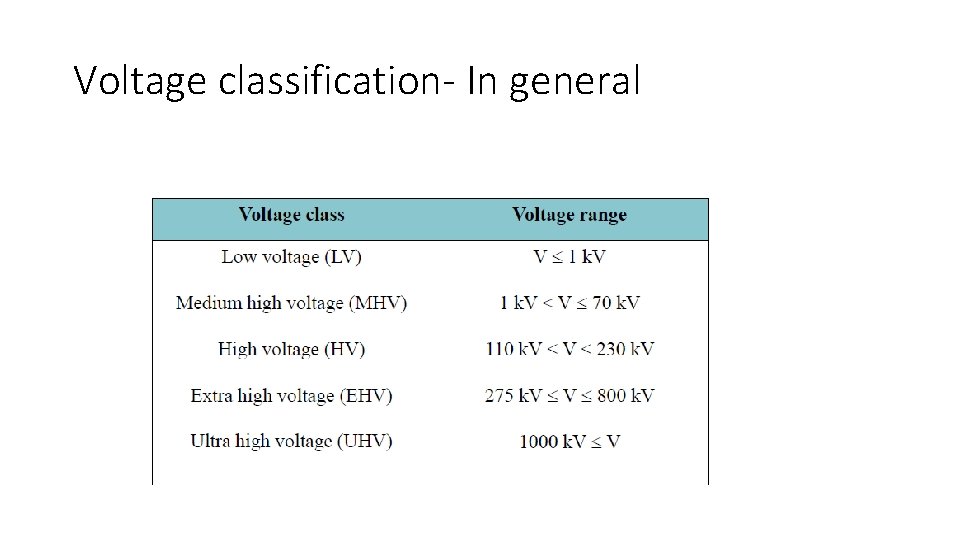
Voltage classification- In general

ionization process

Ionization process •
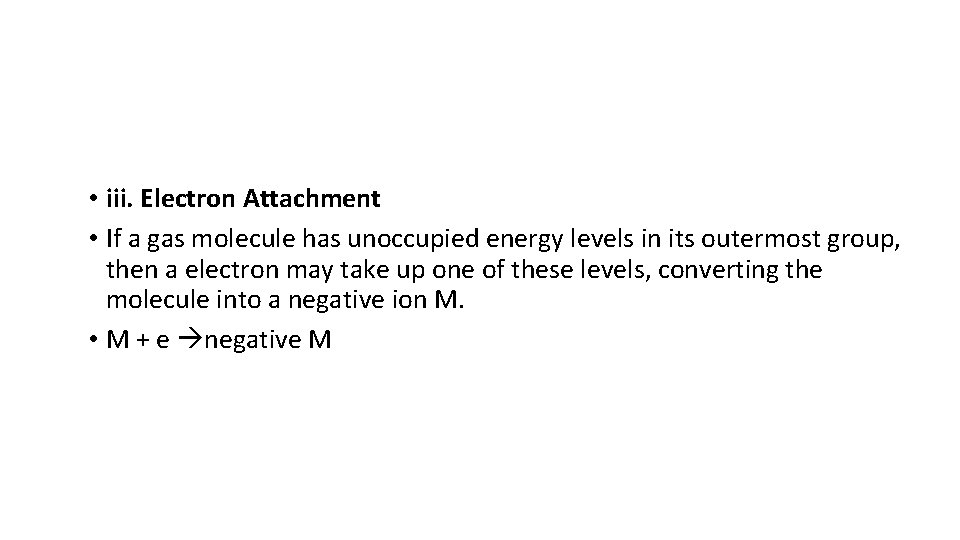
• iii. Electron Attachment • If a gas molecule has unoccupied energy levels in its outermost group, then a electron may take up one of these levels, converting the molecule into a negative ion M. • M + e negative M
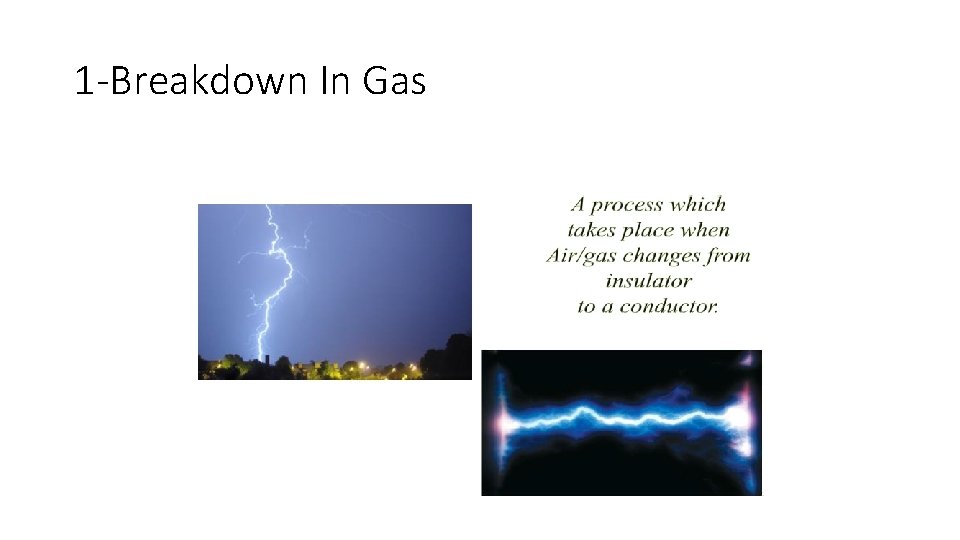
1 -Breakdown In Gas
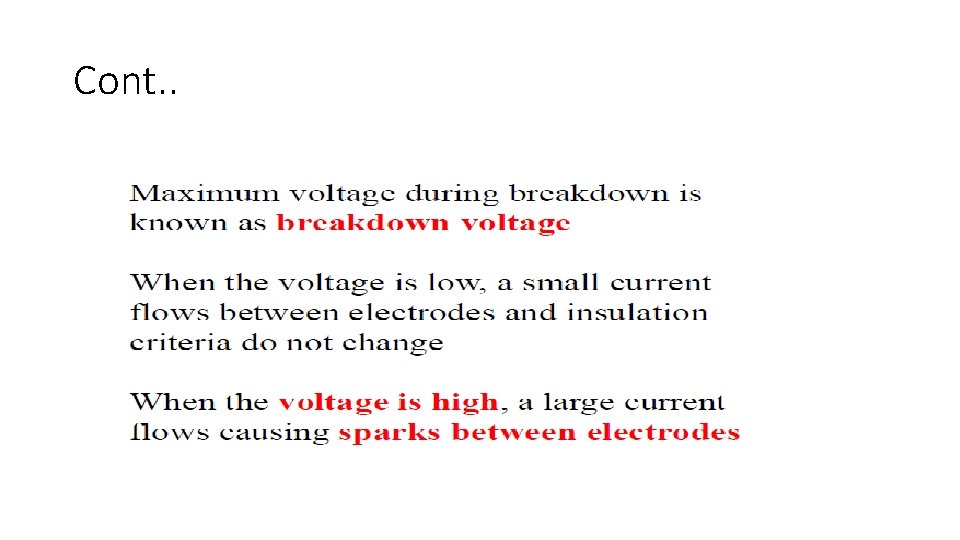
Cont. .
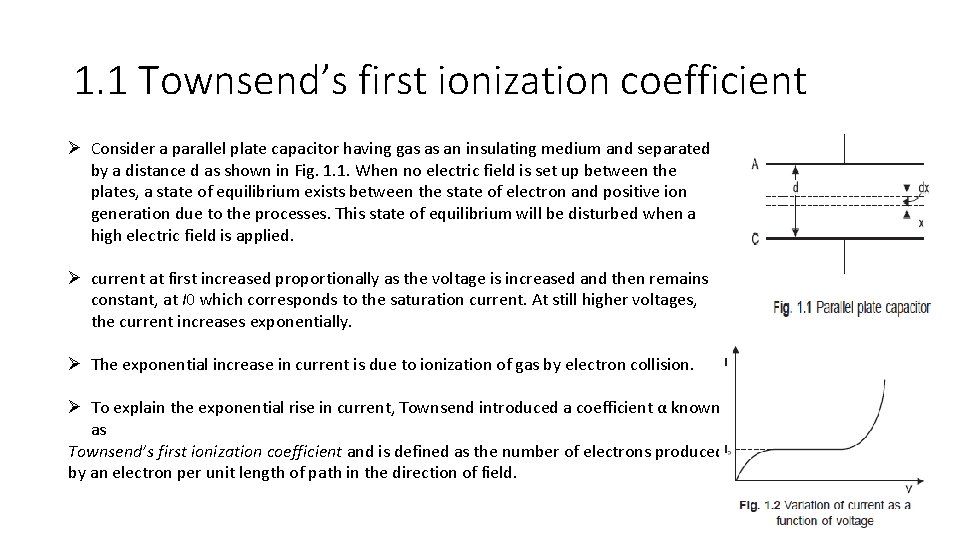
1. 1 Townsend’s first ionization coefficient Ø Consider a parallel plate capacitor having gas as an insulating medium and separated by a distance d as shown in Fig. 1. 1. When no electric field is set up between the plates, a state of equilibrium exists between the state of electron and positive ion generation due to the processes. This state of equilibrium will be disturbed when a high electric field is applied. Ø current at first increased proportionally as the voltage is increased and then remains constant, at I 0 which corresponds to the saturation current. At still higher voltages, the current increases exponentially. Ø The exponential increase in current is due to ionization of gas by electron collision. Ø To explain the exponential rise in current, Townsend introduced a coefficient α known as Townsend’s first ionization coefficient and is defined as the number of electrons produced by an electron per unit length of path in the direction of field.
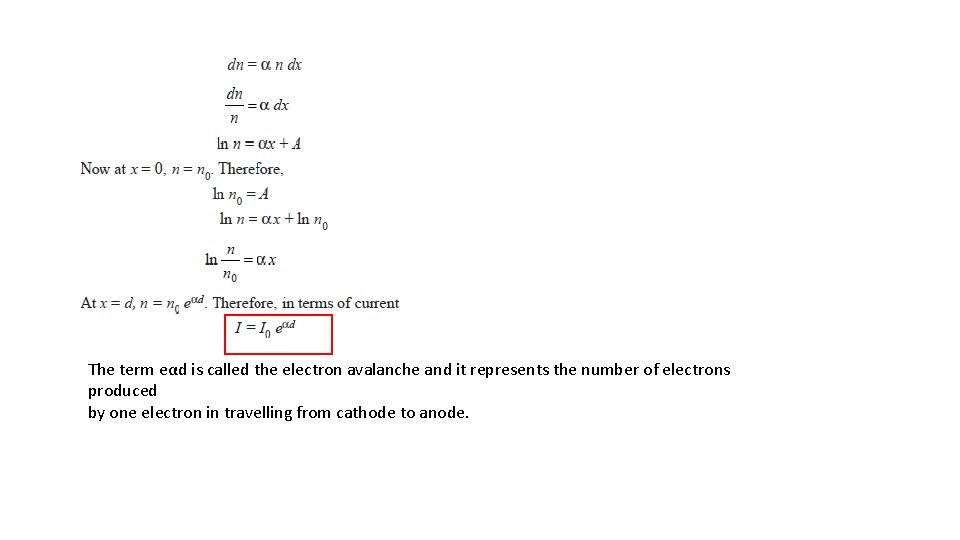
The term eαd is called the electron avalanche and it represents the number of electrons produced by one electron in travelling from cathode to anode.

1. 2 TOWNSEND SECOND IONISATION COEFFICIENT This is a straight line equation with slope a and intercept ln I 0 as shown in Fig. 1. 3 if for a given pressure p, E is kept constant.
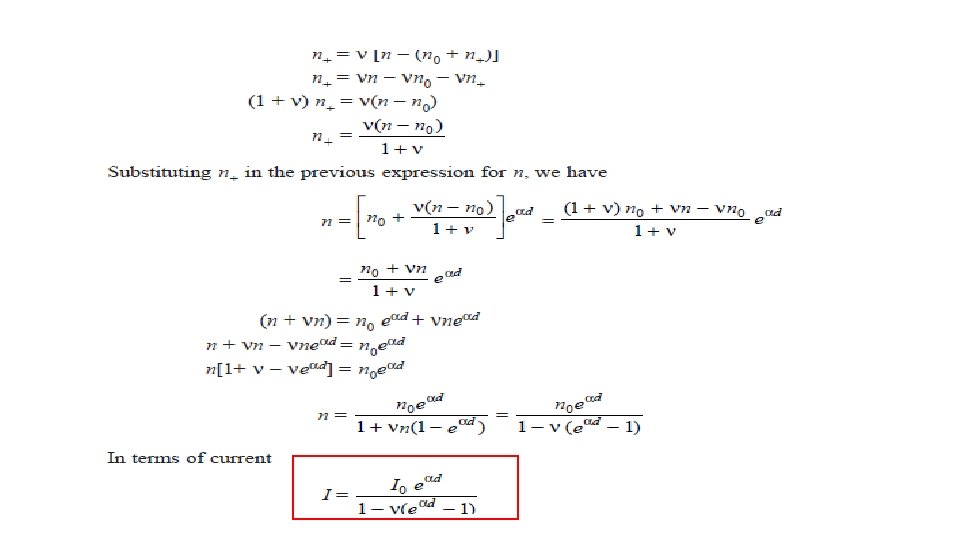
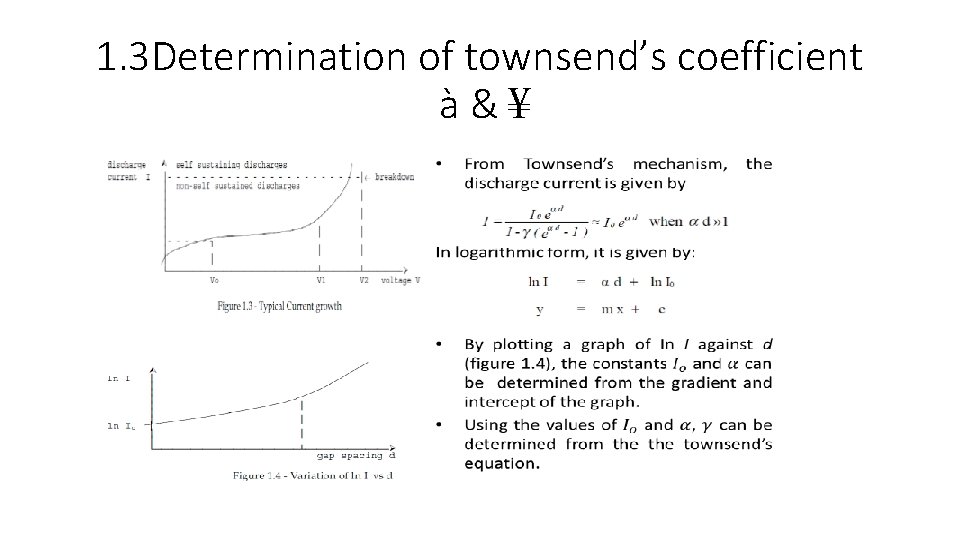
1. 3 Determination of townsend’s coefficient à&¥
1. 4 Streamer theory breakdown mainly arises due to the added effect of the space charge field of an avalanche and photo-electric ionization in the gas volume. Below discuss about the Townsend theory: a) According to the Townsend theory, current growth occurs as a result of ionization process only. But in practice, breakdown voltage were found to depend on the gas pressure and the geometry of the gap. b) The mechanism predicts time lags ( the time that elapses between the application of the voltage to a gap sufficient to cause breakdown of the order of 106 s, while in actual practice breakdown was observed to occur at very short time of the order of 108 s. c) While the Townsend mechanism predicts a very diffused form of discharge, in actual practice, discharge were found to be filamentary and irregular.
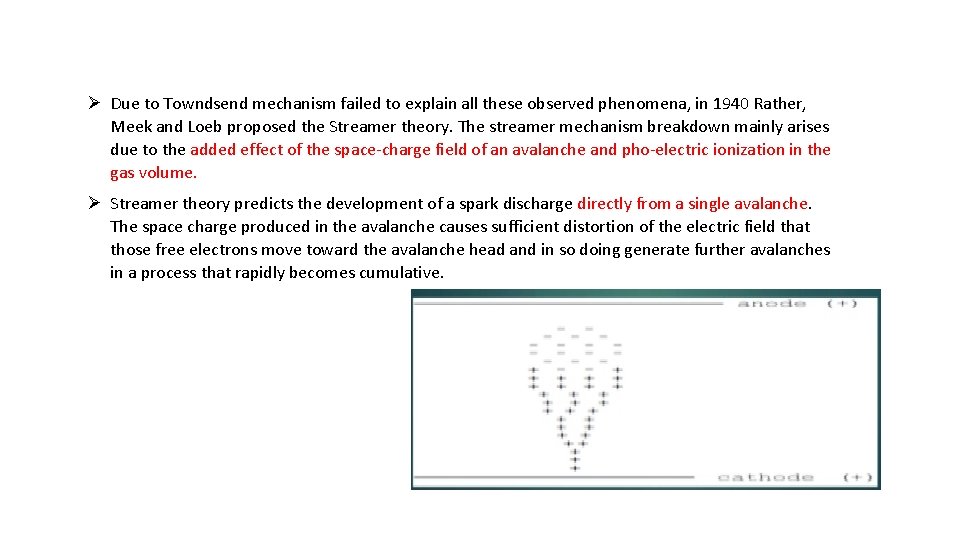
Ø Due to Towndsend mechanism failed to explain all these observed phenomena, in 1940 Rather, Meek and Loeb proposed the Streamer theory. The streamer mechanism breakdown mainly arises due to the added effect of the space-charge field of an avalanche and pho-electric ionization in the gas volume. Ø Streamer theory predicts the development of a spark discharge directly from a single avalanche. The space charge produced in the avalanche causes sufficient distortion of the electric field that those free electrons move toward the avalanche head and in so doing generate further avalanches in a process that rapidly becomes cumulative.
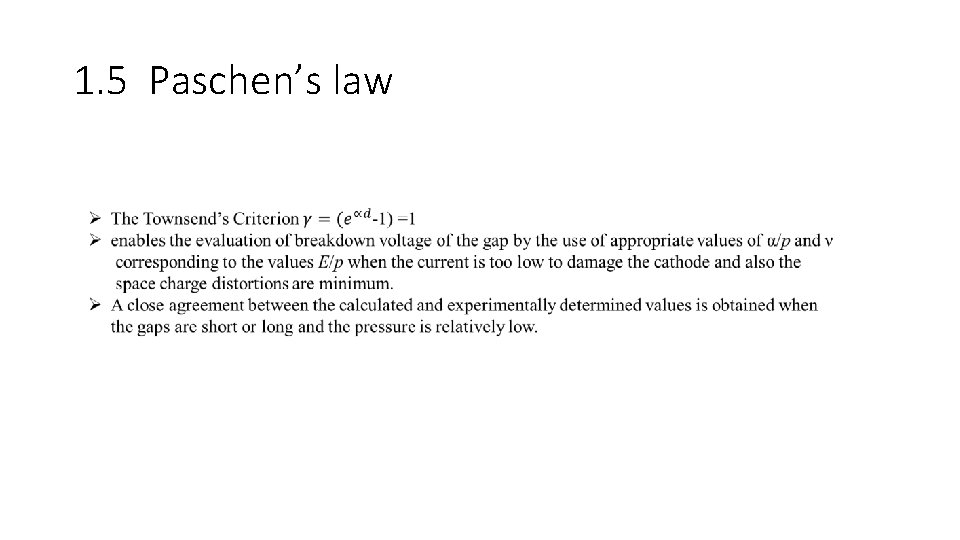
1. 5 Paschen’s law
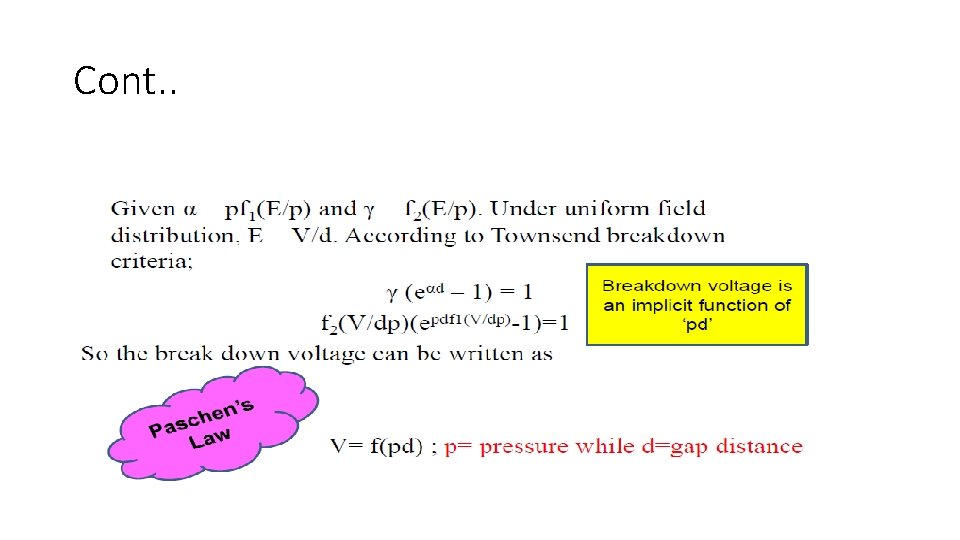
Cont. .
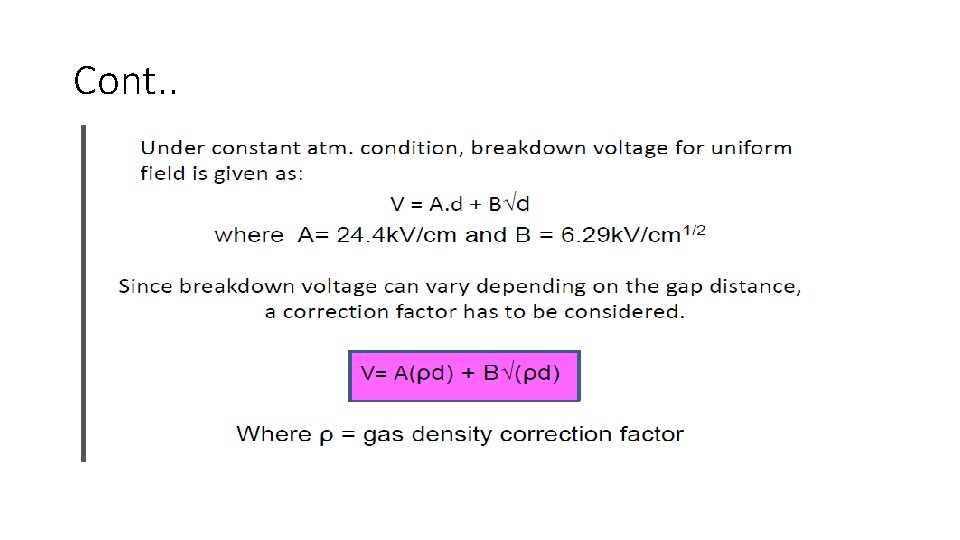
Cont. .
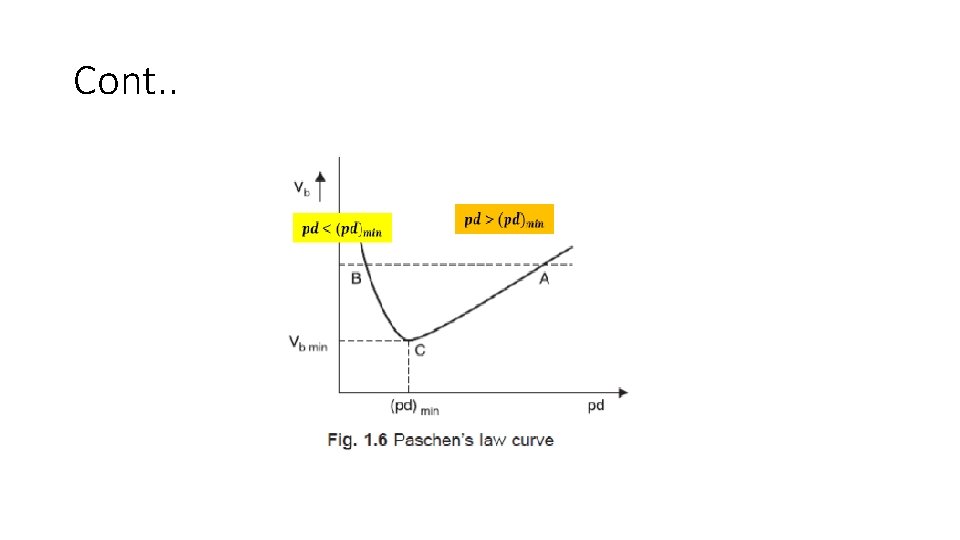
Cont. .
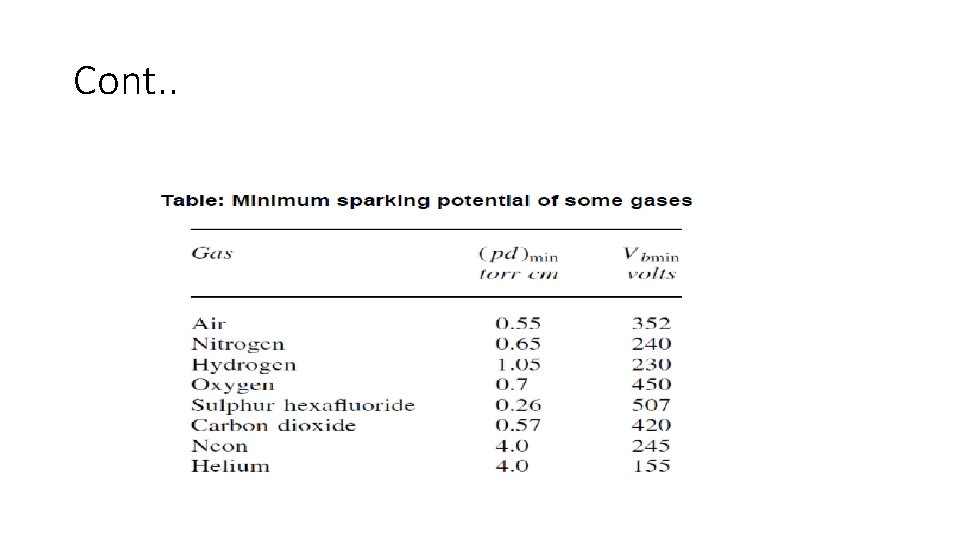
Cont. .
1. 6 Breakdown in non-uniform Fields and Corona Discharges • If the field is non-uniform, an increase in voltage will first cause a discharge in the gas to appear at points with highest electric field intensity. This form of discharge is called a corona discharge and can be observed as a bluish luminescence. • The corona discharge is accompanied by a hissing noise, and the air surrounding the corona region becomes converted into ozone. -Corona is responsible for considerable loss of power from high voltage transmission lines. -When the voltage is positive - corona appears as a uniform bluish white sheath over the entire surface of the conductor. - When voltage is negative - like reddish glowing spot distributed along the length of wire.
2 - Breakdown in Liquid Dielectrics • Liquid dielectrics are used mainly in HV cables and capacitor filling up of transformers, circuit breakers etc. • Act as heat transfer agents in transformer • The most important factor that affects the electrical strength of an insulating oil, is the presence of water in the form of fine droplets in the oil. Dielectric strength of oil reduces more sharply if it contains impurities in addition to water. 23
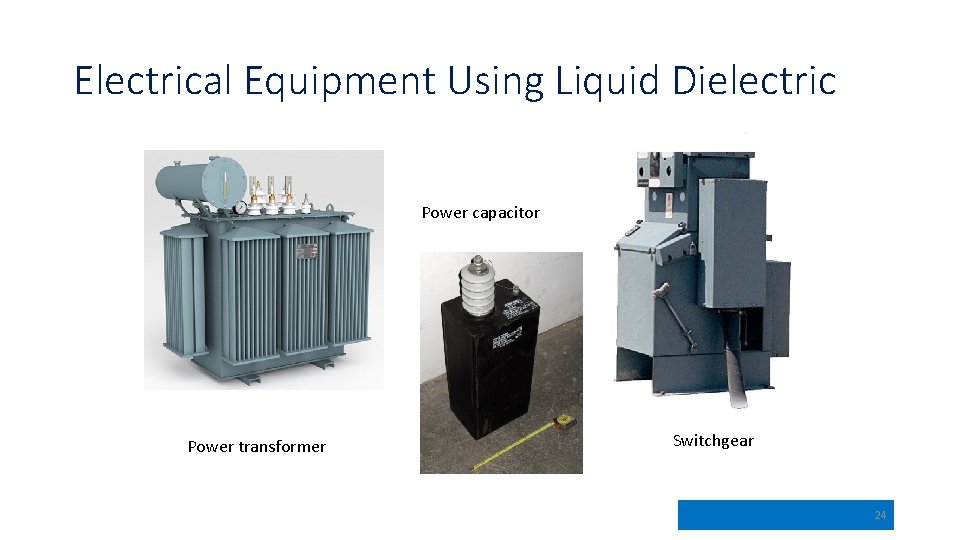
Electrical Equipment Using Liquid Dielectric Power capacitor Power transformer Switchgear 24
2. 1 - Characteristics of Liquid Dielectrics 1. Electrical Properties 2. Heat Transfer Characteristic 3. Chemical Stability 25
2. 1. 1 Electrical Properties i. The electrical properties are essential in determining the dielectric performance of liquid dielectric are: Capacitance per unit volume or relative permittivity Resistivity Loss tangent ( tan d) or power factor Ability to withstand high dielectric stresses • ii. Permitivities of most the petroleum oils vary from 2. 0 to 2. 6 and Silicone oils from 2. 0 t 0 73 • Iii. Resistivities used high voltage application more than 1016 ohm-meter • Iv. Power factor, determine power loss and is an important parameter in cable and capacitor. In case transformer, the dielectric loss in the oil is negligible when compared to copper and iron losses. Pure and transformer oil, power factor have very low power factor varying 10 -4 at 20°C and 10 -3 at 90°C. 26
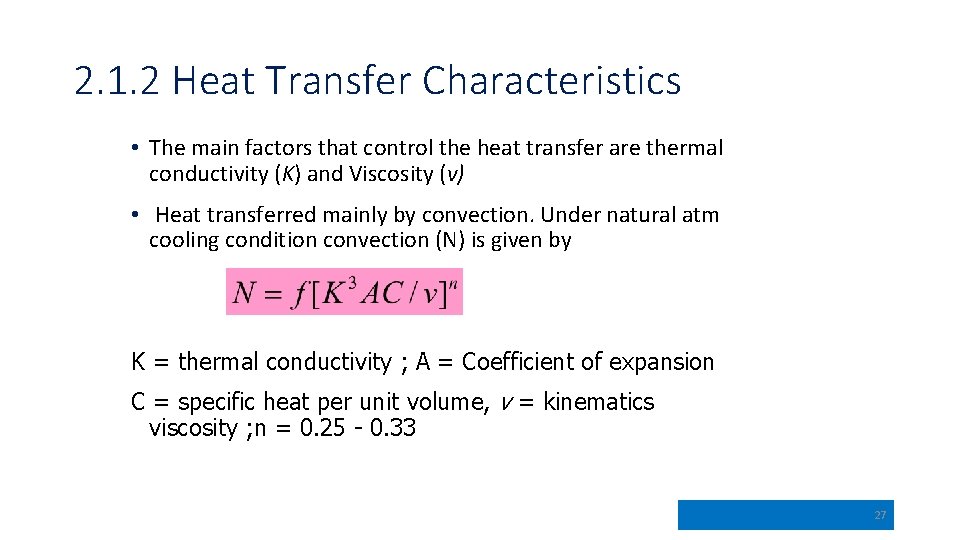
2. 1. 2 Heat Transfer Characteristics • The main factors that control the heat transfer are thermal conductivity (K) and Viscosity (v) • Heat transferred mainly by convection. Under natural atm cooling condition convection (N) is given by K = thermal conductivity ; A = Coefficient of expansion C = specific heat per unit volume, v = kinematics viscosity ; n = 0. 25 - 0. 33 27
2. 1. 3 Chemical Stability Insulating liquid are subjected to thermal and electrical stresses in the presence of materials like oxygen, water, fibers and etc. These will cause degradation of the liquid which can result in corrosion, impairment of heat transfer, increased dielectric losses, discharge and arcing. 28
2. 2 Conduction and Breakdown in Pure Liquids • Fig below shows the characteristic of conduction current-electric field in a hydrocarbon liquid. The curve has three distinct regions. EET 413 HIGH VOLTAGE ENGINEERING 29
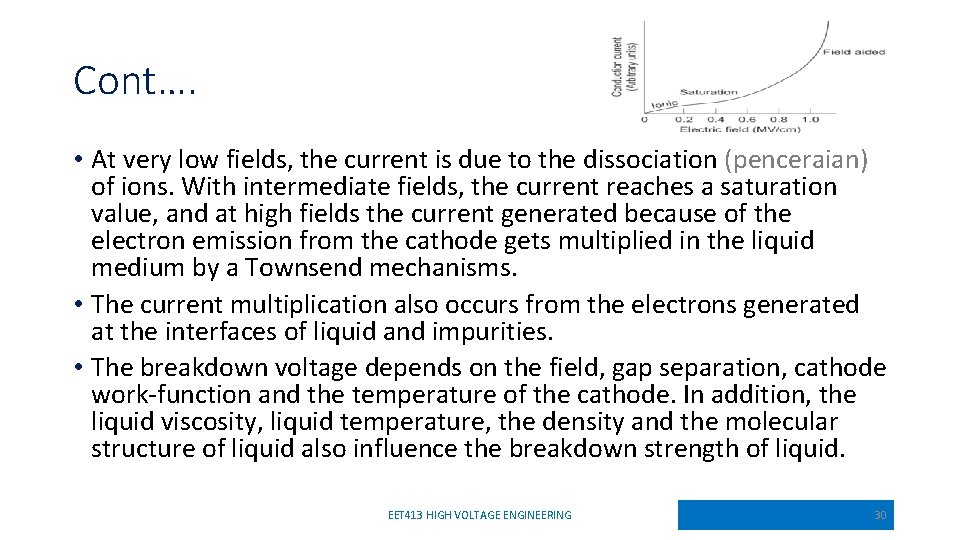
Cont…. • At very low fields, the current is due to the dissociation (penceraian) of ions. With intermediate fields, the current reaches a saturation value, and at high fields the current generated because of the electron emission from the cathode gets multiplied in the liquid medium by a Townsend mechanisms. • The current multiplication also occurs from the electrons generated at the interfaces of liquid and impurities. • The breakdown voltage depends on the field, gap separation, cathode work-function and the temperature of the cathode. In addition, the liquid viscosity, liquid temperature, the density and the molecular structure of liquid also influence the breakdown strength of liquid. EET 413 HIGH VOLTAGE ENGINEERING 30

Cont…. Ø The breakdown strength is more if the dissolved (terlarut) gases are electronegative in character (like oxygen). ØSimilarly the increase in the partial pressure of oxygen evolved and the liquid hydrostatic pressure will increase the breakdown strength in n-hexane as shown in Fig conduction current-electric field in a hydrocarbon liquid. EET 413 HIGH VOLTAGE ENGINEERING 31
formula
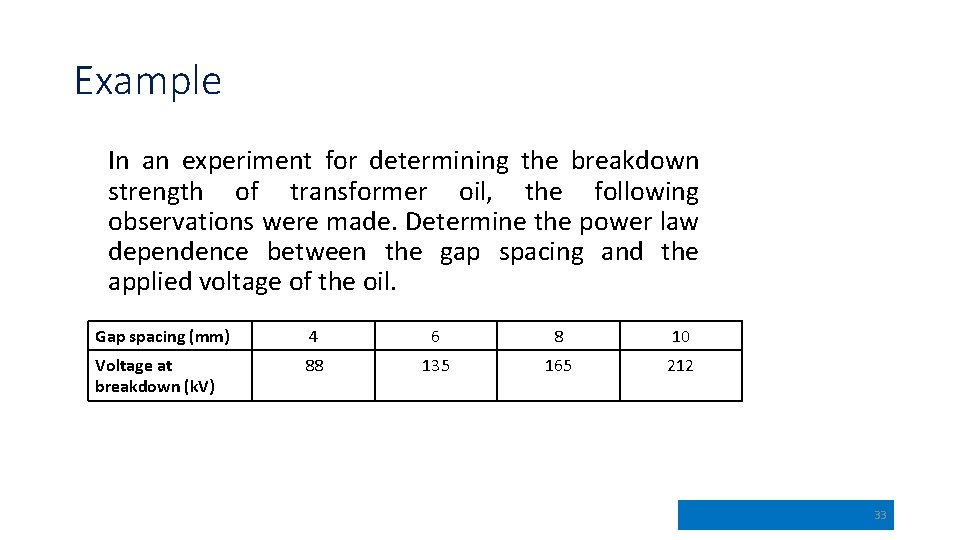
Example In an experiment for determining the breakdown strength of transformer oil, the following observations were made. Determine the power law dependence between the gap spacing and the applied voltage of the oil. Gap spacing (mm) 4 6 8 10 Voltage at breakdown (k. V) 88 135 165 212 33
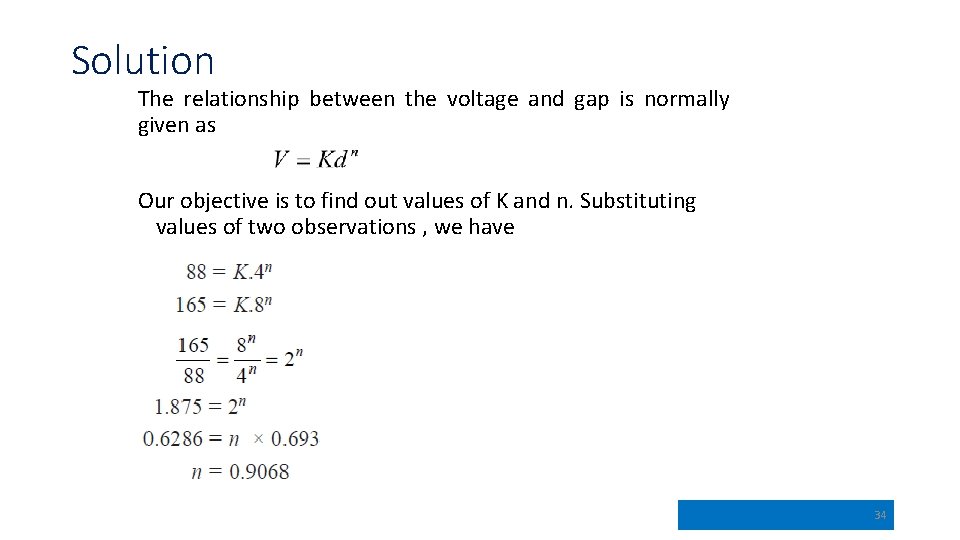
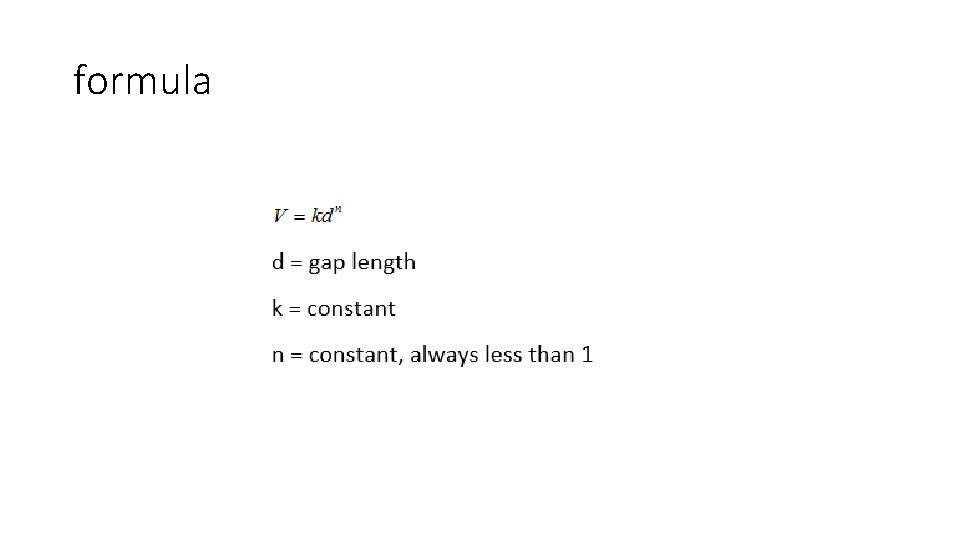
Solution The relationship between the voltage and gap is normally given as Our objective is to find out values of K and n. Substituting values of two observations , we have 34
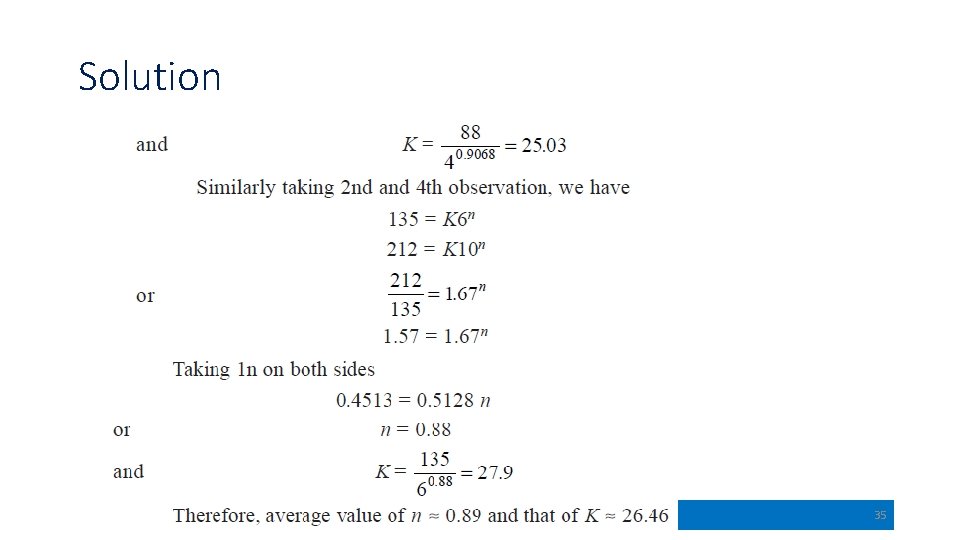
Solution 35
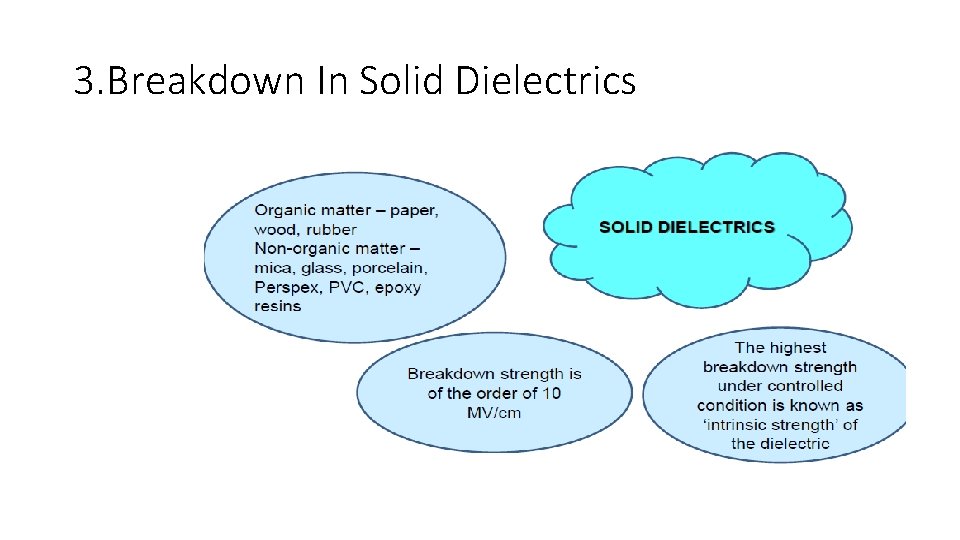
3. Breakdown In Solid Dielectrics
Cont…. Breakdown Mechanism in solid dielectric depend on the time of application of voltage, and can be classified as follows: 1. Intrinsic or ionic breakdown 2. Electromechanical breakdown 3. Failure due to treeing and tracking 4. Thermal Breakdown 5. Electrochemical Breakdown 37
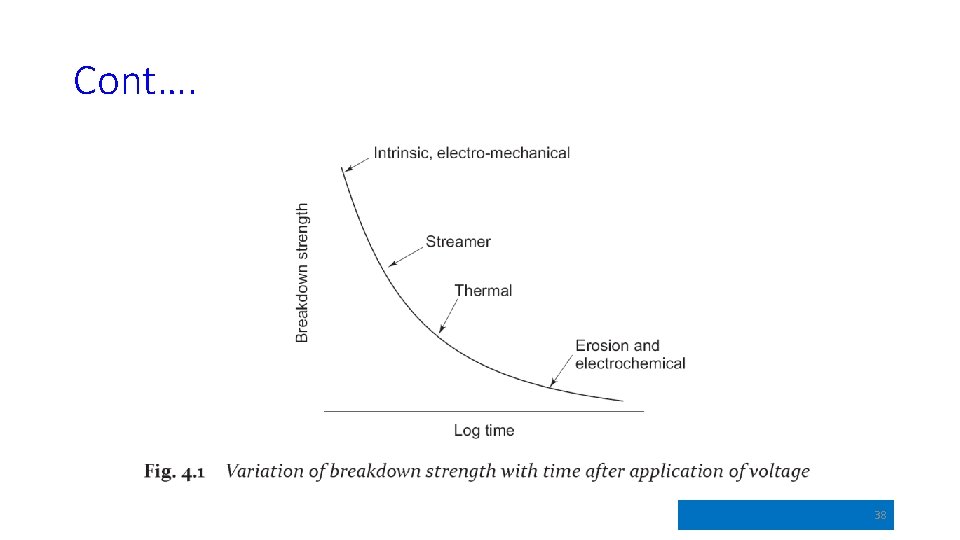
Cont…. 38
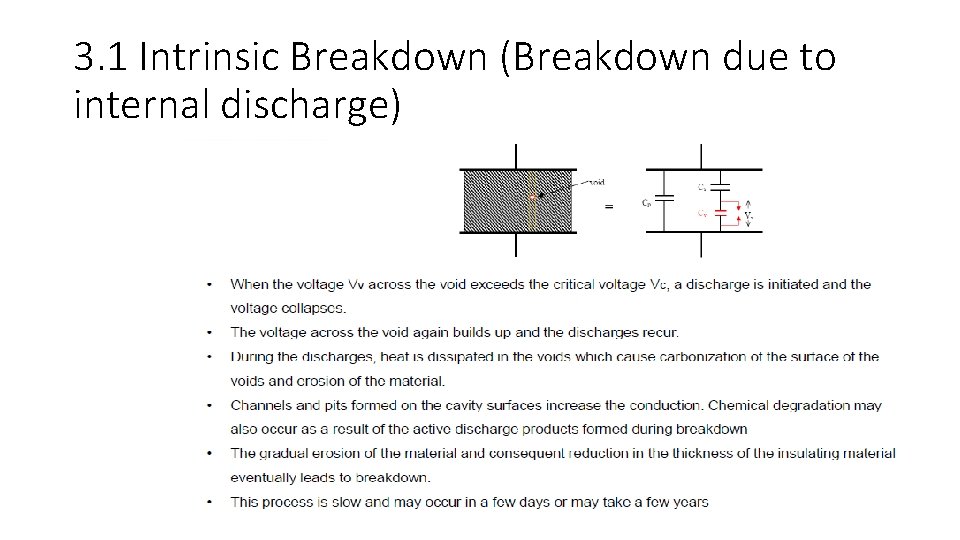
3. 1 Intrinsic Breakdown (Breakdown due to internal discharge)
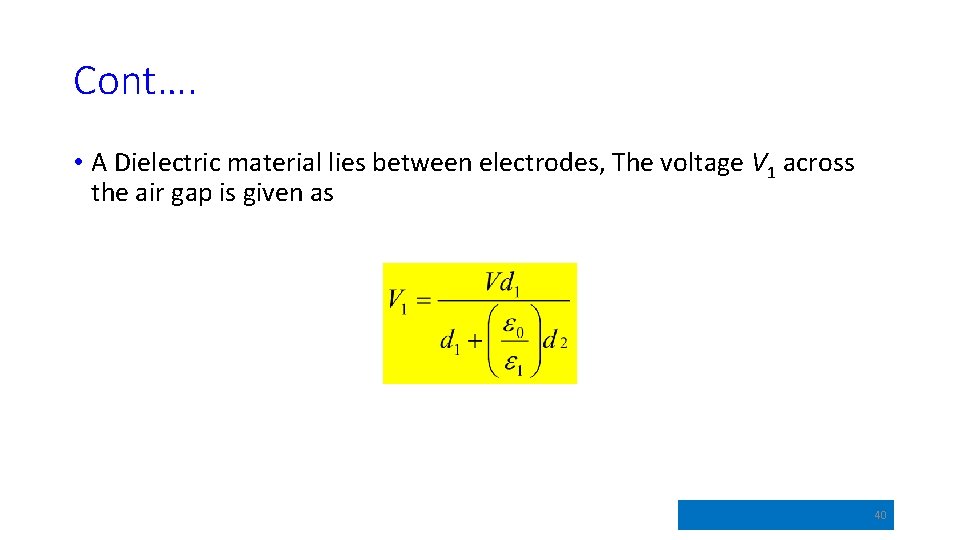
Cont…. • A Dielectric material lies between electrodes, The voltage V 1 across the air gap is given as 40
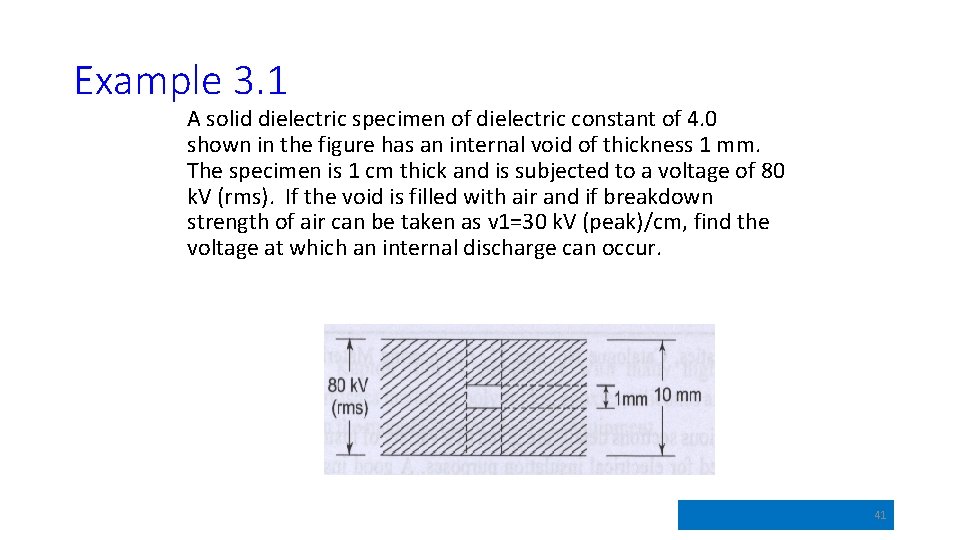
Example 3. 1 A solid dielectric specimen of dielectric constant of 4. 0 shown in the figure has an internal void of thickness 1 mm. The specimen is 1 cm thick and is subjected to a voltage of 80 k. V (rms). If the void is filled with air and if breakdown strength of air can be taken as v 1=30 k. V (peak)/cm, find the voltage at which an internal discharge can occur. 41
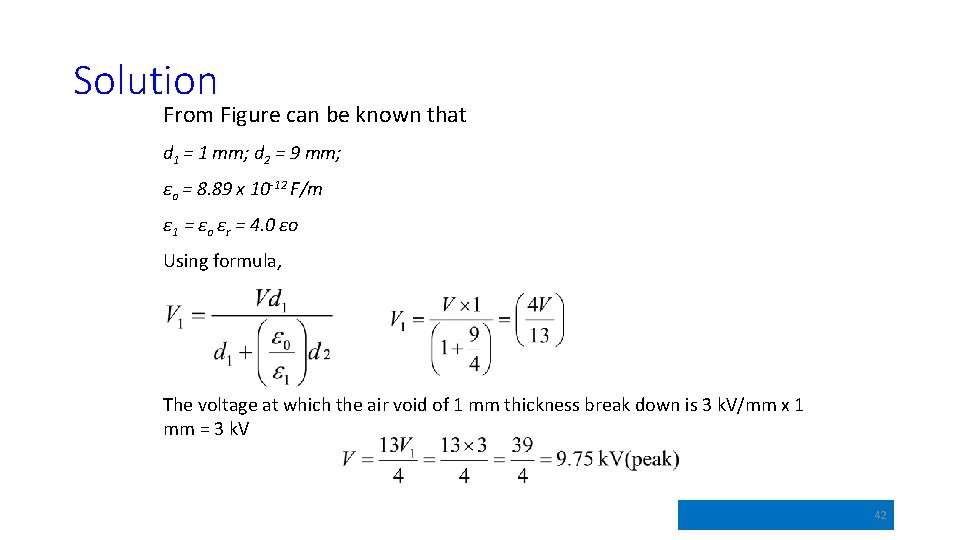
Solution From Figure can be known that d 1 = 1 mm; d 2 = 9 mm; εo = 8. 89 x 10 -12 F/m ε 1 = εo εr = 4. 0 εo Using formula, The voltage at which the air void of 1 mm thickness break down is 3 k. V/mm x 1 mm = 3 k. V 42
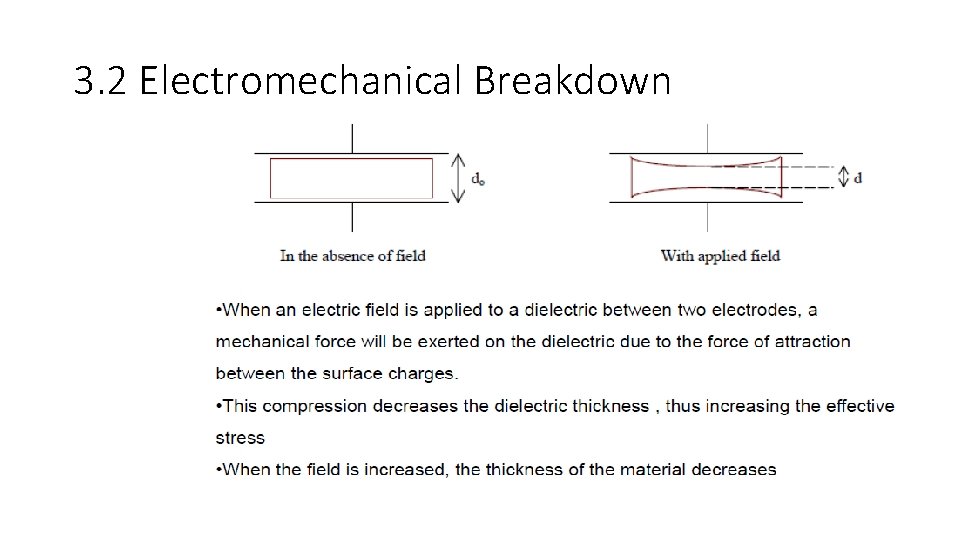
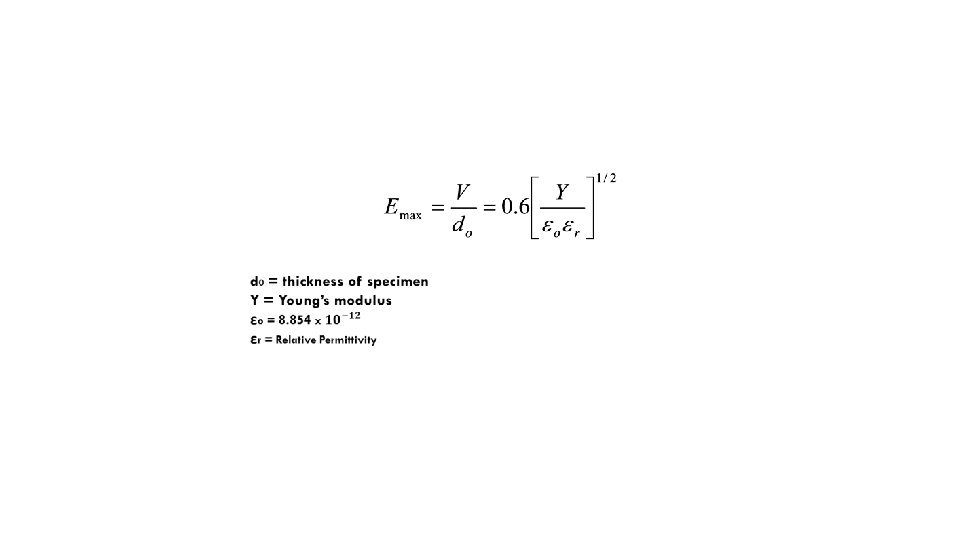
3. 2 Electromechanical Breakdown
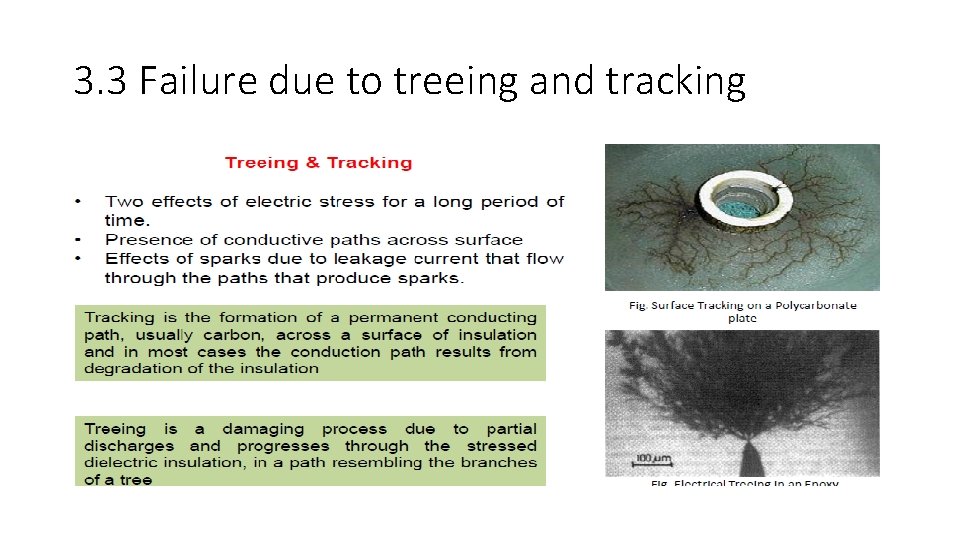
3. 3 Failure due to treeing and tracking
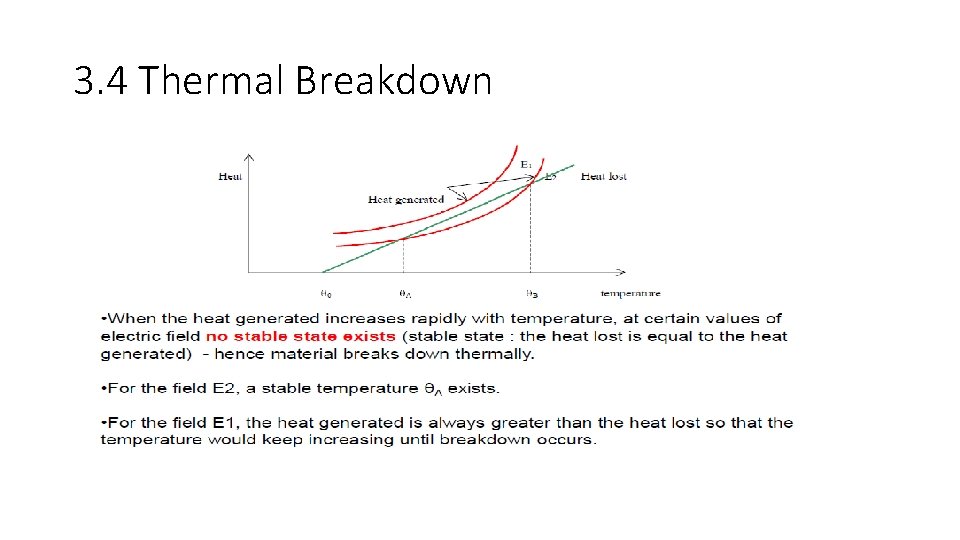
3. 4 Thermal Breakdown
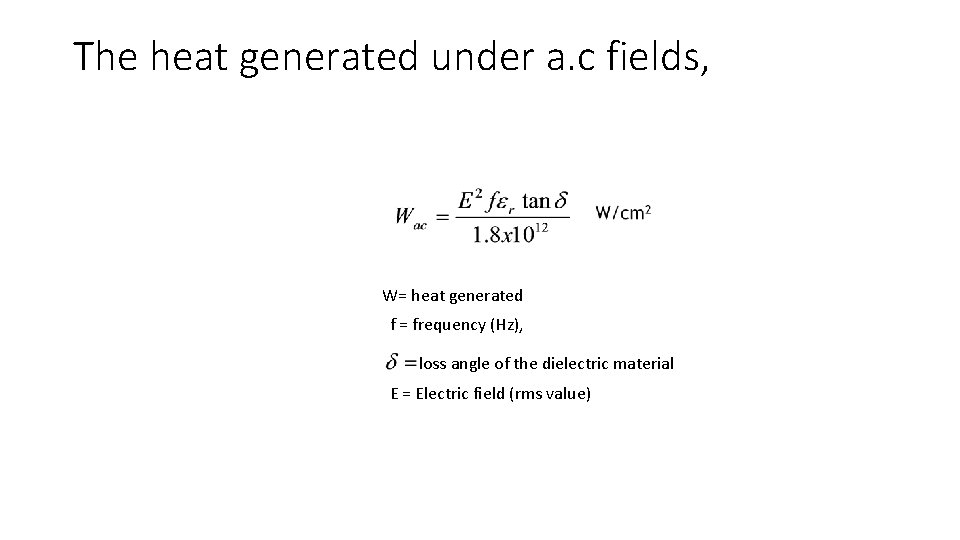
The heat generated under a. c fields, W= heat generated f = frequency (Hz), loss angle of the dielectric material E = Electric field (rms value)
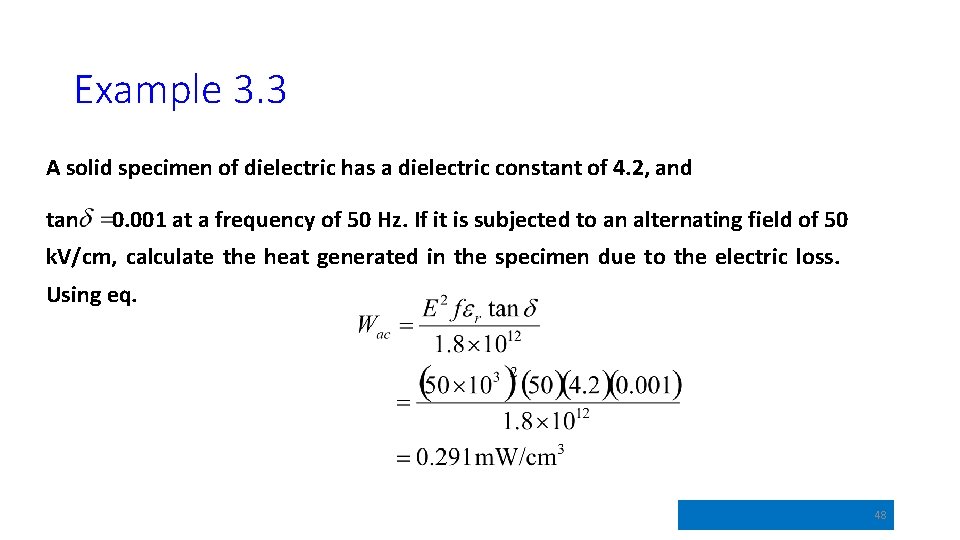
Example 3. 3 A solid specimen of dielectric has a dielectric constant of 4. 2, and tan 0. 001 at a frequency of 50 Hz. If it is subjected to an alternating field of 50 k. V/cm, calculate the heat generated in the specimen due to the electric loss. Using eq. 48
3. 5 Electro-chemical & chemical breakdown
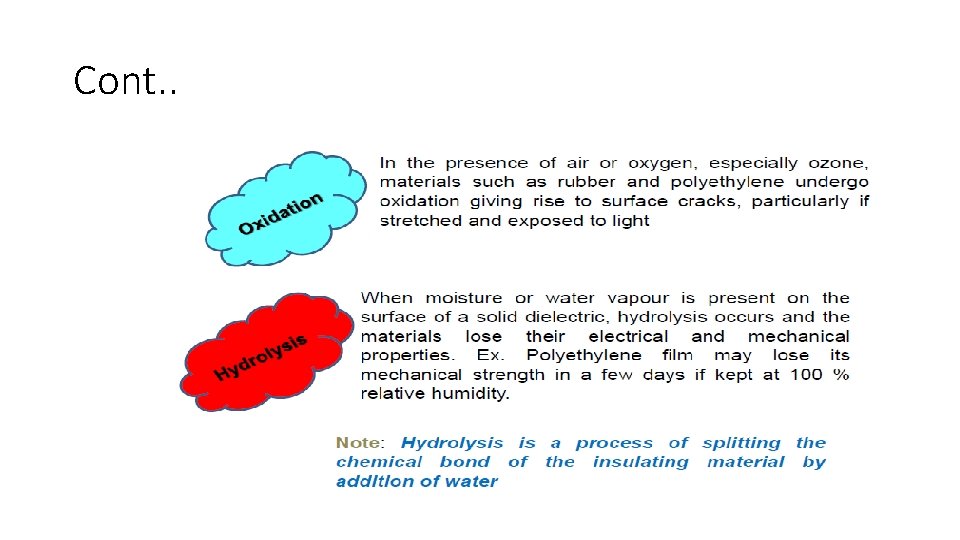
Cont. .
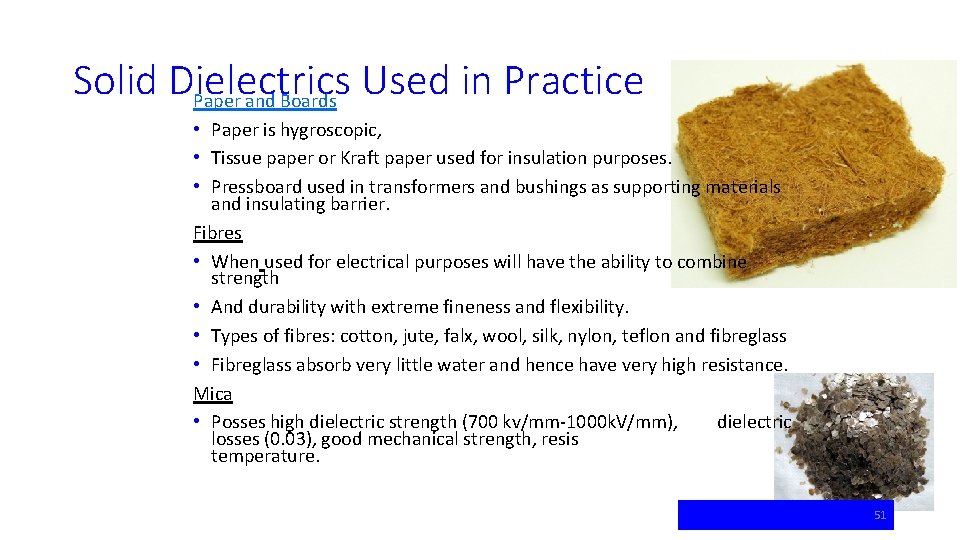
Solid Dielectrics Used in Practice Paper and Boards • Paper is hygroscopic, • Tissue paper or Kraft paper used for insulation purposes. • Pressboard used in transformers and bushings as supporting materials and insulating barrier. Fibres • When used for electrical purposes will have the ability to combine strength • And durability with extreme fineness and flexibility. • Types of fibres: cotton, jute, falx, wool, silk, nylon, teflon and fibreglass • Fibreglass absorb very little water and hence have very high resistance. Mica • Posses high dielectric strength (700 kv/mm-1000 k. V/mm), low dielectric losses (0. 03), good mechanical strength, resistance to high temperature. 51
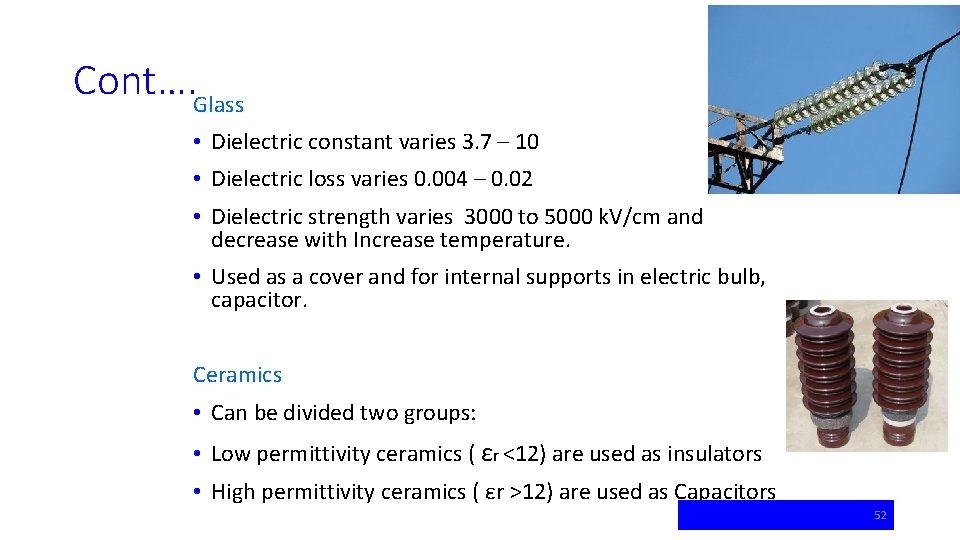
Cont…. Glass • Dielectric constant varies 3. 7 – 10 • Dielectric loss varies 0. 004 – 0. 02 • Dielectric strength varies 3000 to 5000 k. V/cm and decrease with Increase temperature. • Used as a cover and for internal supports in electric bulb, capacitor. Ceramics • Can be divided two groups: • Low permittivity ceramics ( εr <12) are used as insulators • High permittivity ceramics ( εr >12) are used as Capacitors 52
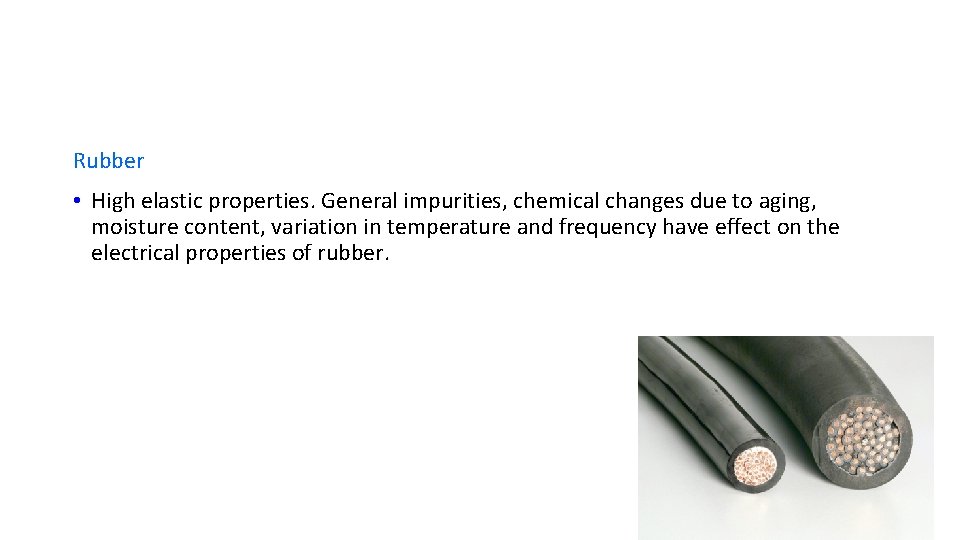
Rubber • High elastic properties. General impurities, chemical changes due to aging, moisture content, variation in temperature and frequency have effect on the electrical properties of rubber. 53
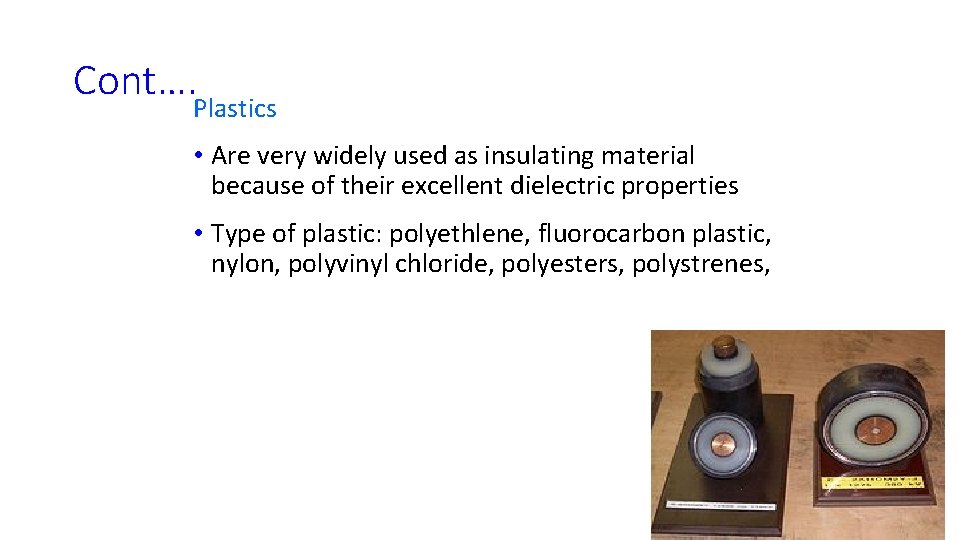
Cont…. Plastics • Are very widely used as insulating material because of their excellent dielectric properties • Type of plastic: polyethlene, fluorocarbon plastic, nylon, polyvinyl chloride, polyesters, polystrenes, 54
- Slides: 54