
Chapter 1 Comparing Childhood Past Present What is

- Slides: 25
Chapter 1: Comparing Childhood Past & Present
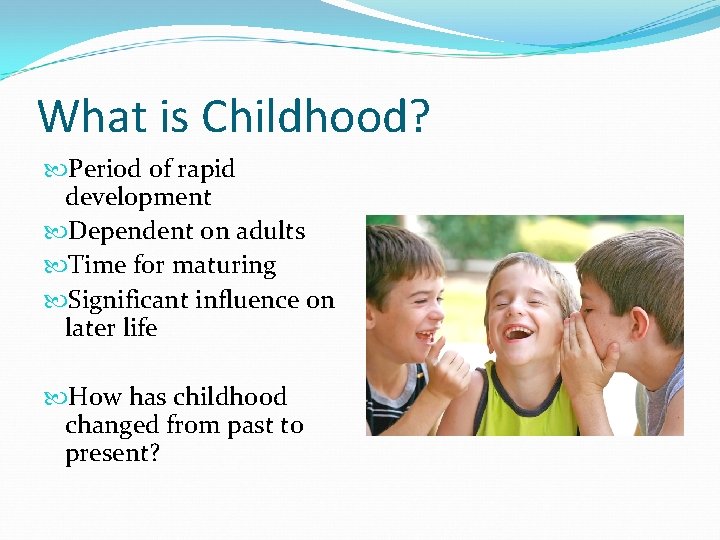
What is Childhood? Period of rapid development Dependent on adults Time for maturing Significant influence on later life How has childhood changed from past to present?
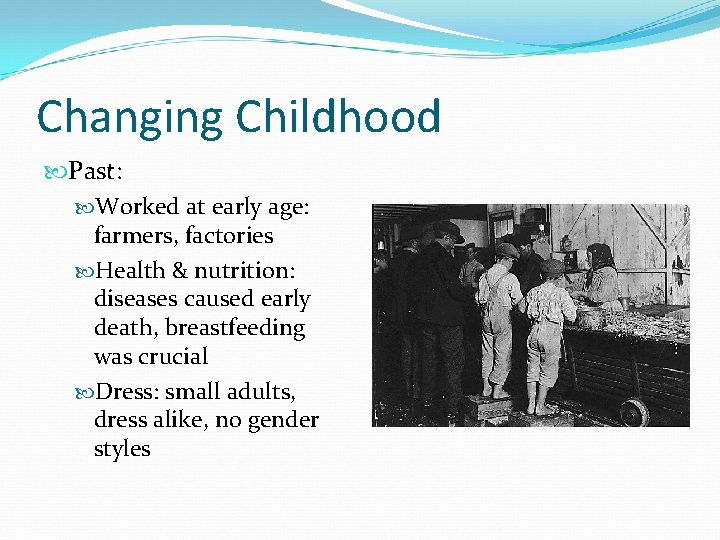
Changing Childhood Past: Worked at early age: farmers, factories Health & nutrition: diseases caused early death, breastfeeding was crucial Dress: small adults, dress alike, no gender styles
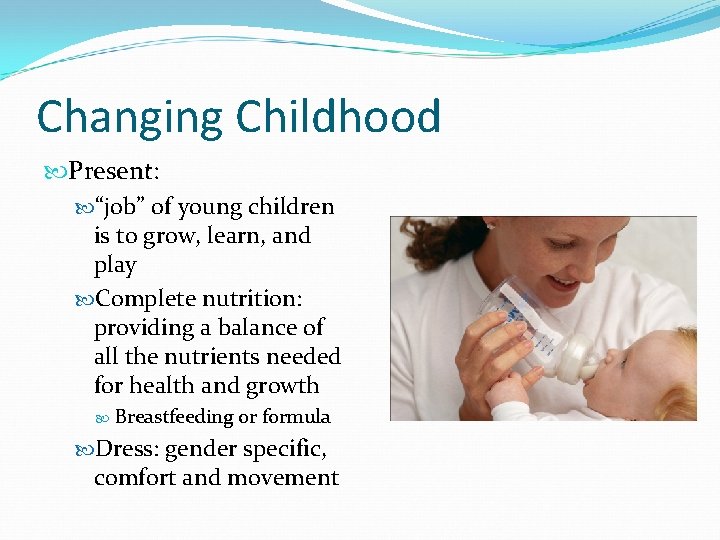
Changing Childhood Present: “job” of young children is to grow, learn, and play Complete nutrition: providing a balance of all the nutrients needed for health and growth Breastfeeding or formula Dress: gender specific, comfort and movement
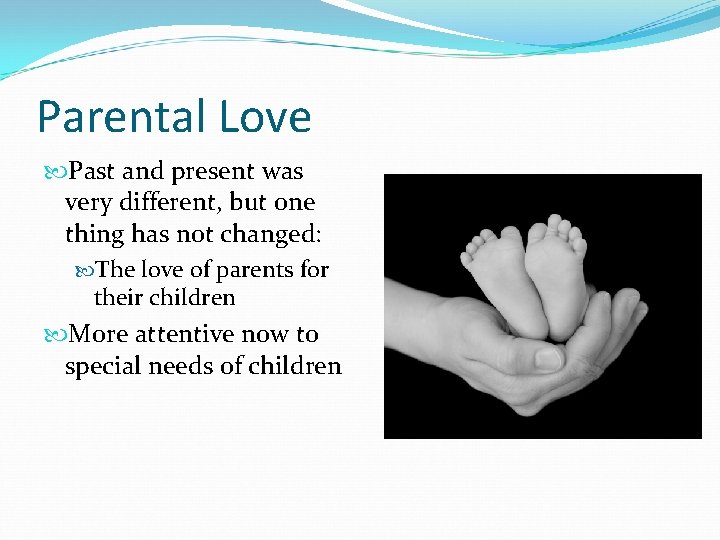
Parental Love Past and present was very different, but one thing has not changed: The love of parents for their children More attentive now to special needs of children
Ch 1: Section 2 Studying Children
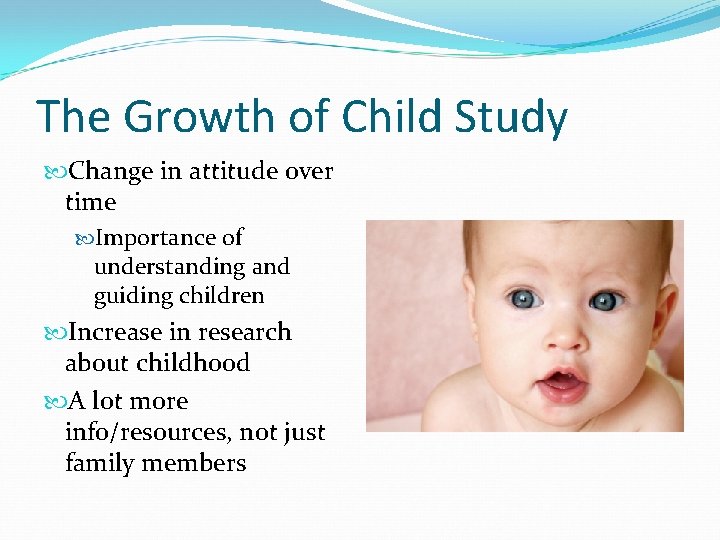
The Growth of Child Study Change in attitude over time Importance of understanding and guiding children Increase in research about childhood A lot more info/resources, not just family members
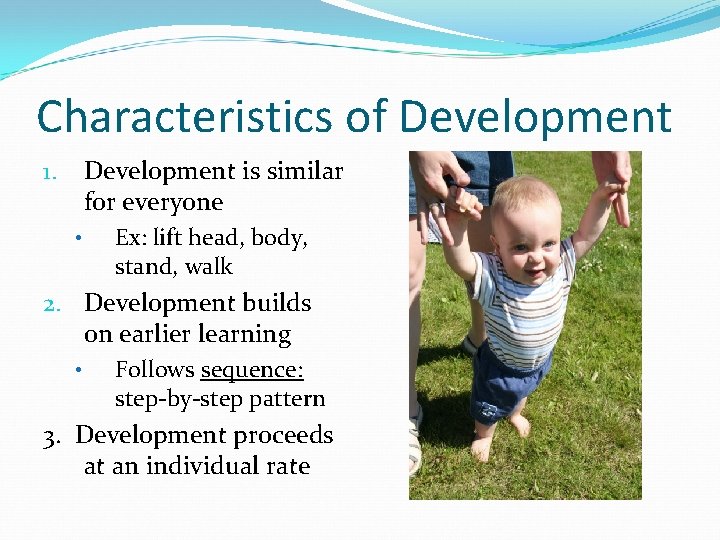
Characteristics of Development is similar for everyone 1. • Ex: lift head, body, stand, walk 2. Development builds on earlier learning • Follows sequence: step-by-step pattern 3. Development proceeds at an individual rate
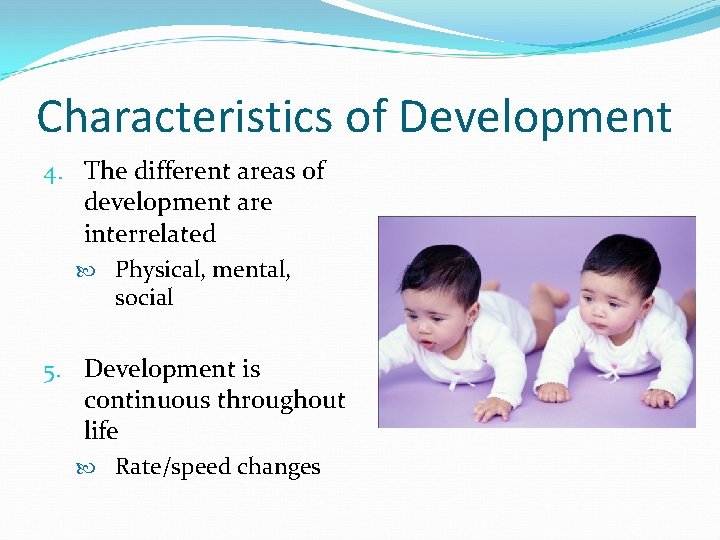
Characteristics of Development 4. The different areas of development are interrelated Physical, mental, social 5. Development is continuous throughout life Rate/speed changes
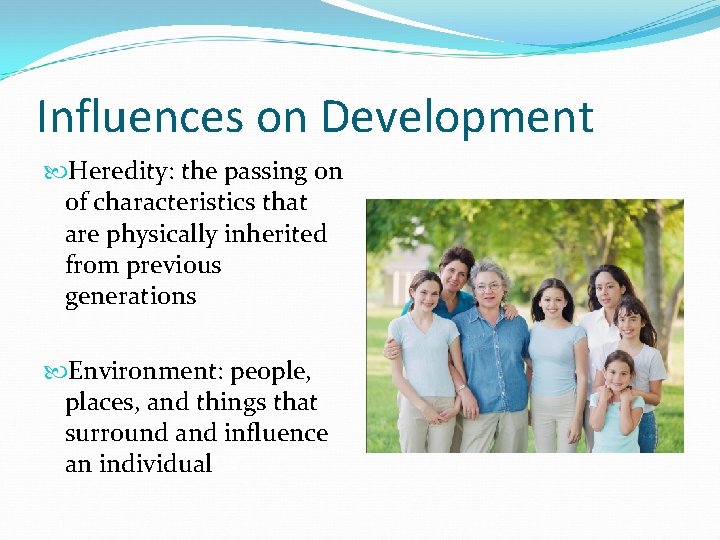
Influences on Development Heredity: the passing on of characteristics that are physically inherited from previous generations Environment: people, places, and things that surround and influence an individual
Nature vs. Nurture Nature: Heredity Nurture: Environment Which one has a greater influence on a person? ? ?
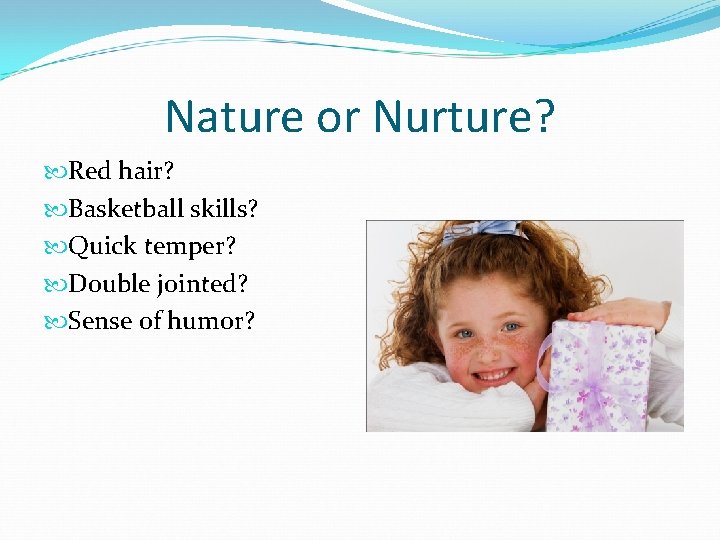
Nature or Nurture? Red hair? Basketball skills? Quick temper? Double jointed? Sense of humor?
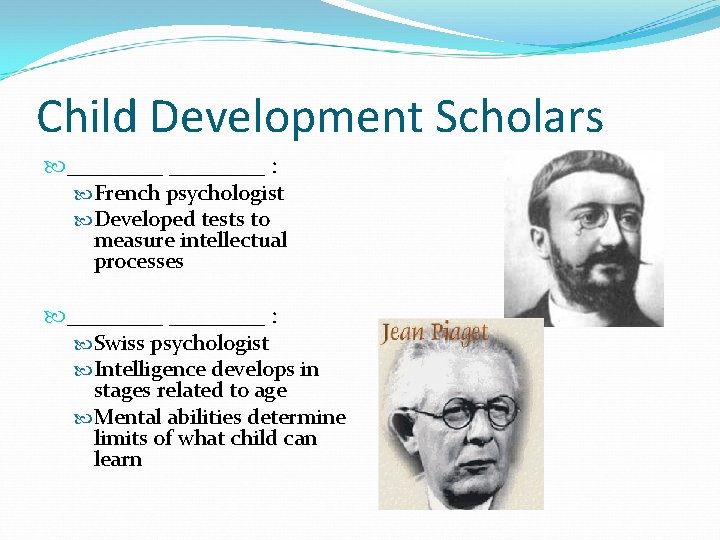
Child Development Scholars ________ : French psychologist Developed tests to measure intellectual processes ________ : Swiss psychologist Intelligence develops in stages related to age Mental abilities determine limits of what child can learn
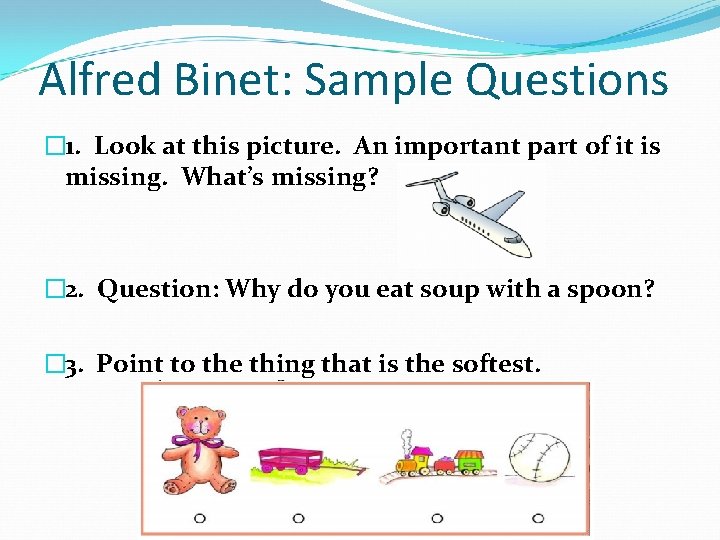
Alfred Binet: Sample Questions � 1. Look at this picture. An important part of it is missing. What’s missing? � 2. Question: Why do you eat soup with a spoon? � 3. Point to the thing that is the softest.
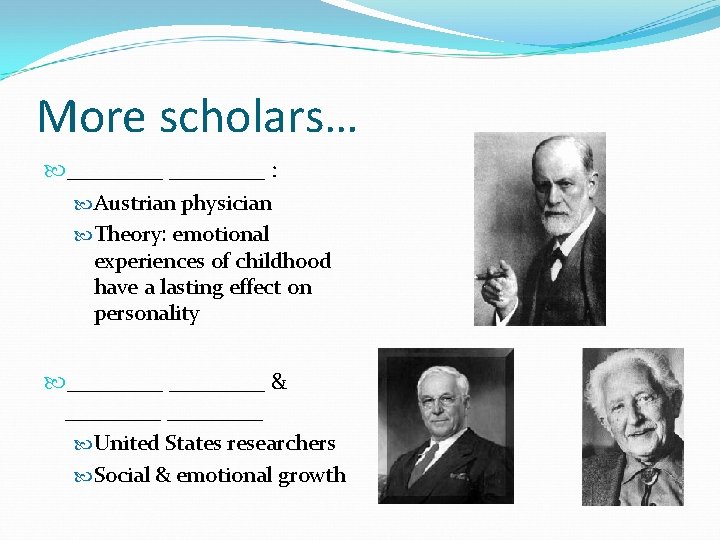
More scholars… ________ : Austrian physician Theory: emotional experiences of childhood have a lasting effect on personality ________ & ________ United States researchers Social & emotional growth
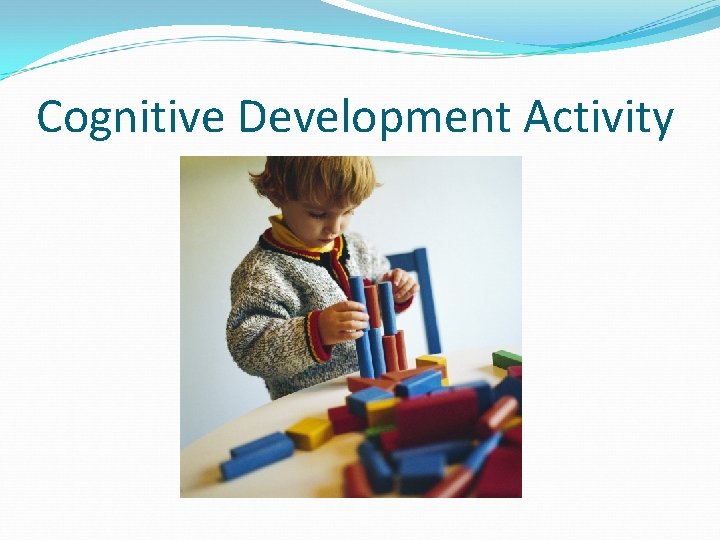
Cognitive Development Activity
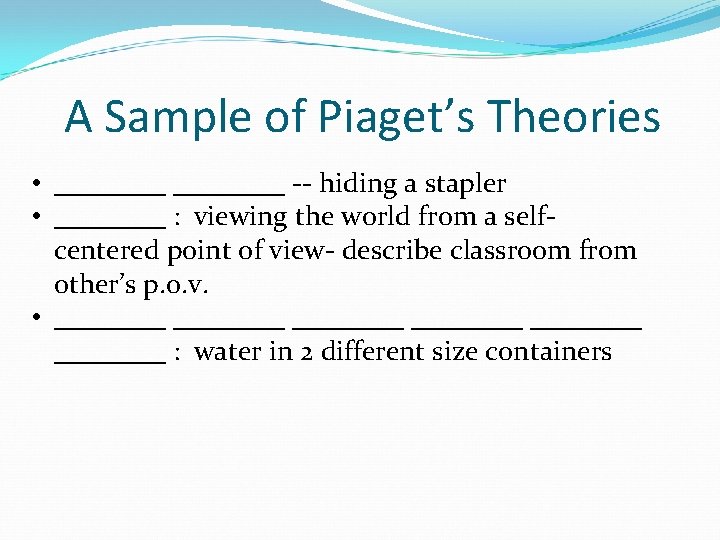
A Sample of Piaget’s Theories • ________ -- hiding a stapler • ____ : viewing the world from a selfcentered point of view- describe classroom from other’s p. o. v. • ________ ________ : water in 2 different size containers
Piaget’s Theories
The Beauty of Play. . �Play
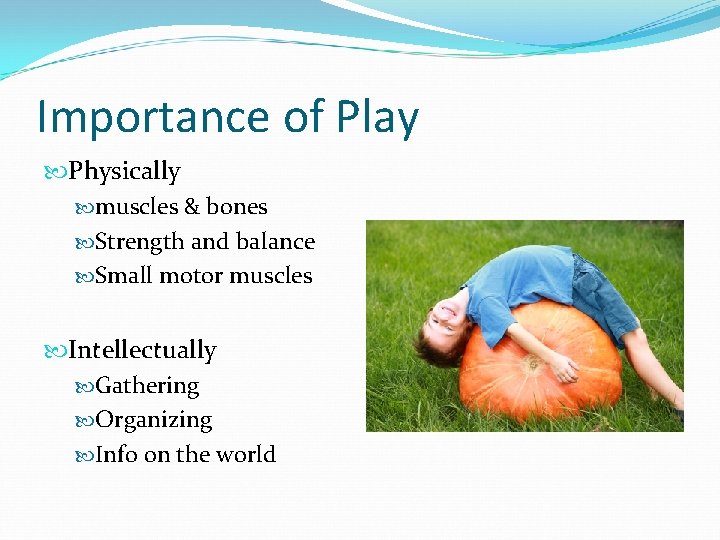
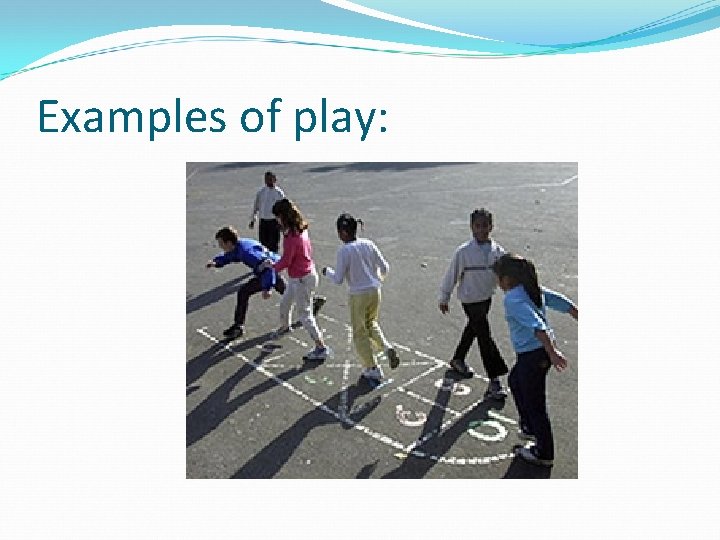
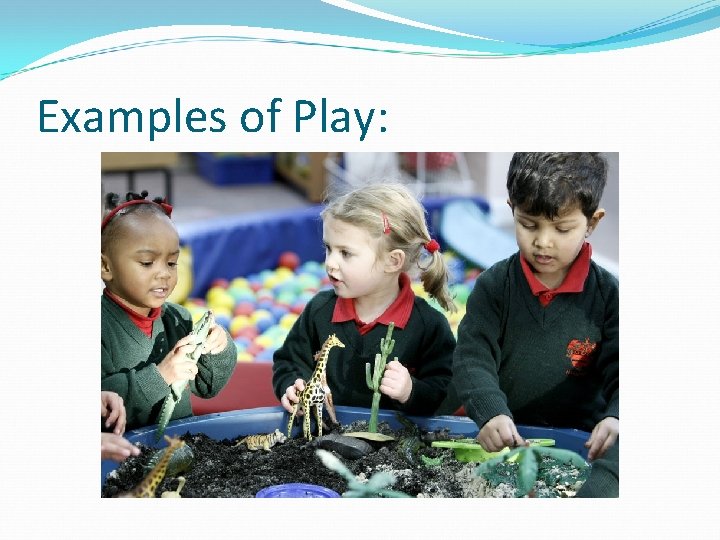
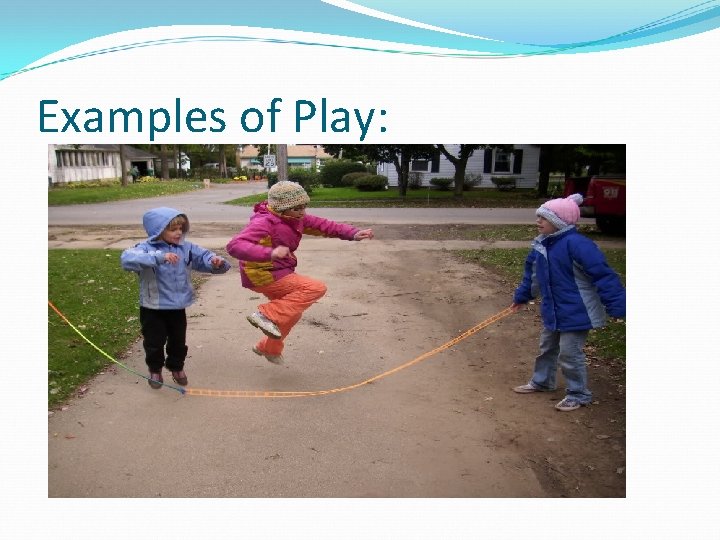
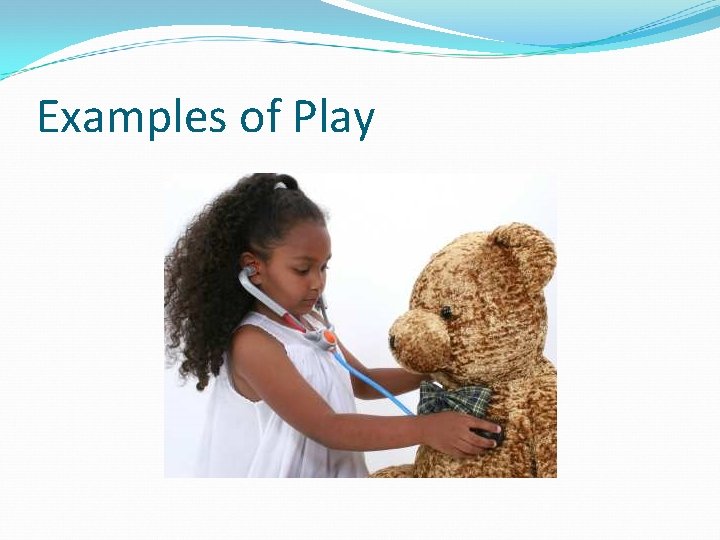
Importance of Play Physically muscles & bones Strength and balance Small motor muscles Intellectually Gathering Organizing Info on the world
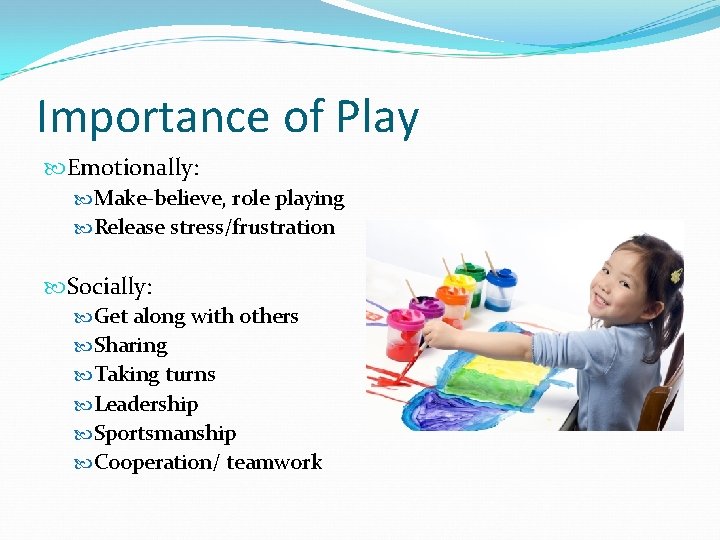
Importance of Play Emotionally: Make-believe, role playing Release stress/frustration Socially: Get along with others Sharing Taking turns Leadership Sportsmanship Cooperation/ teamwork
Examples of play:
Examples of Play:
Examples of Play:
Examples of Play