
Chapter 1 Classifying and Exploring Life Lesson 2

- Slides: 14
Chapter 1 – Classifying and Exploring Life Lesson 2 – Classifying Organisms
Essential Questions: What methods are used to classify living things into groups? Why does every species have a scientific name?
Classification – a system of grouping - features used to classify: cell type habitat nutritional needs methods of obtaining food common ancestry - some other classification systems… library, mailing system, grocery stores, department stores
Aristotle – Greek philosopher - 2000+ years ago - classified organisms into 2 groups (plants and animals)
Linnaeus – a Swedish doctor and botanist (1770’s) - classified organisms into 2 groups called kingdoms - also developed a system of naming
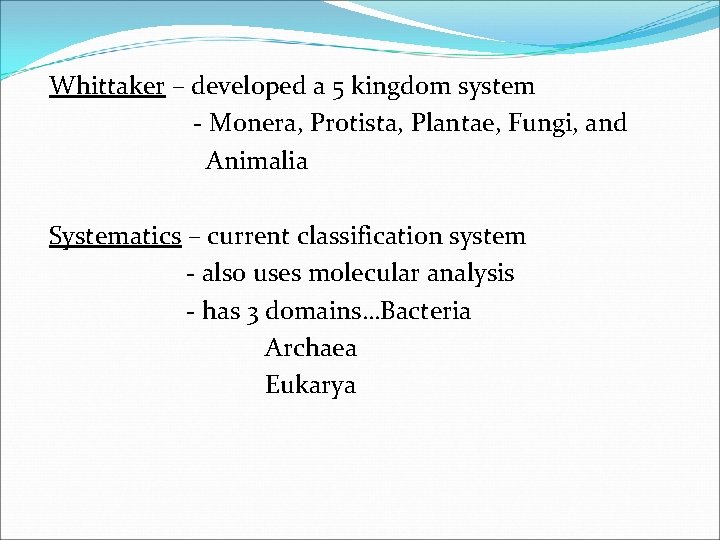
Whittaker – developed a 5 kingdom system - Monera, Protista, Plantae, Fungi, and Animalia Systematics – current classification system - also uses molecular analysis - has 3 domains…Bacteria Archaea Eukarya
Brain POP – Six Kingdoms http: //connected. mcgrawhill. com/media/repository/protected_content/COMP OUND/50000020/22/15/Six_Kingdoms/00044691. htm ? state. Code=PA
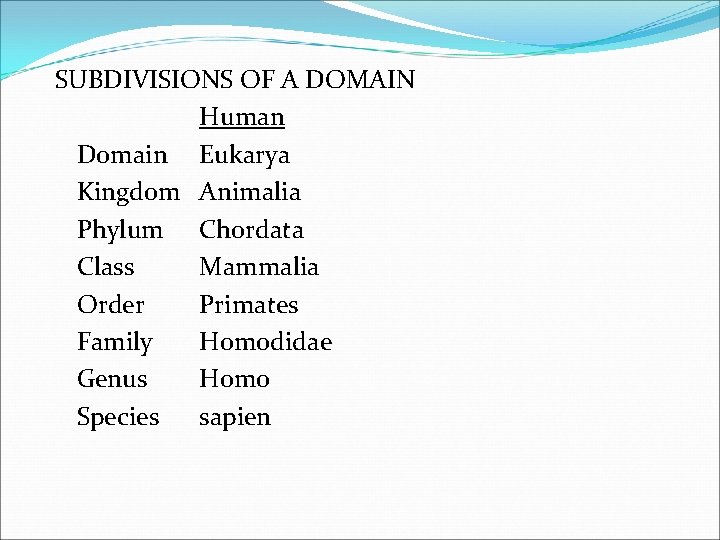
SUBDIVISIONS OF A DOMAIN Human Domain Eukarya Kingdom Animalia Phylum Chordata Class Mammalia Order Primates Family Homodidae Genus Homo Species sapien
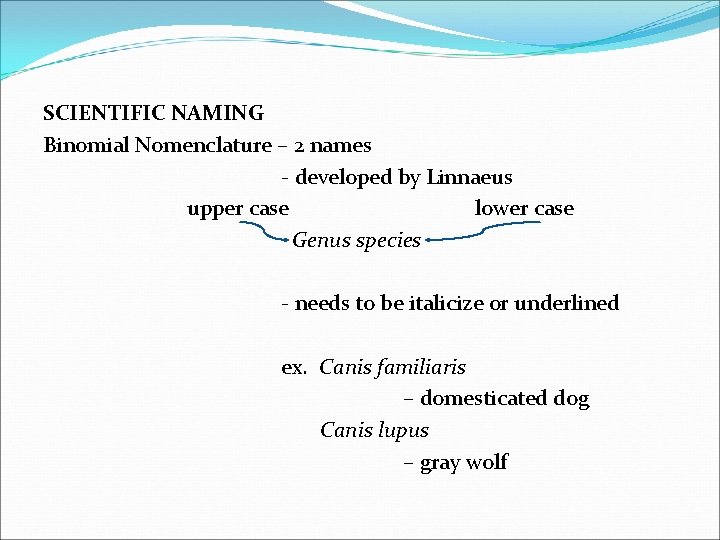
SCIENTIFIC NAMING Binomial Nomenclature – 2 names - developed by Linnaeus upper case lower case Genus species - needs to be italicize or underlined ex. Canis familiaris – domesticated dog Canis lupus – gray wolf
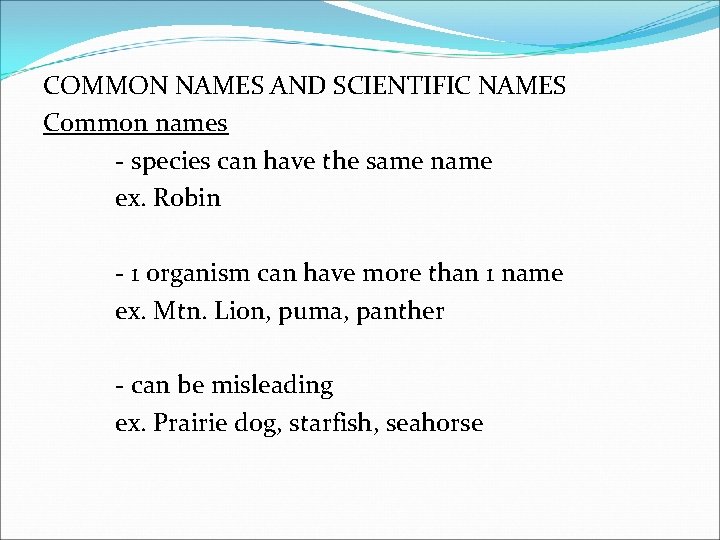
COMMON NAMES AND SCIENTIFIC NAMES Common names - species can have the same name ex. Robin - 1 organism can have more than 1 name ex. Mtn. Lion, puma, panther - can be misleading ex. Prairie dog, starfish, seahorse
Scientific names 1. avoid errors in communication 2. gives descriptive info 3. allows info to be organized and found easy 4. classifies organisms with similar evolutionary histories together
Identifying Organisms - use field guides, cladogram, or dichotomous keys Field guides – use pictures and descriptions including where the organisms can be found.
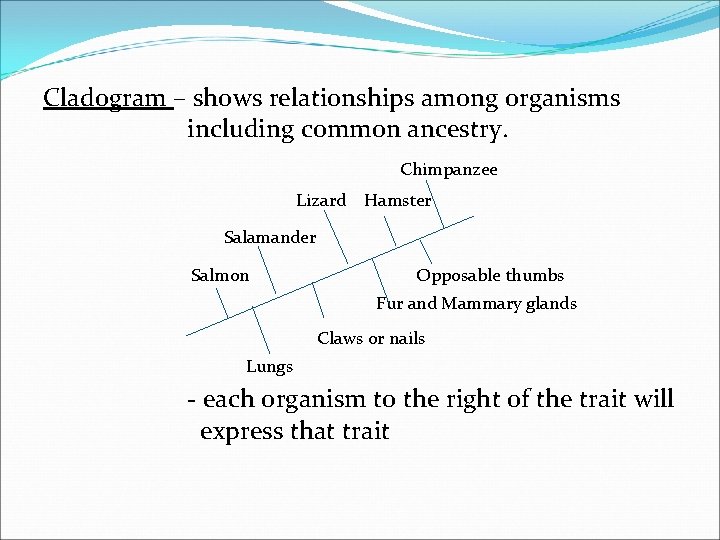
Cladogram – shows relationships among organisms including common ancestry. Chimpanzee Lizard Hamster Salamander Salmon Opposable thumbs Fur and Mammary glands Claws or nails Lungs - each organism to the right of the trait will express that trait
Dichotomous key – uses steps with 2 descriptive statements - always start with the first step