
Chapter 1 challenge 6 Use the genetic code
- Slides: 9
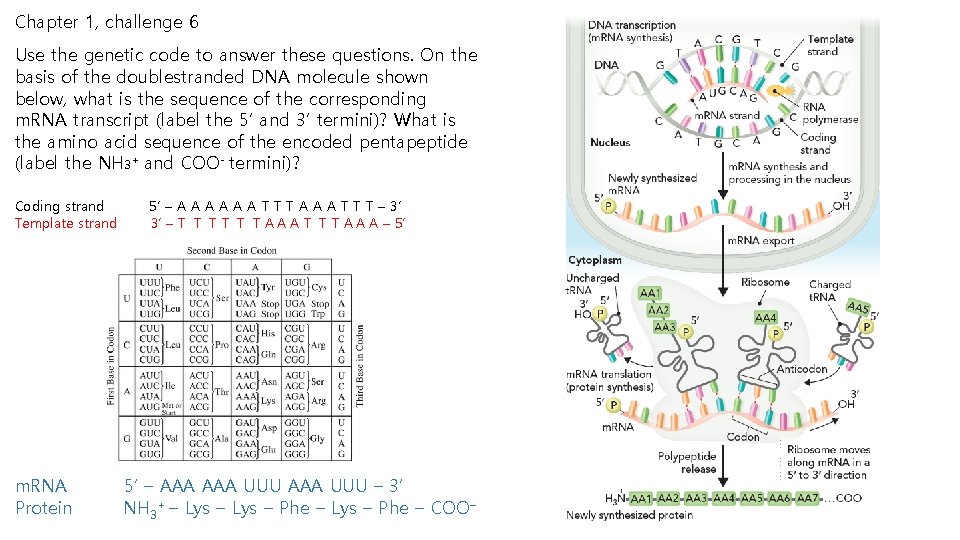
Chapter 1, challenge 6 Use the genetic code to answer these questions. On the basis of the doublestranded DNA molecule shown below, what is the sequence of the corresponding m. RNA transcript (label the 5’ and 3’ termini)? What is the amino acid sequence of the encoded pentapeptide (label the NH 3+ and COO- termini)? Coding strand Template strand m. RNA Protein 5’ – A A A T T T – 3’. 3’ – T. T. T A. A. A T. T T A. A. A – 5’ 5’ – AAA UUU – 3’ NH 3+ – Lys – Phe – COO–
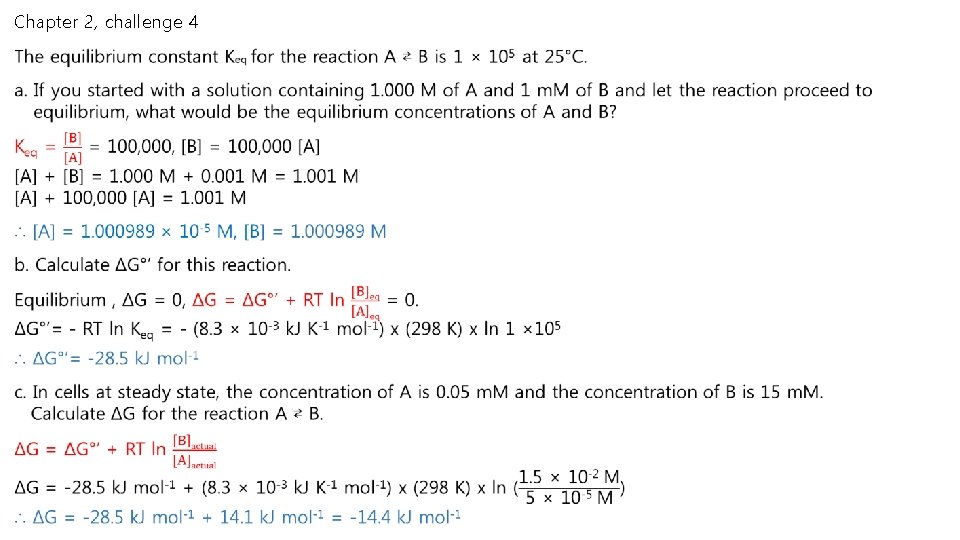
Chapter 2, challenge 4
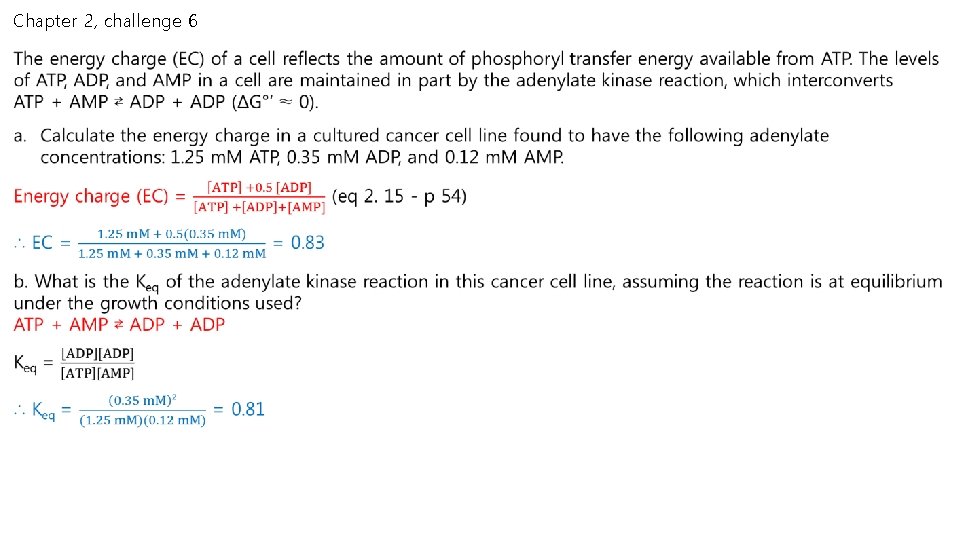
Chapter 2, challenge 6
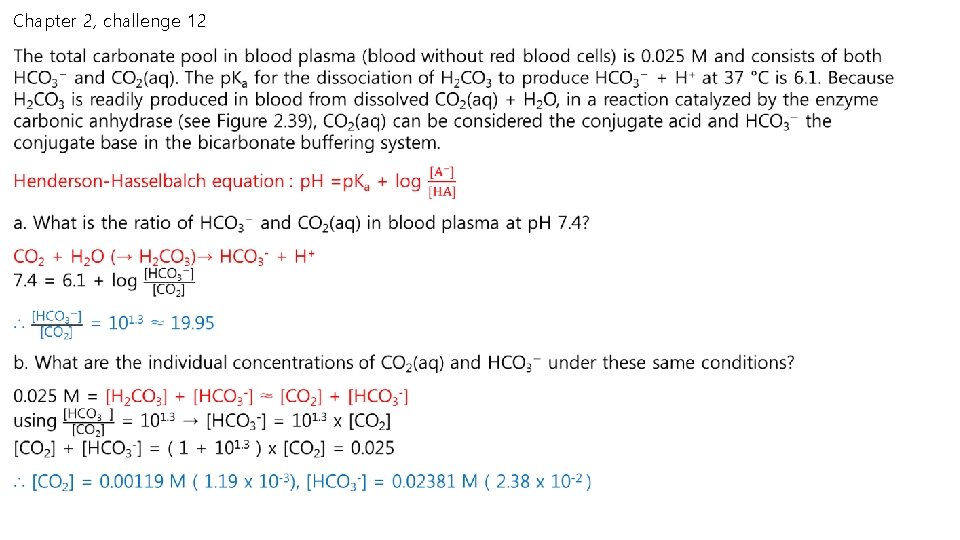
Chapter 2, challenge 12
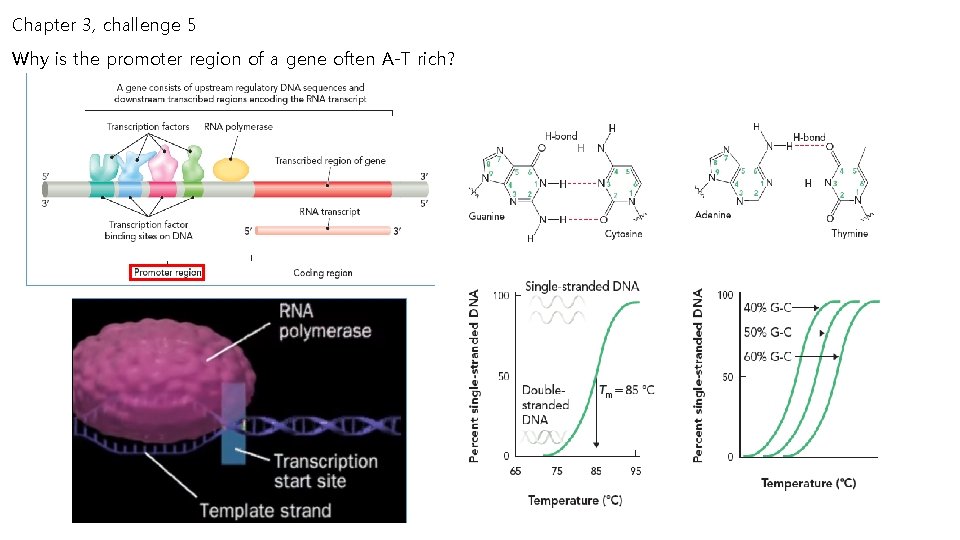
Chapter 3, challenge 5 Why is the promoter region of a gene often A-T rich?
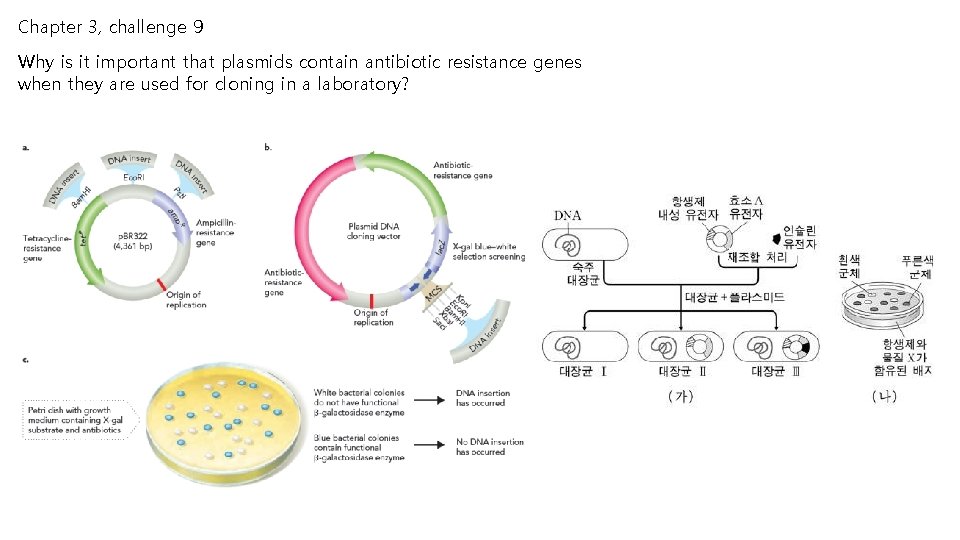
Chapter 3, challenge 9 Why is it important that plasmids contain antibiotic resistance genes when they are used for cloning in a laboratory?
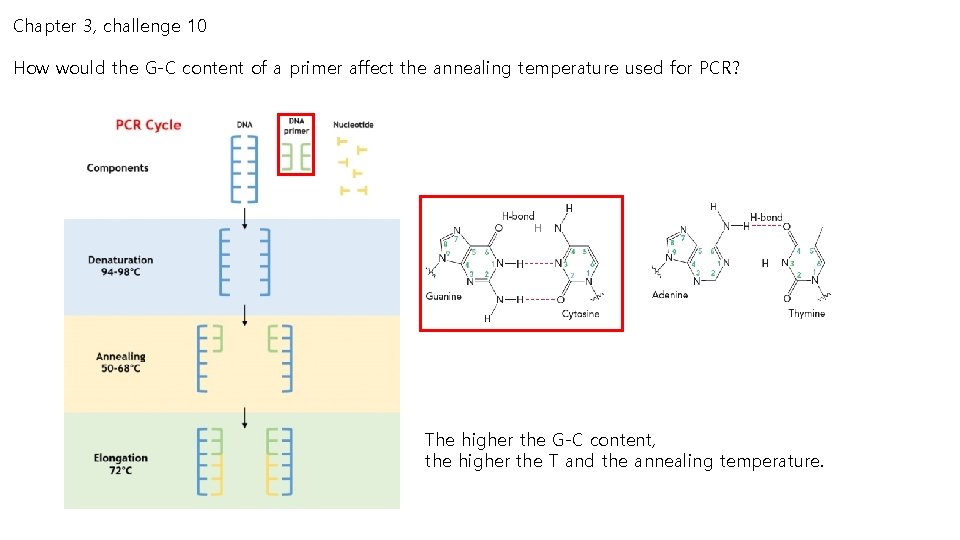
Chapter 3, challenge 10 How would the G-C content of a primer affect the annealing temperature used for PCR? The higher the G-C content, the higher the T and the annealing temperature.
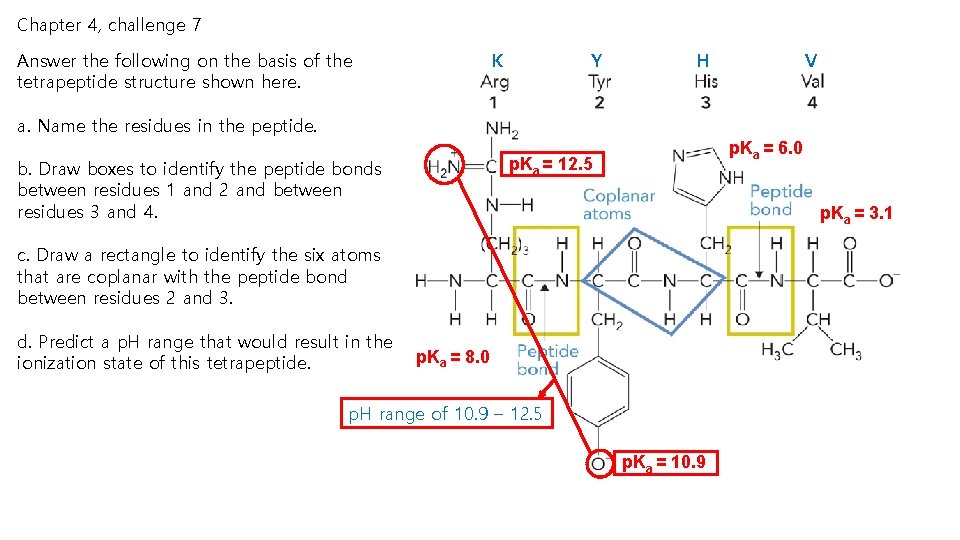
Chapter 4, challenge 7 K Answer the following on the basis of the tetrapeptide structure shown here. Y H V a. Name the residues in the peptide. p. Ka = 6. 0 p. Ka = 12. 5 b. Draw boxes to identify the peptide bonds between residues 1 and 2 and between residues 3 and 4. p. Ka = 3. 1 c. Draw a rectangle to identify the six atoms that are coplanar with the peptide bond between residues 2 and 3. d. Predict a p. H range that would result in the ionization state of this tetrapeptide. p. Ka = 8. 0 p. H range of 10. 9 – 12. 5 p. Ka = 10. 9
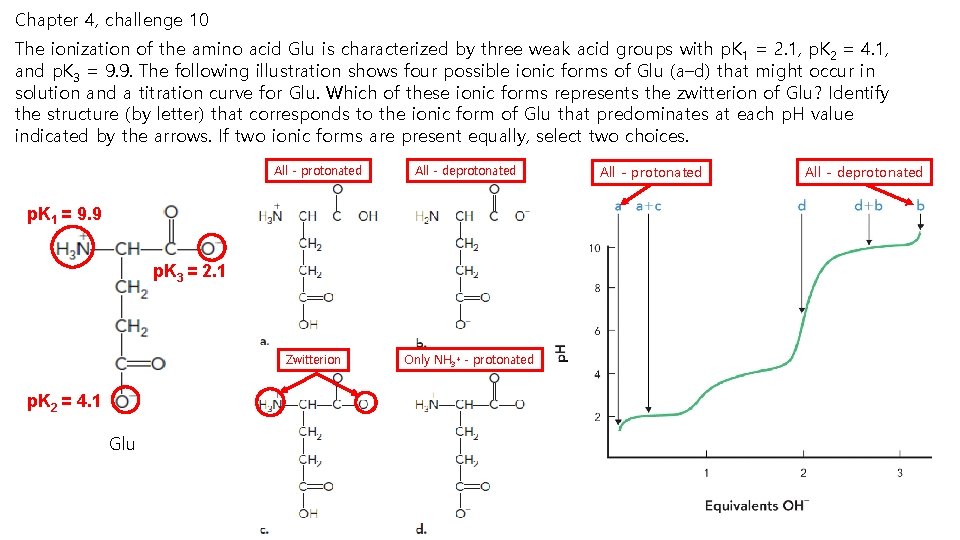
Chapter 4, challenge 10 The ionization of the amino acid Glu is characterized by three weak acid groups with p. K 1 = 2. 1, p. K 2 = 4. 1, and p. K 3 = 9. 9. The following illustration shows four possible ionic forms of Glu (a–d) that might occur in solution and a titration curve for Glu. Which of these ionic forms represents the zwitterion of Glu? Identify the structure (by letter) that corresponds to the ionic form of Glu that predominates at each p. H value indicated by the arrows. If two ionic forms are present equally, select two choices. All - protonated All - deprotonated p. K 1 = 9. 9 p. K 3 = 2. 1 Zwitterion p. K 2 = 4. 1 Glu Only NH 3+ - protonated All - deprotonated