
Chapter 1 Cells the Basic Building Blocks of
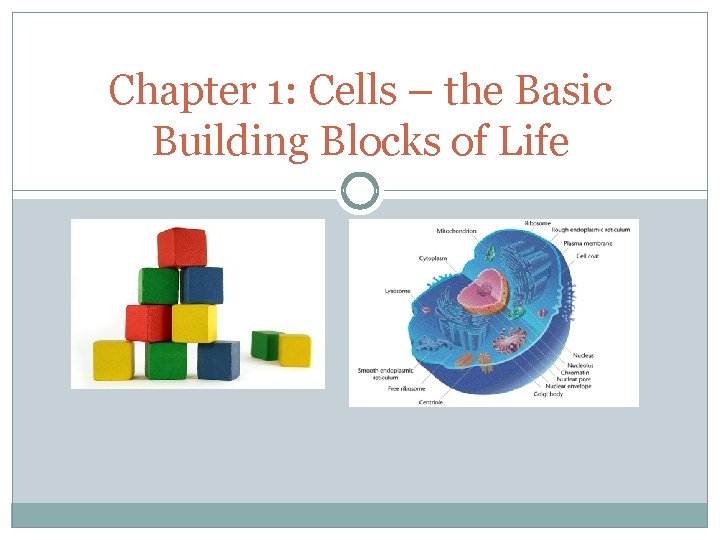
Chapter 1: Cells – the Basic Building Blocks of Life
Lesson 7: Understanding Organisation in Multicellular Organisms �Define the terms tissues, organs and organ systems. �Explain the organisational structure in multicellular organisms. �Compare the strengths and weaknesses of multicellular organisms and single celled organisms. �Did you know? There are 15 different organ systems within human beings, all working together to help us to survive.
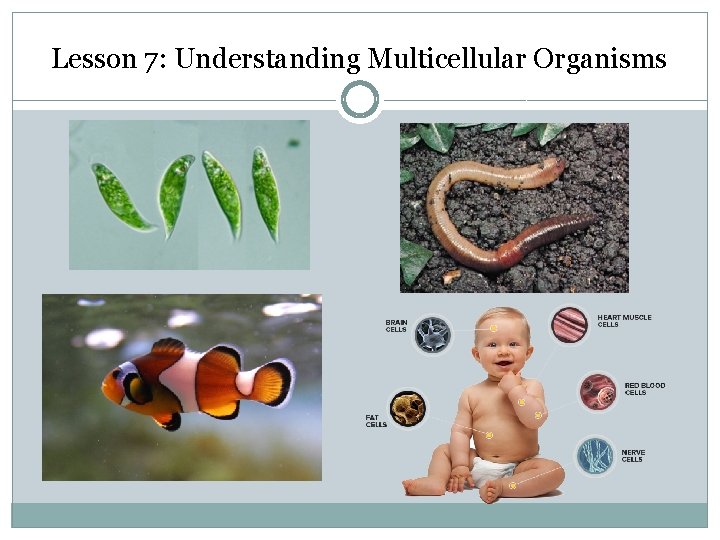
Lesson 7: Understanding Multicellular Organisms
Lesson 7: Cells, tissues and organs � Tissues: groups of similar specialised cells working together � Examples of human tissues are muscles and bones. � Organ: different tissues working together � Every organ has a specific job – the eye is an organ made up of many different tissues including a lens and an iris. They work together to enable us to see. � Examples of other organs are: � the heart, which pumps blood to the cells � the kidneys, which clean the body and balance water in the body � the brain, which allows us to control all parts of our body quickly. � Organ systems: made up of organs that work together. � Examples of the organ systems are: the circulatory system, the skeletal system, the respiratory system, the digestive system, the reproductive system and the nervous system.
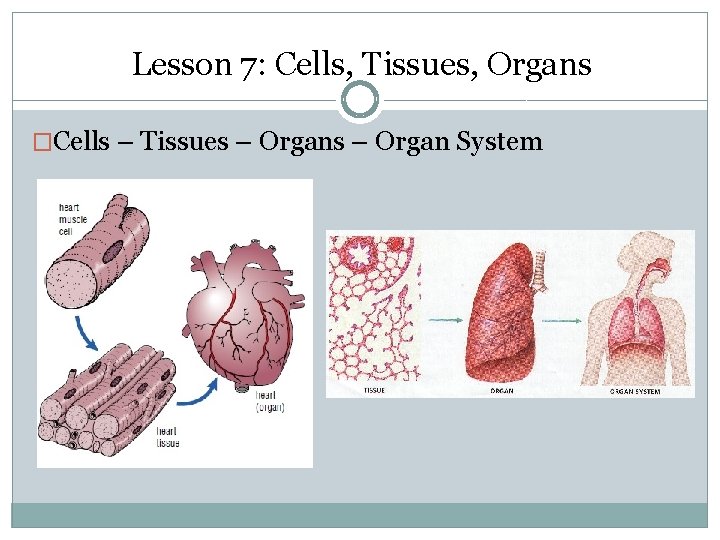
Lesson 7: Cells, Tissues, Organs �Cells – Tissues – Organ System
Lesson 7: How cell types evolved � Some cells evolved to join and work together, forming groups of cells. � An advantage of this was that in times of food shortage, food could be caught, digested and shared more effectively by cells working together. � Eventually some of the cells within the group became specialised and took on particular jobs. This eventually led to the formation of simple multicellular organisms. � These could grow to be much larger than the unicellular organisms and so were better protected and could move further in search of food. � However, they needed to evolve complex organ systems in order to become much larger. This requires a lot of energy, and the larger the organism became, the slower the rate of reproduction.
Lesson 7: Key Vocabulary and Notes Key Vocabulary: tissue, organ system Key Notes: Ø Organ systems are made from organs which are made from tissues which are made from cells! Ø Multicellular organisms are made from organisms working together Ø Multicellular organisms are larger than unicellular organisms Ø The larger the organisms the slower the rate of reproduction
Lesson 7: Questions and Answers 1. Name three organs and describe their function � Ans: � the heart, which pumps blood to the cells � the kidneys, which clean the body and balance water in the body � the brain, which allows us to control all parts of our body quickly 2. Describe the organisation of the multicellular organisms. (using: tissue, organ system, cell, organ) Ans: cell, tissue, organ system 3. What is one advantage of multicellular organisms over unicellular organisms? Ans: Multicellular organisms can grow larger to be able to protect themselves better.
- Slides: 8