
Chapter 1 Cell Structure Introduction Robert Hooke examined
Chapter 1 – Cell Structure
Introduction Robert Hooke examined slices of cork under a microscope and decided to call the ‘pore-like’ structures cells. About 200 years later, a general cell theory was proposed using the works of German scientists Schleiden (botanist, 1838) and Schwannn (zoologist, 1939). The cell theory states: Robert Hooke, through his observations, had discovered and described in his 1665 book the fundamental unit of all living things. The basic unit of structure and function of all living organisms is the cell. All cells arise from pre-existing cells by cell division. (Virchow, 1855) Cells a very similar to a bag in which the chemistry of life is allowed to happen. This is permitted because the cell is partially separated from its external environment by a thin, partially permeable membrane. The cell’s membrane is a very effective barrier, but also allows for certain materials to move in and out of the cell. This partial permeability allows for the cell to maintain a stable environment for optimal function. (homeostasis)
Cell Microscopy The branch of biology that studies cells is known as cell biology (normal cellular anatomy). Although cells can be studied using various methods, scientists began by “looking” at the cells using different types of microscopes. Nowadays, we use 2 fundamentally different types of microscopes. Both of the microscopes use a form of radiation in order to create am image of the specimen that is being examined. The light microscope uses light as its source of radiation. The electron microscope uses electrons. Early in the nineteenth century, dramatic improvements were made in the quality of glass lenses which allowed for rapid progress in microscope design and in preparing material for examination with microscopes. Cytology is the branch of biology that deals with the study of cells in terms of structure, function, and chemistry.
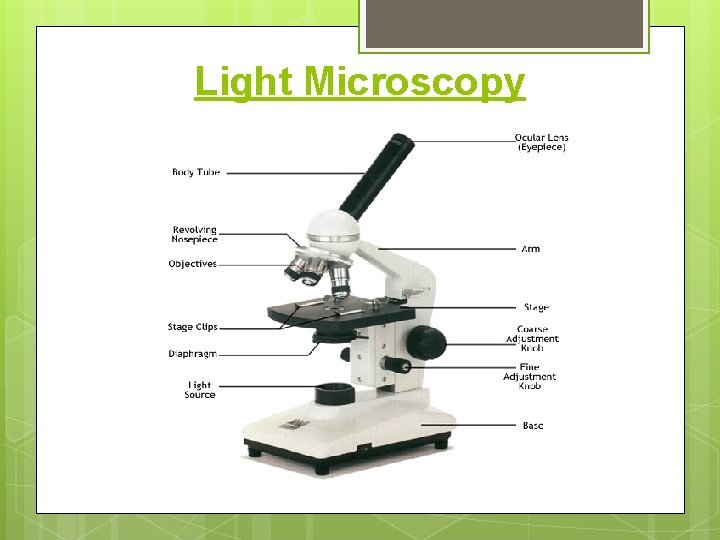
Light Microscopy
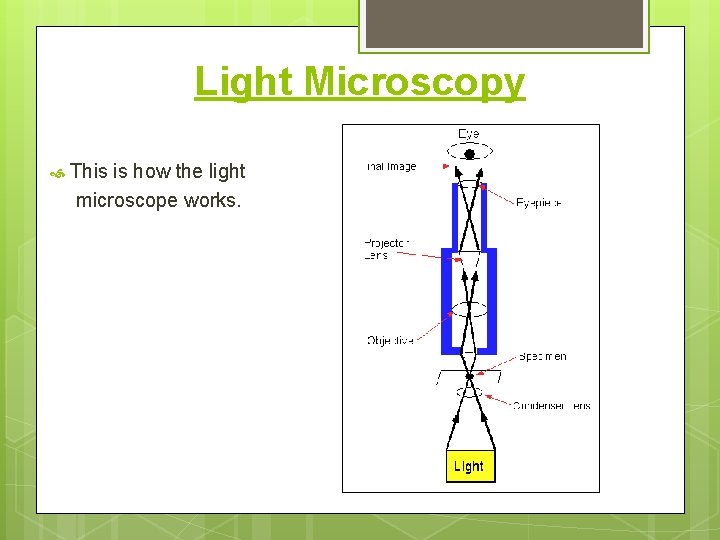
Light Microscopy This is how the light microscope works.
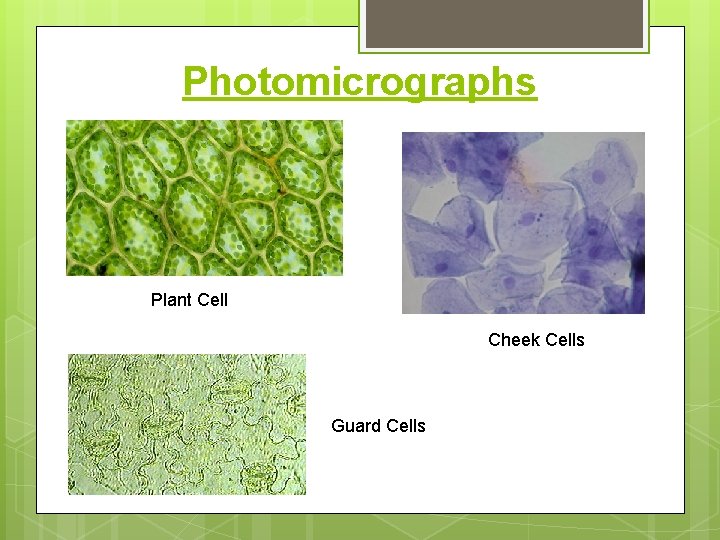
Photomicrographs Plant Cell Cheek Cells Guard Cells
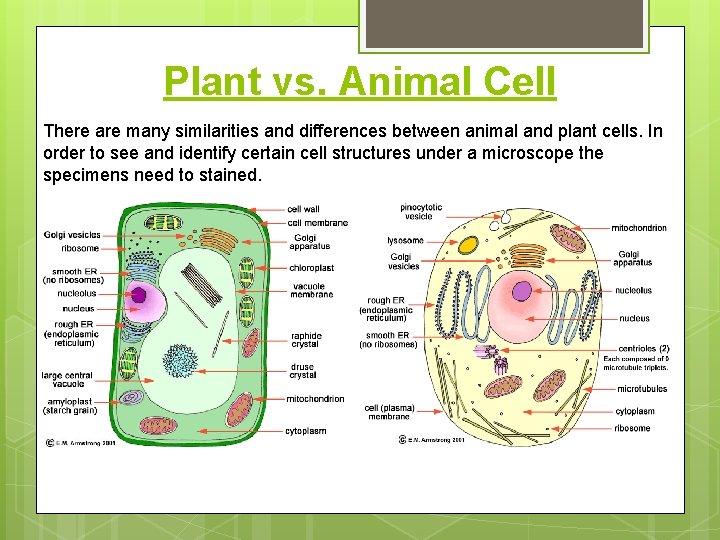
Plant vs. Animal Cell There are many similarities and differences between animal and plant cells. In order to see and identify certain cell structures under a microscope the specimens need to stained.
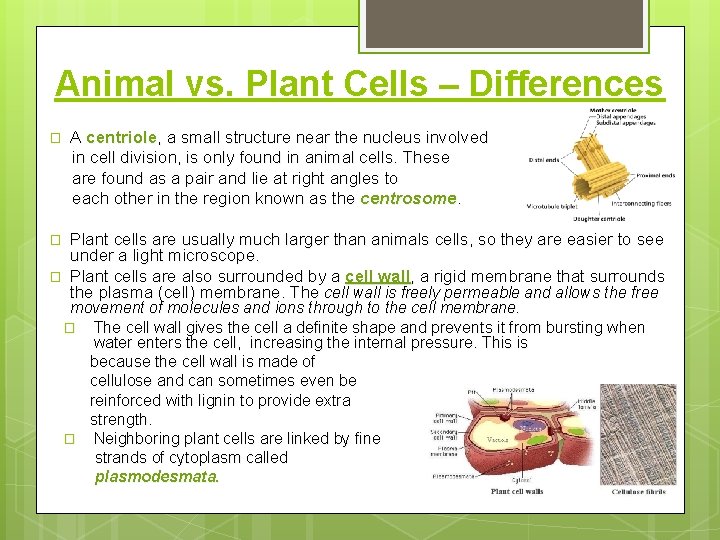
Animal vs. Plant Cells – Differences � A centriole, a small structure near the nucleus involved in cell division, is only found in animal cells. These are found as a pair and lie at right angles to each other in the region known as the centrosome. � Plant cells are usually much larger than animals cells, so they are easier to see under a light microscope. Plant cells are also surrounded by a cell wall, a rigid membrane that surrounds the plasma (cell) membrane. The cell wall is freely permeable and allows the free � movement of molecules and ions through to the cell membrane. � The cell wall gives the cell a definite shape and prevents it from bursting when water enters the cell, increasing the internal pressure. This is because the cell wall is made of cellulose and can sometimes even be reinforced with lignin to provide extra strength. � Neighboring plant cells are linked by fine strands of cytoplasm called plasmodesmata.

Animal vs. Plant Cells – Differences � Plant cells possess a large central vacuole surrounded by the tonoplast. (Unlike animal cells, the plant vacuole is large and permanent) � � The central vacuole is composed of a solution of mineral salts, sugars, O 2, CO 2, pigments, enzymes, and other organic compounds including waste products. The tonoplast controls any exchange between the cytoplasm and the vacuole. One of the main purposes of the vacuole is to regulate the osmotic properties of cells. Chloroplasts are large green organelles found mainly in the leaves of plants used in photosynthesis. They contain chlorophyll, the green pigment that absorbs light that is needed for the light dependent reactions of photosynthesis.
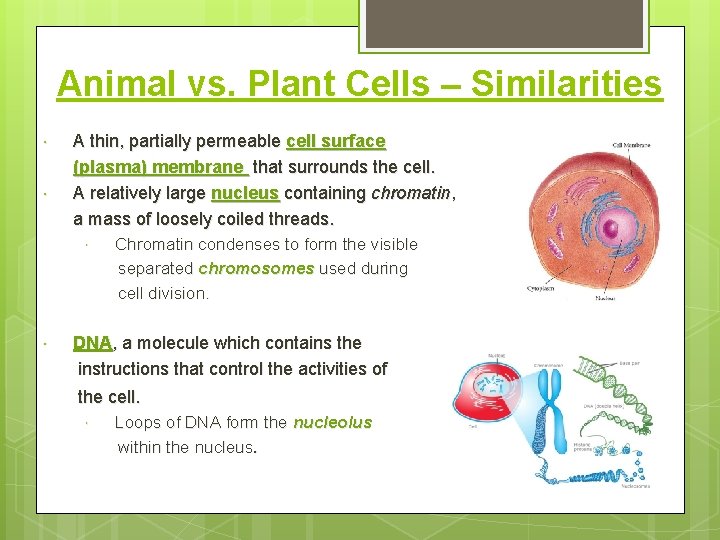
Animal vs. Plant Cells – Similarities A thin, partially permeable cell surface (plasma) membrane that surrounds the cell. A relatively large nucleus containing chromatin, a mass of loosely coiled threads. Chromatin condenses to form the visible separated chromosomes used during cell division. DNA, a molecule which contains the instructions that control the activities of the cell. Loops of DNA form the nucleolus within the nucleus.

Animal vs. Plant Cells – Similarities The cytoplasm, an aqueous material that is in between that plasma membrane and the nucleus. This can be liquid or jelly-like. Mitochondria is the most abundant organelle seen with a microscope responsible for aerobic respiration. Organelles, small and distinct functional and structural parts of the cell. Each organelle is separated from the cytoplasm by its own membrane. (compartmentalisation) This allows the cell to show division of labor, in which the work to reach the cell’s ultimate function is shared among the different specialized organelles. The Golgi apparatus, a part of a complex internal sorting and distribution system found within the cell.
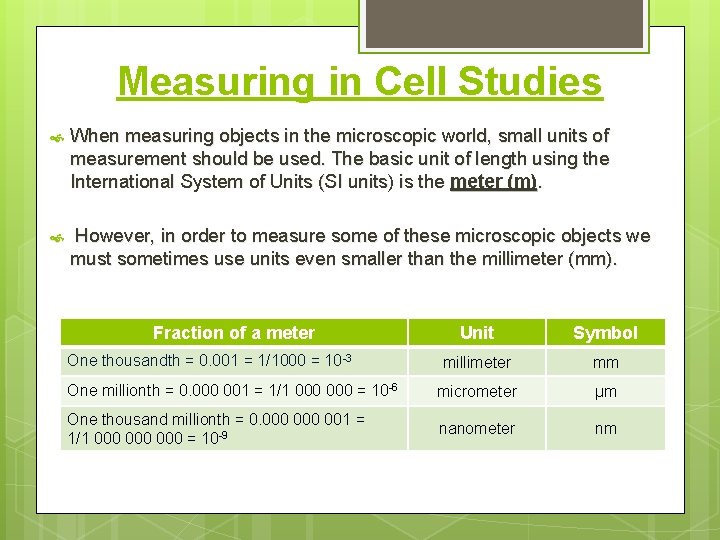
Measuring in Cell Studies When measuring objects in the microscopic world, small units of measurement should be used. The basic unit of length using the International System of Units (SI units) is the meter (m). However, in order to measure some of these microscopic objects we must sometimes use units even smaller than the millimeter (mm). Fraction of a meter Unit Symbol millimeter mm One millionth = 0. 000 001 = 1/1 000 = 10 -6 micrometer μm One thousand millionth = 0. 000 001 = 1/1 000 000 = 10 -9 nanometer nm One thousandth = 0. 001 = 1/1000 = 10 -3
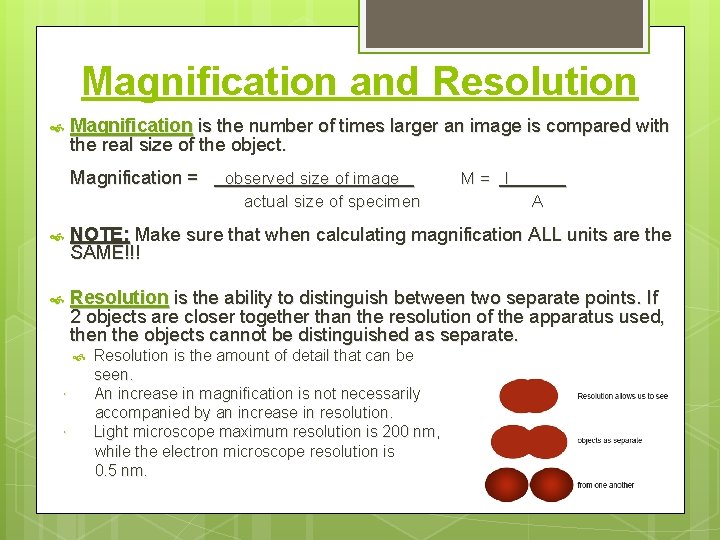
Magnification and Resolution Magnification is the number of times larger an image is compared with the real size of the object. Magnification = observed size of image actual size of specimen M= I A NOTE: Make sure that when calculating magnification ALL units are the SAME!!! Resolution is the ability to distinguish between two separate points. If 2 objects are closer together than the resolution of the apparatus used, then the objects cannot be distinguished as separate. Resolution is the amount of detail that can be seen. An increase in magnification is not necessarily accompanied by an increase in resolution. Light microscope maximum resolution is 200 nm, while the electron microscope resolution is 0. 5 nm.
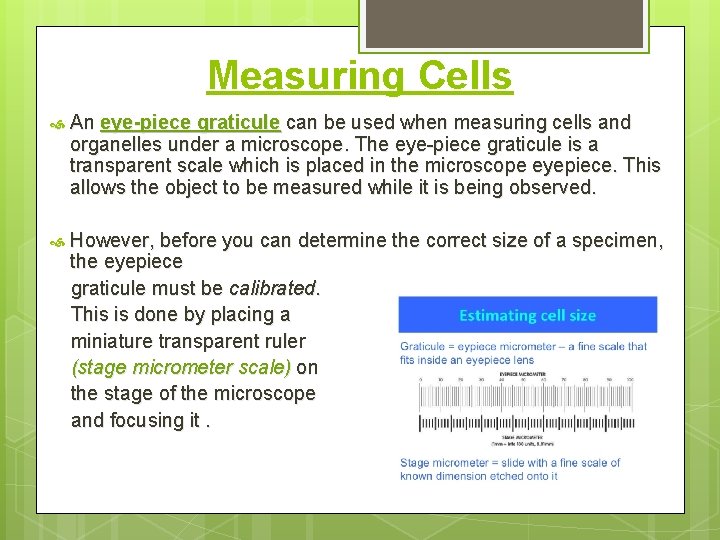
Measuring Cells An eye-piece graticule can be used when measuring cells and organelles under a microscope. The eye-piece graticule is a transparent scale which is placed in the microscope eyepiece. This allows the object to be measured while it is being observed. However, before you can determine the correct size of a specimen, the eyepiece graticule must be calibrated. This is done by placing a miniature transparent ruler (stage micrometer scale) on the stage of the microscope and focusing it.
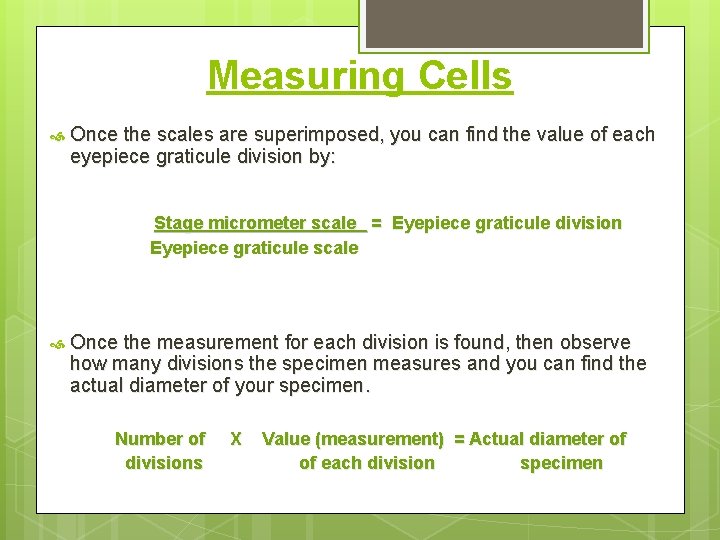
Measuring Cells Once the scales are superimposed, you can find the value of each eyepiece graticule division by: Stage micrometer scale = Eyepiece graticule division Eyepiece graticule scale Once the measurement for each division is found, then observe how many divisions the specimen measures and you can find the actual diameter of your specimen. Number of divisions X Value (measurement) = Actual diameter of of each division specimen
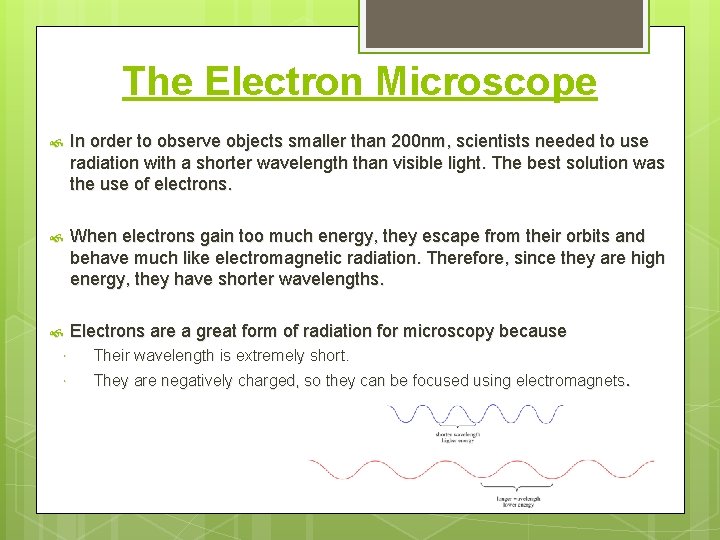
The Electron Microscope In order to observe objects smaller than 200 nm, scientists needed to use radiation with a shorter wavelength than visible light. The best solution was the use of electrons. When electrons gain too much energy, they escape from their orbits and behave much like electromagnetic radiation. Therefore, since they are high energy, they have shorter wavelengths. Electrons are a great form of radiation for microscopy because Their wavelength is extremely short. They are negatively charged, so they can be focused using electromagnets.
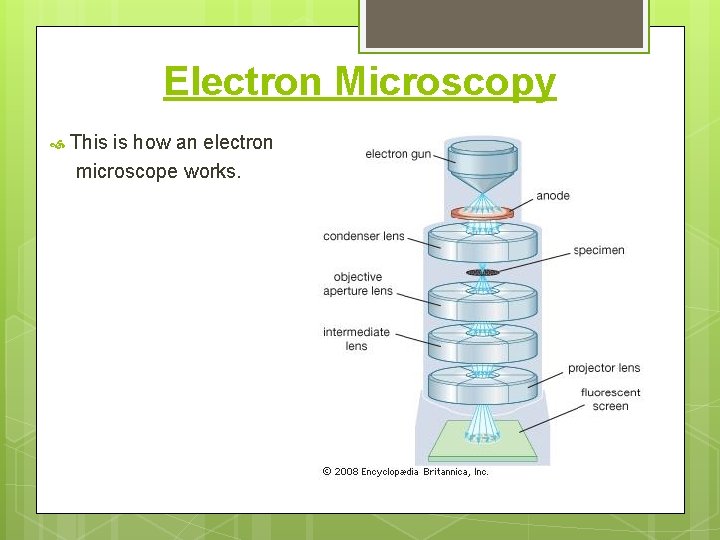
Electron Microscopy This is how an electron microscope works.
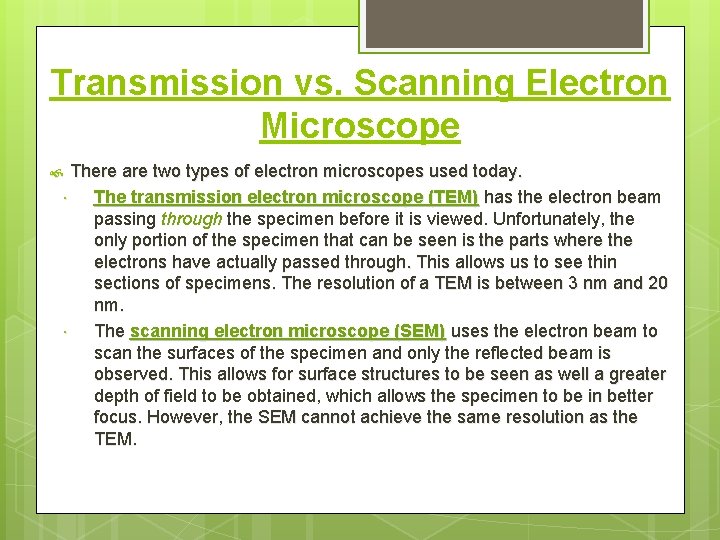
Transmission vs. Scanning Electron Microscope There are two types of electron microscopes used today. The transmission electron microscope (TEM) has the electron beam passing through the specimen before it is viewed. Unfortunately, the only portion of the specimen that can be seen is the parts where the electrons have actually passed through. This allows us to see thin sections of specimens. The resolution of a TEM is between 3 nm and 20 nm. The scanning electron microscope (SEM) uses the electron beam to scan the surfaces of the specimen and only the reflected beam is observed. This allows for surface structures to be seen as well a greater depth of field to be obtained, which allows the specimen to be in better focus. However, the SEM cannot achieve the same resolution as the TEM.
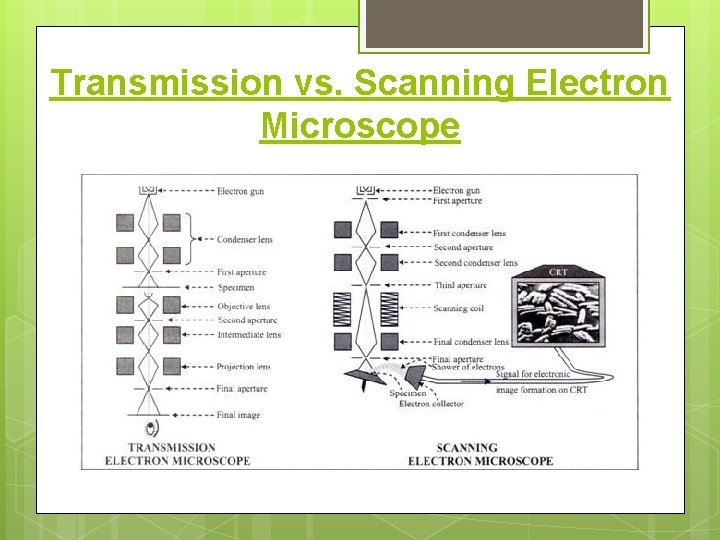
Transmission vs. Scanning Electron Microscope
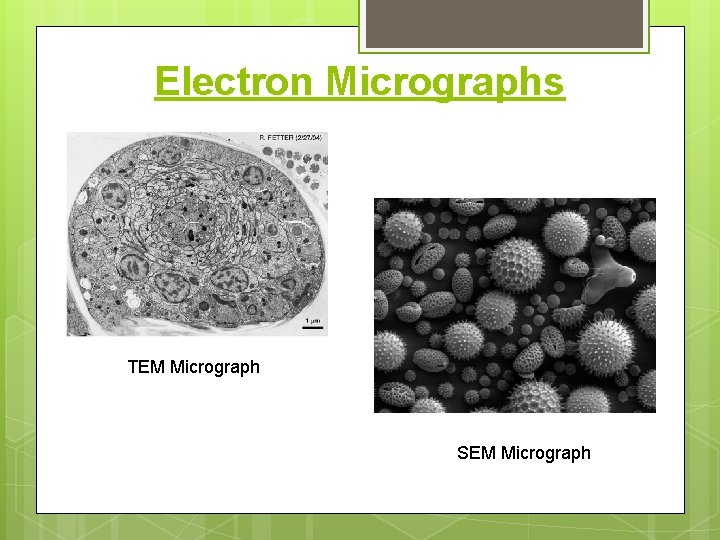
Electron Micrographs TEM Micrograph SEM Micrograph
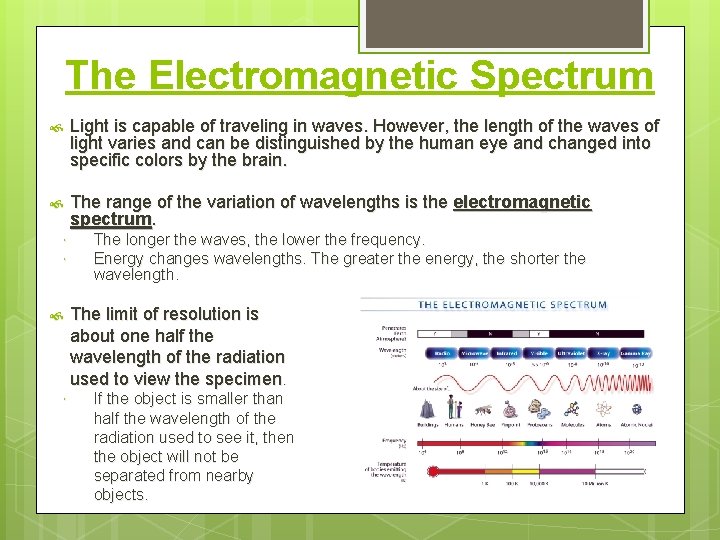
The Electromagnetic Spectrum Light is capable of traveling in waves. However, the length of the waves of light varies and can be distinguished by the human eye and changed into specific colors by the brain. The range of the variation of wavelengths is the electromagnetic spectrum. The longer the waves, the lower the frequency. Energy changes wavelengths. The greater the energy, the shorter the wavelength. The limit of resolution is about one half the wavelength of the radiation used to view the specimen. If the object is smaller than half the wavelength of the radiation used to see it, then the object will not be separated from nearby objects.
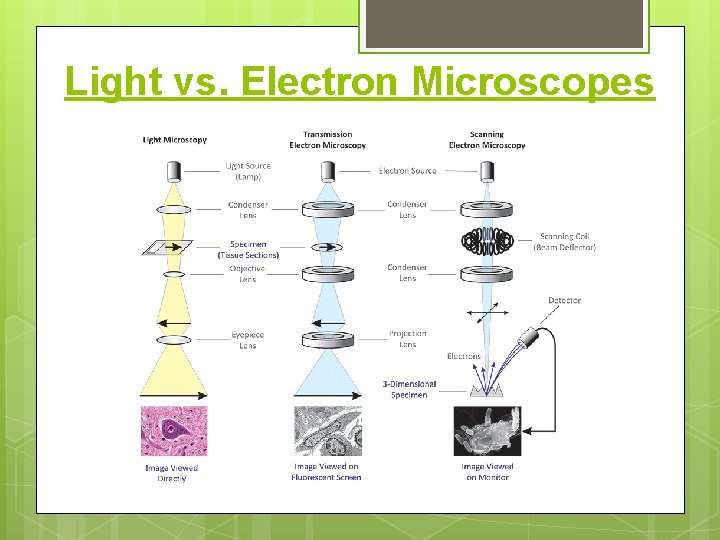
Light vs. Electron Microscopes
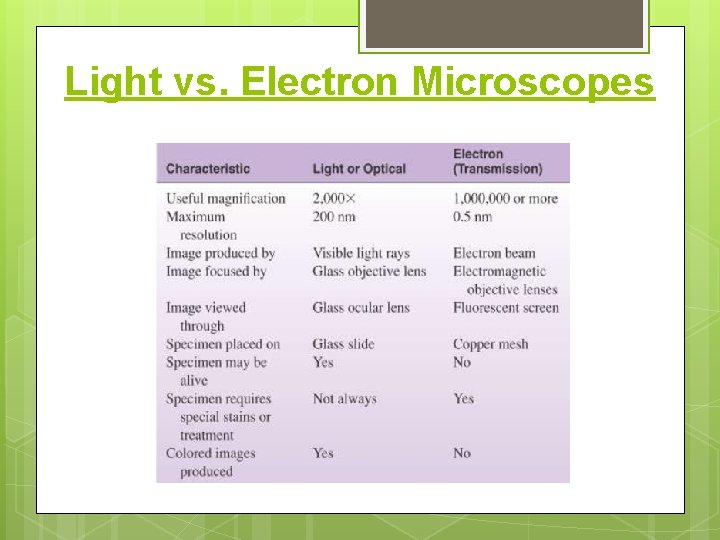
Light vs. Electron Microscopes

Ultrastructure of Animal Cell The ultrastructure of a cell is the detailed structure that is revealed by the electron microscope.
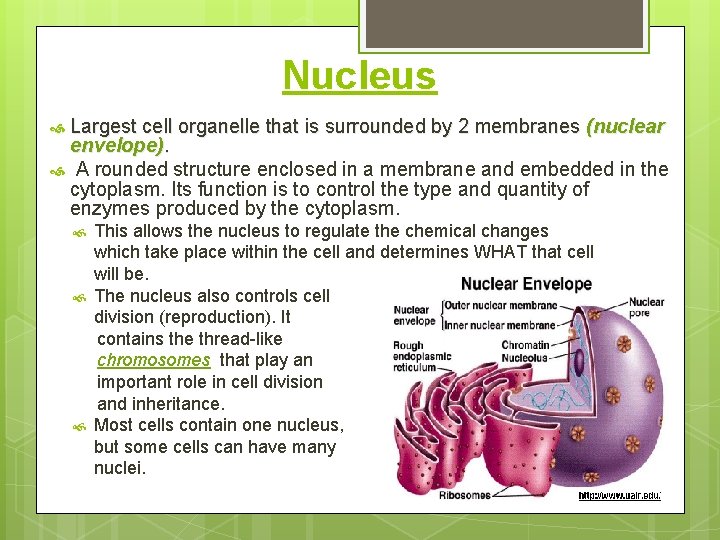
Nucleus Largest cell organelle that is surrounded by 2 membranes (nuclear envelope). A rounded structure enclosed in a membrane and embedded in the cytoplasm. Its function is to control the type and quantity of enzymes produced by the cytoplasm. This allows the nucleus to regulate the chemical changes which take place within the cell and determines WHAT that cell will be. The nucleus also controls cell division (reproduction). It contains the thread-like chromosomes that play an important role in cell division and inheritance. Most cells contain one nucleus, but some cells can have many nuclei.
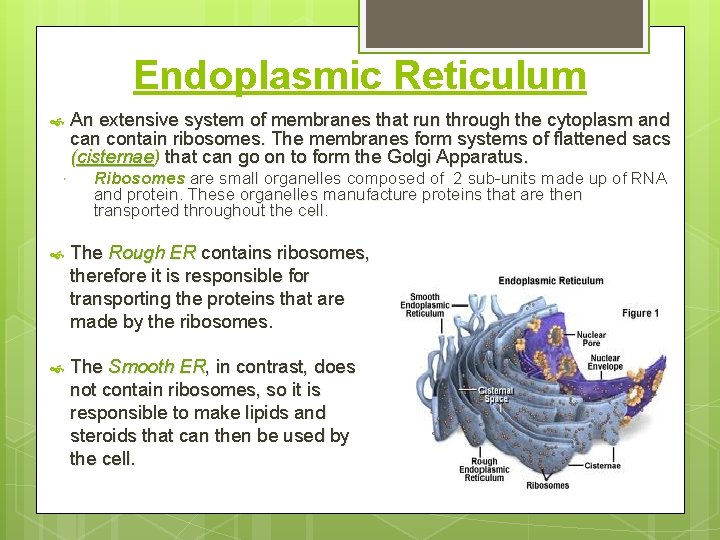
Endoplasmic Reticulum An extensive system of membranes that run through the cytoplasm and can contain ribosomes. The membranes form systems of flattened sacs (cisternae) that can go on to form the Golgi Apparatus. Ribosomes are small organelles composed of 2 sub-units made up of RNA and protein. These organelles manufacture proteins that are then transported throughout the cell. The Rough ER contains ribosomes, therefore it is responsible for transporting the proteins that are made by the ribosomes. The Smooth ER, in contrast, does not contain ribosomes, so it is responsible to make lipids and steroids that can then be used by the cell.
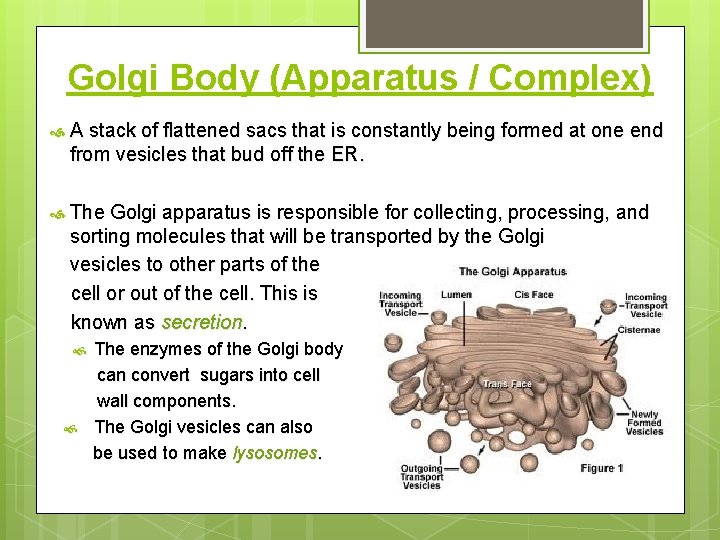
Golgi Body (Apparatus / Complex) A stack of flattened sacs that is constantly being formed at one end from vesicles that bud off the ER. The Golgi apparatus is responsible for collecting, processing, and sorting molecules that will be transported by the Golgi vesicles to other parts of the cell or out of the cell. This is known as secretion. The enzymes of the Golgi body can convert sugars into cell wall components. The Golgi vesicles can also be used to make lysosomes.
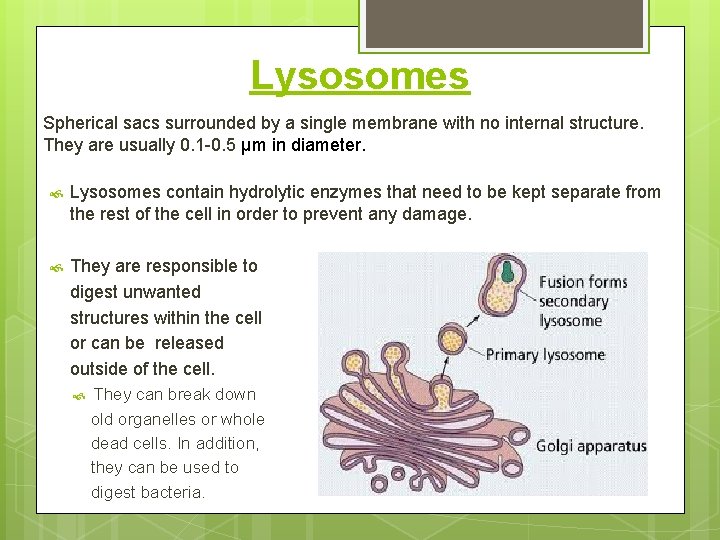
Lysosomes Spherical sacs surrounded by a single membrane with no internal structure. They are usually 0. 1 -0. 5 μm in diameter. Lysosomes contain hydrolytic enzymes that need to be kept separate from the rest of the cell in order to prevent any damage. They are responsible to digest unwanted structures within the cell or can be released outside of the cell. They can break down old organelles or whole dead cells. In addition, they can be used to digest bacteria.
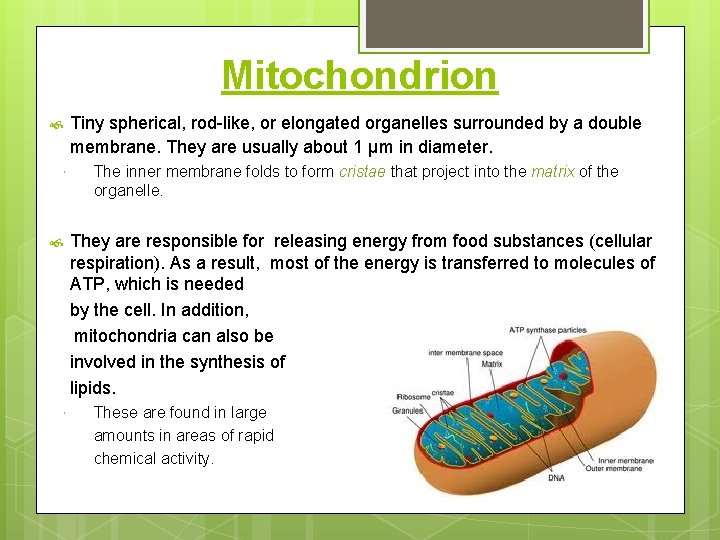
Mitochondrion Tiny spherical, rod-like, or elongated organelles surrounded by a double membrane. They are usually about 1 μm in diameter. The inner membrane folds to form cristae that project into the matrix of the organelle. They are responsible for releasing energy from food substances (cellular respiration). As a result, most of the energy is transferred to molecules of ATP, which is needed by the cell. In addition, mitochondria can also be involved in the synthesis of lipids. These are found in large amounts in areas of rapid chemical activity.
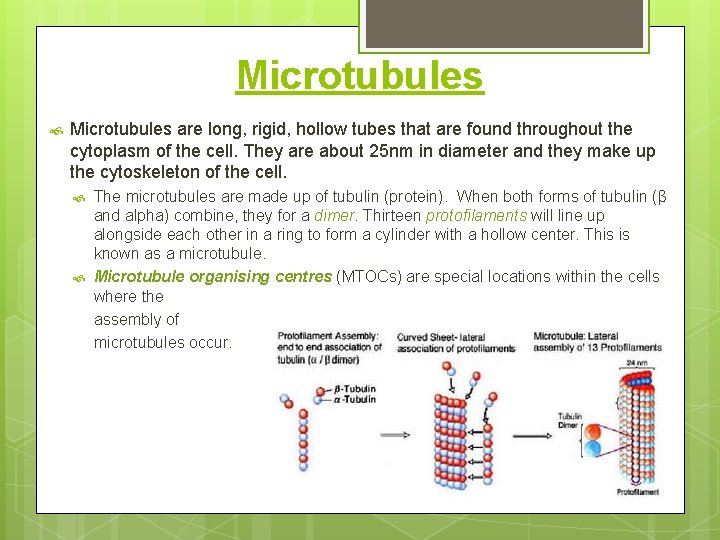
Microtubules are long, rigid, hollow tubes that are found throughout the cytoplasm of the cell. They are about 25 nm in diameter and they make up the cytoskeleton of the cell. The microtubules are made up of tubulin (protein). When both forms of tubulin (β and alpha) combine, they for a dimer. Thirteen protofilaments will line up alongside each other in a ring to form a cylinder with a hollow center. This is known as a microtubule. Microtubule organising centres (MTOCs) are special locations within the cells where the assembly of microtubules occur.
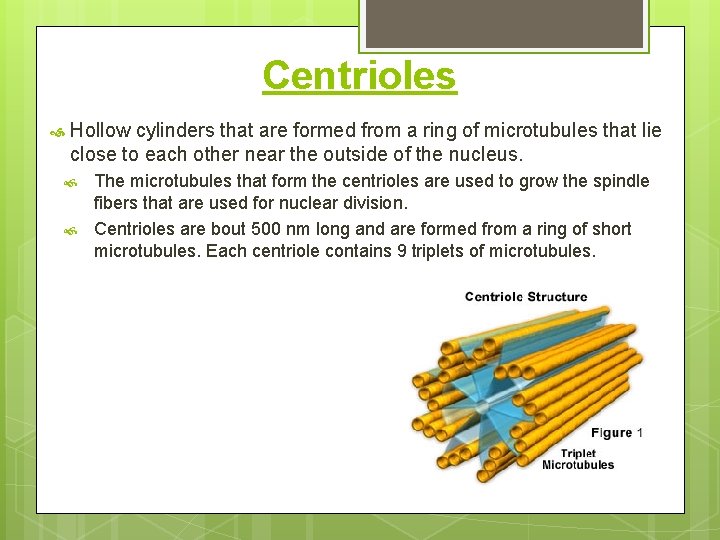
Centrioles Hollow cylinders that are formed from a ring of microtubules that lie close to each other near the outside of the nucleus. The microtubules that form the centrioles are used to grow the spindle fibers that are used for nuclear division. Centrioles are bout 500 nm long and are formed from a ring of short microtubules. Each centriole contains 9 triplets of microtubules.
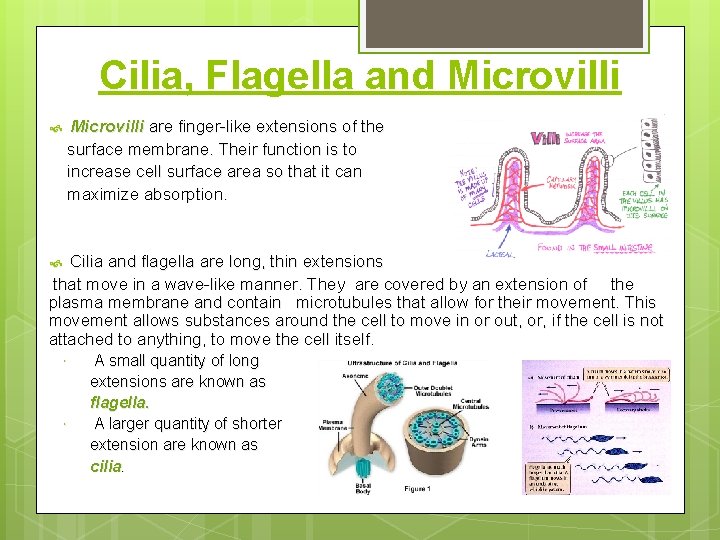
Cilia, Flagella and Microvilli are finger-like extensions of the surface membrane. Their function is to increase cell surface area so that it can maximize absorption. Cilia and flagella are long, thin extensions that move in a wave-like manner. They are covered by an extension of the plasma membrane and contain microtubules that allow for their movement. This movement allows substances around the cell to move in or out, or, if the cell is not attached to anything, to move the cell itself. A small quantity of long extensions are known as flagella. A larger quantity of shorter extension are known as cilia.
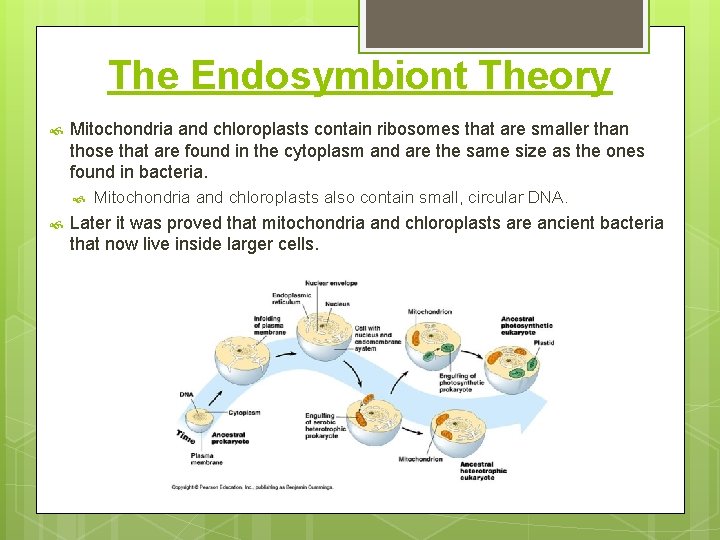
The Endosymbiont Theory Mitochondria and chloroplasts contain ribosomes that are smaller than those that are found in the cytoplasm and are the same size as the ones found in bacteria. Mitochondria and chloroplasts also contain small, circular DNA. Later it was proved that mitochondria and chloroplasts are ancient bacteria that now live inside larger cells.
Plant vs. Animal Cells Plant cells differ from animal cells in many ways. Plant cells contain 3 important structures / organelles that are not present in animal cells: Cell Wall – This is a tough wall made of cellulose or other compounds that is tightly placed against the outside of the cell membrane. It is a non-living structure that allows water and other dissolved substances to pass through. IT IS FULLY permeable!!! Vacuole – This is a large, fluid-filled space that contains cell sap. Cell sap is a watery solution made up of sugars, salts, and sometimes pigments. Due to its size, the vacuole pushes the cytoplasm aside so that it forms a thin lining inside the cell wall. This causes an outward pressure that makes the plant cells and tissues extremely rigid. NOTE: Some animal cells can produce smaller vacuoles. However, these vacuoles are only produced to carry out a particular job and are not permanent. Plastids – These are organelles that are only found in plant cells. If they contain chlorophyll (green pigment), these plastid are known as chloroplasts (photosynthesis). If they are colorless, they usually contain starch, which is used as a food source.
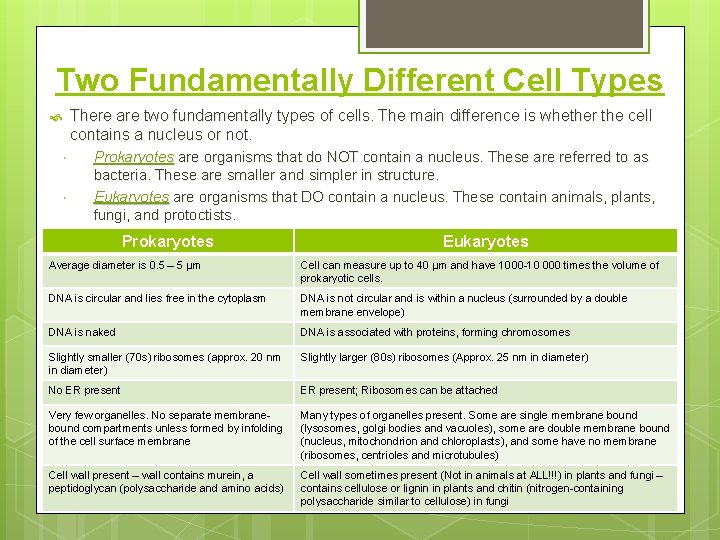
Two Fundamentally Different Cell Types There are two fundamentally types of cells. The main difference is whether the cell contains a nucleus or not. Prokaryotes are organisms that do NOT contain a nucleus. These are referred to as bacteria. These are smaller and simpler in structure. Eukaryotes are organisms that DO contain a nucleus. These contain animals, plants, fungi, and protoctists. Prokaryotes Eukaryotes Average diameter is 0. 5 – 5 μm Cell can measure up to 40 μm and have 1000 -10 000 times the volume of prokaryotic cells. DNA is circular and lies free in the cytoplasm DNA is not circular and is within a nucleus (surrounded by a double membrane envelope) DNA is naked DNA is associated with proteins, forming chromosomes Slightly smaller (70 s) ribosomes (approx. 20 nm in diameter) Slightly larger (80 s) ribosomes (Approx. 25 nm in diameter) No ER present; Ribosomes can be attached Very few organelles. No separate membranebound compartments unless formed by infolding of the cell surface membrane Many types of organelles present. Some are single membrane bound (lysosomes, golgi bodies and vacuoles), some are double membrane bound (nucleus, mitochondrion and chloroplasts), and some have no membrane (ribosomes, centrioles and microtubules) Cell wall present – wall contains murein, a peptidoglycan (polysaccharide and amino acids) Cell wall sometimes present (Not in animals at ALL!!!) in plants and fungi – contains cellulose or lignin in plants and chitin (nitrogen-containing polysaccharide similar to cellulose) in fungi
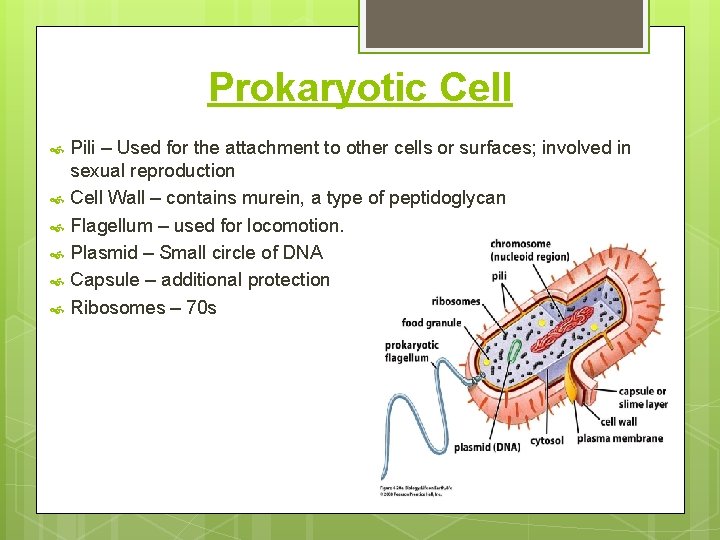
Prokaryotic Cell Pili – Used for the attachment to other cells or surfaces; involved in sexual reproduction Cell Wall – contains murein, a type of peptidoglycan Flagellum – used for locomotion. Plasmid – Small circle of DNA Capsule – additional protection Ribosomes – 70 s
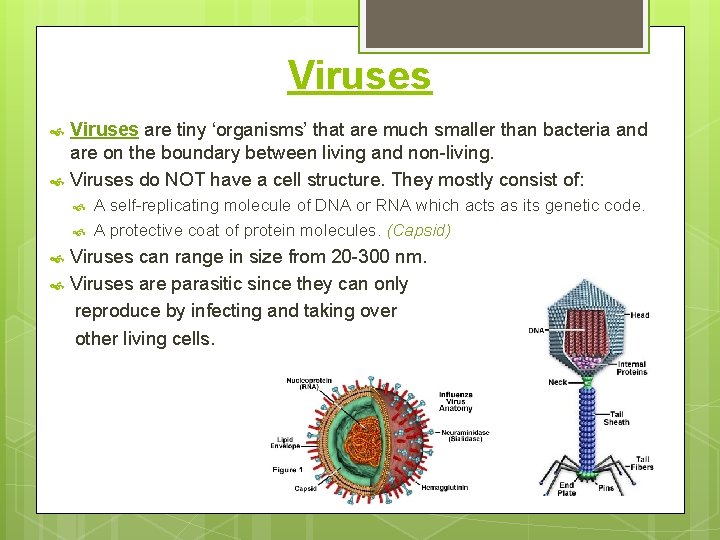
Viruses are tiny ‘organisms’ that are much smaller than bacteria and are on the boundary between living and non-living. Viruses do NOT have a cell structure. They mostly consist of: A self-replicating molecule of DNA or RNA which acts as its genetic code. A protective coat of protein molecules. (Capsid) Viruses can range in size from 20 -300 nm. Viruses are parasitic since they can only reproduce by infecting and taking over other living cells.
- Slides: 37