
Chapter 1 BiologyStudy of Life Biotic Factors living

Chapter 1

• Biology—Study of Life
• Biotic Factors--- living components of an environment (Examples: plants and animals etc. ) • Abiotic Factors— nonliving components in an environment • • temperature precipitation humidity wind nutrient availability soil type sunlight Copyright Pearson Prentice Hall
CHARACTERISTICS OF LIVING ORGANISMS SECTION 1 -3: STUDYING LIFE
1. Made up of Cells Basic building blocks of all life § 2 TYPES OF CELLS A. PROKARYOTIC CELLS B. EUKARYOTIC CELLS
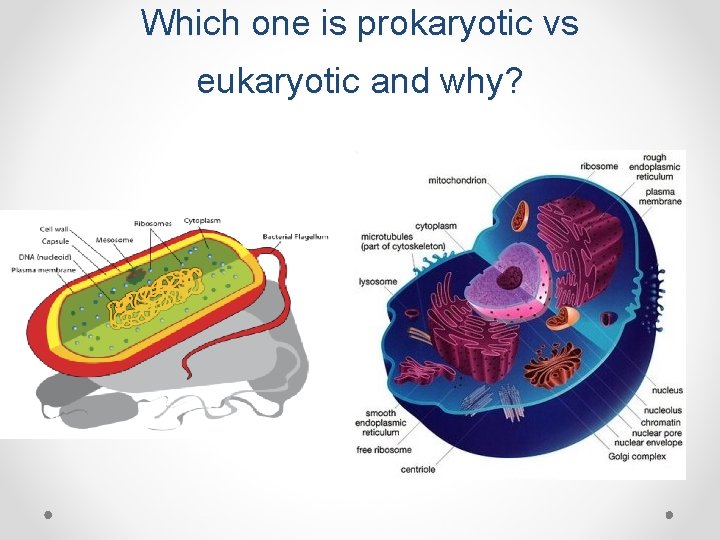
Which one is prokaryotic vs eukaryotic and why?
A. Prokaryotic Cells • “Prokaryotes” • “Pro” means first • Have DNA: no nucleus to hold it in • Very small and simple EXAMPLES • unicellular bacteria
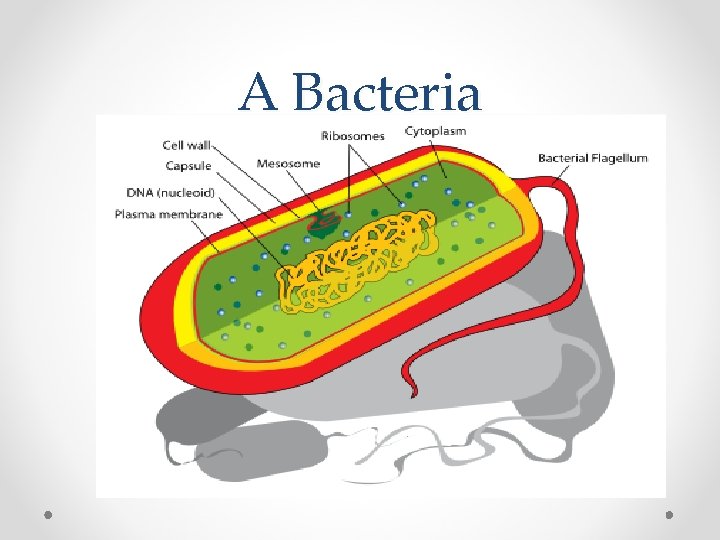
A Bacteria
B. Eukaryotic Cells § § § “Eukaryotes” “Eu” means true Have a nucleus More complex and larger in size EXAMPLES. protists (unicellular) fungi, plants, and animals (multicellular)
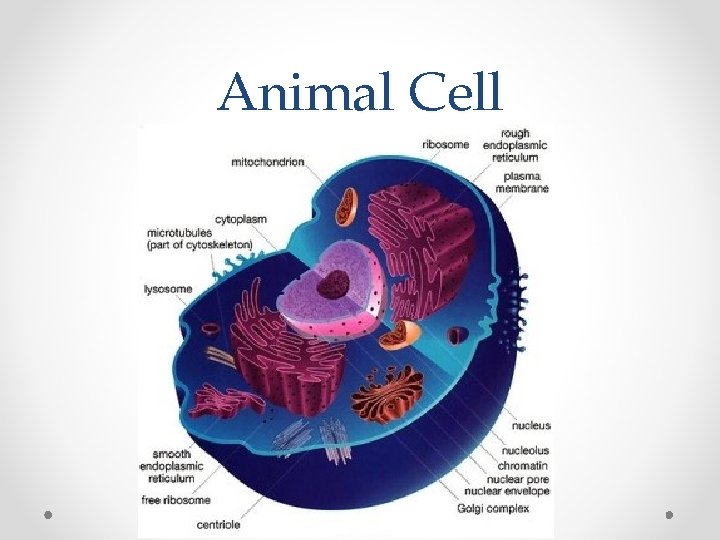
Animal Cell
List all differences between prokaryotic and eukaryotic and give an example of each
2. All Living Things Reproduce • Two Types of Reproduction A. Asexual Reproduction B. Sexual Reproduction
• What is the difference between the 2?
A. Asexual Reproduction • • • No exchange of DNA Only requires one parent Cell splits in half to form two identical offspring No genetic variation Also called cloning, mitosis
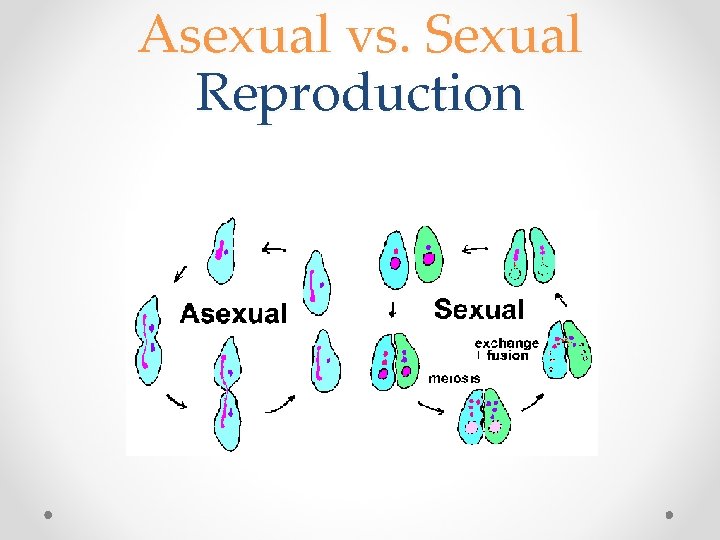
Asexual vs. Sexual Reproduction
B. Sexual Reproduction • • Combination of both parents’ DNA Requires a male and a female Much more genetic variation Meiosis
3. Living Things ALL HAVE DNA § All living organisms have DNA § All DNA is made of the same chemicals
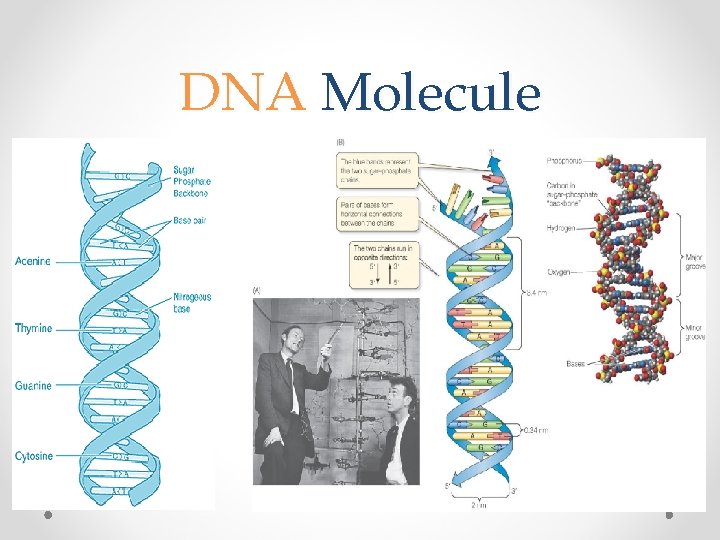
DNA Molecule
4. Living Things Grow and Develop • Growth: “gets bigger” by mitosis • Development: Characteristics that develop your lifetime during
5. Living Things Obtain and Use Materials and Energy All must make or eat some type of “food” to make energy in the form of ATP to function Example a. b. c. d. e. Respiration Heal Digestion Excretion Circulation ENERGY=ATP
metabolism • all of the processes that keep you alive
How Organisms Eat § Three Ways to Obtain Energy Troph= to feed or nourish A. Autotroph B. Chemotroph C. Heterotroph What do these mean? ? ?
A. Autotrophs and PRODUCERS § make their own food through photosynthesis § PHOTOSYNTHESIS -process by which plants and some other organisms use light energy to convert water and carbon dioxide into oxygen and high-energy carbohydrates such as sugars and starches
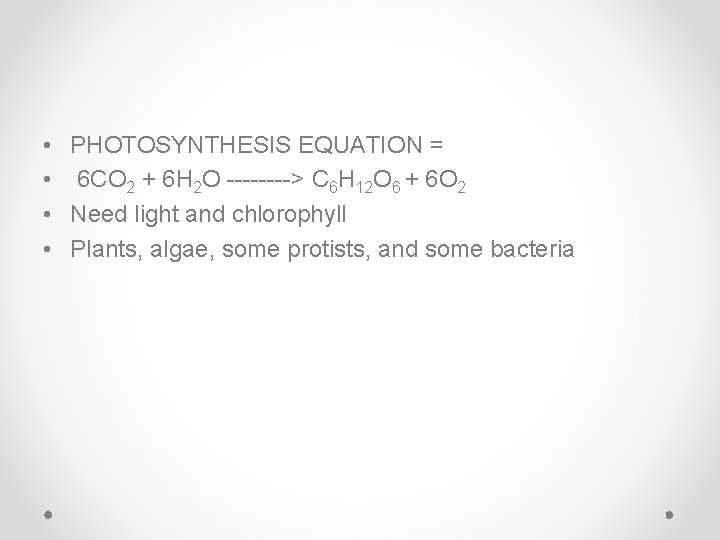
• PHOTOSYNTHESIS EQUATION = • 6 CO 2 + 6 H 2 O ----> C 6 H 12 O 6 + 6 O 2 • Need light and chlorophyll • Plants, algae, some protists, and some bacteria
B. Chemotrophs § CHEMOSYNTHESIS § Organisms that make their own food by using a chemical found in their environment § Some bacteria § Use sulfer or nitrogen
C. Heterotrophs or CONSUMERS Eat other organisms § Types are: 1. Herbivores: eat plants 2. Carnivores: eat other animals 3. Omnivores: eat both plants and animals 4. decomposers break down dead organisms into a liquid form *fungi and bacteria* 5. Parasites: live in or on another organism tapeworms, ticks, fleas
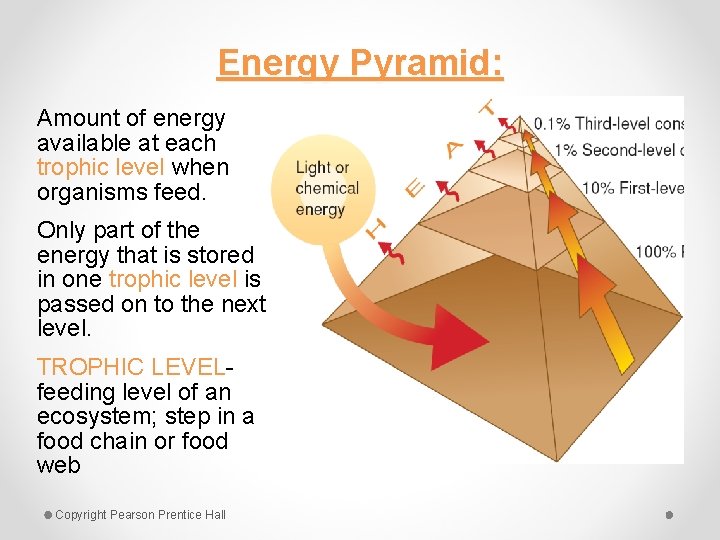
Energy Pyramid: Amount of energy available at each trophic level when organisms feed. Only part of the energy that is stored in one trophic level is passed on to the next level. TROPHIC LEVELfeeding level of an ecosystem; step in a food chain or food web Copyright Pearson Prentice Hall
Energy Pyramids o. Only about 10 percent of the energy available within one trophic level is transferred to organisms at the next trophic level. o. Food chain with 4 levels. o. Amount of energy = 100>10>1>0. 1 for each level Copyright Pearson Prentice Hall
Levels of Consumers • Primary- eat only plants (herbivores) • Secondary – eat the herbivores (They are carnivores) • Tertiary- eat the secondary or carnivores that eat carnivores Put examples of each in your notes
MAKE A FOOD CHAIN • USE TROUT, ALGAE, EAGLE, MINNOW • NOW ADD TO IT ORGANISMS TO MAKE A FOOD WEB
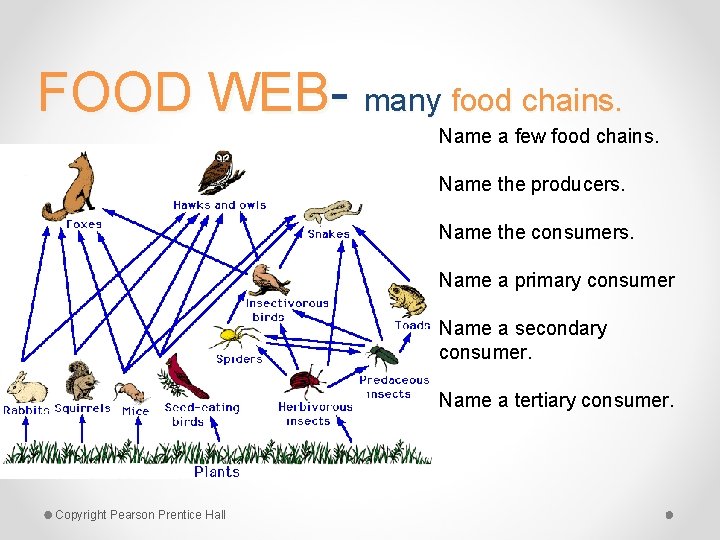
FOOD WEB- many food chains. Name a few food chains. Name the producers. Name the consumers. Name a primary consumer Name a secondary consumer. Name a tertiary consumer. Copyright Pearson Prentice Hall
Community Interactions §Symbiosis--the relationship between different species living in close association with one another. § 5 Major Types of Symbiosis § 1. ) Predation § 2. ) Parasitism § 3. ) Competition § 4. ) Mutualism § 5. ) Commensalism Copyright Pearson Prentice Hall
Symbiosis TYPES • 1. ) Predation • one individual, the predator, captures, kills, and consumes another individual, the prey. • an effective regulator of population size. • Natural selection favors adaptations that improve the efficiency of predators and prey. Copyright Pearson Prentice Hall
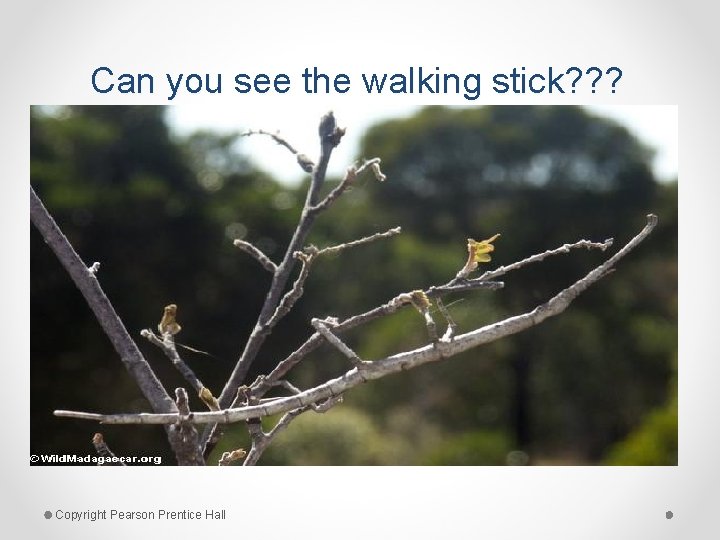
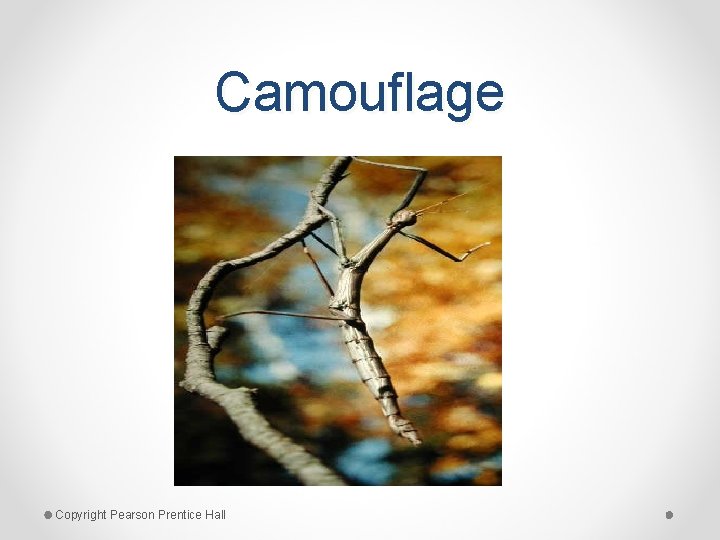
Predator Examples: Rattlesnakes, spiders, wolves, tigers etc. Prey: 1. ) Flee when a predator approaches 2. ) Hide or try to resemble an inedible object 3. ) Some organisms use bright colors Examples: poison dart frogs, coral snake etc. § Copyright Pearson Prentice Hall
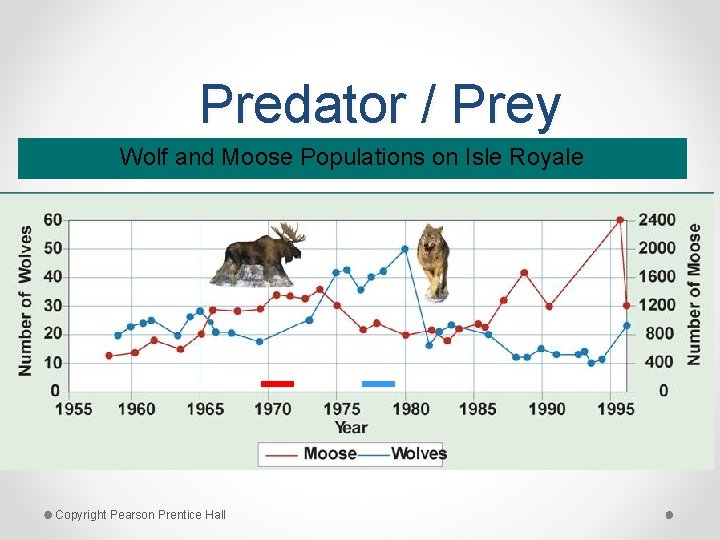
Predator / Prey Wolf and Moose Populations on Isle Royale Copyright Pearson Prentice Hall
Camouflage Copyright Pearson Prentice Hall
Can you see the walking stick? ? ? Copyright Pearson Prentice Hall
Camouflage Copyright Pearson Prentice Hall
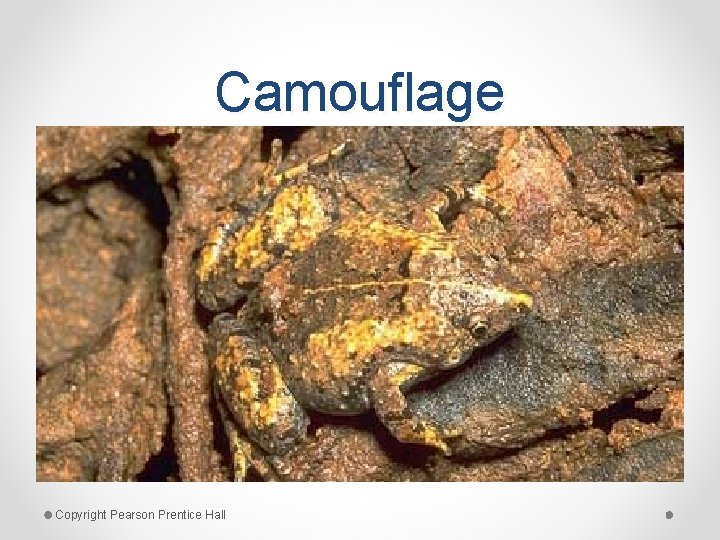
Camouflage Copyright Pearson Prentice Hall
Symbiosis TYPES • 2. ) Parasitism is a species interaction in which one individual is harmed while the other individual benefits. • parasites feed on another individual the host. • it will weaken the host instead of killing it. Why? Copyright Pearson Prentice Hall
• Parasites are grouped into 2 Groups: Copyright Pearson Prentice Hall
parasites • 1. ) Ectoparasites • They live on the host but do not enter the host’s body • Examples: ticks, fleas, lice, lampreys, leeches, and mosquitoes Copyright Pearson Prentice Hall
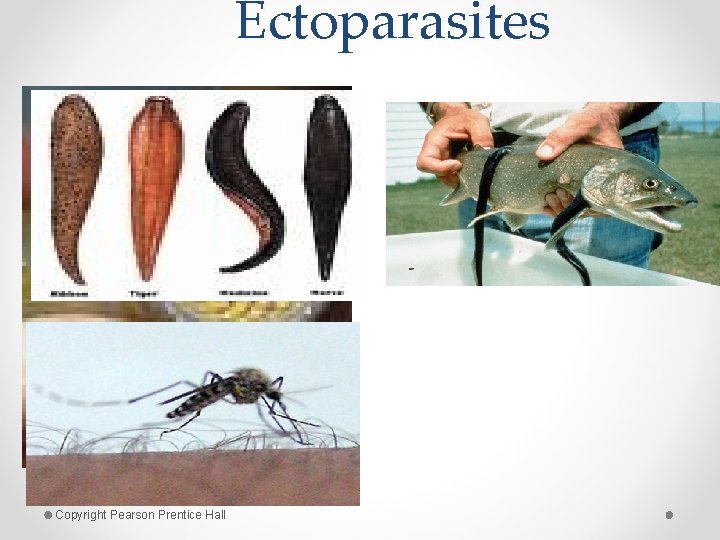
Ectoparasites Copyright Pearson Prentice Hall
• 2. ) Endoparasites • They live inside the host’s body • Examples: Tapeworms, disease causing bacteria Copyright Pearson Prentice Hall
Adaptations OF parasites: § Tapeworms do not have a digestive system § They absorb nutrients directly through their skin Copyright Pearson Prentice Hall
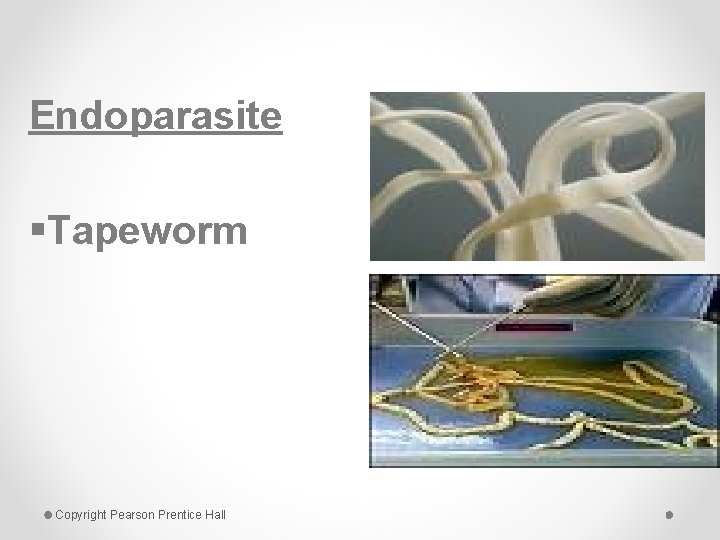
Endoparasite §Tapeworm Copyright Pearson Prentice Hall
Parasites • Host defense against parasites: § Skin § Eyes, nose, and mouth---defended by tears, mucus and saliva • Parasites that get passed these defenses still may be attacked by the cells of the immune system Copyright Pearson Prentice Hall
Protection • Mimicry • -a harmless species resembles a poisonous/venomous or distasteful species. • The harmless animal is protected because it is often mistaken to be dangerous. –Examples: 1. ) Scarlet king snake (mimic)/Coral snake o“red next to black venom lack, red next to yellow kill a fellow” 2. ) Monarch butterfly/viceroy Copyright Pearson Prentice Hall
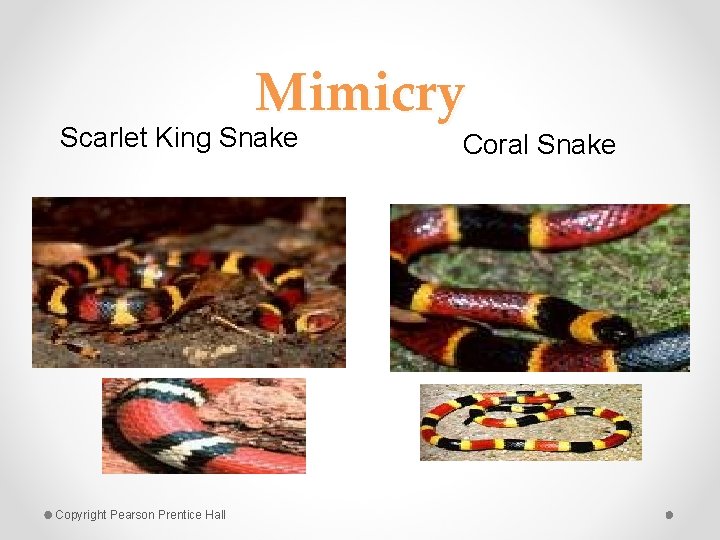
Mimicry Scarlet King Snake Copyright Pearson Prentice Hall Coral Snake
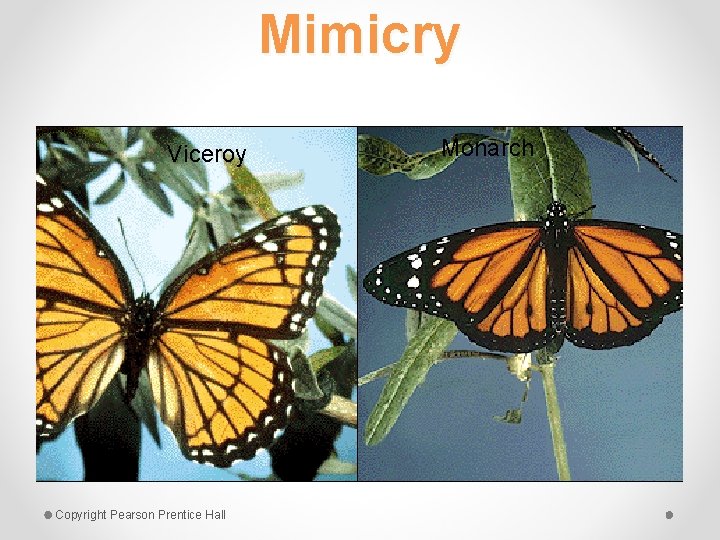
Mimicry Viceroy Copyright Pearson Prentice Hall Monarch
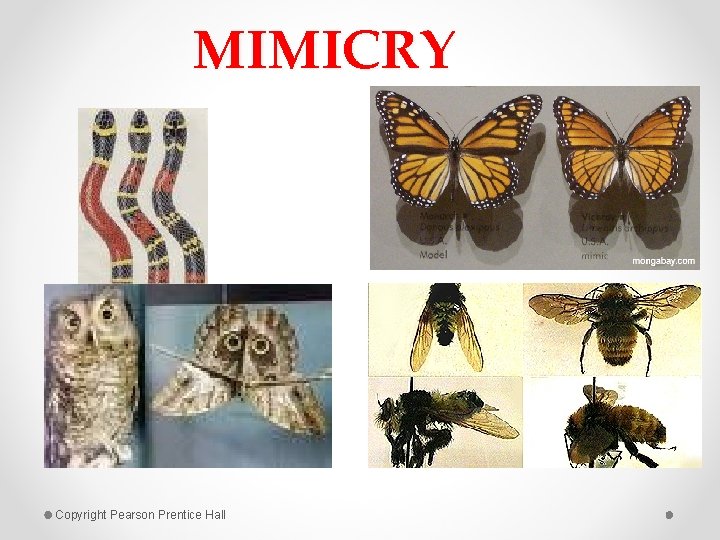
MIMICRY Copyright Pearson Prentice Hall
protection • Plant---Herbivore Interaction • Through natural selection, plants have evolved adaptations that protect them from being eaten. • Physical Defenses---sharp thorns, spines, sticky hairs, tough leaves • --plants make chemicals called secondary compounds-that are poisonous, irritating, or bad tasting. Copyright Pearson Prentice Hall
• Examples secondary compounds: • nicotine---toxic to insects---found in the leaves of tobacco • poison ivy and poison oak---produce an irritating chemical that causes a rash on most people • medicinal uses: • Examples: morphine and codeine Copyright Pearson Prentice Hall
Symbiosis TYPES § 3. ) Competition • Competition results from a fundamental niche overlap---the use of the same limited resources by two or more species • Survival of the fittest Copyright Pearson Prentice Hall
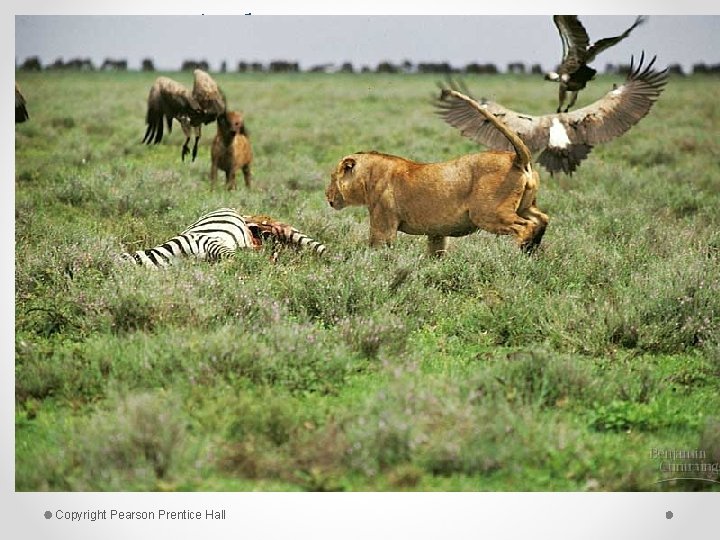
Adaptations to Competition Chapter 8 Species A Species B Copyright Pearson Prentice Hall
Competitive exclusion principle • 1 species is eliminated from a community because of competition for the same limited resources. • 1 species uses the resources more efficiently and has a reproductive advantage that eventually eliminates the other species. Copyright Pearson Prentice Hall
• Competitors may also evolve niche differences or anatomical differences that lessen the intensity of competition. This phenomenon is known as character displacement. • Example: Darwin’s finches---the finches have different size beaks to feed on a slightly different food source. Copyright Pearson Prentice Hall
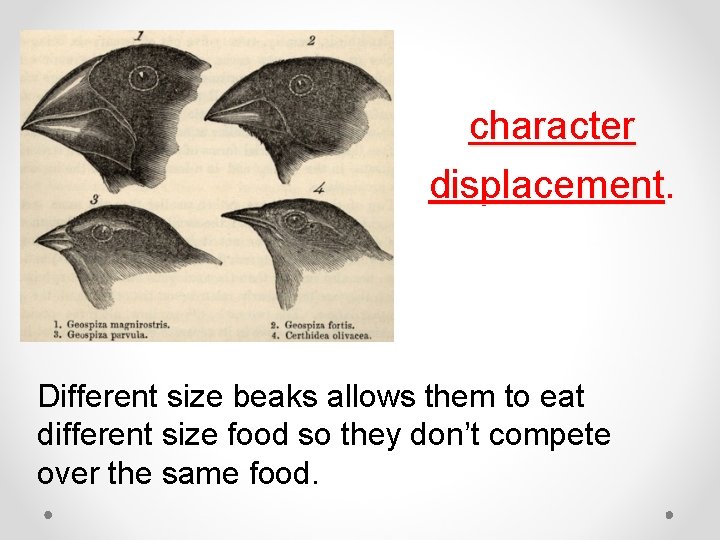
character displacement. Different size beaks allows them to eat different size food so they don’t compete over the same food.
LOOK AT NEXT FEW SLIDES AND DEVELOP A DEFINITON FOR MUTUALISM
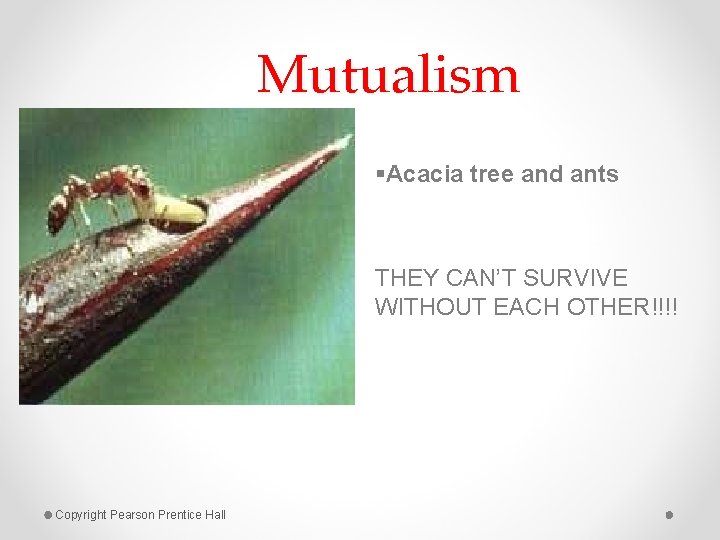
Mutualism §Acacia tree and ants THEY CAN’T SURVIVE WITHOUT EACH OTHER!!!! Copyright Pearson Prentice Hall
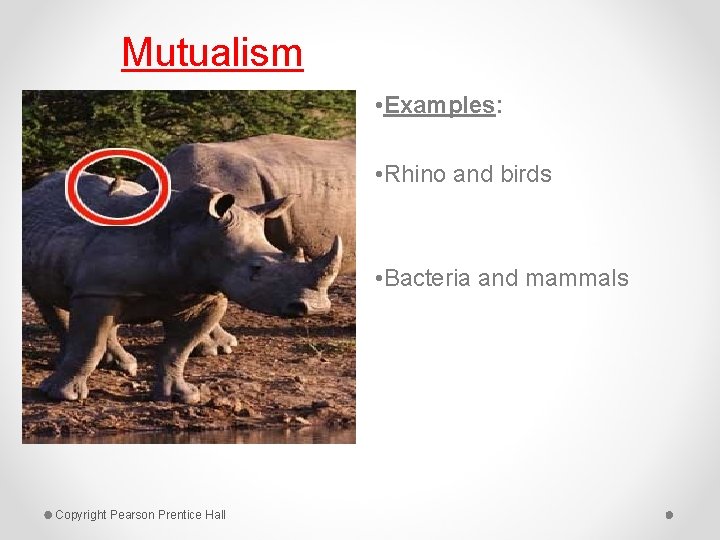
Mutualism • Examples: • Rhino and birds • Bacteria and mammals Copyright Pearson Prentice Hall
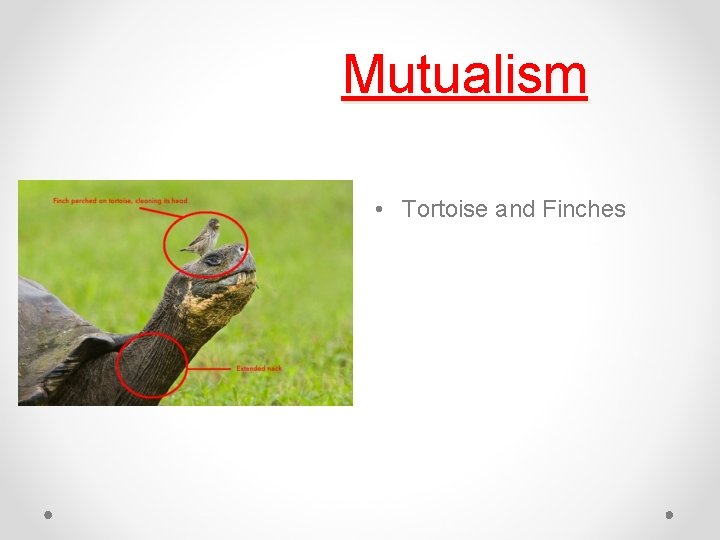
Mutualism • Tortoise and Finches
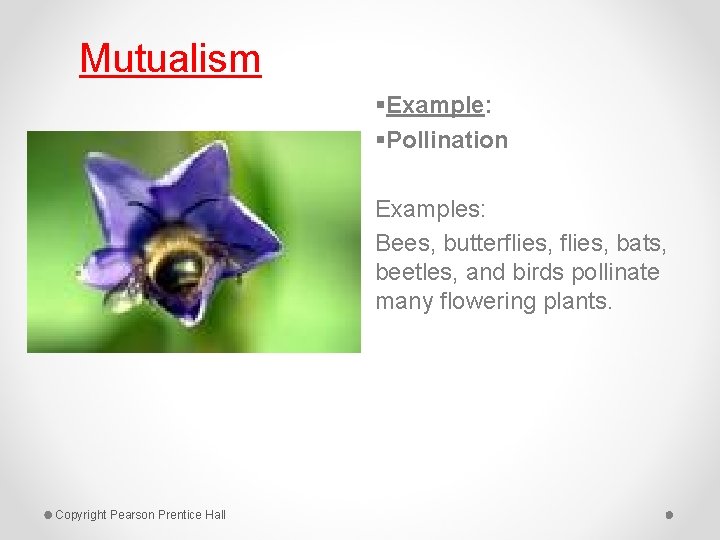
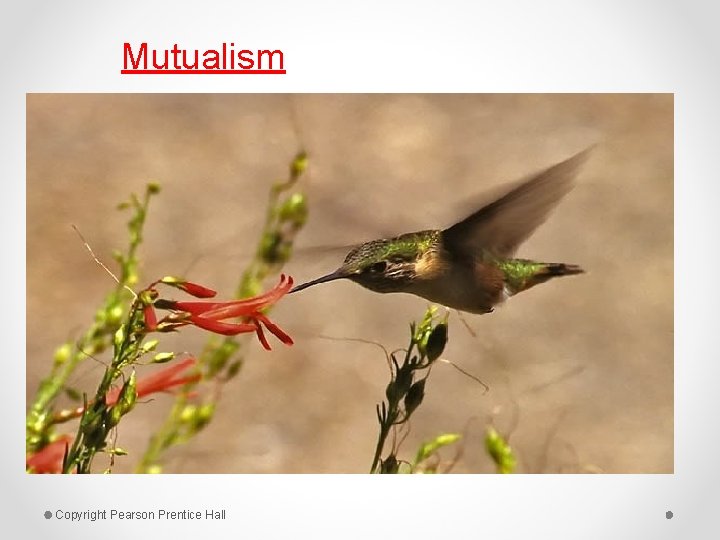
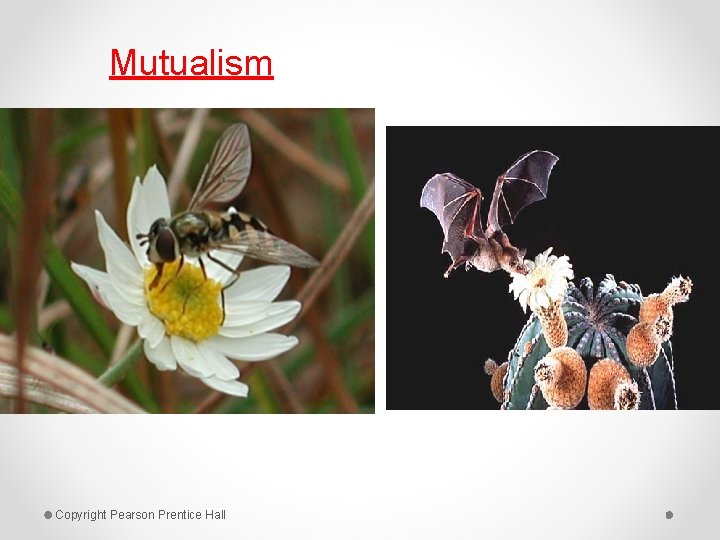
Mutualism §Example: §Pollination Examples: Bees, butterflies, bats, beetles, and birds pollinate many flowering plants. Copyright Pearson Prentice Hall
Mutualism Copyright Pearson Prentice Hall
Mutualism Copyright Pearson Prentice Hall
Symbiosis Types • 4. ) Mutualism • both species derive some benefit. • Some are so close that neither species can survive without the other • Example: ants and the bull’s horn Acacia • Ants gain food and shelter • Acacia get protection from herbivores and from plants that attempt to shade the tree Copyright Pearson Prentice Hall

Look at the next slides and develop a definition for commensalism
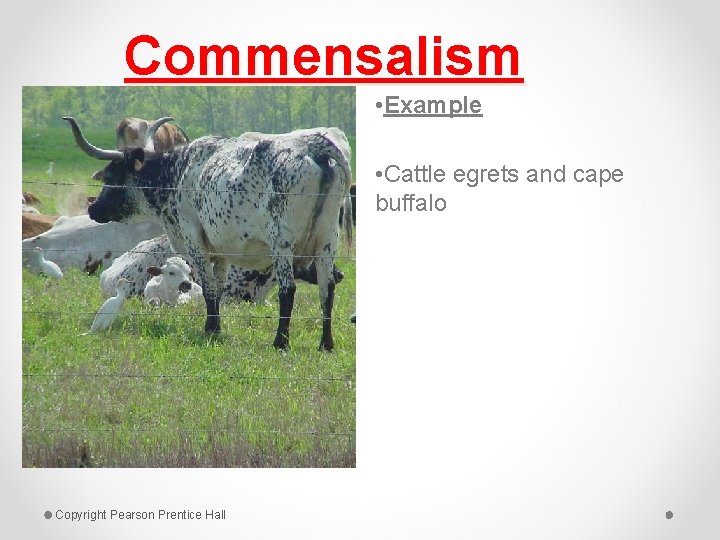
Commensalism • Example • Cattle egrets and cape buffalo Copyright Pearson Prentice Hall
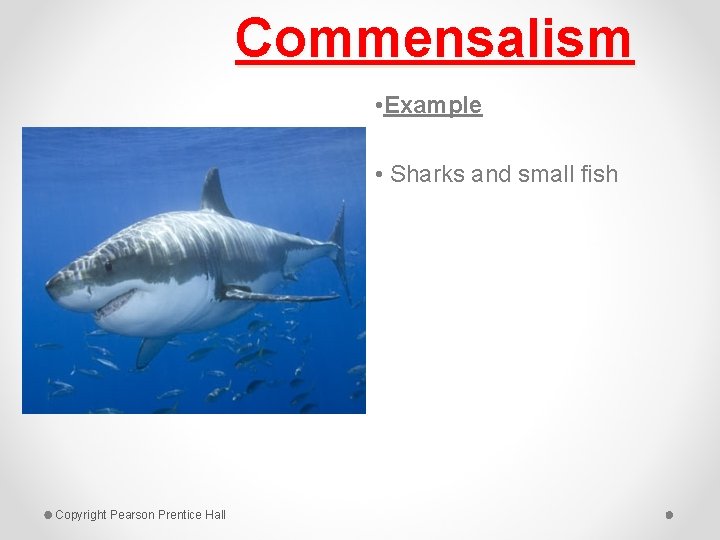
Commensalism • Example • Sharks and small fish Copyright Pearson Prentice Hall
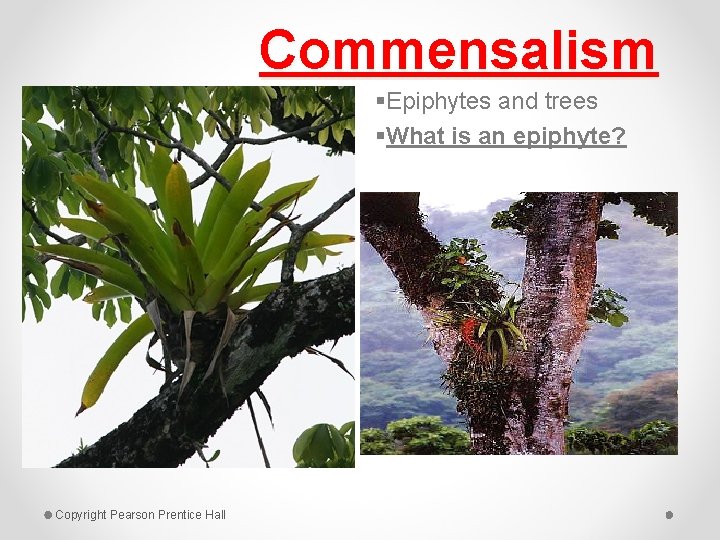
Commensalism §Epiphytes and trees §What is an epiphyte? Copyright Pearson Prentice Hall
Symbiosis types • 5. ) Commensalism • Is an interaction in which one species benefits and the other species is not affected. Copyright Pearson Prentice Hall
6. Living Things Respond to Their Environment § Detect and respond to changes in their environment § The change is called the stimulus § Senses are used to detect change
Examples • Stimulus • Cool breeze • Hunger • Light (Plant) Response goosebumps shivering stomach growls phototropism grows towards it
7. Living Things Maintain a Stable Internal Environment § Homeostasis: keeping the internal environment stable (temp. , blood pressure, ph of blood, etc. ) § “homo” = same / “stasis” = state § Metabolism maintains homeostasis
8. living things change over time. § evolution § Adapt to their environment if they already have the necessary traits § Proof: DNA, fossil record
9. All Living Things Have a Life Span § Born --- Live --- Die
BELL RINGER • WHAT IS THE DIFFERENCE BETWEEN A PROKARYOTE AND EUKARYOTE? • GIVE AN EXAMPLE OF EACH • DEFINE ABIOTIC AND BIOTIC • WHAT IS THE SMALLEST UNIT OF AN ORGANISM THAT IS ALIVE?
- Slides: 77