
Chapter 1 Basics of Geometry Section 7 Introduction
Chapter 1 Basics of Geometry
Section 7 Introduction to Perimeter, Circumference, and Area
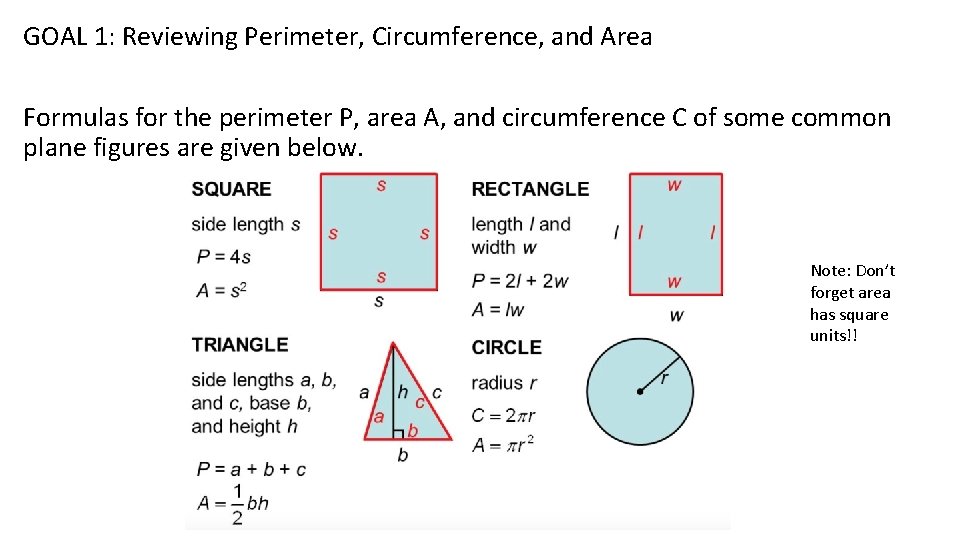
GOAL 1: Reviewing Perimeter, Circumference, and Area Formulas for the perimeter P, area A, and circumference C of some common plane figures are given below. Note: Don’t forget area has square units!!
Example 1: Finding the Perimeter and Area of a Rectangle Find the perimeter and area of a rectangle of length 12 inches and width 5 inches.
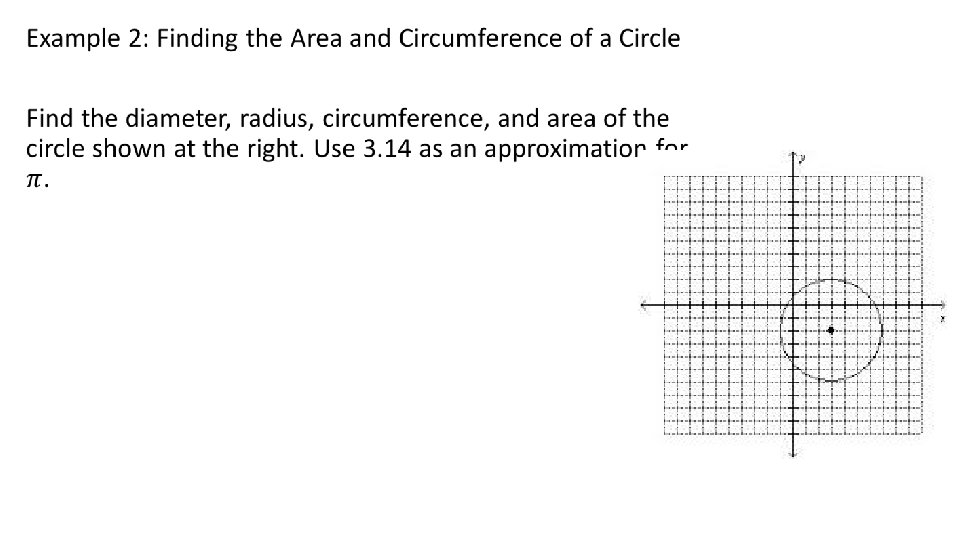
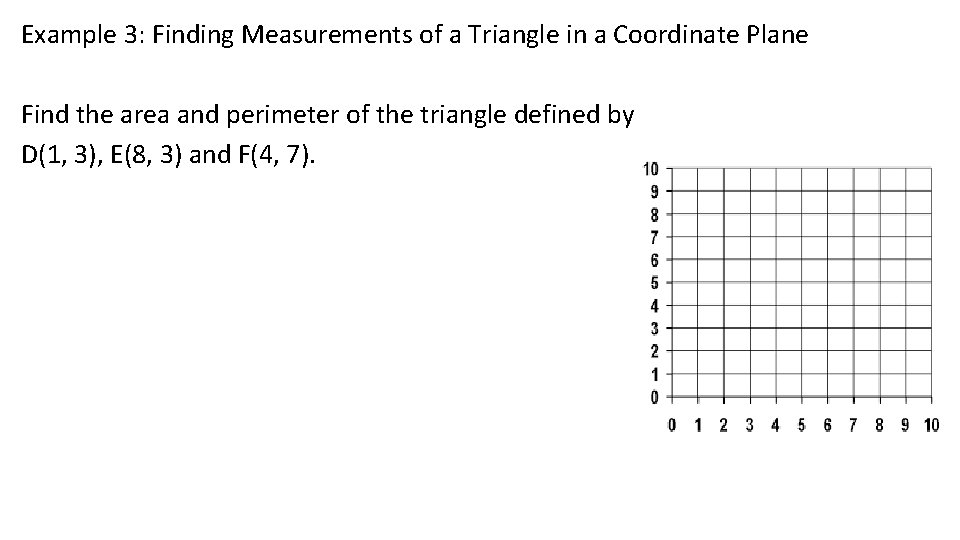
Example 3: Finding Measurements of a Triangle in a Coordinate Plane Find the area and perimeter of the triangle defined by D(1, 3), E(8, 3) and F(4, 7).
GOAL 2: Using a Problem-Solving Plan A problem-solving plan can help you organize solutions to geometry problems. 1) Ask yourself what you need to solve the problem. Write a verbal model or draw a sketch that will help you find what you need to know. 2) Label known and unknown facts on or near your sketch. 3) Use labels and facts to choose related definition, theorems, formulas, or other results you may need. 4) Reason logically to link the facts, using a proof or other written argument. 5) Write a conclusion that answers the original problem. Check that your reasoning is correct.
Example 4: Using the Area of a Rectangle You have a part-time job at a school. You need to buy enough grass seed to cover the school’s soccer field. The field is 50 yards wide and 100 yards long. The instructions on the seed bags say that one bag will cover 5000 square feet. How many bags do you need?
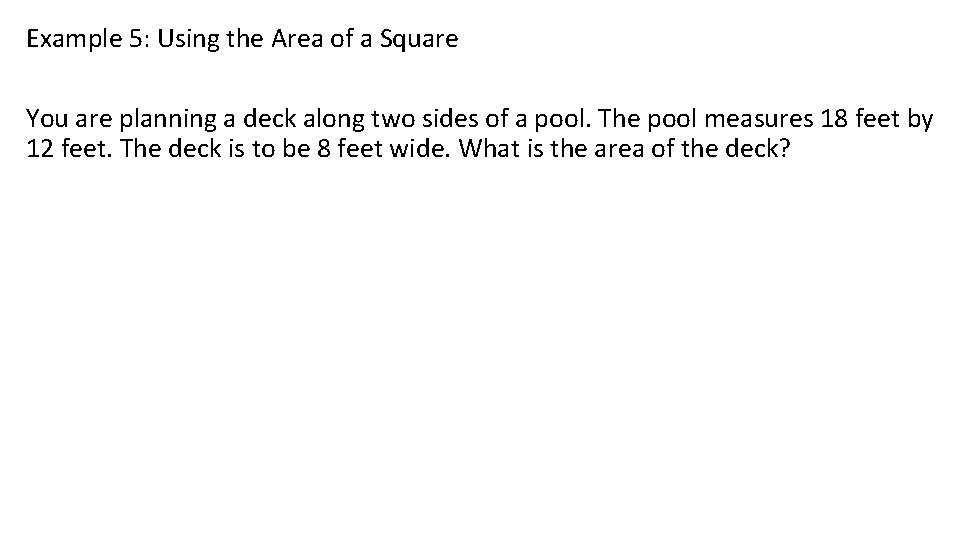
Example 5: Using the Area of a Square You are planning a deck along two sides of a pool. The pool measures 18 feet by 12 feet. The deck is to be 8 feet wide. What is the area of the deck?
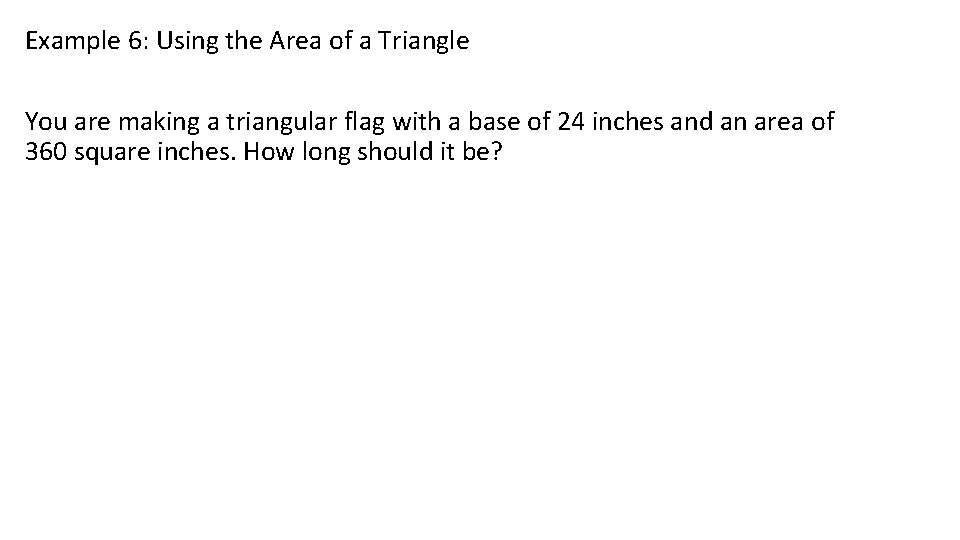
Example 6: Using the Area of a Triangle You are making a triangular flag with a base of 24 inches and an area of 360 square inches. How long should it be?
- Slides: 10