
Chapter 1 Basics of Electronic Communication 12 Marks
Chapter 1… Basics of Electronic Communication ( 12 Marks) Visit for more Learning Resources
Introduction to communication Communication is the basic process of exchanging information i. e. communication means conveying message from one place to another place. Two human beings communicate each other face-to-face, by body language this is known as verbal communication. Communication in big auditorium, sports grounds, announcement on airports, railway stations and long distance communication from one city to other city, one country to othe country is the another problem. Long distance communication is possible using electronic media or electronic circuitary that is known as electronic communication. For example, PA system, telephony, telegraph radio, TV.
Importance of Electronic Communication Long distance communication is not possible without electronic media. More and more people are looking for electronic means to transmit information. Well-known forms of electronic communications, such as the telephone, radio and television, have increased our ability to share information. Today they are major part of the our lives. An unexpected development in the role that computers play in communication E-mail and Internet allows: Most economical way to get informations and communication. Very high speed. High security because of individual log-in and passwords. On-line shopping, booking.
Definitions 1. Analog signal is the signal, in which voltage or current varies continuously with time. 2. Digital signal is the discontinuous signal, which has only two levels, high and low or one and zero. 3. Baseband signal The electrical equivalent of original information (For example, sound) is known as Baseband signal.

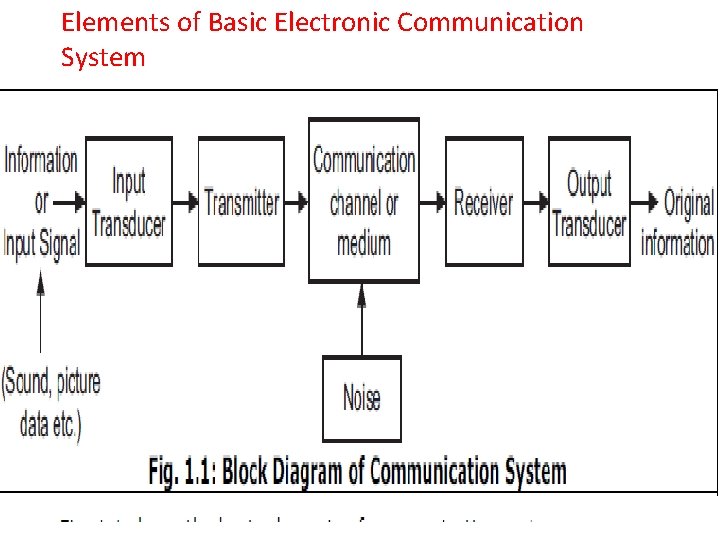
Elements of Basic Electronic Communication System
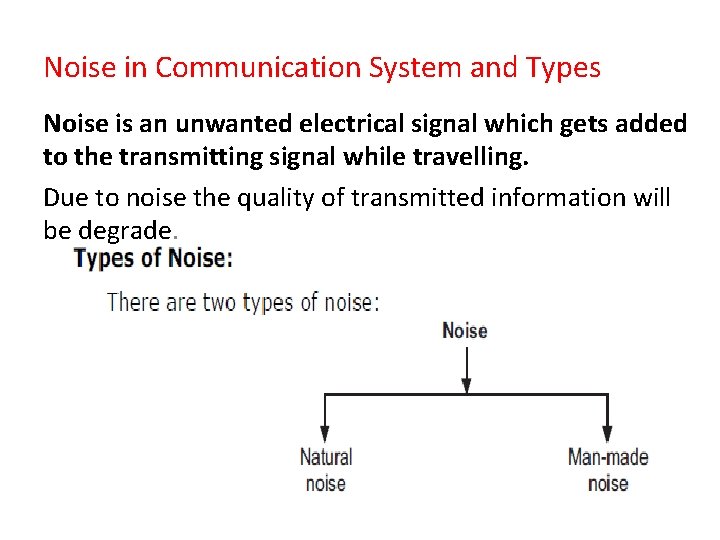
Noise in Communication System and Types Noise is an unwanted electrical signal which gets added to the transmitting signal while travelling. Due to noise the quality of transmitted information will be degrade.
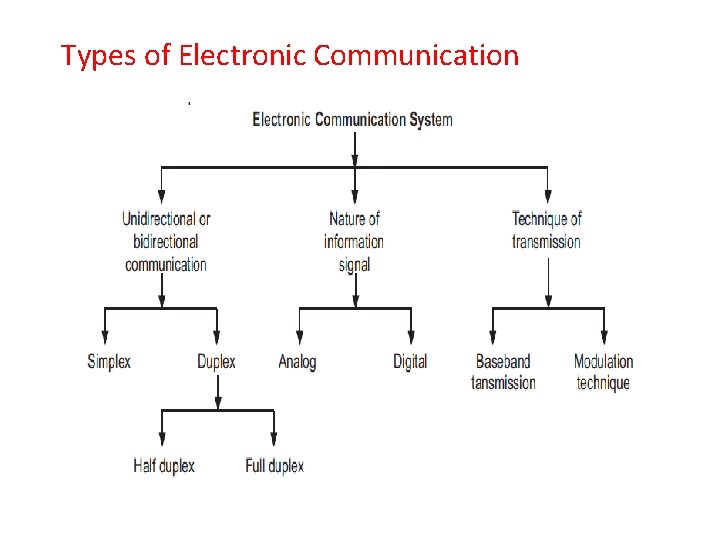
Types of Electronic Communication
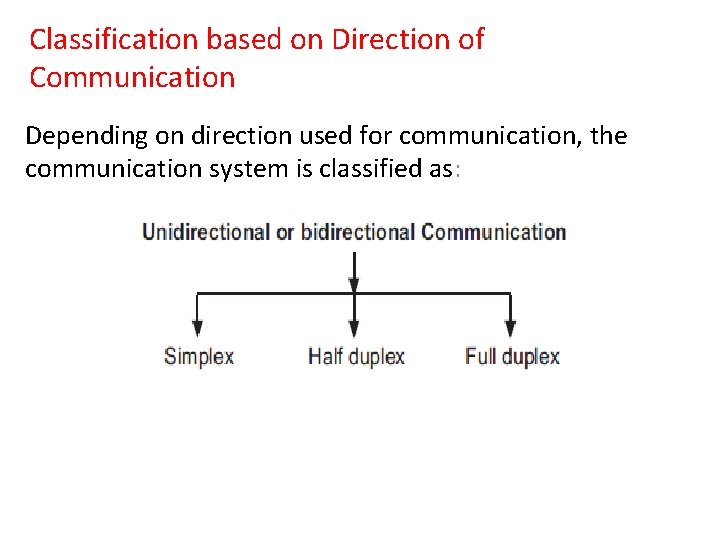
Classification based on Direction of Communication Depending on direction used for communication, the communication system is classified as:
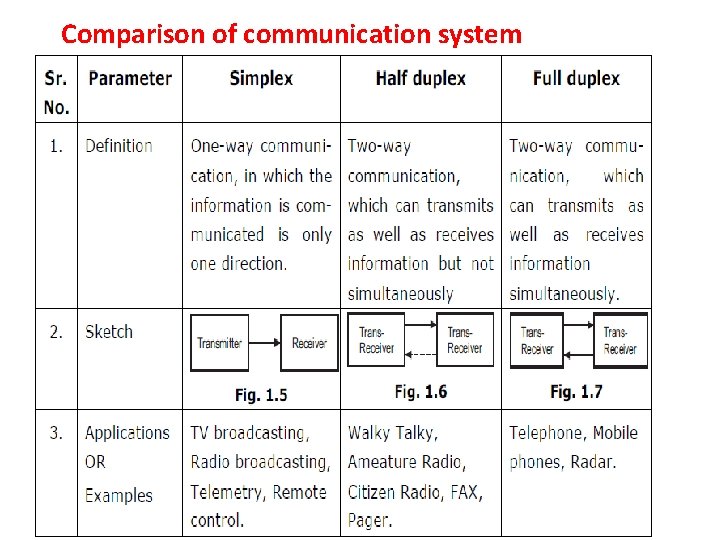
Comparison of communication system
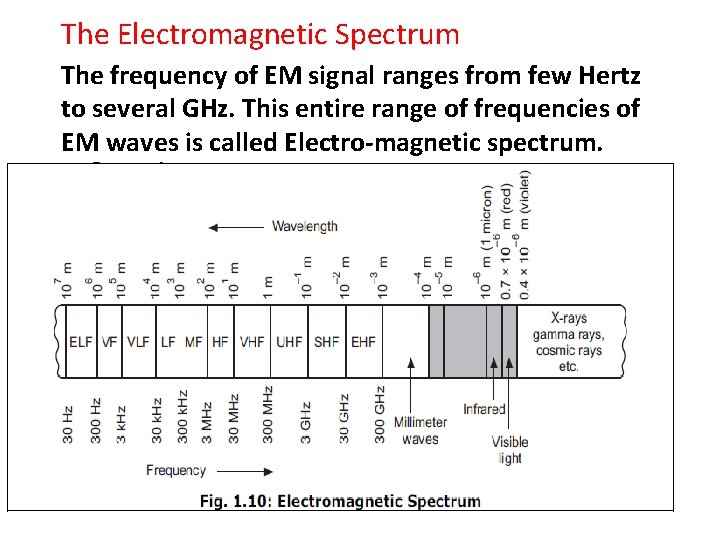
The Electromagnetic Spectrum The frequency of EM signal ranges from few Hertz to several GHz. This entire range of frequencies of EM waves is called Electro-magnetic spectrum.
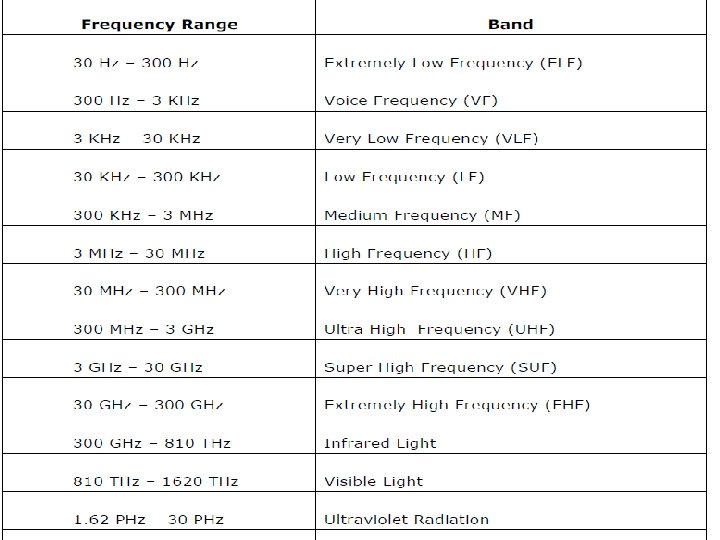
Segments of EM spectrum
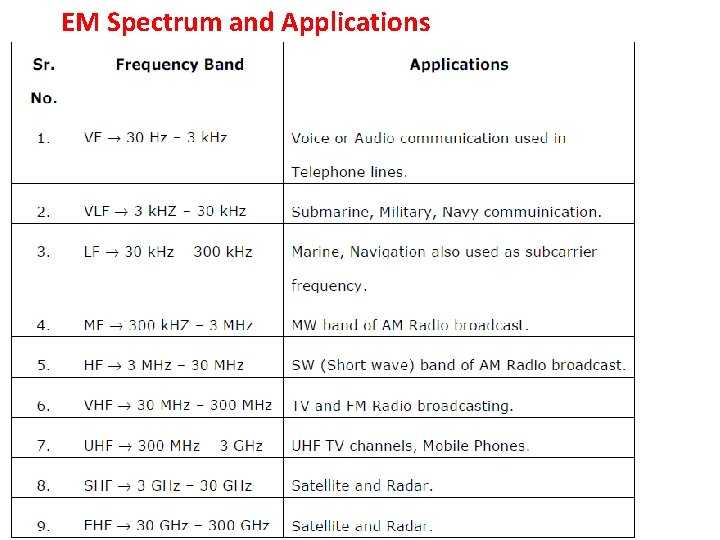
EM Spectrum and Applications
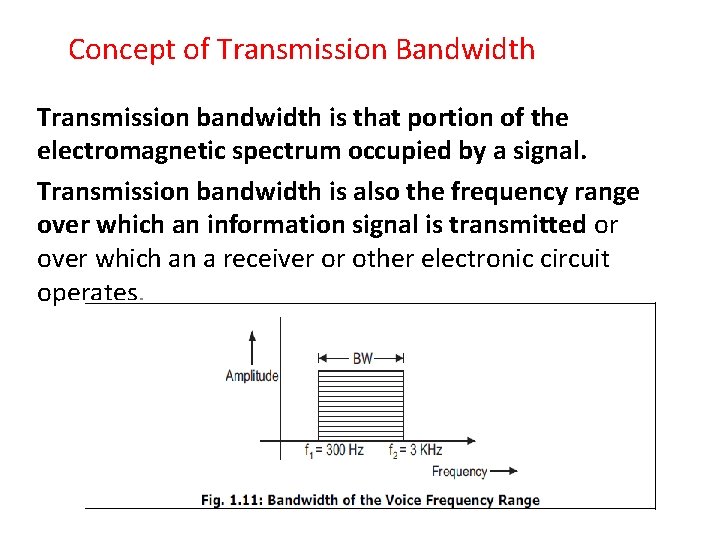
Concept of Transmission Bandwidth Transmission bandwidth is that portion of the electromagnetic spectrum occupied by a signal. Transmission bandwidth is also the frequency range over which an information signal is transmitted or over which an a receiver or other electronic circuit operates.
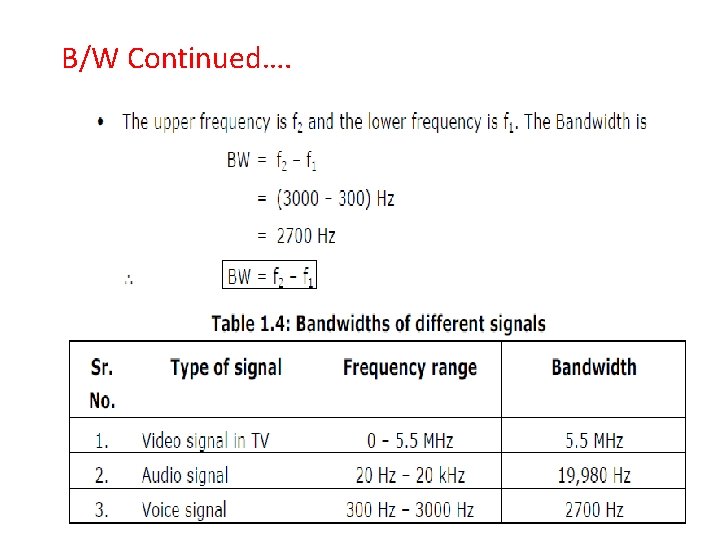
B/W Continued….

ANY QUESTIONS? For more detail contact us
- Slides: 16