
Chapter 1 Basic Circuit Theory III OHMs LAW
Chapter 1 Basic Circuit Theory (III) OHM’s LAW BRANCH, LOOP, NODE, MESH
Learning Goals! • Be able to state and use Ohm’s Law to solve electric circuits • Differentiate between branch, nodal and loop
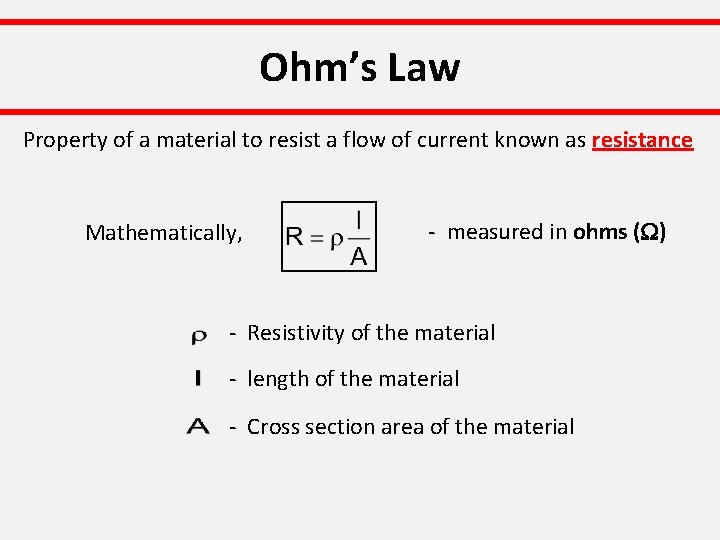
Ohm’s Law Property of a material to resist a flow of current known as resistance Mathematically, - measured in ohms ( ) - Resistivity of the material - length of the material - Cross section area of the material
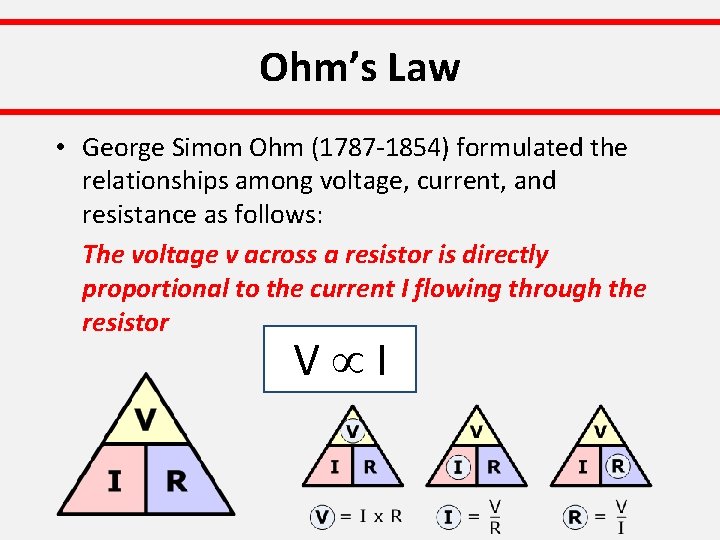
Ohm’s Law • George Simon Ohm (1787 -1854) formulated the relationships among voltage, current, and resistance as follows: The voltage v across a resistor is directly proportional to the current I flowing through the resistor V I
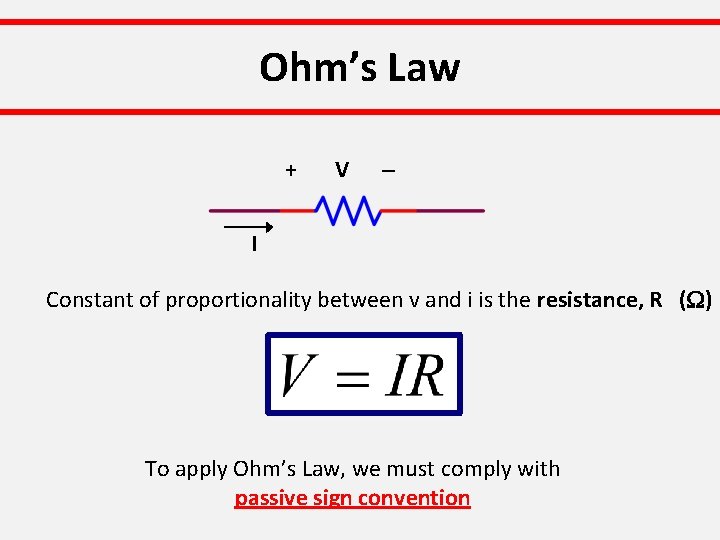
Ohm’s Law + V I Constant of proportionality between v and i is the resistance, R ( ) To apply Ohm’s Law, we must comply with passive sign convention
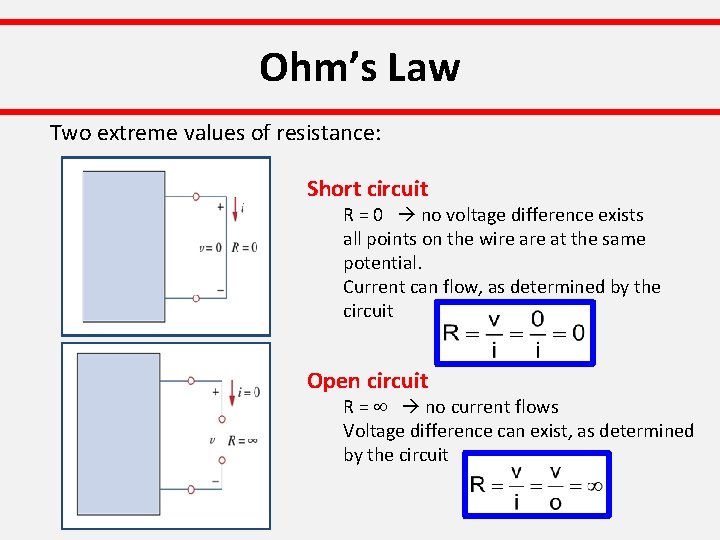
Ohm’s Law Two extreme values of resistance: Short circuit R = 0 no voltage difference exists all points on the wire at the same potential. Current can flow, as determined by the circuit Open circuit R = no current flows Voltage difference can exist, as determined by the circuit
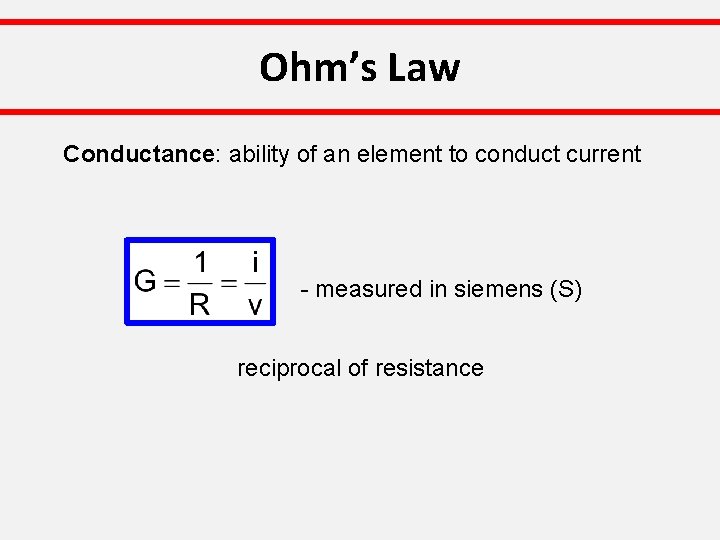
Ohm’s Law Conductance: ability of an element to conduct current - measured in siemens (S) reciprocal of resistance
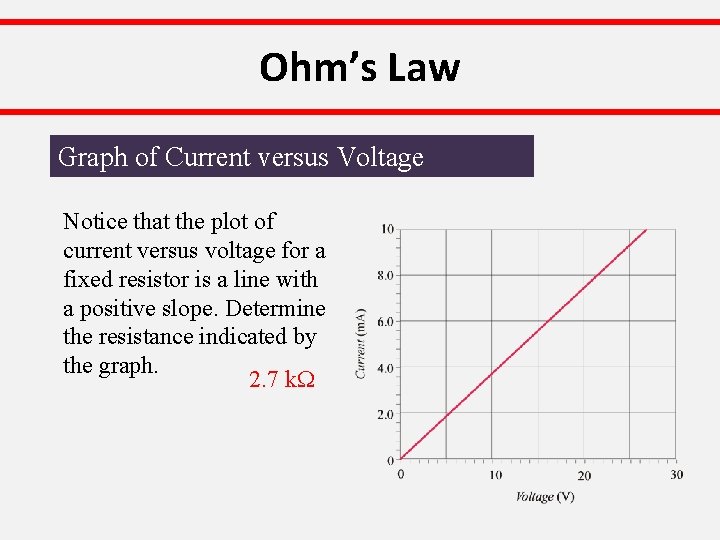
Ohm’s Law Graph of Current versus Voltage Notice that the plot of current versus voltage for a fixed resistor is a line with a positive slope. Determine the resistance indicated by the graph. 2. 7 k. W
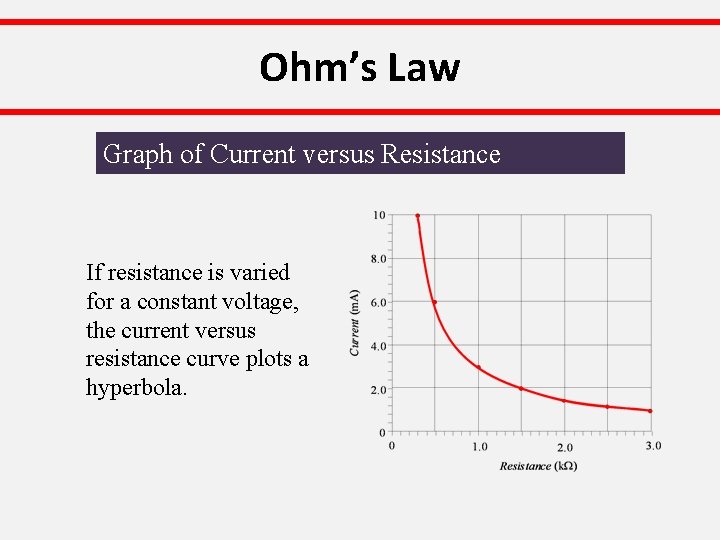
Ohm’s Law Graph of Current versus Resistance If resistance is varied for a constant voltage, the current versus resistance curve plots a hyperbola.
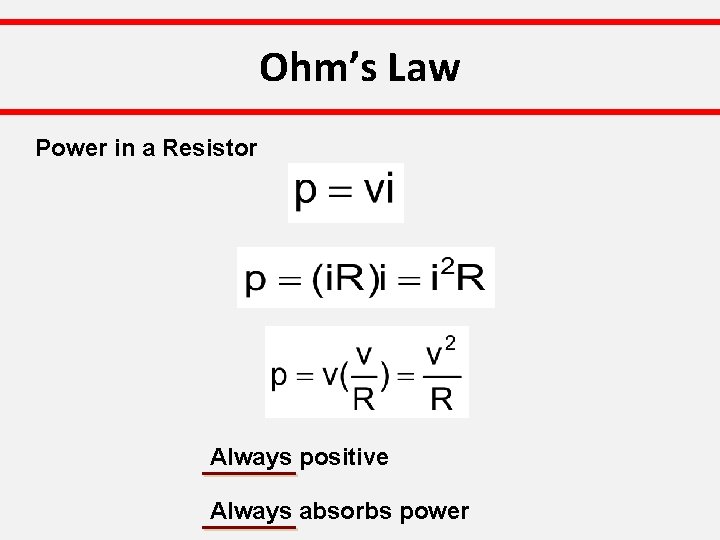
Ohm’s Law Power in a Resistor Always positive Always absorbs power
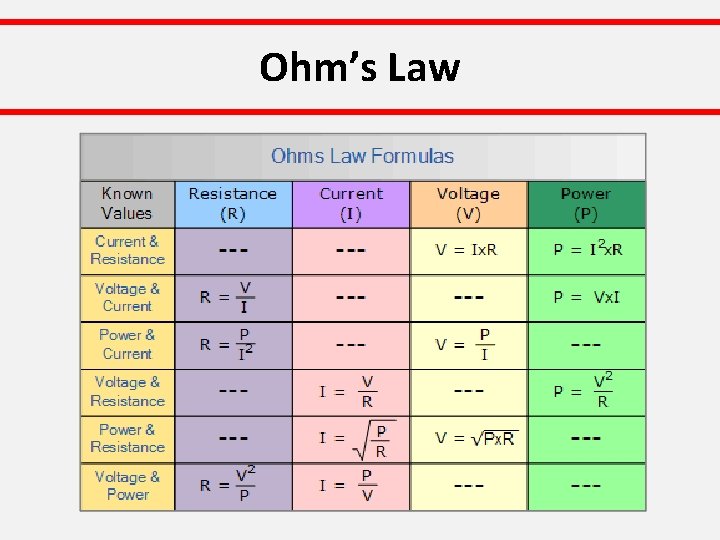
Ohm’s Law
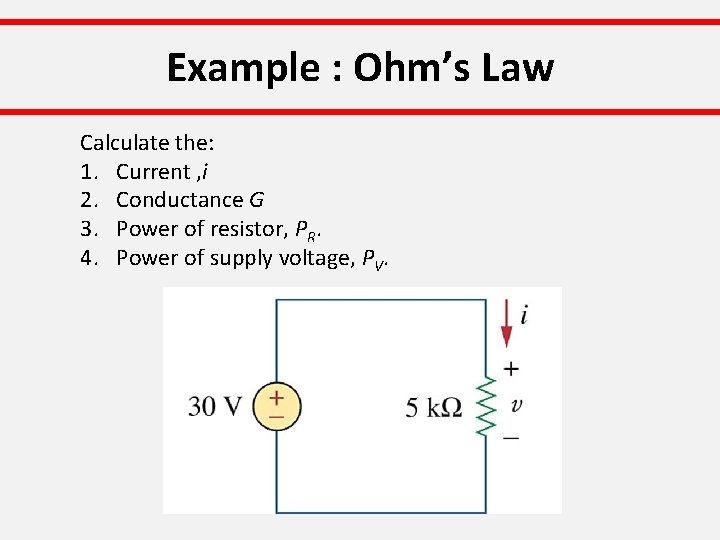
Example : Ohm’s Law Calculate the: 1. Current , i 2. Conductance G 3. Power of resistor, PR. 4. Power of supply voltage, PV.
Branch, Node, Loop & Mesh § Understand some basic concepts of network topology since the elements of electric circuit can be interconnected in several ways. § May define a network as an interconnection of elements, whereas a circuit is a network providing none or more closed paths. § So, we study the properties relating to the placement of elements in the network. § Elements including : branch, node, loop, mesh
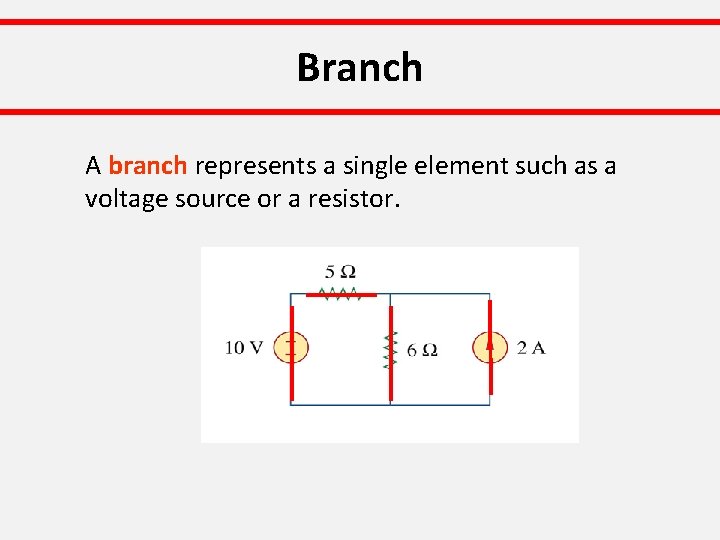
Branch A branch represents a single element such as a voltage source or a resistor.
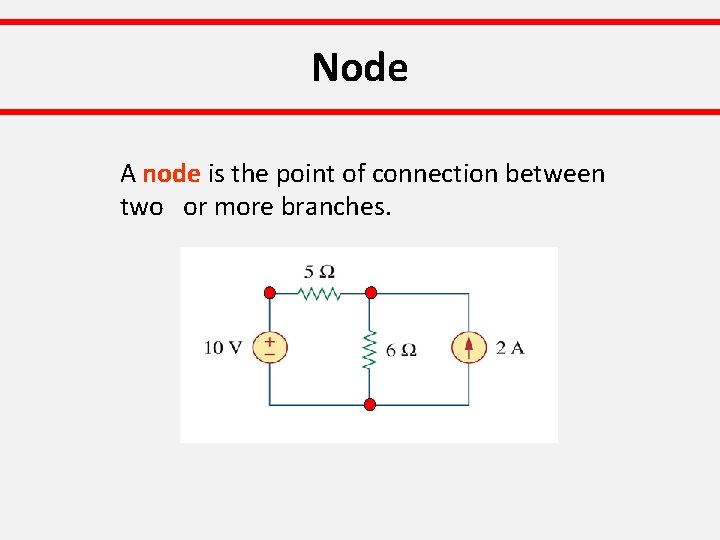
Node A node is the point of connection between two or more branches.
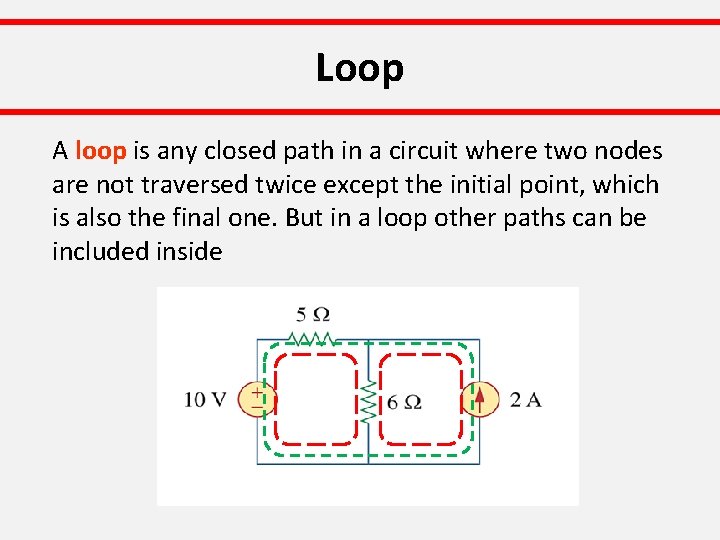
Loop A loop is any closed path in a circuit where two nodes are not traversed twice except the initial point, which is also the final one. But in a loop other paths can be included inside
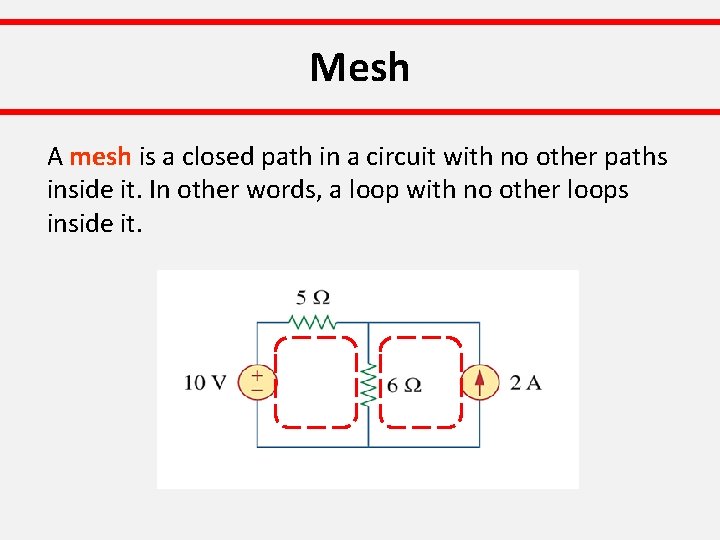
Mesh A mesh is a closed path in a circuit with no other paths inside it. In other words, a loop with no other loops inside it.
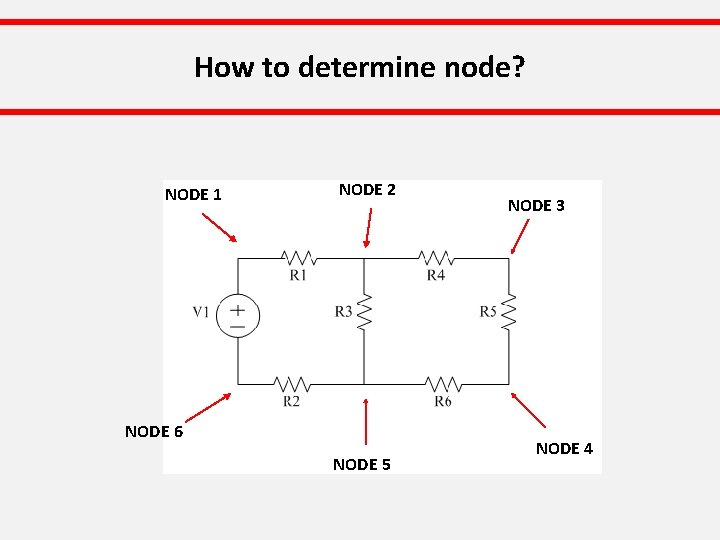
How to determine node? NODE 1 NODE 2 NODE 6 NODE 5 NODE 3 NODE 4
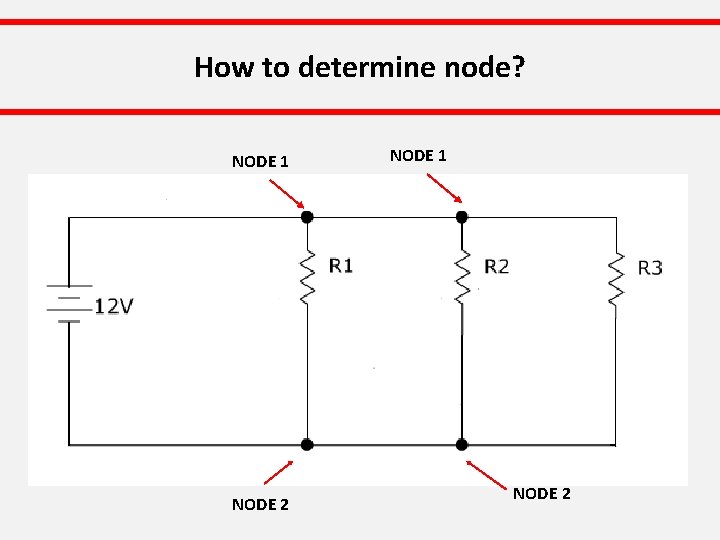
How to determine node? NODE 1 NODE 2
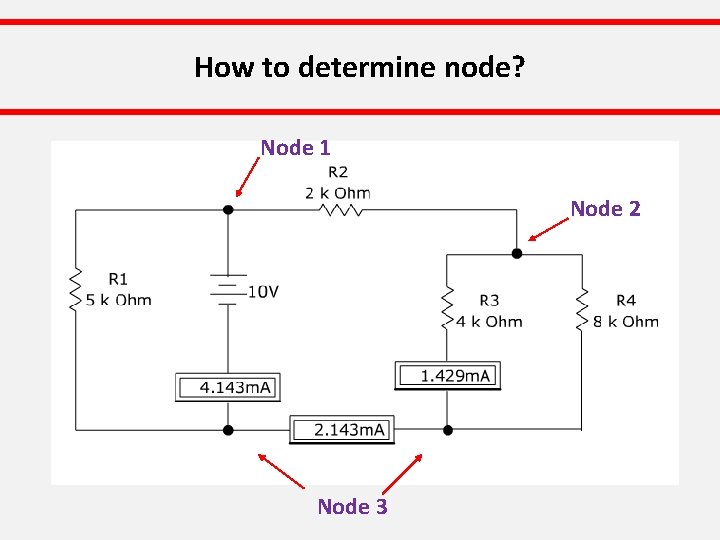
How to determine node? Node 1 Node 2 Node 3
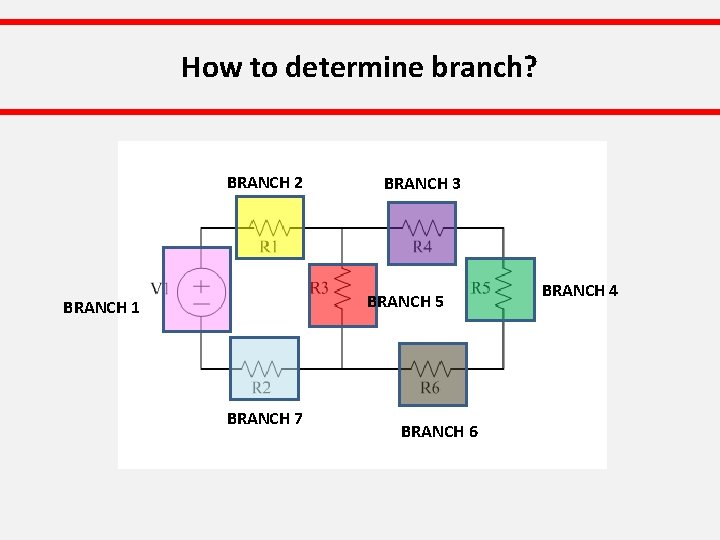
How to determine branch? BRANCH 2 BRANCH 3 BRANCH 5 BRANCH 1 BRANCH 7 BRANCH 6 BRANCH 4
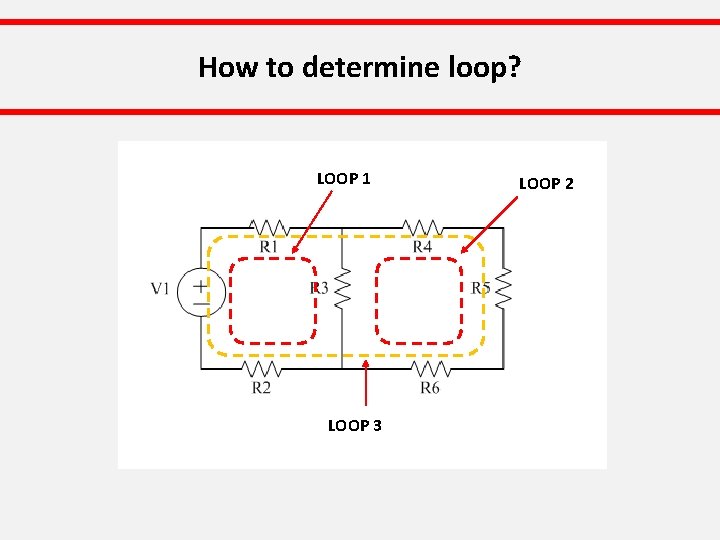
How to determine loop? LOOP 1 LOOP 3 LOOP 2
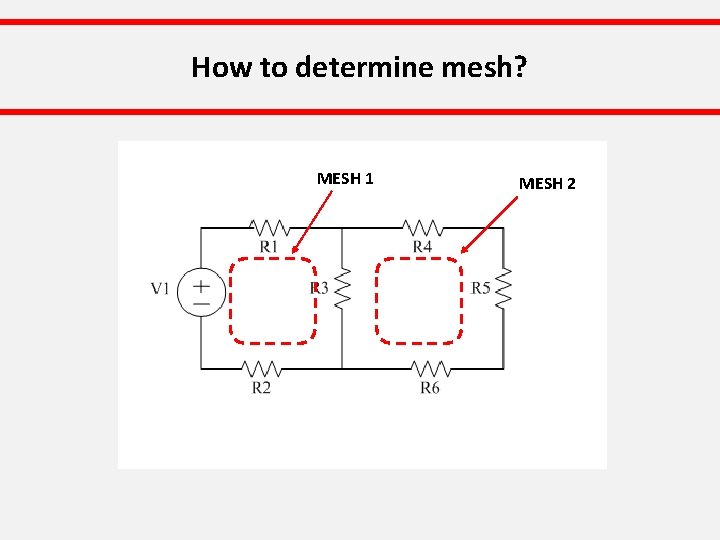
How to determine mesh? MESH 1 MESH 2
- Slides: 23