
Chapter 1 An Introduction to HRM SHRM References


- Slides: 32
Chapter 1 An Introduction to HRM & SHRM References: • • Principles of Management, Griffin Human Resource Management, Wayne Dean Mondy Strategic Human Resource Management, Jeffrey A. Mello Strategic Human Resource Management, Charles R. Greer Resource Person: Furqan-ul-haq Siddiqui
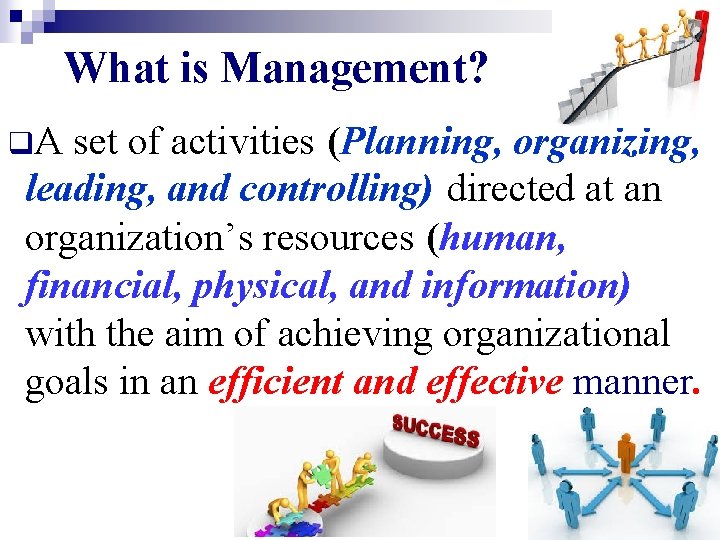
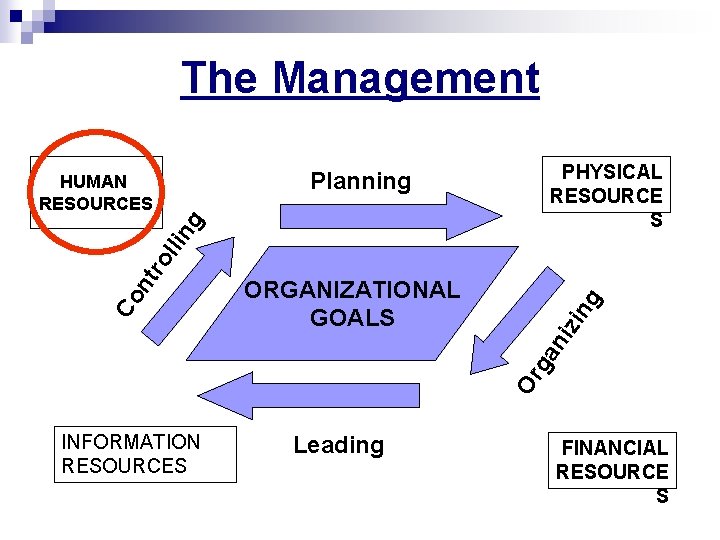
What is Management? q. A set of activities (Planning, organizing, leading, and controlling) directed at an organization’s resources (human, financial, physical, and information) with the aim of achieving organizational goals in an efficient and effective manner.
The Management g g lli n tro Or ga ni Co n ORGANIZATIONAL GOALS PHYSICAL RESOURCE S zin Planning HUMAN RESOURCES INFORMATION RESOURCES Leading FINANCIAL RESOURCE S
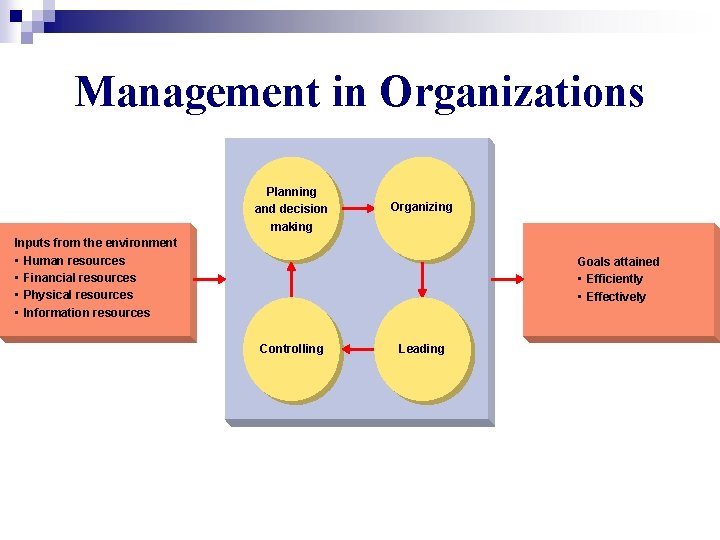
Management in Organizations Planning and decision making Organizing Inputs from the environment • Human resources • Financial resources • Physical resources • Information resources Goals attained • Efficiently • Effectively Controlling Leading
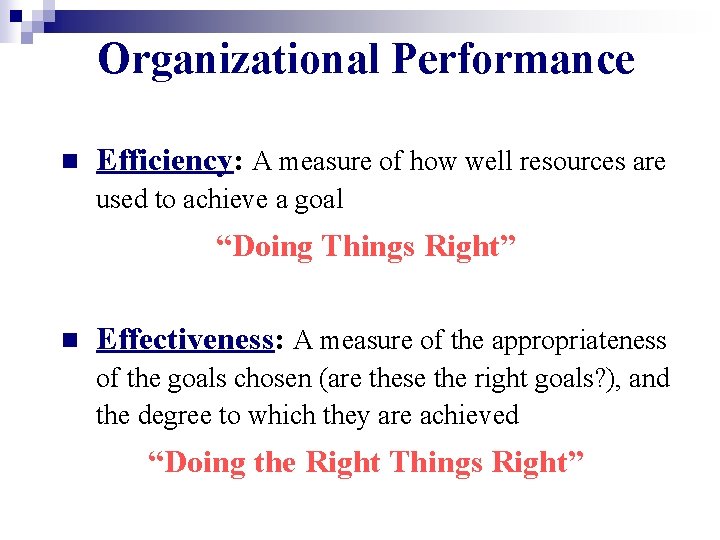
Organizational Performance n Efficiency: A measure of how well resources are used to achieve a goal “Doing Things Right” n Effectiveness: A measure of the appropriateness of the goals chosen (are these the right goals? ), and the degree to which they are achieved “Doing the Right Things Right”
HRM FHuman FResource FManagement
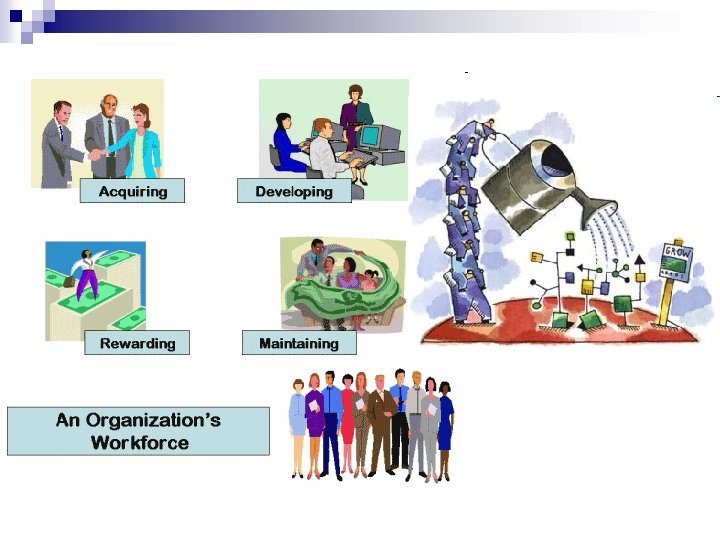
Human Resource Management Ø Managerial function that tries to match an organization’s needs to the skills and abilities of its ssible, o p. s ” g n n e i p h employees. p t a h s ake g m n i s h t t e s k a A “ m e l p o e p
Human Resource Management Ø Human Resource Management (HRM) is the approach of Management of an organization's most valued assets - the people working there who individually and collectively contribute to the achievement of the objectives of the business. In simple sense, HRM means employing people, developing their resources, utilizing, maintaining and compensating their services in tune with the job and organizational requirements to achieve its goals effectively & efficiently.
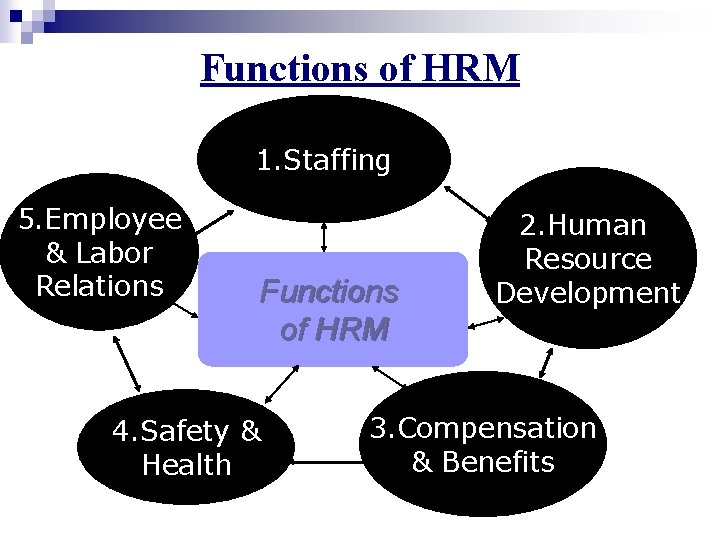
Functions of HRM 1. Staffing 5. Employee & Labor Relations Functions of HRM 4. Safety & Health 2. Human Resource Development 3. Compensation & Benefits
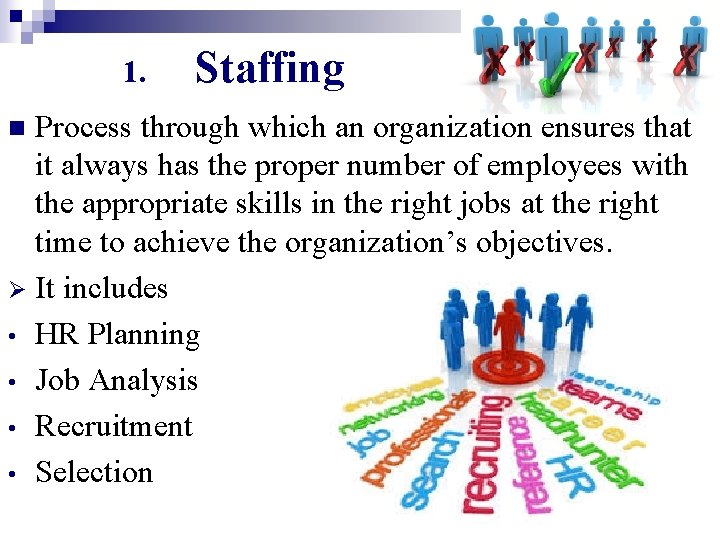
1. Staffing Process through which an organization ensures that it always has the proper number of employees with the appropriate skills in the right jobs at the right time to achieve the organization’s objectives. Ø It includes • HR Planning • Job Analysis • Recruitment • Selection n
2. Human Resource Development It consist not only of T&D but also individual career planning, developing activities and performance appraisal. Ø HRD is composed of • Training • Development • Career planning • Career Development • Performance Appraisal n
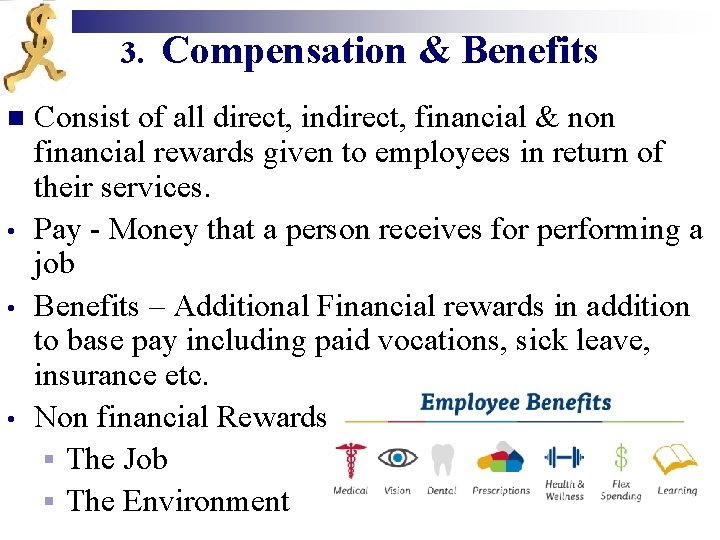
3. n • • • Compensation & Benefits Consist of all direct, indirect, financial & non financial rewards given to employees in return of their services. Pay - Money that a person receives for performing a job Benefits – Additional Financial rewards in addition to base pay including paid vocations, sick leave, insurance etc. Non financial Rewards § The Job § The Environment
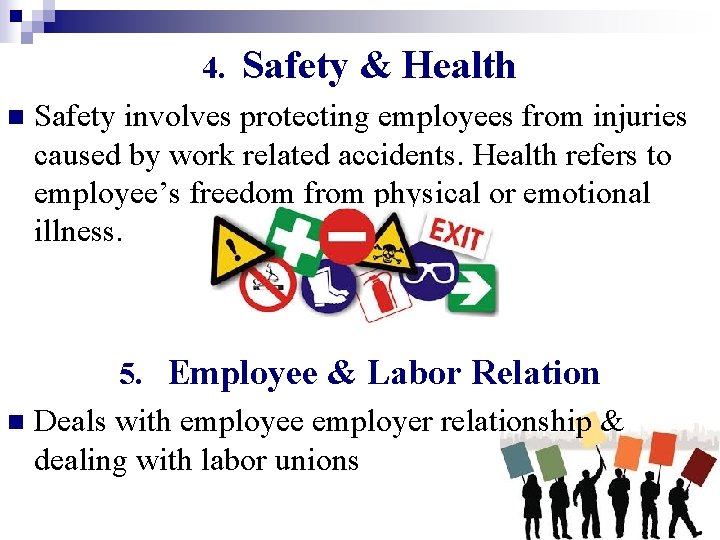
4. Safety & Health n Safety involves protecting employees from injuries caused by work related accidents. Health refers to employee’s freedom from physical or emotional illness. 5. Employee & Labor Relation n Deals with employee employer relationship & dealing with labor unions
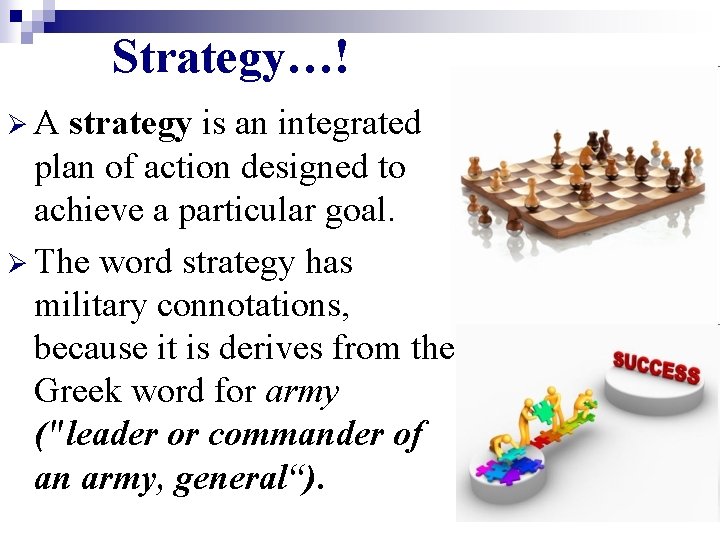
Strategy…! Ø A strategy is an integrated plan of action designed to achieve a particular goal. Ø The word strategy has military connotations, because it is derives from the Greek word for army ("leader or commander of an army, general“). 16
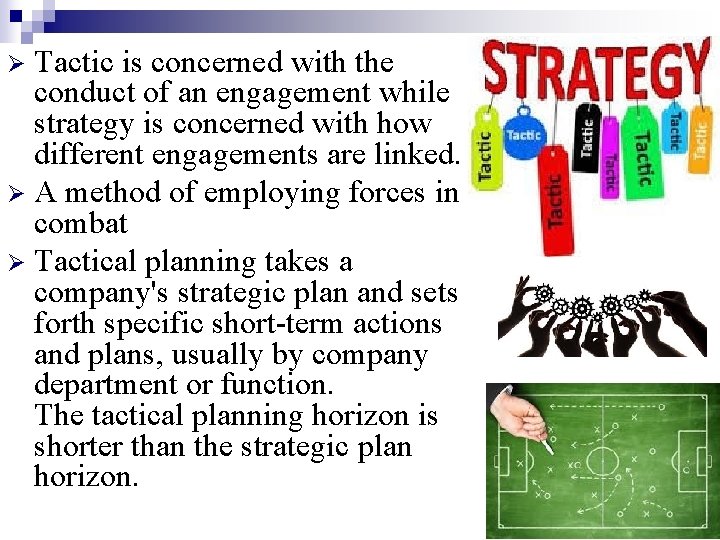
Tactic is concerned with the conduct of an engagement while strategy is concerned with how different engagements are linked. Ø A method of employing forces in combat Ø Tactical planning takes a company's strategic plan and sets forth specific short-term actions and plans, usually by company department or function. The tactical planning horizon is shorter than the strategic plan horizon. Ø 17
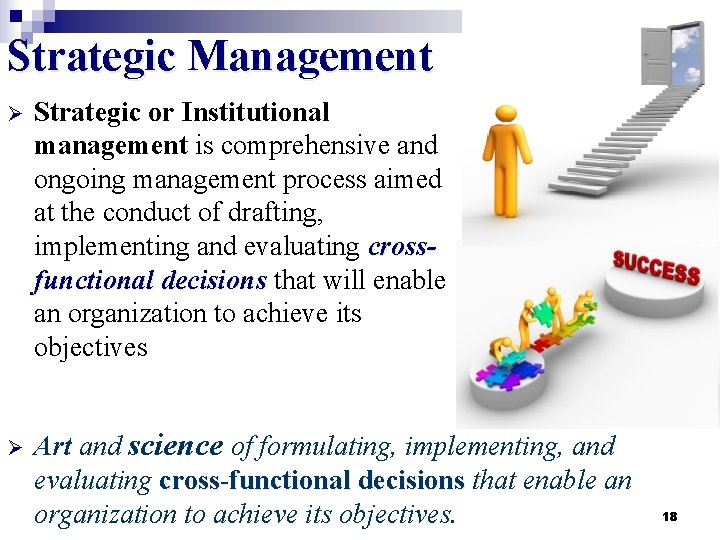
Strategic Management Ø Strategic or Institutional management is comprehensive and ongoing management process aimed at the conduct of drafting, implementing and evaluating crossfunctional decisions that will enable decisions an organization to achieve its objectives Ø Art and science of formulating, implementing, and evaluating cross-functional decisions that enable an organization to achieve its objectives. 18
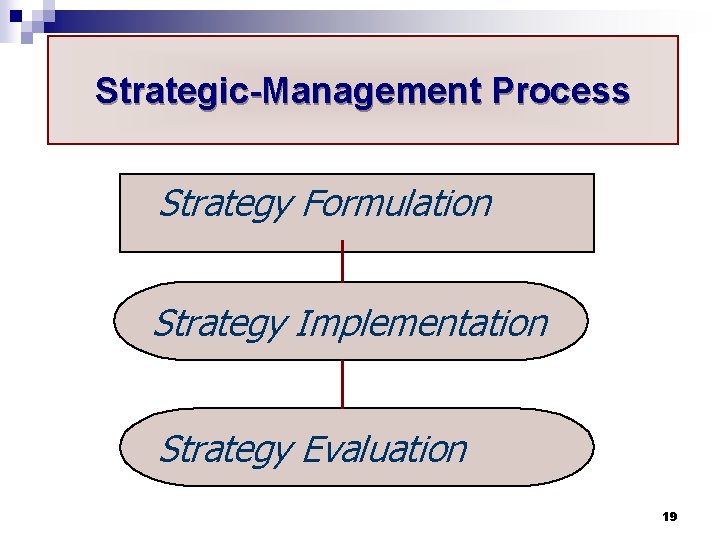
Strategic-Management Process Strategy Formulation Strategy Implementation Strategy Evaluation 19
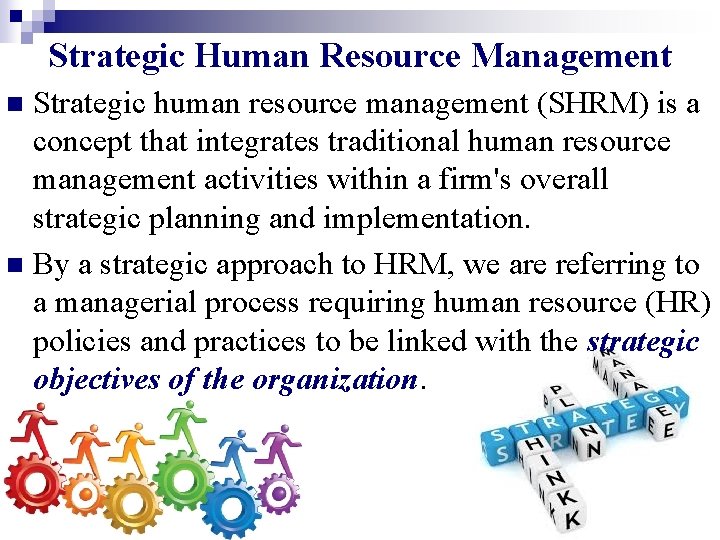
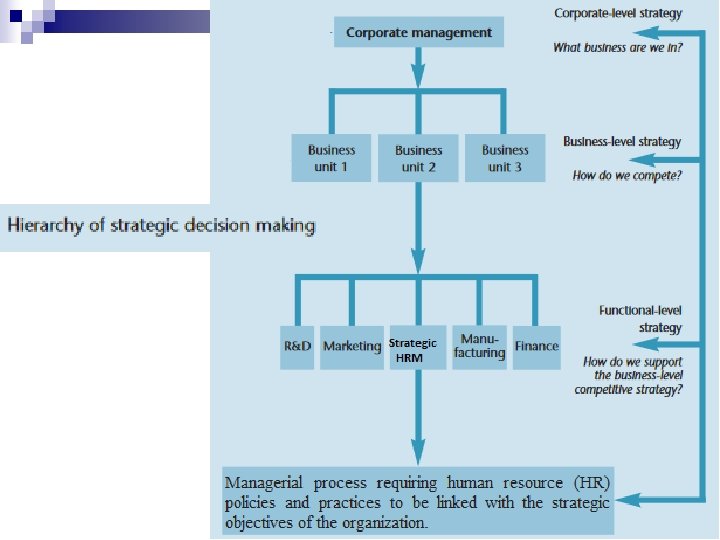
Strategic Human Resource Management Strategic human resource management (SHRM) is a concept that integrates traditional human resource management activities within a firm's overall strategic planning and implementation. n By a strategic approach to HRM, we are referring to a managerial process requiring human resource (HR) policies and practices to be linked with the strategic objectives of the organization. n. n
Strategic Human Resource Management § § § Involves the development of a consistent, aligned collection of practices, programs, and policies to facilitate the achievement of the organization’s strategic objectives. Requires abandoning the mindset and practices of “personnel management” and focusing on strategic issues than operational issues. Integration of all HR programs within a larger framework, facilitating the organization’s mission and its objectives.
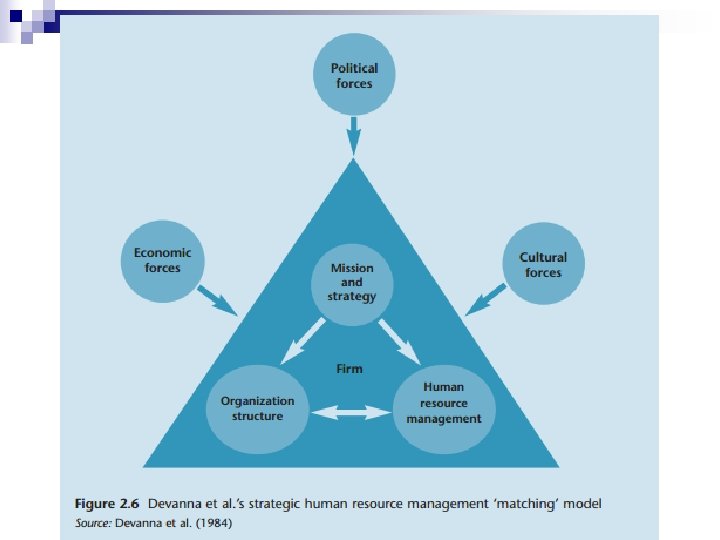
Strategic Human Resource Management Once the business strategy has been determined, an HR strategy is implemented to support the chosen competitive strategy. Ø one-way downward from business- to functional level strategy. Ø This relatively young field represents an intersection of the strategic management and human resource management (HRM) literatures v In this sense, a HR strategy is concerned with the challenge of matching the philosophy, policies, programs, practices and processes – the ‘five Ps’ Ø
The major objectives of SHRM are as follows: Ø To ensure the availability of a skilled committed and highly motivated workforce in the organization to achieve sustained competitive advantage Ø To provide direction to the organization so that both the business needs of the organization and the individual and collective needs of its workforce are met Ø This is achieved by developing and implementing HR practices that are strategically aligned. n
Ø Ø Ø SHRM is practiced in only those organizations that have a clearly articulated corporate or business strategy. Organizations who do not have a corporate plan cannot have SHRM. In such organization HR personnel carry out the traditional administrative and service rolesnot concerned with strategic business issues.
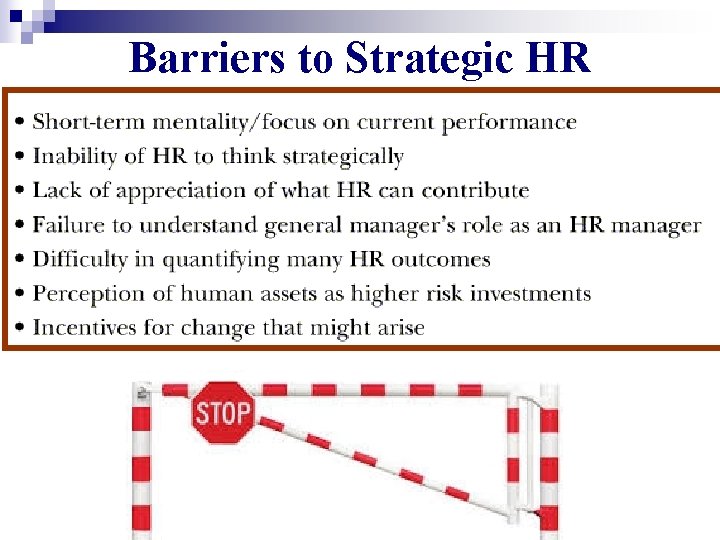
Barriers to Strategic HR
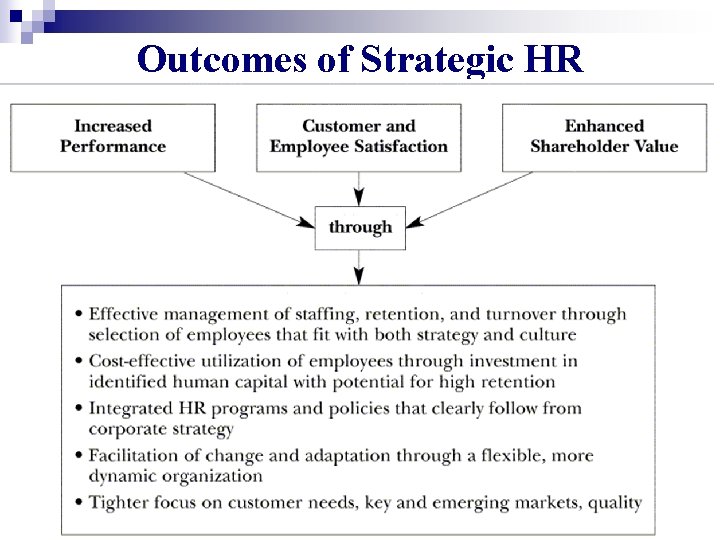
Outcomes of Strategic HR
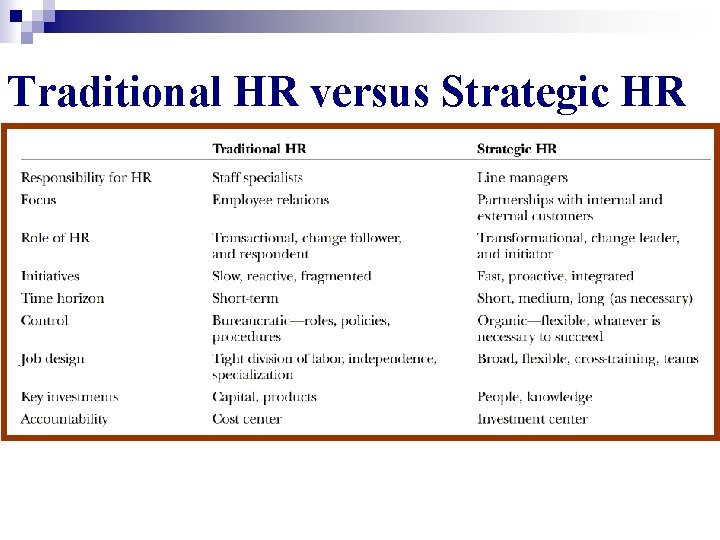
Traditional HR versus Strategic HR
Model of SHRM