
Chapter 1 American Government and Politics The Stories


- Slides: 35
Chapter 1: American Government and Politics The Stories of Our Nation
The Fight for Students' Rights
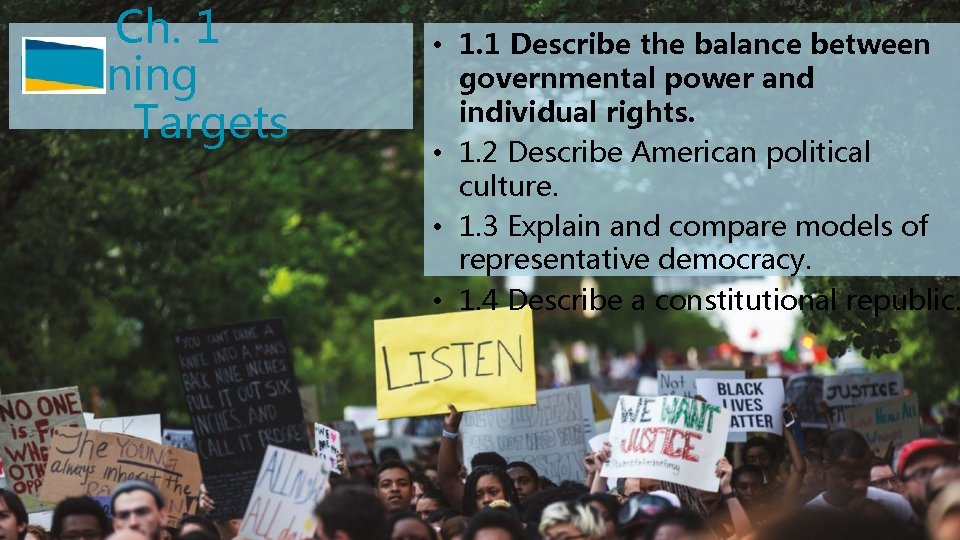
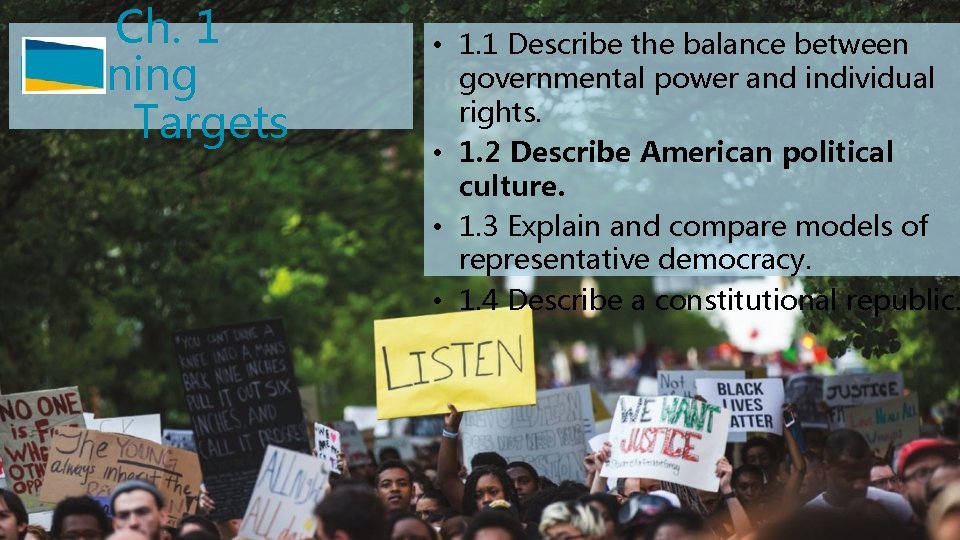
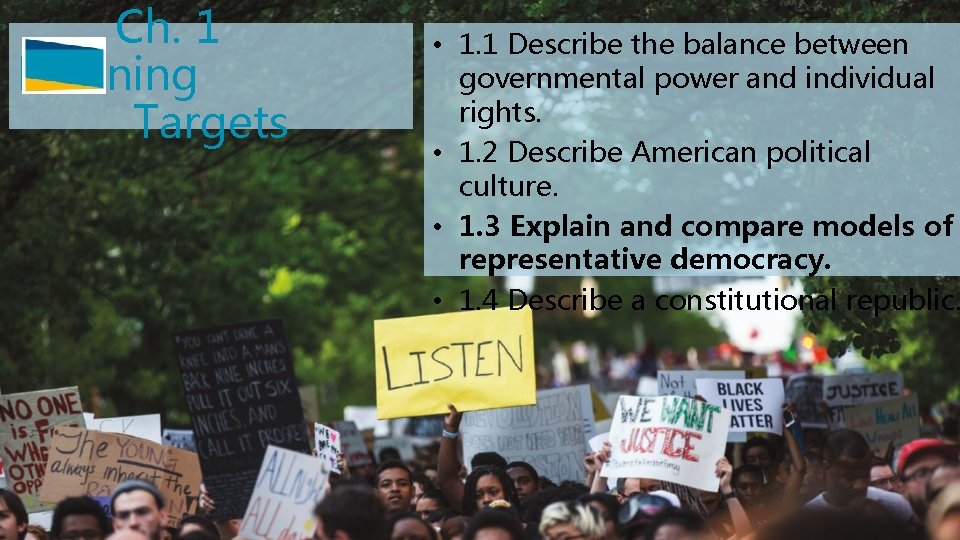
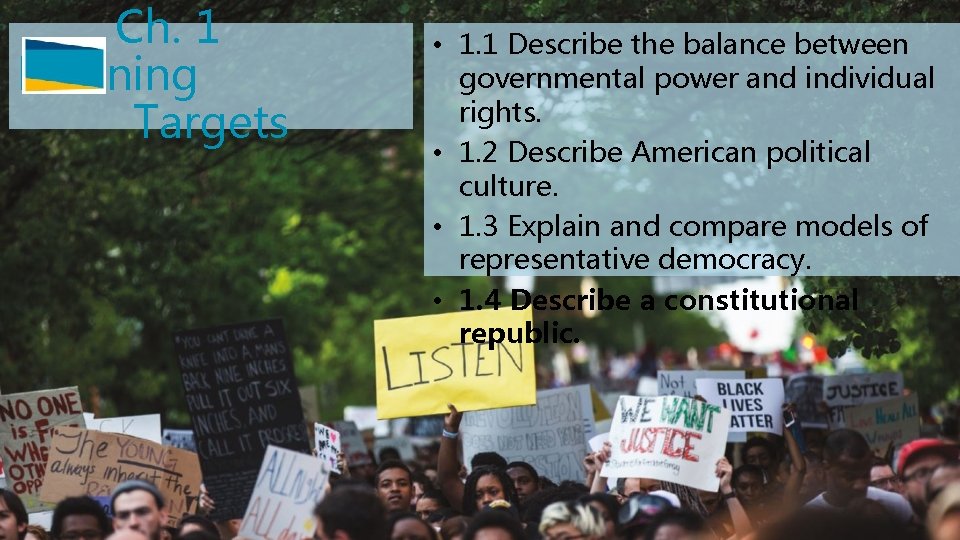
Ch. 1 Learning Targets • 1. 1 Describe the balance between governmental power and individual rights. • 1. 2 Describe American political culture. • 1. 3 Explain and compare models of representative democracy. • 1. 4 Describe a constitutional republic.
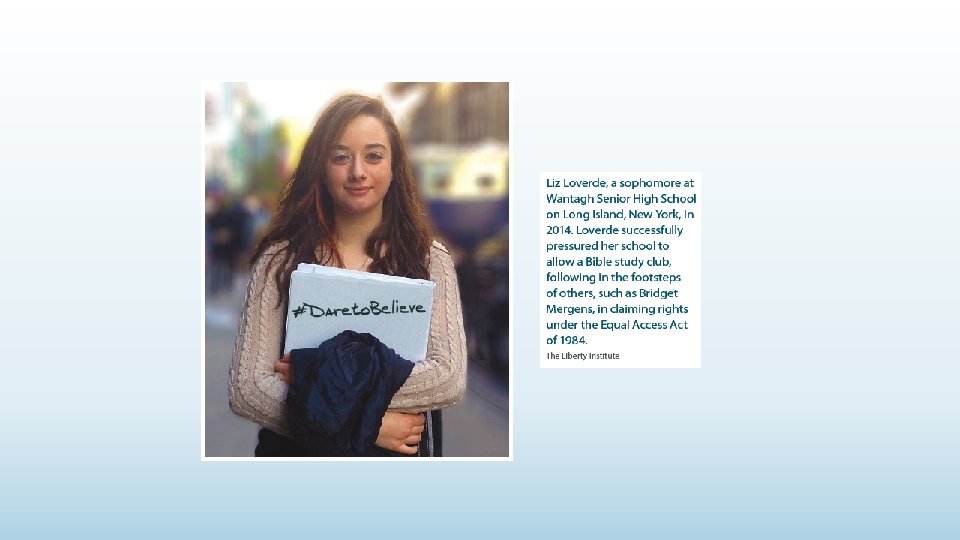
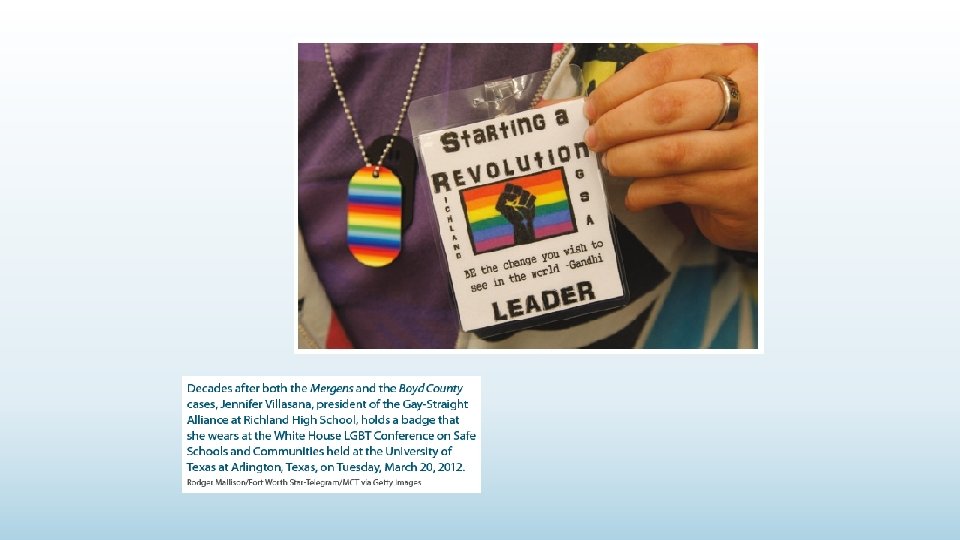
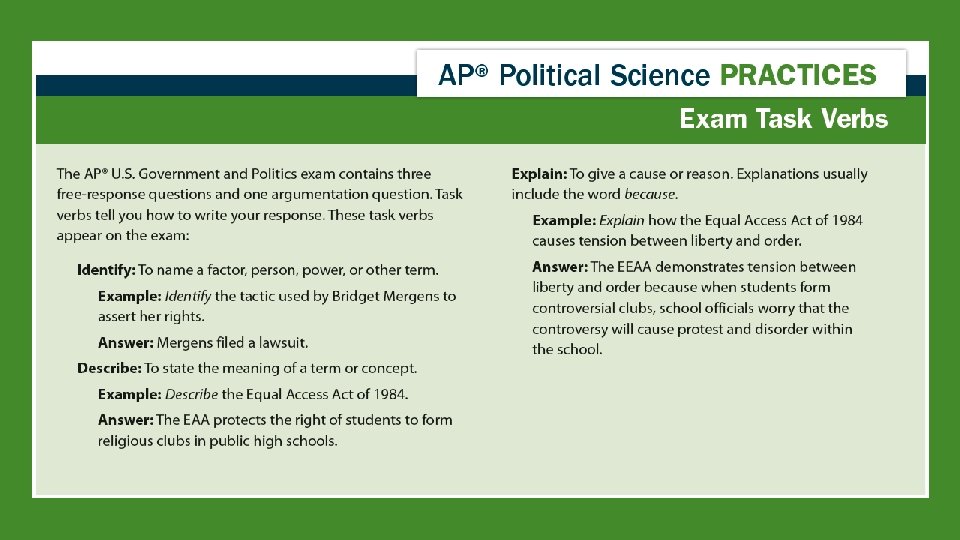
Section 1. 1 The Fight for Students’ Rights • Students have used political tools available to them to secure their rights • Bridget Mergens – Christian Bible study club • Boyd County students – Gay-Straight Alliance • Outside organizations aided in their goals • Governmental structures at all levels were involved
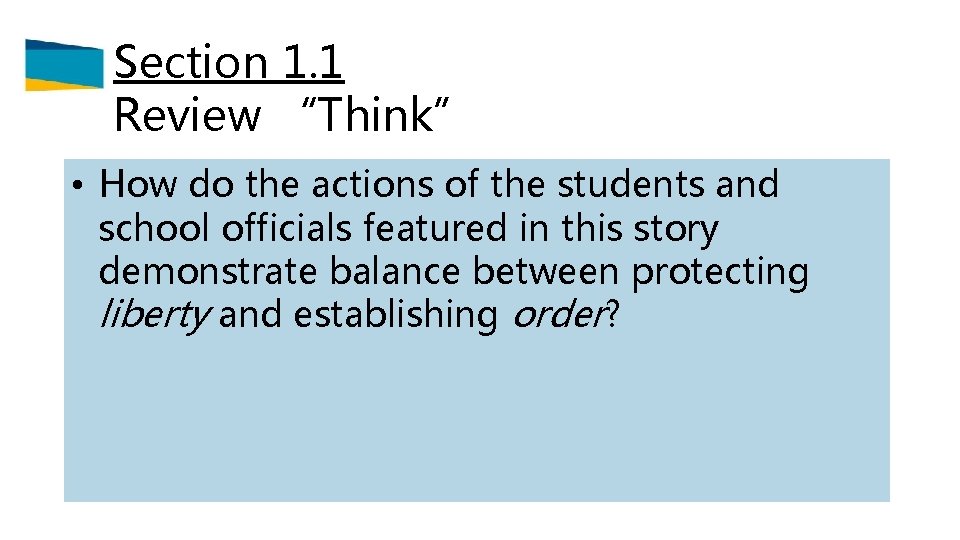
Section 1. 1 Review “Think” • How do the actions of the students and school officials featured in this story demonstrate balance between protecting liberty and establishing order?
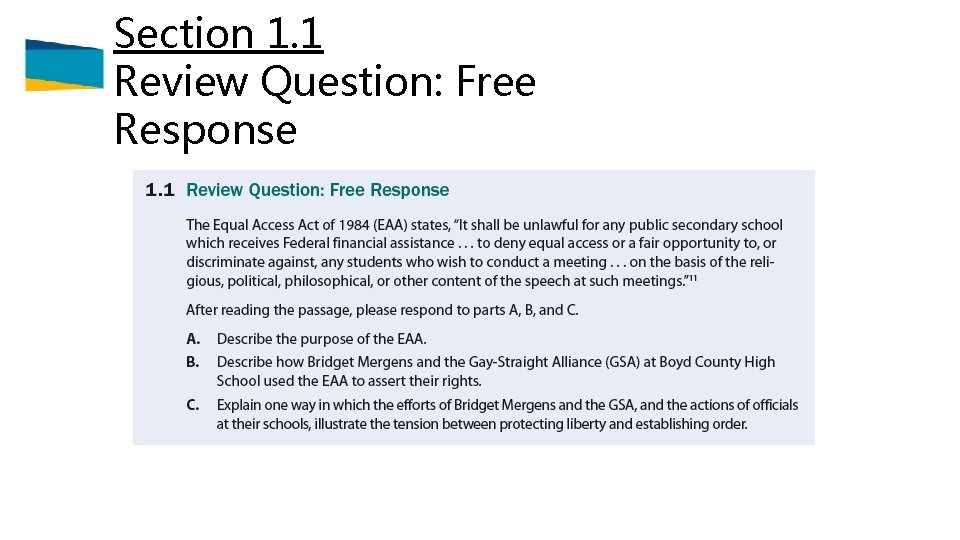
Section 1. 1 Review Question: Free Response
American Political Culture
Ch. 1 Learning Targets • 1. 1 Describe the balance between governmental power and individual rights. • 1. 2 Describe American political culture. • 1. 3 Explain and compare models of representative democracy. • 1. 4 Describe a constitutional republic.
Section 1. 2 American Political Culture • When Americans assert their rights they are doing so based on revolutionary ideas • These ideas make up the country’s basic DNA • Democracy, natural/inalienable rights, popular sovereignty, republicanism, liberty, pursuit of happiness, religious freedom
Section 1. 2 Enlightenment Principles • Enlightenment principles shaped American revolutionary ideals • Democracy: power is held by the people • Natural rights: the right to life, liberty, and property, which government cannot take away • Social contract: people allow their governments to rule over them to ensure an orderly and functioning society
Section 1. 2 The Declaration of Independence • Jefferson’s arguments: – British government no longer legitimate – Inalienable rights were denied to citizens • “Life, Liberty, pursuit of Happiness” - should be self-evident under the law of nature – Long list of grievances against King of England • No representation, justice obstructed, standing armies threatened, unfair taxes imposed
Section 1. 2 Government by the People • Popular sovereignty: the idea that the government’s right to rule comes from the people • Republicanism: the authority of the government comes from the people – Representative government – Americans use free, fair, and frequent elections to hold officials accountable – Opposes a direct democracy
Section 1. 2 Two Visions of Liberty • • Social, political and economic freedoms Freedom from interference by a government Freedom to pursue one’s dreams Conflicts with government imposed order
Section 1. 2 Review “Think” • How might changing values influence American political culture in the future?
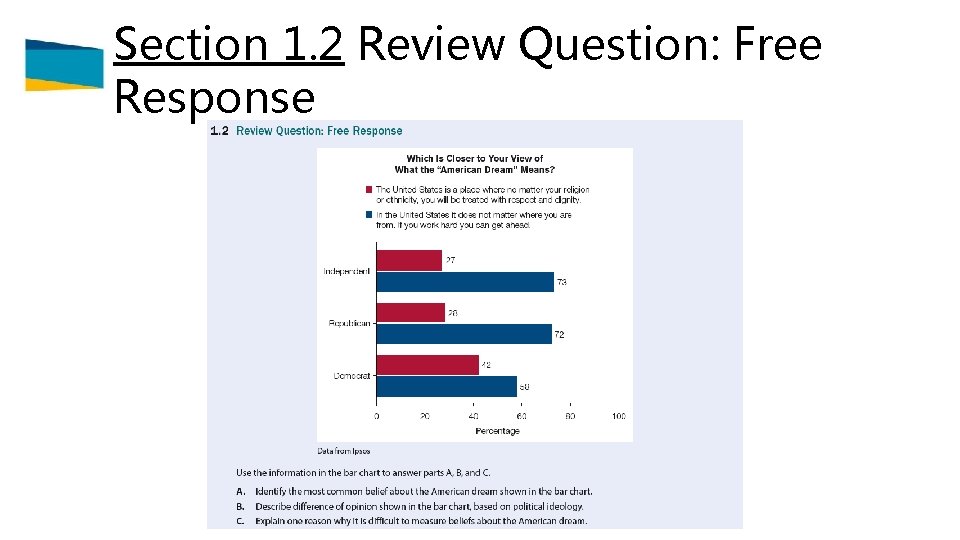
Section 1. 2 Review Question: Free Response
Competing Theories of Democracy
Ch. 1 Learning Targets • 1. 1 Describe the balance between governmental power and individual rights. • 1. 2 Describe American political culture. • 1. 3 Explain and compare models of representative democracy. • 1. 4 Describe a constitutional republic.
Section 1. 3 Competing Theories of Democracy • Political scientists differ over how power is distributed • Power is held by: – Political participation of the masses – Competing groups – Elites
Section 1. 3 Participatory Democratic Theory • A theory that widespread political participation is essential for democratic government • Citizens can join groups outside of the government control – Demonstrates strong civil society – Joining voluntary associations prepares citizens for the democratic process – Work for a common good
Section 1. 3 Pluralist Theory • Americans have always united for a common purpose with likeminded people – America is “a nation of joiners” • A theory of democracy that emphasizes the role of groups in the policymaking process – Groups compete, no one group dominates – Results in bargaining and compromise • Americans generally join interest groups who collectively seek to influence policy outcomes – National Rifle Association (NRA) – American Association of Retired Persons (AARP)
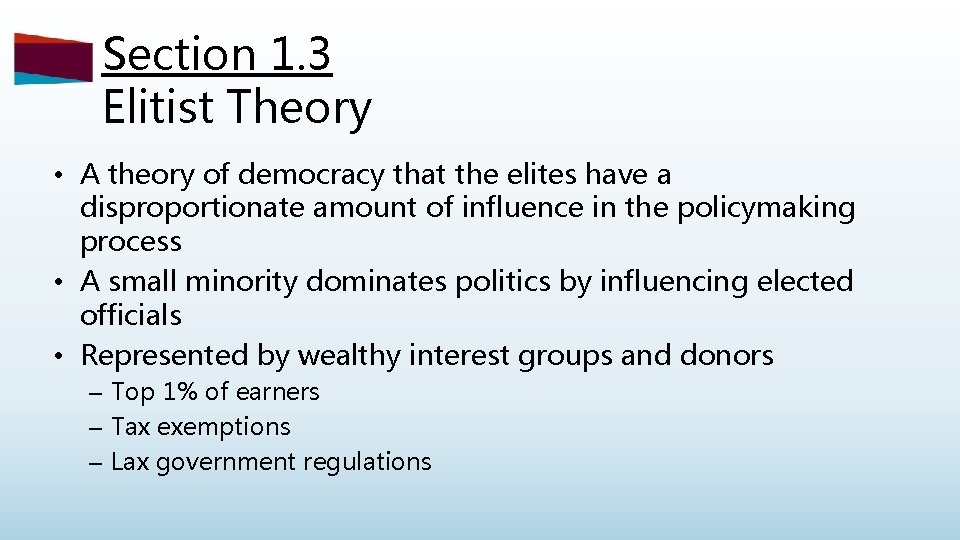
Section 1. 3 Elitist Theory • A theory of democracy that the elites have a disproportionate amount of influence in the policymaking process • A small minority dominates politics by influencing elected officials • Represented by wealthy interest groups and donors – Top 1% of earners – Tax exemptions – Lax government regulations
Section 1. 3 Review “Think” • Bridget Mergens used a law firm to assert her rights. Does her story best represent pluralism, elitism or participatory democracy?
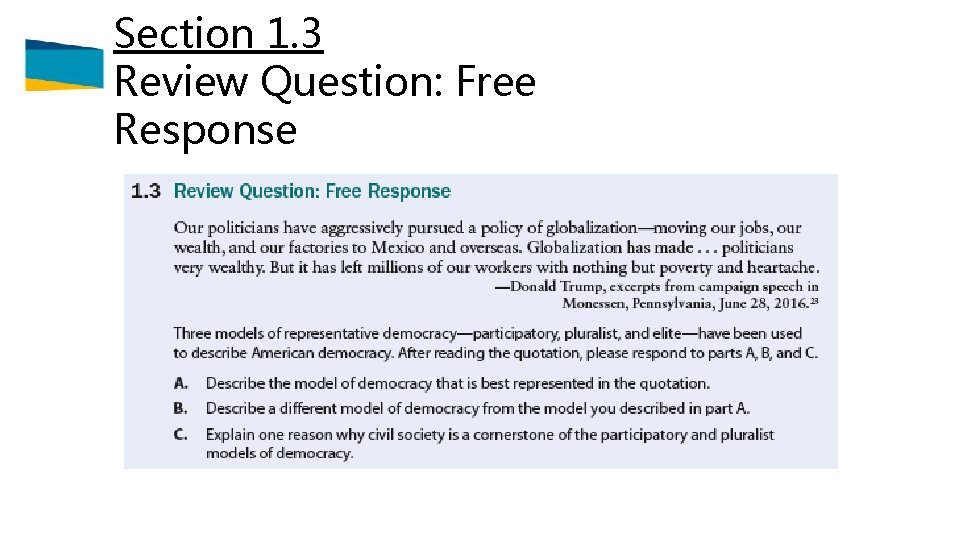
Section 1. 3 Review Question: Free Response
Institutions, Systems, and Power
Ch. 1 Learning Targets • 1. 1 Describe the balance between governmental power and individual rights. • 1. 2 Describe American political culture. • 1. 3 Explain and compare models of representative democracy. • 1. 4 Describe a constitutional republic.
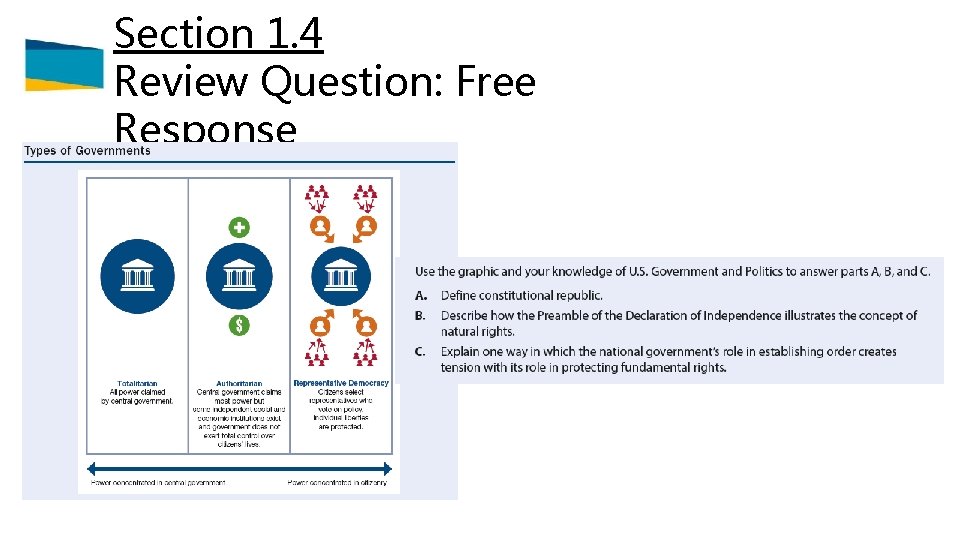
Section 1. 4 Institutions, Systems, and Power • Questions to ask when devising a system of government: – 1) How much power will the government have? – 2) How is political power going to be distributed? • Political Institutions: the structure of government, including the executive, legislature, and judiciary • Constitutional Republic: a democratic system with elected representatives in which the Constitution is supreme law – How do these styles of governments maintain order and liberty?
Section 1. 4 Our Nation and Your Story • This course is designed to give you the tools to be civically aware, engaged and responsible • You should know how to pinpoint your own point of view and recognize other viewpoints • Political science is based on the actions of real people in real scenarios
Section 1. 4 Review “Think” • Are three models of democracy the best way to describe our system? Why or why not?
Section 1. 4 Review Question: Free Response