
Chapter 1 Accounting Information Systems An Overview Copyright
- Slides: 21
Chapter 1 Accounting Information Systems: An Overview Copyright © 2012 Pearson Education, Inc. publishing as Prentice Hall 1 -1
Learning Objectives Distinguish between data and information. Discuss the characteristics of useful information. Explain how to determine the value of information. Explain the decisions an organization makes and the information needed to make them. Identify the information that passes between internal and external parties and an AIS. Describe the major business processes present in most companies. Explain what an accounting information system (AIS) is and describe its basic functions. Discuss how an AIS can add value to an organization. Explain how an AIS and corporate strategy affect each other. Explain the role an AIS plays in a company’s value chain. Copyright © 2012 Pearson Education, Inc. publishing as Prentice Hall 1 -2
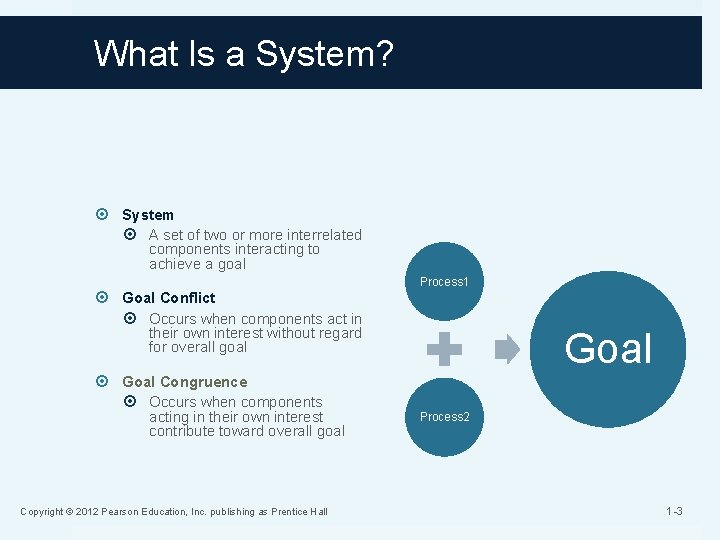
What Is a System? System A set of two or more interrelated components interacting to achieve a goal Process 1 Goal Conflict Occurs when components act in their own interest without regard for overall goal Goal Congruence Occurs when components acting in their own interest contribute toward overall goal Copyright © 2012 Pearson Education, Inc. publishing as Prentice Hall Goal Process 2 1 -3
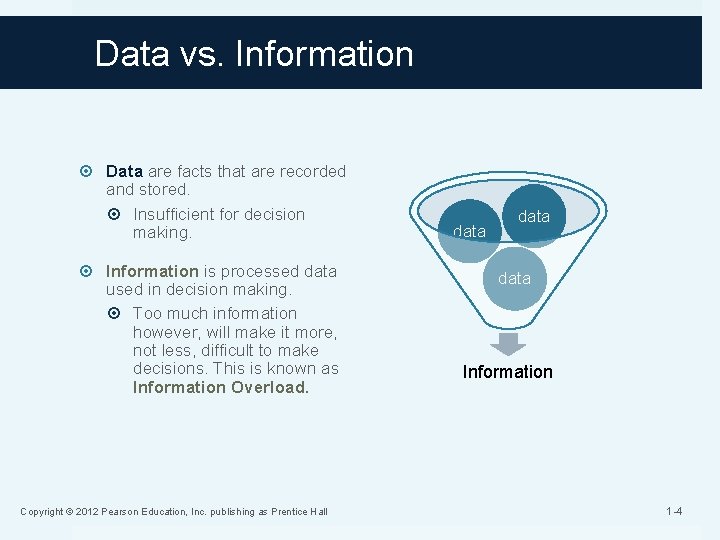
Data vs. Information Data are facts that are recorded and stored. Insufficient for decision making. Information is processed data used in decision making. Too much information however, will make it more, not less, difficult to make decisions. This is known as Information Overload. Copyright © 2012 Pearson Education, Inc. publishing as Prentice Hall data Information 1 -4
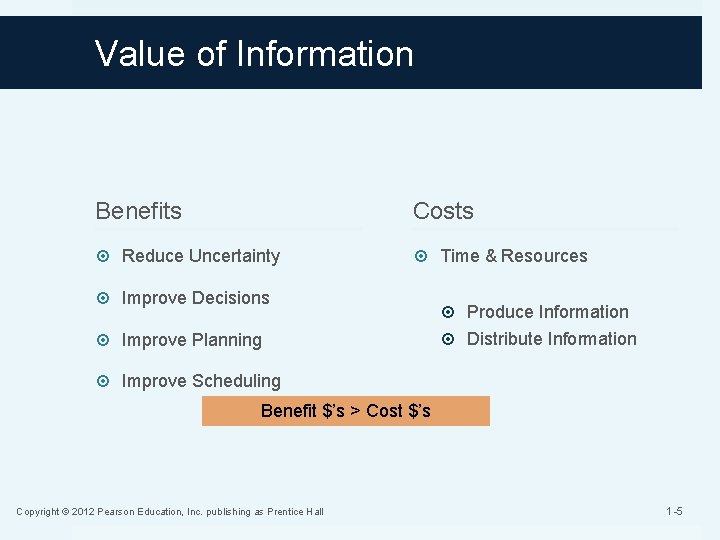
Value of Information Benefits Costs Reduce Uncertainty Time & Resources Improve Decisions Improve Planning Produce Information Distribute Information Improve Scheduling Benefit $’s > Cost $’s Copyright © 2012 Pearson Education, Inc. publishing as Prentice Hall 1 -5
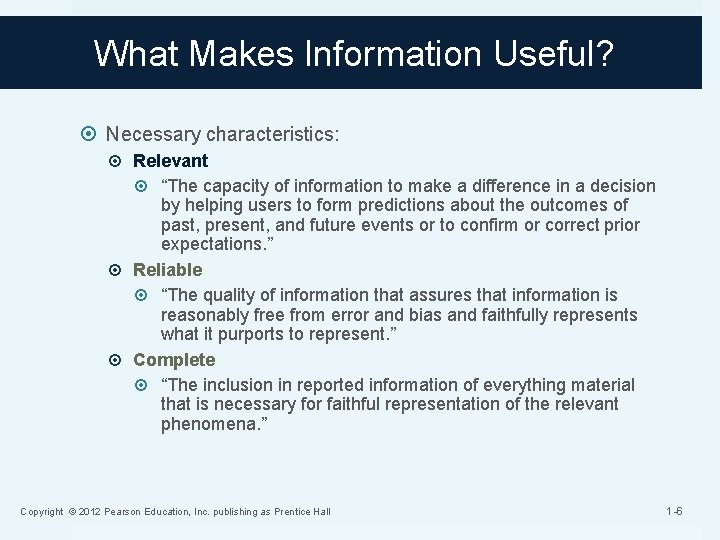
What Makes Information Useful? Necessary characteristics: Relevant “The capacity of information to make a difference in a decision by helping users to form predictions about the outcomes of past, present, and future events or to confirm or correct prior expectations. ” Reliable “The quality of information that assures that information is reasonably free from error and bias and faithfully represents what it purports to represent. ” Complete “The inclusion in reported information of everything material that is necessary for faithful representation of the relevant phenomena. ” Copyright © 2012 Pearson Education, Inc. publishing as Prentice Hall 1 -6
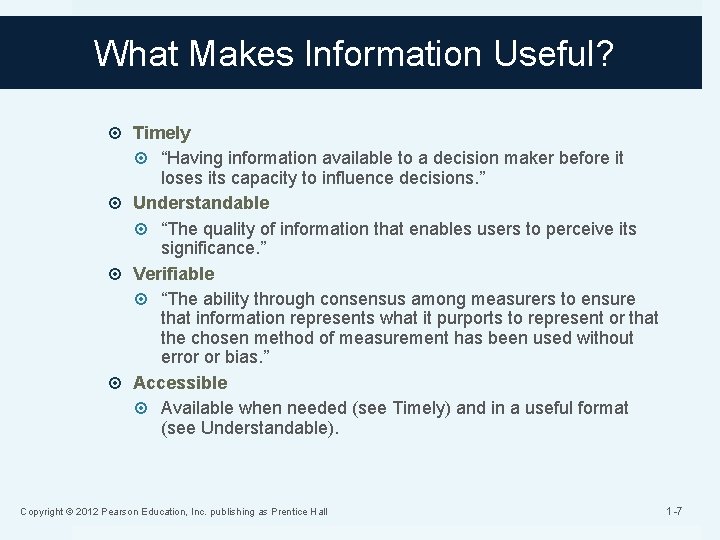
What Makes Information Useful? Timely “Having information available to a decision maker before it loses its capacity to influence decisions. ” Understandable “The quality of information that enables users to perceive its significance. ” Verifiable “The ability through consensus among measurers to ensure that information represents what it purports to represent or that the chosen method of measurement has been used without error or bias. ” Accessible Available when needed (see Timely) and in a useful format (see Understandable). Copyright © 2012 Pearson Education, Inc. publishing as Prentice Hall 1 -7
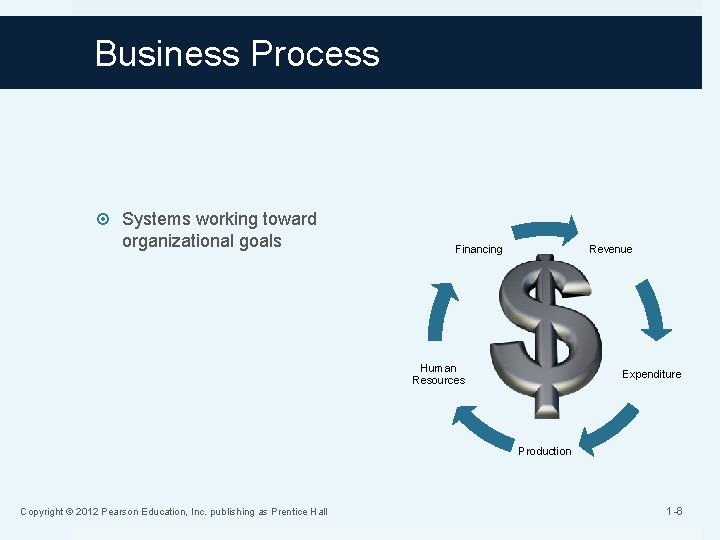
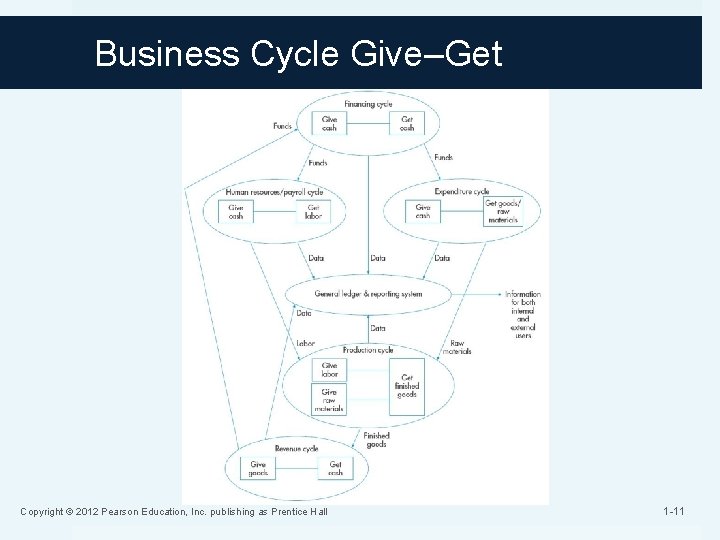
Business Process Systems working toward organizational goals Financing Revenue Human Resources Expenditure Production Copyright © 2012 Pearson Education, Inc. publishing as Prentice Hall 1 -8
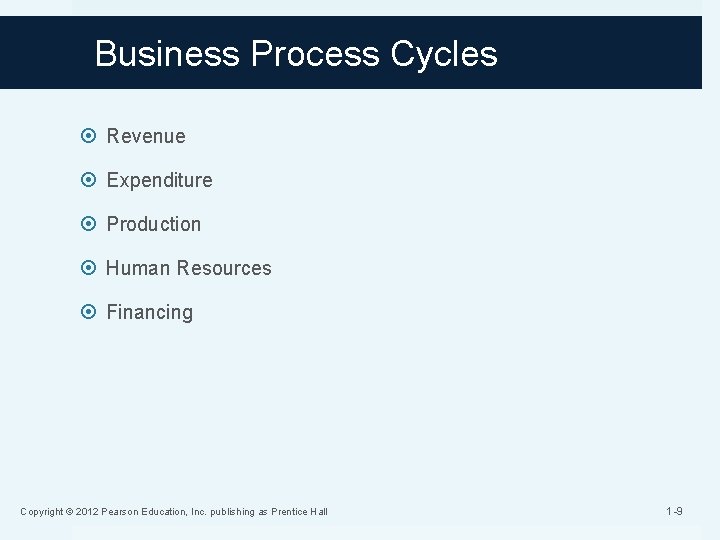
Business Process Cycles Revenue Expenditure Production Human Resources Financing Copyright © 2012 Pearson Education, Inc. publishing as Prentice Hall 1 -9
Business Transactions Give–Get exchanges Between two entities Measured in economic terms Copyright © 2012 Pearson Education, Inc. publishing as Prentice Hall 1 -10
Business Cycle Give–Get Copyright © 2012 Pearson Education, Inc. publishing as Prentice Hall 1 -11
Accounting Information Systems Collect, process, store, and report data and information If Accounting = language of business AIS = information providing vehicle Accounting = AIS Copyright © 2012 Pearson Education, Inc. publishing as Prentice Hall 1 -12
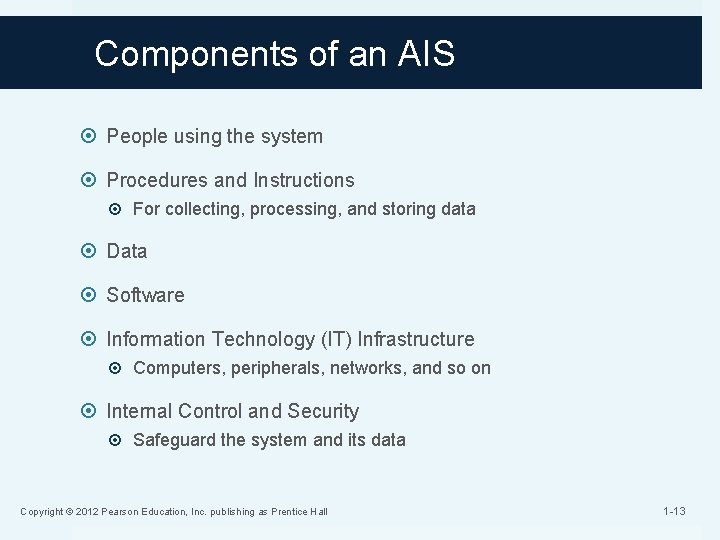
Components of an AIS People using the system Procedures and Instructions For collecting, processing, and storing data Data Software Information Technology (IT) Infrastructure Computers, peripherals, networks, and so on Internal Control and Security Safeguard the system and its data Copyright © 2012 Pearson Education, Inc. publishing as Prentice Hall 1 -13
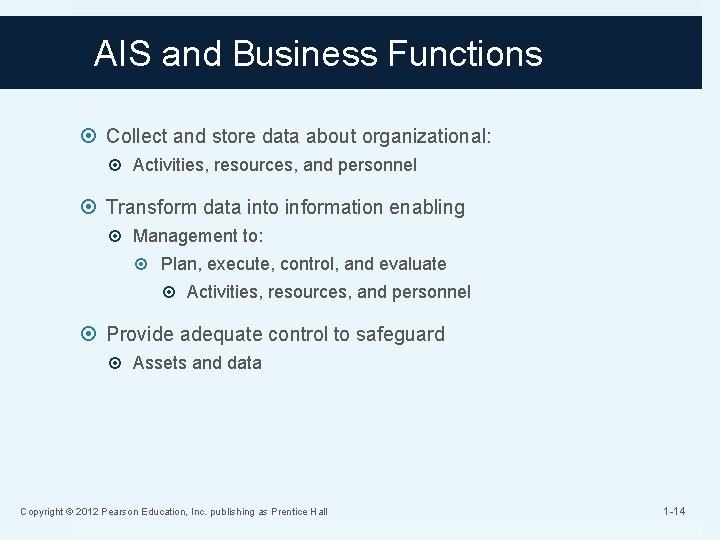
AIS and Business Functions Collect and store data about organizational: Activities, resources, and personnel Transform data into information enabling Management to: Plan, execute, control, and evaluate Activities, resources, and personnel Provide adequate control to safeguard Assets and data Copyright © 2012 Pearson Education, Inc. publishing as Prentice Hall 1 -14
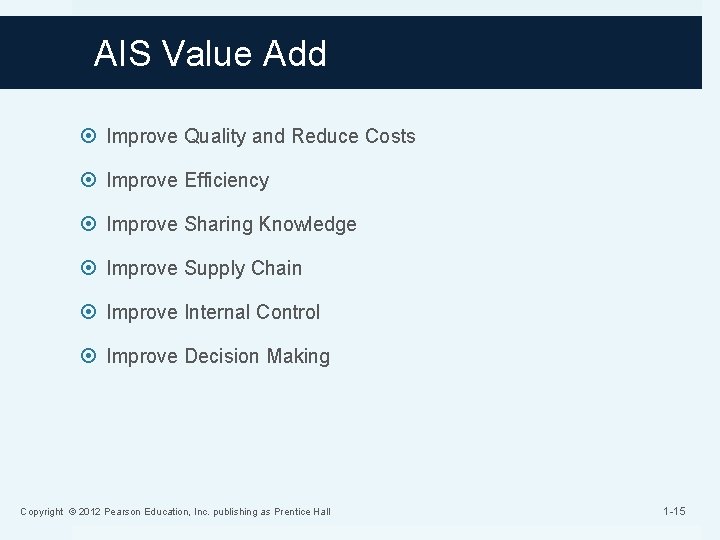
AIS Value Add Improve Quality and Reduce Costs Improve Efficiency Improve Sharing Knowledge Improve Supply Chain Improve Internal Control Improve Decision Making Copyright © 2012 Pearson Education, Inc. publishing as Prentice Hall 1 -15
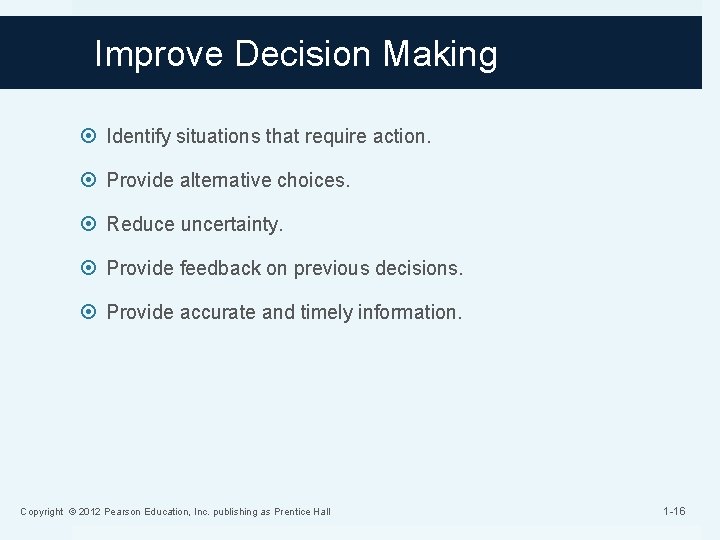
Improve Decision Making Identify situations that require action. Provide alternative choices. Reduce uncertainty. Provide feedback on previous decisions. Provide accurate and timely information. Copyright © 2012 Pearson Education, Inc. publishing as Prentice Hall 1 -16
Value Chain The set of activities a product or service moves along before as output it is sold to a customer At each activity the product or service gains value Copyright © 2012 Pearson Education, Inc. publishing as Prentice Hall 1 -17
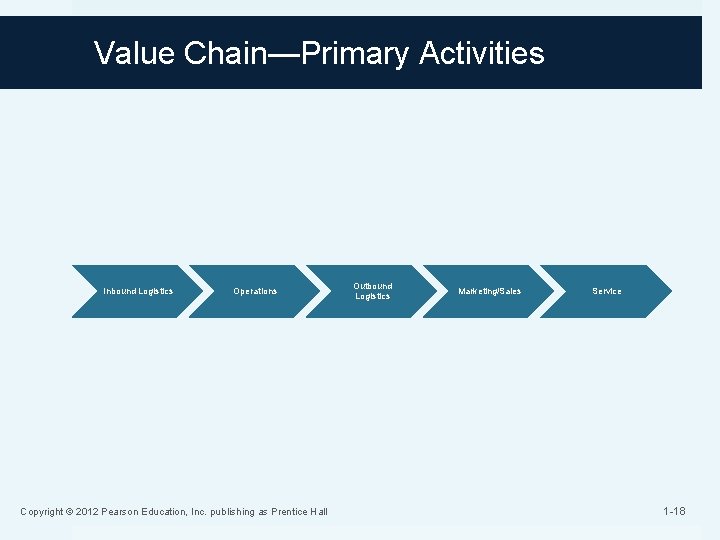
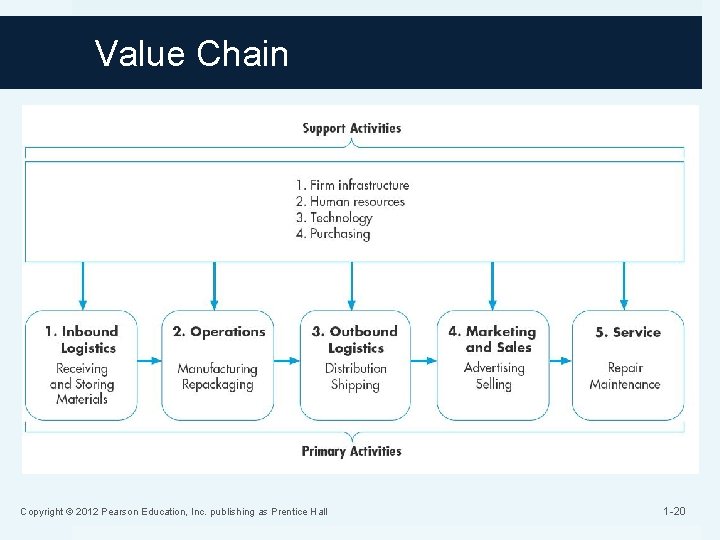
Value Chain—Primary Activities Inbound Logistics Operations Copyright © 2012 Pearson Education, Inc. publishing as Prentice Hall Outbound Logistics Marketing/Sales Service 1 -18
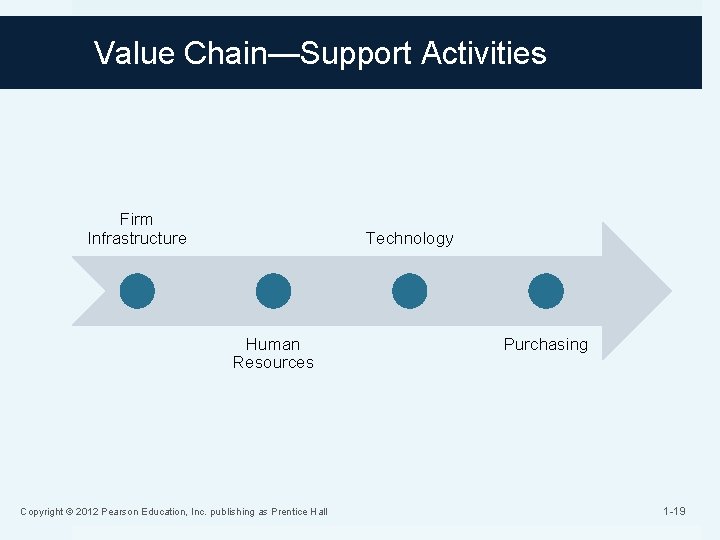
Value Chain—Support Activities Firm Infrastructure Technology Human Resources Copyright © 2012 Pearson Education, Inc. publishing as Prentice Hall Purchasing 1 -19
Value Chain Copyright © 2012 Pearson Education, Inc. publishing as Prentice Hall 1 -20
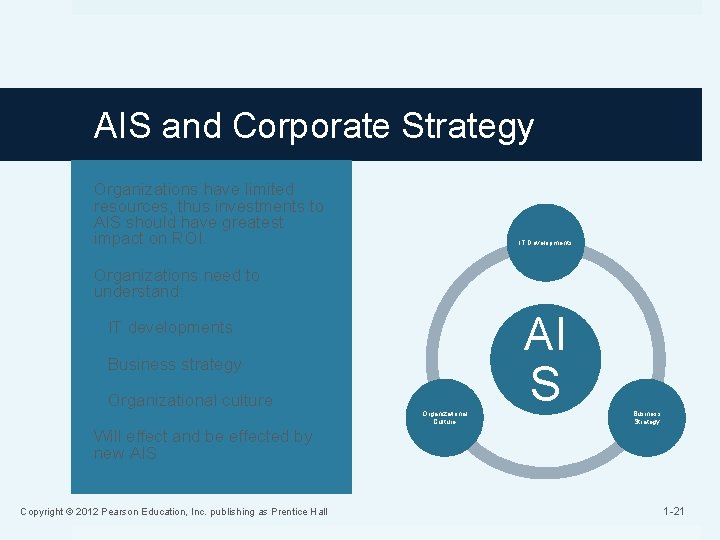
AIS and Corporate Strategy Organizations have limited resources, thus investments to AIS should have greatest impact on ROI. IT Developments Organizations need to understand: AI S üIT developments üBusiness strategy üOrganizational culture Organizational Culture Business Strategy Will effect and be effected by new AIS Copyright © 2012 Pearson Education, Inc. publishing as Prentice Hall 1 -21