
Chapter 1 Accounting and the Business Environment 2018
Chapter 1 Accounting and the Business Environment © 2018 Pearson Education, Inc.
Chapter 1 Learning Objectives 1. Explain why accounting is important and list the users of accounting information 2. Describe the organizations and rules that govern accounting 3. Describe the accounting equation and define assets, liabilities, and equity © 2018 Pearson Education, Inc. 1 -2
Chapter 1 Learning Objectives 4. Use the accounting equation to analyze transactions 5. Prepare financial statements 6. Use financial statements and return on assets (ROA) to evaluate business performance © 2018 Pearson Education, Inc. 1 -3
Learning Objective 1 Explain why accounting is important and list the users of accounting information © 2018 Pearson Education, Inc. 1 -4
WHY IS ACCOUNTING IMPORTANT? • Accounting is the information system that: – Measures business activities – Processes the information into reports – Communicates the results to decision makers © 2018 Pearson Education, Inc. 1 -5
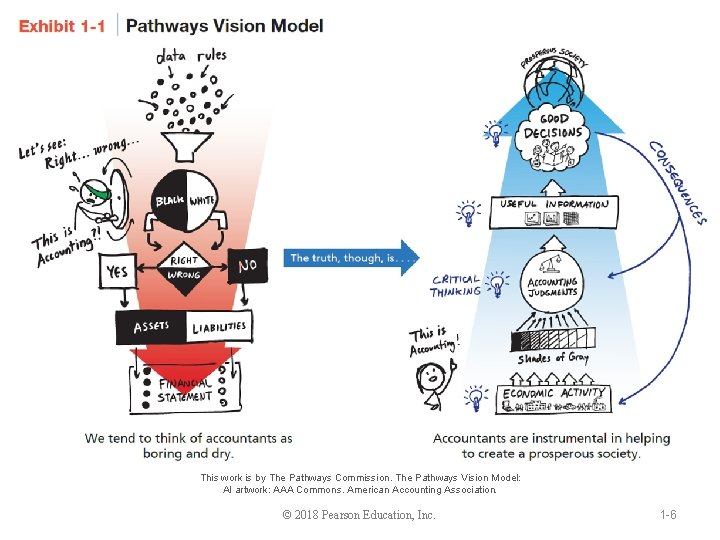
This work is by The Pathways Commission. The Pathways Vision Model: AI artwork: AAA Commons. American Accounting Association. © 2018 Pearson Education, Inc. 1 -6
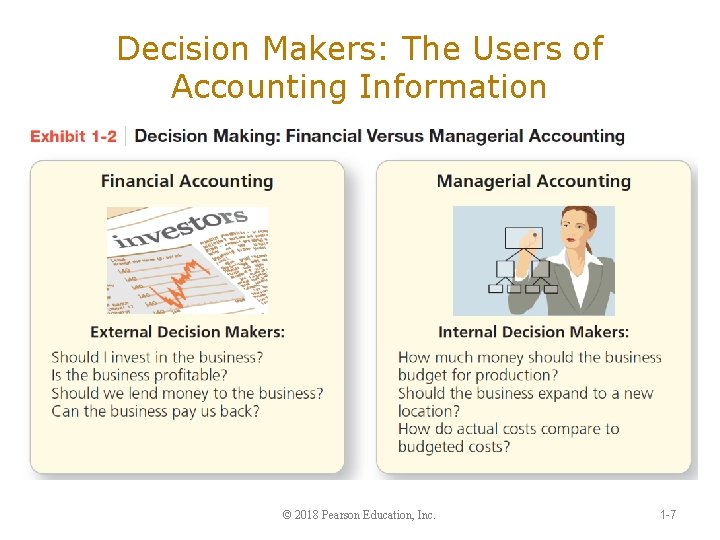
Decision Makers: The Users of Accounting Information © 2018 Pearson Education, Inc. 1 -7
Decision Makers: The Users of Accounting Information • Financial accounting provides information for external decision makers, such as: – Investors who own a portion of the business – Creditors to whom the business owes money – Taxing authorities, to whom the business owes taxes • Managerial accounting provides information to internal decision makers, such as: – – Managers Employees Individuals Businesses © 2018 Pearson Education, Inc. 1 -8
Accounting Matters • Types of accountants: – Certified Public Accountants (CPAs) serve the general public. – Certified Management Accountants (CMAs) specialize in accounting and financial management knowledge and often work for a single company. • Accounting positions: – Public – Private – Governmental © 2018 Pearson Education, Inc. 1 -9
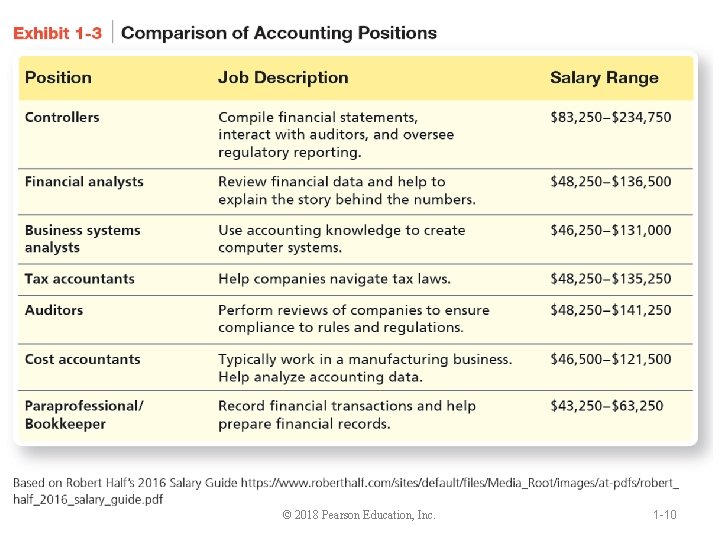
© 2018 Pearson Education, Inc. 1 -10
Learning Objective 2 Describe the organizations and rules that govern accounting © 2018 Pearson Education, Inc. 1 -11
WHAT ARE THE ORGANIZATIONS AND RULES THAT GOVERN ACCOUNTING? • Governing organizations: – The Financial Accounting Standards Board (FASB) oversees creation and governance of accounting standards. – The Securities and Exchange Commission (SEC) oversees the U. S. financial markets. © 2018 Pearson Education, Inc. 1 -12
WHAT ARE THE ORGANIZATIONS AND RULES THAT GOVERN ACCOUNTING? • Accounting guidelines are called Generally Accepted Accounting Principles (GAAP). • Useful accounting information must: – Be relevant, allowing users to make a decision – Have faithful representation by being complete, neutral, and free from error © 2018 Pearson Education, Inc. 1 -13
The Economic Entity Assumption • An organization that stands apart as a separate economic unit follows the economic entity assumption. • An Economic Entity can be a: - Sole Proprietorship Partnership Corporation LLC © 2018 Pearson Education, Inc. 1 -14
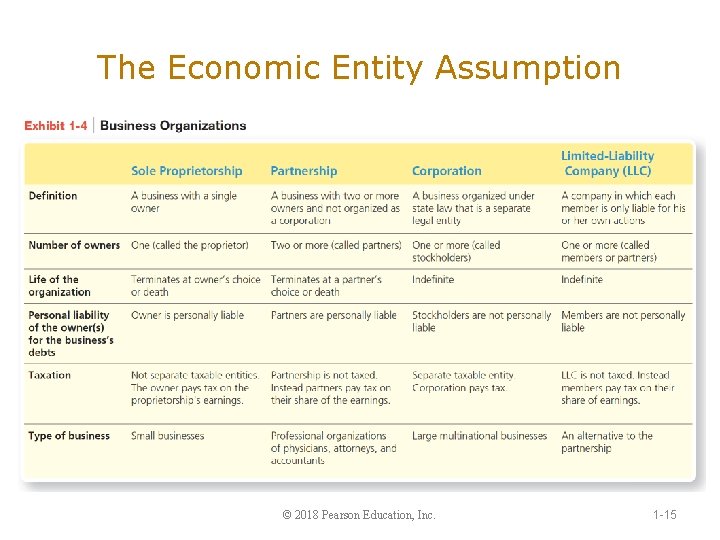
The Economic Entity Assumption © 2018 Pearson Education, Inc. 1 -15
The Economic Entity Assumption • Features of a corporation: Separate legal entity Continuous life and transferability of ownership No mutual agency Limited liability of stockholders (owners of the corporation) – Separation of ownership and management – Corporate taxation – Government regulation – – © 2018 Pearson Education, Inc. 1 -16
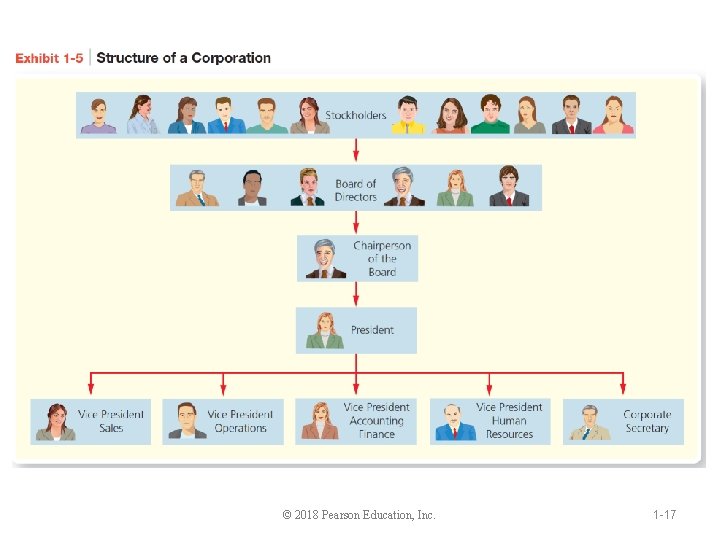
© 2018 Pearson Education, Inc. 1 -17
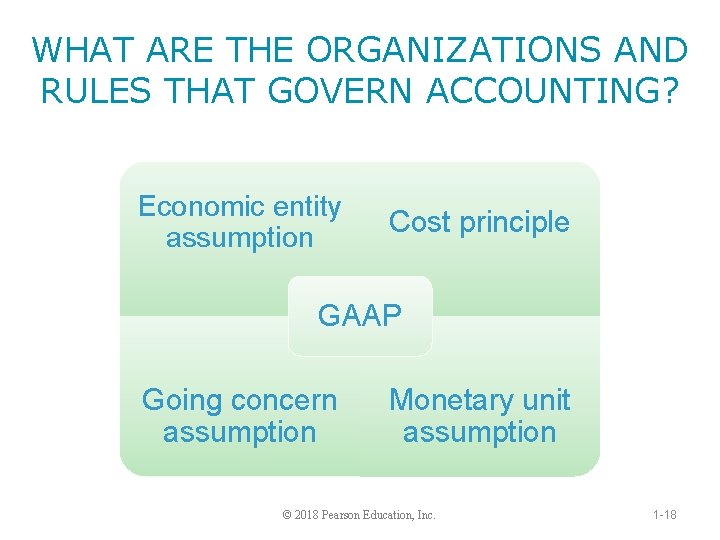
WHAT ARE THE ORGANIZATIONS AND RULES THAT GOVERN ACCOUNTING? Economic entity assumption Cost principle GAAP Going concern assumption Monetary unit assumption © 2018 Pearson Education, Inc. 1 -18
WHAT ARE THE ORGANIZATIONS AND RULES THAT GOVERN ACCOUNTING? • International Financial Reporting Standards (IFRS) – Global accounting guidelines – Used or required by more than 116 nations – Published by the International Accounting Standards Board (IASB) • Ethics in accounting and business – An audit is an examination of a company’s financial statements and records. – The Sarbanes-Oxley Act (SOX) requires companies to review internal controls. © 2018 Pearson Education, Inc. 1 -19
Learning Objective 3 Describe the accounting equation and define assets, liabilities, and equity © 2018 Pearson Education, Inc. 1 -20
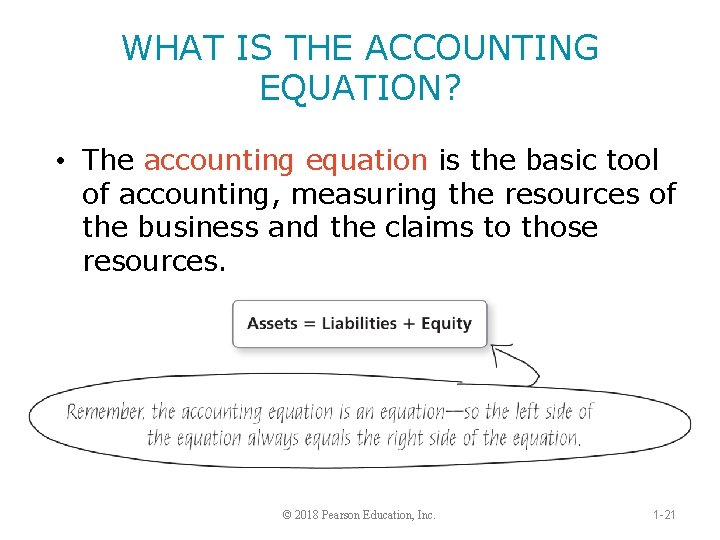
WHAT IS THE ACCOUNTING EQUATION? • The accounting equation is the basic tool of accounting, measuring the resources of the business and the claims to those resources. © 2018 Pearson Education, Inc. 1 -21
Assets • An asset is an economic resource that is expected to benefit the business in the future. • Examples: – – Cash Merchandise Inventory Furniture Land © 2018 Pearson Education, Inc. 1 -22
Liabilities • Liabilities are debts that are owed to creditors. • Many liabilities have the word payable in their titles. • Examples: – Accounts Payable – Notes Payable – Salaries Payable © 2018 Pearson Education, Inc. 1 -23

Equity • The owners’ claims to the assets of the business are called equity. – Also called stockholders’ equity • Increases in equity result from: – Contributed capital (owner contributions) – Revenues • Decreases in equity result from: – Dividends (owner distributions) – Expenses © 2018 Pearson Education, Inc. 1 -24
Equity consists of two components: 1. Contributed capital: • Also called paid-in capital, contributed capital is the amount invested in the corporation by its owners, the stockholders. • Common stock represents the basic ownership of every corporation. 2. Retained earnings: • Equity earned from profitable operations that is not distributed to shareholders © 2018 Pearson Education, Inc. 1 -25
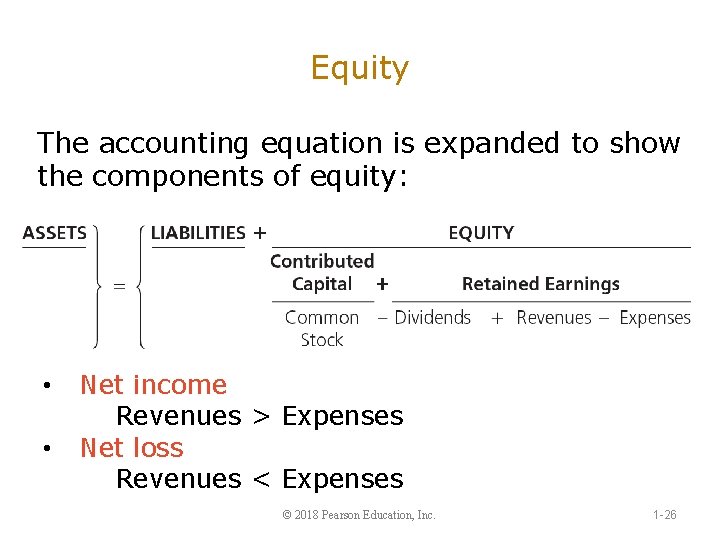
Equity The accounting equation is expanded to show the components of equity: • • Net income Revenues > Expenses Net loss Revenues < Expenses © 2018 Pearson Education, Inc. 1 -26
Learning Objective 4 Use the accounting equation to analyze transactions © 2018 Pearson Education, Inc. 1 -27
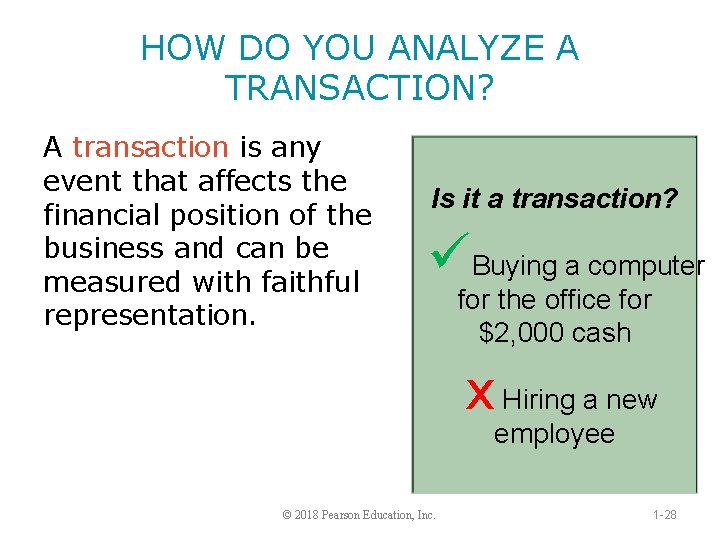
HOW DO YOU ANALYZE A TRANSACTION? A transaction is any event that affects the financial position of the business and can be measured with faithful representation. Is it a transaction? üBuying a computer for the office for $2, 000 cash x Hiring a new employee © 2018 Pearson Education, Inc. 1 -28
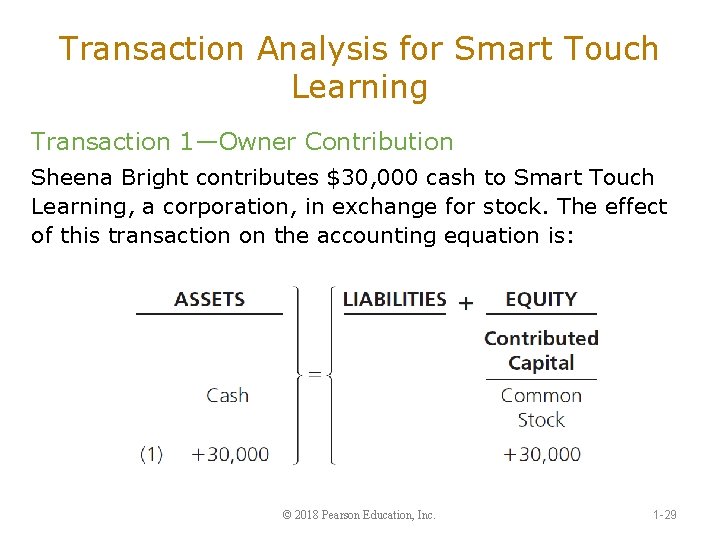
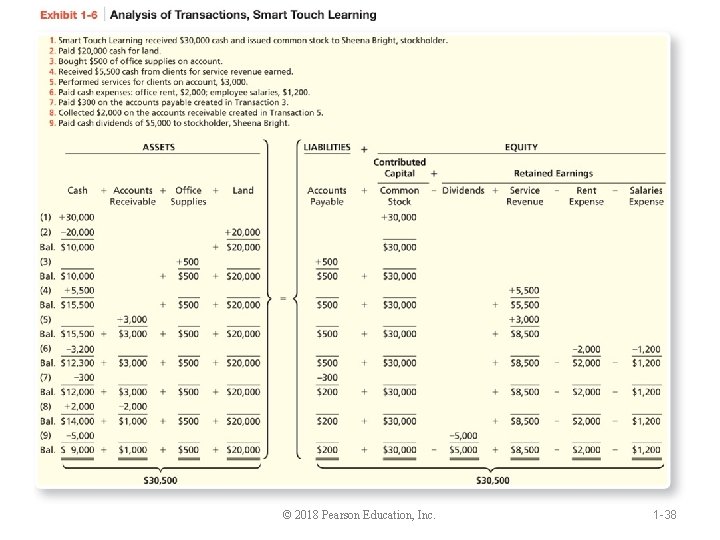
Transaction Analysis for Smart Touch Learning Transaction 1—Owner Contribution Sheena Bright contributes $30, 000 cash to Smart Touch Learning, a corporation, in exchange for stock. The effect of this transaction on the accounting equation is: © 2018 Pearson Education, Inc. 1 -29
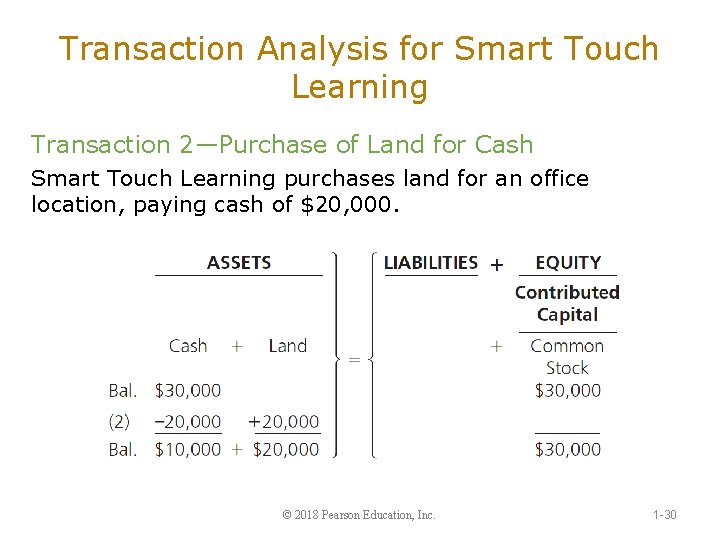
Transaction Analysis for Smart Touch Learning Transaction 2—Purchase of Land for Cash Smart Touch Learning purchases land for an office location, paying cash of $20, 000. © 2018 Pearson Education, Inc. 1 -30
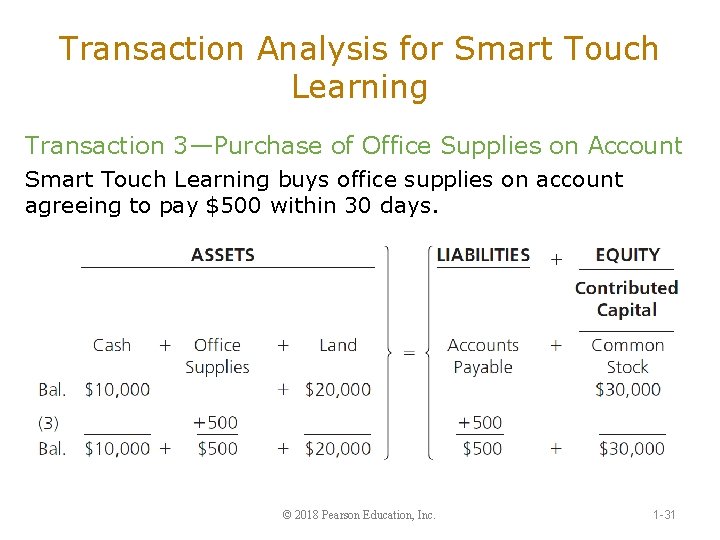
Transaction Analysis for Smart Touch Learning Transaction 3—Purchase of Office Supplies on Account Smart Touch Learning buys office supplies on account agreeing to pay $500 within 30 days. © 2018 Pearson Education, Inc. 1 -31
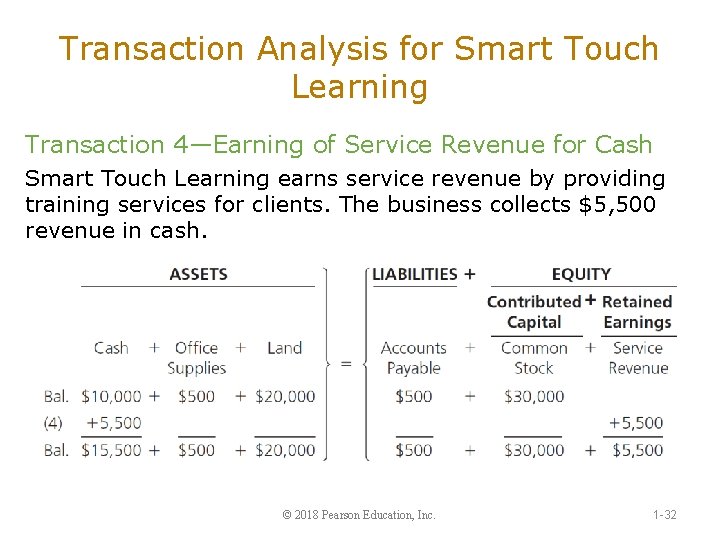
Transaction Analysis for Smart Touch Learning Transaction 4—Earning of Service Revenue for Cash Smart Touch Learning earns service revenue by providing training services for clients. The business collects $5, 500 revenue in cash. © 2018 Pearson Education, Inc. 1 -32
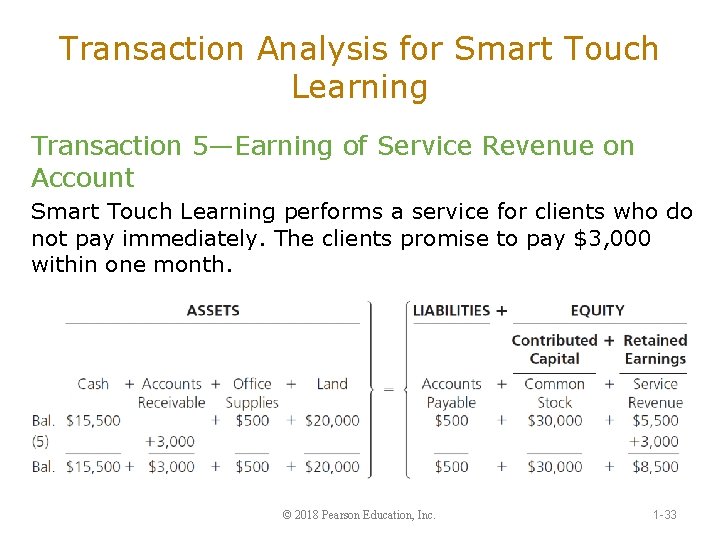
Transaction Analysis for Smart Touch Learning Transaction 5—Earning of Service Revenue on Account Smart Touch Learning performs a service for clients who do not pay immediately. The clients promise to pay $3, 000 within one month. © 2018 Pearson Education, Inc. 1 -33
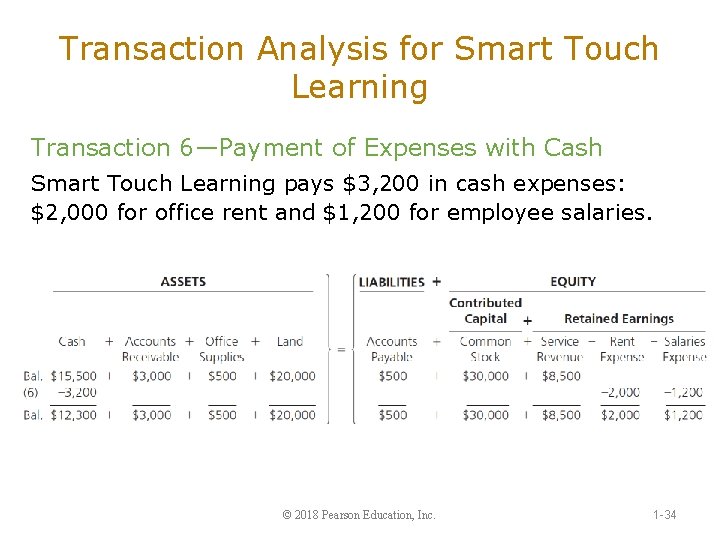
Transaction Analysis for Smart Touch Learning Transaction 6—Payment of Expenses with Cash Smart Touch Learning pays $3, 200 in cash expenses: $2, 000 for office rent and $1, 200 for employee salaries. © 2018 Pearson Education, Inc. 1 -34
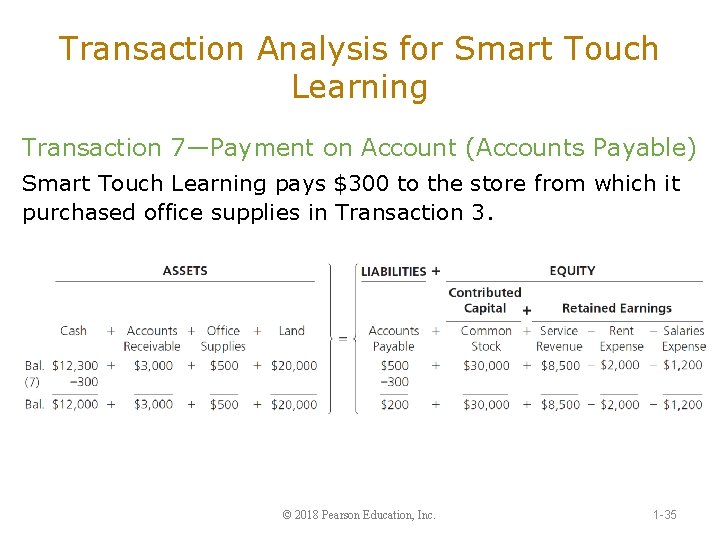
Transaction Analysis for Smart Touch Learning Transaction 7—Payment on Account (Accounts Payable) Smart Touch Learning pays $300 to the store from which it purchased office supplies in Transaction 3. © 2018 Pearson Education, Inc. 1 -35
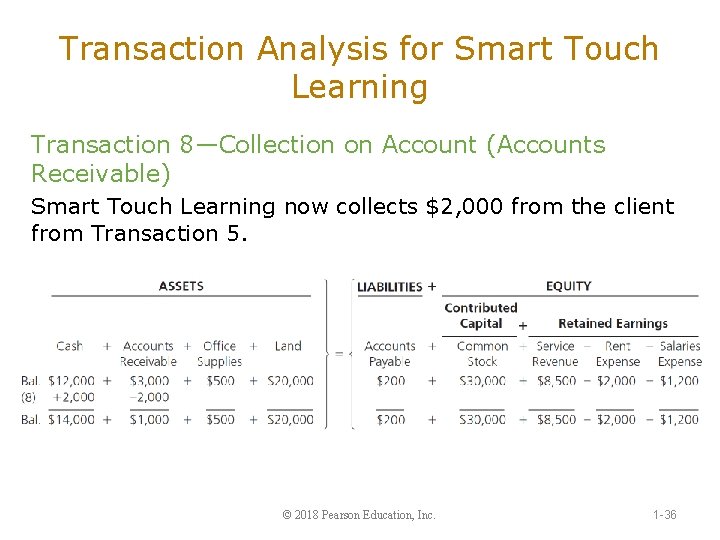
Transaction Analysis for Smart Touch Learning Transaction 8—Collection on Account (Accounts Receivable) Smart Touch Learning now collects $2, 000 from the client from Transaction 5. © 2018 Pearson Education, Inc. 1 -36
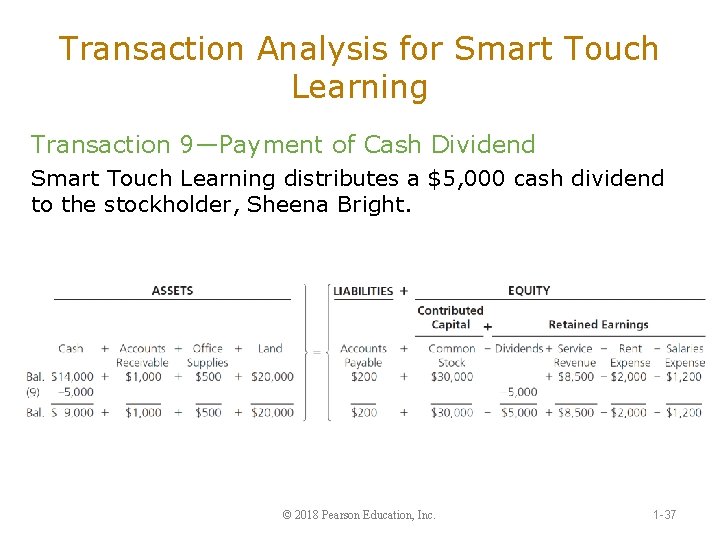
Transaction Analysis for Smart Touch Learning Transaction 9—Payment of Cash Dividend Smart Touch Learning distributes a $5, 000 cash dividend to the stockholder, Sheena Bright. © 2018 Pearson Education, Inc. 1 -37
© 2018 Pearson Education, Inc. 1 -38
Learning Objective 5 Prepare financial statements © 2018 Pearson Education, Inc. 1 -39
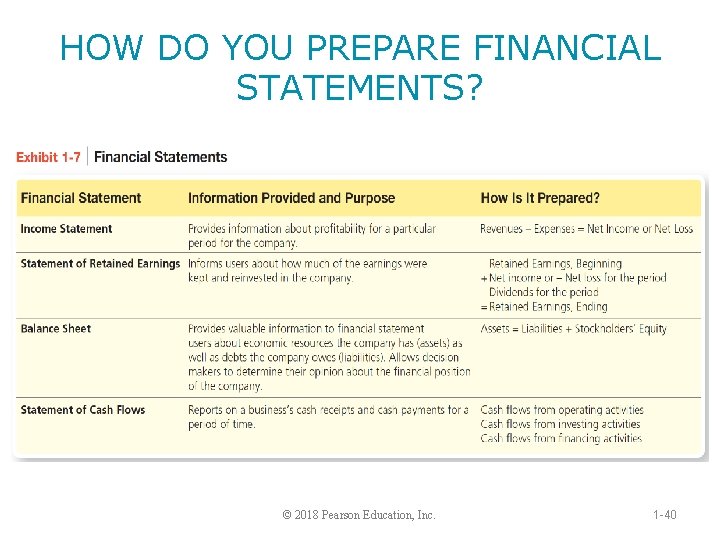
HOW DO YOU PREPARE FINANCIAL STATEMENTS? © 2018 Pearson Education, Inc. 1 -40
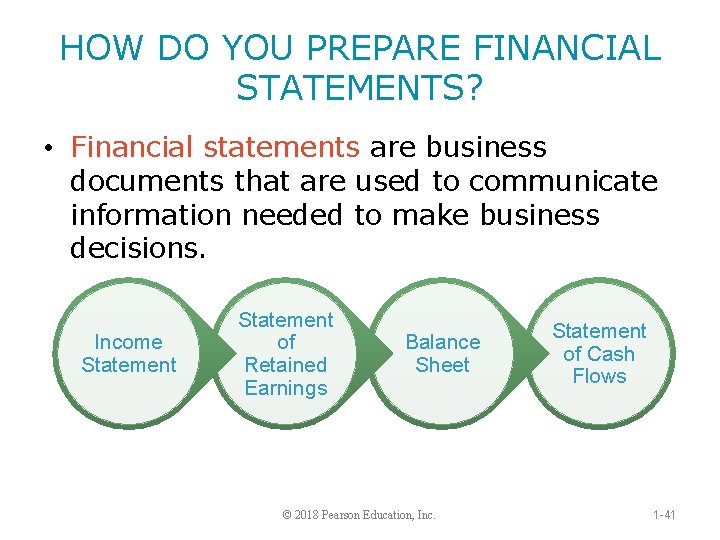
HOW DO YOU PREPARE FINANCIAL STATEMENTS? • Financial statements are business documents that are used to communicate information needed to make business decisions. Income Statement of Retained Earnings Balance Sheet © 2018 Pearson Education, Inc. Statement of Cash Flows 1 -41
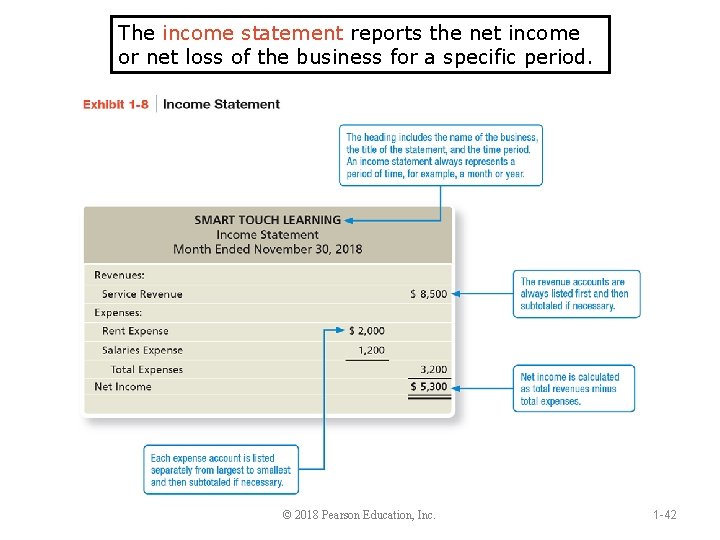
The income statement reports the net income or net loss of the business for a specific period. © 2018 Pearson Education, Inc. 1 -42
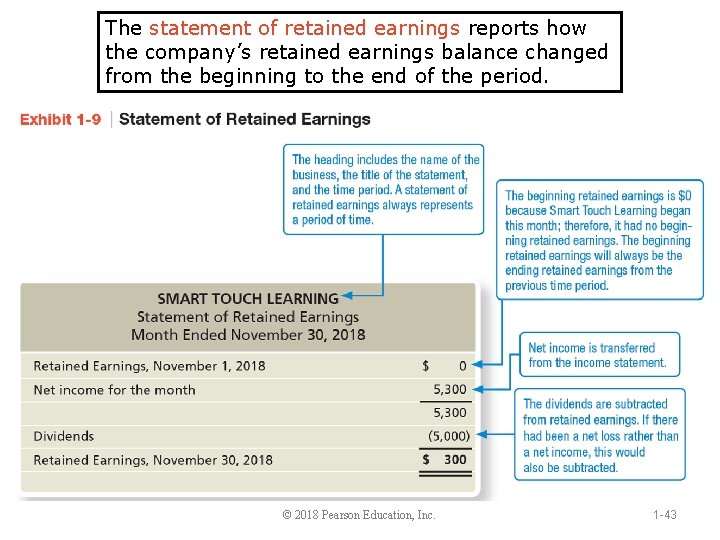
The statement of retained earnings reports how the company’s retained earnings balance changed from the beginning to the end of the period. © 2018 Pearson Education, Inc. 1 -43
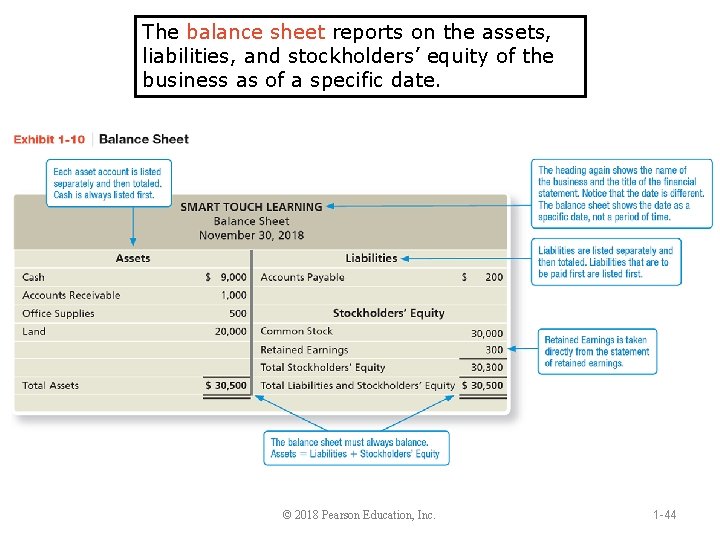
The balance sheet reports on the assets, liabilities, and stockholders’ equity of the business as of a specific date. © 2018 Pearson Education, Inc. 1 -44
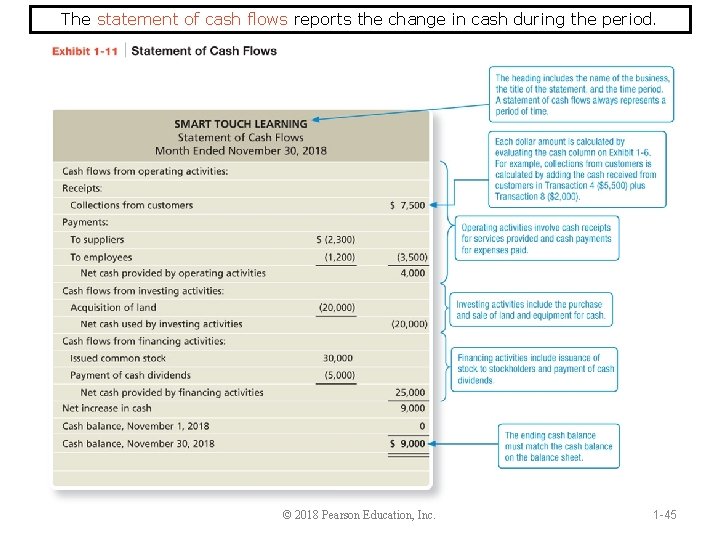
The statement of cash flows reports the change in cash during the period. © 2018 Pearson Education, Inc. 1 -45
Learning Objective 6 Use financial statements and return on assets (ROA) to evaluate business performance © 2018 Pearson Education, Inc. 1 -46
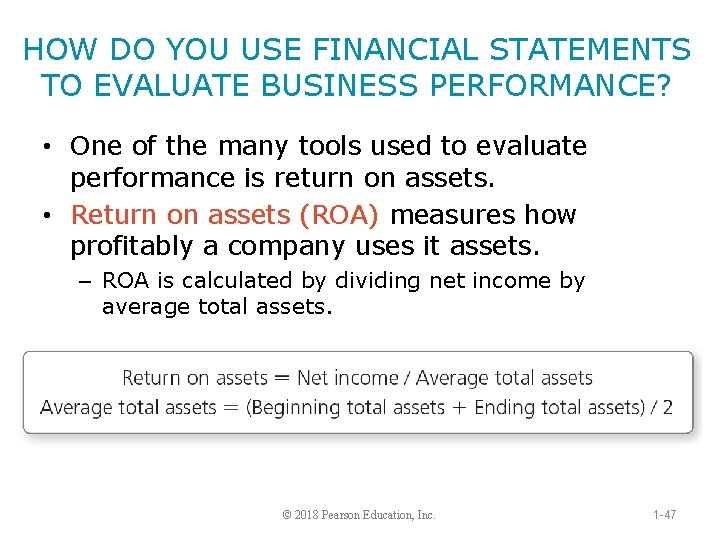
HOW DO YOU USE FINANCIAL STATEMENTS TO EVALUATE BUSINESS PERFORMANCE? • One of the many tools used to evaluate performance is return on assets. • Return on assets (ROA) measures how profitably a company uses it assets. – ROA is calculated by dividing net income by average total assets. © 2018 Pearson Education, Inc. 1 -47
© 2018 Pearson Education, Inc. 1 -48
- Slides: 48