
Chapter 1 2 THE HUMAN BODY BODY ORGANIZATION
Chapter 1 & 2 THE HUMAN BODY
BODY ORGANIZATION � Cell � Basic unit of structure & function in living things � Tissue � Group of similar cells performing the same function � nervous, epithelial, muscle, connective � Organ � Different � Organ tissues working together to perform a job System � Organs working together to perform a major function � Organism � Anything that can live on its own � Homeostasis � Body systems work together to keep the body in balance
HUMAN BODY SYSTEMS � Skeletal � Muscular � Integumentary � Cardiovascular/circulatory � Respiratory � Digestive � Excretory � Nervous � Endocrine � Lymphatic � Reproductive
SKELETAL SYSTEM � Functions � Protection � Ex. Ribs protect heart & lungs; vertebrae protect spinal cord � Storage � Store minerals that help the nerves & muscles function (calcium, potassium, sodium) � Movement � Skeletal � Blood muscle pulls on the bones to produce movement Cell Formation � Bones are filled with red bone marrow that makes blood cells. Yellow bone marrow is important for white blood cells.
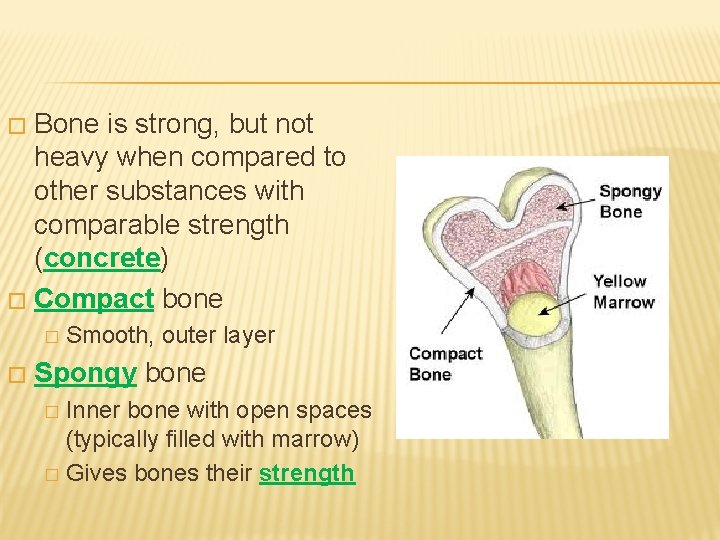
Bone is strong, but not heavy when compared to other substances with comparable strength (concrete) � Compact bone � � � Smooth, outer layer Spongy bone Inner bone with open spaces (typically filled with marrow) � Gives bones their strength �
MUSCULAR SYSTEM � Voluntary � Under muscle your control (ex. Skeletal muscle) � Involuntary � muscle Not under your control (ex. Cardiac and smooth muscle) � Muscles work in pairs because they can only pull; never push. � Types of muscle � Flexor – bend a body part � Extensor – straightens a body part
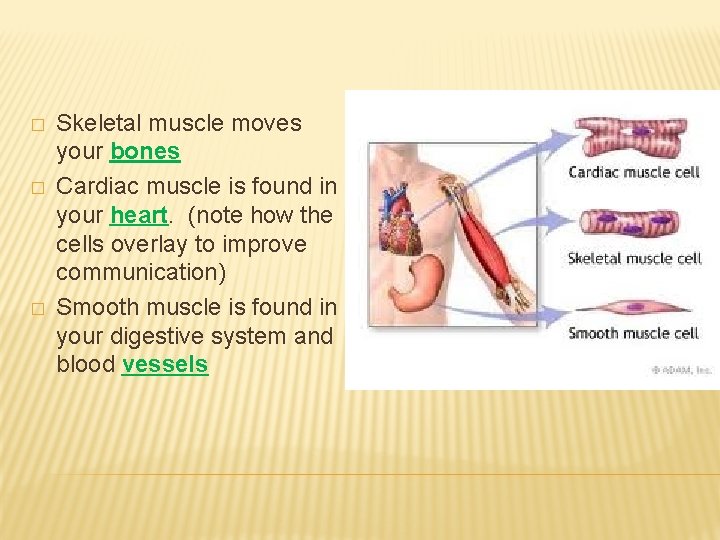
� � � Skeletal muscle moves your bones Cardiac muscle is found in your heart. (note how the cells overlay to improve communication) Smooth muscle is found in your digestive system and blood vessels
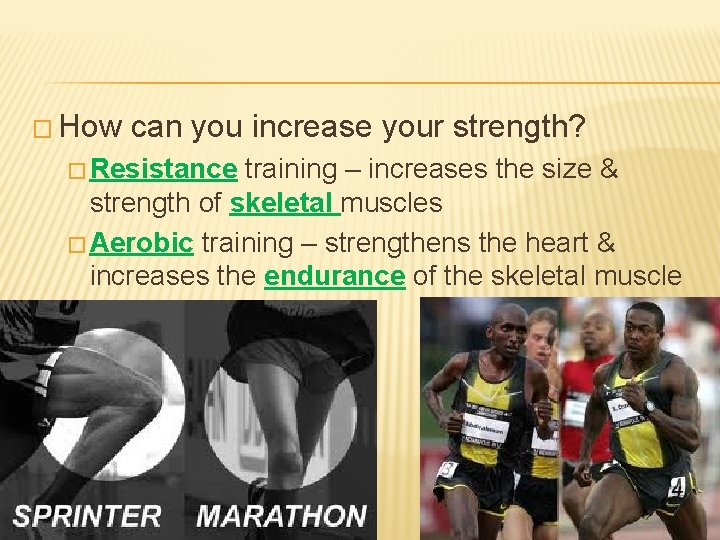
� How can you increase your strength? � Resistance training – increases the size & strength of skeletal muscles � Aerobic training – strengthens the heart & increases the endurance of the skeletal muscle
INTEGUMENTARY SYSTEM � Skin, Hair, and Nails � Skin � Protects – keeps moisture in and foreign particles out � Sense – nerve endings in the skin help you feel what’s around you � Regulates body temperature with help of sweat glands � Removes waste – waste chemicals leave the bloodstream and body in sweat � Epidermis � Dead � Dermis – outer layers of skin cells filled with the protein keratin – beneath the epidermis
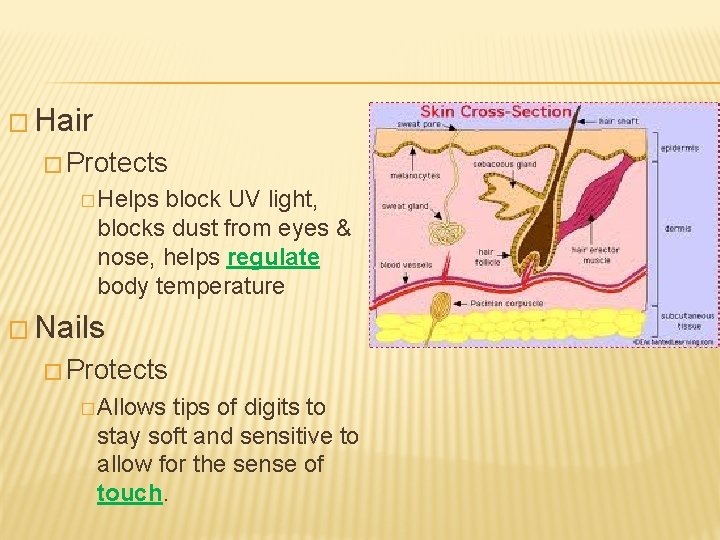
� Hair � Protects � Helps block UV light, blocks dust from eyes & nose, helps regulate body temperature � Nails � Protects � Allows tips of digits to stay soft and sensitive to allow for the sense of touch.
- Slides: 10