
CHAPTER 1 1 Introduction to Information Systems IS
- Slides: 35
CHAPTER 1 1 Introduction to Information Systems
IS IT • Information + Technology • Processing data - > Information • Technology 1 § Computer § Data § Network 2
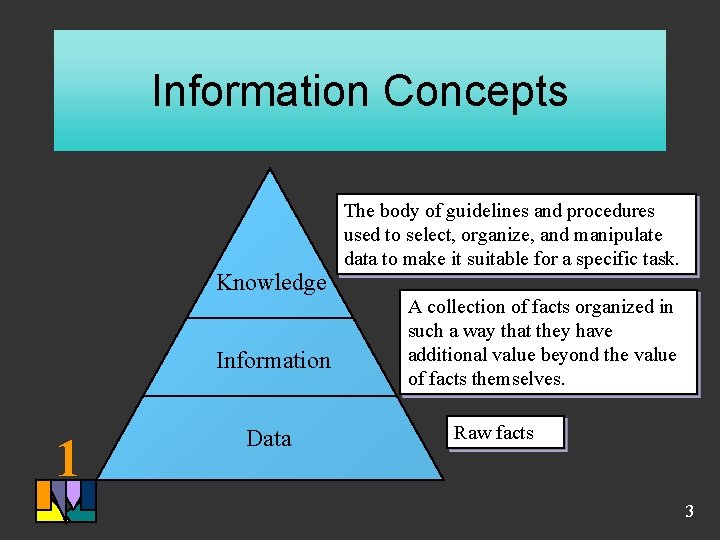
Information Concepts Knowledge Information 1 Data The body of guidelines and procedures used to select, organize, and manipulate data to make it suitable for a specific task. A collection of facts organized in such a way that they have additional value beyond the value of facts themselves. Raw facts 3
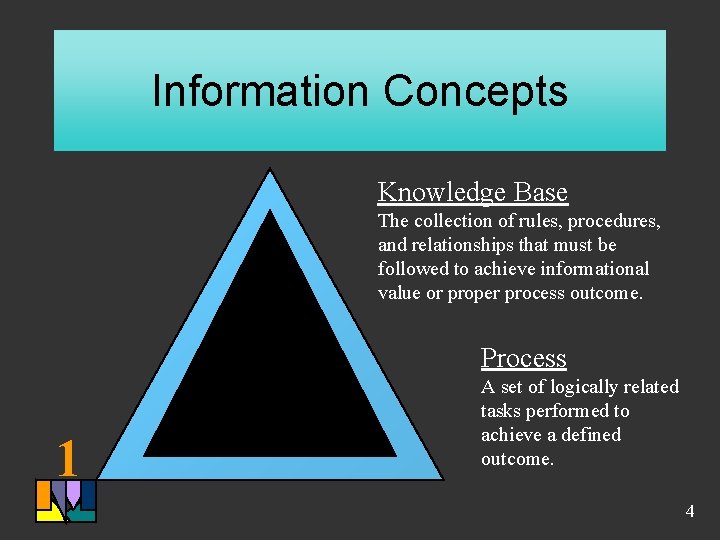
Information Concepts Knowledge Base The collection of rules, procedures, and relationships that must be followed to achieve informational value or proper process outcome. Process 1 A set of logically related tasks performed to achieve a defined outcome. 4
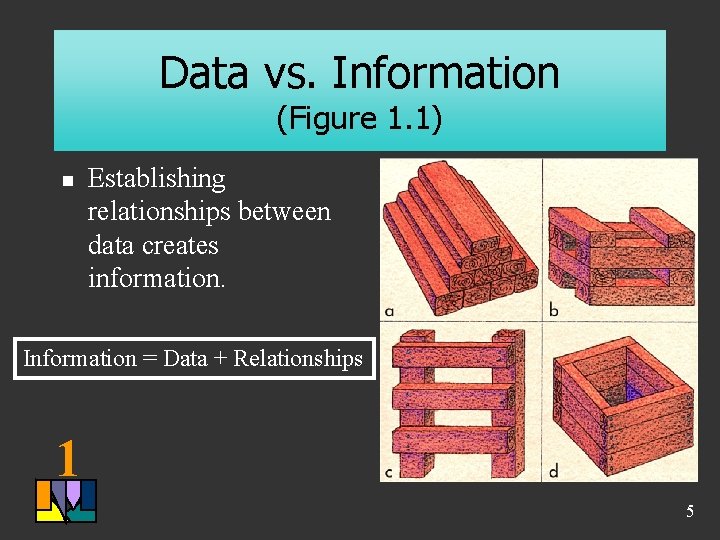
Data vs. Information (Figure 1. 1) n Establishing relationships between data creates information. Information = Data + Relationships 1 5
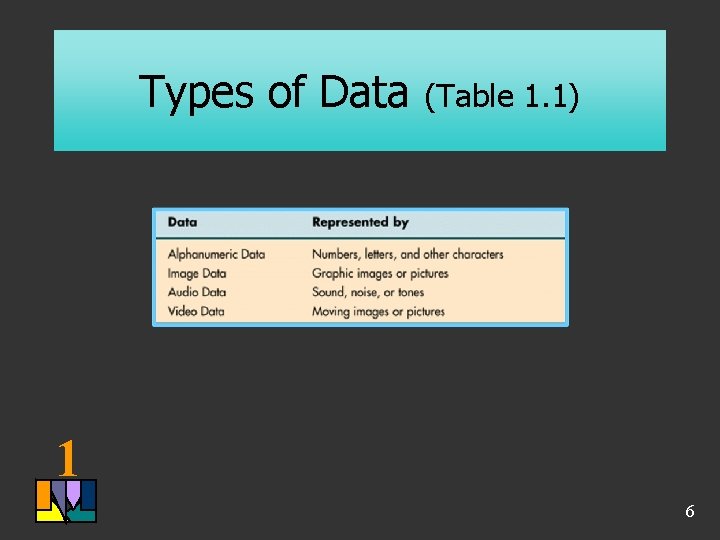
Types of Data (Table 1. 1) 1 6
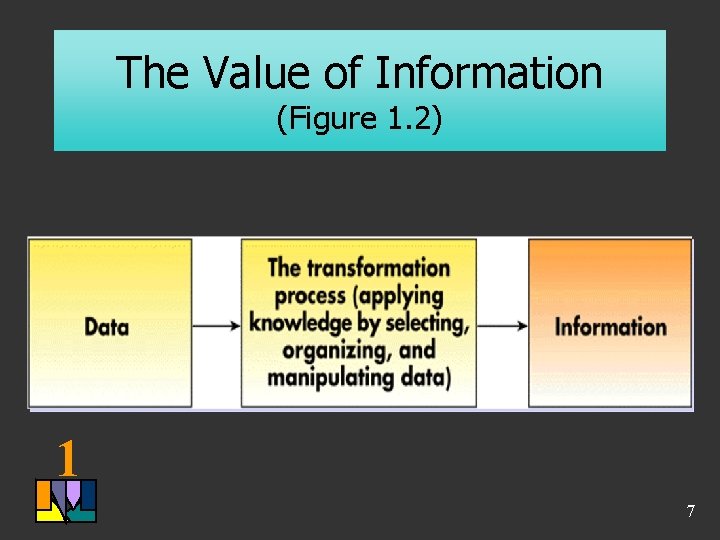
The Value of Information (Figure 1. 2) 1 7
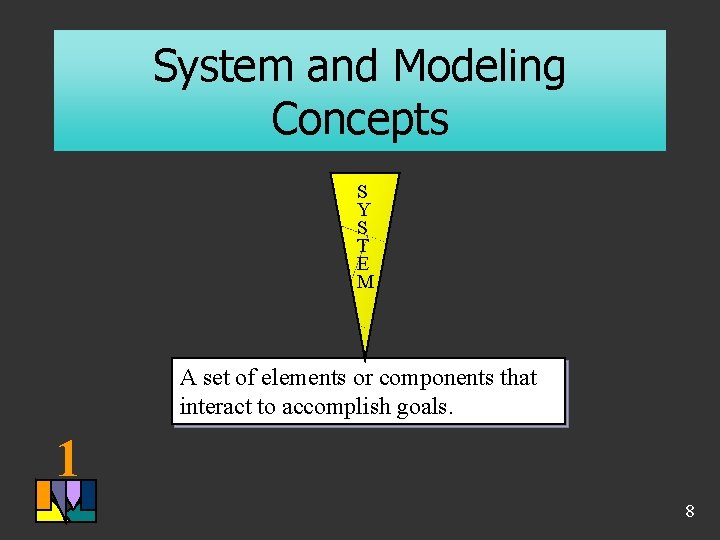
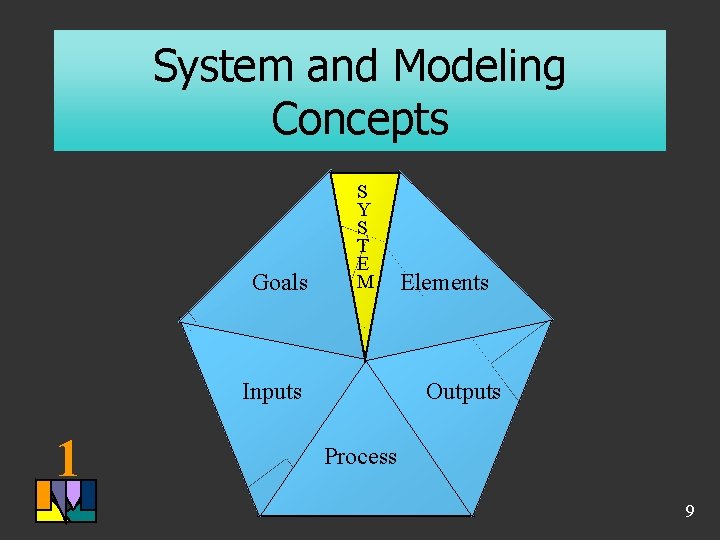
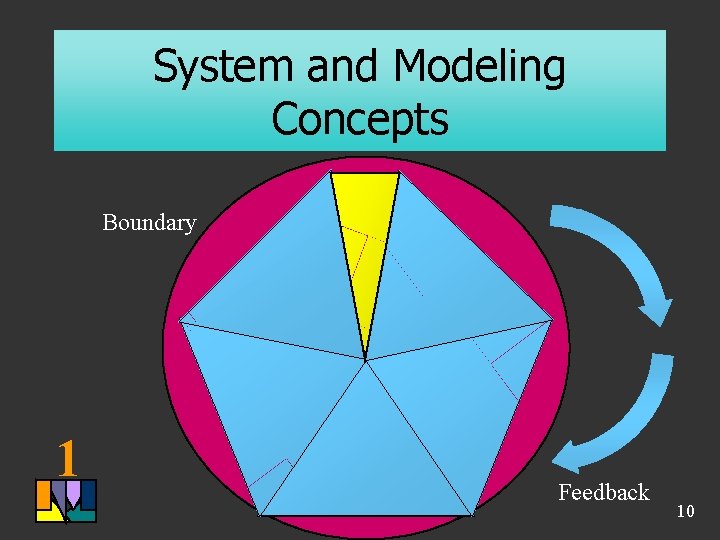
System and Modeling Concepts S Y S T E M A set of elements or components that interact to accomplish goals. 1 8
System and Modeling Concepts Goals S Y S T E M Outputs Inputs 1 Elements Process 9
System and Modeling Concepts Boundary 1 Feedback 10
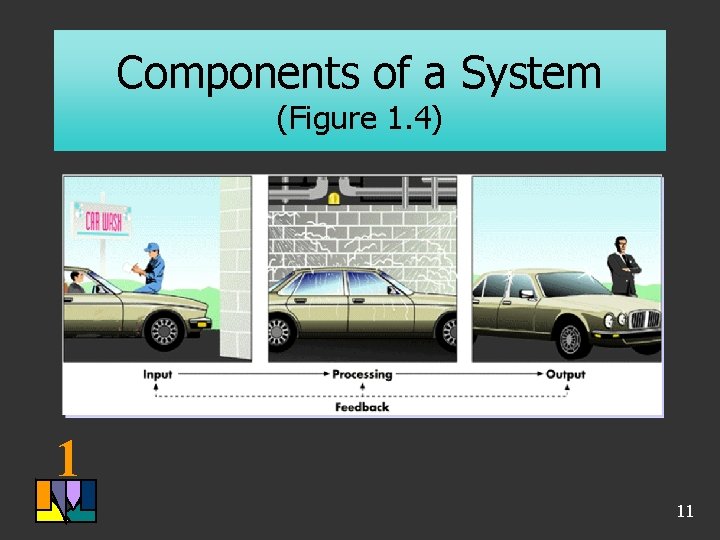
Components of a System (Figure 1. 4) 1 11
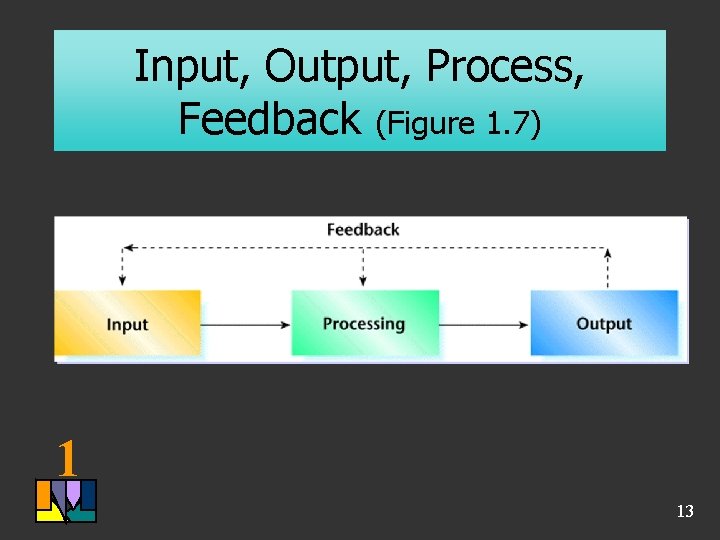
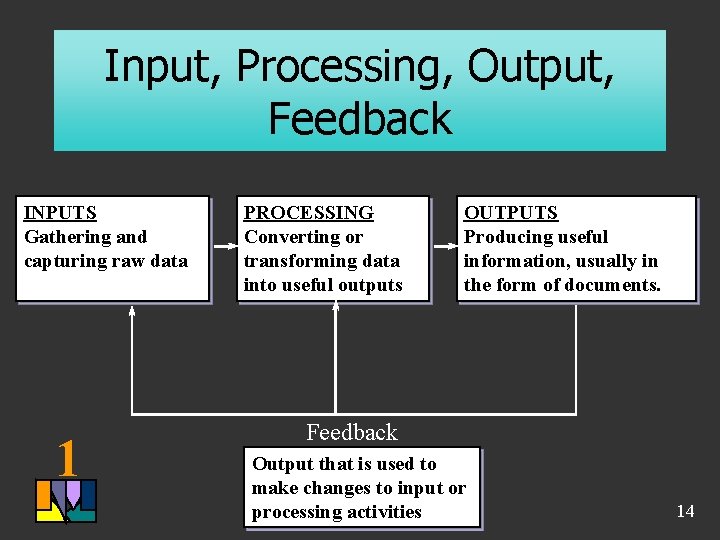
Information System (IS) • Information System § A set of interrelated elements or components that collect (input), manipulate (process), and disseminate (output) data and information and provide a feedback mechanism to meet an objective. 1 12
Input, Output, Process, Feedback (Figure 1. 7) 1 13
Input, Processing, Output, Feedback INPUTS Gathering and capturing raw data 1 PROCESSING Converting or transforming data into useful outputs OUTPUTS Producing useful information, usually in the form of documents. Feedback Output that is used to make changes to input or processing activities 14
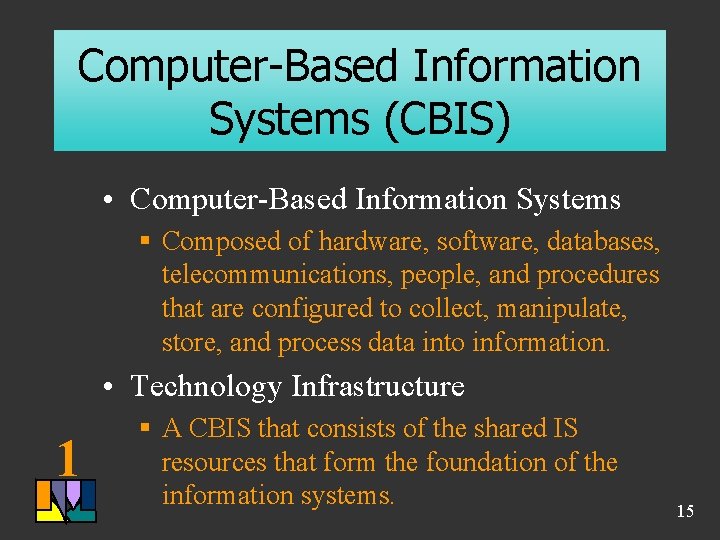
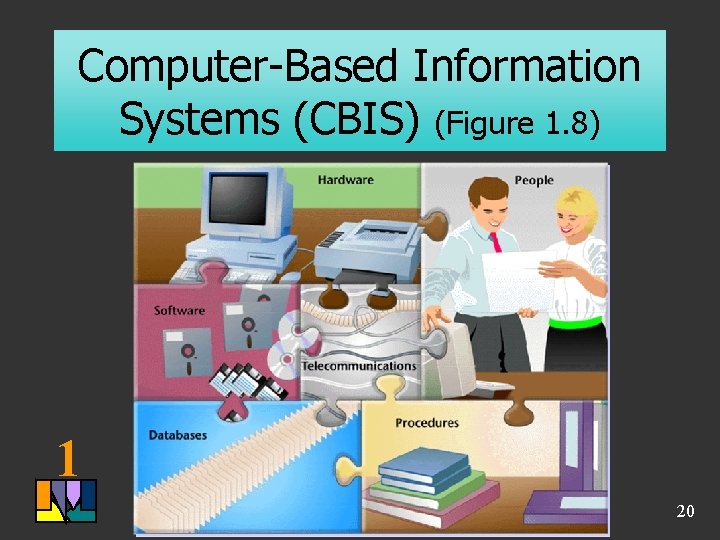
Computer-Based Information Systems (CBIS) • Computer-Based Information Systems § Composed of hardware, software, databases, telecommunications, people, and procedures that are configured to collect, manipulate, store, and process data into information. • Technology Infrastructure 1 § A CBIS that consists of the shared IS resources that form the foundation of the information systems. 15
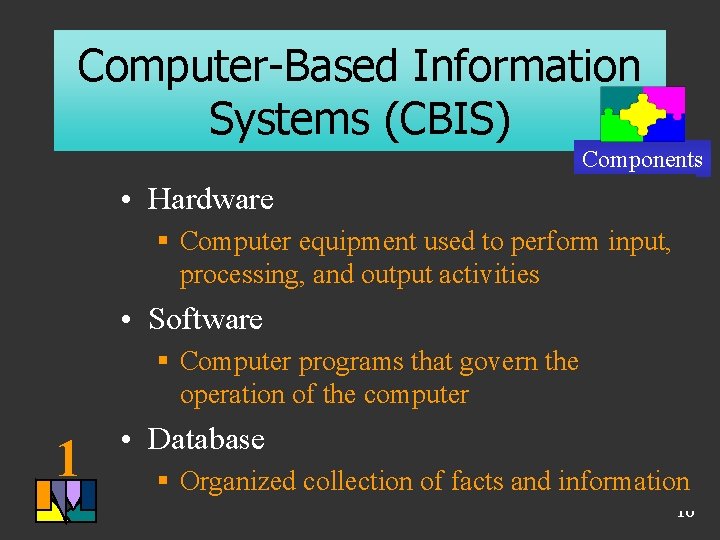
Computer-Based Information Systems (CBIS) Components • Hardware § Computer equipment used to perform input, processing, and output activities • Software § Computer programs that govern the operation of the computer 1 • Database § Organized collection of facts and information 16
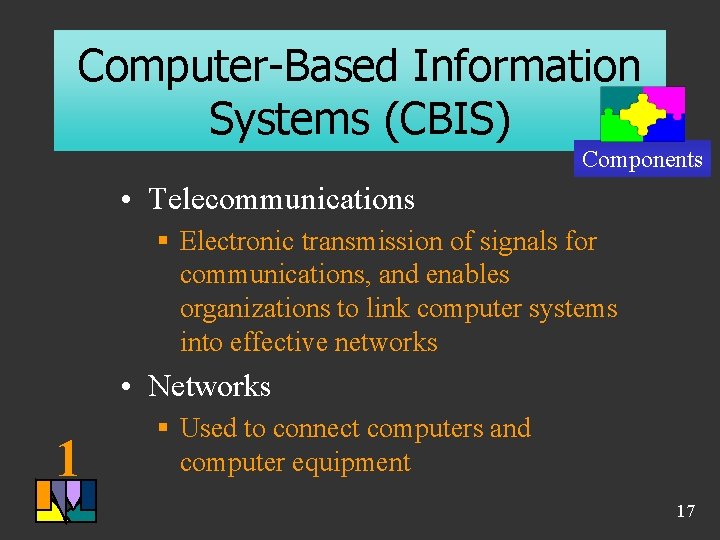
Computer-Based Information Systems (CBIS) Components • Telecommunications § Electronic transmission of signals for communications, and enables organizations to link computer systems into effective networks • Networks 1 § Used to connect computers and computer equipment 17
Computer-Based Information Systems (CBIS) Components • Internet § The world’s largest telecommunications network • Intranet § A network that uses Internet technology within an organization 1 18
Computer-Based Information Systems (CBIS) Components • People § The most important elements in most CBIS • Procedures § Strategies, policies, methods, and rules for using CBIS 1 19
Computer-Based Information Systems (CBIS) (Figure 1. 8) 1 20
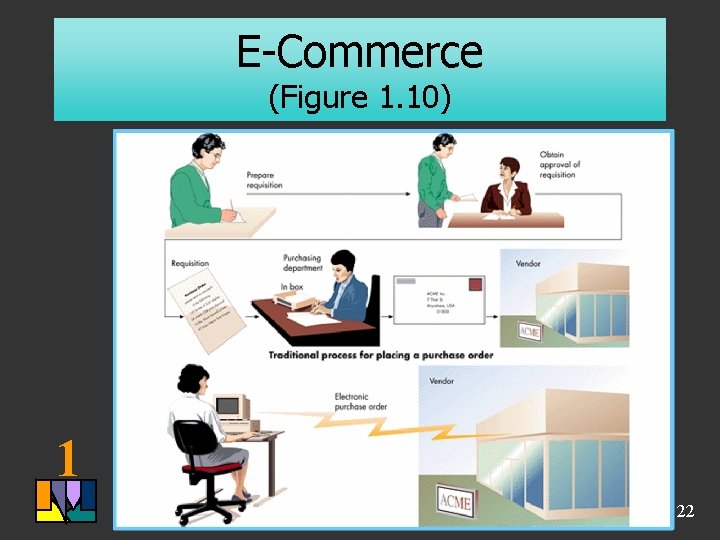
E-Commerce • E-Commerce § Any business transaction executed electronically between parties involving the exchange of goods and/or services for an equitable consideration. 1 21
E-Commerce (Figure 1. 10) 1 22
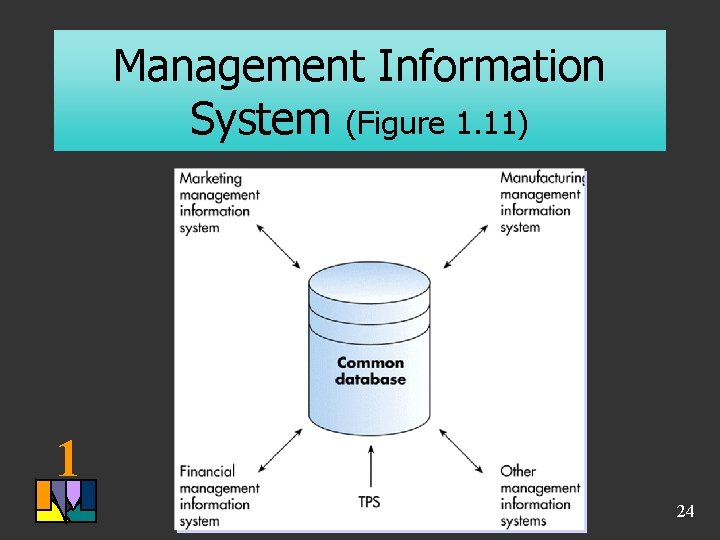
Management Information System • Management Information System § Organized set of people, procedures, databases, and devices used to provide routine information to managers and decision makers. 1 23
Management Information System (Figure 1. 11) 1 24
Decision Support Systems • Decision Support Systems § A set of people, procedures, databases, and devices used to support problemspecific decision making. 1 25
Decision Support Systems (Figure 1. 12) 1 26
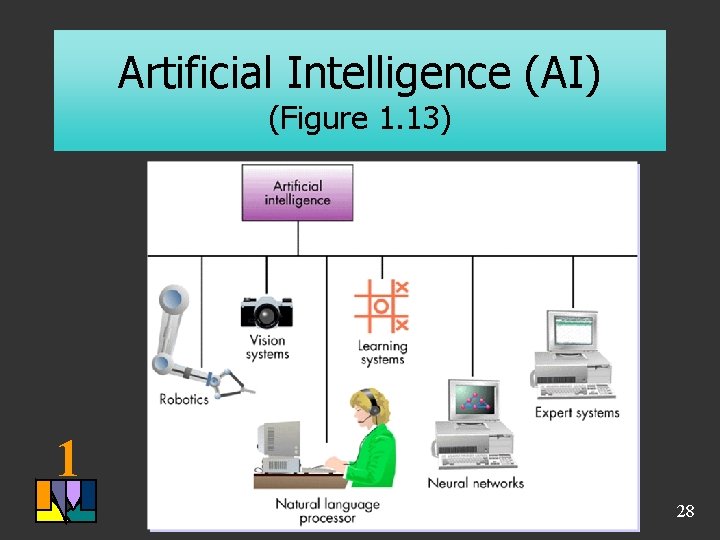
Artificial Intelligence (AI) and Expert Systems • Artificial Intelligence (AI) § A field that involves computer systems taking on the characteristics of human intelligence • Expert Systems (ES) 1 § Give the computer the ability to make suggestions and act like an expert in a particular field 27
Artificial Intelligence (AI) (Figure 1. 13) 1 28
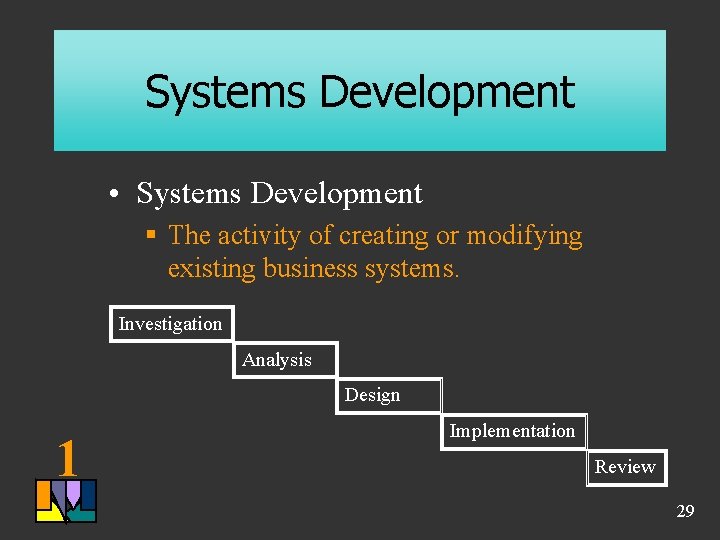
Systems Development • Systems Development § The activity of creating or modifying existing business systems. Investigation Analysis Design 1 Implementation Review 29
Systems Development • Systems Investigation § Gains a clear understanding of the problem to be solved or opportunity to be addressed. • Systems Analysis 1 § Defines the problems and opportunities of the existing system. 30
Systems Development • Systems Design § Determines how the new system will work to meet the business needs defined during systems analysis. • Systems Implementation 1 § Creating or acquiring the various system components defined in the design step, assembling them, and putting the new system into operation. 31
Systems Development • System Maintenance and Review § Checks and modifies the system so that it continues to meet changing business needs. 1 32
Literacy • Computer Literacy § A knowledge of computer systems and equipment and the ways they function. • Information Systems Literacy 1 § A knowledge of how data and information are used by individuals, groups, and organizations. 33
Information Systems in the Functional Areas of Business l Functional Areas and Information Systems § § § 1 Financial information systems Accounting information systems Marketing information systems Manufacturing information systems Human resources management information systems § Legal information systems 34
Information Systems in Industry 1 n Airline industry n Publishing companies n Investment firms n Health care organizations n Banks and savings and loan companies n Retail companies n Power management & utility companies n Transportation industry 35