
CHAPTER 1 1 3 Operations on Real Numbers
CHAPTER 1 1. 3 - Operations on Real Numbers and Order of Operations

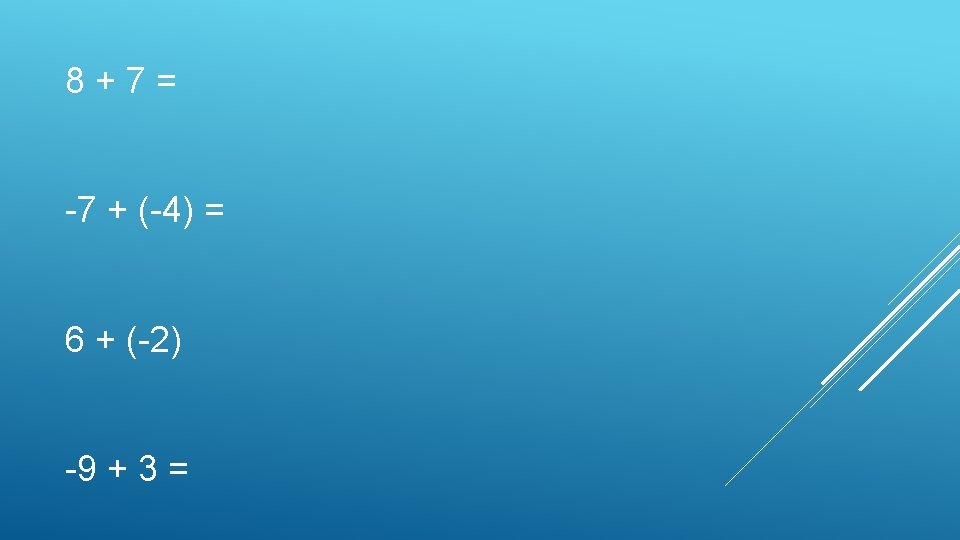
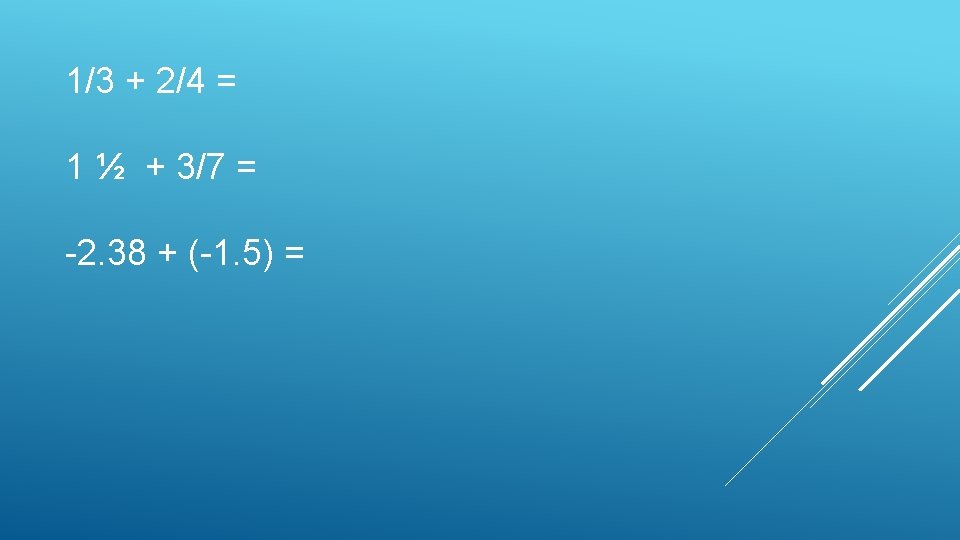
Rules for Adding : If two numbers have the SAME sign, add the numbers and keep the sign If two numbers have DIFFERENT signs, subtract the smaller number from the larger number and keep the sign of the larger number.
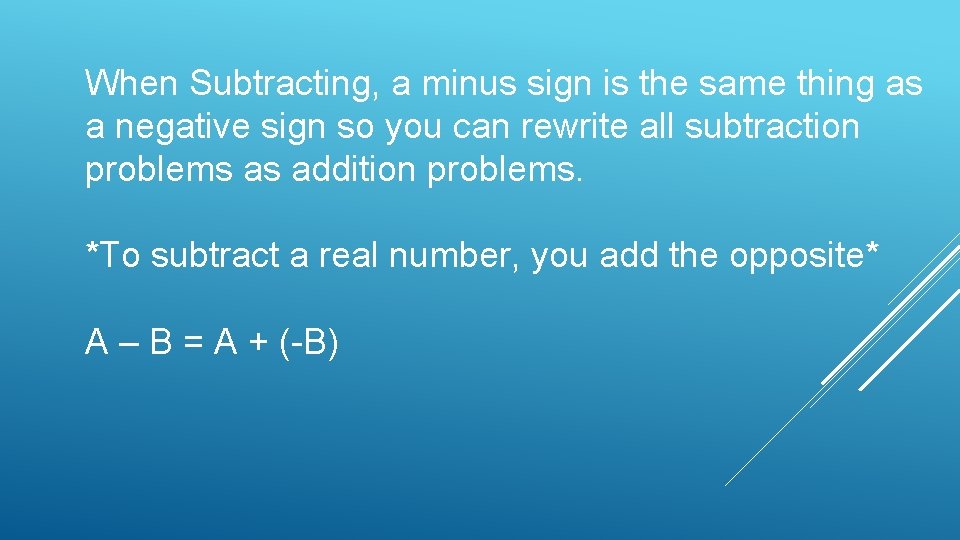
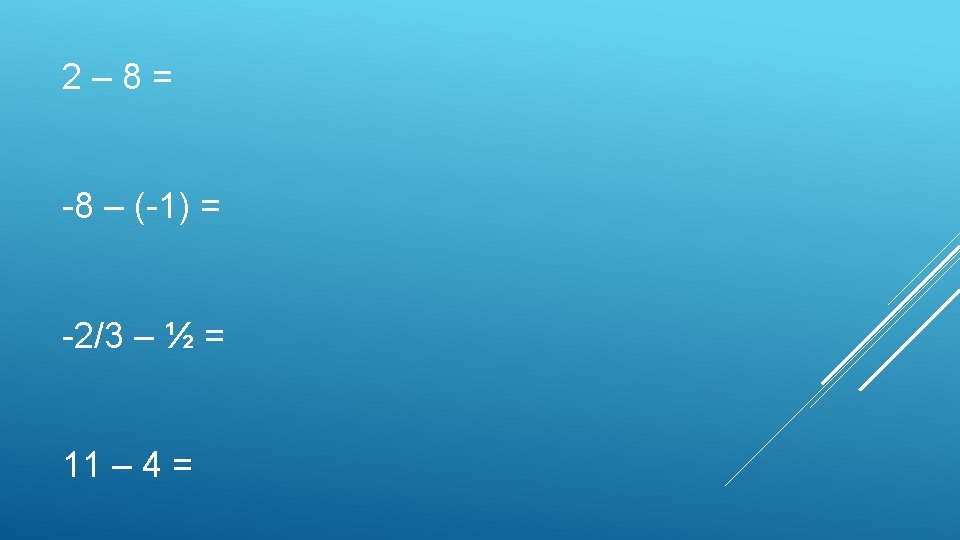
When Subtracting, a minus sign is the same thing as a negative sign so you can rewrite all subtraction problems as addition problems. *To subtract a real number, you add the opposite* A – B = A + (-B)
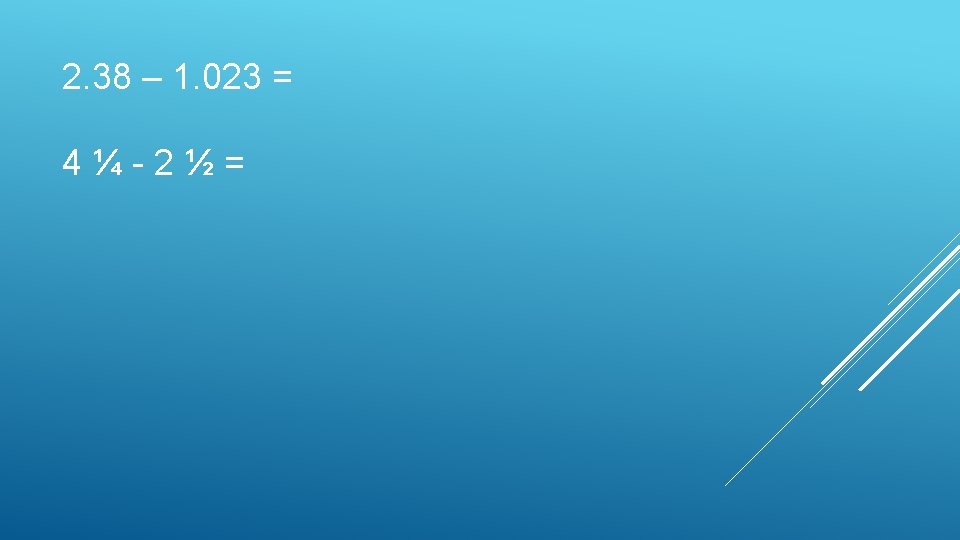
2. 38 – 1. 023 = 4¼-2½=
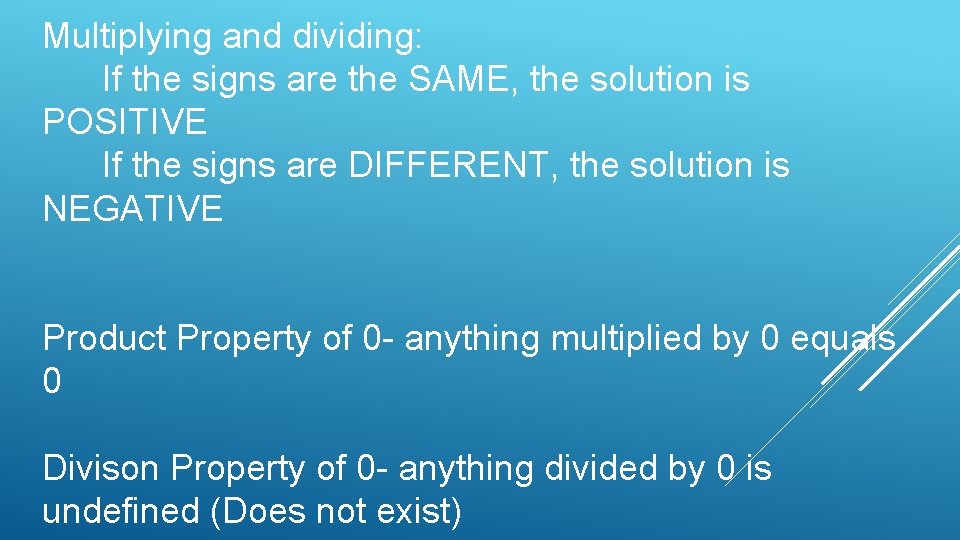
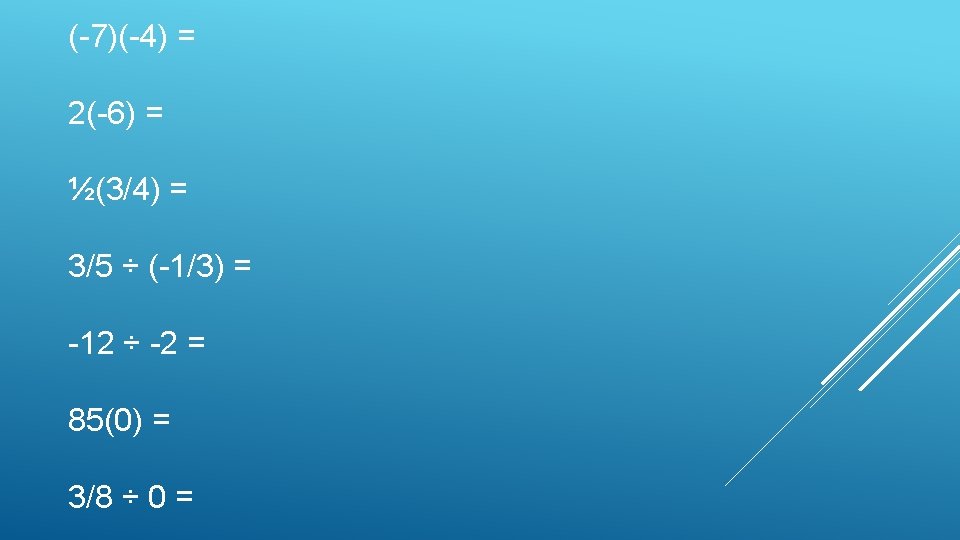
Multiplying and dividing: If the signs are the SAME, the solution is POSITIVE If the signs are DIFFERENT, the solution is NEGATIVE Product Property of 0 - anything multiplied by 0 equals 0 Divison Property of 0 - anything divided by 0 is undefined (Does not exist)
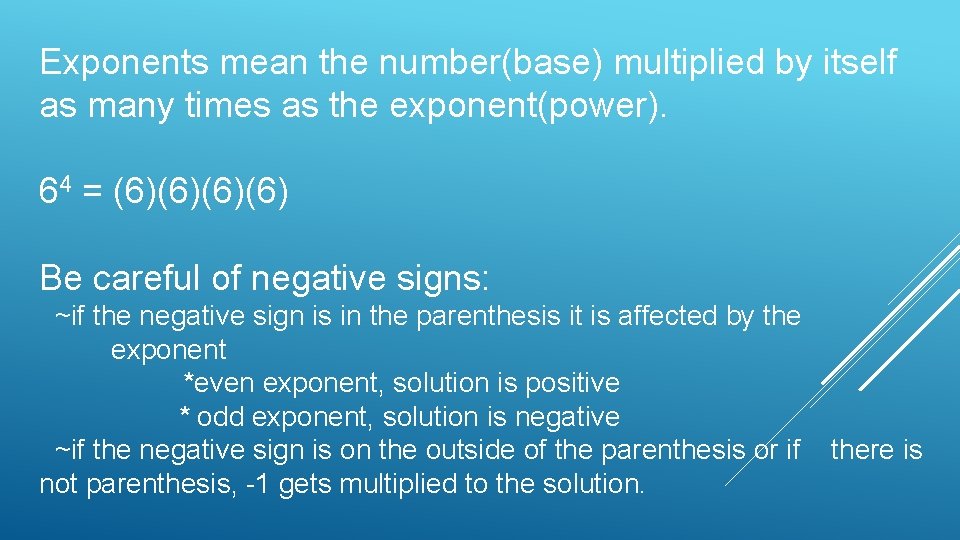
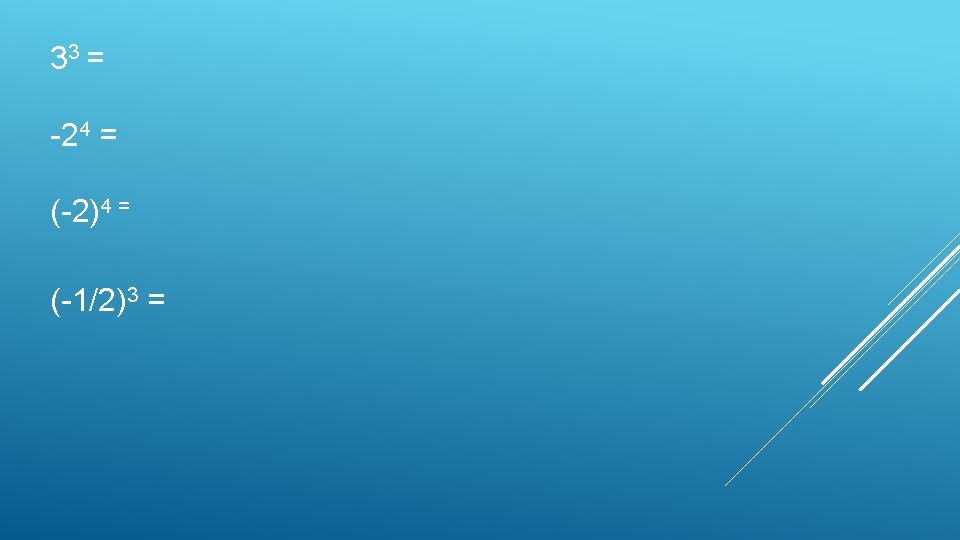
Exponents mean the number(base) multiplied by itself as many times as the exponent(power). 64 = (6)(6) Be careful of negative signs: ~if the negative sign is in the parenthesis it is affected by the exponent *even exponent, solution is positive * odd exponent, solution is negative ~if the negative sign is on the outside of the parenthesis or if not parenthesis, -1 gets multiplied to the solution. there is
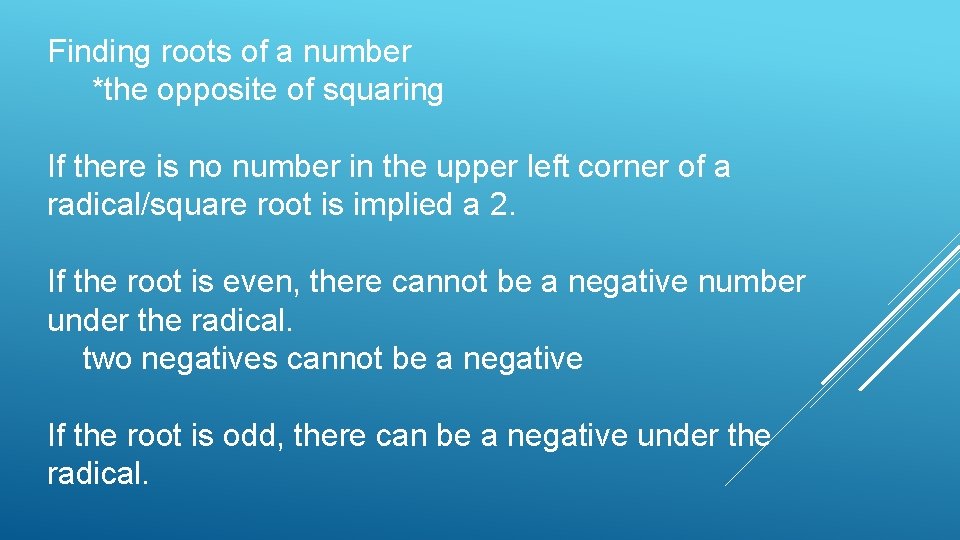
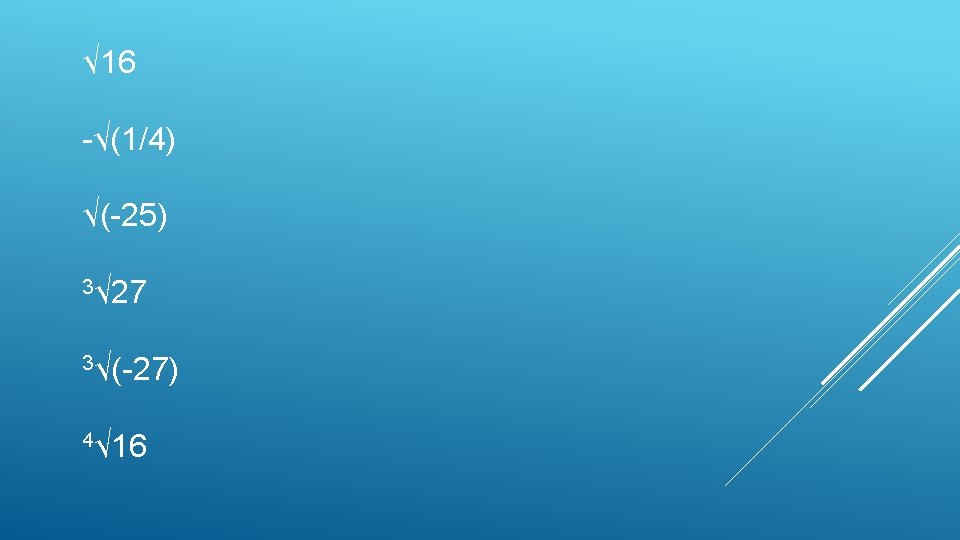
Finding roots of a number *the opposite of squaring If there is no number in the upper left corner of a radical/square root is implied a 2. If the root is even, there cannot be a negative number under the radical. two negatives cannot be a negative If the root is odd, there can be a negative under the radical.
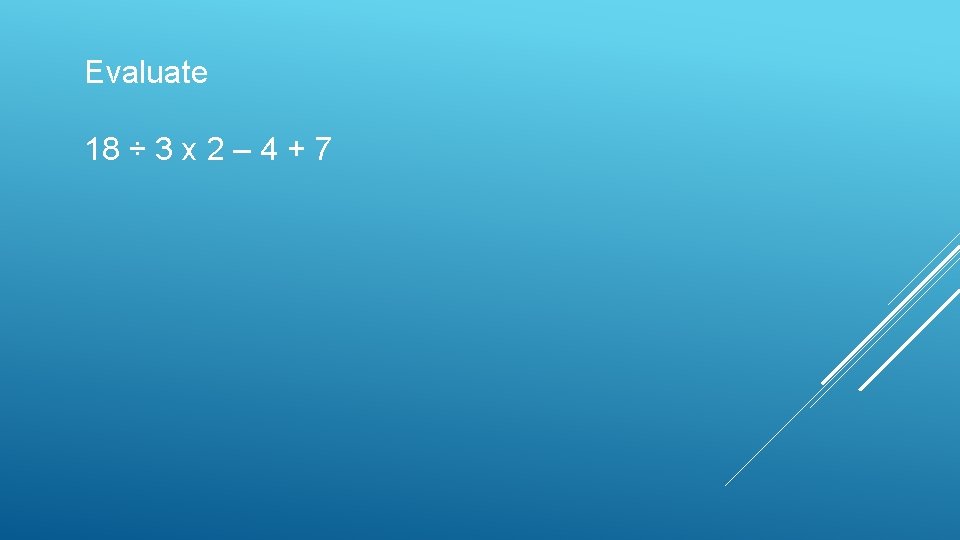
Evaluate 18 ÷ 3 x 2 – 4 + 7
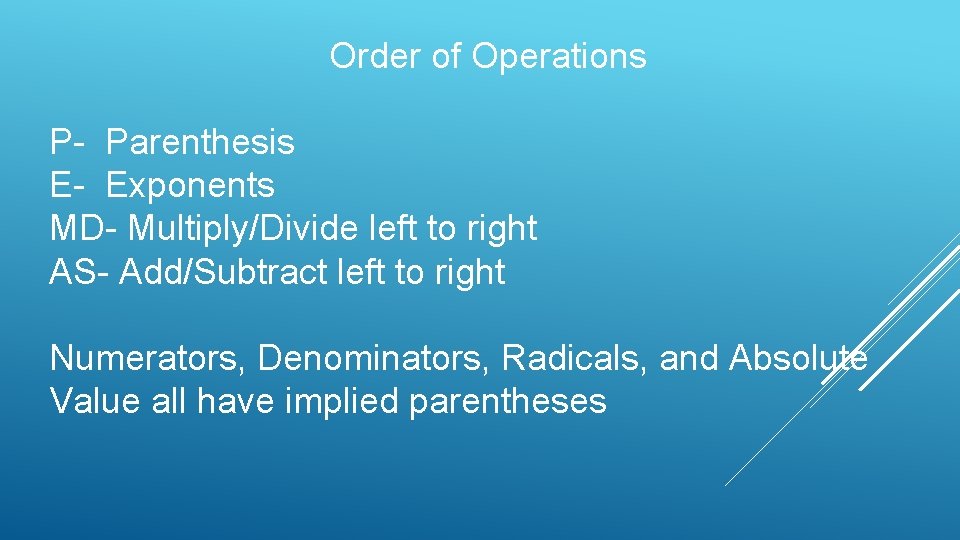
Order of Operations P- Parenthesis E- Exponents MD- Multiply/Divide left to right AS- Add/Subtract left to right Numerators, Denominators, Radicals, and Absolute Value all have implied parentheses
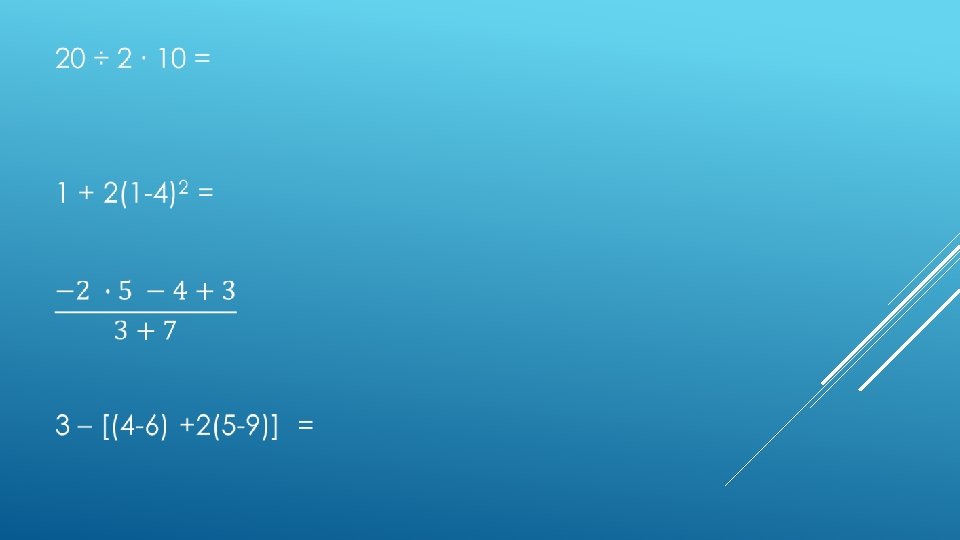
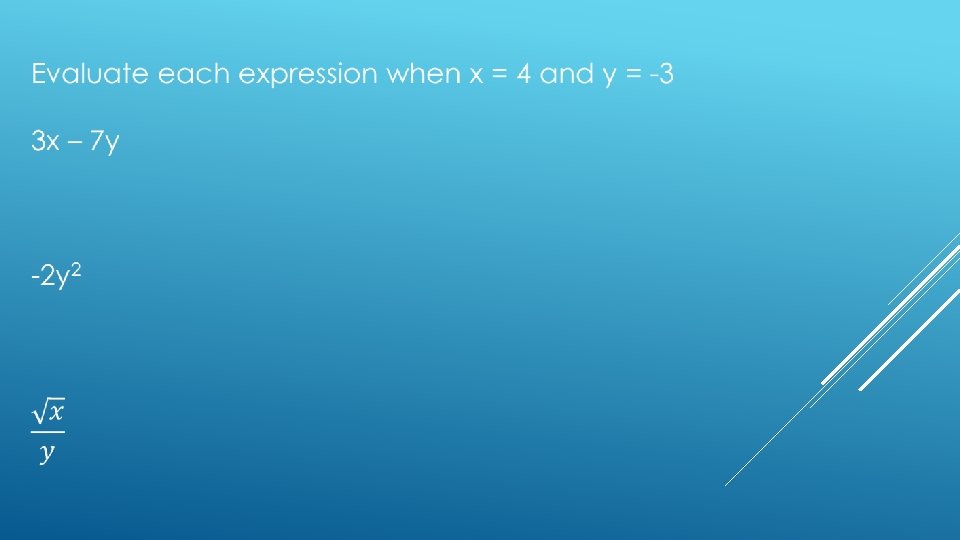
You Do: Student organizer p. 7 -8 #1 -8
Classwork/Homework textbook p. 26 #1 -8 p. 27 -29 #10, 12, 18, 20, 24, 28, 34, 36, 38, 42, 44, 46, 48, 62, 66, 68, 74, 86, 92, 100, 104, 110, 114
- Slides: 19