
Chapter 05 Summary IS changes many business processes
Chapter -05 Summary

IS changes many business processes around you! See to believe it.
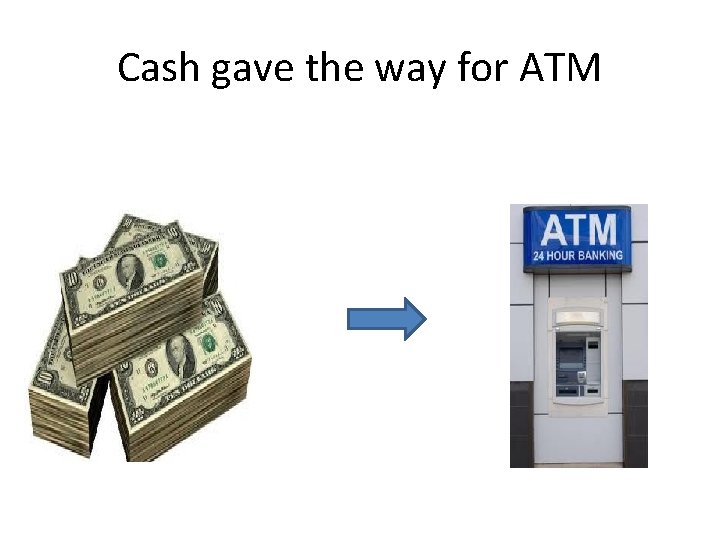
Cash gave the way for ATM
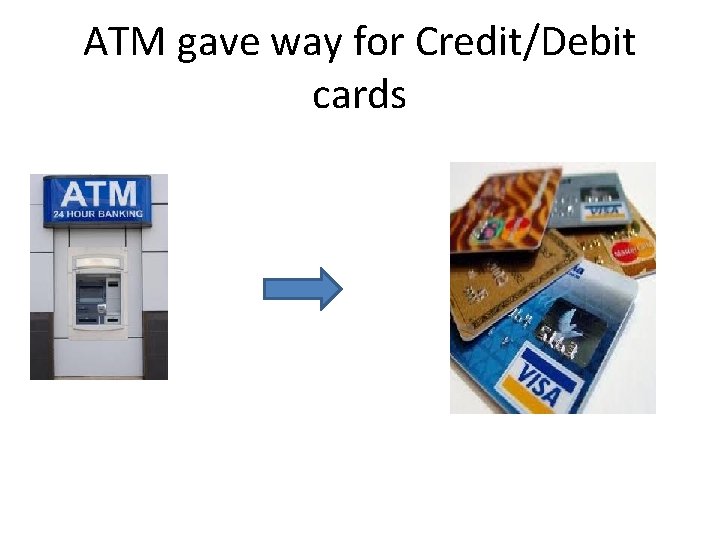
ATM gave way for Credit/Debit cards
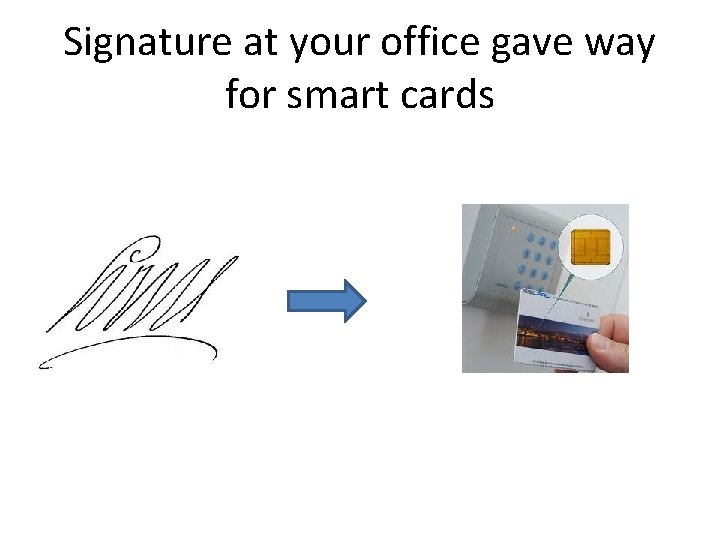
Signature at your office gave way for smart cards
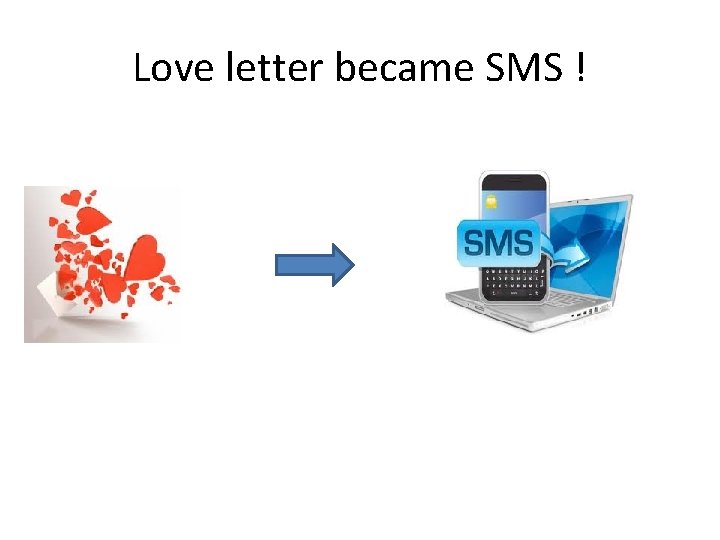
Love letter became SMS !
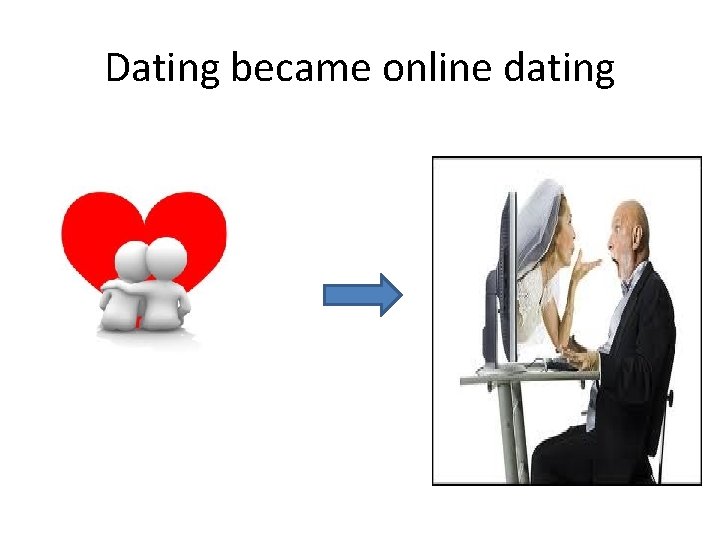
Dating became online dating
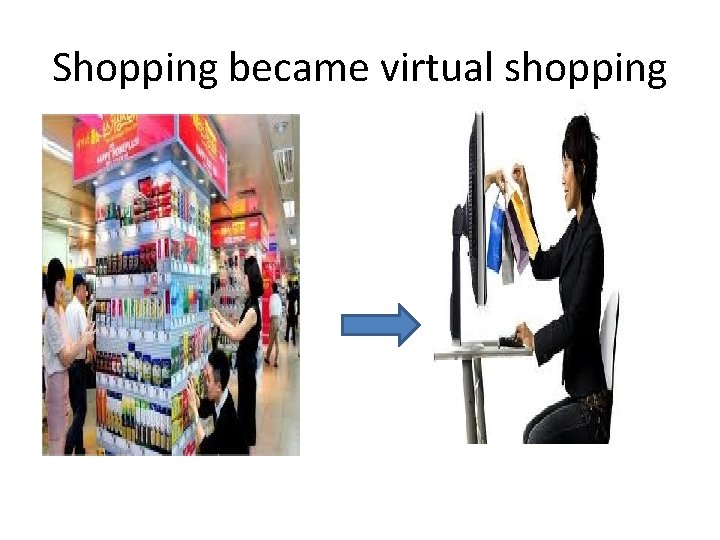
Shopping became virtual shopping
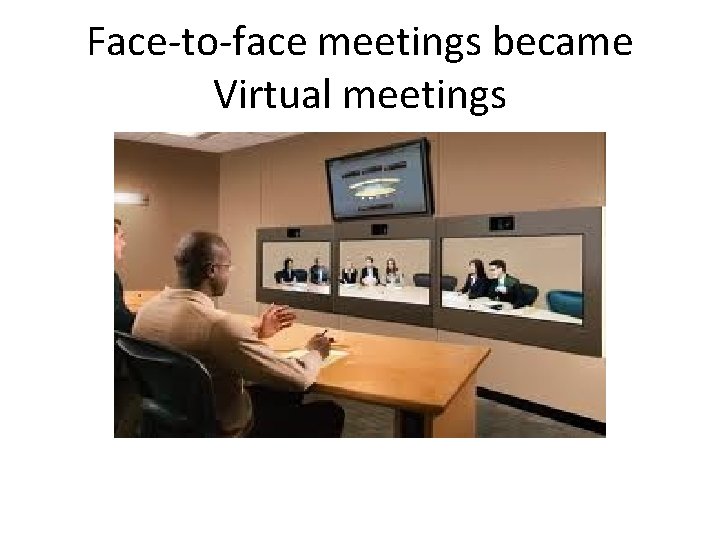
Face-to-face meetings became Virtual meetings
LETTERS BECAME e-mails
IS in the early ages were based on different business functions. But different IS were not connected or could not be linked for central management. For example HR, Finance, Marketing, Production e. t. c. later on as IS developed the technology developed to connect different systems in different departments/functions together with central database. For example ERP, CRM systems which connected different functions in an organisation together. This act of connecting different departments or changing the normal business processes is known as Business Process Re-engineering or process innovation. Innovating Business Process/ Business Process Re-design What is a process? A business process is a collection or set of interrelated or connected tasks, performed to achieve a business outcome (result). In other words business process is a chain of activities such as purchasing, manufacturing, selling, delivering e. t. c. There are three categories or three types of Business processes in an organisation: 1. Operational Process - the core process of an organisation. 2. Management Process – management of the core processes or an organisation. 3. Supporting process – support core processes such as HR, Finance, IS.
Different departments perform tasks which are interrelated. Each department specialises in core functions for example purchasing, manufacturing e. t. c. But, when services or products move between different departments, it causes waste of time and misunderstandings. Because of these troubles companies decide to manage organisations from a process. For example CRM, where customer focused process became a solution to lower the cost and improve the operation. Managers make process innovations by connecting separate processes and designing the remaining ones to be more efficient. Process innovation involves changes in responsibilities and gives more focus to customer. So, when business process in an organisation is redesigned there should be closer cooperation with suppliers and customers. This makes the process challenging to manage, so any process change in the organisation affects all parts of an organisation. Different Approaches to Innovation What does it meant by process innovation? A process innovation means implementing a new/redesigned or changed production or delivery method. For example collecting the trends and preferences from the customers for production, and selling directly to the customer by online.
What are the different ways to innovate process in an organisation? ( remember process, and main processes in an organisation) There can be different types of innovation in an organisation. The first of it’s kind is the process innovation. But, there are other ways to innovate too such as: 1. Product or service innovation – introducing a new good or service. 2. Business model innovation – changing the way a business adds value to resources. For example finding a new resource for revenue. 3. Supply chain innovation – changes in sourcing inputs from suppliers and delivering outputs to customers.
Organising Process Innovation (refer the diagram page. 135) A process innovation in any organisation takes place as a project. While considering a process innovation, company should consider the whole organisation and its strategic goals. All projects of process innovation are linked to organisational goals such as: 1. Improved quality 2. Faster processes 3. Reduced labour costs 4. Reduced materials, environmental damage, energy use. 5. Conformance to regulations. We should not redesign any business process separately in an organisation. We have to develop a process map that is showing different organisational processes. Now from this map we can prioritise by finding out the important processes for innovation. While prioritising the processes, we can consider the following criteria: 1. The health of the process 2. Importance of the process 3. The feasibility ( practicality) of innovation.
Methods for process innovation in an organisation There are two methods for process innovation in an organisation: 1. Systematic Redesign – here designing/ redesigning takes place after the evaluation on the existing process. This approach will get more support from the staff who are involved in, and lead to the improvements more quickly. But this method is based on the existing process so, it limits radical thinking. 2. Clean sheet approach – it is a rethinking about the service or product and designing a new process from the scratch. This approach can only be carried out with the help of external advisers, because of the particular interest of staff inside the company.
Using Systematic approach in process designing While designing a process innovation according to systematic approach a company should ask for questions to start with: 1. Is it possible to avoid different process steps? The more the number of process, the more will be the waiting time. 2. Is it possible to simplify the process steps? Using unnecessary forms or procedures creating additional costs and time. For example, the use of internet can save time of customers while feeding the information. 3. Is it possible to link or connect different processes? Some tasks are done by various departments or people and if this can be done by one, it would save time and money. 4. Is it possible to automate process steps? Avoiding boring and dangerous works.
Process Mapping and Modeling process mapping is an activity of identifying and analyzing the existing process, before redesigning the same. Usually we use ‘Boxes’ to show a process in mapping, followed by ‘circles’ to show events, and ‘W’ to show the waiting time. While designing or redesigning a process innovation, we can experience two factors such as: Highest level of process and Sub- Process. A highest level of process is something that is the most important activity, and the various connected processes are called subprocesses. For example in the car manufacturing industry, we call the production of cars as a highest level of process and obtaining the raw materials as sub-process.
Major Principles while designing processes 1. Reduce the number of people involved in every process. 2. Always redesign starting from the most critical or important process. 3. Reduce the number of process steps. 4. Transform process into events. For example registration in a hospital or school by a smart card. 5. Avoid long processes. 6. Reduce waiting time. 7. Always process should be as short as possible. 8. With the use of new information systems the processes can be made short. For example the use of smart cards, card readers, networks, databases. Read the case study page 138 – A hospital process & page 139 – analyzing a process.
The role of IS in process change Both IS and process changes are interrelated or connected. There are three models to analyze this connection or link between IS and process changes as follows: 1. Managers innovate process first and them implement IS to support them. 2. Rapidly developing IS themselves bring changes to an organisation. They are called as ‘ disruptive’ technologies, because IS sets ‘rules’ and changes the process. 3. People use IS to improve their process. IS enables organisations to handle geographical distances effectively. IS makes customers everywhere ( groupware, internet, portable systems). IS reduces the number of steps, the departments and people involved. IS can help/support business process change or innovation as follows:
1. IS connecting/integrating different tasks. 2. IS avoids the problem of geographical distance. 3. IS can avoid or reduce human labour. 4. IS can be analytical in decision making. 5. IS becomes informative. 6. IS avoids sequences of processes. 7. IS can collect and distribute knowledge. 8. IS can be used for monitoring. 9. IS avoids intermediaries or middlemen for example wholesalers.
Examples for IS enable process change in an organisation 1. ERP SYSTEMS Many companies use IS for enterprise resource planning. An ERP system helps to co-ordinate different functions of an organisation such as planning, manufacturing, sales and Finance e. t. c. This possibly avoids the expensive links of IS in separated departments or functions in an organisation. For example within an ERP system, sales representatives can enter online orders from customers and check the stock/inventory levels. In the same way manufacturing or purchasing files are updated. Even customers can check the progress of an order by the help of internet. Usually ERP systems are implemented in stages, here an organisation considers the most important part of the process first, for example Finance, Purchasing, Manufacturing, and marketing. Many organisations extend their ERP systems to suppliers and customers.
There are two forces or influences behind the process change or innovation through ERP in an organisation. Or the two driving factors behind the popularity of ERP based process innovations. Why ERP systems are so popular? There are two forces behind the popularity such as: 1. Business Drivers(Objectives) 2. Technological Drivers( objectives) Business Drivers ERP systems changes the business environment Due to the globalisation Large amount of information sharing Higher level of competition and low margins E-commerce
Technological Drivers Popularity and increased use of internet Database technology Availability of networks IS helping the connection and c 0 -ordination of decision making. But, same as all IS ERP also has got both advantages and disadvantages. Advantages of ERP systems 1. ERP systems connecting or integrating different functions of an organisation. 2. ERP systems provide complete overview of the entire organisation. 3. ERP systems provides faster and integrated decision making. 4. ERP systems provide a unified IS 5. ERP systems are focused on the customer.
Disadvantages of ERP systems 1. ERP systems are inflexible 2. In ERP systems, it is difficult to make a fit between IS and the business process. 3. Business process should adapt to the ERP systems, rather than ERP systems adapting to the business. 4. ERP systems are expensive to implement. 5. ERP systems limits process innovation. Summary of ERP systems 1. ERP systems connects the whole organisation. 2. ERP systems improves the flow of information. 3. ERP systems help organisation to connect to external parties.
Example -02 Using IS to change the business process • We can consider the amount of process change happened due to the IS. Most of the organisations, use website to have an internet presence. Before deciding to use internet, an organisation should decide as how to use internet in business. Here organisations consider two questions as follows: 1. Combining or mixing non-internet activities with the existing process – multi-channel or integration. 2. Creation – doing all transactions with internet. 3. Any company that moves from existing business process to internet, has to make sure that they can handle the associated physical processes for example, order handling, arranging the shipments, receiving payments and after sale services.
Using IS for procurement and changing business process • Procurement means all activities involved with obtaining items from a supplier, and inbound logistics(movement) such as transportation, goods in, warehousing e. t. c. The development of technology, has also changed the traditional procurement process by e-procurement. For example the traditional procurement process included the following processes: 1. Search for goods 2. Fill in paper request 3. Sending it to buyers 4. Reaching the request to buyers 5. Buyers enter number of orders 6. Buyers authorise the order 7. Buyers prints the order 8. Order copied to the supplier and goods in
9. Delivery from suppliers 10. Order copied to supplier and goods in 11. Delivery from suppliers 12. Order copied to accounts 13. Accounts check the invoices against the orders 14. Makes the payment This traditional procurement has many disadvantages as follows: 1. Long waiting time of buyers. 2. Too many processes in procurement. 3. High procurement costs. The modern e-procurement avoids the disadvantages by: 1. Avoiding long processes in procurement 2. Reducing the procurement costs 3. Reducing the number of staff involved in the procurement 4. Reducing inventory costs.
So, e-procurement has following advantages: High budget control Improvement in quality Elimination or avoidance of errors Increased productivity of buyers( buyers can focus on the business Process, rather than the search, selection, and negotiation with different suppliers) Low prices by standardization(common solution of problems) Better management of Information The steps involved in an E-procurement process: 1. Search for goods 2. Order on the internet 3. Delivery from suppliers 4. Receive invoice 5. Payment With supplier integrated systems all these processes can be automated.
Another development in the technology is related to the electronic invoices and e-payment. By electronic invoices suppliers can send electronic invoices to the buyers, the buyers can organise the invoices with purchasing orders and make payments. There are disadvantages for e-procurements too; 1. e-procurement needs an organisation linked to its supplier, which needs trust from buyers. 2. It requires a long-term partnership with suppliers. 3. It may lead to dependency on suppliers. As for e-procurement e-invoicing also has issues or problems.
1. Creating unclear responsibilities among procurement staff. For example employees may authorise an e-procurement. 2. There will be other people involved in the e-procurement, other than procurement staff. The issues related to business process innovation, and management of process innovation Any business process innovation creates radical changes in the organisation. The main impacts of process innovation in an organisation 1. Work units change, from functional departments to process teams. 2. Jobs change, from simple tasks to multidimensional work. 3. People’s role changes – from being controlled to empowered. 4. Focus of performance shifts, from activity to results. 5. Values change, from protective to productive.
So, process innovation in an organisation can create issues or problems such as: 1. Resistance from the staff 2. It can create confusion among the project team, whether to focus on development of systems or adaptation to the changes due to the IS. 3. Human issues get ignored. Why some process innovation projects fail in some companies? 1. External reasons ( political, environmental, technological and economic) 2. Internal reasons ( problems in the organisation) 3. Poor leadership 4. Poor organisation of project 5. Poor communication 6. poor empowerment 7. Poor goal definition 8. Poor monitoring
Read table 5. 3 page 151 Read the case study 152 and answer in discussion forum.
- Slides: 32