
Chapter 05 Membranes 2 Outline Membrane Models FluidMosaic
Chapter 05 Membranes
2 Outline Membrane Models Fluid-Mosaic Plasma Membrane Structure and Function Phospholipids Proteins Plasma Membrane Permeability Diffusion Osmosis Transport Via Carrier Proteins Cell Surface Modifications
Structure and Function: The Phospholipid Bilayer The plasma membrane is common to all cells Separates: Internal living cytoplasmic from External environment of cell Phospholipid bilayer: External surface lined with hydrophilic polar heads Cytoplasmic surface lined with hydrophilic polar heads Nonpolar, hydrophobic, fatty-acid tails sandwiched in between 3
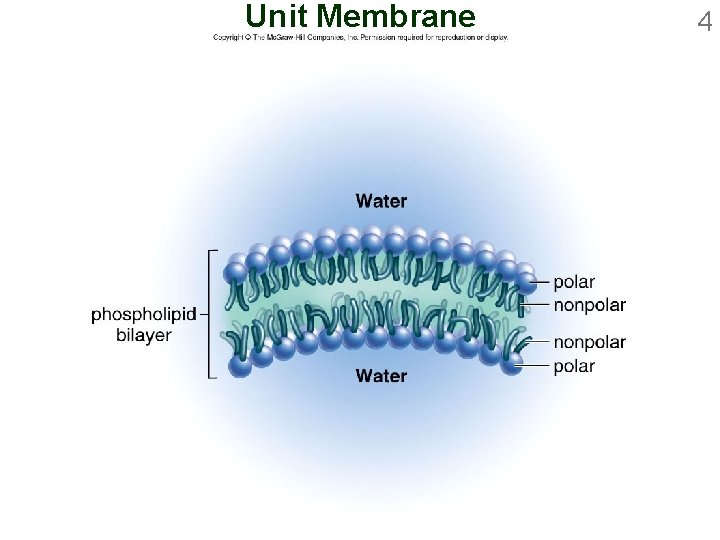
Unit Membrane 4
5 Membrane Models Fluid-Mosaic Model Three components: Basic membrane referred to as phospholipid bilayer Protein molecules Float around like icebergs on a sea Membrane proteins may be peripheral or integral w Peripheral proteins are found on the inner membrane surface w Integral proteins are partially or wholly embedded (transmembrane) in the membrane Some have carbohydrate chains attached Cholesterol
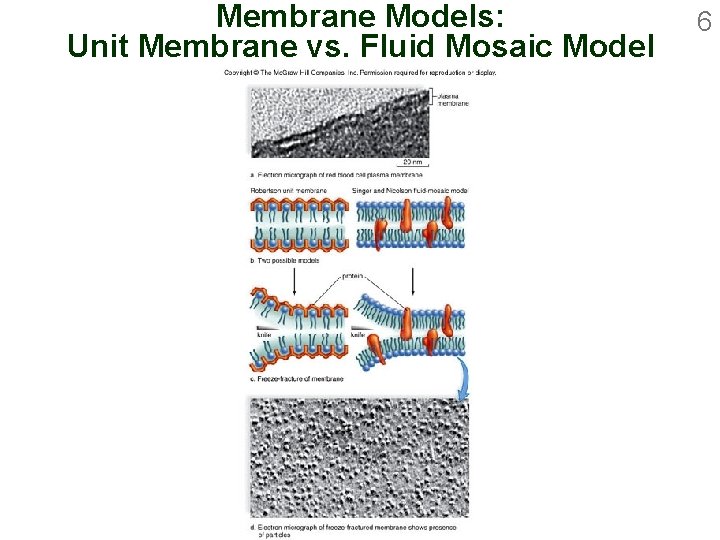
Membrane Models: Unit Membrane vs. Fluid Mosaic Model 6
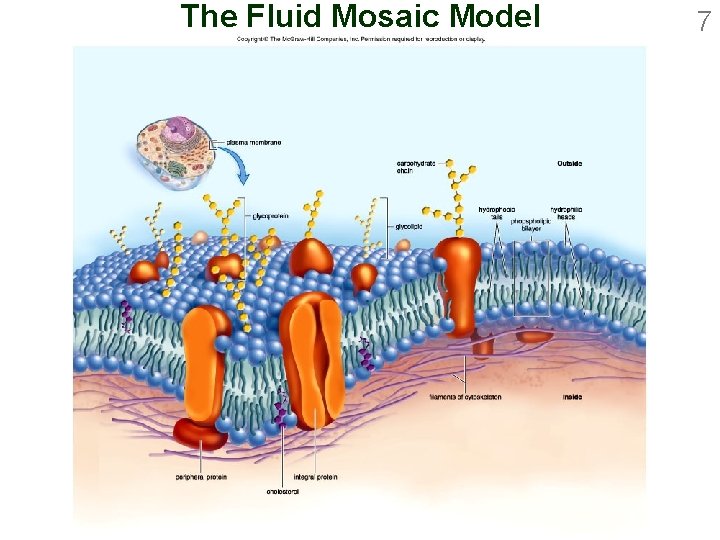
The Fluid Mosaic Model 7
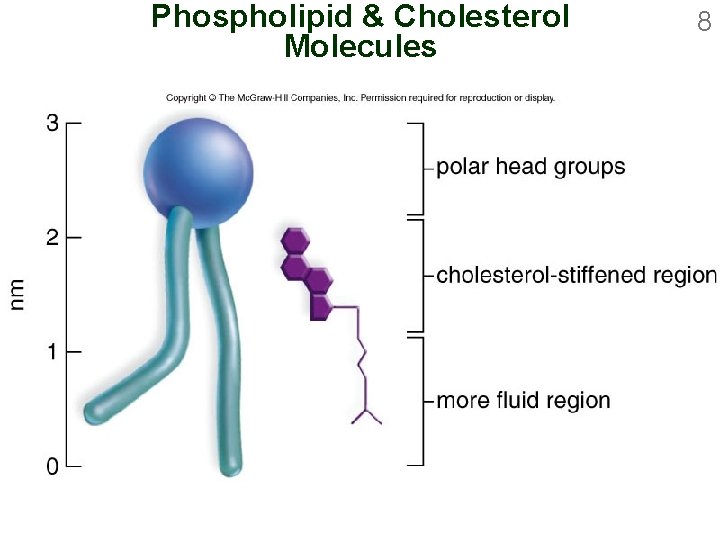
Phospholipid & Cholesterol Molecules 8
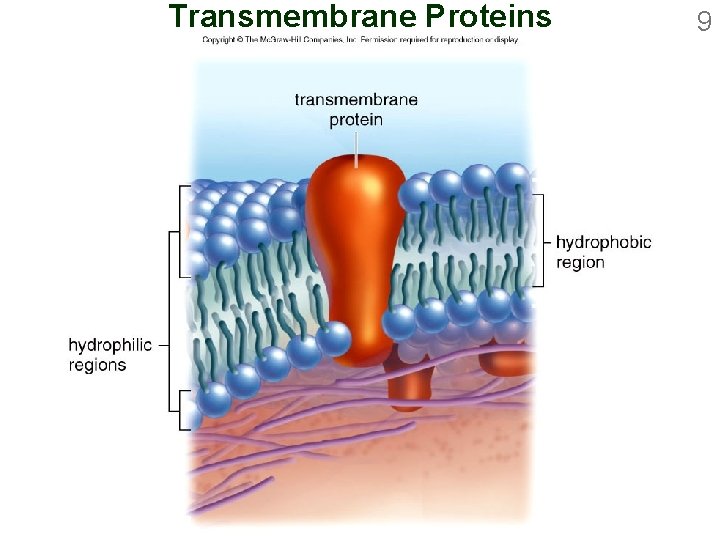
Transmembrane Proteins 9
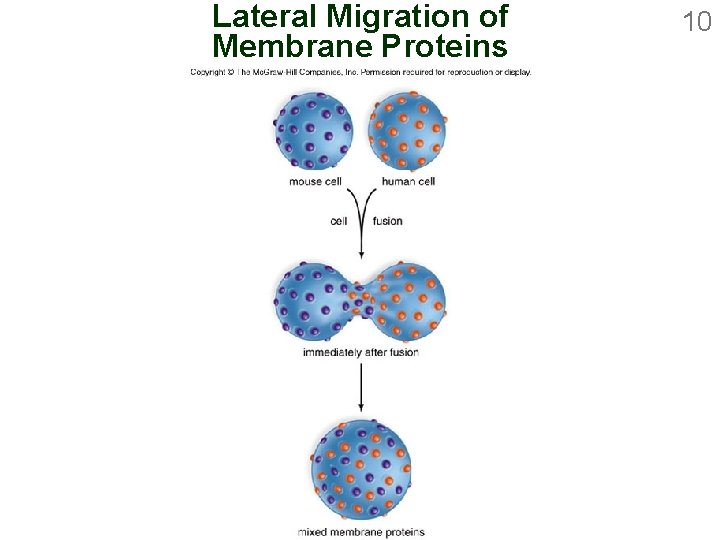
Lateral Migration of Membrane Proteins 10
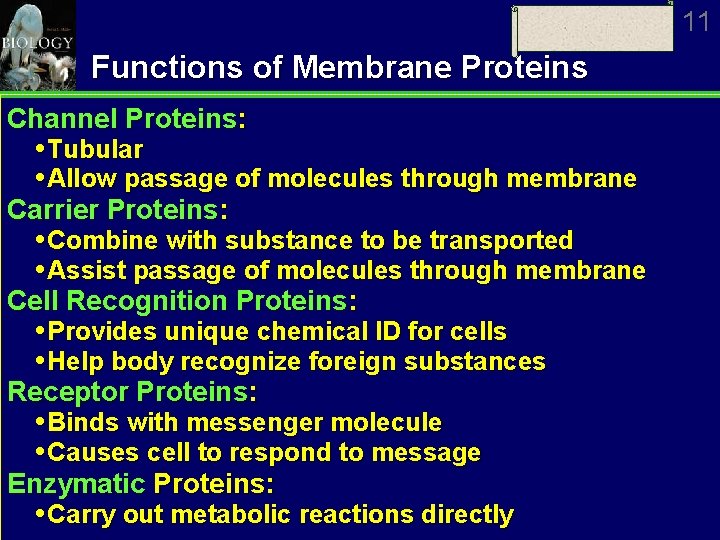
11 Functions of Membrane Proteins Channel Proteins: Tubular Allow passage of molecules through membrane Carrier Proteins: Combine with substance to be transported Assist passage of molecules through membrane Cell Recognition Proteins: Provides unique chemical ID for cells Help body recognize foreign substances Receptor Proteins: Binds with messenger molecule Causes cell to respond to message Enzymatic Proteins: Carry out metabolic reactions directly
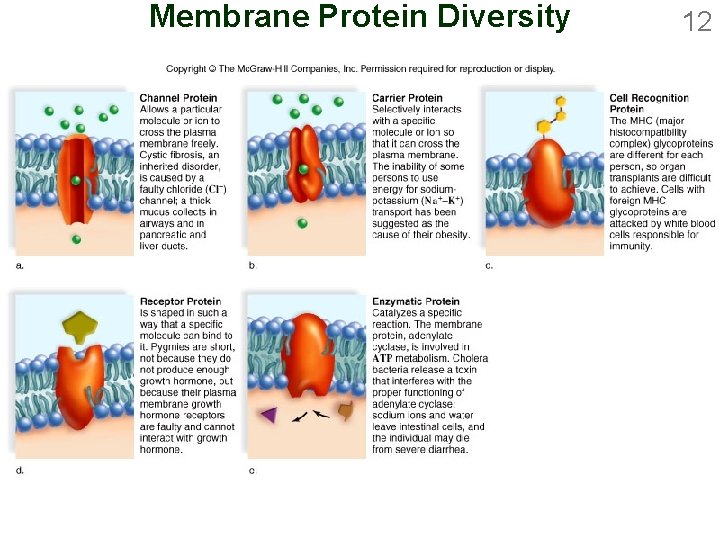
Membrane Protein Diversity 12
Types of Transport: Active vs. Passive Plasma membrane is differentially (selectively) permeable Allows some material to pass Inhibits passage of other materials Passive Transport: No ATP requirement Molecules follow concentration gradient Active Transport Requires carrier protein Requires energy in form of ATP 13

Types of Membrane Transport: Overview 14
Types of Transport: Diffusion A solution consists of: A solvent (liquid) , and A solute (dissolved solid) Diffusion Net movement of solute molecules down a concentration gradient Molecules both ways along gradient More move from high to low concentration than vice versa Equilibrium: When NET change stops Solute concentration uniform – no gradient 15
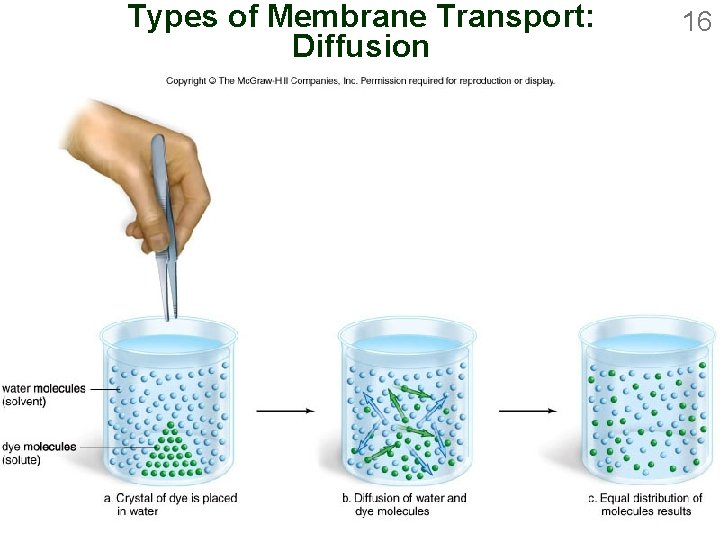
Types of Membrane Transport: Diffusion 16

Types of Membrane Transport: Diffusion Across Lung 17

Types of Transport: Osmosis 18 Osmosis: Special case of diffusion Focuses on solvent (water) movement rather than solute Diffusion of water across a differentially (selectively) permeable membrane Solute concentration on one side high, but water concentration low Solute concentration on other side low, but water concentration high Water diffuses both ways across membrane but solute can’t Net movement of water is toward low water (high solute) concentration Osmotic pressure is the pressure that develops due to osmosis
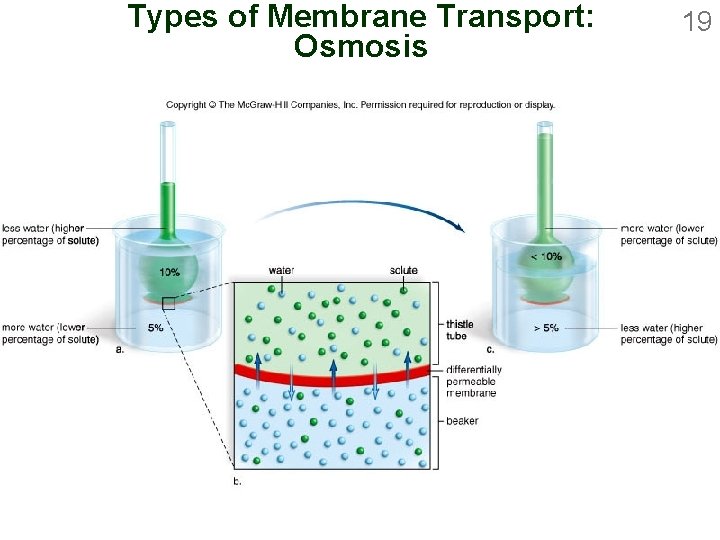
Types of Membrane Transport: Osmosis 19
Types of Transport: Osmosis 20 Isotonic Solution Solute and water concentrations equal on both sides of membrane Hypotonic Solution Concentration of solute lower than on other side Cells placed in a hypotonic solution will swell May cause cells to break – Lysis Hypertonic Solution Concentration of solute higher than on other side Cells placed in a hypertonic solution will shrink – Plasmolysis
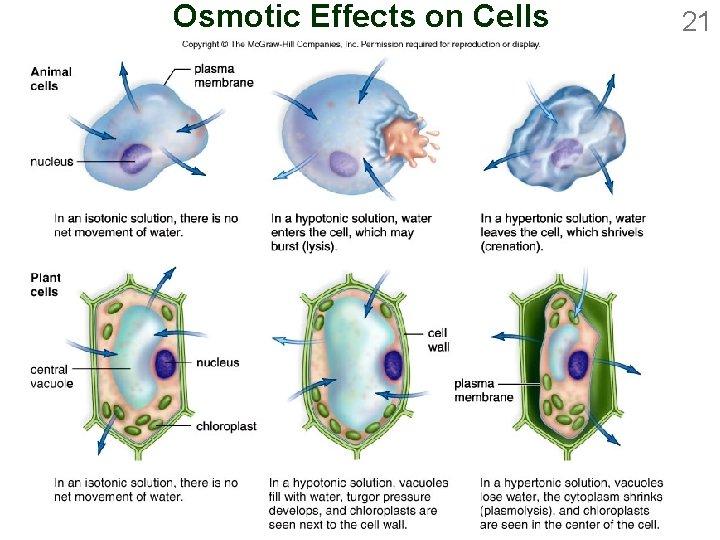
Osmotic Effects on Cells 21
Types of Transport: Carrier Proteins Facilitated Transport Small molecules Can’t get through membrane lipids Combine with carrier proteins Follow concentration gradient Active Transport Small molecules Move against concentration gradient Combining with carrier proteins Requires energy 22
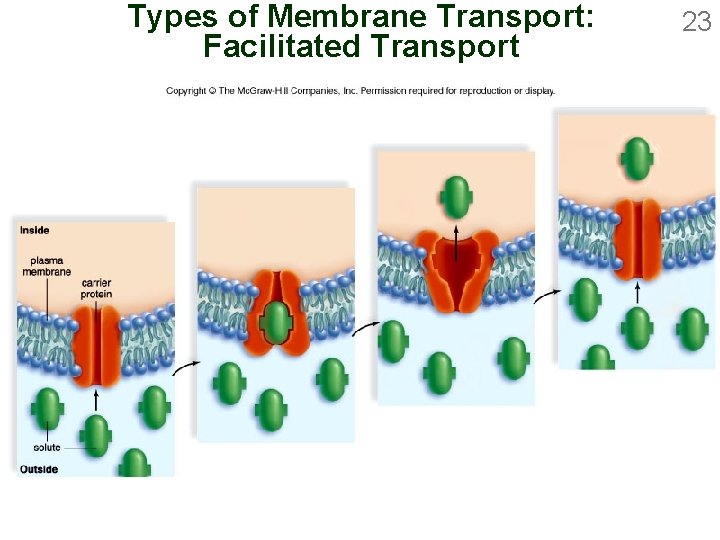
Types of Membrane Transport: Facilitated Transport 23
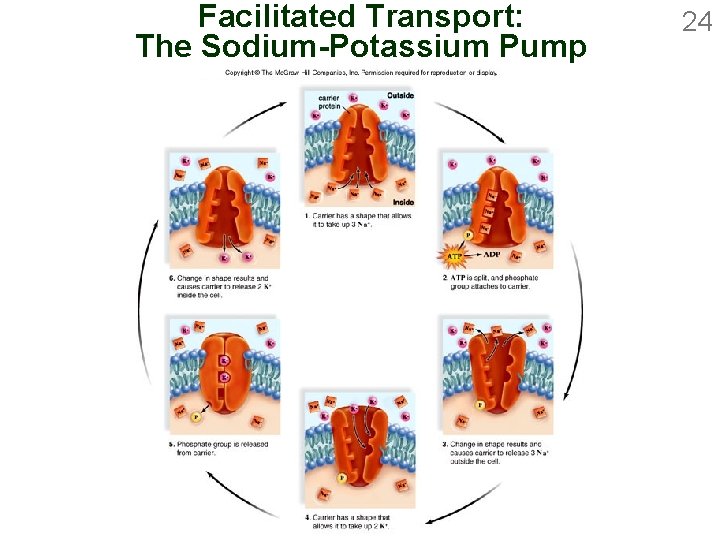
Facilitated Transport: The Sodium-Potassium Pump 24

Types of Transport: Membrane-Assisted Transport 25 Macromolecules transported into or out of the cell inside vesicles Exocytosis – Vesicles fuse with plasma membrane and secrete contents Endocytosis – Cells engulf substances into pouch which becomes a vesicle Phagocytosis – Large, solid material into vesicle Pinocytosis – Liquid or small, solid particles go into vesicle Receptor-Mediated – Specific form of pinocytosis using a coated pit
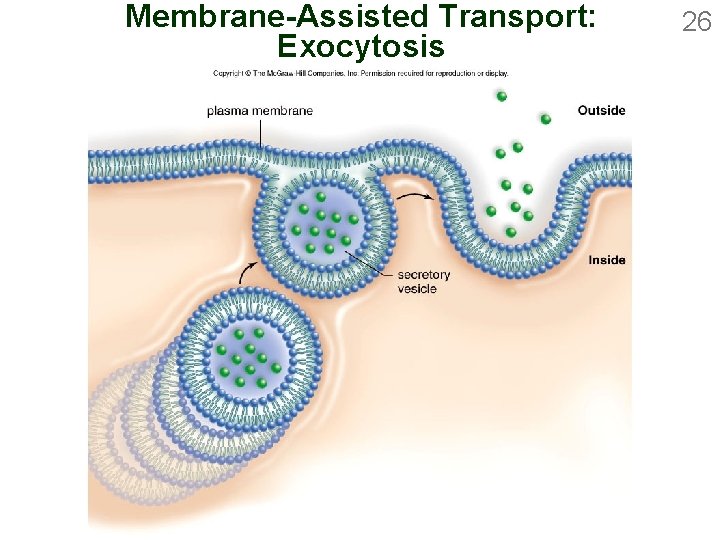
Membrane-Assisted Transport: Exocytosis 26
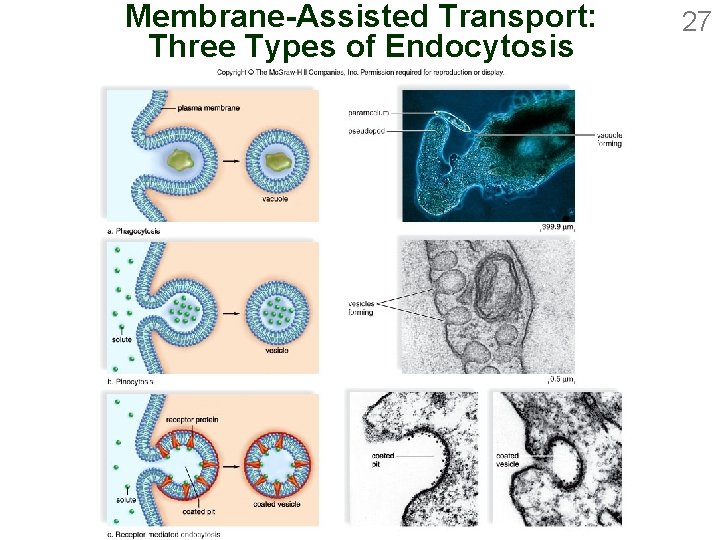
Membrane-Assisted Transport: Three Types of Endocytosis 27
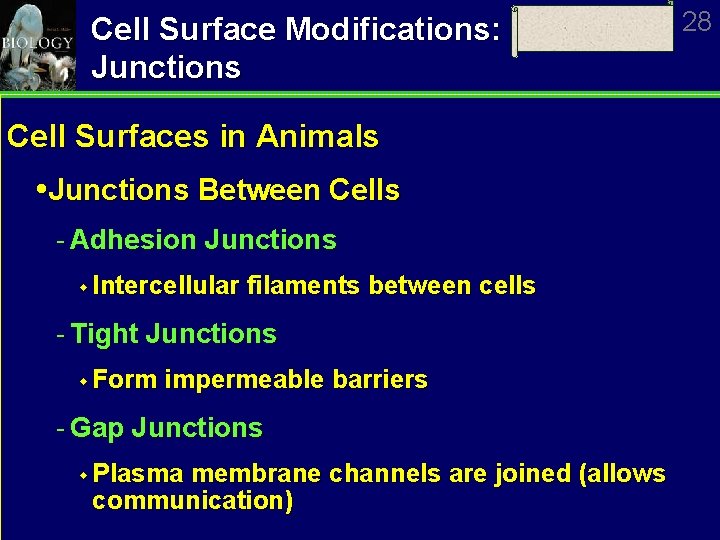
Cell Surface Modifications: Junctions Cell Surfaces in Animals Junctions Between Cells Adhesion Junctions w Intercellular filaments between cells Tight Junctions w Form impermeable barriers Gap Junctions w Plasma membrane channels are joined (allows communication) 28
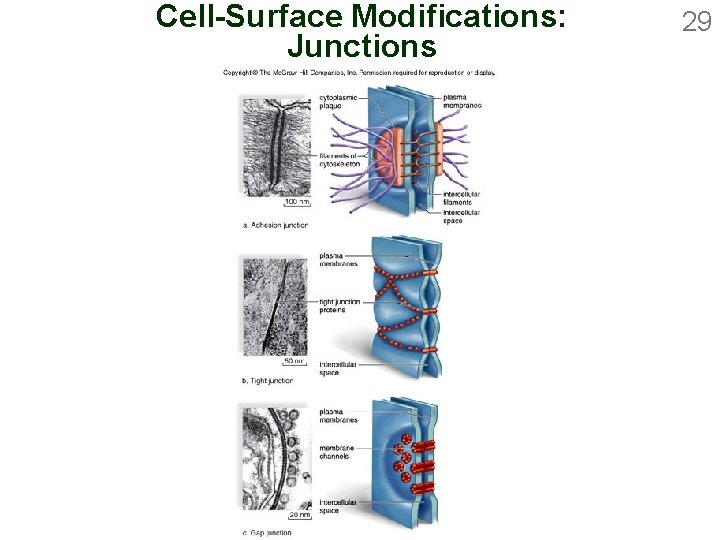
Cell-Surface Modifications: Junctions 29
30 Cell Surface Modifications Extracellular Matrix External meshwork of polysaccharides and proteins Found in close association with the cell that produced them Plant Cell Walls Plants have freely permeable cell wall, with cellulose as the main component Plasmodesmata penetrate cell wall Each contains a strand of cytoplasm Allow passage of material between cells

Cell-Surface Modifications: Extracellular Matrix 31
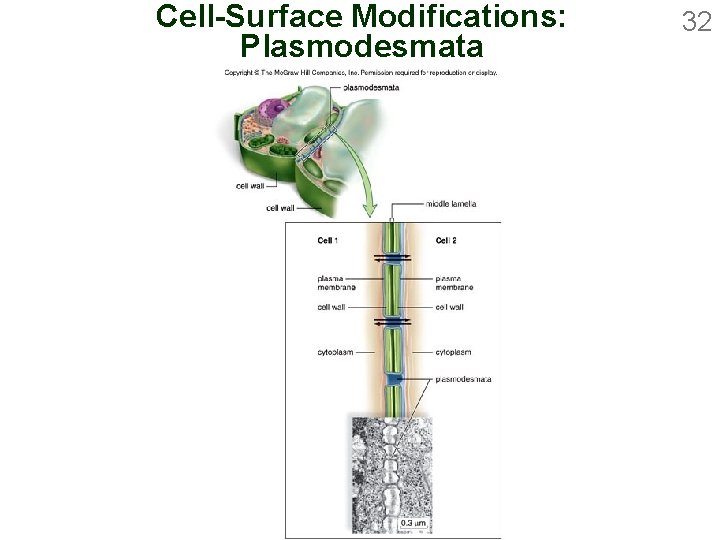
Cell-Surface Modifications: Plasmodesmata 32
33 Review Membrane Models Fluid-Mosaic Plasma Membrane Structure and Function Protein Functions Plasma Membrane Permeability Diffusion Osmosis Transport Via Carrier Proteins Cell Surface Modifications
Ending Slide Chapter 05 Membranes
- Slides: 34