
Chapter 03 Process Management This chapter covers Process
- Slides: 20
Chapter# 03: Process Management This chapter covers: • • • Process Concept Process Scheduling Operations on Processes Inter-process Communication Examples of IPC Systems Communication in Client– Server Systems
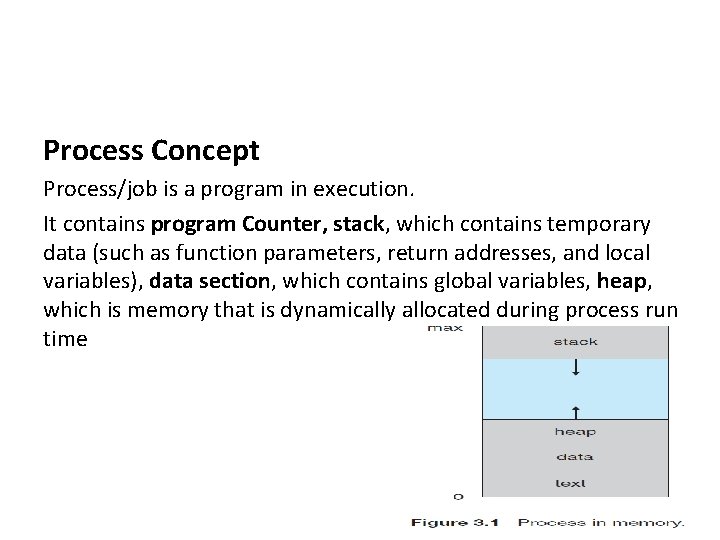
Process Concept Process/job is a program in execution. It contains program Counter, stack, which contains temporary data (such as function parameters, return addresses, and local variables), data section, which contains global variables, heap, which is memory that is dynamically allocated during process run time
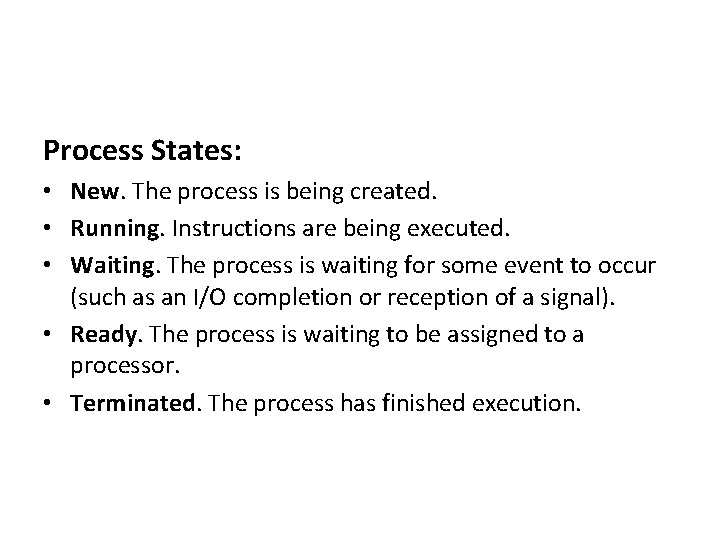
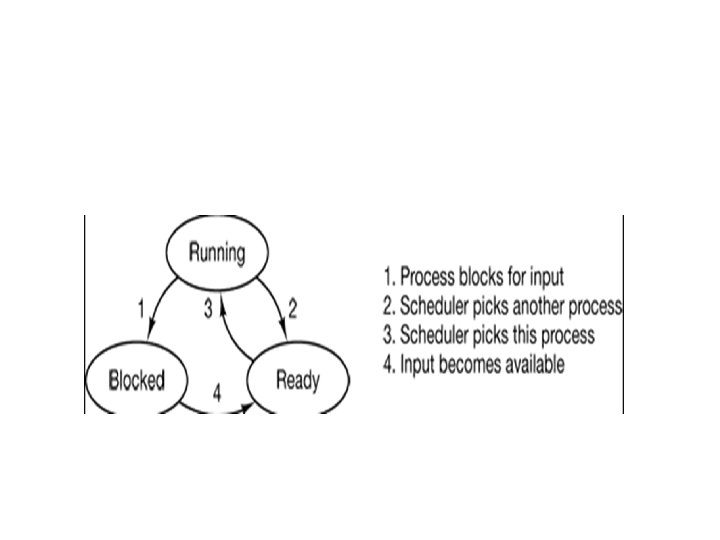
Process States: • New. The process is being created. • Running. Instructions are being executed. • Waiting. The process is waiting for some event to occur (such as an I/O completion or reception of a signal). • Ready. The process is waiting to be assigned to a processor. • Terminated. The process has finished execution.
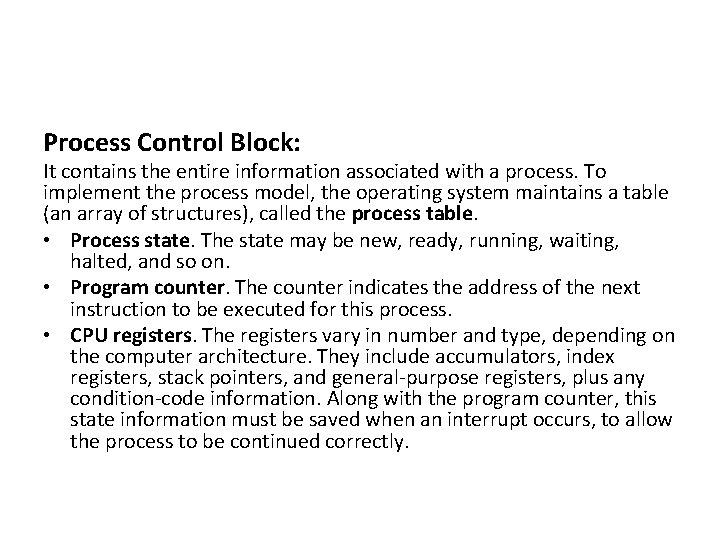
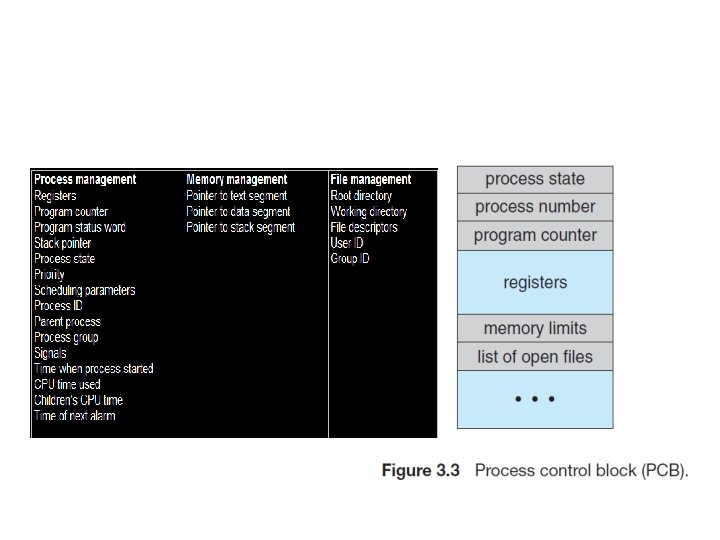
Process Control Block: It contains the entire information associated with a process. To implement the process model, the operating system maintains a table (an array of structures), called the process table. • Process state. The state may be new, ready, running, waiting, halted, and so on. • Program counter. The counter indicates the address of the next instruction to be executed for this process. • CPU registers. The registers vary in number and type, depending on the computer architecture. They include accumulators, index registers, stack pointers, and general-purpose registers, plus any condition-code information. Along with the program counter, this state information must be saved when an interrupt occurs, to allow the process to be continued correctly.
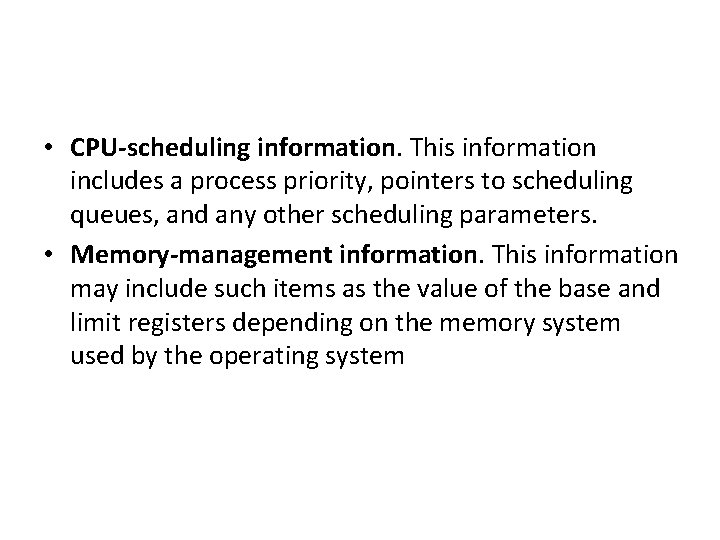
• CPU-scheduling information. This information includes a process priority, pointers to scheduling queues, and any other scheduling parameters. • Memory-management information. This information may include such items as the value of the base and limit registers depending on the memory system used by the operating system
Threads: Light weight process Each process has an address space and a single thread of control. The thread has a program counter that keeps track of which instruction to execute next. It has registers, which hold its current working variables. It has a stack, which contains the execution history.
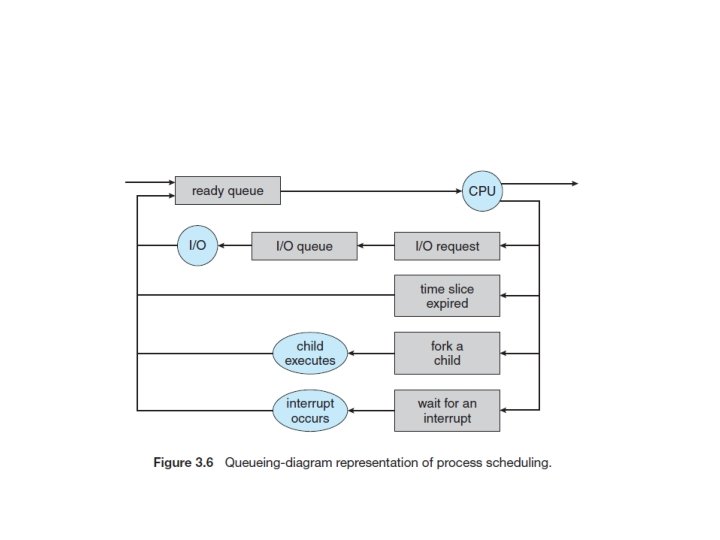
Process Scheduling: Process scheduler(selects an available process (possibly from a set of several available processes) for program execution on the CPU. )
Schedulers: The long-term scheduler, or job scheduler, selects processes from this pool and loads them into memory for execution. The short-term scheduler, or CPU scheduler, selects from among the processes that are ready to execute and allocates the CPU to one of them.
• An I/O-bound process is one that spends more of its time doing I/O than it spends doing computations. • A CPU-bound process, in contrast, generates I/O requests infrequently, using more of its time doing computations
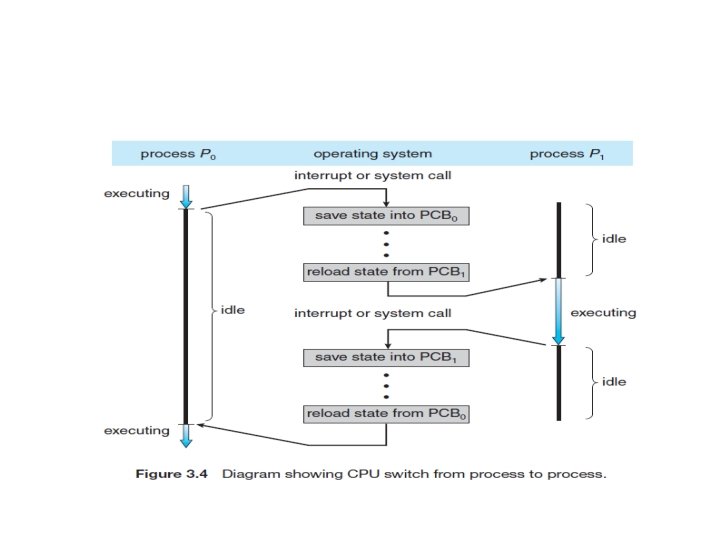
Context Switch: • State save • state restore
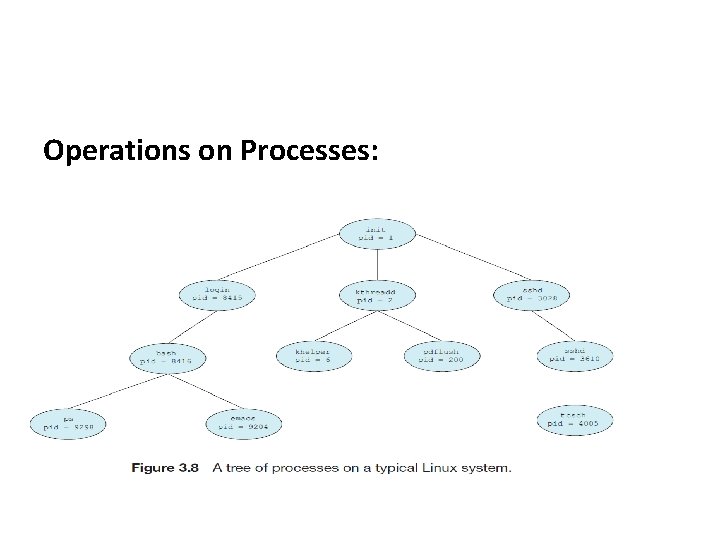
Operations on Processes:
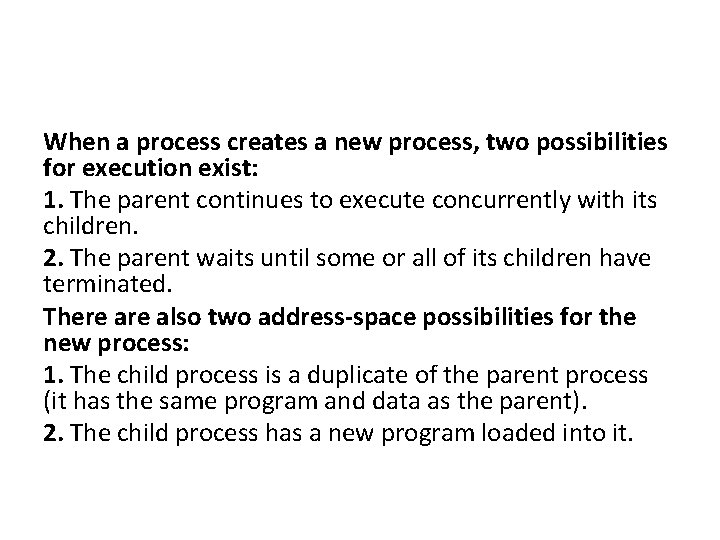
When a process creates a new process, two possibilities for execution exist: 1. The parent continues to execute concurrently with its children. 2. The parent waits until some or all of its children have terminated. There also two address-space possibilities for the new process: 1. The child process is a duplicate of the parent process (it has the same program and data as the parent). 2. The child process has a new program loaded into it.
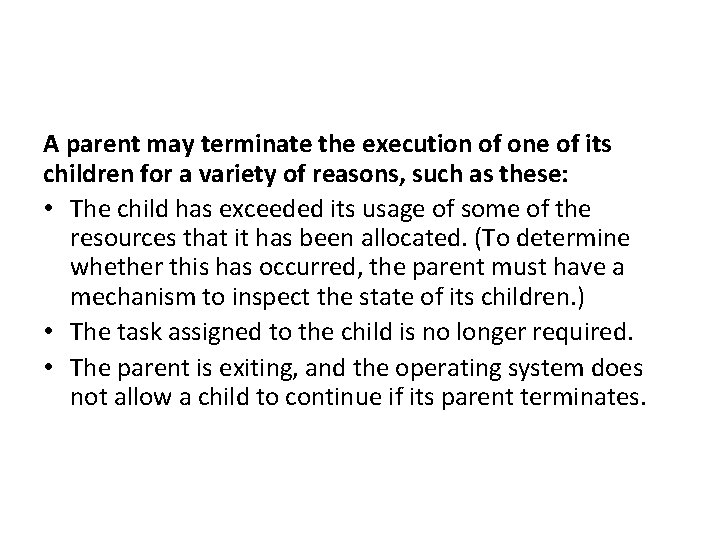
A parent may terminate the execution of one of its children for a variety of reasons, such as these: • The child has exceeded its usage of some of the resources that it has been allocated. (To determine whether this has occurred, the parent must have a mechanism to inspect the state of its children. ) • The task assigned to the child is no longer required. • The parent is exiting, and the operating system does not allow a child to continue if its parent terminates.
• cascading termination • orphans
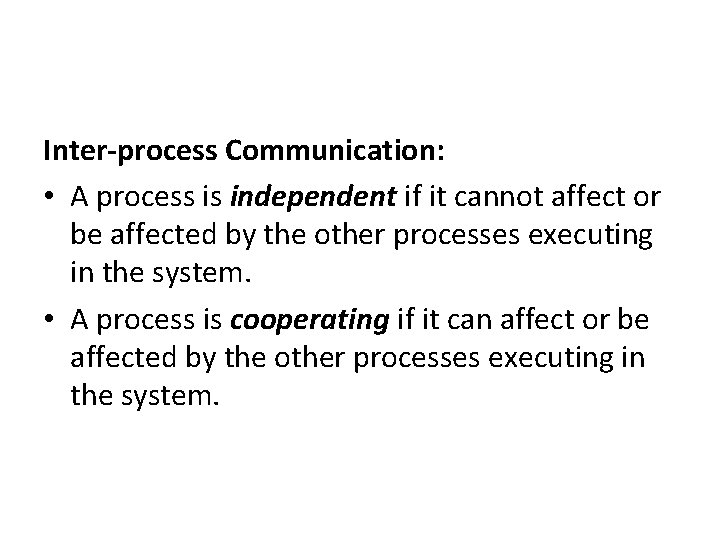
Inter-process Communication: • A process is independent if it cannot affect or be affected by the other processes executing in the system. • A process is cooperating if it can affect or be affected by the other processes executing in the system.